PROBIOTICS AND
PREBIOTICS
P:4 U:3
Vedanti Gharat
Exam seat no.- 3009
M.Sc. Biotechnology Part-2
Introduction
◦ People often think of bacteria and other microorganisms as
harmful “germs,” but many are actually helpful.
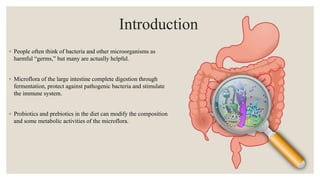
◦ Microflora of the large intestine complete digestion through
fermentation, protect against pathogenic bacteria and stimulate
the immune system.
◦ Probiotics and prebiotics in the diet can modify the composition
and some metabolic activities of the microflora.
Probiotics
◦ The root of the word “Probiotics” come from Greek word pro
meaning “promoting” and biotic meaning “life”.
◦ A Probiotic can be defined as live microbial feed supplement,
which when administered in adequate amounts beneficially
affects the host animal by improving its intestinal microbial
balance.
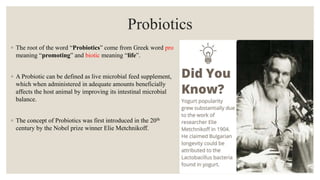
◦ The concept of Probiotics was first introduced in the 20th
century by the Nobel prize winner Elie Metchnikoff.
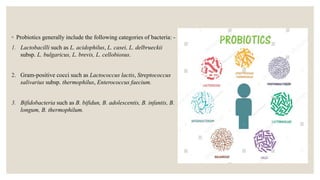
◦ Probiotics generally include the following categories of bacteria: -
1. Lactobacilli such as L. acidophilus, L. casei, L. delbrueckii
subsp. L. bulgaricus, L. brevis, L. cellobiosus.
2. Gram-positive cocci such as Lactococcus lactis, Streptococcus
salivarius subsp. thermophilus, Enterococcus faecium.
3. Bifidobacteria such as B. bifidun, B. adolescentis, B. infantis, B.
longum, B. thermophilum.
◦ Probiotics are available in various forms as powder form, liquid form, gel or paste or granule forms,
capsule forms etc.
◦ Specific probiotics are generally used to treat gastrointestinal (GI) conditions such as lactose intolerance,
acute diarrhea and antibiotic-associated GI side effects.
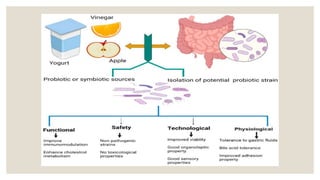
◦ Probiotic agents possess the properties of non-pathogenic, non-toxic, resistance to gastric acid, adherence
to gut epithelial tissues producing antibacterial substances.
◦ There are evidences that administration of probiotics decreases the risk of systemic conditions, such as
allergy, asthma, cancer and several other infections of the ear, urinary tract etc.
Prebiotics
◦ Prebiotics are dietary ingredients that beneficially affect the host
by selectively altering the composition or metabolism of the gut
microbiota.
◦ The concept of Prebiotics was introduced by Gibson and
Roberfroid in 1995.
◦ These are short-chain polysaccharides that have unique chemical
structures that are not digested by humans; in particular fructose-
based oligosaccharides that exist naturally in food or are added in
the food.
◦ The prebiotic consumption generally promotes the Lactobacillus
and Bifidobacterial growth in the gut, thus helping in metabolism.
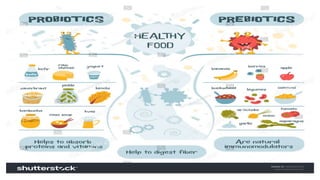
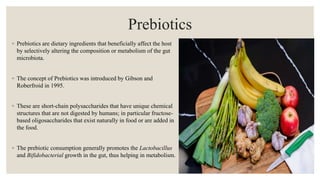
◦ Vegetables like chicory roots, banana, tomato, alliums are rich in fructo- oligosaccharides.
◦ Some other examples of these oligosaccharides are raffinose and stachyose, found in beans and peas.
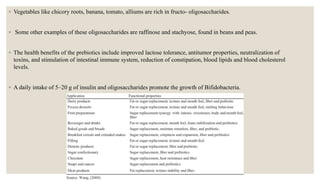
◦ The health benefits of the prebiotics include improved lactose tolerance, antitumor properties, neutralization of
toxins, and stimulation of intestinal immune system, reduction of constipation, blood lipids and blood cholesterol
levels.
◦ A daily intake of 5–20 g of insulin and oligosaccharides promote the growth of Bifidobacteria.
◦ Synbiotics are products that combine probiotics and prebiotics.
Prebiotics and probiotics.pptx

Prebiotics and probiotics.pptx

  • 1.
    PROBIOTICS AND PREBIOTICS P:4 U:3 VedantiGharat Exam seat no.- 3009 M.Sc. Biotechnology Part-2
  • 2.
    Introduction ◦ People oftenthink of bacteria and other microorganisms as harmful “germs,” but many are actually helpful. ◦ Microflora of the large intestine complete digestion through fermentation, protect against pathogenic bacteria and stimulate the immune system. ◦ Probiotics and prebiotics in the diet can modify the composition and some metabolic activities of the microflora.
  • 3.
    Probiotics ◦ The rootof the word “Probiotics” come from Greek word pro meaning “promoting” and biotic meaning “life”. ◦ A Probiotic can be defined as live microbial feed supplement, which when administered in adequate amounts beneficially affects the host animal by improving its intestinal microbial balance. ◦ The concept of Probiotics was first introduced in the 20th century by the Nobel prize winner Elie Metchnikoff.
  • 4.
    ◦ Probiotics generallyinclude the following categories of bacteria: - 1. Lactobacilli such as L. acidophilus, L. casei, L. delbrueckii subsp. L. bulgaricus, L. brevis, L. cellobiosus. 2. Gram-positive cocci such as Lactococcus lactis, Streptococcus salivarius subsp. thermophilus, Enterococcus faecium. 3. Bifidobacteria such as B. bifidun, B. adolescentis, B. infantis, B. longum, B. thermophilum.
  • 5.
    ◦ Probiotics areavailable in various forms as powder form, liquid form, gel or paste or granule forms, capsule forms etc. ◦ Specific probiotics are generally used to treat gastrointestinal (GI) conditions such as lactose intolerance, acute diarrhea and antibiotic-associated GI side effects. ◦ Probiotic agents possess the properties of non-pathogenic, non-toxic, resistance to gastric acid, adherence to gut epithelial tissues producing antibacterial substances. ◦ There are evidences that administration of probiotics decreases the risk of systemic conditions, such as allergy, asthma, cancer and several other infections of the ear, urinary tract etc.
  • 8.
    Prebiotics ◦ Prebiotics aredietary ingredients that beneficially affect the host by selectively altering the composition or metabolism of the gut microbiota. ◦ The concept of Prebiotics was introduced by Gibson and Roberfroid in 1995. ◦ These are short-chain polysaccharides that have unique chemical structures that are not digested by humans; in particular fructose- based oligosaccharides that exist naturally in food or are added in the food. ◦ The prebiotic consumption generally promotes the Lactobacillus and Bifidobacterial growth in the gut, thus helping in metabolism.
  • 9.
    ◦ Vegetables likechicory roots, banana, tomato, alliums are rich in fructo- oligosaccharides. ◦ Some other examples of these oligosaccharides are raffinose and stachyose, found in beans and peas. ◦ The health benefits of the prebiotics include improved lactose tolerance, antitumor properties, neutralization of toxins, and stimulation of intestinal immune system, reduction of constipation, blood lipids and blood cholesterol levels. ◦ A daily intake of 5–20 g of insulin and oligosaccharides promote the growth of Bifidobacteria.
  • 10.
    ◦ Synbiotics areproducts that combine probiotics and prebiotics.