P: 1 U: 2
V E D AN T I S . G H AR AT
R O L L N O . 2 0
E X AM N O . 0 0 5 0 1 8
T. Y. B . S C . B I O T E C H N O L O G Y
PEPTIDOGLYCAN SYNTHESIS IN
BACTERIA: Pathway (Stage 3) and
Regulation
INTRODUCTION
The cell wall peptidoglycan, or murein, of bacteria is synthesized
in three major stages.
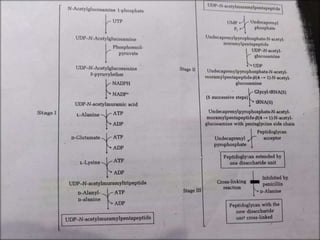
 Stage 1, where N-acetylmuramylpentapeptide, a recurring
unit of the backbone structure, is synthesized in the form of
its UDP derivative from its precursors N-Acetylglucosamine,
phosphoenolpyruvate and five amino acid units.
 Stage 2, where N-acetylmuramylpentapeptide is first
transferred enzymatically from UDP to a membrane-bound
lipid intermediate, undecaprenyl phosphate and then added
to a monosaccharide unit to yield the recurring disaccharide
of the peptidoglycan backbone, N-
acetylmuramylpentapeptide-β-(4 1)-N-acetylglucosamine,
attached to the undecaprenyl phosphate. Short cross linking
peptide chains are then added to the disaccharide.
Stage 3
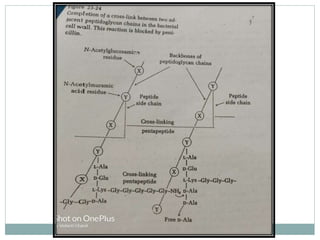
 In the last stage (3) of the cell-wall synthesis, the cross
linkage between parallel peptidoglycan chains is
established through a transpeptidation reaction in which
the amino terminal glycine residue of the cross-linking
chain displaces the carboxyl-terminal D-alanine from the
end of the pentapeptide side chain of an N-
acetylmuramylpentapeptide residue in the adjacent
peptidoglycan chain;
 It is this reaction that is inhibited by penicillin.
 Penicillin thus prevents completion of the synthesis of
the cell wall at its last stage, after the bacterial cell has
already made a very heavy biosynthetic investment.
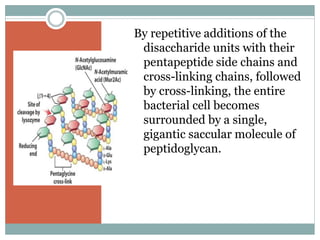
By repetitive additions of the
disaccharide units with their
pentapeptide side chains and
cross-linking chains, followed
by cross-linking, the entire
bacterial cell becomes
surrounded by a single,
gigantic saccular molecule of
peptidoglycan.
REGULATION
Peptidoglycan synthesis is regulated at multiple levels to
ensure shape-maintaining growth and cell division.
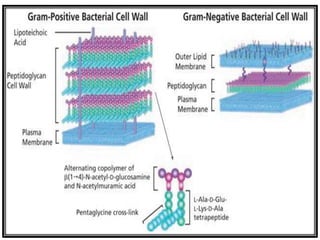
 In some gram-positive bacteria the rigid peptidoglycan
framework of the cell is covered with a layer of teichoic
acid. Sugar side chains are then introduced into the
teichoic acid chain from UDP derivatives.
 In gram-negative organisms, such as E. coli, the
peptidoglycan framework is surrounded by a complex
polymeric lipopolysaccharide.
PEPTIDOGLYCAN SYNTHESIS IN BACTERIA.pptx

PEPTIDOGLYCAN SYNTHESIS IN BACTERIA.pptx

  • 1.
    P: 1 U:2 V E D AN T I S . G H AR AT R O L L N O . 2 0 E X AM N O . 0 0 5 0 1 8 T. Y. B . S C . B I O T E C H N O L O G Y PEPTIDOGLYCAN SYNTHESIS IN BACTERIA: Pathway (Stage 3) and Regulation
  • 2.
    INTRODUCTION The cell wallpeptidoglycan, or murein, of bacteria is synthesized in three major stages.  Stage 1, where N-acetylmuramylpentapeptide, a recurring unit of the backbone structure, is synthesized in the form of its UDP derivative from its precursors N-Acetylglucosamine, phosphoenolpyruvate and five amino acid units.  Stage 2, where N-acetylmuramylpentapeptide is first transferred enzymatically from UDP to a membrane-bound lipid intermediate, undecaprenyl phosphate and then added to a monosaccharide unit to yield the recurring disaccharide of the peptidoglycan backbone, N- acetylmuramylpentapeptide-β-(4 1)-N-acetylglucosamine, attached to the undecaprenyl phosphate. Short cross linking peptide chains are then added to the disaccharide.
  • 4.
    Stage 3  Inthe last stage (3) of the cell-wall synthesis, the cross linkage between parallel peptidoglycan chains is established through a transpeptidation reaction in which the amino terminal glycine residue of the cross-linking chain displaces the carboxyl-terminal D-alanine from the end of the pentapeptide side chain of an N- acetylmuramylpentapeptide residue in the adjacent peptidoglycan chain;  It is this reaction that is inhibited by penicillin.  Penicillin thus prevents completion of the synthesis of the cell wall at its last stage, after the bacterial cell has already made a very heavy biosynthetic investment.
  • 6.
    By repetitive additionsof the disaccharide units with their pentapeptide side chains and cross-linking chains, followed by cross-linking, the entire bacterial cell becomes surrounded by a single, gigantic saccular molecule of peptidoglycan.
  • 7.
    REGULATION Peptidoglycan synthesis isregulated at multiple levels to ensure shape-maintaining growth and cell division.  In some gram-positive bacteria the rigid peptidoglycan framework of the cell is covered with a layer of teichoic acid. Sugar side chains are then introduced into the teichoic acid chain from UDP derivatives.  In gram-negative organisms, such as E. coli, the peptidoglycan framework is surrounded by a complex polymeric lipopolysaccharide.