P:2 U:2
VEDANTI GHARAT
M.SC. PART-1
ROLL NO. - 09
HYPERSENSITIVITY:
TYPE 1 & 2
 Hypersensitivity reactions are immune responses that are
exaggerated or inappropriate against an antigen or allergen.
 They are usually referred to as an over-reaction of the immune
system and these reactions may be damaging and uncomfortable.
 May develop in the course of either humoral or cell-mediated
responses.
 Anaphylactic reactions within the humoral branch initiated by
antibody or antigen-antibody complexes as immediate
hypersensitivity, because the symptoms are manifest within minutes
or hours after a sensitized recipient encounters antigen.
 Delayed-type hypersensitivity (DTH) is so named in recognition of
the delay of symptoms until days after exposure.
Gell and Coombs Classification
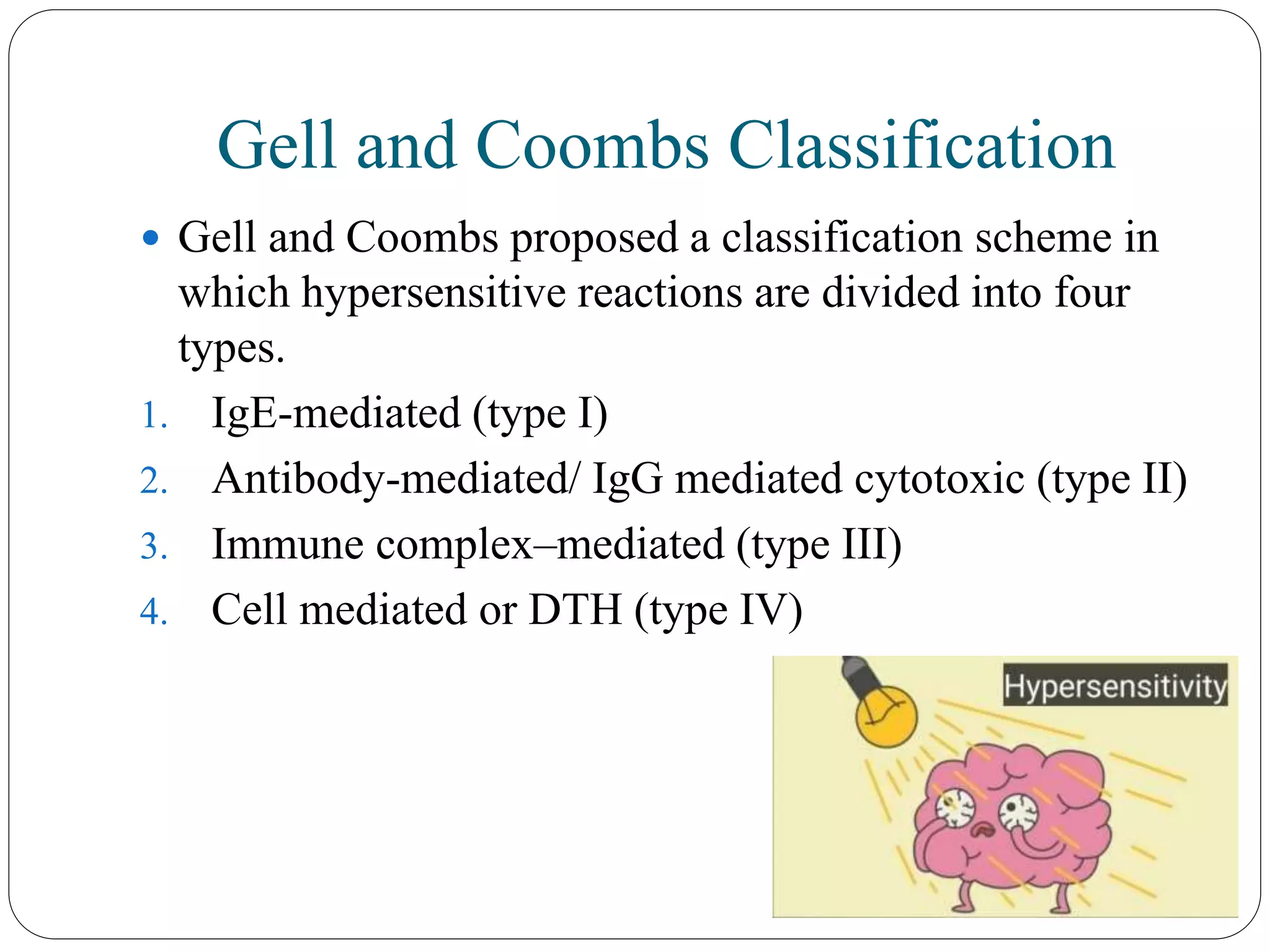
 Gell and Coombs proposed a classification scheme in
which hypersensitive reactions are divided into four
types.
1. IgE-mediated (type I)
2. Antibody-mediated/ IgG mediated cytotoxic (type II)
3. Immune complex–mediated (type III)
4. Cell mediated or DTH (type IV)
IgE-Mediated (Type I) Hypersensitivity
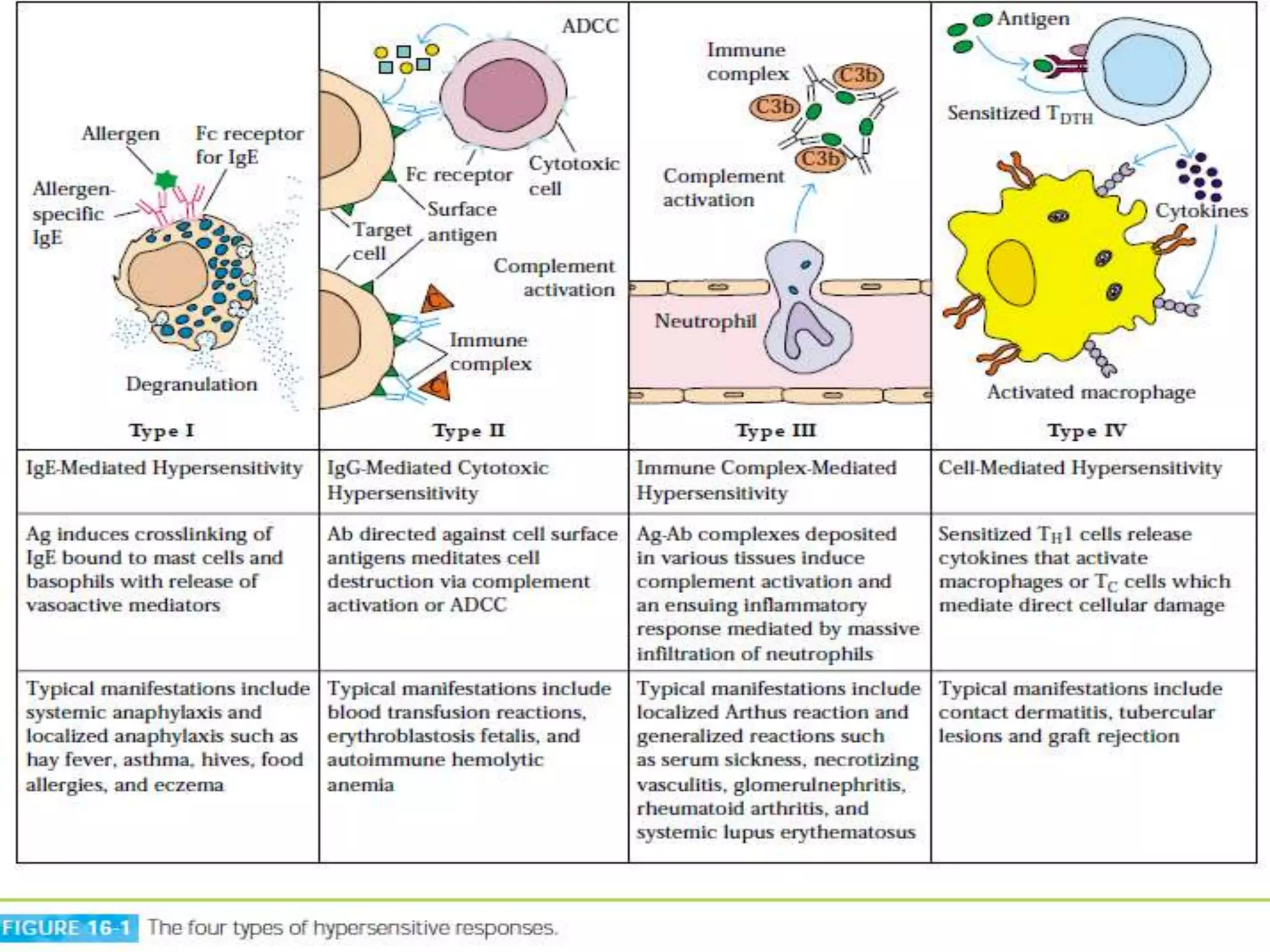
 A type I hypersensitive reaction is induced by certain types of
antigens referred to as allergens.
 In type I hypersensitive response, the plasma cells secrete IgE.
 This class of antibody binds with high affinity to Fc receptors on
the surface of tissue mast cells and blood basophils.
 A later exposure to the same allergen cross-links the membrane-
bound IgE on sensitized mast cells and basophils, causing
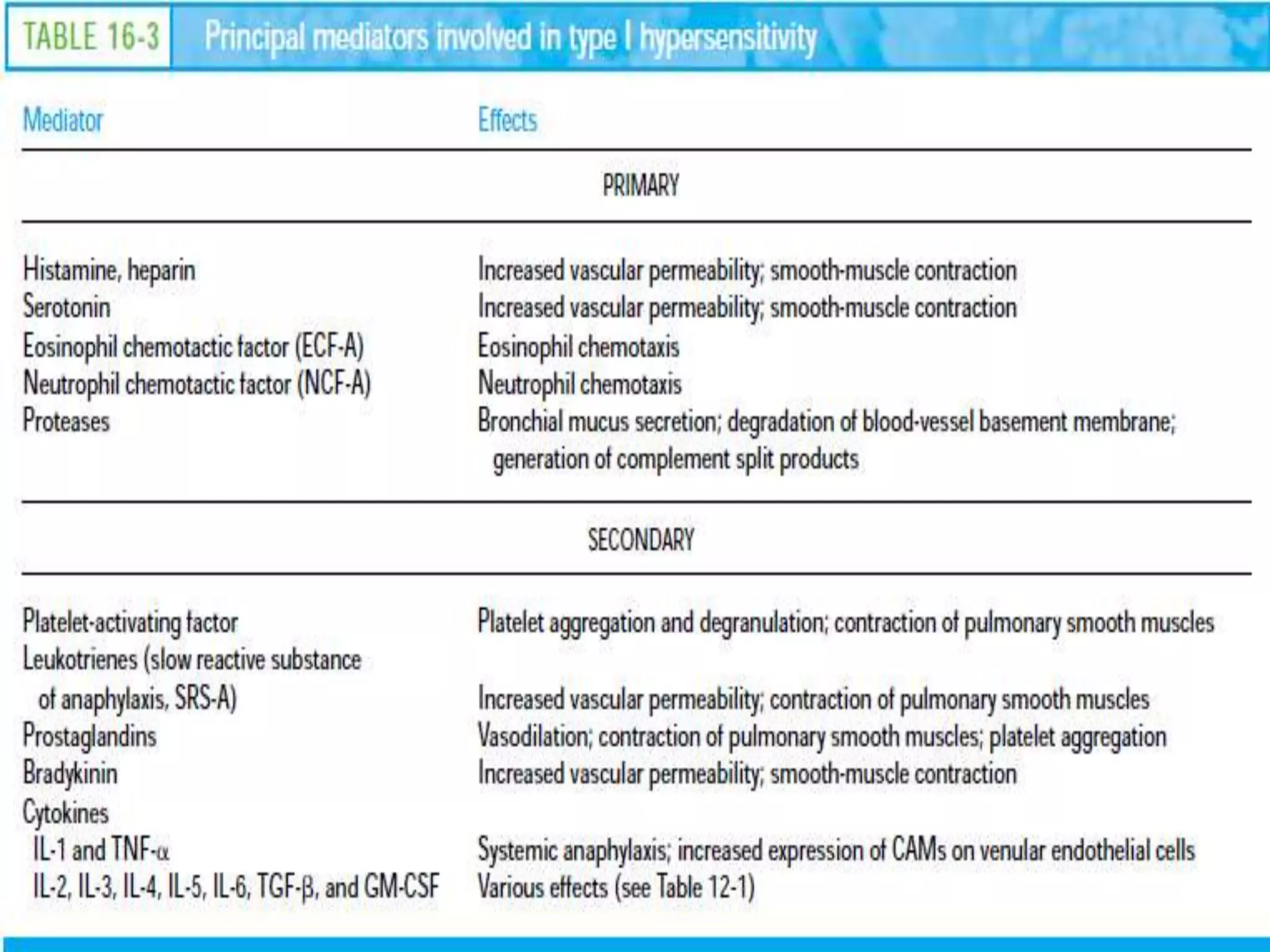
degranulation of these cells. (release of primary mediators,
vasoactive amines, smooth muscle contraction, etc.)
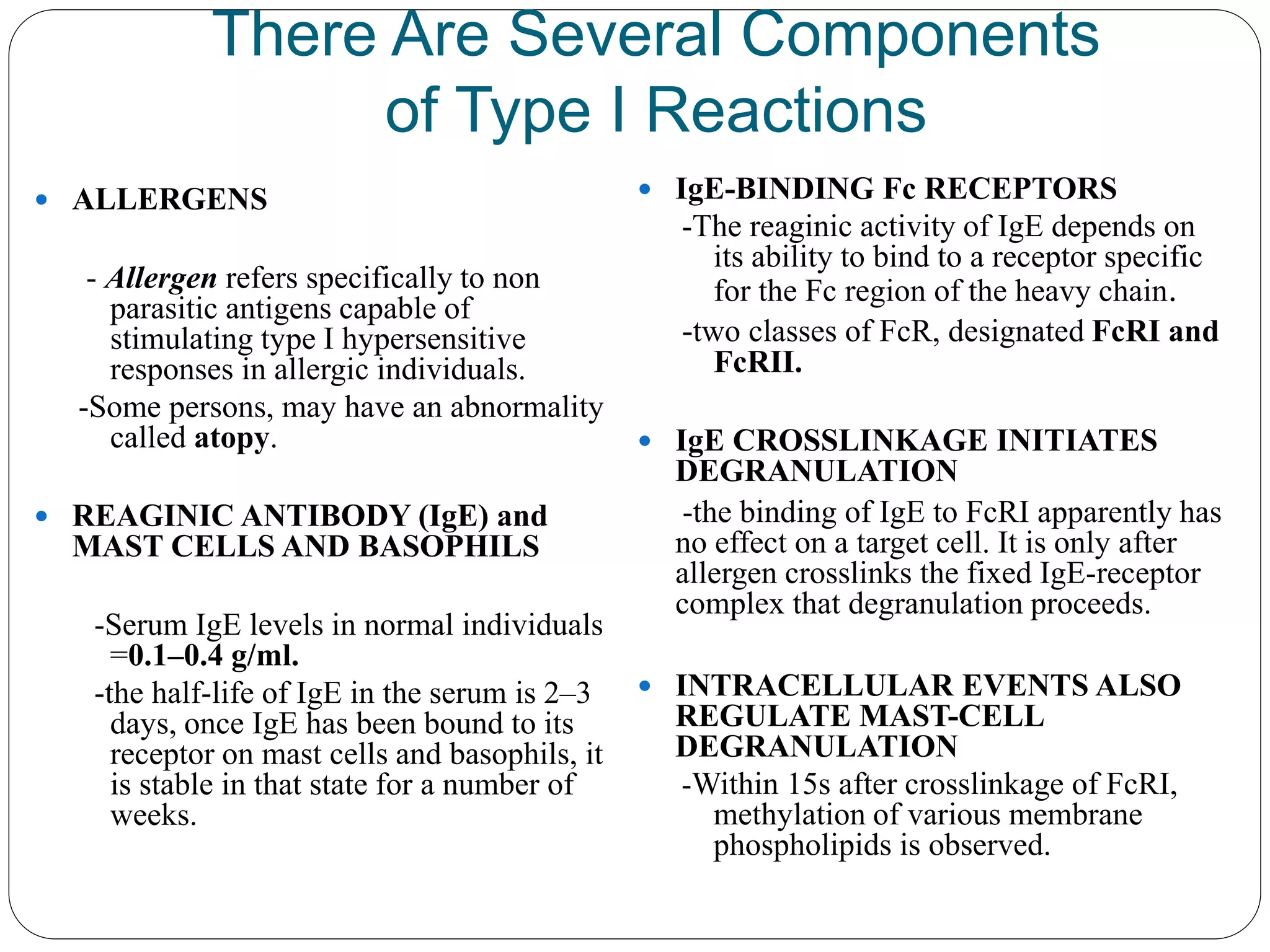
There Are Several Components
of Type I Reactions
 ALLERGENS
- Allergen refers specifically to non
parasitic antigens capable of
stimulating type I hypersensitive
responses in allergic individuals.
-Some persons, may have an abnormality
called atopy.
 REAGINIC ANTIBODY (IgE) and
MAST CELLS AND BASOPHILS
-Serum IgE levels in normal individuals
=0.1–0.4 g/ml.
-the half-life of IgE in the serum is 2–3
days, once IgE has been bound to its
receptor on mast cells and basophils, it
is stable in that state for a number of
weeks.
 IgE-BINDING Fc RECEPTORS
-The reaginic activity of IgE depends on
its ability to bind to a receptor specific
for the Fc region of the heavy chain.
-two classes of FcR, designated FcRI and
FcRII.
 IgE CROSSLINKAGE INITIATES
DEGRANULATION
-the binding of IgE to FcRI apparently has
no effect on a target cell. It is only after
allergen crosslinks the fixed IgE-receptor
complex that degranulation proceeds.
 INTRACELLULAR EVENTS ALSO
REGULATE MAST-CELL
DEGRANULATION
-Within 15s after crosslinkage of FcRI,
methylation of various membrane
phospholipids is observed.
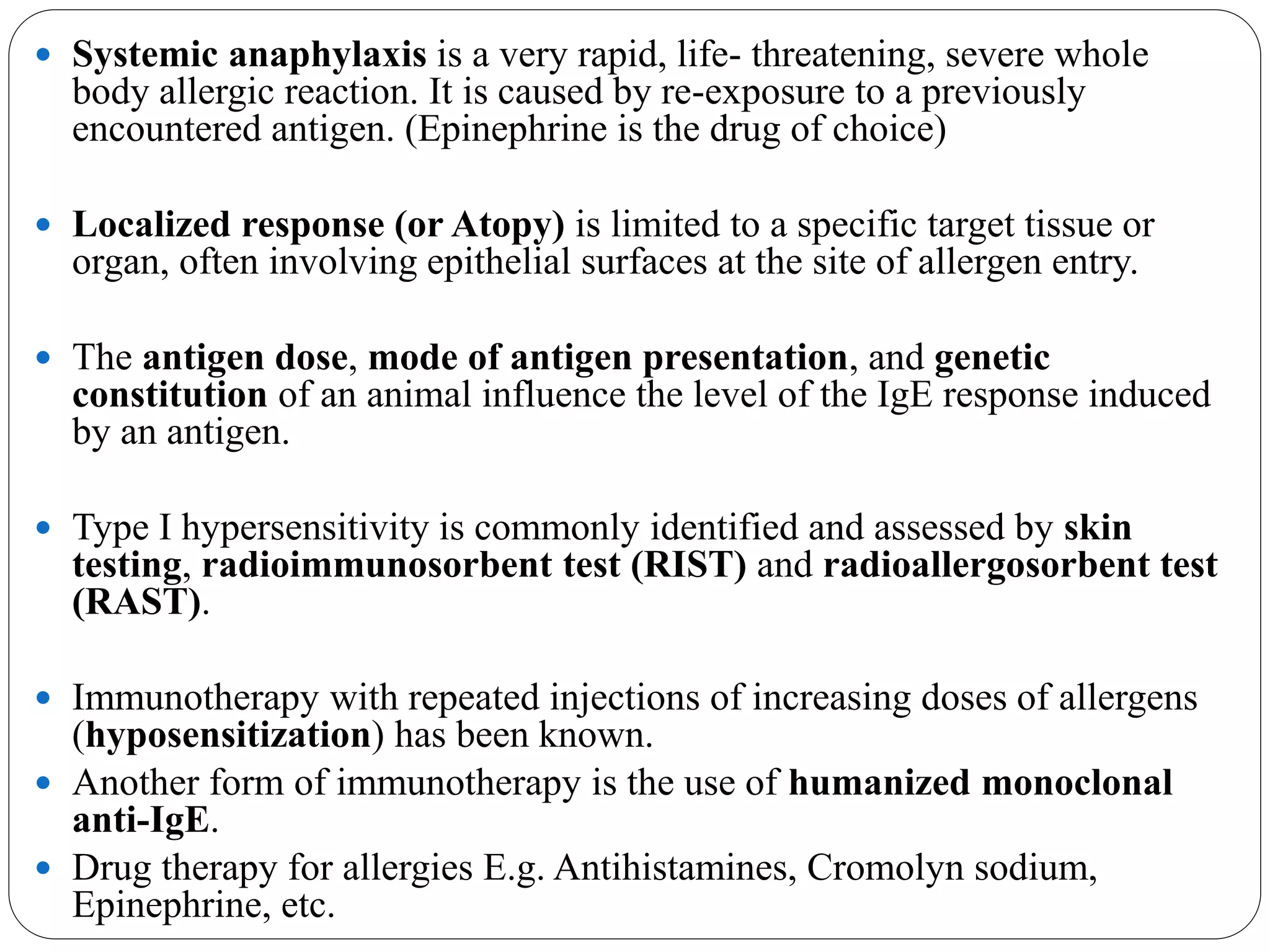
 Systemic anaphylaxis is a very rapid, life- threatening, severe whole
body allergic reaction. It is caused by re-exposure to a previously
encountered antigen. (Epinephrine is the drug of choice)
 Localized response (or Atopy) is limited to a specific target tissue or
organ, often involving epithelial surfaces at the site of allergen entry.
 The antigen dose, mode of antigen presentation, and genetic
constitution of an animal influence the level of the IgE response induced
by an antigen.
 Type I hypersensitivity is commonly identified and assessed by skin
testing, radioimmunosorbent test (RIST) and radioallergosorbent test
(RAST).
 Immunotherapy with repeated injections of increasing doses of allergens
(hyposensitization) has been known.
 Another form of immunotherapy is the use of humanized monoclonal
anti-IgE.
 Drug therapy for allergies E.g. Antihistamines, Cromolyn sodium,
Epinephrine, etc.
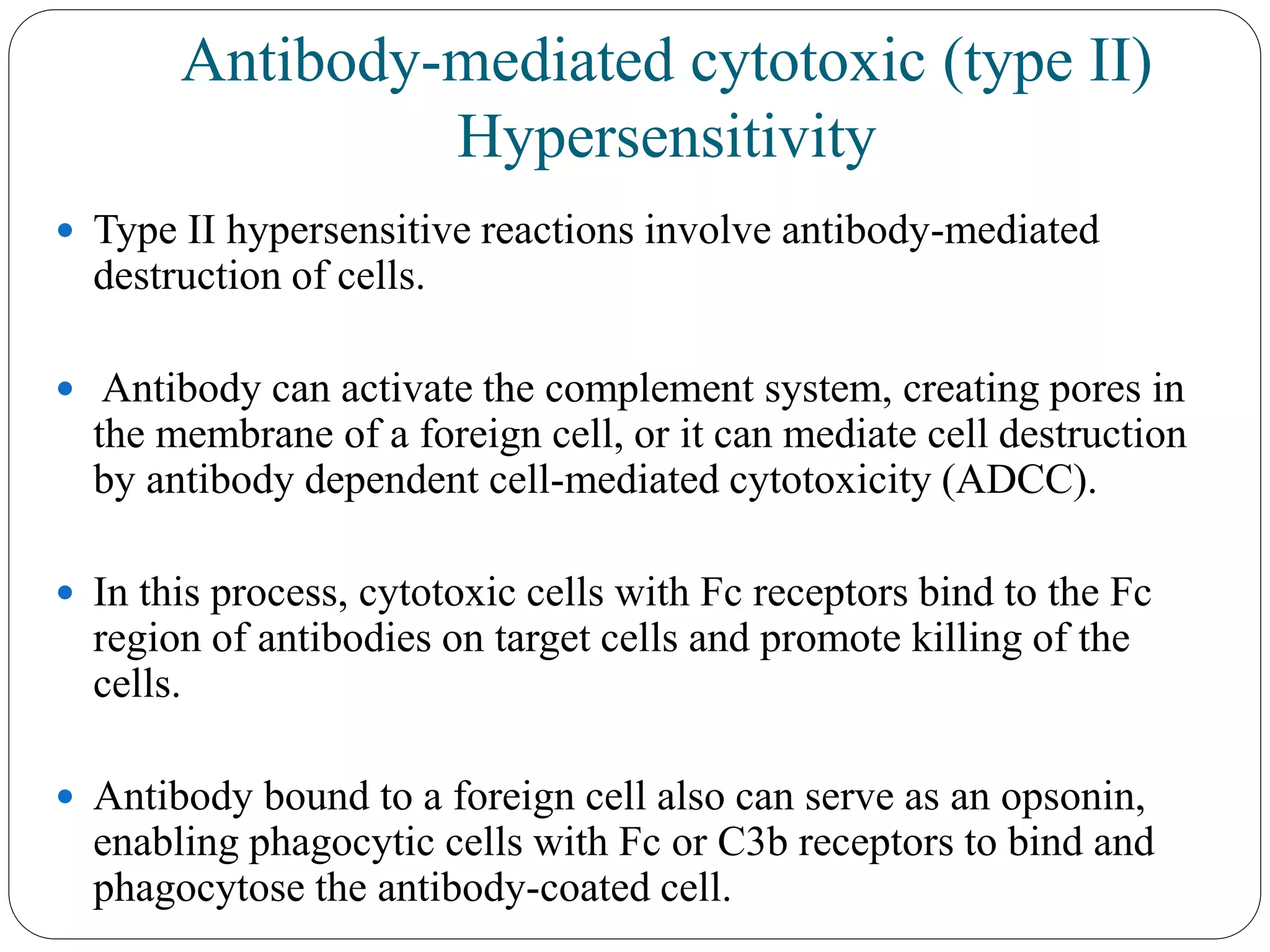
Antibody-mediated cytotoxic (type II)
Hypersensitivity
 Type II hypersensitive reactions involve antibody-mediated
destruction of cells.
 Antibody can activate the complement system, creating pores in
the membrane of a foreign cell, or it can mediate cell destruction
by antibody dependent cell-mediated cytotoxicity (ADCC).
 In this process, cytotoxic cells with Fc receptors bind to the Fc
region of antibodies on target cells and promote killing of the
cells.
 Antibody bound to a foreign cell also can serve as an opsonin,
enabling phagocytic cells with Fc or C3b receptors to bind and
phagocytose the antibody-coated cell.
Transfusion Reactions Are Type II
Reactions
 An individual possessing one allelic form of a blood-group antigen can recognize other allelic
forms on transfused blood as foreign.
 In some cases, the antibodies have already been induced by natural exposure to similar
antigenic determinants. This is the case with the ABO blood-group antigens.
 Antibodies to the A, B, and O antigens, called isohemagglutinins, are usually of the IgM
class.
 If a type A individual is transfused with blood containing type B cells, isohemagglutinins
bind to the B blood cells and mediate their destruction by means of complement-mediated
lysis.
 Typical symptoms include fever, chills, nausea, clotting within blood vessels, pain in the lower
back, and hemoglobin in the urine.
 Treatment involves prompt termination of the transfusion and maintenance of urine flow with
a diuretic.
Hemolytic Disease of the Newborn
Is Caused by Type II Reactions
 Hemolytic disease of the newborn develops when maternal IgG antibodies specific
for fetal blood-group antigens cross the placenta and destroy fetal red blood cells.
 Severe hemolytic disease of the newborn, called erythroblastosis fetalis, most
commonly develops when an Rh+ fetus expresses an Rh antigen on its blood cells
that the Rh– mother does not express.
 The presence of maternal IgG on the surface of fetal red blood cells can be detected
by a Coombs test.
 The mother can also be treated during the pregnancy by plasmapheresis.
 The majority of cases (65%) of hemolytic disease of the newborn have minor
consequences and are caused by ABO blood-group incompatibility between the
mother and fetus.
 Type A or B fetuses carried by type O mothers most commonly develop these
reactions.
BIBLIOGRAPHY
 Immunology by Kuby 6th edition.

Hypersensitivity types.pptx

  • 1.
    P:2 U:2 VEDANTI GHARAT M.SC.PART-1 ROLL NO. - 09 HYPERSENSITIVITY: TYPE 1 & 2
  • 2.
     Hypersensitivity reactionsare immune responses that are exaggerated or inappropriate against an antigen or allergen.  They are usually referred to as an over-reaction of the immune system and these reactions may be damaging and uncomfortable.  May develop in the course of either humoral or cell-mediated responses.  Anaphylactic reactions within the humoral branch initiated by antibody or antigen-antibody complexes as immediate hypersensitivity, because the symptoms are manifest within minutes or hours after a sensitized recipient encounters antigen.  Delayed-type hypersensitivity (DTH) is so named in recognition of the delay of symptoms until days after exposure.
  • 3.
    Gell and CoombsClassification  Gell and Coombs proposed a classification scheme in which hypersensitive reactions are divided into four types. 1. IgE-mediated (type I) 2. Antibody-mediated/ IgG mediated cytotoxic (type II) 3. Immune complex–mediated (type III) 4. Cell mediated or DTH (type IV)
  • 5.
    IgE-Mediated (Type I)Hypersensitivity  A type I hypersensitive reaction is induced by certain types of antigens referred to as allergens.  In type I hypersensitive response, the plasma cells secrete IgE.  This class of antibody binds with high affinity to Fc receptors on the surface of tissue mast cells and blood basophils.  A later exposure to the same allergen cross-links the membrane- bound IgE on sensitized mast cells and basophils, causing degranulation of these cells. (release of primary mediators, vasoactive amines, smooth muscle contraction, etc.)
  • 7.
    There Are SeveralComponents of Type I Reactions  ALLERGENS - Allergen refers specifically to non parasitic antigens capable of stimulating type I hypersensitive responses in allergic individuals. -Some persons, may have an abnormality called atopy.  REAGINIC ANTIBODY (IgE) and MAST CELLS AND BASOPHILS -Serum IgE levels in normal individuals =0.1–0.4 g/ml. -the half-life of IgE in the serum is 2–3 days, once IgE has been bound to its receptor on mast cells and basophils, it is stable in that state for a number of weeks.  IgE-BINDING Fc RECEPTORS -The reaginic activity of IgE depends on its ability to bind to a receptor specific for the Fc region of the heavy chain. -two classes of FcR, designated FcRI and FcRII.  IgE CROSSLINKAGE INITIATES DEGRANULATION -the binding of IgE to FcRI apparently has no effect on a target cell. It is only after allergen crosslinks the fixed IgE-receptor complex that degranulation proceeds.  INTRACELLULAR EVENTS ALSO REGULATE MAST-CELL DEGRANULATION -Within 15s after crosslinkage of FcRI, methylation of various membrane phospholipids is observed.
  • 9.
     Systemic anaphylaxisis a very rapid, life- threatening, severe whole body allergic reaction. It is caused by re-exposure to a previously encountered antigen. (Epinephrine is the drug of choice)  Localized response (or Atopy) is limited to a specific target tissue or organ, often involving epithelial surfaces at the site of allergen entry.  The antigen dose, mode of antigen presentation, and genetic constitution of an animal influence the level of the IgE response induced by an antigen.  Type I hypersensitivity is commonly identified and assessed by skin testing, radioimmunosorbent test (RIST) and radioallergosorbent test (RAST).  Immunotherapy with repeated injections of increasing doses of allergens (hyposensitization) has been known.  Another form of immunotherapy is the use of humanized monoclonal anti-IgE.  Drug therapy for allergies E.g. Antihistamines, Cromolyn sodium, Epinephrine, etc.
  • 10.
    Antibody-mediated cytotoxic (typeII) Hypersensitivity  Type II hypersensitive reactions involve antibody-mediated destruction of cells.  Antibody can activate the complement system, creating pores in the membrane of a foreign cell, or it can mediate cell destruction by antibody dependent cell-mediated cytotoxicity (ADCC).  In this process, cytotoxic cells with Fc receptors bind to the Fc region of antibodies on target cells and promote killing of the cells.  Antibody bound to a foreign cell also can serve as an opsonin, enabling phagocytic cells with Fc or C3b receptors to bind and phagocytose the antibody-coated cell.
  • 11.
    Transfusion Reactions AreType II Reactions  An individual possessing one allelic form of a blood-group antigen can recognize other allelic forms on transfused blood as foreign.  In some cases, the antibodies have already been induced by natural exposure to similar antigenic determinants. This is the case with the ABO blood-group antigens.  Antibodies to the A, B, and O antigens, called isohemagglutinins, are usually of the IgM class.  If a type A individual is transfused with blood containing type B cells, isohemagglutinins bind to the B blood cells and mediate their destruction by means of complement-mediated lysis.  Typical symptoms include fever, chills, nausea, clotting within blood vessels, pain in the lower back, and hemoglobin in the urine.  Treatment involves prompt termination of the transfusion and maintenance of urine flow with a diuretic.
  • 13.
    Hemolytic Disease ofthe Newborn Is Caused by Type II Reactions  Hemolytic disease of the newborn develops when maternal IgG antibodies specific for fetal blood-group antigens cross the placenta and destroy fetal red blood cells.  Severe hemolytic disease of the newborn, called erythroblastosis fetalis, most commonly develops when an Rh+ fetus expresses an Rh antigen on its blood cells that the Rh– mother does not express.  The presence of maternal IgG on the surface of fetal red blood cells can be detected by a Coombs test.  The mother can also be treated during the pregnancy by plasmapheresis.  The majority of cases (65%) of hemolytic disease of the newborn have minor consequences and are caused by ABO blood-group incompatibility between the mother and fetus.  Type A or B fetuses carried by type O mothers most commonly develop these reactions.
  • 15.