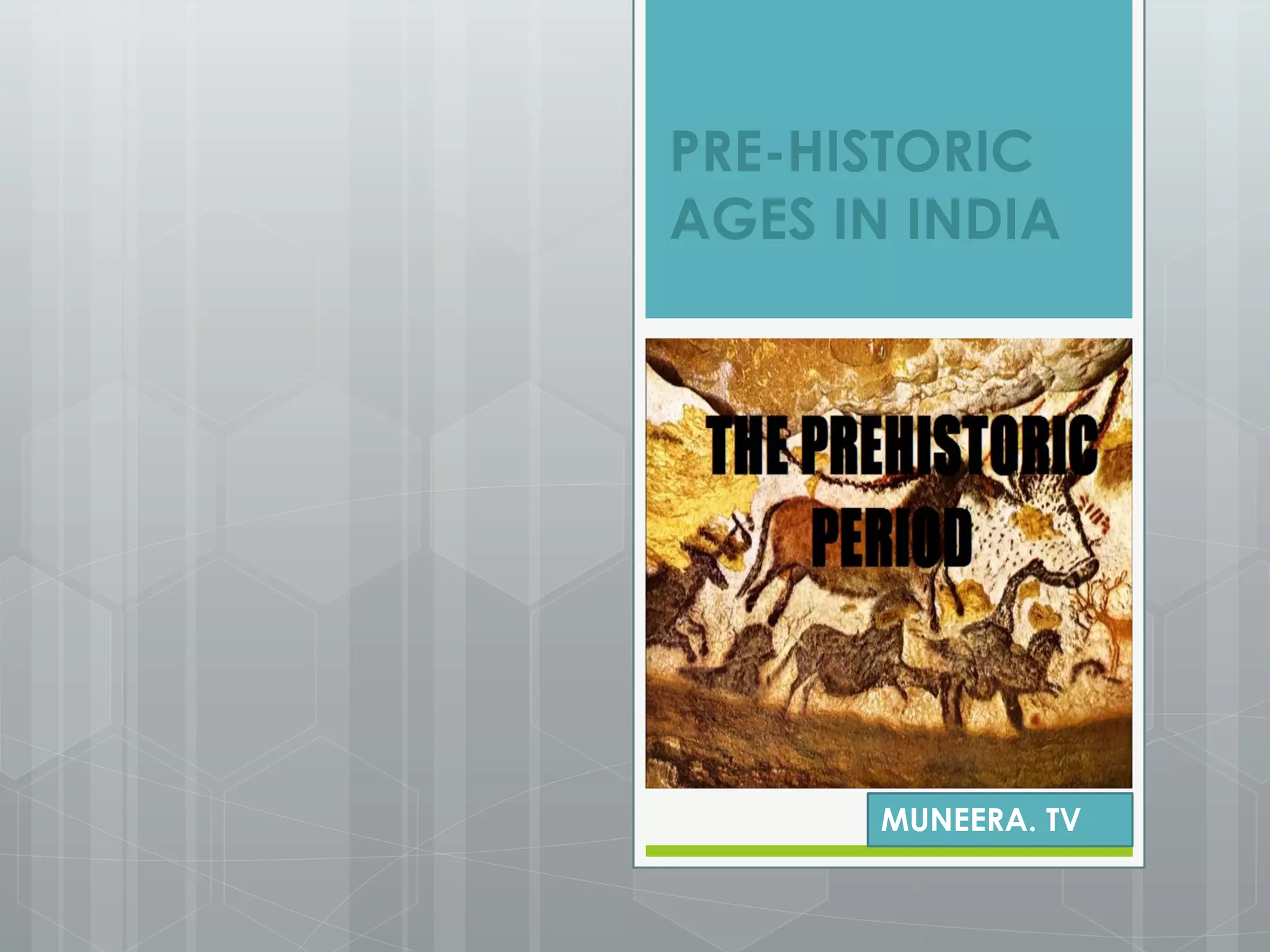
PRE-HISTORIC
AGES IN INDIA
MUNEERA. TV
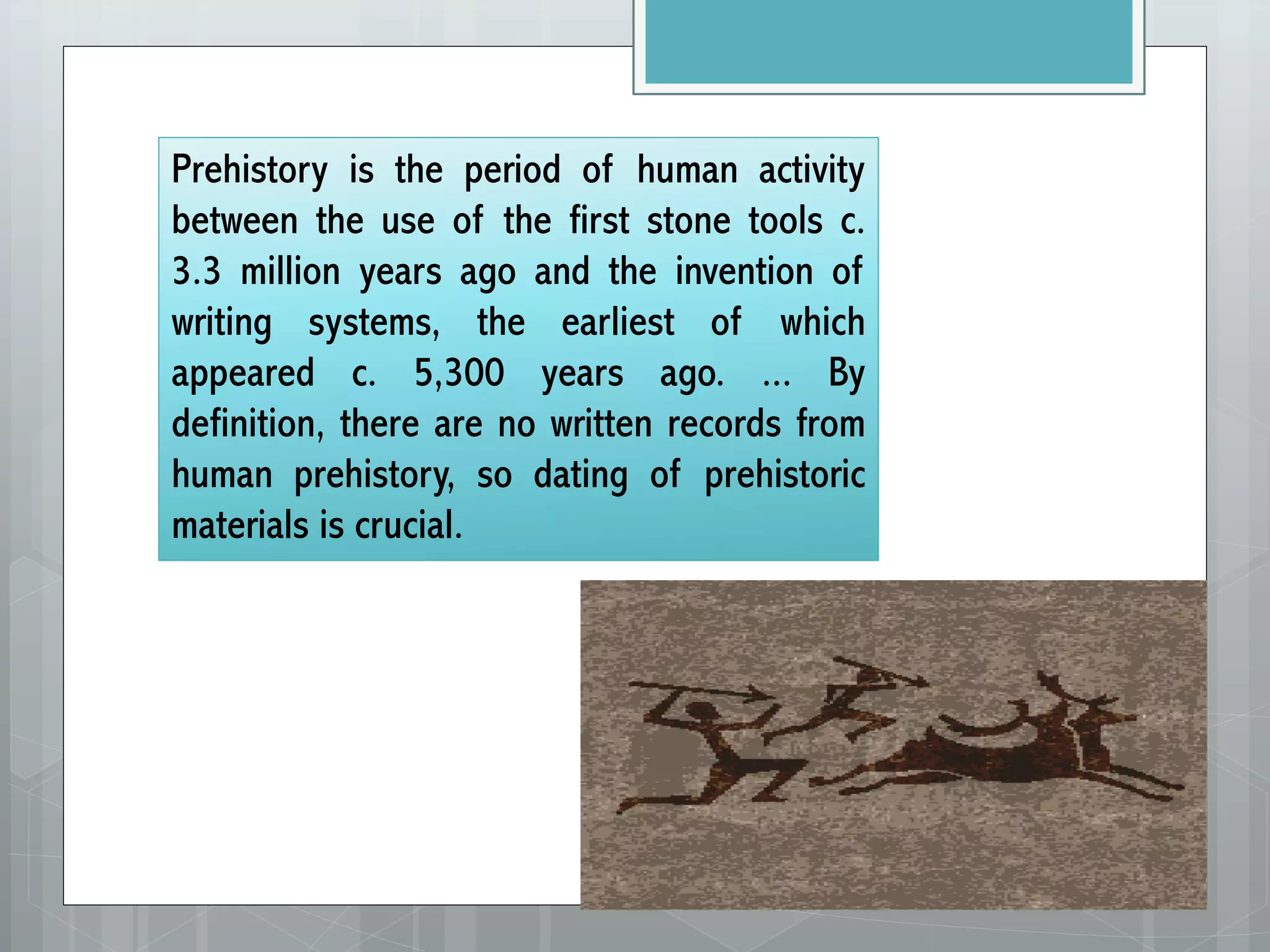
Prehistory is the period of human activity
between the use of the first stone tools c.
3.3 million years ago and the invention of
writing systems, the earliest of which
appeared c. 5,300 years ago. ... By
definition, there are no written records from
human prehistory, so dating of prehistoric
materials is crucial.
Four important pre-historic ages in India
1. Paleolithic Age
2. Mesolithic Age
3. Neolithic Age
4. The age of Metals.
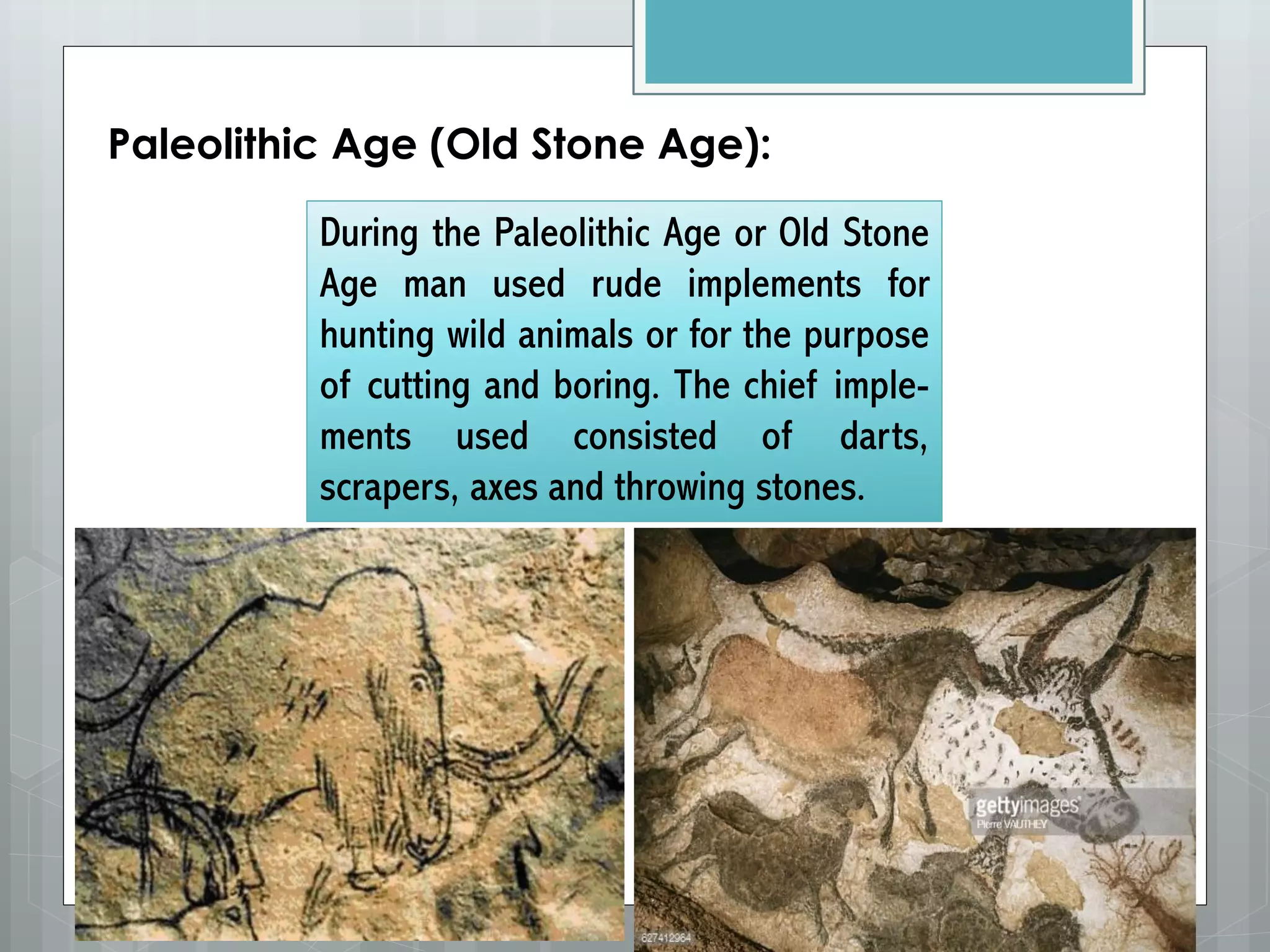
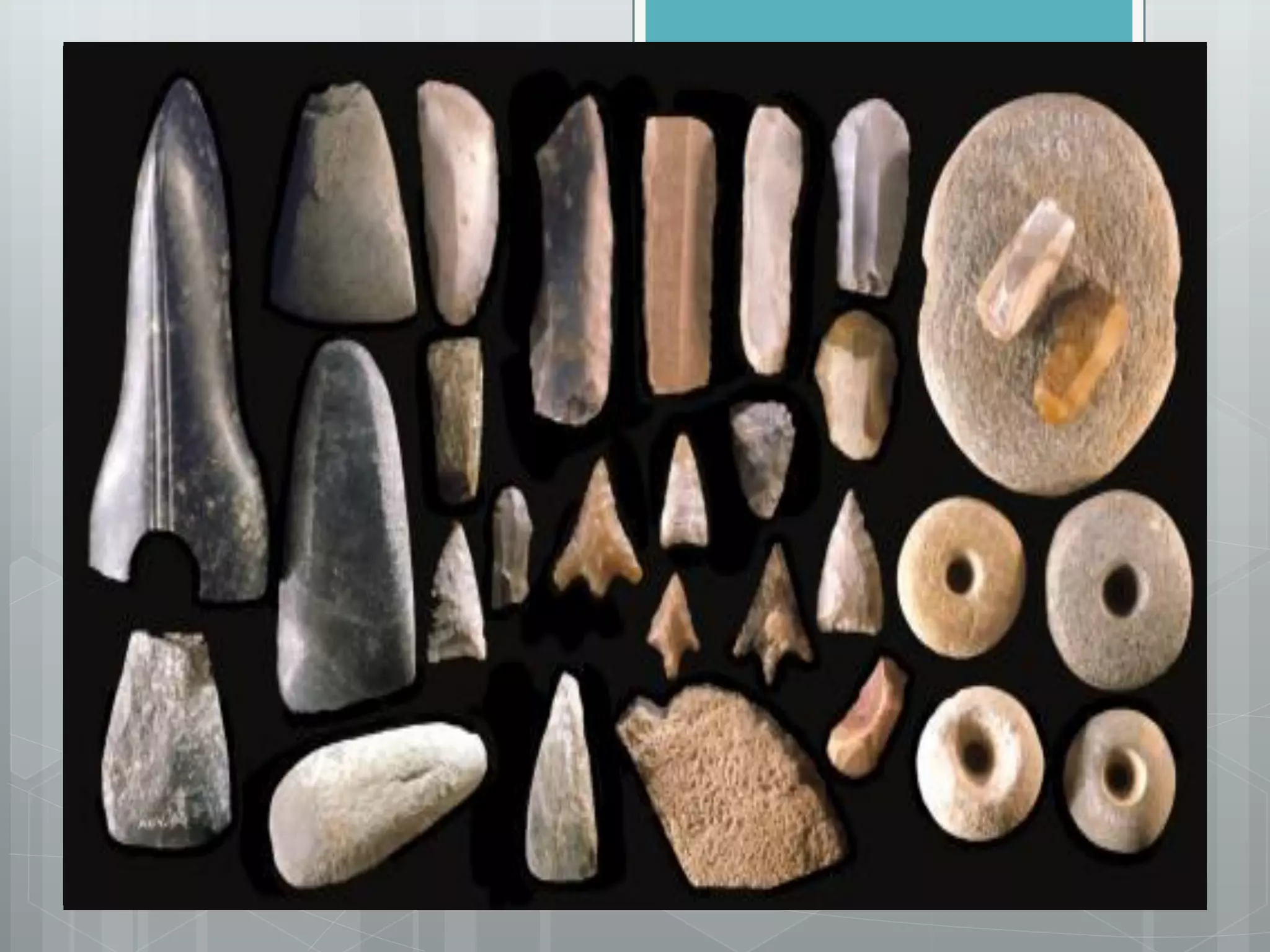
During the Paleolithic Age or Old Stone
Age man used rude implements for
hunting wild animals or for the purpose
of cutting and boring. The chief imple-
ments used consisted of darts,
scrapers, axes and throwing stones.
Paleolithic Age (Old Stone Age):
Rock Shelters of Bhimbetka
Mesolithic Age (Intermediate Stone Age):
MAMOTH IN MESOLITHIC PERIOD
In the course of time man made
progress and acquired greater
knowledge and skill in mastering
the forces of nature and evolved a
new type of civilization and
reached a new age known as the
Neolithic Age. It is difficult to say for
certain the time taken by man to
reach this new stage. Probably it
took him thousands of years.
Neolithic Age (New Stone Age):
The term Neolithic is derived from the
two Greek words meaning New Stone.
During this age also men were wholly
dependent on stone implements and
were ignorant of the use of metals,
except gold. Though the implements
were made of stone, they were a
great improvement on the implements
of the old stone age. They were made
of black-coloured rock which was
tougher and more tenacious than
quartzite.
The people of the Neolithic age lived in
granite rocks, which protected them from
rains and sun. No houses of this age have
been discovered in busy places like
Bellary and Salem districts. Even if there
were any dwelling houses these were built
of twigs and thatch, which have been
destroyed by the time. Probably the
timber was also used.
The Age of Metals —Copper, Bronze and Iron:
A new age was ushered in the
development of human civilization
with the discovery of metals. The
earliest metal discovered by the
people was gold, which was used
even by the people of the New Stone
Age for the purpose of making
ornaments.
In India gold was first discovered in South India and
Egypt, Mesopotamia and Indus Valley people must
have imported it from there. One of the Chaldean
inscriptions of Mesopotamia acknowledges that ships
from the city often sailed long distances and brought
gold from India to be used for decorative purposes.
The next metal to come in use was Copper. It was
used as a successor of stones for the manufacture of
tools and implements. The place of its origin is quite
obscure. Probably it was discovered in a number of
countries independently.
Though our knowledge of pre historic India
is based on surface findings on the basis of
which we can form only general conclusions,
and there is the problem of chronology, but
despite these limitations we have to admit
that the prehistoric ages in India, like in
other parts of the world equipped man with
skills and arts and basic set of inventions
upon which rests is superstructure of
civilization and culture.
CONCLUSION
THANK YOU

PRE HISTORIC AGES IN INDIA

  • 1.
  • 3.
    Prehistory is theperiod of human activity between the use of the first stone tools c. 3.3 million years ago and the invention of writing systems, the earliest of which appeared c. 5,300 years ago. ... By definition, there are no written records from human prehistory, so dating of prehistoric materials is crucial.
  • 4.
    Four important pre-historicages in India 1. Paleolithic Age 2. Mesolithic Age 3. Neolithic Age 4. The age of Metals.
  • 5.
    During the PaleolithicAge or Old Stone Age man used rude implements for hunting wild animals or for the purpose of cutting and boring. The chief imple- ments used consisted of darts, scrapers, axes and throwing stones. Paleolithic Age (Old Stone Age):
  • 9.
  • 10.
  • 13.
  • 14.
    In the courseof time man made progress and acquired greater knowledge and skill in mastering the forces of nature and evolved a new type of civilization and reached a new age known as the Neolithic Age. It is difficult to say for certain the time taken by man to reach this new stage. Probably it took him thousands of years. Neolithic Age (New Stone Age):
  • 17.
    The term Neolithicis derived from the two Greek words meaning New Stone. During this age also men were wholly dependent on stone implements and were ignorant of the use of metals, except gold. Though the implements were made of stone, they were a great improvement on the implements of the old stone age. They were made of black-coloured rock which was tougher and more tenacious than quartzite.
  • 20.
    The people ofthe Neolithic age lived in granite rocks, which protected them from rains and sun. No houses of this age have been discovered in busy places like Bellary and Salem districts. Even if there were any dwelling houses these were built of twigs and thatch, which have been destroyed by the time. Probably the timber was also used.
  • 21.
    The Age ofMetals —Copper, Bronze and Iron: A new age was ushered in the development of human civilization with the discovery of metals. The earliest metal discovered by the people was gold, which was used even by the people of the New Stone Age for the purpose of making ornaments.
  • 23.
    In India goldwas first discovered in South India and Egypt, Mesopotamia and Indus Valley people must have imported it from there. One of the Chaldean inscriptions of Mesopotamia acknowledges that ships from the city often sailed long distances and brought gold from India to be used for decorative purposes. The next metal to come in use was Copper. It was used as a successor of stones for the manufacture of tools and implements. The place of its origin is quite obscure. Probably it was discovered in a number of countries independently.
  • 25.
    Though our knowledgeof pre historic India is based on surface findings on the basis of which we can form only general conclusions, and there is the problem of chronology, but despite these limitations we have to admit that the prehistoric ages in India, like in other parts of the world equipped man with skills and arts and basic set of inventions upon which rests is superstructure of civilization and culture. CONCLUSION
  • 26.