
MUNEERA. TV
Personality development is relatively
enduring pattern of thoughts, feeling and
behaviors that distinguish individuals from
one another. The dominant view in field of
personality psychology today holds that
personality emerges early and continues to
change in meaningful ways throughout the
lifespan.
Personality development
The most important stages of personality
development
1.Oral stage
2.Anal stage
3.Phallic stage
4.Latency
stage
5.Genital stage
What influences the development of
personality?
There are three main influences
on personality development .
Those are heredity, environment
and situation. Heredity : this
refers to the influences on your
personality that you are born with.
They are in your genes and there
is not much you can do to change
these traits>
How can we develop a more positive attitude?
1. Remember that you control your
attitude
2. Adopt beliefs that frame events in a
positive way
3. Create a library of the positive
thought
4. Avoid angry or negative media
5. Use a more positive vocabulary
How do we form personality?
A person’s personality forms during
their childhood and is shaped
through an interaction of two
factors, their inherited tendencies
and their environment. Inherited
tendencies are aspects of your
personality passed on to you by your
parents, such as shyness or having a
happy outlook.
The most important factors influence one’s
personality
Biological factor: by and large, the
influences of biological factors on
personality structure are limited
and indirect. The biological factors
include genetic, hereditary factors,
physical appearance and physique
and rate of maturation
Determines of person’s personality
Personality is not determined by any
single gene rather by the actions of
many genes working together.
Overall, genetics has more influence
than do parents on shaping our
personality. Molecular genetics is
the study of which genes are
associated with which personality
traits.
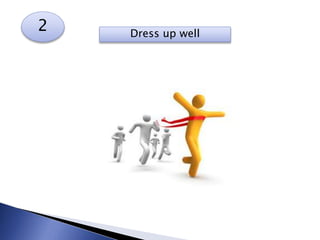
2 Dress up well
3 Each person is unique
4 Learn social skills
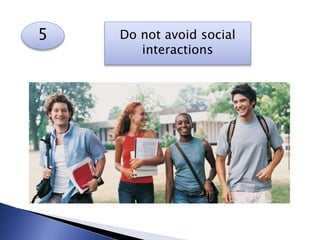
5 Do not avoid social
interactions
6
Know your positives
Thank you

Personality development

  • 1.
  • 3.
    Personality development isrelatively enduring pattern of thoughts, feeling and behaviors that distinguish individuals from one another. The dominant view in field of personality psychology today holds that personality emerges early and continues to change in meaningful ways throughout the lifespan. Personality development
  • 4.
    The most importantstages of personality development 1.Oral stage 2.Anal stage 3.Phallic stage 4.Latency stage 5.Genital stage
  • 5.
    What influences thedevelopment of personality? There are three main influences on personality development . Those are heredity, environment and situation. Heredity : this refers to the influences on your personality that you are born with. They are in your genes and there is not much you can do to change these traits>
  • 6.
    How can wedevelop a more positive attitude? 1. Remember that you control your attitude 2. Adopt beliefs that frame events in a positive way 3. Create a library of the positive thought 4. Avoid angry or negative media 5. Use a more positive vocabulary
  • 7.
    How do weform personality? A person’s personality forms during their childhood and is shaped through an interaction of two factors, their inherited tendencies and their environment. Inherited tendencies are aspects of your personality passed on to you by your parents, such as shyness or having a happy outlook.
  • 8.
    The most importantfactors influence one’s personality Biological factor: by and large, the influences of biological factors on personality structure are limited and indirect. The biological factors include genetic, hereditary factors, physical appearance and physique and rate of maturation
  • 9.
    Determines of person’spersonality Personality is not determined by any single gene rather by the actions of many genes working together. Overall, genetics has more influence than do parents on shaping our personality. Molecular genetics is the study of which genes are associated with which personality traits.
  • 12.
  • 13.
    3 Each personis unique
  • 14.
  • 15.
    5 Do notavoid social interactions
  • 16.
  • 17.