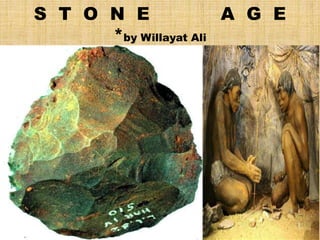
S T O N E A G E
*by Willayat Ali
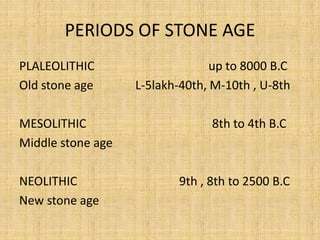
PERIODS OF STONE AGE
PLALEOLITHIC up to 8000 B.C
Old stone age L-5lakh-40th, M-10th , U-8th
MESOLITHIC 8th to 4th B.C
Middle stone age
NEOLITHIC 9th , 8th to 2500 B.C
New stone age
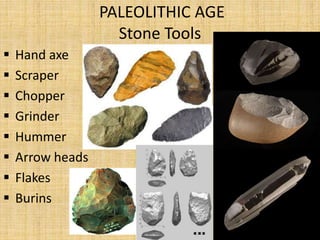
PALEOLITHIC AGE
Stone Tools
 Hand axe
 Scraper
 Chopper
 Grinder
 Hummer
 Arrow heads
 Flakes
 Burins
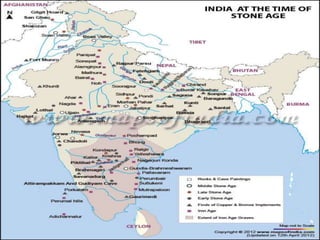
AREA
• RAJSTHAN
• GUJRAT
• M.P
• T.N
• U.P
• KASHMIR
• MAHRASHTRA
• ORRISSA
• BIHAR
• A.P
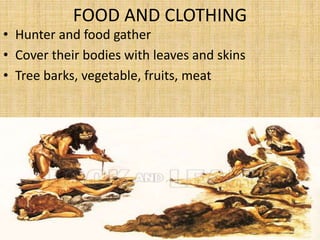
FOOD AND CLOTHING
• Hunter and food gather
• Cover their bodies with leaves and skins
• Tree barks, vegetable, fruits, meat
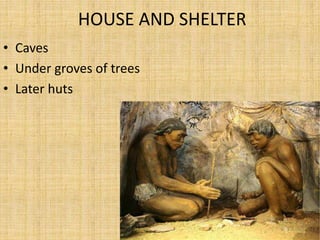
HOUSE AND SHELTER
• Caves
• Under groves of trees
• Later huts
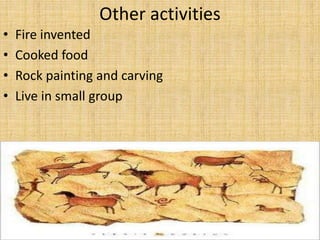
Other activities
• Fire invented
• Cooked food
• Rock painting and carving
• Live in small group
MESOLITHIC AGE
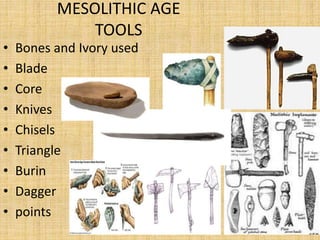
TOOLS
• Bones and Ivory used
• Blade
• Core
• Knives
• Chisels
• Triangle
• Burin
• Dagger
• points
AREA
• Bago (Rajasthan)
• Adamgrah-Bhimbitka
(U.P)
• Lunghri- (Gujarat)
• Sari Nhar Rai (U.P)
• A.P
• Punjab
• Mharashtra
• M.P
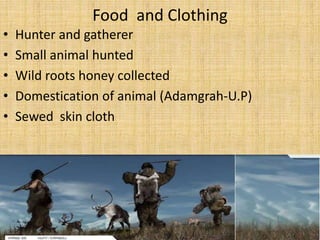
Food and Clothing
• Hunter and gatherer
• Small animal hunted
• Wild roots honey collected
• Domestication of animal (Adamgrah-U.P)
• Sewed skin cloth
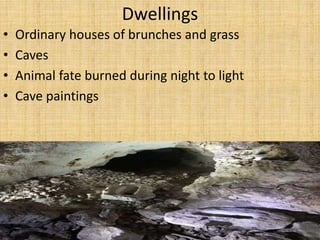
Dwellings
• Ordinary houses of brunches and grass
• Caves
• Animal fate burned during night to light
• Cave paintings
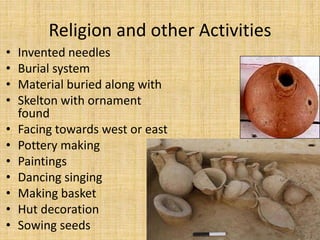
Religion and other Activities
• Invented needles
• Burial system
• Material buried along with
• Skelton with ornament
found
• Facing towards west or east
• Pottery making
• Paintings
• Dancing singing
• Making basket
• Hut decoration
• Sowing seeds
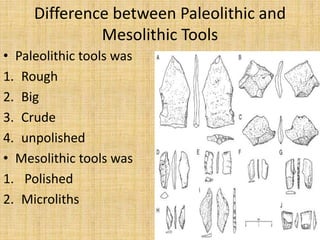
Difference between Paleolithic and
Mesolithic Tools
• Paleolithic tools was
1. Rough
2. Big
3. Crude
4. unpolished
• Mesolithic tools was
1. Polished
2. Microliths
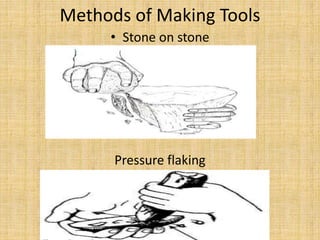
Methods of Making Tools
• Stone on stone
Pressure flaking
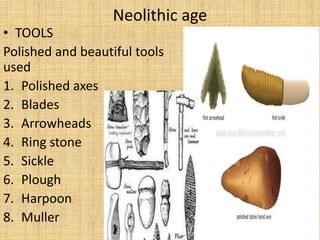
Neolithic age
• TOOLS
Polished and beautiful tools
used
1. Polished axes
2. Blades
3. Arrowheads
4. Ring stone
5. Sickle
6. Plough
7. Harpoon
8. Muller
Areas
• Chotanagpur
• Upper gangatic basin
• Karnataka
• Mehergrah (Pakistan)
• Burzaham
• Gufkral (Kashmir)
• Porkalam (karalla)
• M.P
• Orissa
• Hyderabad
• Madras
• Bundelkhand
• Bihar
• Assam
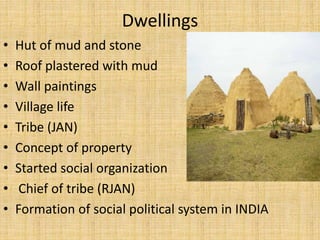
Dwellings
• Hut of mud and stone
• Roof plastered with mud
• Wall paintings
• Village life
• Tribe (JAN)
• Concept of property
• Started social organization
• Chief of tribe (RJAN)
• Formation of social political system in INDIA
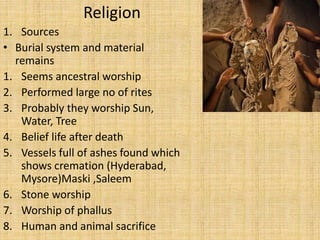
Religion
1. Sources
• Burial system and material
remains
1. Seems ancestral worship
2. Performed large no of rites
3. Probably they worship Sun,
Water, Tree
4. Belief life after death
5. Vessels full of ashes found which
shows cremation (Hyderabad,
Mysore)Maski ,Saleem
6. Stone worship
7. Worship of phallus
8. Human and animal sacrifice
Food and Dress
• Cooked food
• Wheat, Barley, Fish, Rice, Honey
• Milk and milk product
• Learn to make Curd, Butter, Ghee
• Grown cotton
• Cotton cloth
• Wool of animal used
• Ornaments of Precious Stone, Ivory
and Bone
• Dhoti, Skirt
• Hair style
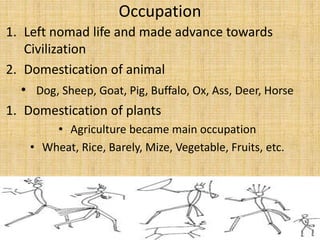
Occupation
1. Left nomad life and made advance towards
Civilization
2. Domestication of animal
• Dog, Sheep, Goat, Pig, Buffalo, Ox, Ass, Deer, Horse
1. Domestication of plants
• Agriculture became main occupation
• Wheat, Rice, Barely, Mize, Vegetable, Fruits, etc.
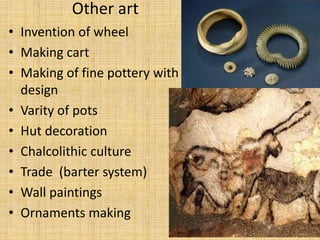
Other art
• Invention of wheel
• Making cart
• Making of fine pottery with
design
• Varity of pots
• Hut decoration
• Chalcolithic culture
• Trade (barter system)
• Wall paintings
• Ornaments making
THANKS

Stone age

  • 1.
    S T ON E A G E *by Willayat Ali
  • 2.
    PERIODS OF STONEAGE PLALEOLITHIC up to 8000 B.C Old stone age L-5lakh-40th, M-10th , U-8th MESOLITHIC 8th to 4th B.C Middle stone age NEOLITHIC 9th , 8th to 2500 B.C New stone age
  • 3.
    PALEOLITHIC AGE Stone Tools Hand axe  Scraper  Chopper  Grinder  Hummer  Arrow heads  Flakes  Burins
  • 4.
    AREA • RAJSTHAN • GUJRAT •M.P • T.N • U.P • KASHMIR • MAHRASHTRA • ORRISSA • BIHAR • A.P
  • 5.
    FOOD AND CLOTHING •Hunter and food gather • Cover their bodies with leaves and skins • Tree barks, vegetable, fruits, meat
  • 6.
    HOUSE AND SHELTER •Caves • Under groves of trees • Later huts
  • 7.
    Other activities • Fireinvented • Cooked food • Rock painting and carving • Live in small group
  • 8.
    MESOLITHIC AGE TOOLS • Bonesand Ivory used • Blade • Core • Knives • Chisels • Triangle • Burin • Dagger • points
  • 9.
    AREA • Bago (Rajasthan) •Adamgrah-Bhimbitka (U.P) • Lunghri- (Gujarat) • Sari Nhar Rai (U.P) • A.P • Punjab • Mharashtra • M.P
  • 10.
    Food and Clothing •Hunter and gatherer • Small animal hunted • Wild roots honey collected • Domestication of animal (Adamgrah-U.P) • Sewed skin cloth
  • 11.
    Dwellings • Ordinary housesof brunches and grass • Caves • Animal fate burned during night to light • Cave paintings
  • 12.
    Religion and otherActivities • Invented needles • Burial system • Material buried along with • Skelton with ornament found • Facing towards west or east • Pottery making • Paintings • Dancing singing • Making basket • Hut decoration • Sowing seeds
  • 13.
    Difference between Paleolithicand Mesolithic Tools • Paleolithic tools was 1. Rough 2. Big 3. Crude 4. unpolished • Mesolithic tools was 1. Polished 2. Microliths
  • 14.
    Methods of MakingTools • Stone on stone Pressure flaking
  • 15.
    Neolithic age • TOOLS Polishedand beautiful tools used 1. Polished axes 2. Blades 3. Arrowheads 4. Ring stone 5. Sickle 6. Plough 7. Harpoon 8. Muller
  • 16.
    Areas • Chotanagpur • Uppergangatic basin • Karnataka • Mehergrah (Pakistan) • Burzaham • Gufkral (Kashmir) • Porkalam (karalla) • M.P • Orissa • Hyderabad • Madras • Bundelkhand • Bihar • Assam
  • 18.
    Dwellings • Hut ofmud and stone • Roof plastered with mud • Wall paintings • Village life • Tribe (JAN) • Concept of property • Started social organization • Chief of tribe (RJAN) • Formation of social political system in INDIA
  • 19.
    Religion 1. Sources • Burialsystem and material remains 1. Seems ancestral worship 2. Performed large no of rites 3. Probably they worship Sun, Water, Tree 4. Belief life after death 5. Vessels full of ashes found which shows cremation (Hyderabad, Mysore)Maski ,Saleem 6. Stone worship 7. Worship of phallus 8. Human and animal sacrifice
  • 20.
    Food and Dress •Cooked food • Wheat, Barley, Fish, Rice, Honey • Milk and milk product • Learn to make Curd, Butter, Ghee • Grown cotton • Cotton cloth • Wool of animal used • Ornaments of Precious Stone, Ivory and Bone • Dhoti, Skirt • Hair style
  • 21.
    Occupation 1. Left nomadlife and made advance towards Civilization 2. Domestication of animal • Dog, Sheep, Goat, Pig, Buffalo, Ox, Ass, Deer, Horse 1. Domestication of plants • Agriculture became main occupation • Wheat, Rice, Barely, Mize, Vegetable, Fruits, etc.
  • 22.
    Other art • Inventionof wheel • Making cart • Making of fine pottery with design • Varity of pots • Hut decoration • Chalcolithic culture • Trade (barter system) • Wall paintings • Ornaments making
  • 23.