BALANCED DIET
IMPORTANCE
MUNEERA.TV
WHAT IS BALANCED
DIET?
Balanced diet is the
combination of different
varieties of nutrients. To
maintain good health and
physical efficiency the
diet should contain
adequate amount of all
nutrients.
On the basis of their pre
dominant functions food
are,
Energy yielding foods –carbohydrate and fat
Body building food- protein
Protective food- vitamins &minerals
Carbohydrates
Carbohydrates contain carbon, hydrogen,
oxygen. The main function in carbohydrate in
the body is to provide energy. The glucose
formed by the digestion of the starch and sugar
absorbed mainly in to the blood through the
walls of the intestine and carried to the liver.
Uses
1. Quick source of energy
2. It produce heat and energy
3. It regulates amount of sugar circulation in the
body
4. It assist the body’s absorption of calcium
5. It helps in lowering cholesterol level and
regulate blood pressure
Sources
1. Rice
2. Potatoes
3. Sugarcane
4. Wheat
5. Dates
6. Bread sugar etc
Fat
Fat is the component used in the
production of several hormones like
compounds which help to regulate blood
pressure, heart rate, blood vessel
constriction, blood clotting and the
nervous system.
Uses
1. Delayed source of energy
2. Better source than carbohydrate
3. Helps to maintain body temperature
4. It lubricates and smoothen the body
5. It protect delicate organs against being injured
Sources
1. Ghee
2. Cheese
3. Milk products
4. Egg
5. Oil seeds
6. Fish oil
7. Badam
8. Nuts etc
Protein
Protein are made up of Amino acids.
Out of 23 Amino acids, 8 are
essential and they cannot be
manufactured in our body and are to
be supplied from out side. Proteins
are present in all living tissues – both
plant and animal.
Uses
1.For building new tissues
2.Maintenance of tissues already built
and replacement of regular losses
3.Functions as regulatory substances for
internal water and acid base balance
4.For lactation
5.It also produces heat and energy in the
absence of carbohydrate
Sources
Plant
1. Pulses
2. Cerels
3. Pappayas
4. Beans
5. Nuts
6. Oil seeds etc
Animals
1. Meat
2. Egg
3. Milk products
4. Fish etc
Minerals
It provided the material for to
growth and development of bones
and teeth. They are also needed for
the growth of body cells,
especially the red blood cells.
Uses
1.They maintain acid balance in the
body
2.They regulate normal system in the
heart beat
3.They regulate normality in reaction
time
4.Formation of bones and teeth
5.It activate the digestive system and
strengthen the muscle
Major mineral items
IRON
IODINE
MAGNESIUM
CALCIUM
IRON
USES
1. ACTIVATE BLOOD TO CARRY
OXYGEN TO THE PART OF BODY
2. ACT AS PART OF HEMOGLOBIN
3. DEFICIENCY CAUSES ANEMIA
SOURC
ES
CARROT, GREEN LEAFY VEGITABLE,
EGG, MEAT
IODIN
USES
1. IT REGULATE TEMPERATURE
2. FOR MENTAL DEVELOPMENT AND
COLORING OF HAIR
3. DEFICIENCY CREATE GOITE,
STUNTED GROWTH
SOURCES
SE FOOD, IODIZED SALT, EGG
YOLK ONION
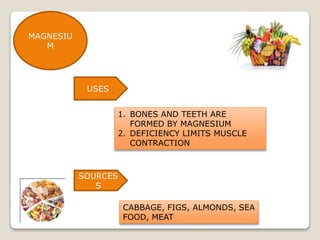
MAGNESIU
M
USES
1. BONES AND TEETH ARE
FORMED BY MAGNESIUM
2. DEFICIENCY LIMITS MUSCLE
CONTRACTION
SOURCES
S
CABBAGE, FIGS, ALMONDS, SEA
FOOD, MEAT
CALCIU
M
USES
1. FORMATION OF BONES AND TEETH
2. IT CONTROLS THE ACTIONS OF HEART,
BLOOD AND NERVOUS
3. PHYSICAL RETARDATION TAKES PLACE IN
THE ABSENCE
SOURC
ES
FISH, MILK,CHEESE, EGG YOLK, ORANGE,
GREEN VEGETABLE, CARROT
VITAMINS
Food contains certain chemical substance in small
amounts. These are called vitamins. Vitamin play a key
role in most chemical reactions in the body but they do
not provide energy. M any of the cell reaction are carried
through enzymes.
USES
1. It facilitates the digestive actions
2. For proper growth of the body
3. It produce disease resistance and
destroying capacity
4. For proper physical reproduction
THANK
YOU

Balanced diet

  • 1.
  • 2.
    WHAT IS BALANCED DIET? Balanceddiet is the combination of different varieties of nutrients. To maintain good health and physical efficiency the diet should contain adequate amount of all nutrients.
  • 3.
    On the basisof their pre dominant functions food are, Energy yielding foods –carbohydrate and fat Body building food- protein Protective food- vitamins &minerals
  • 4.
    Carbohydrates Carbohydrates contain carbon,hydrogen, oxygen. The main function in carbohydrate in the body is to provide energy. The glucose formed by the digestion of the starch and sugar absorbed mainly in to the blood through the walls of the intestine and carried to the liver.
  • 5.
    Uses 1. Quick sourceof energy 2. It produce heat and energy 3. It regulates amount of sugar circulation in the body 4. It assist the body’s absorption of calcium 5. It helps in lowering cholesterol level and regulate blood pressure
  • 6.
    Sources 1. Rice 2. Potatoes 3.Sugarcane 4. Wheat 5. Dates 6. Bread sugar etc
  • 7.
    Fat Fat is thecomponent used in the production of several hormones like compounds which help to regulate blood pressure, heart rate, blood vessel constriction, blood clotting and the nervous system.
  • 8.
    Uses 1. Delayed sourceof energy 2. Better source than carbohydrate 3. Helps to maintain body temperature 4. It lubricates and smoothen the body 5. It protect delicate organs against being injured Sources 1. Ghee 2. Cheese 3. Milk products 4. Egg 5. Oil seeds 6. Fish oil 7. Badam 8. Nuts etc
  • 9.
    Protein Protein are madeup of Amino acids. Out of 23 Amino acids, 8 are essential and they cannot be manufactured in our body and are to be supplied from out side. Proteins are present in all living tissues – both plant and animal.
  • 10.
    Uses 1.For building newtissues 2.Maintenance of tissues already built and replacement of regular losses 3.Functions as regulatory substances for internal water and acid base balance 4.For lactation 5.It also produces heat and energy in the absence of carbohydrate
  • 11.
    Sources Plant 1. Pulses 2. Cerels 3.Pappayas 4. Beans 5. Nuts 6. Oil seeds etc Animals 1. Meat 2. Egg 3. Milk products 4. Fish etc
  • 12.
    Minerals It provided thematerial for to growth and development of bones and teeth. They are also needed for the growth of body cells, especially the red blood cells.
  • 13.
    Uses 1.They maintain acidbalance in the body 2.They regulate normal system in the heart beat 3.They regulate normality in reaction time 4.Formation of bones and teeth 5.It activate the digestive system and strengthen the muscle
  • 14.
  • 15.
    IRON USES 1. ACTIVATE BLOODTO CARRY OXYGEN TO THE PART OF BODY 2. ACT AS PART OF HEMOGLOBIN 3. DEFICIENCY CAUSES ANEMIA SOURC ES CARROT, GREEN LEAFY VEGITABLE, EGG, MEAT
  • 16.
    IODIN USES 1. IT REGULATETEMPERATURE 2. FOR MENTAL DEVELOPMENT AND COLORING OF HAIR 3. DEFICIENCY CREATE GOITE, STUNTED GROWTH SOURCES SE FOOD, IODIZED SALT, EGG YOLK ONION
  • 17.
    MAGNESIU M USES 1. BONES ANDTEETH ARE FORMED BY MAGNESIUM 2. DEFICIENCY LIMITS MUSCLE CONTRACTION SOURCES S CABBAGE, FIGS, ALMONDS, SEA FOOD, MEAT
  • 18.
    CALCIU M USES 1. FORMATION OFBONES AND TEETH 2. IT CONTROLS THE ACTIONS OF HEART, BLOOD AND NERVOUS 3. PHYSICAL RETARDATION TAKES PLACE IN THE ABSENCE SOURC ES FISH, MILK,CHEESE, EGG YOLK, ORANGE, GREEN VEGETABLE, CARROT
  • 19.
    VITAMINS Food contains certainchemical substance in small amounts. These are called vitamins. Vitamin play a key role in most chemical reactions in the body but they do not provide energy. M any of the cell reaction are carried through enzymes. USES 1. It facilitates the digestive actions 2. For proper growth of the body 3. It produce disease resistance and destroying capacity 4. For proper physical reproduction
  • 20.