PHILOSOPHICAL SCHOOL OF
THOUGHT
Philosophy
 Search for knowledge
 Love for Wisdom
 Mother of All Sciences
Philosophy
Definitions : -
“ Philosophy is concerned with everything as a
universal science” – Herbert Spencer
“ Philosophy is essentially a spirit or method of
approaching experience rather than a body of
conclusions and results” – Edgar S Brightman
Three Major Branches of Philosophy
 Metaphysics - the nature of reality
 Axiology - the nature of values
 Epistemology - the nature of knowledge
Schools of Philosophy
 IDEALISM
 REALISM
 PRAGMATISM
 NATURALISM
 EXISTENTIALISM
 HUMANISM
 ESSENTIALISM
 HUMANISMISM
 PERENNIALISM
Idealism
Oldest Philosophy
 Idealist believe that
ideas are the only true reality.
 The material world is characterized by change,
instability, and uncertainty; some ideas are
enduring
Idealism (Idea-ism)
We should be concerned primarily with the
search for truth. Since truth is perfect and
eternal, it cannot be found in the world of
matter that is both imperfect and constantly
changing.
Idealism
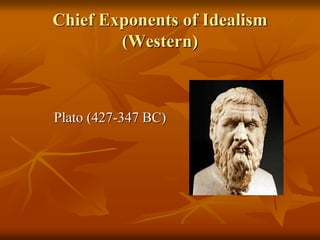
Chief Exponents of Idealism
(Western)
Plato (427-347 BC)
Fundamental principles of Idealism
 Spirit and mind constitute reality.
 Man being spiritual is asupreme creation.
 God is the source of all knowledge.
 Values are absolute and unchanging.
 What is ultimately real is not the object itself
but the idea behind it.
 Man is not the creator of values
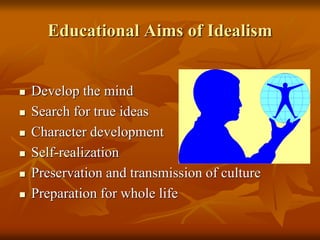
Educational Aims of Idealism
 Develop the mind
 Search for true ideas
 Character development
 Self-realization
 Preservation and transmission of culture
 Preparation for whole life
Epistemology of Idealism
 The ultimate knowledge is the knowledge on
spirituality
 Idealism and critical realism are like in their
treatment of perception to some extent
 Some idealists support direct experience of the
self
 Surrounding world is important to experience
the self
 Reality to be a logically unified total system, a
Universal mind
Metaphysics of Idealism
 The self is the primary
reality of individual
experience
 Ultimate reality is self
 Ultimate reality maybe one
or many
 The individual self has all
the freedom
Axiology of Idealism
 Values are real existents.
 Evil is not real existent.
 The values of human life are what
they are largely because there are
individual persons to possess and
enjoy them
 The individual person can realise
value by actively relating parts and
wholes
Discipline
Emphasis inner
discipline
Moral and Religious
instruction
Restraint on freedom
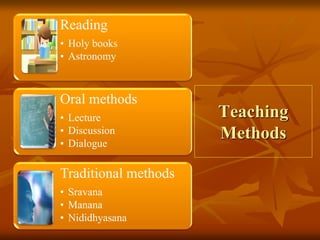
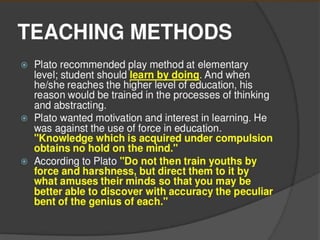
Teaching
Methods
Reading
• Holy books
• Astronomy
Oral methods
• Lecture
• Discussion
• Dialogue
Traditional methods
• Sravana
• Manana
• Nididhyasana
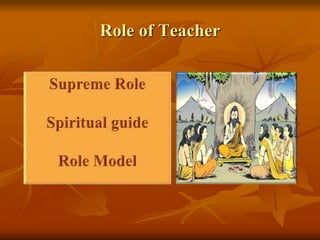
Role of Teacher
References
 Philosophical and Sociological Foundations of
Education - N R Swarup saxena and N K Dutt
 A Text book of Educational Philosophy
- Ram Nath Sharma
 Theory of Philosophy of Education ( Vol 2)
- S R Sharma
 An Introduction to Educational analysis
- John Hospers
 Rudiments of Education – Philosophy and Sociology
- Sankara Narayanan Paleery

Idealism

  • 1.
  • 2.
    Philosophy  Search forknowledge  Love for Wisdom  Mother of All Sciences
  • 3.
    Philosophy Definitions : - “Philosophy is concerned with everything as a universal science” – Herbert Spencer “ Philosophy is essentially a spirit or method of approaching experience rather than a body of conclusions and results” – Edgar S Brightman
  • 4.
    Three Major Branchesof Philosophy  Metaphysics - the nature of reality  Axiology - the nature of values  Epistemology - the nature of knowledge
  • 5.
    Schools of Philosophy IDEALISM  REALISM  PRAGMATISM  NATURALISM  EXISTENTIALISM  HUMANISM  ESSENTIALISM  HUMANISMISM  PERENNIALISM
  • 6.
  • 7.
     Idealist believethat ideas are the only true reality.  The material world is characterized by change, instability, and uncertainty; some ideas are enduring Idealism (Idea-ism)
  • 8.
    We should beconcerned primarily with the search for truth. Since truth is perfect and eternal, it cannot be found in the world of matter that is both imperfect and constantly changing. Idealism
  • 9.
    Chief Exponents ofIdealism (Western) Plato (427-347 BC)
  • 14.
    Fundamental principles ofIdealism  Spirit and mind constitute reality.  Man being spiritual is asupreme creation.  God is the source of all knowledge.  Values are absolute and unchanging.  What is ultimately real is not the object itself but the idea behind it.  Man is not the creator of values
  • 15.
    Educational Aims ofIdealism  Develop the mind  Search for true ideas  Character development  Self-realization  Preservation and transmission of culture  Preparation for whole life
  • 16.
    Epistemology of Idealism The ultimate knowledge is the knowledge on spirituality  Idealism and critical realism are like in their treatment of perception to some extent  Some idealists support direct experience of the self  Surrounding world is important to experience the self  Reality to be a logically unified total system, a Universal mind
  • 19.
    Metaphysics of Idealism The self is the primary reality of individual experience  Ultimate reality is self  Ultimate reality maybe one or many  The individual self has all the freedom
  • 20.
    Axiology of Idealism Values are real existents.  Evil is not real existent.  The values of human life are what they are largely because there are individual persons to possess and enjoy them  The individual person can realise value by actively relating parts and wholes
  • 21.
    Discipline Emphasis inner discipline Moral andReligious instruction Restraint on freedom
  • 25.
    Teaching Methods Reading • Holy books •Astronomy Oral methods • Lecture • Discussion • Dialogue Traditional methods • Sravana • Manana • Nididhyasana
  • 28.
  • 30.
    References  Philosophical andSociological Foundations of Education - N R Swarup saxena and N K Dutt  A Text book of Educational Philosophy - Ram Nath Sharma  Theory of Philosophy of Education ( Vol 2) - S R Sharma  An Introduction to Educational analysis - John Hospers  Rudiments of Education – Philosophy and Sociology - Sankara Narayanan Paleery