Practical Fundamentals of 
E-Manufacturing, MES & 
Supply Chain Management 
www.idc-online.com/slideshare Technology Training that Works
Systems Development 
• Process Control system evolution 
• Accounting systems evolution 
• Manufacturing Execution systems 
• Supply Chain Management systems 
www.idc-online.com/slideshare Technology Training that Works
WHY 
• Increased reliability for 
– Quality 
– Yields 
• Increased throughput 
• Increased safety 
• Reduced human-error 
• Increased accuracy of measurement instrumentation 
www.idc-online.com/slideshare Technology Training that Works
Evolutionary steps 
• Manual Control 
• Pneumatic controls 
• Sequential Relay controls 
• Basic Automatic Process Control 
– Analog 
– Digital 
• SCADA/DCS (& HMI) 
• Advanced Process Control 
www.idc-online.com/slideshare Technology Training that Works
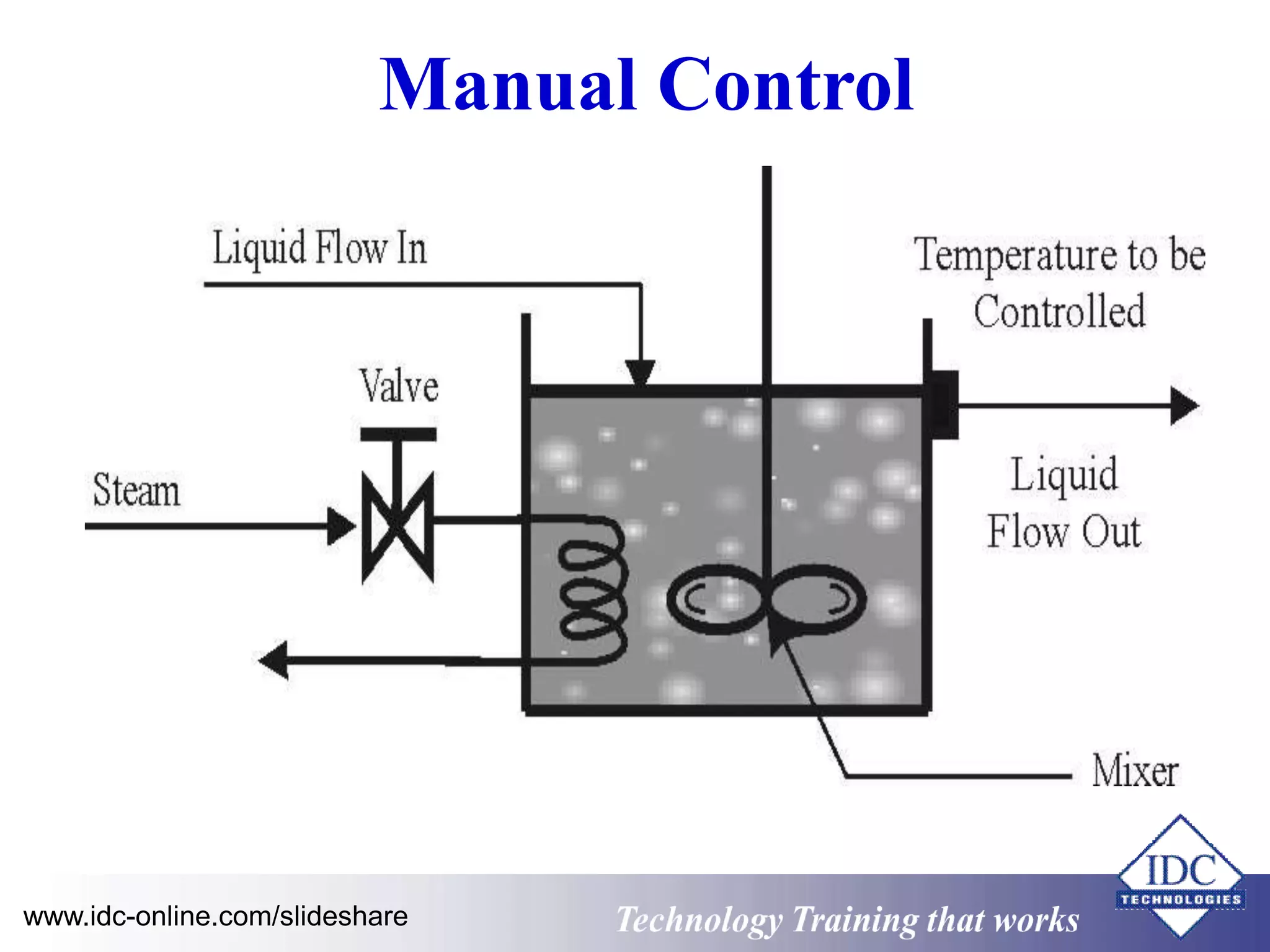
Manual Control 
www.idc-online.com/slideshare Technology Training that Works
Pneumatic 
• Compressed air 
• Multi-directional valves 
• Effectiveness very dependant on original logic 
design and air supply 
• Maintenance/change process difficult 
• Specialized skills required 
www.idc-online.com/slideshare Technology Training that Works
Sequential relay 
• Control relay has to be changed for changing 
production requirement 
• Mechanical devices hence limited life span 
• Troubleshooting time consuming in case of 
multiple relay systems 
• Require frequent maintenance 
• High replacement (in case of changed 
requirement) and maintenance cost 
www.idc-online.com/slideshare Technology Training that Works
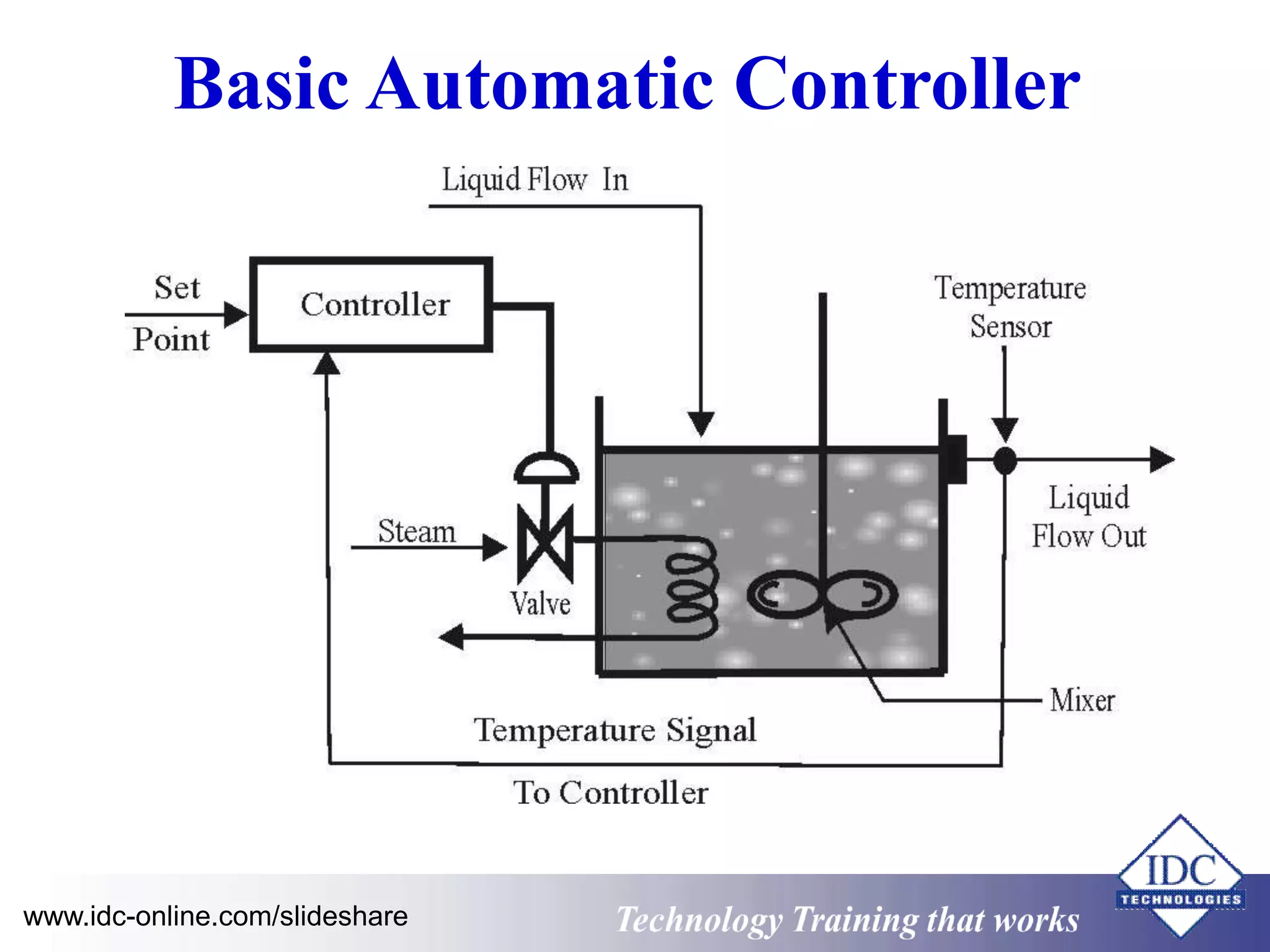
Basic Automatic Controller 
www.idc-online.com/slideshare Technology Training that Works
Process measurement instruments 
• Temperature Measurements - Thermocouples, 
Filled-system thermometer Pressure 
Measurements – Liquid column, Diaphragm 
and Strain gauge type 
• Flow Measurements – Vortex-shedding and 
Ultrasonic flow meters 
• Level Measurements – Float-actuated devices 
and Magnetically coupled devices 
www.idc-online.com/slideshare Technology Training that Works
Indicating Instruments 
• Analog –Analog type indicators fall into two 
main categories, moving pointer and moving 
scale. These are deflection type devices, 
powered directly, pneumatically or electrically, 
depending somewhat on their proximity to the 
process and the nature of the measurement 
• Digital –Electronic digital display is as 
accurate as the information fed to them. In 
addition, it reduce chances of mechanical 
malfunction and human reading error 
www.idc-online.com/slideshare Technology Training that Works
Recording instruments 
• Analog – Graphic analog recorders may be 
grouped in accordance with the type of chart 
used, circular chart and strip chart recorders 
• Digital – It is not used extensively in the process 
industries unless a digital-computer control 
system is used 
www.idc-online.com/slideshare Technology Training that Works
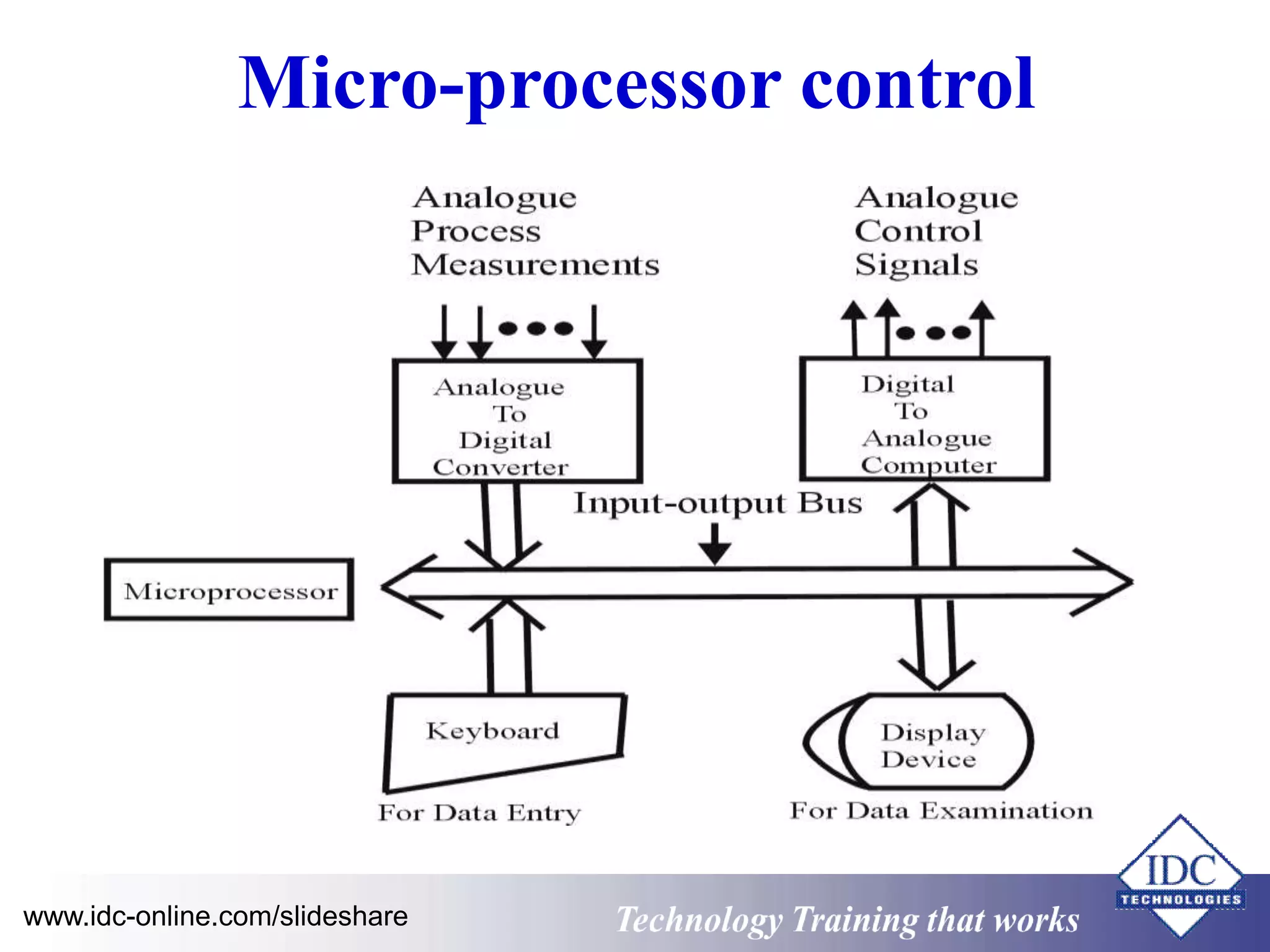
Micro-processor control 
www.idc-online.com/slideshare Technology Training that Works
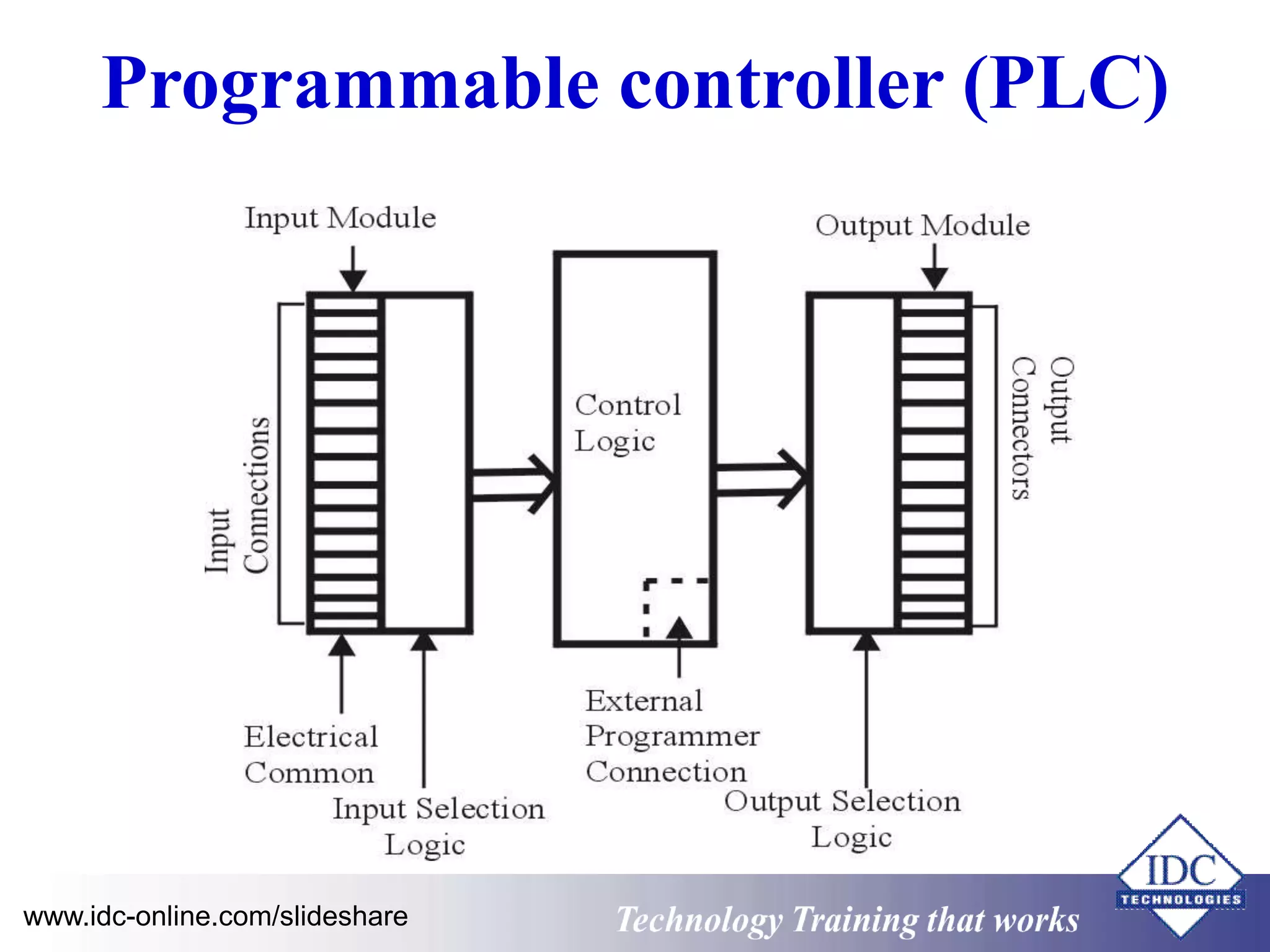
Programmable controller (PLC) 
www.idc-online.com/slideshare Technology Training that Works
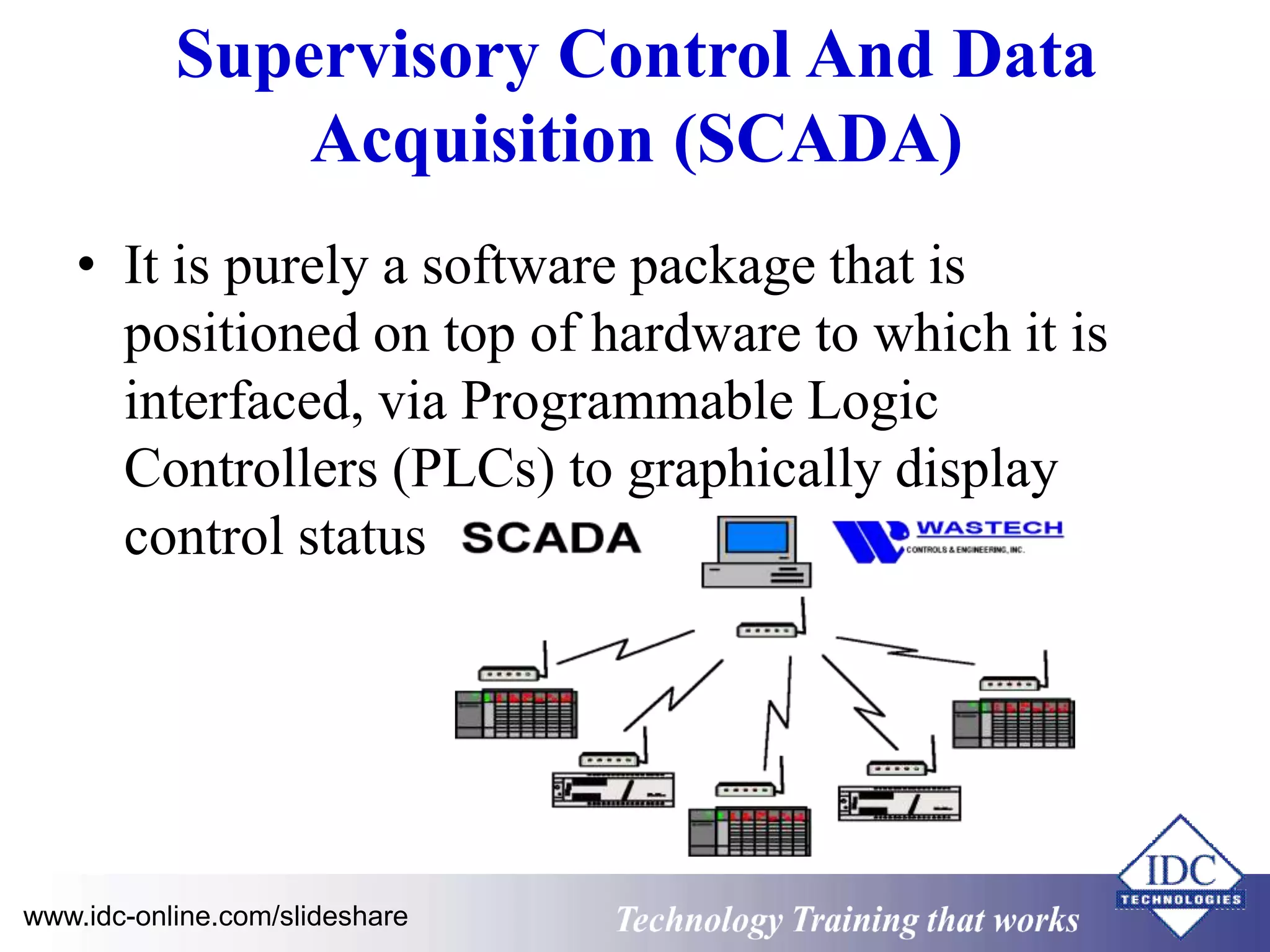
Supervisory Control And Data 
Acquisition (SCADA) 
• It is purely a software package that is 
positioned on top of hardware to which it is 
interfaced, via Programmable Logic 
Controllers (PLCs) to graphically display 
control status 
www.idc-online.com/slideshare Technology Training that Works
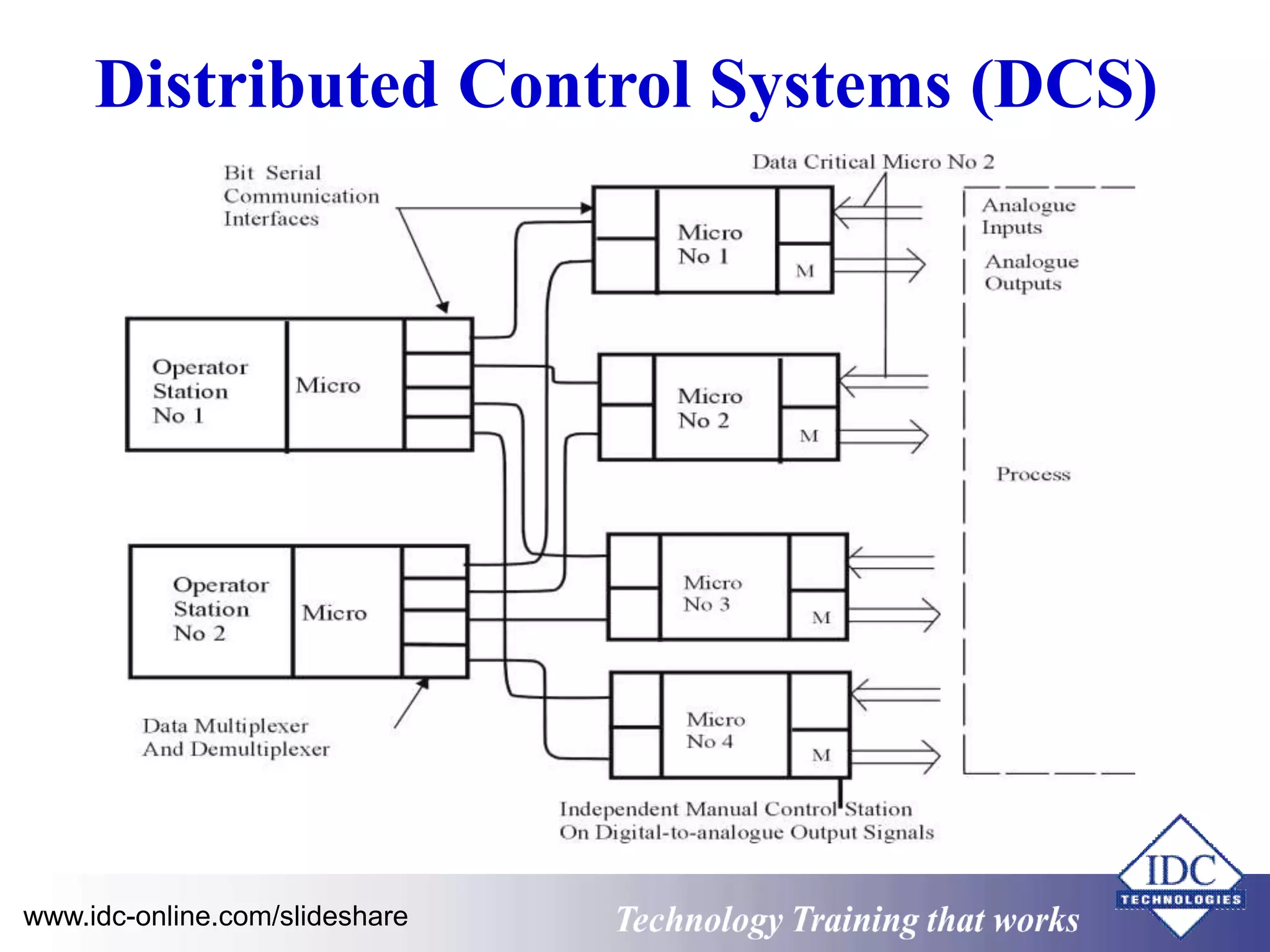
Distributed Control Systems (DCS) 
www.idc-online.com/slideshare Technology Training that Works
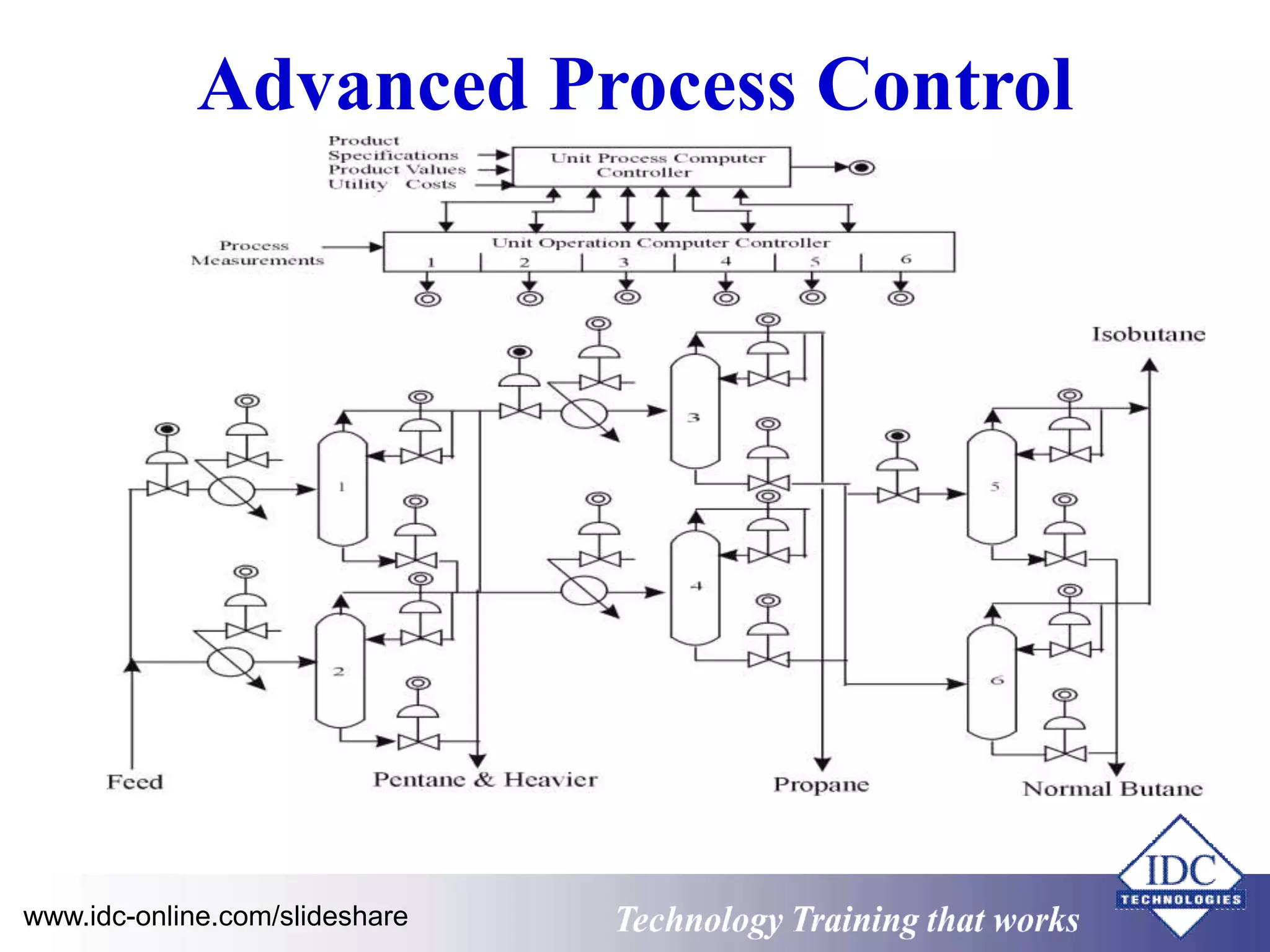
Advanced Process Control 
www.idc-online.com/slideshare Technology Training that Works
Supply Chain Management (SCM) 
• SCM encompasses every effort involved in producing and 
delivering a final product or service, from the supplier’s supplier 
to the customer’s customer 
• SCM includes managing supply and demand, sourcing raw 
materials and parts, manufacturing assembly, warehousing and 
inventory tracking, order entry and order management, distribution 
cress all channels, and delivery to the customer 
• SCM address complex interdependencies due to its wide scope; in 
effect creating an “extended enterprise” that reaches beyond the 
factory door 
www.idc-online.com/slideshare Technology Training that Works
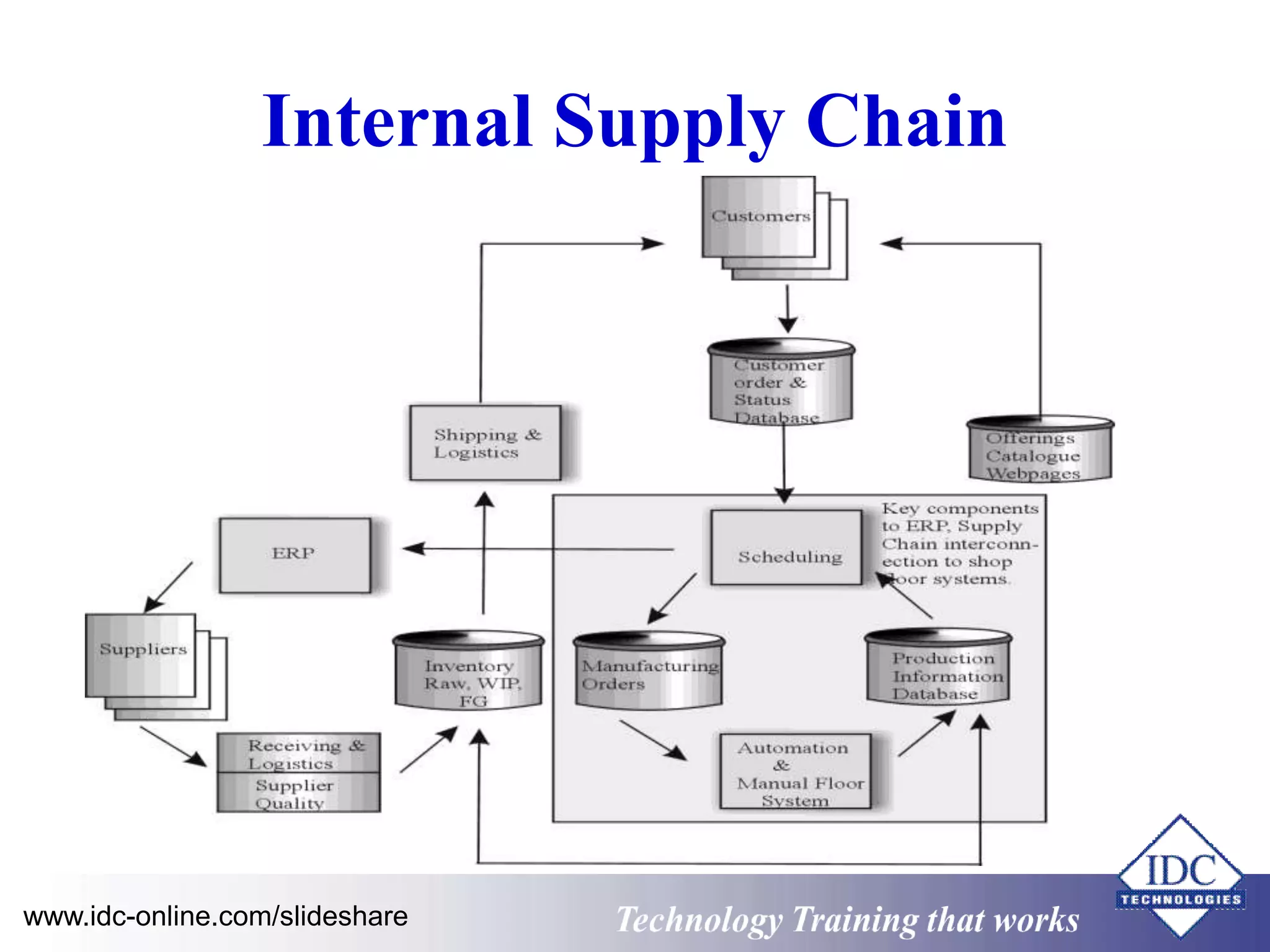
Internal Supply Chain 
www.idc-online.com/slideshare Technology Training that Works
DO YOU WANT TO KNOW MORE? 
If you are interested in further training or information, 
please visit: 
http://idc-online.com/slideshare 
www.idc-online.com/slideshare Technology Training that Works

Practical Fundamentals of E-Manufacturing, MES and Supply

  • 1.
    Practical Fundamentals of E-Manufacturing, MES & Supply Chain Management www.idc-online.com/slideshare Technology Training that Works
  • 2.
    Systems Development •Process Control system evolution • Accounting systems evolution • Manufacturing Execution systems • Supply Chain Management systems www.idc-online.com/slideshare Technology Training that Works
  • 3.
    WHY • Increasedreliability for – Quality – Yields • Increased throughput • Increased safety • Reduced human-error • Increased accuracy of measurement instrumentation www.idc-online.com/slideshare Technology Training that Works
  • 4.
    Evolutionary steps •Manual Control • Pneumatic controls • Sequential Relay controls • Basic Automatic Process Control – Analog – Digital • SCADA/DCS (& HMI) • Advanced Process Control www.idc-online.com/slideshare Technology Training that Works
  • 5.
    Manual Control www.idc-online.com/slideshareTechnology Training that Works
  • 6.
    Pneumatic • Compressedair • Multi-directional valves • Effectiveness very dependant on original logic design and air supply • Maintenance/change process difficult • Specialized skills required www.idc-online.com/slideshare Technology Training that Works
  • 7.
    Sequential relay •Control relay has to be changed for changing production requirement • Mechanical devices hence limited life span • Troubleshooting time consuming in case of multiple relay systems • Require frequent maintenance • High replacement (in case of changed requirement) and maintenance cost www.idc-online.com/slideshare Technology Training that Works
  • 8.
    Basic Automatic Controller www.idc-online.com/slideshare Technology Training that Works
  • 9.
    Process measurement instruments • Temperature Measurements - Thermocouples, Filled-system thermometer Pressure Measurements – Liquid column, Diaphragm and Strain gauge type • Flow Measurements – Vortex-shedding and Ultrasonic flow meters • Level Measurements – Float-actuated devices and Magnetically coupled devices www.idc-online.com/slideshare Technology Training that Works
  • 10.
    Indicating Instruments •Analog –Analog type indicators fall into two main categories, moving pointer and moving scale. These are deflection type devices, powered directly, pneumatically or electrically, depending somewhat on their proximity to the process and the nature of the measurement • Digital –Electronic digital display is as accurate as the information fed to them. In addition, it reduce chances of mechanical malfunction and human reading error www.idc-online.com/slideshare Technology Training that Works
  • 11.
    Recording instruments •Analog – Graphic analog recorders may be grouped in accordance with the type of chart used, circular chart and strip chart recorders • Digital – It is not used extensively in the process industries unless a digital-computer control system is used www.idc-online.com/slideshare Technology Training that Works
  • 12.
  • 13.
    Programmable controller (PLC) www.idc-online.com/slideshare Technology Training that Works
  • 14.
    Supervisory Control AndData Acquisition (SCADA) • It is purely a software package that is positioned on top of hardware to which it is interfaced, via Programmable Logic Controllers (PLCs) to graphically display control status www.idc-online.com/slideshare Technology Training that Works
  • 15.
    Distributed Control Systems(DCS) www.idc-online.com/slideshare Technology Training that Works
  • 16.
    Advanced Process Control www.idc-online.com/slideshare Technology Training that Works
  • 17.
    Supply Chain Management(SCM) • SCM encompasses every effort involved in producing and delivering a final product or service, from the supplier’s supplier to the customer’s customer • SCM includes managing supply and demand, sourcing raw materials and parts, manufacturing assembly, warehousing and inventory tracking, order entry and order management, distribution cress all channels, and delivery to the customer • SCM address complex interdependencies due to its wide scope; in effect creating an “extended enterprise” that reaches beyond the factory door www.idc-online.com/slideshare Technology Training that Works
  • 18.
    Internal Supply Chain www.idc-online.com/slideshare Technology Training that Works
  • 19.
    DO YOU WANTTO KNOW MORE? If you are interested in further training or information, please visit: http://idc-online.com/slideshare www.idc-online.com/slideshare Technology Training that Works