ECE 441 1
Induction Generators
• Same basic construction as squirrel-cage
induction motors
• Drive at a speed greater than the
synchronous speed
• Not started as a motor
• Operated by wind turbines, steam
turbines, etc.
ECE 441 2
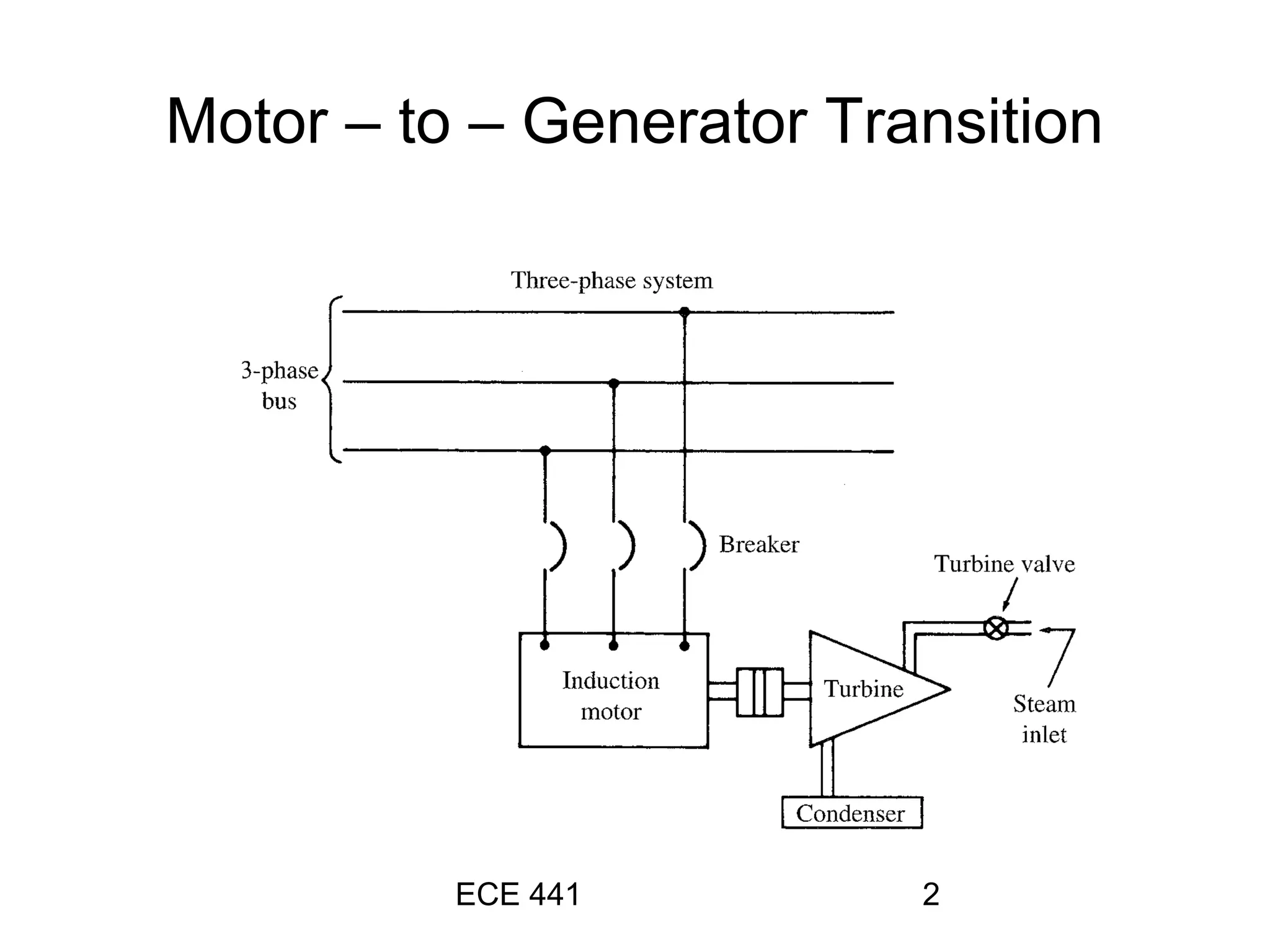
Motor – to – Generator Transition
ECE 441 3
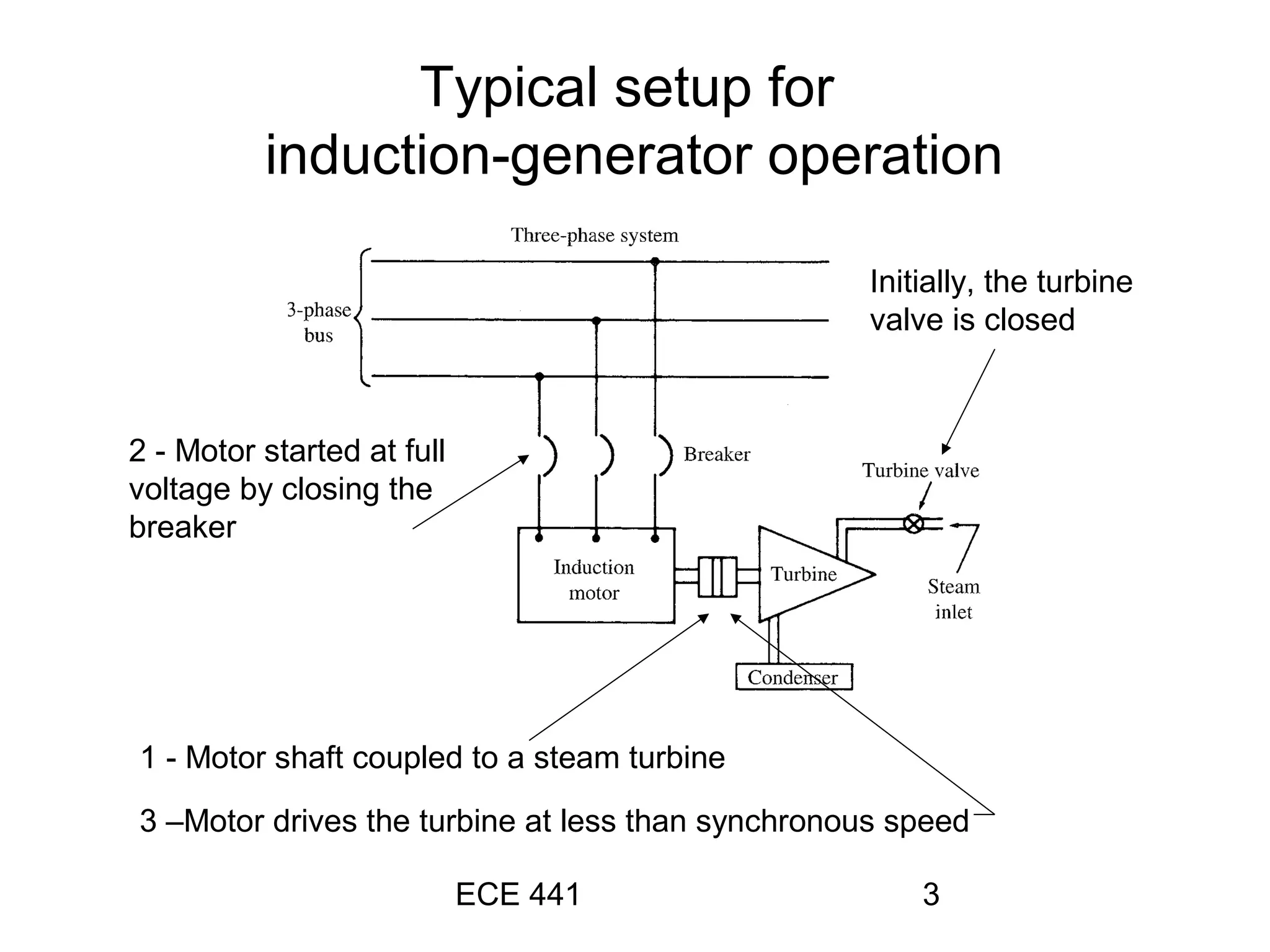
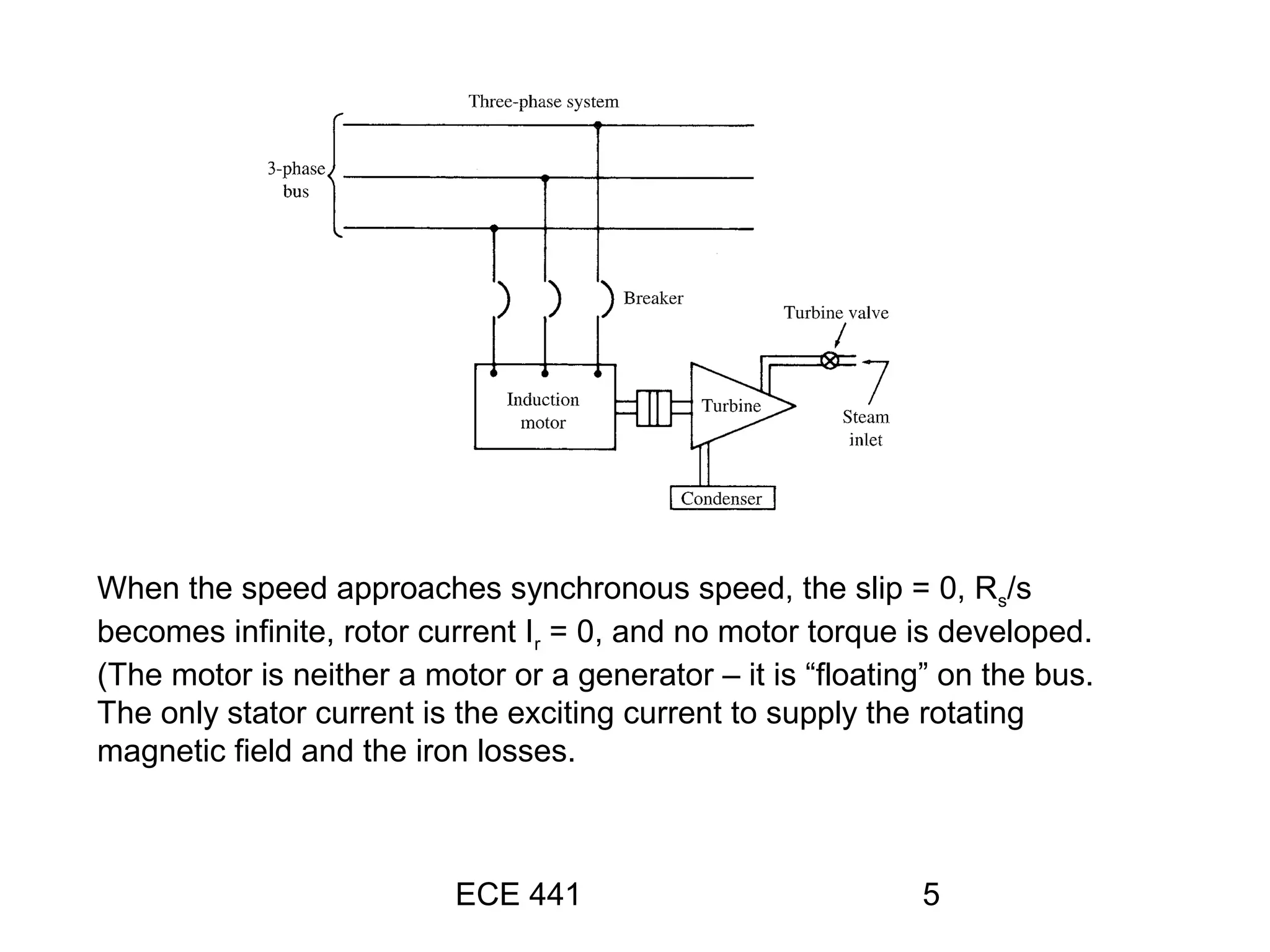
1 - Motor shaft coupled to a steam turbine
Initially, the turbine
valve is closed
2 - Motor started at full
voltage by closing the
breaker
3 –Motor drives the turbine at less than synchronous speed
Typical setup for
induction-generator operation
ECE 441 4
Operation as an
Induction-Generator continued
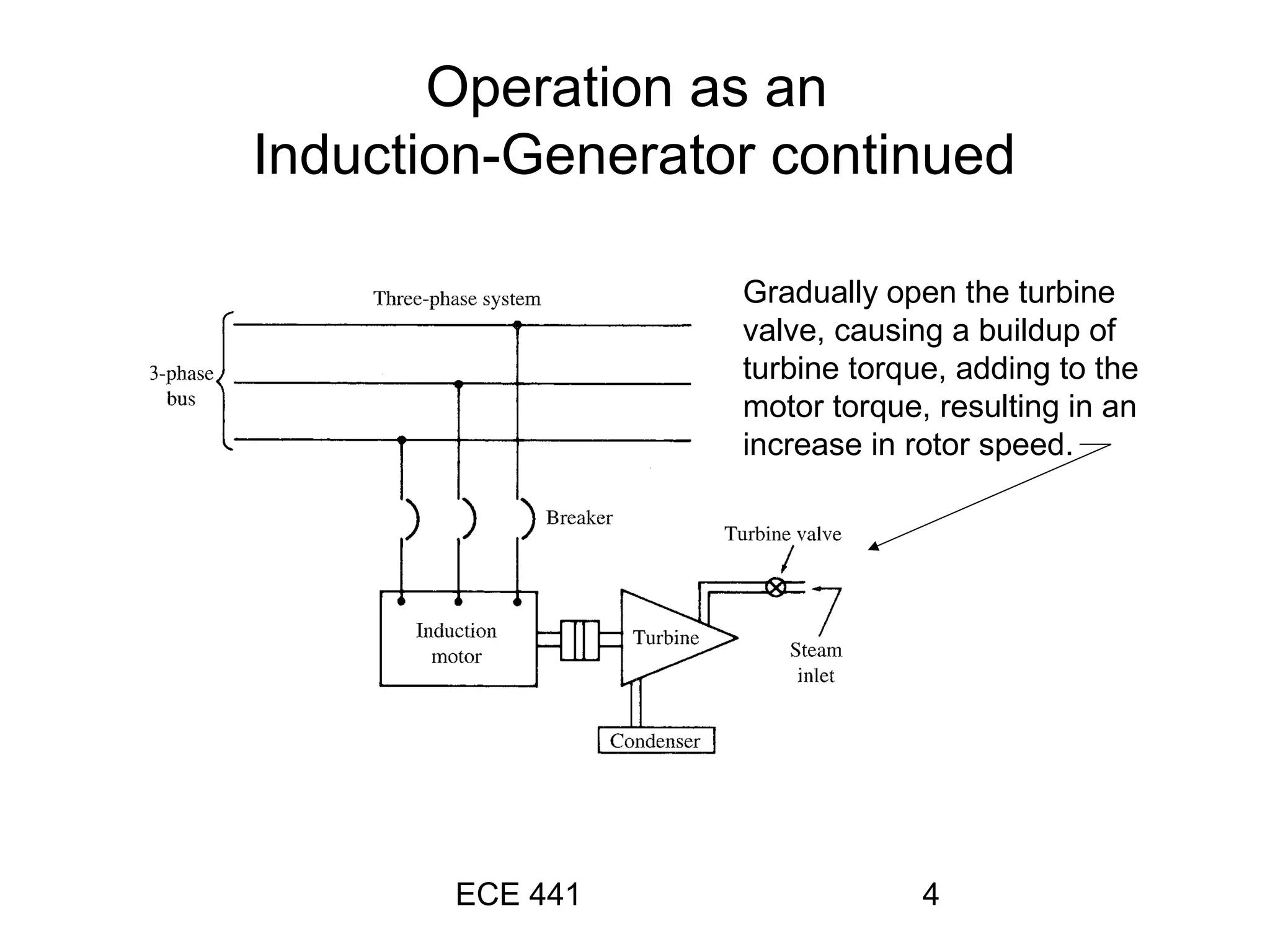
Gradually open the turbine
valve, causing a buildup of
turbine torque, adding to the
motor torque, resulting in an
increase in rotor speed.
ECE 441 5
When the speed approaches synchronous speed, the slip = 0, Rs/s
becomes infinite, rotor current Ir = 0, and no motor torque is developed.
(The motor is neither a motor or a generator – it is “floating” on the bus.
The only stator current is the exciting current to supply the rotating
magnetic field and the iron losses.
ECE 441 6
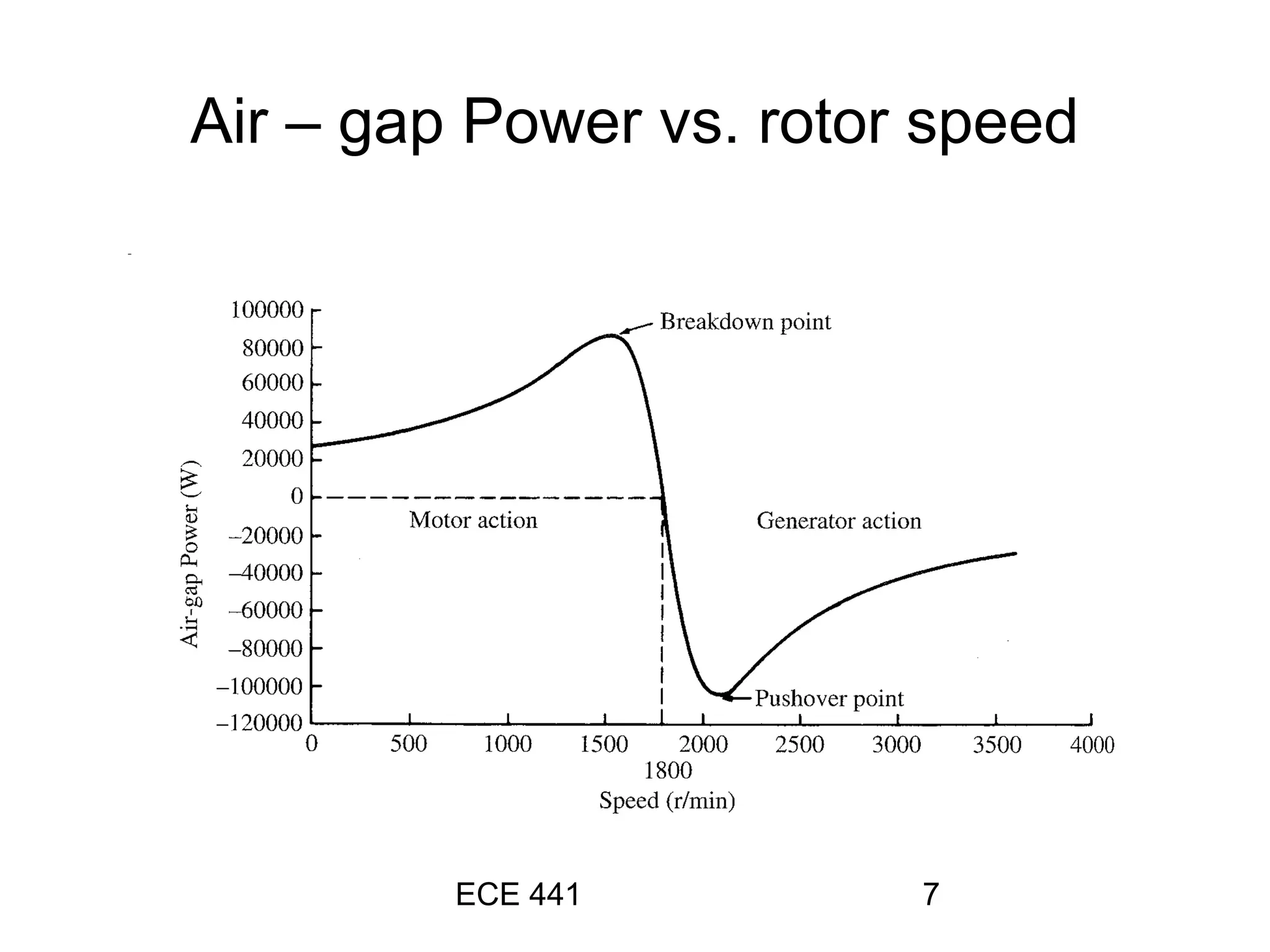
The speed of the rotating flux is independent of the rotor speed –
only a function of the number of poles and the frequency of the
applied voltage. Increasing the rotor speed above the synchronous
speed causes the slip [(ns – nr)/ns] to become negative! The gap
power, Pgap = Prcl/s becomes negative, now supplying power to the
system!
ECE 441 7
Air – gap Power vs. rotor speed
ECE 441 8
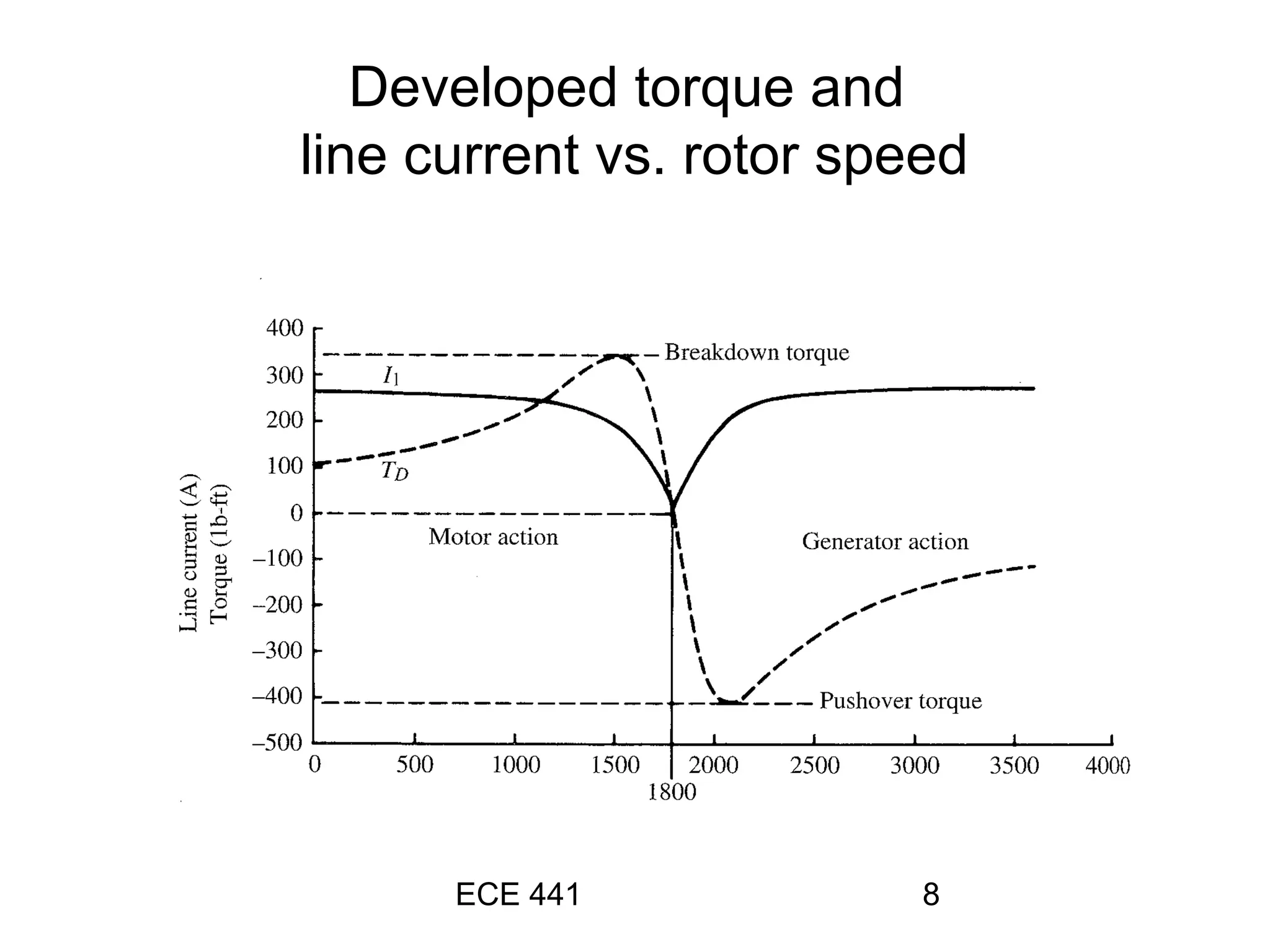
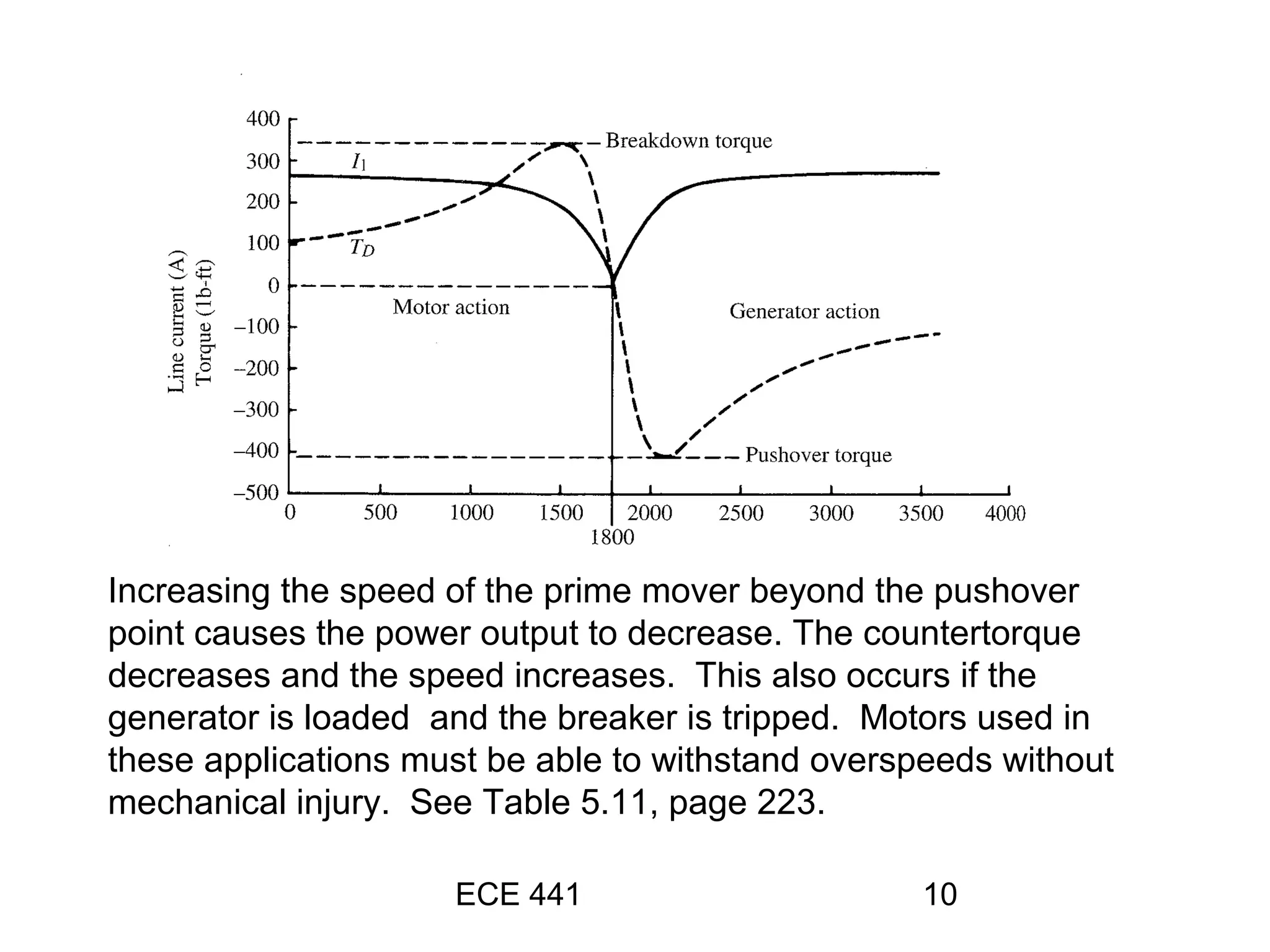
Developed torque and
line current vs. rotor speed
ECE 441 9
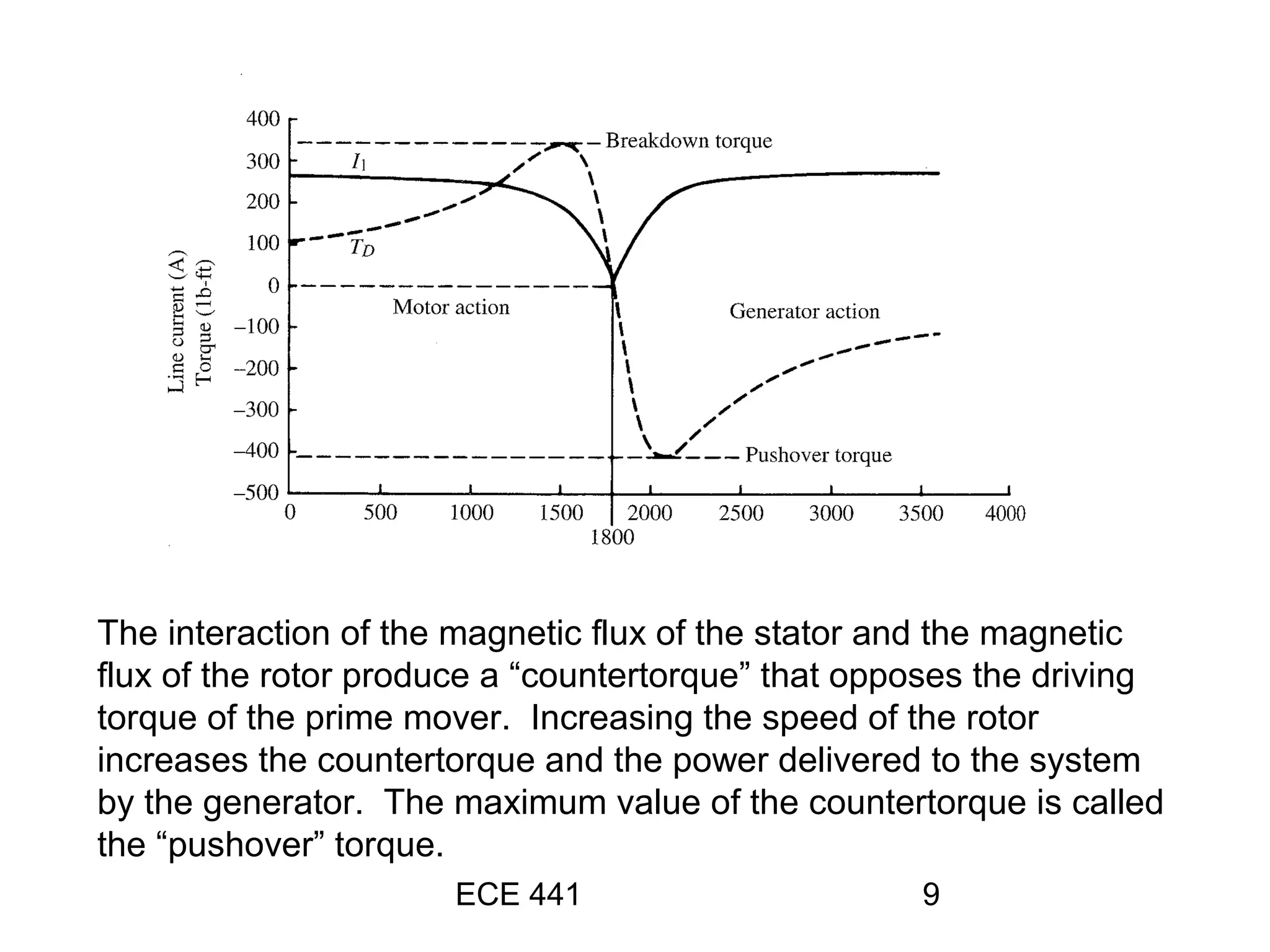
The interaction of the magnetic flux of the stator and the magnetic
flux of the rotor produce a “countertorque” that opposes the driving
torque of the prime mover. Increasing the speed of the rotor
increases the countertorque and the power delivered to the system
by the generator. The maximum value of the countertorque is called
the “pushover” torque.
ECE 441 10
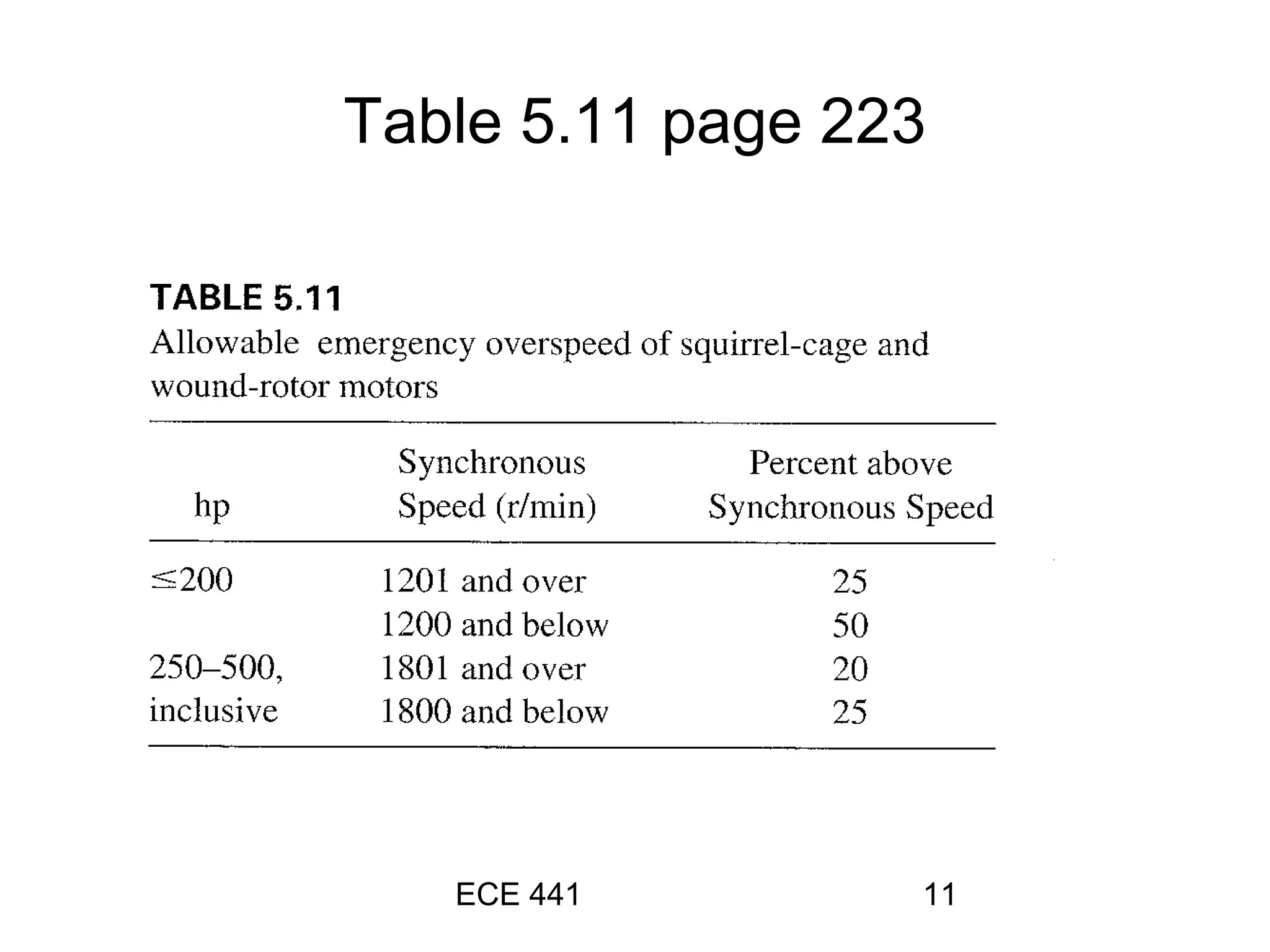
Increasing the speed of the prime mover beyond the pushover
point causes the power output to decrease. The countertorque
decreases and the speed increases. This also occurs if the
generator is loaded and the breaker is tripped. Motors used in
these applications must be able to withstand overspeeds without
mechanical injury. See Table 5.11, page 223.
ECE 441 11
Table 5.11 page 223
ECE 441 12
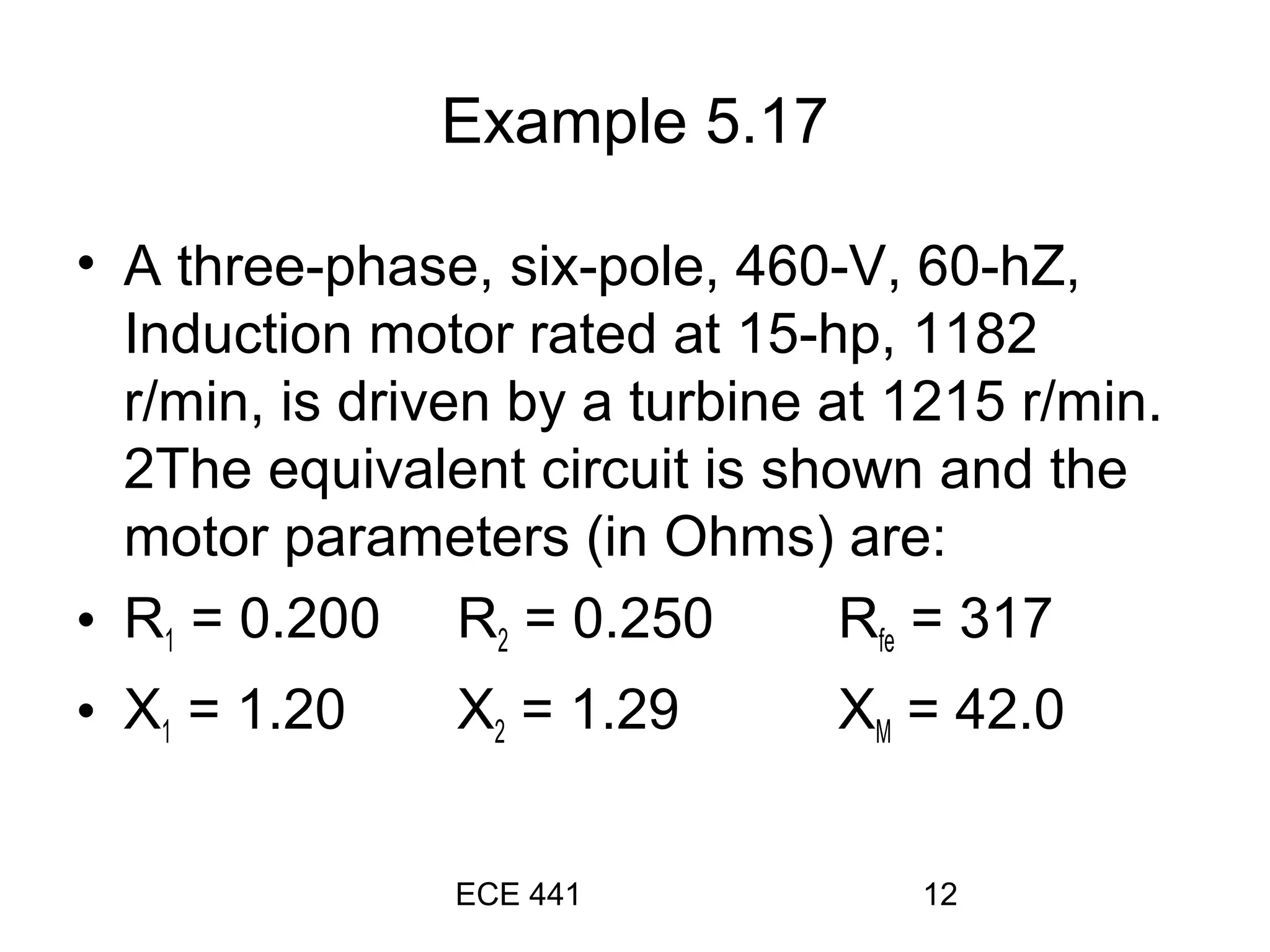
Example 5.17
• A three-phase, six-pole, 460-V, 60-hZ,
Induction motor rated at 15-hp, 1182
r/min, is driven by a turbine at 1215 r/min.
2The equivalent circuit is shown and the
motor parameters (in Ohms) are:
• R1 = 0.200 R2 = 0.250 Rfe = 317
• X1 = 1.20 X2 = 1.29 XM = 42.0
ECE 441 13
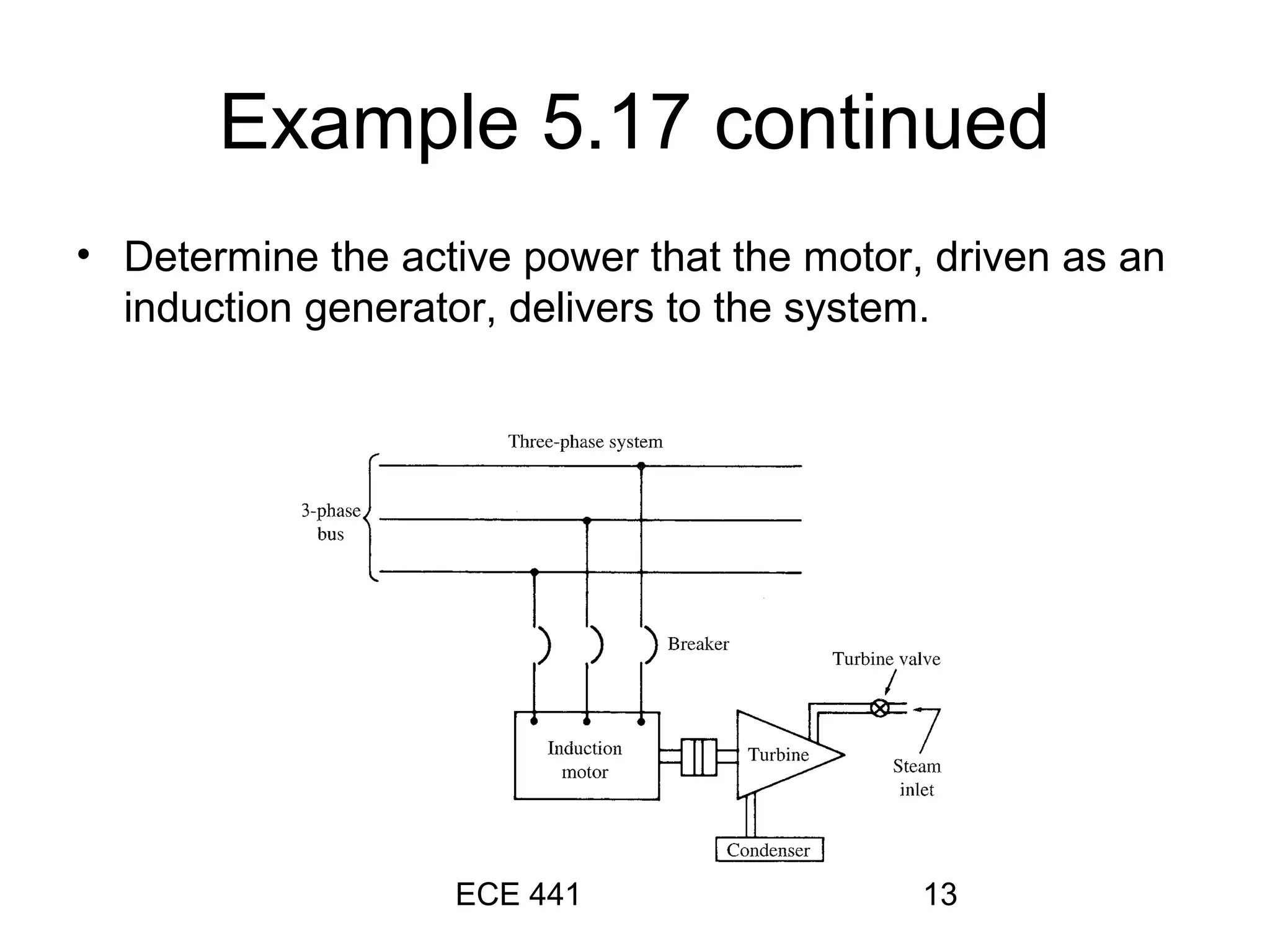
Example 5.17 continued
• Determine the active power that the motor, driven as an
induction generator, delivers to the system.
ECE 441 14
Induction Motor Equivalent Circuit
ECE 441 15
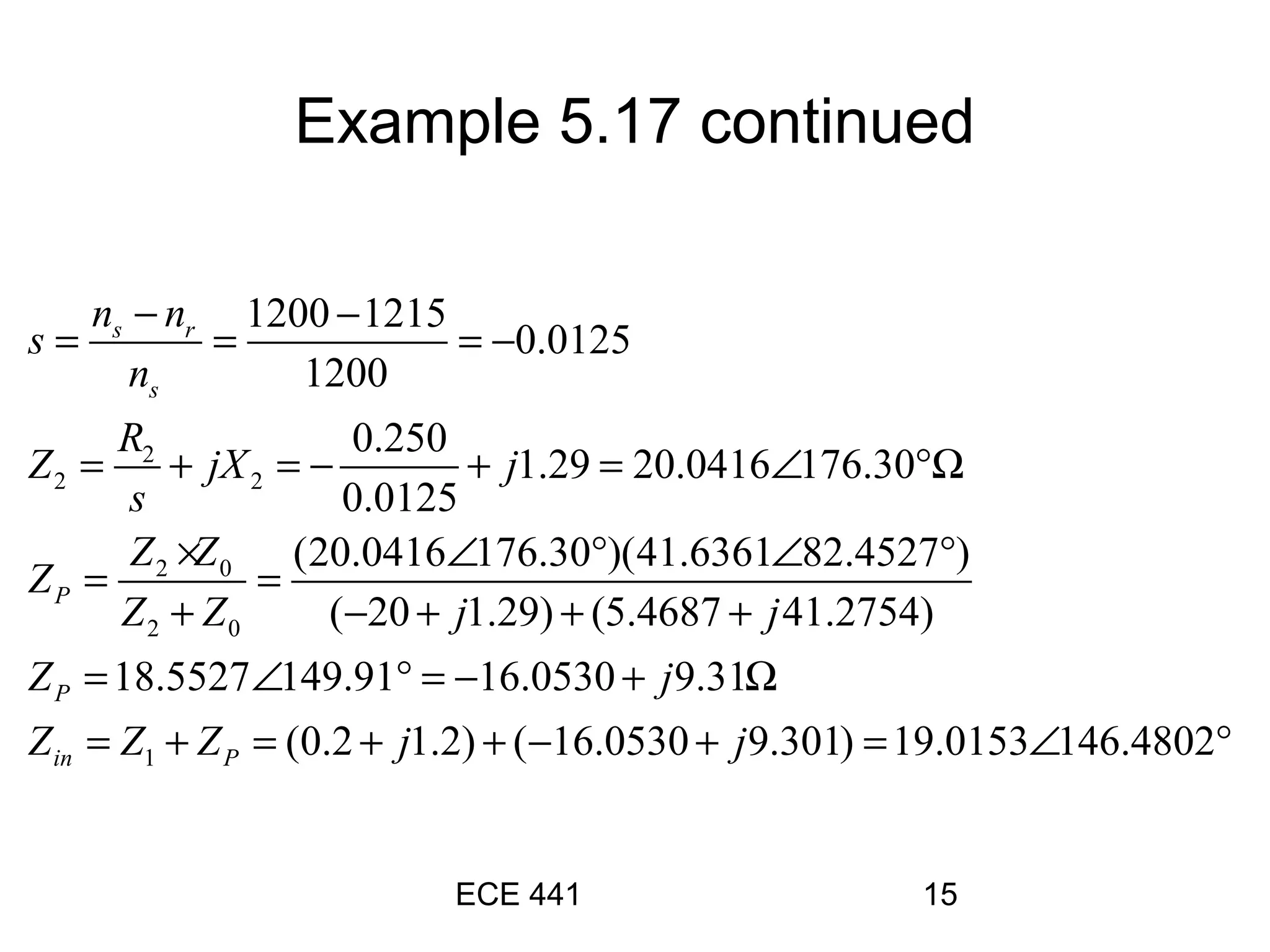
2
2 2
2 0
2 0
1
1200 1215
0.0125
1200
0.250
1.29 20.0416 176.30
0.0125
(20.0416 176.30 )(41.6361 82.4527 )
( 20 1.29) (5.4687 41.2754)
18.5527 149.91 16.0530 9.31
(
s r
s
P
P
in P
n n
s
n
R
Z jX j
s
Z Z
Z
Z Z j j
Z j
Z Z Z
− −
= = = −
= + = − + = ∠ °Ω
× ∠ ° ∠ °
= =
+ − + + +
= ∠ ° = − + Ω
= + = 0.2 1.2) ( 16.0530 9.301) 19.0153 146.4802j j+ + − + = ∠ °
Example 5.17 continued
ECE 441 16
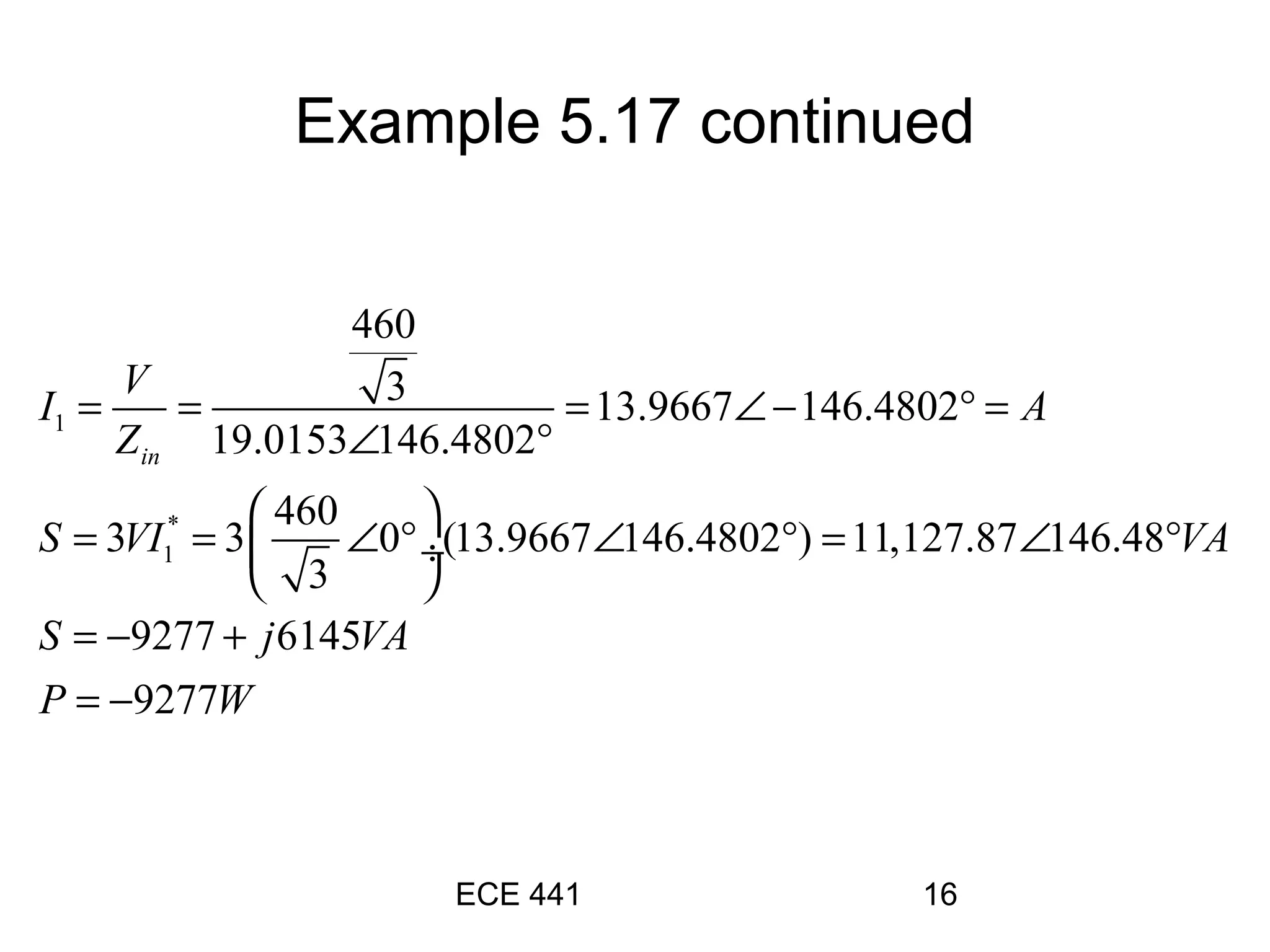
1
*
1
460
3 13.9667 146.4802
19.0153 146.4802
460
3 3 0 (13.9667 146.4802 ) 11,127.87 146.48
3
9277 6145
9277
in
V
I A
Z
S VI VA
S j VA
P W
= = = ∠ − ° =
∠ °
 
= = ∠ ° ∠ ° = ∠ ° ÷
 
= − +
= −
Example 5.17 continued

ppt on induction generator

  • 1.
    ECE 441 1 InductionGenerators • Same basic construction as squirrel-cage induction motors • Drive at a speed greater than the synchronous speed • Not started as a motor • Operated by wind turbines, steam turbines, etc.
  • 2.
    ECE 441 2 Motor– to – Generator Transition
  • 3.
    ECE 441 3 1- Motor shaft coupled to a steam turbine Initially, the turbine valve is closed 2 - Motor started at full voltage by closing the breaker 3 –Motor drives the turbine at less than synchronous speed Typical setup for induction-generator operation
  • 4.
    ECE 441 4 Operationas an Induction-Generator continued Gradually open the turbine valve, causing a buildup of turbine torque, adding to the motor torque, resulting in an increase in rotor speed.
  • 5.
    ECE 441 5 Whenthe speed approaches synchronous speed, the slip = 0, Rs/s becomes infinite, rotor current Ir = 0, and no motor torque is developed. (The motor is neither a motor or a generator – it is “floating” on the bus. The only stator current is the exciting current to supply the rotating magnetic field and the iron losses.
  • 6.
    ECE 441 6 Thespeed of the rotating flux is independent of the rotor speed – only a function of the number of poles and the frequency of the applied voltage. Increasing the rotor speed above the synchronous speed causes the slip [(ns – nr)/ns] to become negative! The gap power, Pgap = Prcl/s becomes negative, now supplying power to the system!
  • 7.
    ECE 441 7 Air– gap Power vs. rotor speed
  • 8.
    ECE 441 8 Developedtorque and line current vs. rotor speed
  • 9.
    ECE 441 9 Theinteraction of the magnetic flux of the stator and the magnetic flux of the rotor produce a “countertorque” that opposes the driving torque of the prime mover. Increasing the speed of the rotor increases the countertorque and the power delivered to the system by the generator. The maximum value of the countertorque is called the “pushover” torque.
  • 10.
    ECE 441 10 Increasingthe speed of the prime mover beyond the pushover point causes the power output to decrease. The countertorque decreases and the speed increases. This also occurs if the generator is loaded and the breaker is tripped. Motors used in these applications must be able to withstand overspeeds without mechanical injury. See Table 5.11, page 223.
  • 11.
    ECE 441 11 Table5.11 page 223
  • 12.
    ECE 441 12 Example5.17 • A three-phase, six-pole, 460-V, 60-hZ, Induction motor rated at 15-hp, 1182 r/min, is driven by a turbine at 1215 r/min. 2The equivalent circuit is shown and the motor parameters (in Ohms) are: • R1 = 0.200 R2 = 0.250 Rfe = 317 • X1 = 1.20 X2 = 1.29 XM = 42.0
  • 13.
    ECE 441 13 Example5.17 continued • Determine the active power that the motor, driven as an induction generator, delivers to the system.
  • 14.
    ECE 441 14 InductionMotor Equivalent Circuit
  • 15.
    ECE 441 15 2 22 2 0 2 0 1 1200 1215 0.0125 1200 0.250 1.29 20.0416 176.30 0.0125 (20.0416 176.30 )(41.6361 82.4527 ) ( 20 1.29) (5.4687 41.2754) 18.5527 149.91 16.0530 9.31 ( s r s P P in P n n s n R Z jX j s Z Z Z Z Z j j Z j Z Z Z − − = = = − = + = − + = ∠ °Ω × ∠ ° ∠ ° = = + − + + + = ∠ ° = − + Ω = + = 0.2 1.2) ( 16.0530 9.301) 19.0153 146.4802j j+ + − + = ∠ ° Example 5.17 continued
  • 16.
    ECE 441 16 1 * 1 460 313.9667 146.4802 19.0153 146.4802 460 3 3 0 (13.9667 146.4802 ) 11,127.87 146.48 3 9277 6145 9277 in V I A Z S VI VA S j VA P W = = = ∠ − ° = ∠ °   = = ∠ ° ∠ ° = ∠ ° ÷   = − + = − Example 5.17 continued