 : MORBIDITY AND
MORTALITY
MEASUREMENTS
Presented By:
Ms.Sandhya.M,
DEFINITION OF EPIDEMIOLOGY:
 Epidemiology is the branch of medical
science which deals with epidemics.
- Parkin (1873)
 Epidemiology is the study of frequency,
distribution and determinants of health
related events in a specified population and
the application of this study to control health
problems.
- Last (1988)
MEASUREMENTS INEPIDEMIOLOGY:
 Mortality indicators
 Morbidity indicators
 Disability rates
 Nutritional indicators
 Health care delivery indicators
 Health care utilization rates
 Environmental indicators
 Socio- economic indicators
 Family health indicators
 Economic indicators
 Other indicators
Mortality indicators:
 Crude death rate
 Expectation of life
 Infant mortality rate(IMR)
 Under five mortality rate
 Neonatal mortality rate
 Post-neonatal mortality rate
 Perinatal mortality rate
 Maternal mortality rate
 Disease specific mortality rate
 Proportional mortality rate
B.Morbidity indicators:
Incidence rate
Prevalence rate
Attack rate
Out-patient and in-patient
attendance
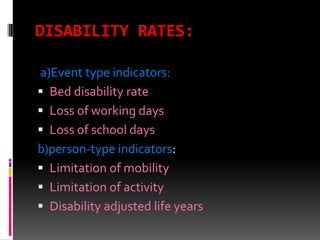
DISABILITY RATES:
a)Event type indicators:
 Bed disability rate
 Loss of working days
 Loss of school days
b)person-type indicators:
 Limitation of mobility
 Limitation of activity
 Disability adjusted life years
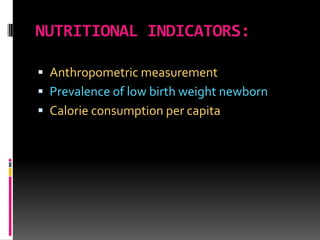
NUTRITIONAL INDICATORS:
 Anthropometric measurement
 Prevalence of low birth weight newborn
 Calorie consumption per capita
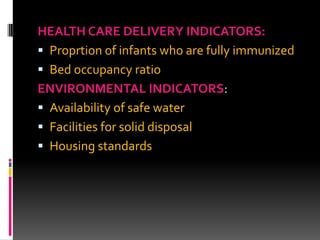
HEALTH CARE DELIVERY INDICATORS:
 Proprtion of infants who are fully immunized
 Bed occupancy ratio
ENVIRONMENTAL INDICATORS:
 Availability of safe water
 Facilities for solid disposal
 Housing standards
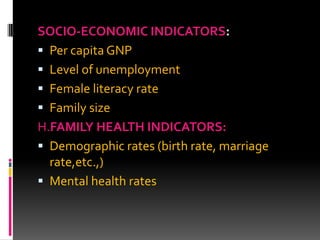
SOCIO-ECONOMIC INDICATORS:
 Per capita GNP
 Level of unemployment
 Female literacy rate
 Family size
H.FAMILY HEALTH INDICATORS:
 Demographic rates (birth rate, marriage
rate,etc.,)
 Mental health rates
.ECONOMIC INDICATORS:
 Gross national product
 % of population below poverty line
 unemployment rate
OTHER INDICATORS:
 Social indicators
 Basic needs indicator
TOOLS OF MEASUREMENT:
 Rates
 Ratios
 Proportions
Rates:
 A rate measures the occurance of some
particular event in a population during a given
time period.
Various categories of rates are
 Crude rates
 Specific rates
 Standardized rates
 Ratio:
 The ratio is the result of dividing one quality
by another which is expressed in the form of:
X :Y or X/Y
Eg. Sex ratio, doctor population ratio,etc
 Proportions:
 A proportion is a ratio which indicates
the relation in magnitude of a part of the whole.
Eg. Number of accidents per 100 vehicles.
 ROLE OF NURSE IN HEALTH
MEASUREMENTS:
 Planning of health services as per the collected
data.
 Enumerate the data for measurements.
 Assessing the health status of the community by
using various health indicators.
 ROLE OF NURSE-CONT’D
 Organizing various services to obtain data for
epidemiological measurements.
 Record the collected data for analysis.
 Report to the higher authority about the
findings.
 Evaluate the success of the health services.
Ppt 2 epidem

Ppt 2 epidem

  • 1.
     : MORBIDITYAND MORTALITY MEASUREMENTS Presented By: Ms.Sandhya.M,
  • 2.
    DEFINITION OF EPIDEMIOLOGY: Epidemiology is the branch of medical science which deals with epidemics. - Parkin (1873)  Epidemiology is the study of frequency, distribution and determinants of health related events in a specified population and the application of this study to control health problems. - Last (1988)
  • 3.
    MEASUREMENTS INEPIDEMIOLOGY:  Mortalityindicators  Morbidity indicators  Disability rates  Nutritional indicators  Health care delivery indicators  Health care utilization rates  Environmental indicators  Socio- economic indicators  Family health indicators  Economic indicators  Other indicators
  • 4.
    Mortality indicators:  Crudedeath rate  Expectation of life  Infant mortality rate(IMR)  Under five mortality rate  Neonatal mortality rate  Post-neonatal mortality rate  Perinatal mortality rate  Maternal mortality rate  Disease specific mortality rate  Proportional mortality rate
  • 5.
    B.Morbidity indicators: Incidence rate Prevalencerate Attack rate Out-patient and in-patient attendance
  • 6.
    DISABILITY RATES: a)Event typeindicators:  Bed disability rate  Loss of working days  Loss of school days b)person-type indicators:  Limitation of mobility  Limitation of activity  Disability adjusted life years
  • 7.
    NUTRITIONAL INDICATORS:  Anthropometricmeasurement  Prevalence of low birth weight newborn  Calorie consumption per capita
  • 8.
    HEALTH CARE DELIVERYINDICATORS:  Proprtion of infants who are fully immunized  Bed occupancy ratio ENVIRONMENTAL INDICATORS:  Availability of safe water  Facilities for solid disposal  Housing standards
  • 9.
    SOCIO-ECONOMIC INDICATORS:  Percapita GNP  Level of unemployment  Female literacy rate  Family size H.FAMILY HEALTH INDICATORS:  Demographic rates (birth rate, marriage rate,etc.,)  Mental health rates
  • 10.
    .ECONOMIC INDICATORS:  Grossnational product  % of population below poverty line  unemployment rate OTHER INDICATORS:  Social indicators  Basic needs indicator
  • 11.
    TOOLS OF MEASUREMENT: Rates  Ratios  Proportions
  • 12.
    Rates:  A ratemeasures the occurance of some particular event in a population during a given time period. Various categories of rates are  Crude rates  Specific rates  Standardized rates
  • 13.
     Ratio:  Theratio is the result of dividing one quality by another which is expressed in the form of: X :Y or X/Y Eg. Sex ratio, doctor population ratio,etc
  • 14.
     Proportions:  Aproportion is a ratio which indicates the relation in magnitude of a part of the whole. Eg. Number of accidents per 100 vehicles.
  • 15.
     ROLE OFNURSE IN HEALTH MEASUREMENTS:  Planning of health services as per the collected data.  Enumerate the data for measurements.  Assessing the health status of the community by using various health indicators.
  • 16.
     ROLE OFNURSE-CONT’D  Organizing various services to obtain data for epidemiological measurements.  Record the collected data for analysis.  Report to the higher authority about the findings.  Evaluate the success of the health services.