Islamic Art and 
Architecture
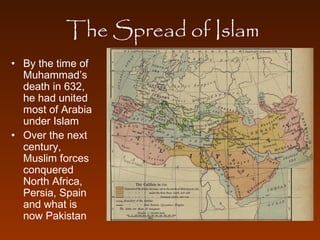
The Spread of Islam 
• By the time of 
Muhammad’s 
death in 632, 
he had united 
most of Arabia 
under Islam 
• Over the next 
century, 
Muslim forces 
conquered 
North Africa, 
Persia, Spain 
and what is 
now Pakistan
Art 
• Muslim philosophy about art: no 
depiction of human beings (figurative 
art seen as competing with the 
omnipotence of God) 
• So Muslim art developed away from 
depiction of humanity and focused on 
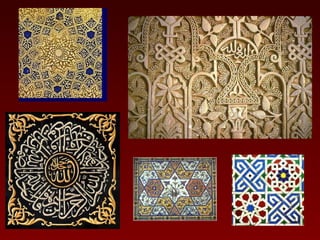
geometric design and calligraphy
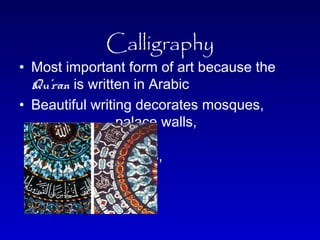
Calligraphy 
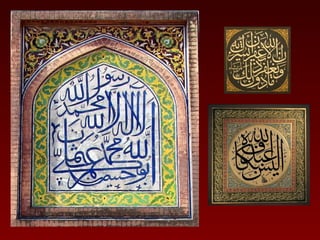
• Most important form of art because the 
Qu’ran is written in Arabic 
• Beautiful writing decorates mosques, 
palace walls, 
metalwork, 
pottery, stone, glass, 
wood, textiles
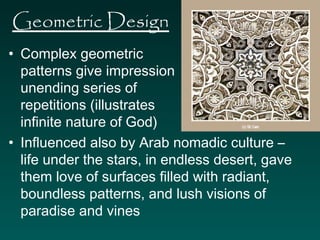
Geometric Design 
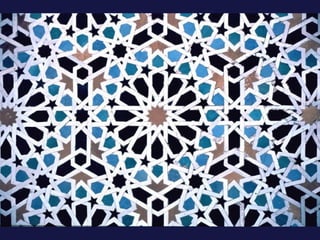
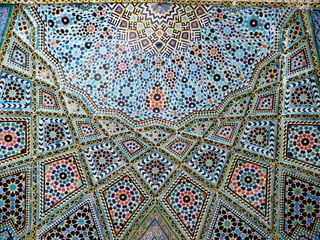
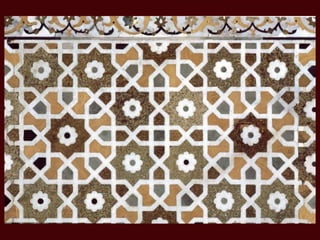
• Complex geometric 
patterns give impression of 
unending series of 
repetitions (illustrates 
infinite nature of God) 
• Influenced also by Arab nomadic culture – 
life under the stars, in endless desert, gave 
them love of surfaces filled with radiant, 
boundless patterns, and lush visions of 
paradise and vines
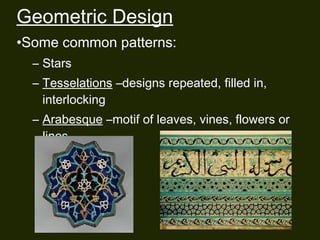
Geometric Design 
•Some common patterns: 
– Stars 
– Tesselations –designs repeated, filled in, 
interlocking 
– Arabesque –motif of leaves, vines, flowers or 
lines
Islamic 
Architecture
Elements of Islamic Architecture 
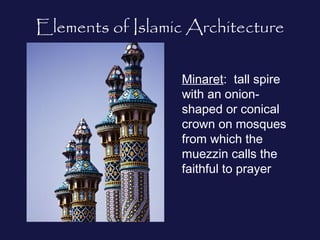
Minaret: tall spire 
with an onion-shaped 
or conical 
crown on mosques 
from which the 
muezzin calls the 
faithful to prayer
Elements of Islamic Architecture 
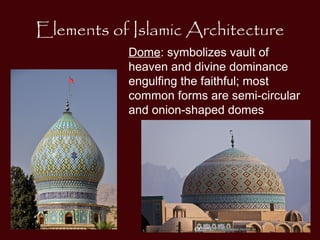
Dome: symbolizes vault of 
heaven and divine dominance 
engulfing the faithful; most 
common forms are semi-circular 
and onion-shaped domes
Elements of Islamic Architecture 
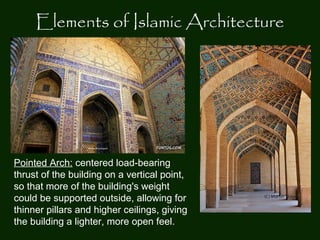
Pointed Arch: centered load-bearing 
thrust of the building on a vertical point, 
so that more of the building's weight 
could be supported outside, allowing for 
thinner pillars and higher ceilings, giving 
the building a lighter, more open feel.
Elements of Islamic Architecture 
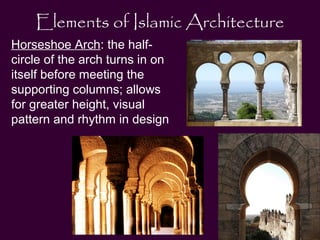
Horseshoe Arch: the half-circle 
of the arch turns in on 
itself before meeting the 
supporting columns; allows 
for greater height, visual 
pattern and rhythm in design
Elements of Islamic Architecture 
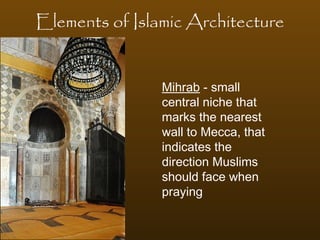
Mihrab - small 
central niche that 
marks the nearest 
wall to Mecca, that 
indicates the 
direction Muslims 
should face when 
praying
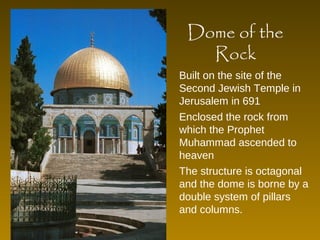
Dome of the 
Rock 
Built on the site of the 
Second Jewish Temple in 
Jerusalem in 691 
Enclosed the rock from 
which the Prophet 
Muhammad ascended to 
heaven 
The structure is octagonal 
and the dome is borne by a 
double system of pillars 
and columns.
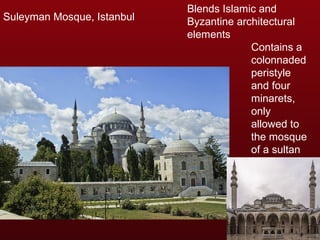
Suleyman Mosque, Istanbul 
Blends Islamic and 
Byzantine architectural 
elements 
Contains a 
colonnaded 
peristyle 
and four 
minarets, 
only 
allowed to 
the mosque 
of a sultan
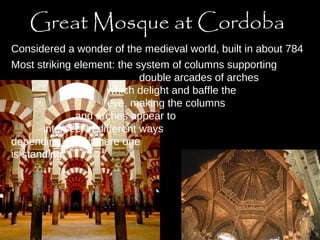
Great Mosque at Cordoba 
Considered a wonder of the medieval world, built in about 784 
Most striking element: the system of columns supporting 
double arcades of arches 
which delight and baffle the 
eye, making the columns 
and arches appear to 
intersect in different ways 
depending upon where one 
is standing
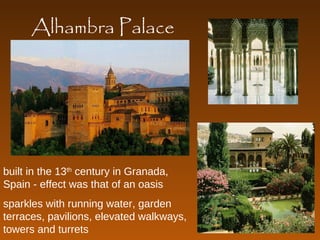
Alhambra Palace 
built in the 13th century in Granada, 
Spain - effect was that of an oasis 
sparkles with running water, garden 
terraces, pavilions, elevated walkways, 
towers and turrets
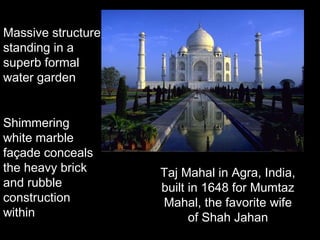
Taj Mahal in Agra, India, 
built in 1648 for Mumtaz 
Mahal, the favorite wife 
of Shah Jahan 
Massive structure 
standing in a 
superb formal 
water garden 
Shimmering 
white marble 
façade conceals 
the heavy brick 
and rubble 
construction 
within

powerpoint.19

  • 1.
    Islamic Art and Architecture
  • 2.
    The Spread ofIslam • By the time of Muhammad’s death in 632, he had united most of Arabia under Islam • Over the next century, Muslim forces conquered North Africa, Persia, Spain and what is now Pakistan
  • 3.
    Art • Muslimphilosophy about art: no depiction of human beings (figurative art seen as competing with the omnipotence of God) • So Muslim art developed away from depiction of humanity and focused on geometric design and calligraphy
  • 4.
    Calligraphy • Mostimportant form of art because the Qu’ran is written in Arabic • Beautiful writing decorates mosques, palace walls, metalwork, pottery, stone, glass, wood, textiles
  • 6.
    Geometric Design •Complex geometric patterns give impression of unending series of repetitions (illustrates infinite nature of God) • Influenced also by Arab nomadic culture – life under the stars, in endless desert, gave them love of surfaces filled with radiant, boundless patterns, and lush visions of paradise and vines
  • 7.
    Geometric Design •Somecommon patterns: – Stars – Tesselations –designs repeated, filled in, interlocking – Arabesque –motif of leaves, vines, flowers or lines
  • 12.
  • 13.
    Elements of IslamicArchitecture Minaret: tall spire with an onion-shaped or conical crown on mosques from which the muezzin calls the faithful to prayer
  • 14.
    Elements of IslamicArchitecture Dome: symbolizes vault of heaven and divine dominance engulfing the faithful; most common forms are semi-circular and onion-shaped domes
  • 15.
    Elements of IslamicArchitecture Pointed Arch: centered load-bearing thrust of the building on a vertical point, so that more of the building's weight could be supported outside, allowing for thinner pillars and higher ceilings, giving the building a lighter, more open feel.
  • 16.
    Elements of IslamicArchitecture Horseshoe Arch: the half-circle of the arch turns in on itself before meeting the supporting columns; allows for greater height, visual pattern and rhythm in design
  • 17.
    Elements of IslamicArchitecture Mihrab - small central niche that marks the nearest wall to Mecca, that indicates the direction Muslims should face when praying
  • 18.
    Dome of the Rock Built on the site of the Second Jewish Temple in Jerusalem in 691 Enclosed the rock from which the Prophet Muhammad ascended to heaven The structure is octagonal and the dome is borne by a double system of pillars and columns.
  • 19.
    Suleyman Mosque, Istanbul Blends Islamic and Byzantine architectural elements Contains a colonnaded peristyle and four minarets, only allowed to the mosque of a sultan
  • 20.
    Great Mosque atCordoba Considered a wonder of the medieval world, built in about 784 Most striking element: the system of columns supporting double arcades of arches which delight and baffle the eye, making the columns and arches appear to intersect in different ways depending upon where one is standing
  • 21.
    Alhambra Palace builtin the 13th century in Granada, Spain - effect was that of an oasis sparkles with running water, garden terraces, pavilions, elevated walkways, towers and turrets
  • 22.
    Taj Mahal inAgra, India, built in 1648 for Mumtaz Mahal, the favorite wife of Shah Jahan Massive structure standing in a superb formal water garden Shimmering white marble façade conceals the heavy brick and rubble construction within