Architecture: 
The Art of Shaping 
Space 
Our Human-made Environment
Architectural Space 
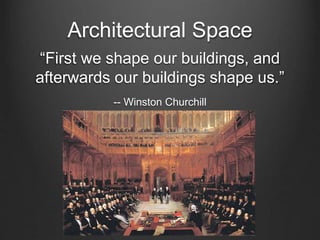
“First we shape our buildings, and 
afterwards our buildings shape us.” 
-- Winston Churchill
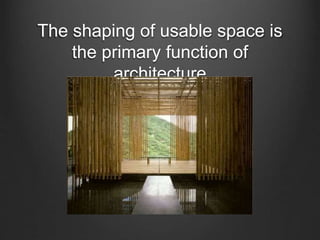
The shaping of usable space is 
the primary function of 
architecture
Architectural Space 
Physical Space – the volume of air bounded by 
the walls, floor, and ceiling of a room (so many 
cubic feet or meters of space) 
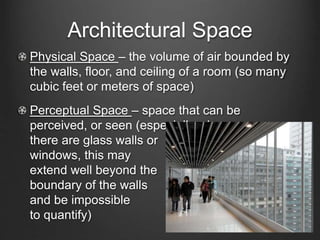
Perceptual Space – space that can be 
perceived, or seen (especially when 
there are glass walls or 
windows, this may 
extend well beyond the 
boundary of the walls 
and be impossible 
to quantify)
Architectural Space 
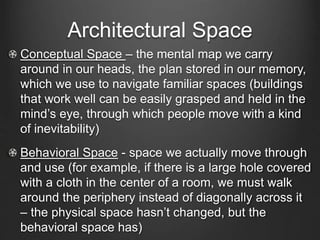
Conceptual Space – the mental map we carry 
around in our heads, the plan stored in our memory, 
which we use to navigate familiar spaces (buildings 
that work well can be easily grasped and held in the 
mind’s eye, through which people move with a kind 
of inevitability) 
Behavioral Space - space we actually move through 
and use (for example, if there is a large hole covered 
with a cloth in the center of a room, we must walk 
around the periphery instead of diagonally across it 
– the physical space hasn’t changed, but the 
behavioral space has)
Architectural Space 
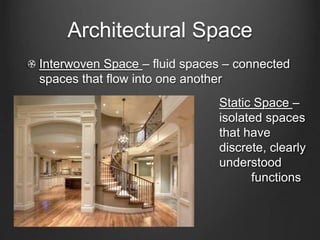
Interwoven Space – fluid spaces – connected 
spaces that flow into one another 
Static Space – 
isolated spaces 
that have 
discrete, clearly 
understood 
functions
Architectural Space 
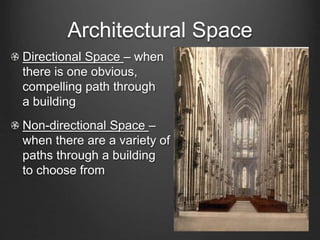
Directional Space – when 
there is one obvious, 
compelling path through 
a building 
Non-directional Space – 
when there are a variety of 
paths through a building 
to choose from
Architectural Space 
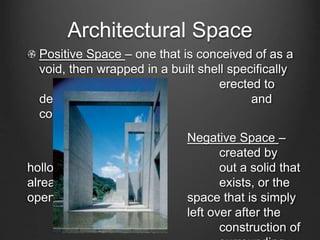
Positive Space – one that is conceived of as a 
void, then wrapped in a built shell specifically 
erected to 
define and 
contain it 
Negative Space – 
created by 
hollowing out a solid that 
already exists, or the 
open space that is simply 
left over after the 
construction of 
surrounding
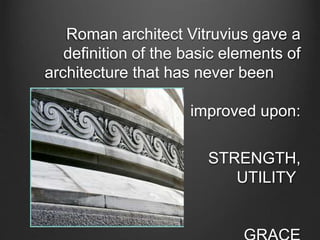
Roman architect Vitruvius gave a 
definition of the basic elements of 
architecture that has never been 
improved upon: 
STRENGTH, 
UTILITY 
AND 
GRACE
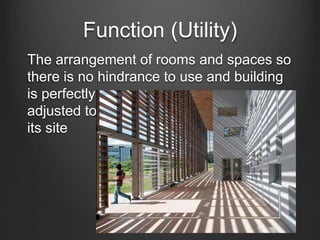
Function (Utility) 
The arrangement of rooms and spaces so 
there is no hindrance to use and building 
is perfectly 
adjusted to 
its site
Components of Function 
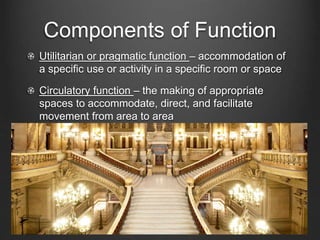
Utilitarian or pragmatic function – accommodation of 
a specific use or activity in a specific room or space 
Circulatory function – the making of appropriate 
spaces to accommodate, direct, and facilitate 
movement from area to area
Components of Function 
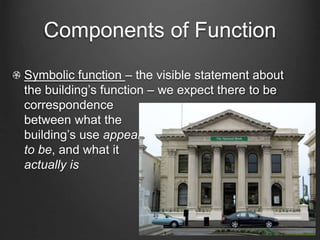
Symbolic function – the visible statement about 
the building’s function – we expect there to be 
correspondence 
between what the 
building’s use appears 
to be, and what it 
actually is
Components of Function 
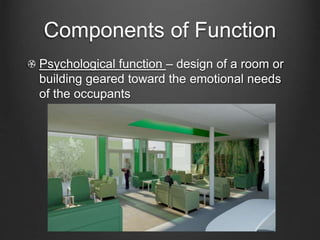
Psychological function – design of a room or 
building geared toward the emotional needs 
of the occupants
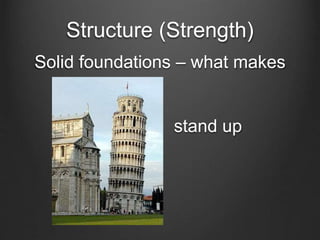
Structure (Strength) 
Solid foundations – what makes 
the building 
stand up
Components of Structure 
Physical structure – the “bones” of the 
building that do the work 
Perceptual structure – what we see (for 
example, a column that is much larger than 
structurally necessary to reassure us that it is 
indeed big enough for its job; or a wall of 
glass that seems to have no ability to hold a 
building up)
Components of Structure 
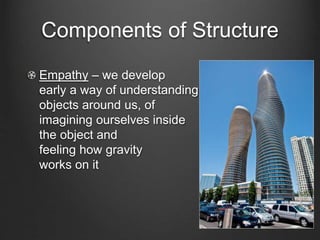
Empathy – we develop 
early a way of understanding 
objects around us, of 
imagining ourselves inside 
the object and 
feeling how gravity 
works on it
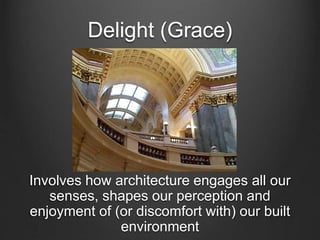
Delight (Grace) 
Involves how architecture engages all our 
senses, shapes our perception and 
enjoyment of (or discomfort with) our built 
environment
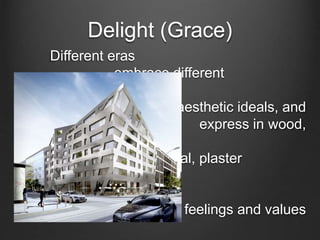
Delight (Grace) 
Different eras 
embrace different 
aesthetic ideals, and 
express in wood, 
stone, metal, plaster 
and plastic their 
feelings and values
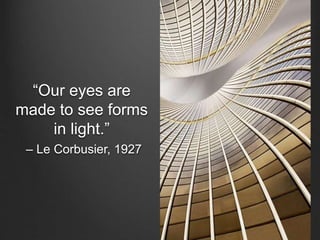
“Our eyes are 
made to see forms 
in light.” 
– Le Corbusier, 1927
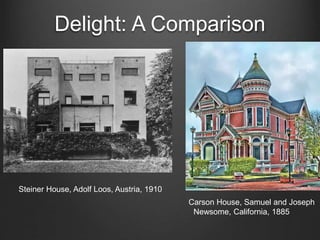
Delight: A Comparison 
Steiner House, Adolf Loos, Austria, 1910 
Carson House, Samuel and Joseph 
Newsome, California, 1885
“Our architecture reflects us 
as truly as a mirror.” 
-- Louis Sullivan 
What do the following 
structures say about the 
values of the cultures that 
built them?
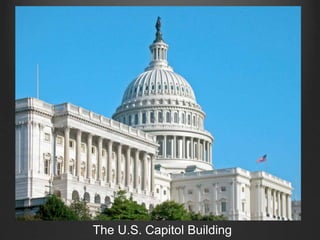
The U.S. Capitol Building
Burj Khalifa, Dubai
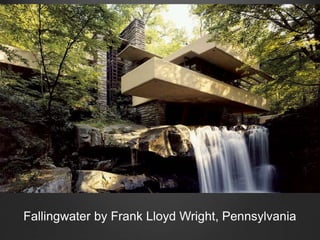
Fallingwater by Frank Lloyd Wright, Pennsylvania
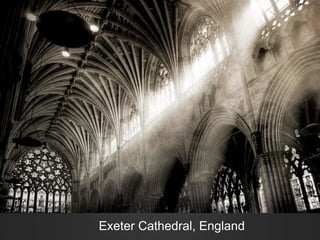
Exeter Cathedral, England
Temple at Karnak, Egypt
St. Basil’s Cathedral, Russia
Taktsang Palphug Monastery, Bhutan
Activity 
You have just been hired to design a museum for 
the city of Ann Arbor. The museum must reflect the 
culture of the city, so start by considering the 
culture of Ann Arbor. What are 5 cultural attributes 
that you believe reflect our values and way of life? 
Now, determine how your museum will mirror these 
values. Think about the use of space, the use of 
ornament and size, the use of materials, history 
and environment. 

Draw a sketch of your plan, and write a paragraph 
description explaining how your building reflects the 
culture of Ann Arbor as you perceive it.

powerpoint.16

  • 1.
    Architecture: The Artof Shaping Space Our Human-made Environment
  • 2.
    Architectural Space “Firstwe shape our buildings, and afterwards our buildings shape us.” -- Winston Churchill
  • 3.
    The shaping ofusable space is the primary function of architecture
  • 4.
    Architectural Space PhysicalSpace – the volume of air bounded by the walls, floor, and ceiling of a room (so many cubic feet or meters of space) Perceptual Space – space that can be perceived, or seen (especially when there are glass walls or windows, this may extend well beyond the boundary of the walls and be impossible to quantify)
  • 5.
    Architectural Space ConceptualSpace – the mental map we carry around in our heads, the plan stored in our memory, which we use to navigate familiar spaces (buildings that work well can be easily grasped and held in the mind’s eye, through which people move with a kind of inevitability) Behavioral Space - space we actually move through and use (for example, if there is a large hole covered with a cloth in the center of a room, we must walk around the periphery instead of diagonally across it – the physical space hasn’t changed, but the behavioral space has)
  • 6.
    Architectural Space InterwovenSpace – fluid spaces – connected spaces that flow into one another Static Space – isolated spaces that have discrete, clearly understood functions
  • 7.
    Architectural Space DirectionalSpace – when there is one obvious, compelling path through a building Non-directional Space – when there are a variety of paths through a building to choose from
  • 8.
    Architectural Space PositiveSpace – one that is conceived of as a void, then wrapped in a built shell specifically erected to define and contain it Negative Space – created by hollowing out a solid that already exists, or the open space that is simply left over after the construction of surrounding
  • 9.
    Roman architect Vitruviusgave a definition of the basic elements of architecture that has never been improved upon: STRENGTH, UTILITY AND GRACE
  • 10.
    Function (Utility) Thearrangement of rooms and spaces so there is no hindrance to use and building is perfectly adjusted to its site
  • 11.
    Components of Function Utilitarian or pragmatic function – accommodation of a specific use or activity in a specific room or space Circulatory function – the making of appropriate spaces to accommodate, direct, and facilitate movement from area to area
  • 12.
    Components of Function Symbolic function – the visible statement about the building’s function – we expect there to be correspondence between what the building’s use appears to be, and what it actually is
  • 13.
    Components of Function Psychological function – design of a room or building geared toward the emotional needs of the occupants
  • 14.
    Structure (Strength) Solidfoundations – what makes the building stand up
  • 15.
    Components of Structure Physical structure – the “bones” of the building that do the work Perceptual structure – what we see (for example, a column that is much larger than structurally necessary to reassure us that it is indeed big enough for its job; or a wall of glass that seems to have no ability to hold a building up)
  • 16.
    Components of Structure Empathy – we develop early a way of understanding objects around us, of imagining ourselves inside the object and feeling how gravity works on it
  • 17.
    Delight (Grace) Involveshow architecture engages all our senses, shapes our perception and enjoyment of (or discomfort with) our built environment
  • 18.
    Delight (Grace) Differenteras embrace different aesthetic ideals, and express in wood, stone, metal, plaster and plastic their feelings and values
  • 19.
    “Our eyes are made to see forms in light.” – Le Corbusier, 1927
  • 20.
    Delight: A Comparison Steiner House, Adolf Loos, Austria, 1910 Carson House, Samuel and Joseph Newsome, California, 1885
  • 21.
    “Our architecture reflectsus as truly as a mirror.” -- Louis Sullivan What do the following structures say about the values of the cultures that built them?
  • 22.
  • 23.
  • 24.
    Fallingwater by FrankLloyd Wright, Pennsylvania
  • 25.
  • 26.
  • 27.
  • 28.
  • 29.
    Activity You havejust been hired to design a museum for the city of Ann Arbor. The museum must reflect the culture of the city, so start by considering the culture of Ann Arbor. What are 5 cultural attributes that you believe reflect our values and way of life? Now, determine how your museum will mirror these values. Think about the use of space, the use of ornament and size, the use of materials, history and environment. Draw a sketch of your plan, and write a paragraph description explaining how your building reflects the culture of Ann Arbor as you perceive it.