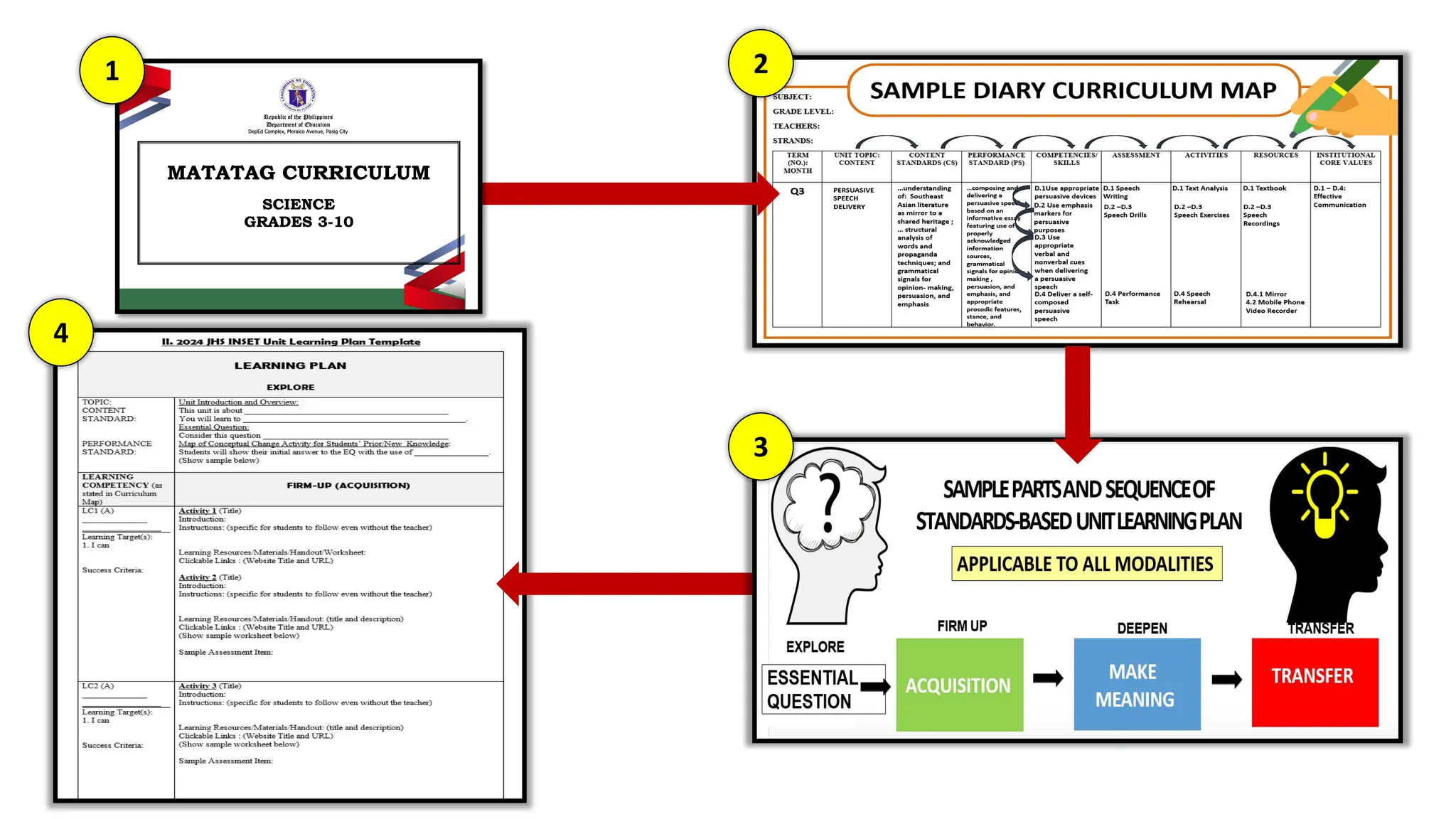
What you need
1. DepEd MATATAG Curriculum Guide
2. Curriculum Map Template
3. Unit Standards and Competencies Diagram
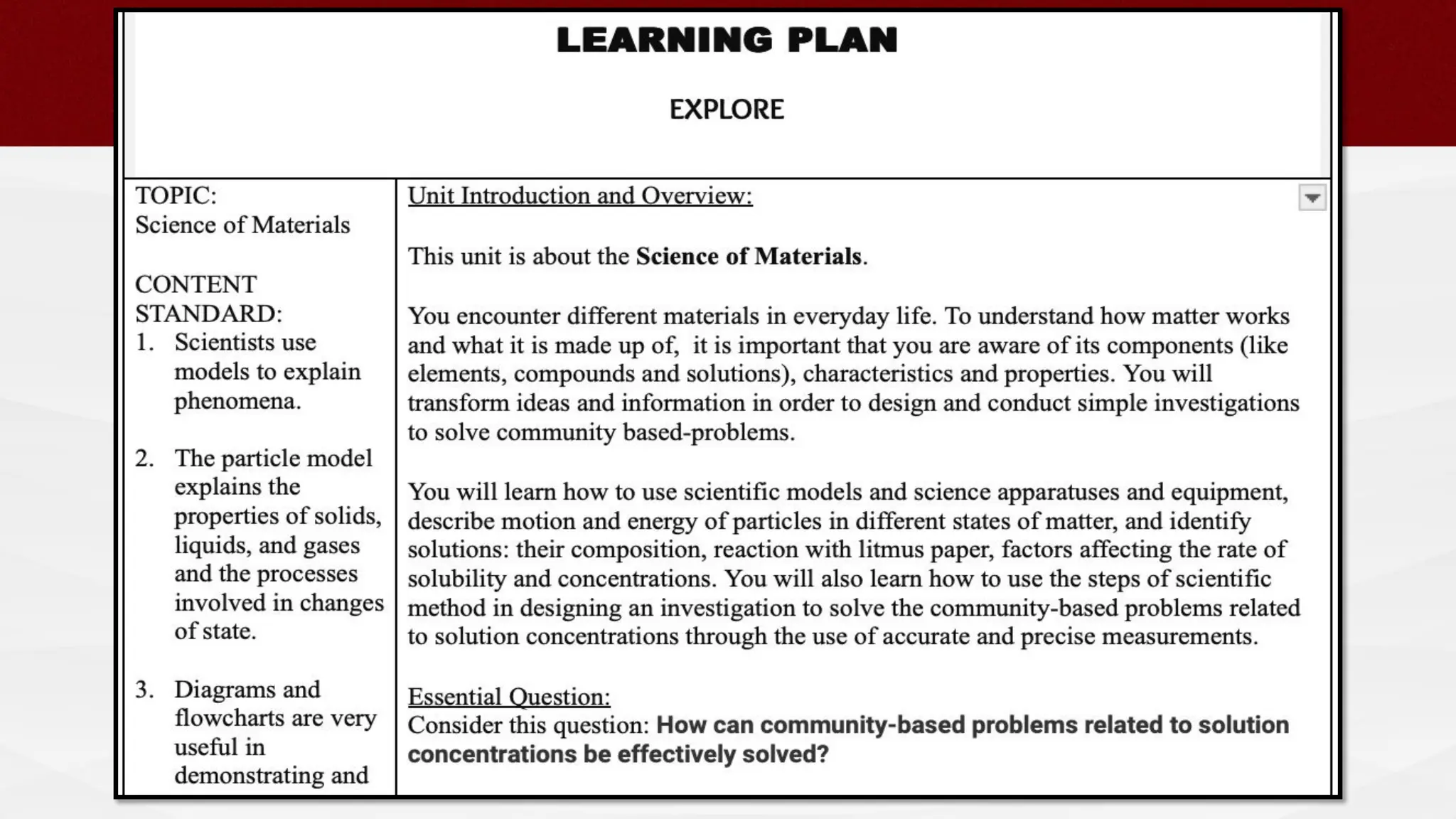
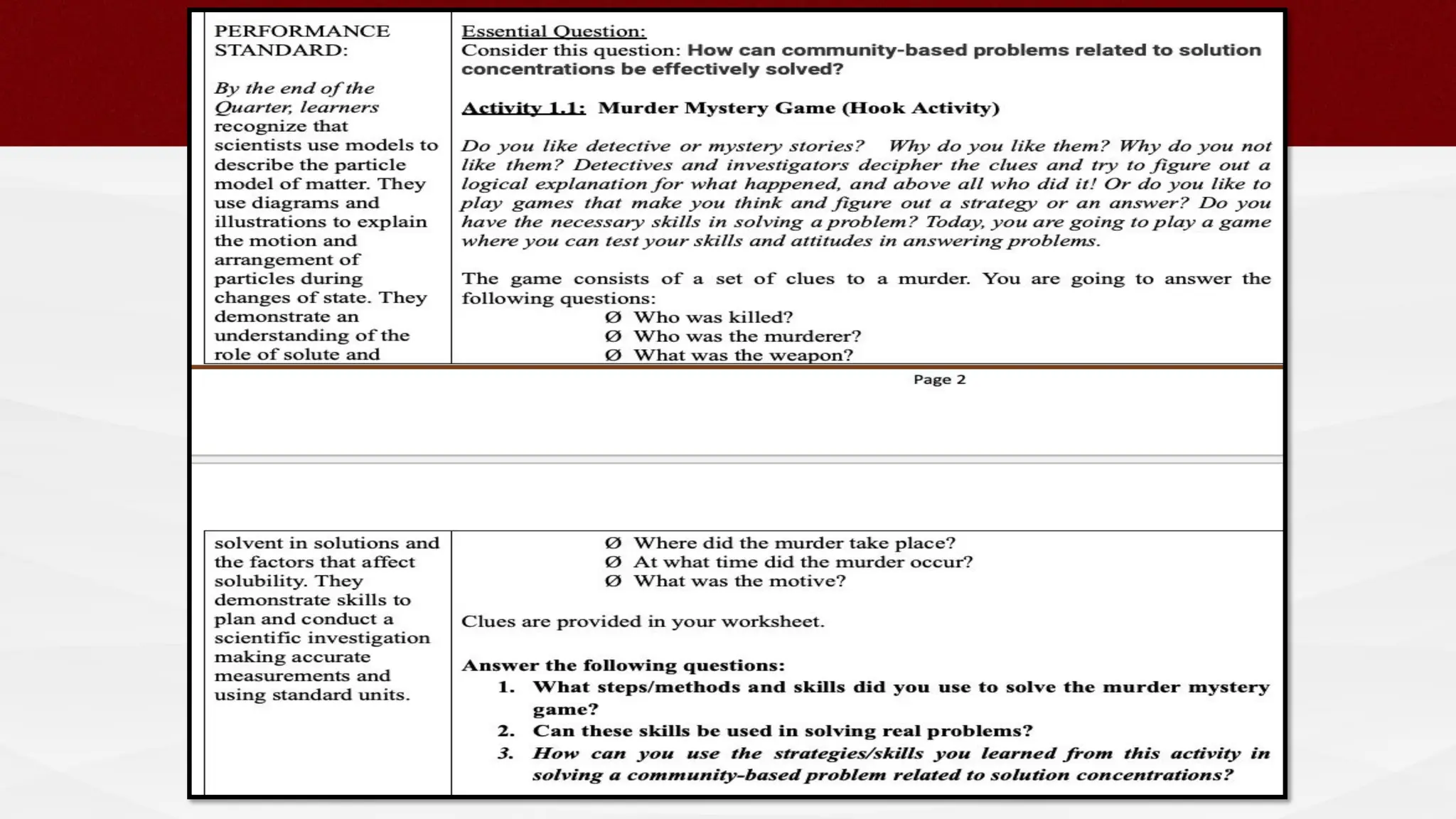
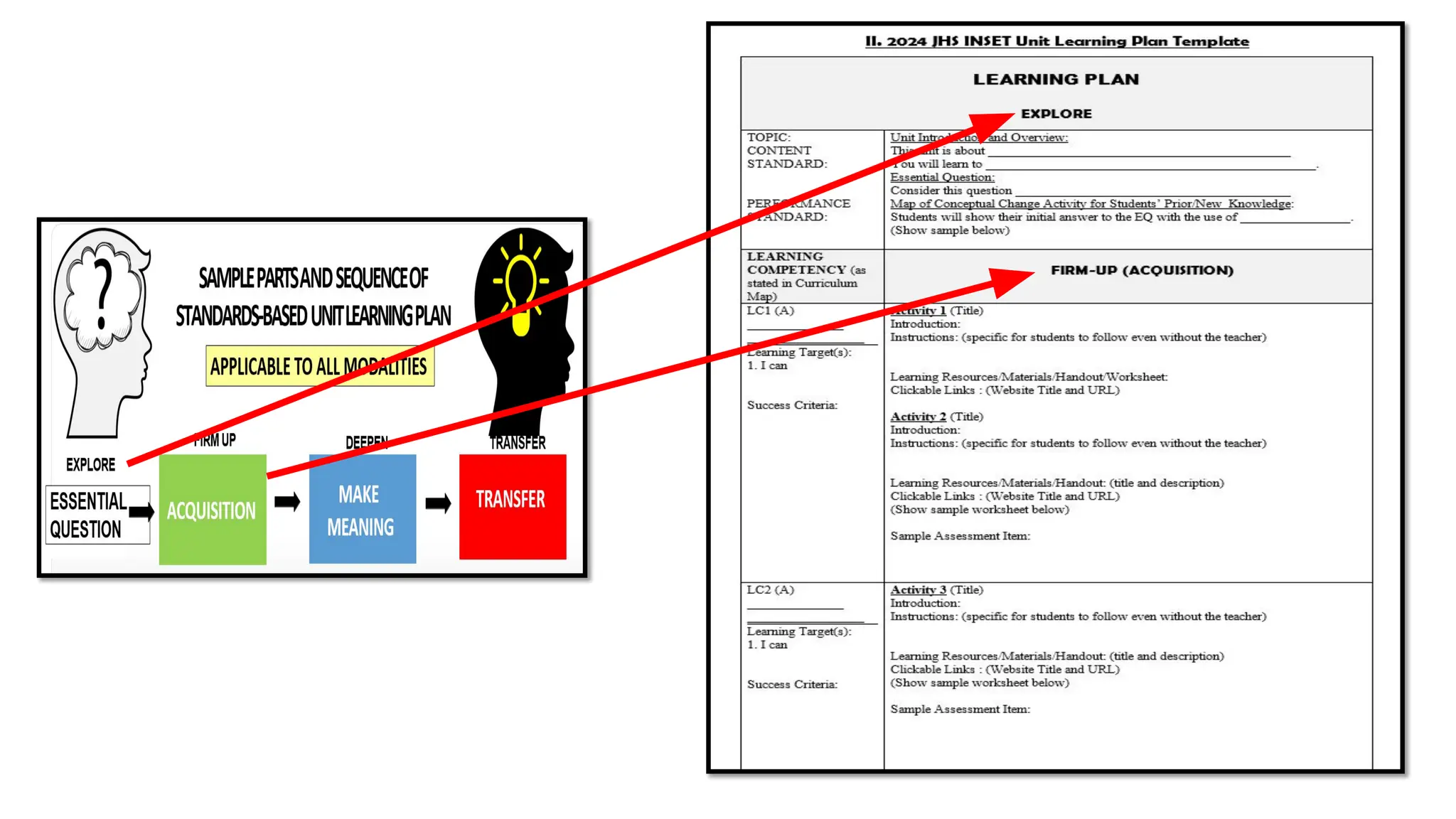
4. Learning Plan Template
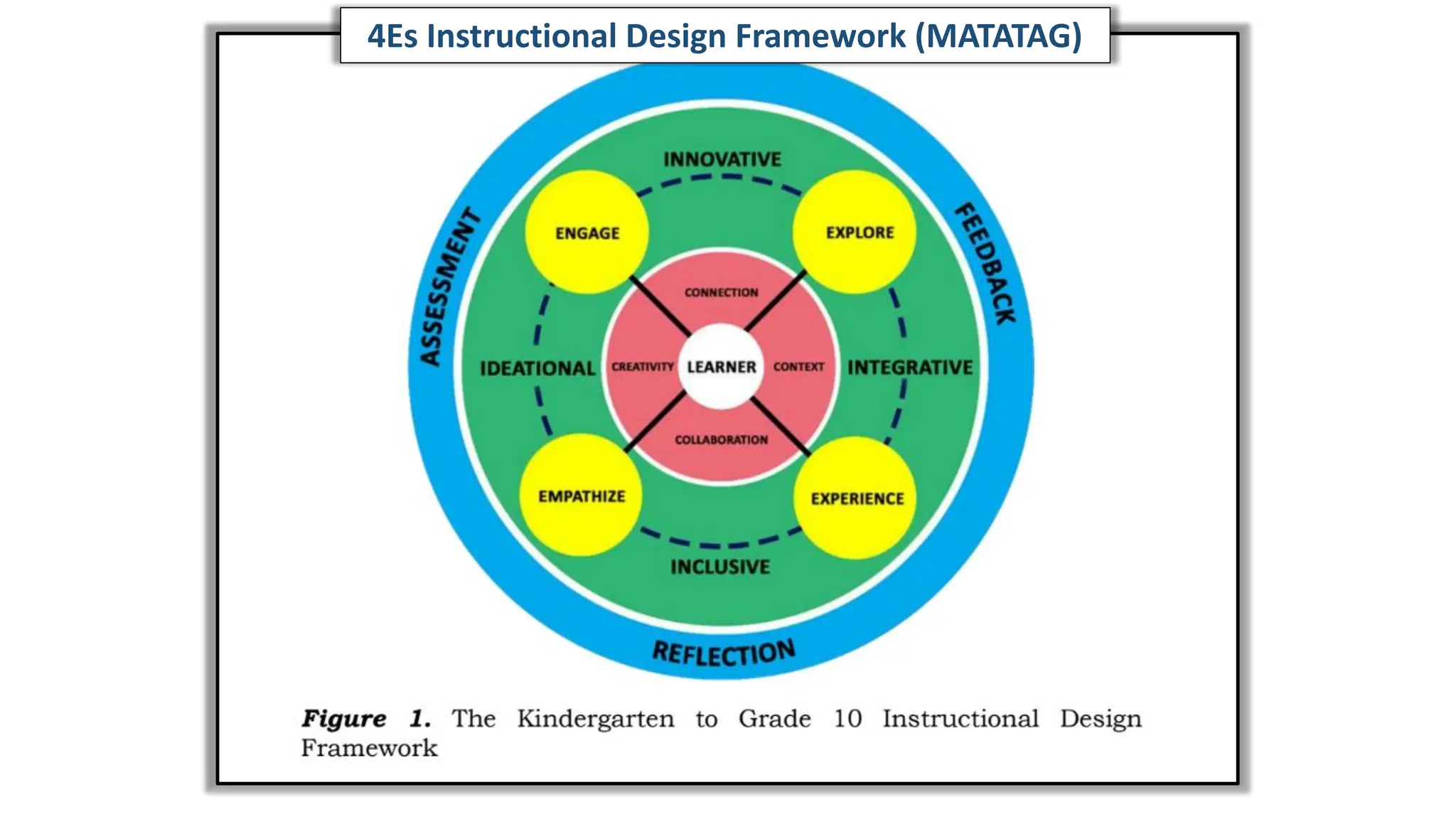
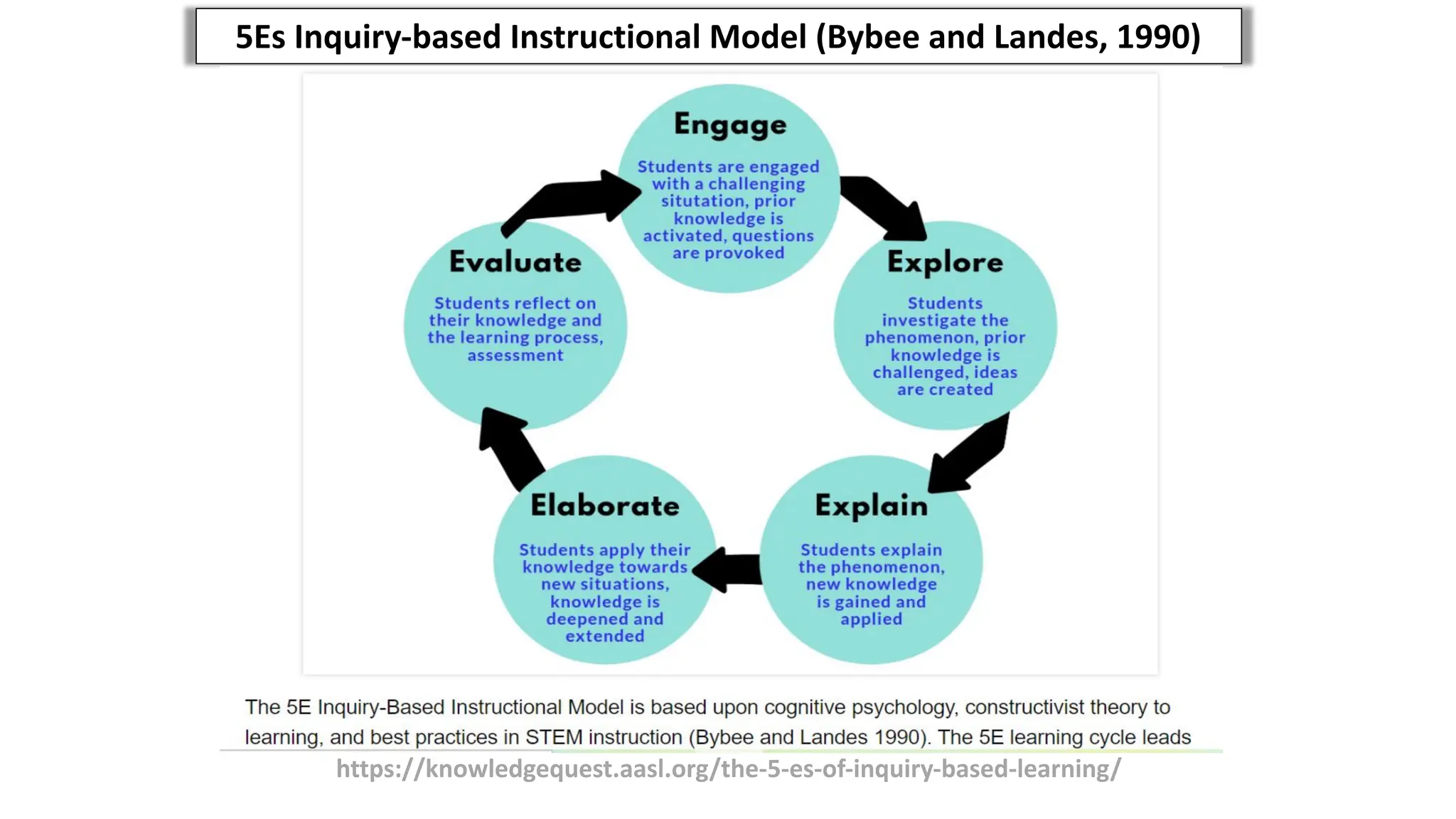
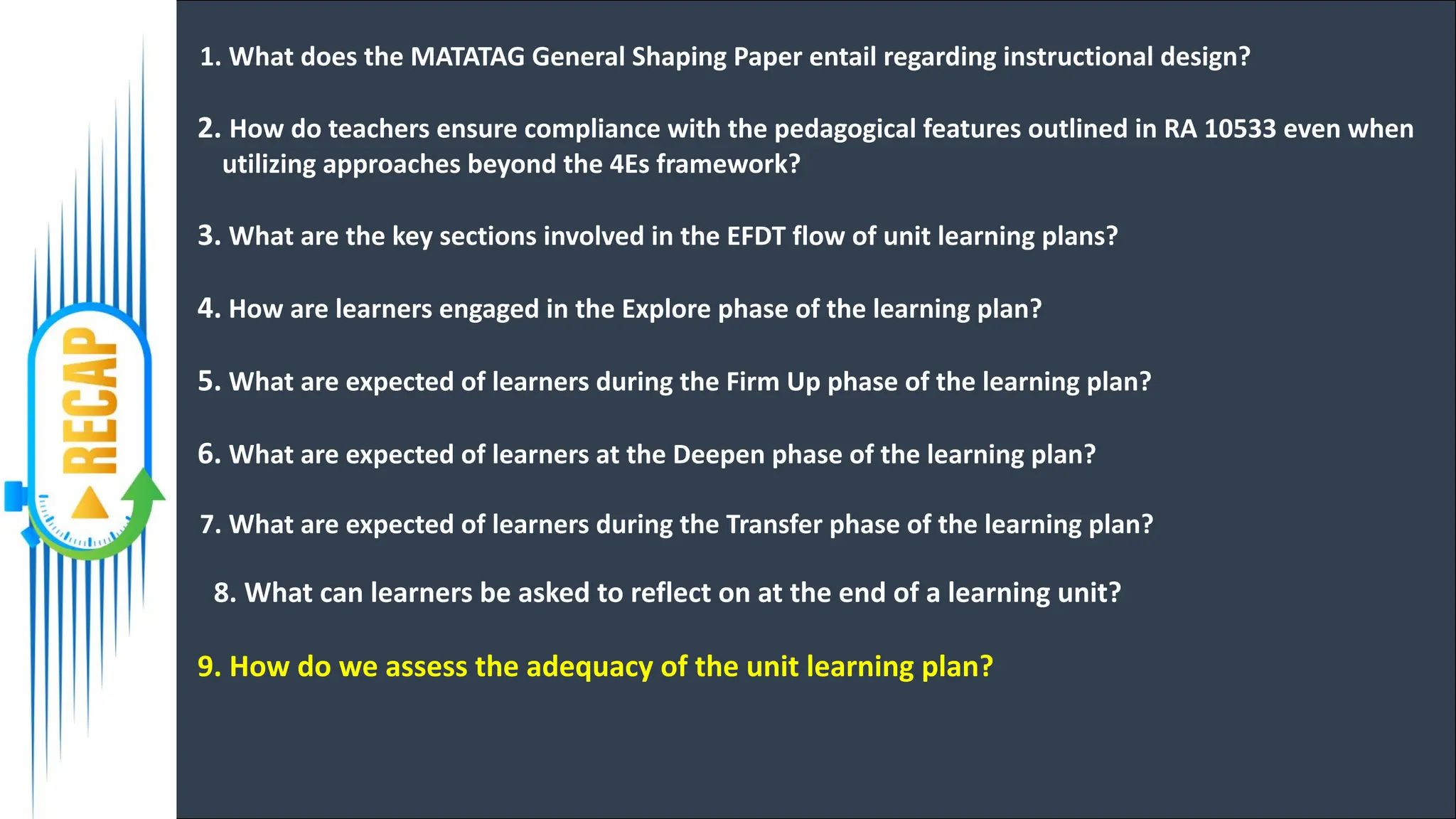
1. Discuss the 4Es Instructional Design Framework of MATATAG
Curriculum
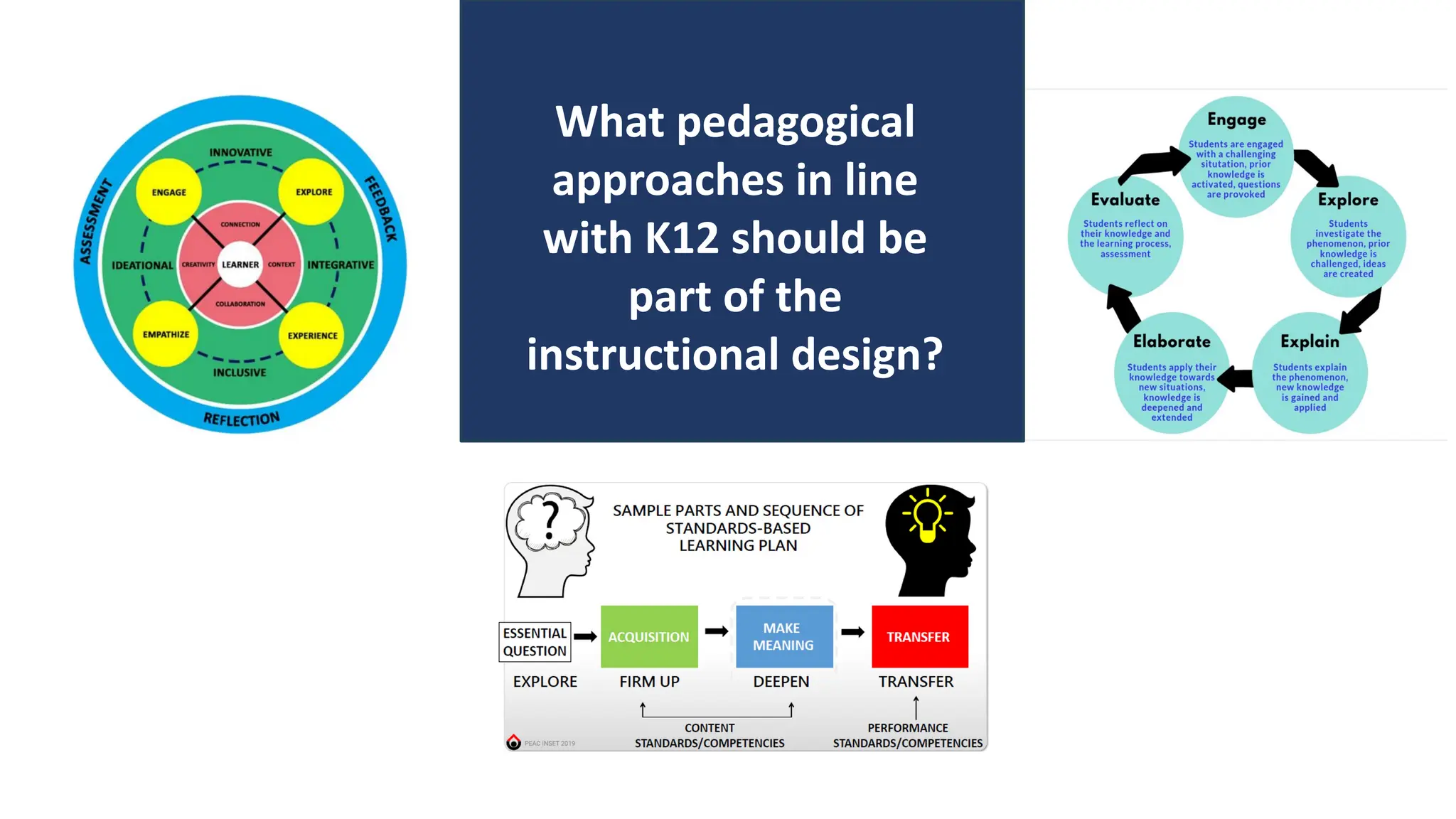
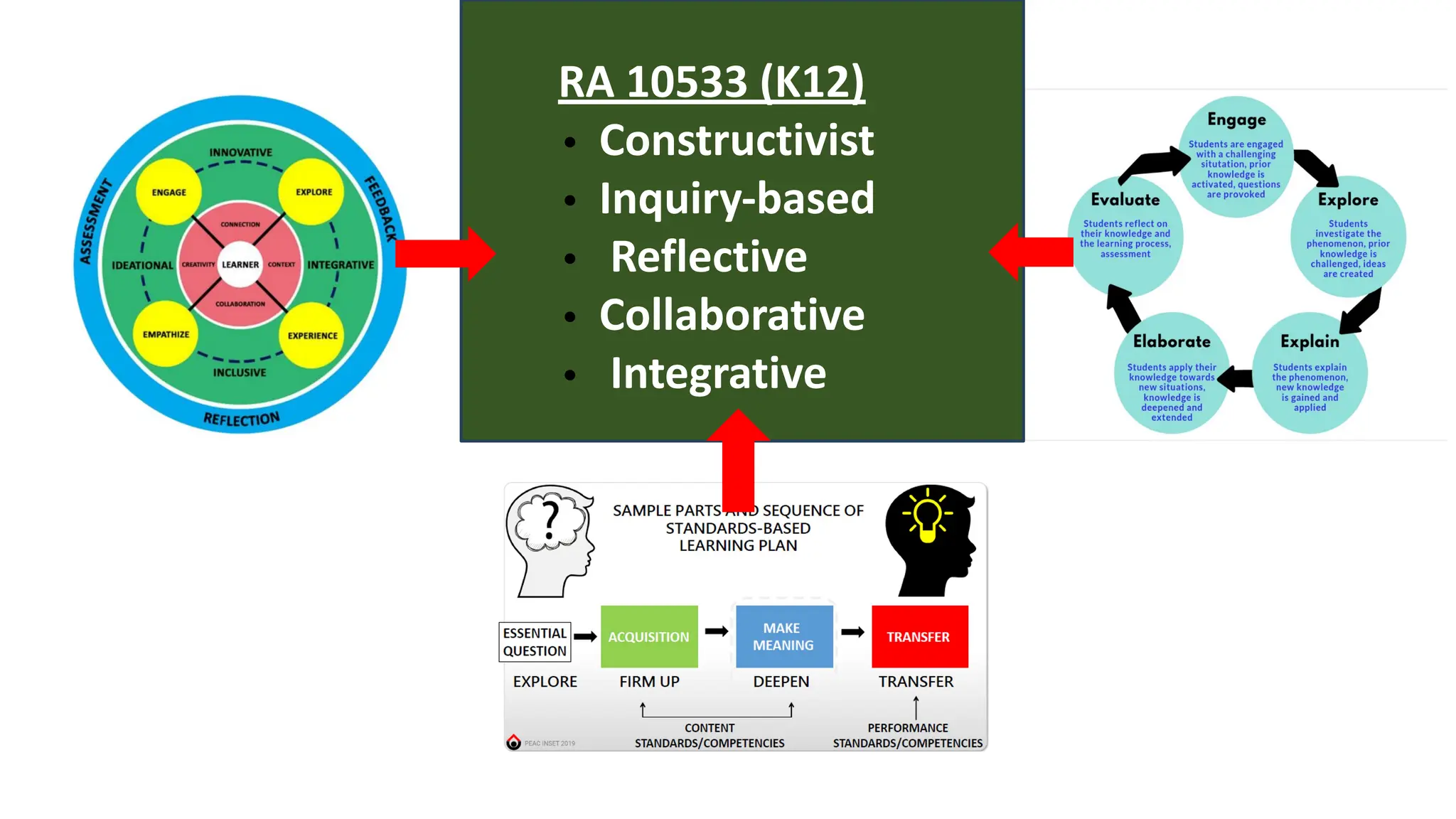
2. Compare 4Es with other instructional design frameworks (i.e., 5Es
Instructional Model and PEAC EFDT)
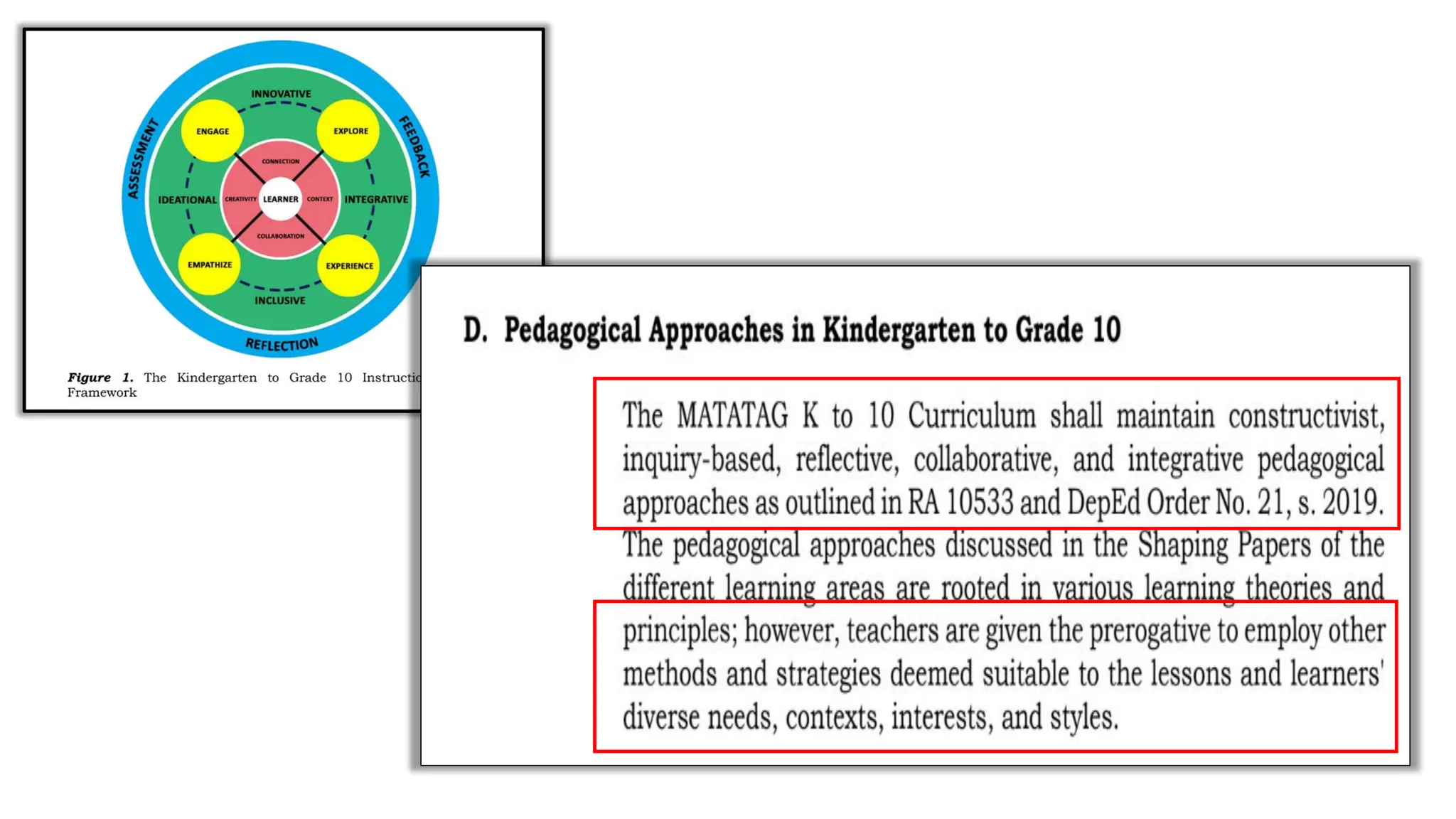
3. Relate the key K12 program pedagogical features as stated in RA 10533
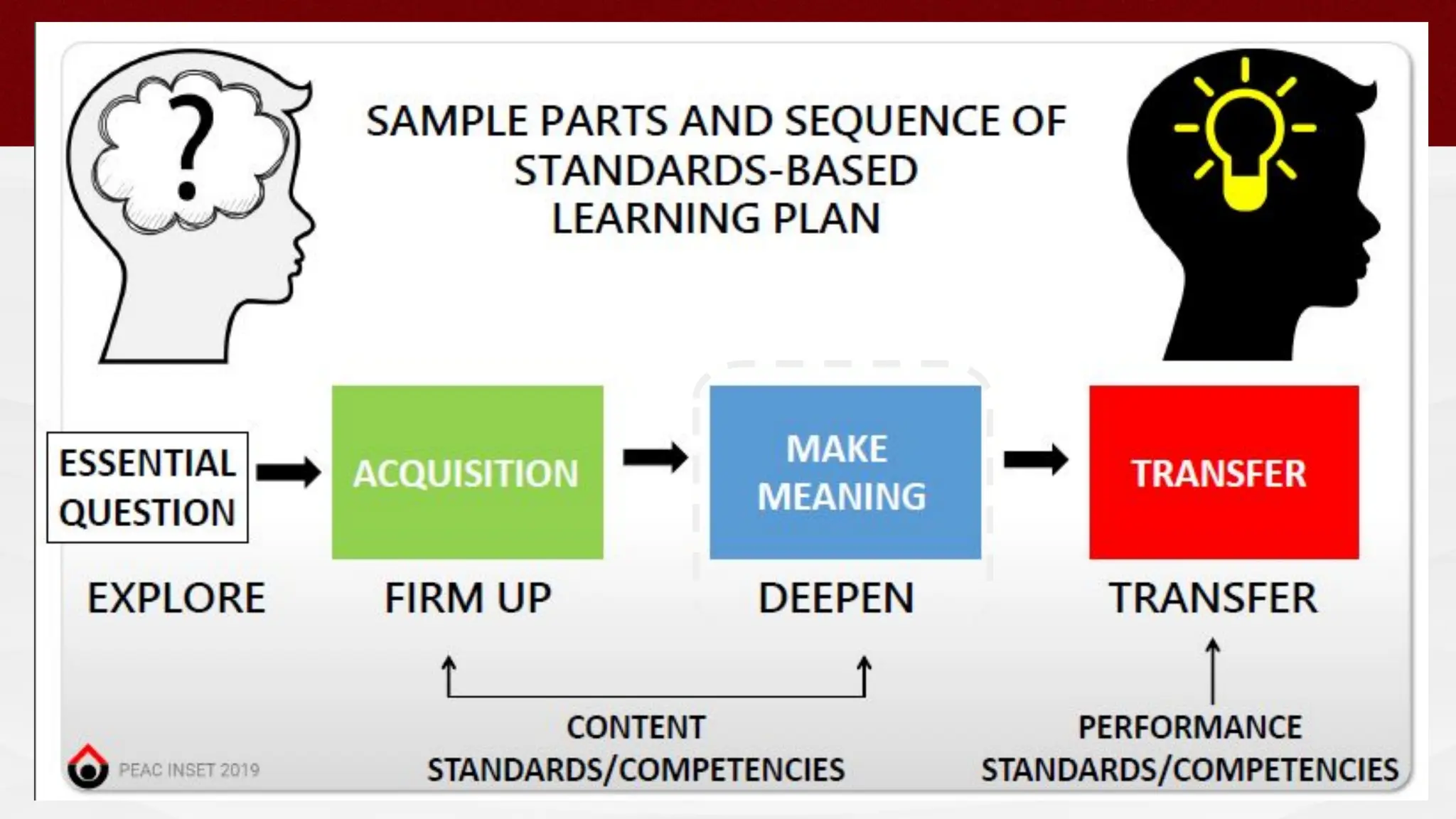
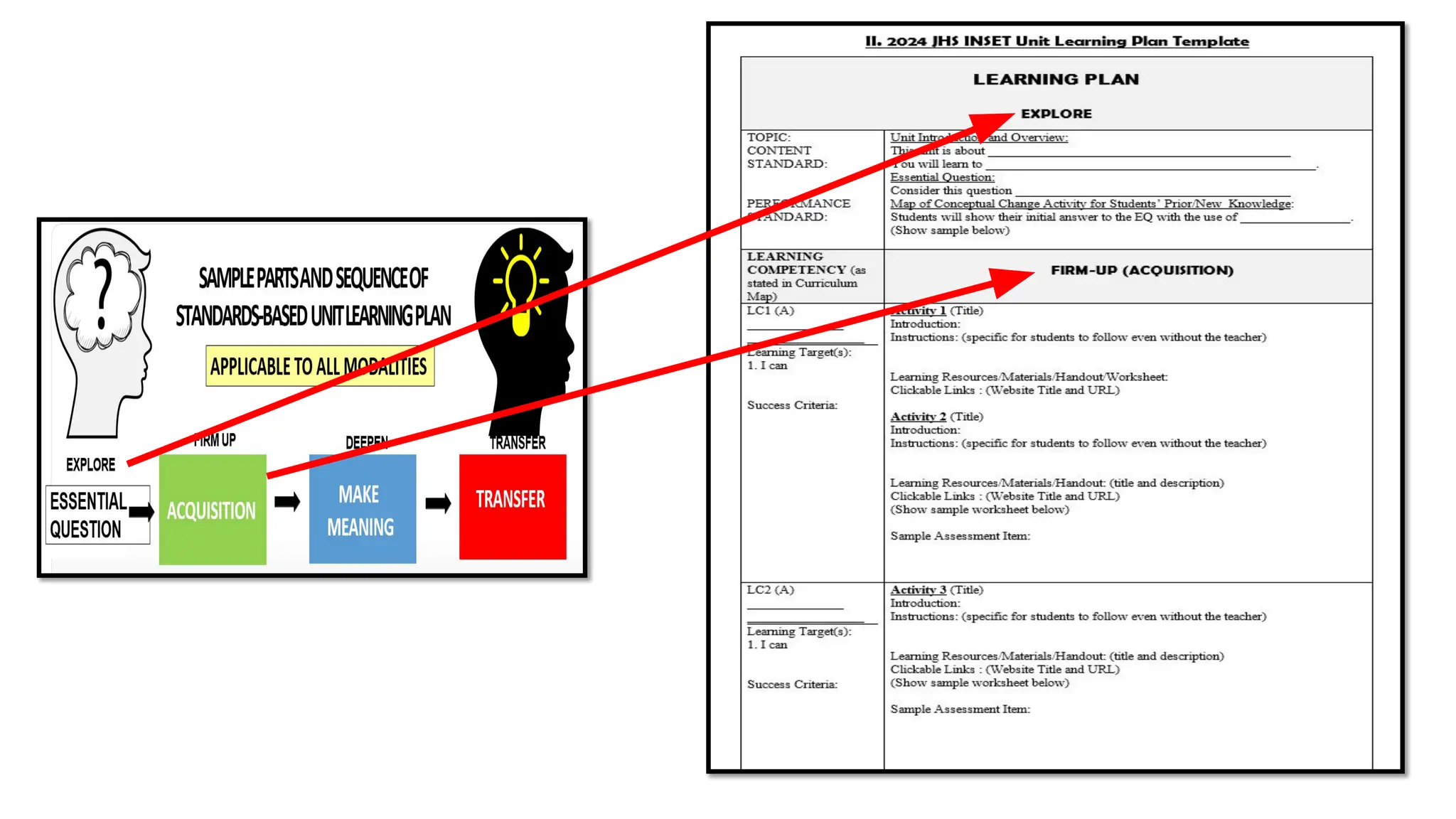
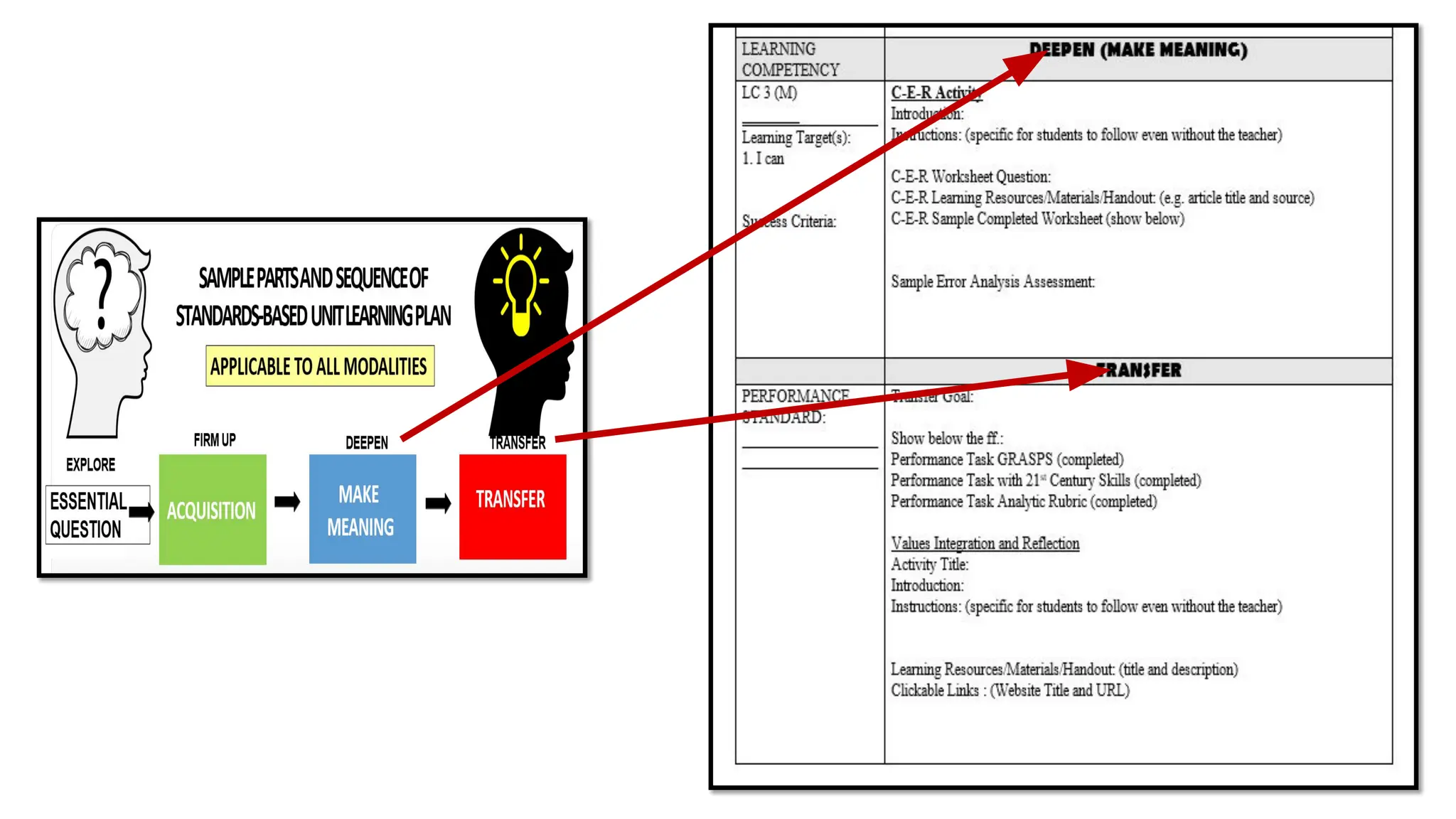
4. Explain each section of the EFDT learning plan
5. Point out integration of values education and peace education topics in
lessons
6. Discuss PEAC certification criteria for learning plans
7. Write sample EFDT learning plan for a chosen curriculum unit and topic
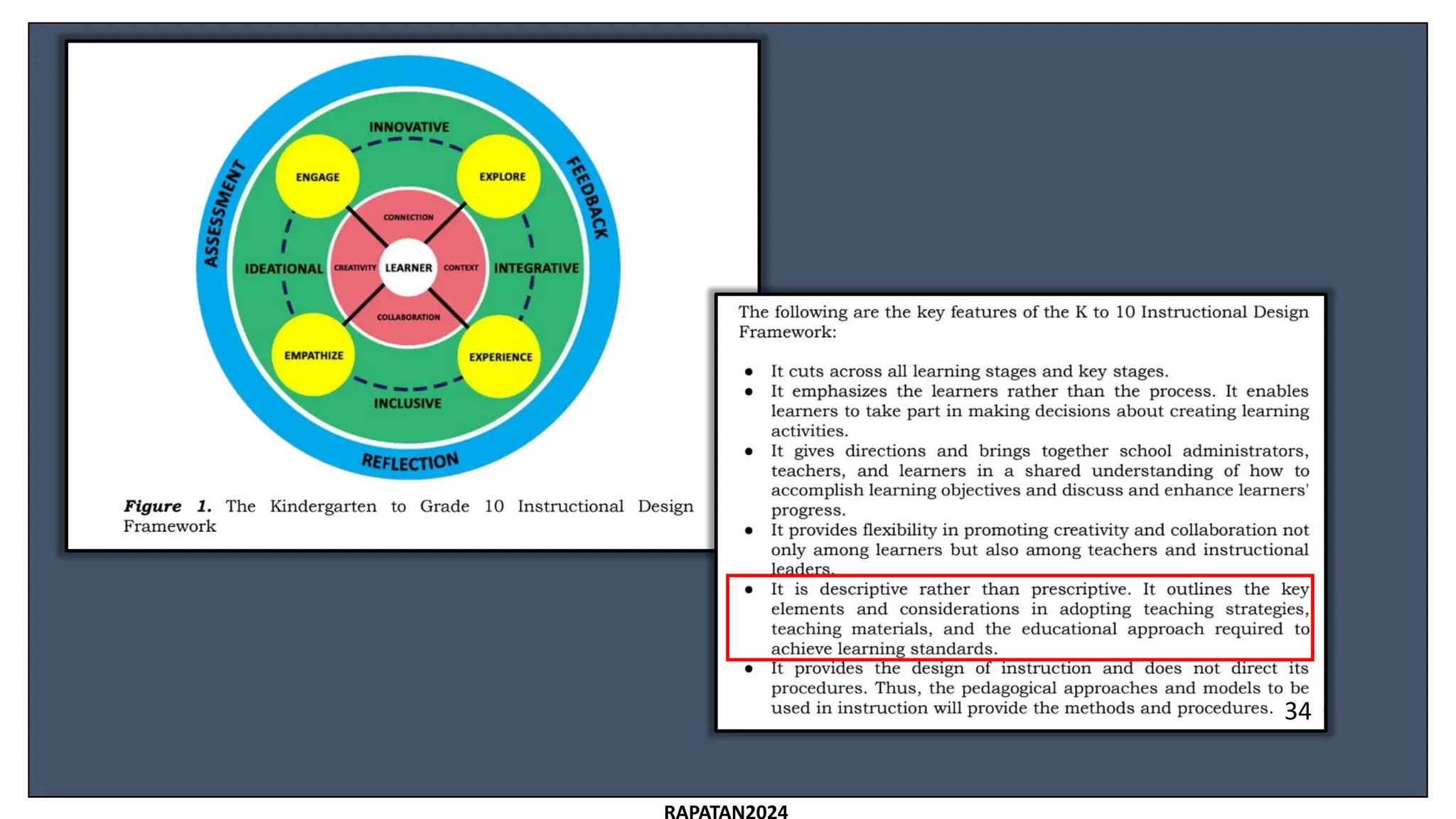
4Es Instructional Design Framework (MATATAG)
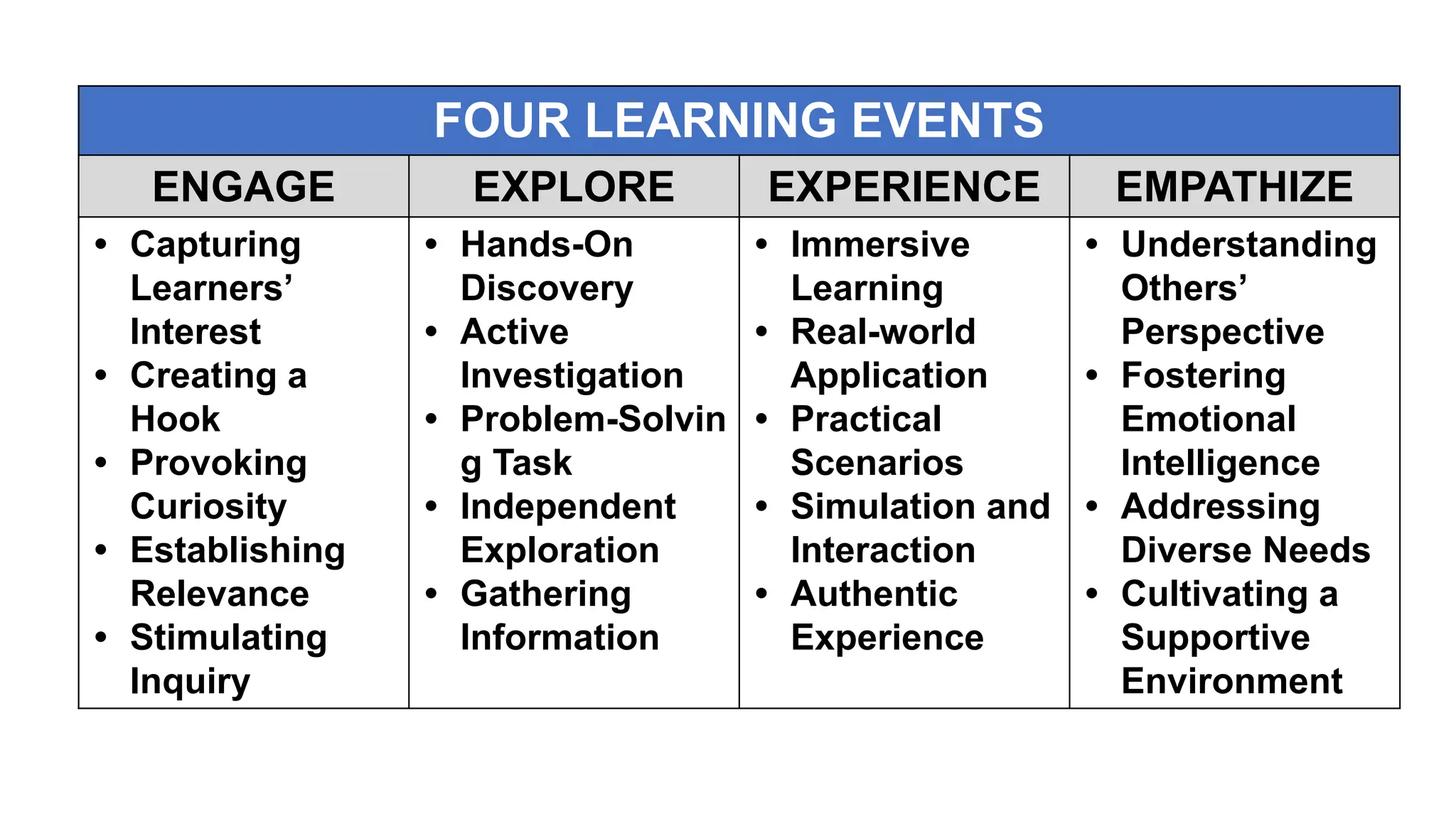
FOUR LEARNING EVENTS
ENGAGE EXPLORE EXPERIENCE EMPATHIZE
• Capturing
Learners’
Interest
• Creating a
Hook
• Provoking
Curiosity
• Establishing
Relevance
• Stimulating
Inquiry
• Hands-On
Discovery
• Active
Investigation
• Problem-Solvin
g Task
• Independent
Exploration
• Gathering
Information
• Immersive
Learning
• Real-world
Application
• Practical
Scenarios
• Simulation and
Interaction
• Authentic
Experience
• Understanding
Others’
Perspective
• Fostering
Emotional
Intelligence
• Addressing
Diverse Needs
• Cultivating a
Supportive
Environment
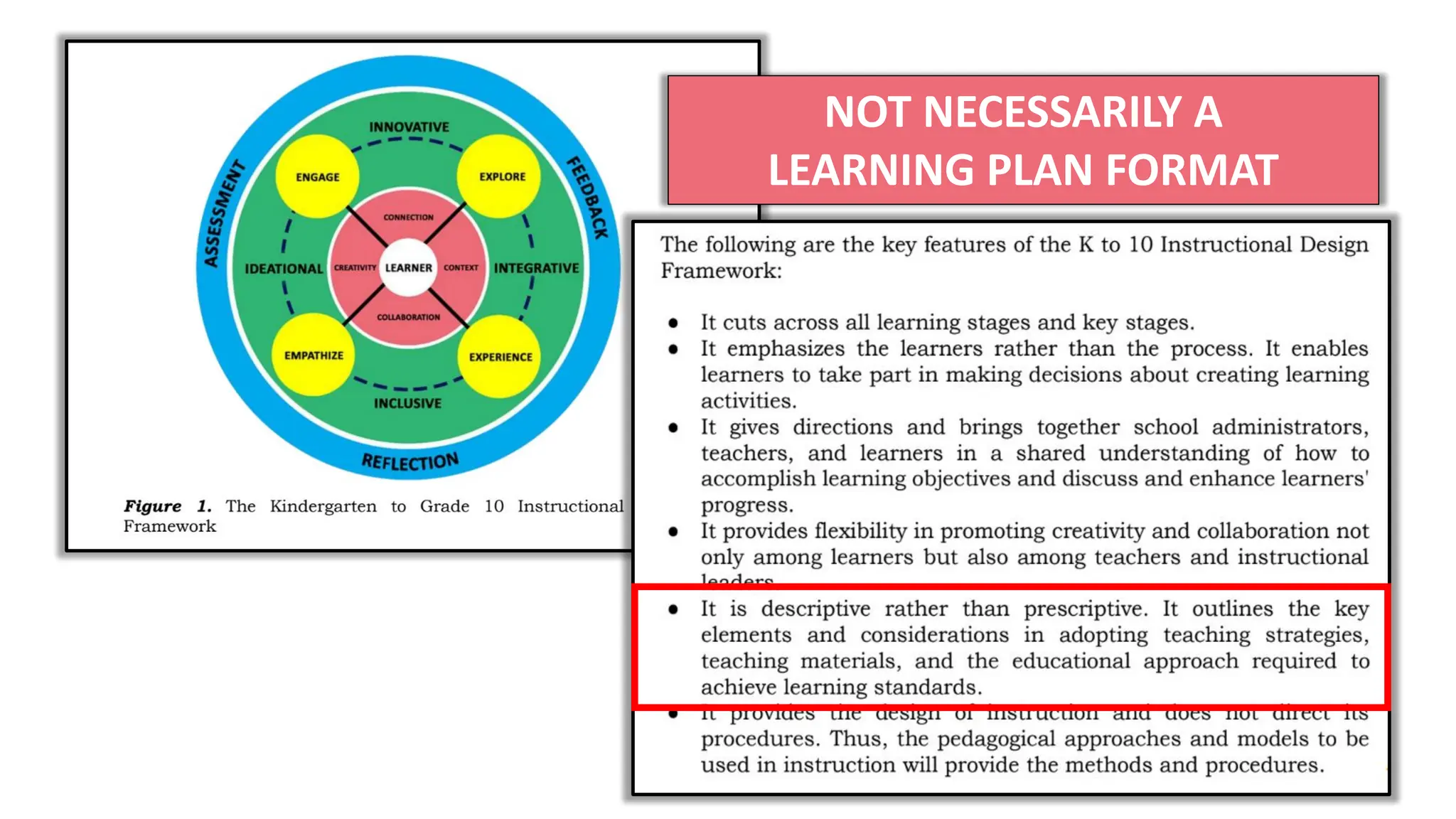
NOT NECESSARILY A
LEARNING PLAN FORMAT
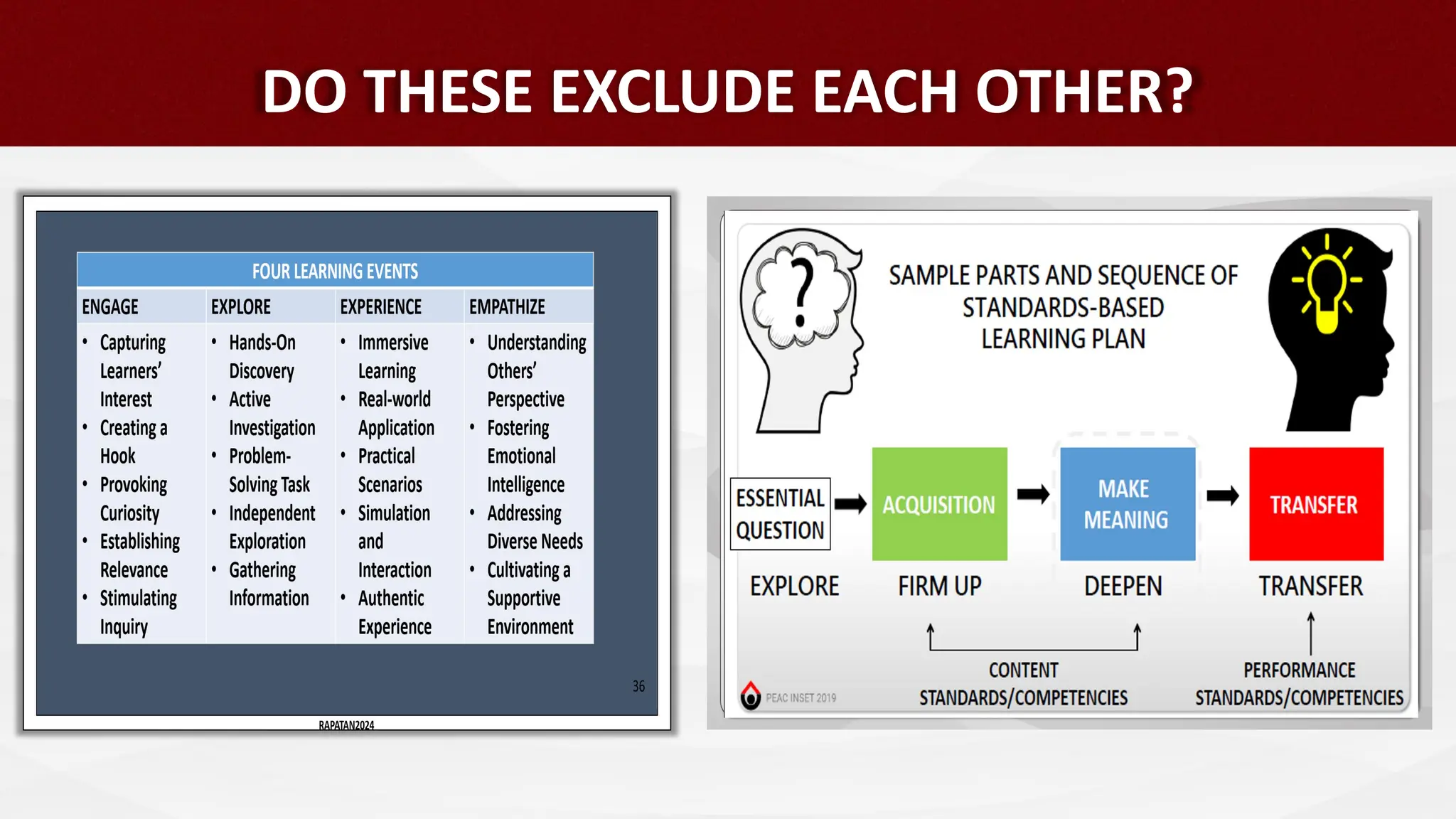
DO THESE EXCLUDE EACH OTHER?
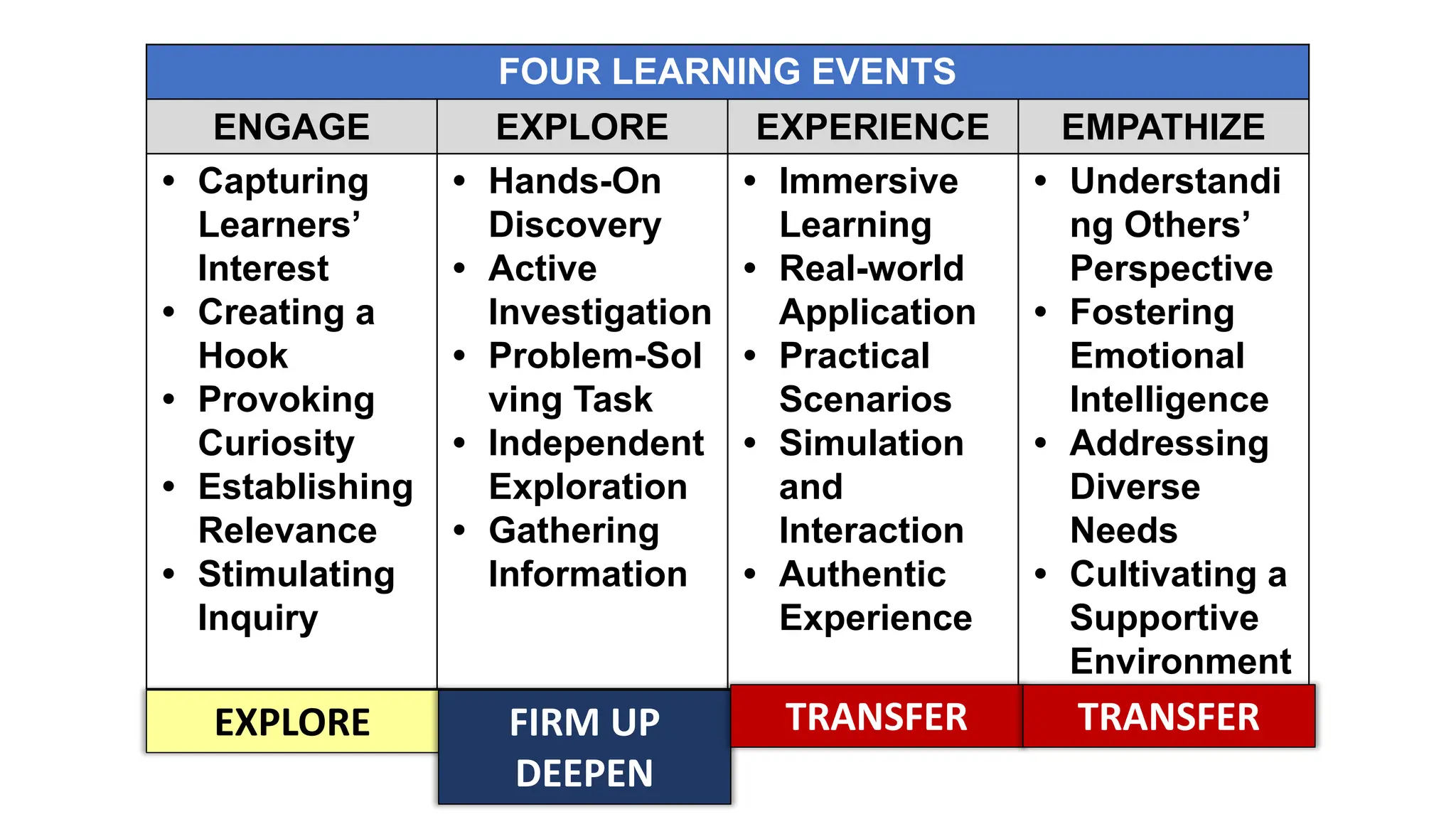
FOUR LEARNING EVENTS
ENGAGE EXPLORE EXPERIENCE EMPATHIZE
• Capturing
Learners’
Interest
• Creating a
Hook
• Provoking
Curiosity
• Establishing
Relevance
• Stimulating
Inquiry
• Hands-On
Discovery
• Active
Investigation
• Problem-Sol
ving Task
• Independent
Exploration
• Gathering
Information
• Immersive
Learning
• Real-world
Application
• Practical
Scenarios
• Simulation
and
Interaction
• Authentic
Experience
• Understandi
ng Others’
Perspective
• Fostering
Emotional
Intelligence
• Addressing
Diverse
Needs
• Cultivating a
Supportive
Environment
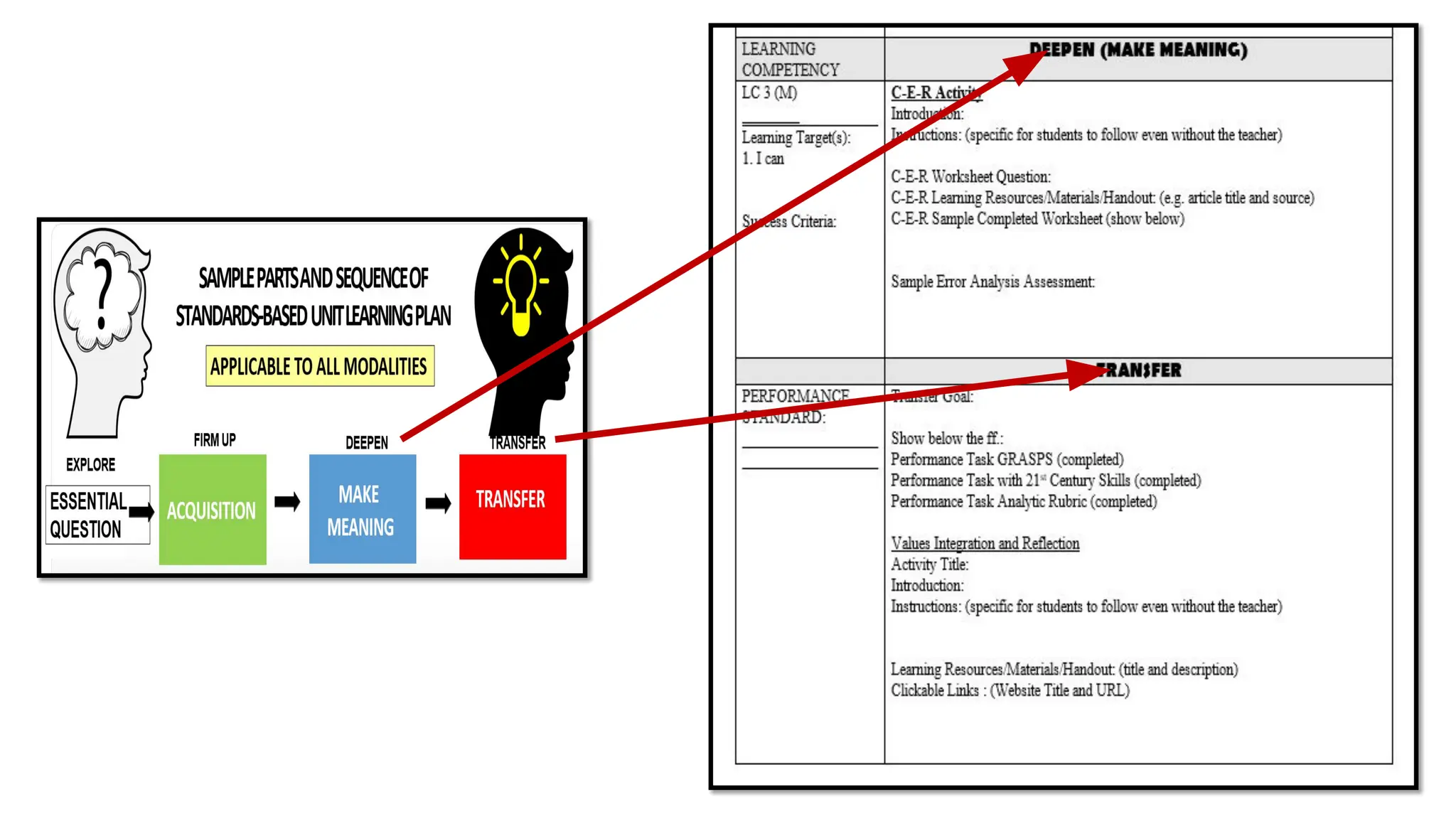
EXPLORE FIRM UP
DEEPEN
TRANSFER TRANSFER
34
https://knowledgequest.aasl.org/the-5-es-of-inquiry-based-learning/
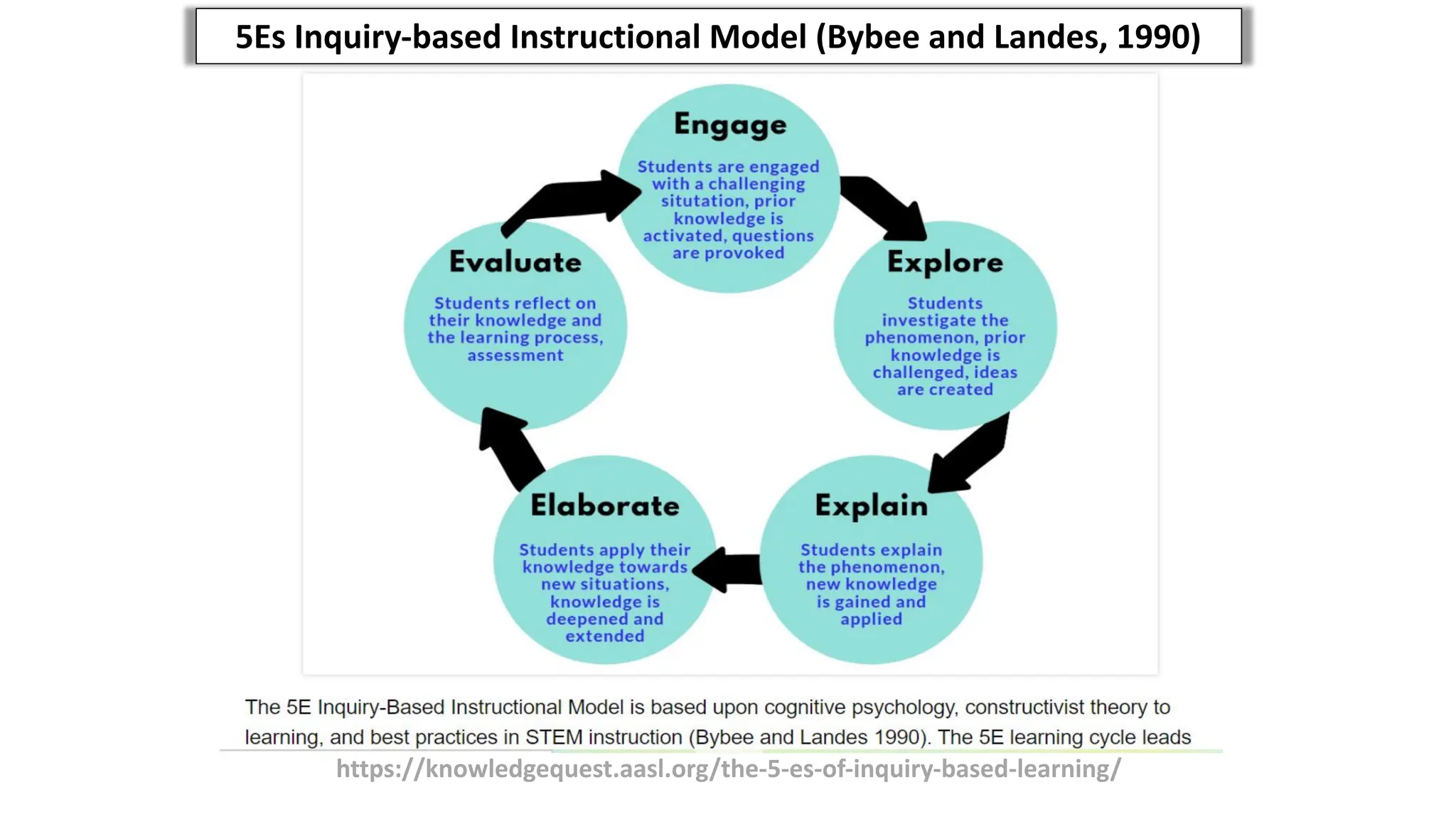
5Es Inquiry-based Instructional Model (Bybee and Landes, 1990)
https://knowledgequest.aasl.org/the-5-es-of-inquiry-based-learning/
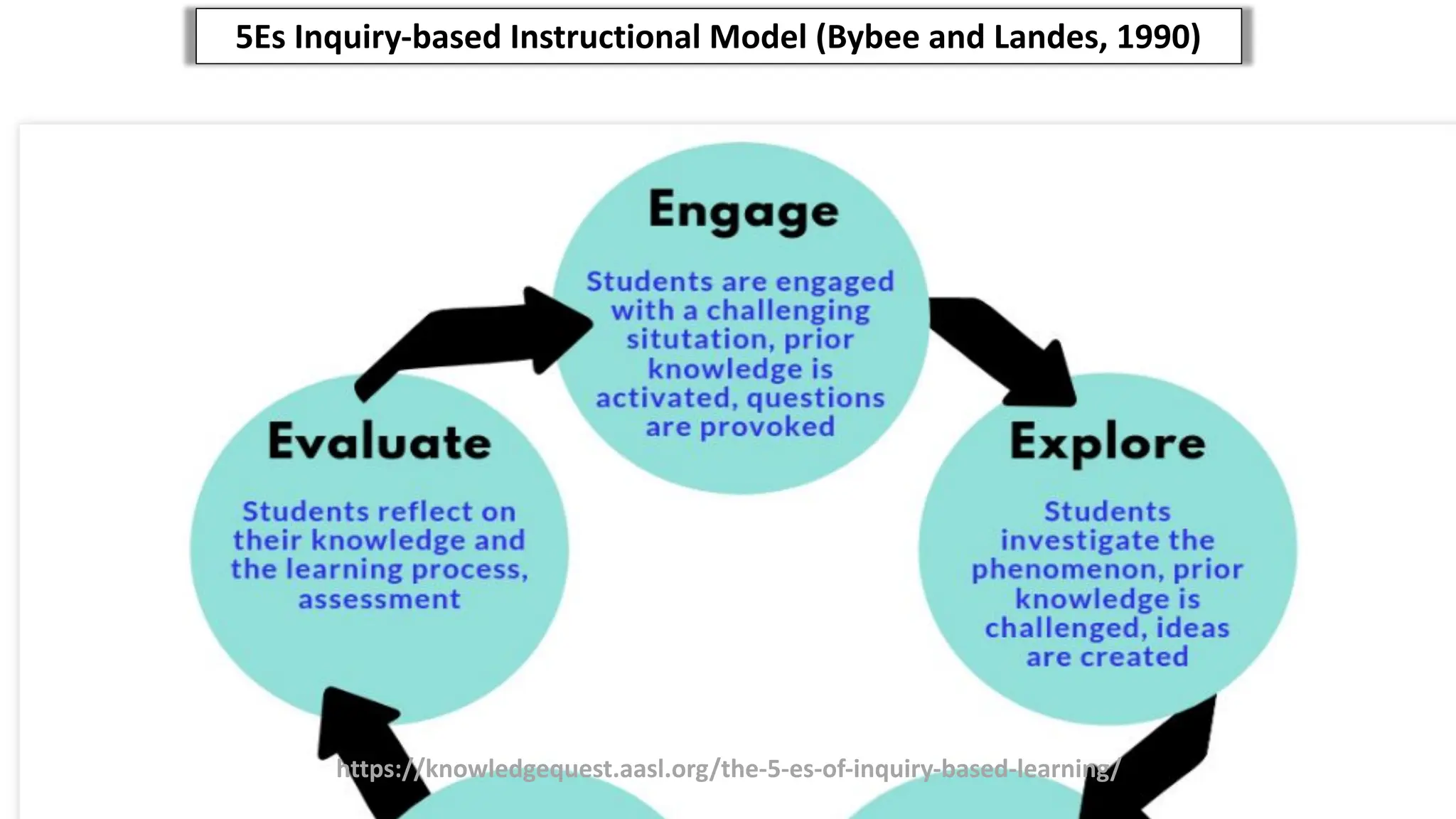
5Es Inquiry-based Instructional Model (Bybee and Landes, 1990)
https://knowledgequest.aasl.org/the-5-es-of-inquiry-based-learning/
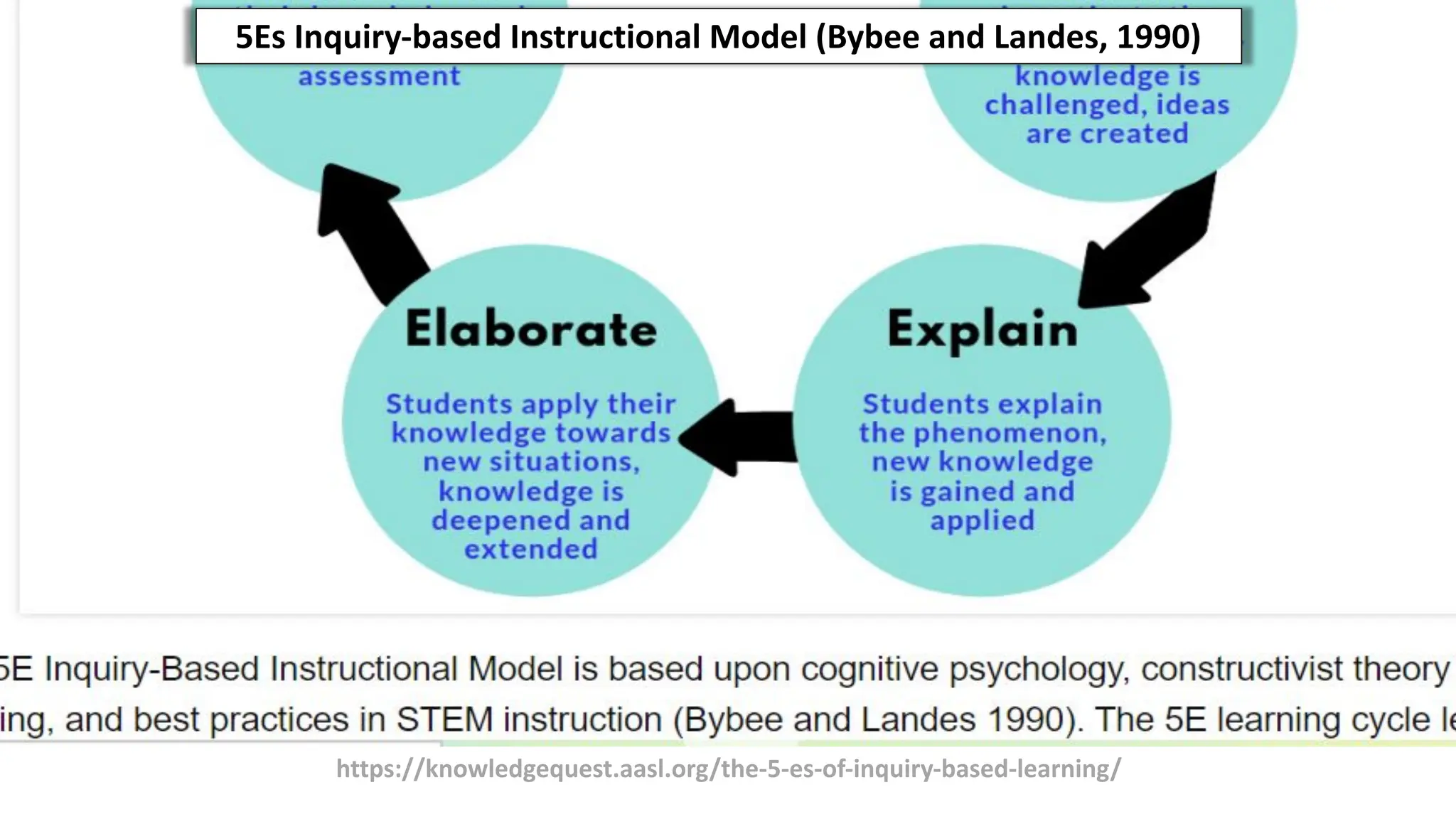
5Es Inquiry-based Instructional Model (Bybee and Landes, 1990)
https://knowledgequest.aasl.org/the-5-es-of-inquiry-based-learning/
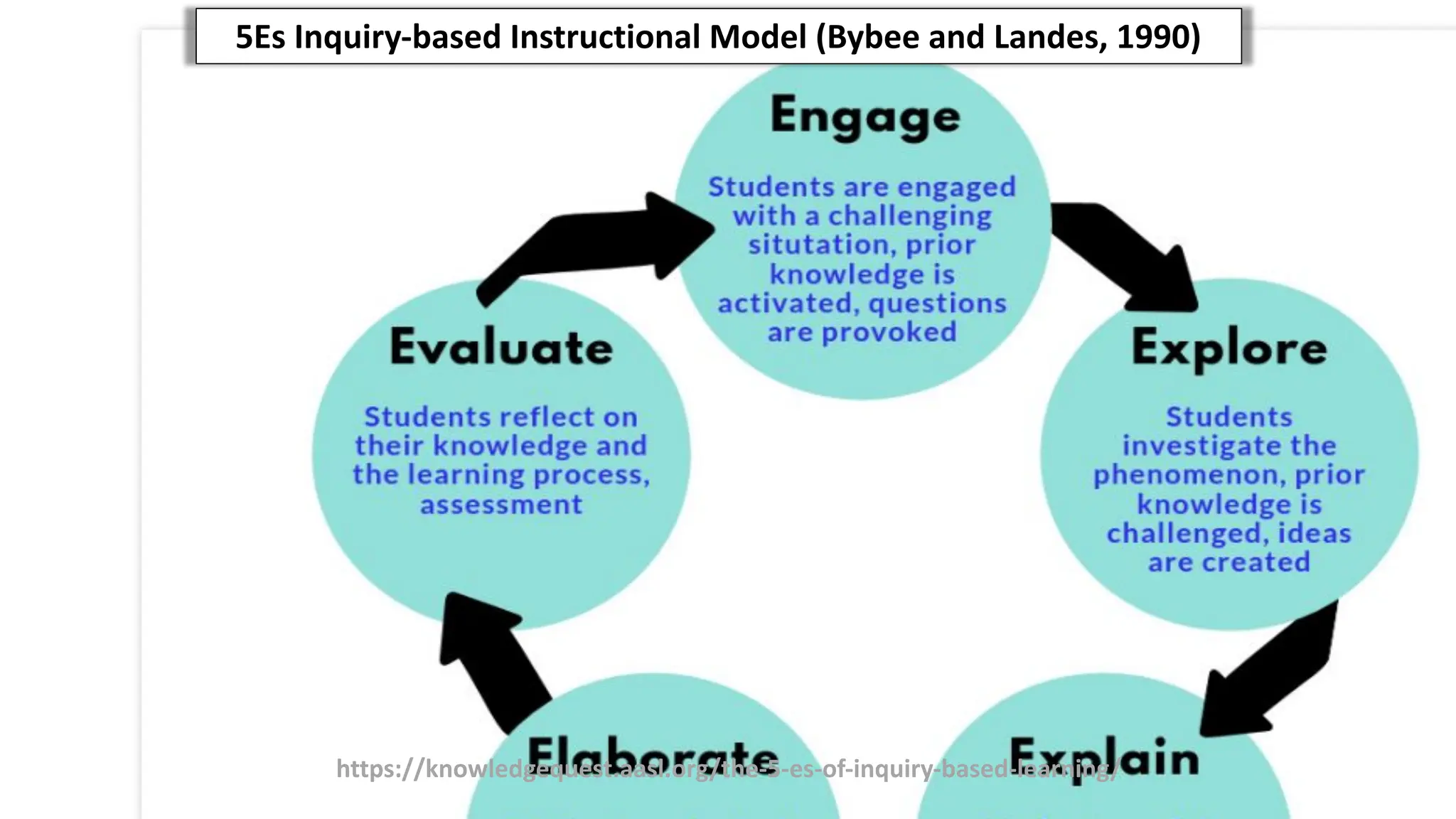
5Es Inquiry-based Instructional Model (Bybee and Landes, 1990)
https://knowledgequest.aasl.org/the-5-es-of-inquiry-based-learning/
5Es Inquiry-based Instructional Model (Bybee and Landes, 1990)
What pedagogical
approaches in line
with K12 should be
part of the
instructional design?
RA 10533 (K12)
• Constructivist
• Inquiry-based
• Reflective
• Collaborative
• Integrative
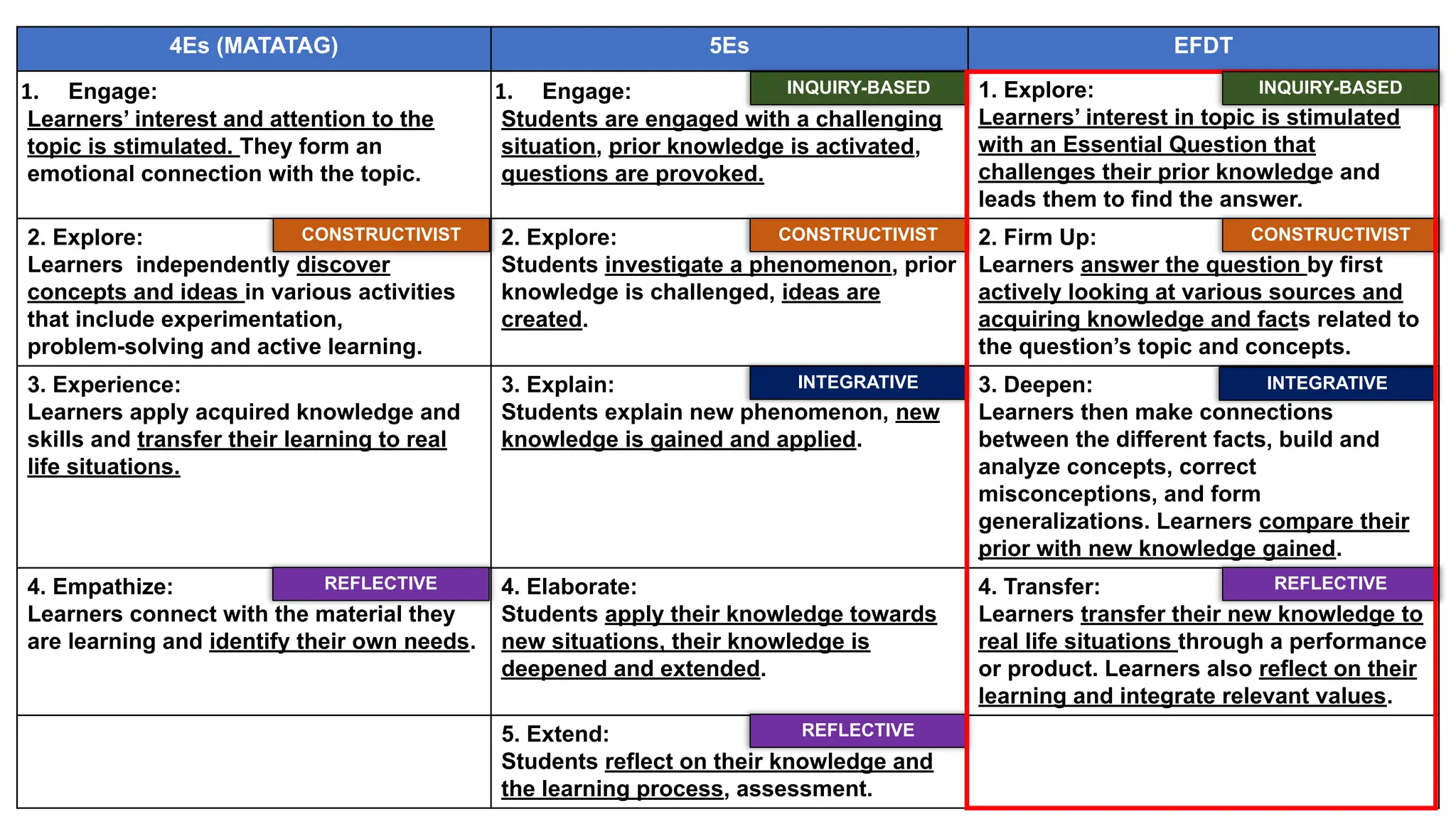
4Es (MATATAG) 5Es EFDT
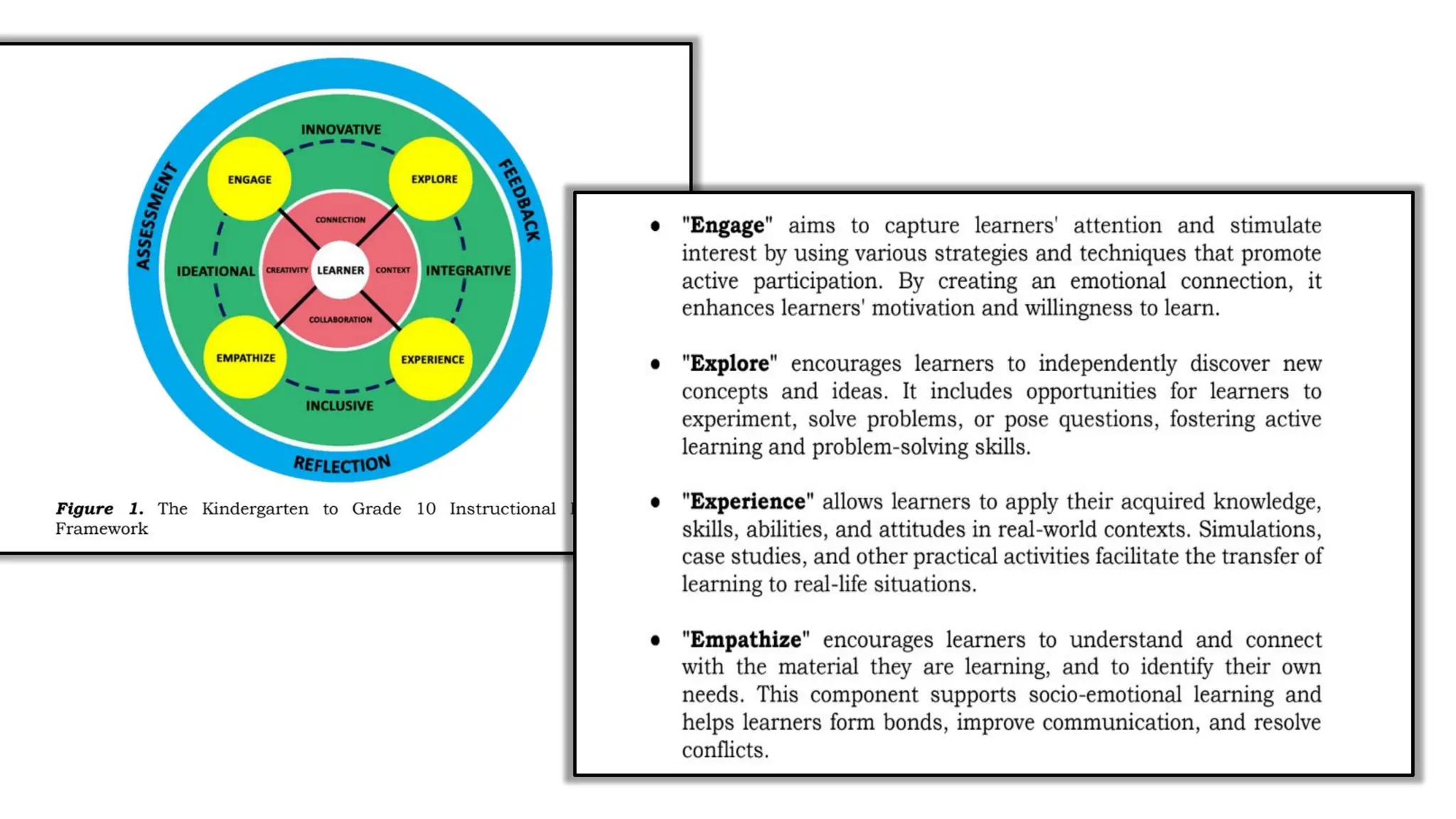
1. Engage:
Learners’ interest and attention to the
topic is stimulated. They form an
emotional connection with the topic.
1. Engage:
Students are engaged with a challenging
situation, prior knowledge is activated,
questions are provoked.
1. Explore:
Learners’ interest in topic is stimulated
with an Essential Question that
challenges their prior knowledge and
leads them to find the answer.
2. Explore:
Learners independently discover
concepts and ideas in various activities
that include experimentation,
problem-solving and active learning.
2. Explore:
Students investigate a phenomenon, prior
knowledge is challenged, ideas are
created.
2. Firm Up:
Learners answer the question by first
actively looking at various sources and
acquiring knowledge and facts related to
the question’s topic and concepts.
3. Experience:
Learners apply acquired knowledge and
skills and transfer their learning to real
life situations.
3. Explain:
Students explain new phenomenon, new
knowledge is gained and applied.
3. Deepen:
Learners then make connections
between the different facts, build and
analyze concepts, correct
misconceptions, and form
generalizations. Learners compare their
prior with new knowledge gained.
4. Empathize:
Learners connect with the material they
are learning and identify their own needs.
4. Elaborate:
Students apply their knowledge towards
new situations, their knowledge is
deepened and extended.
4. Transfer:
Learners transfer their new knowledge to
real life situations through a performance
or product. Learners also reflect on their
learning and integrate relevant values.
5. Extend:
Students reflect on their knowledge and
the learning process, assessment.
CONSTRUCTIVIST
CONSTRUCTIVIST
CONSTRUCTIVIST
REFLECTIVE
REFLECTIVE
REFLECTIVE
INTEGRATIVE
INQUIRY-BASED
INTEGRATIVE
INQUIRY-BASED
2
1
4
3
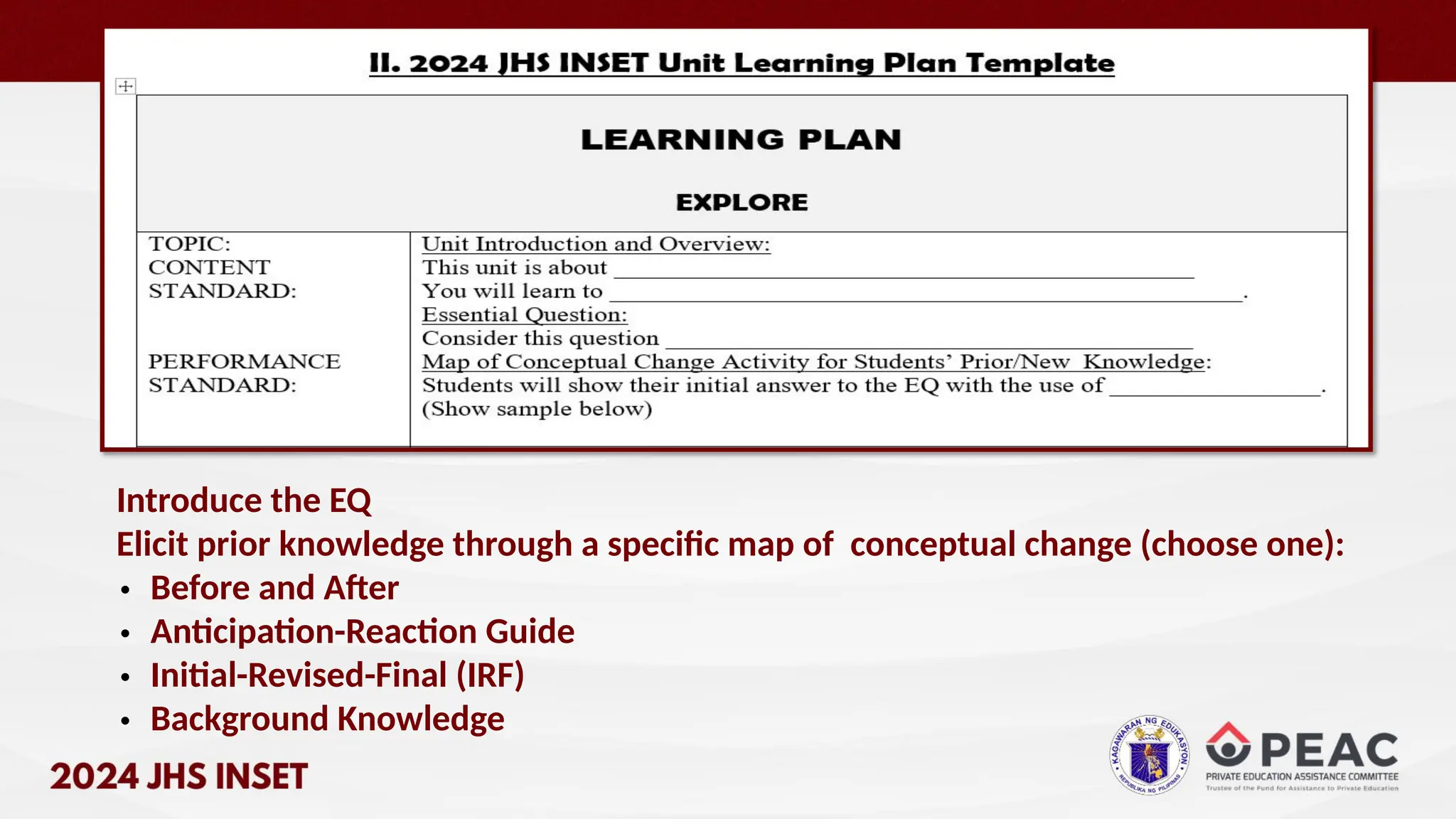
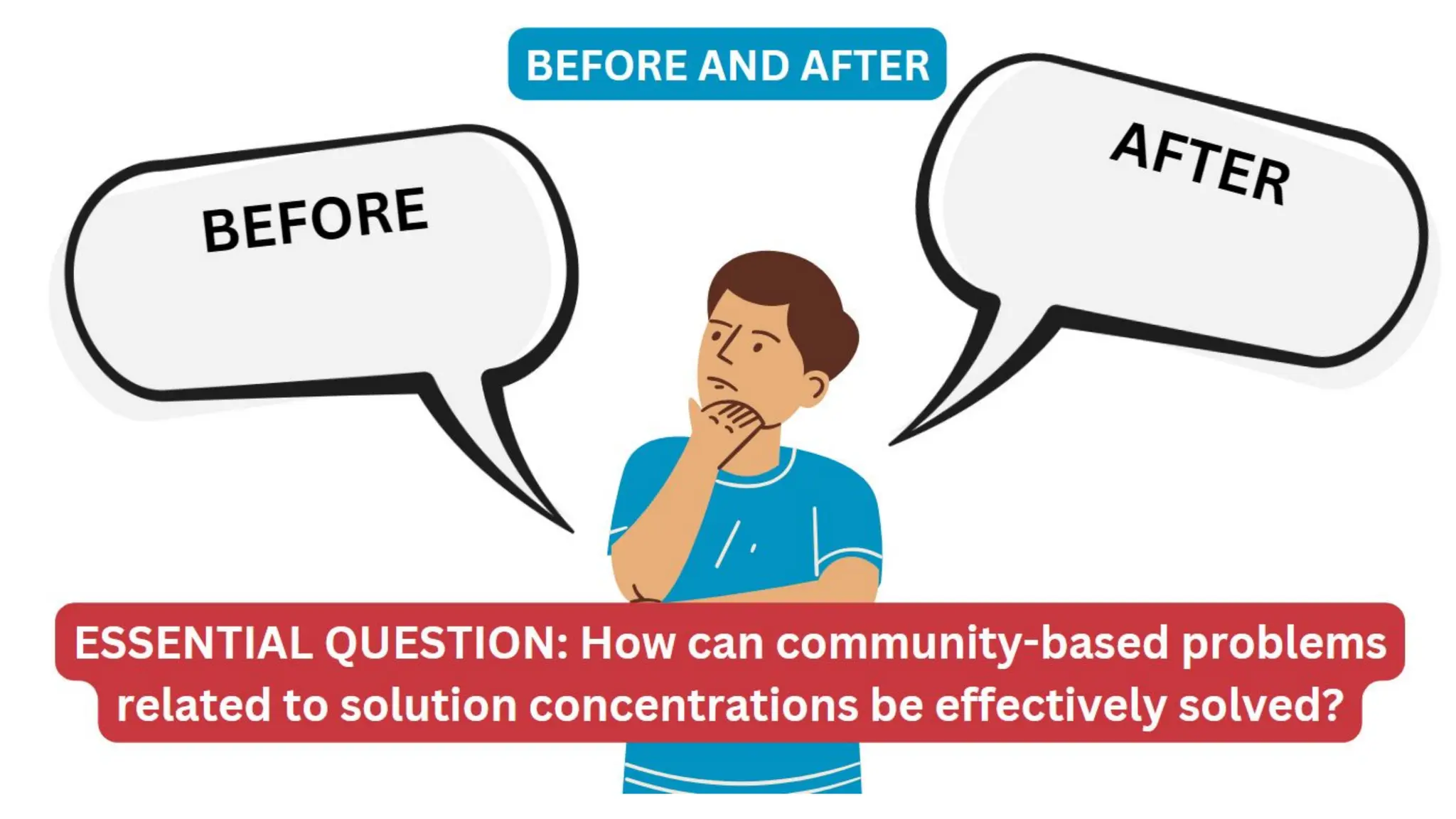
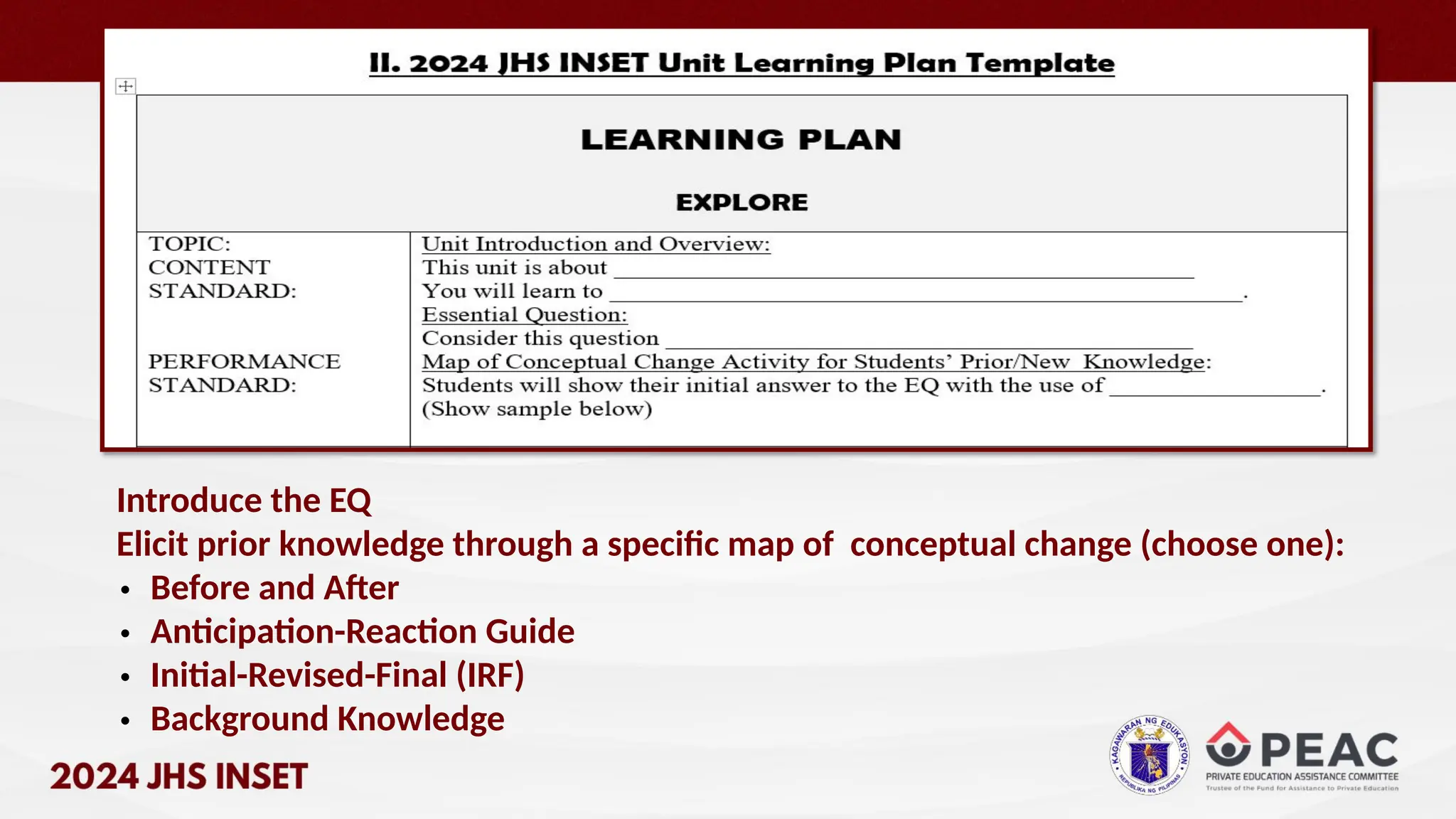
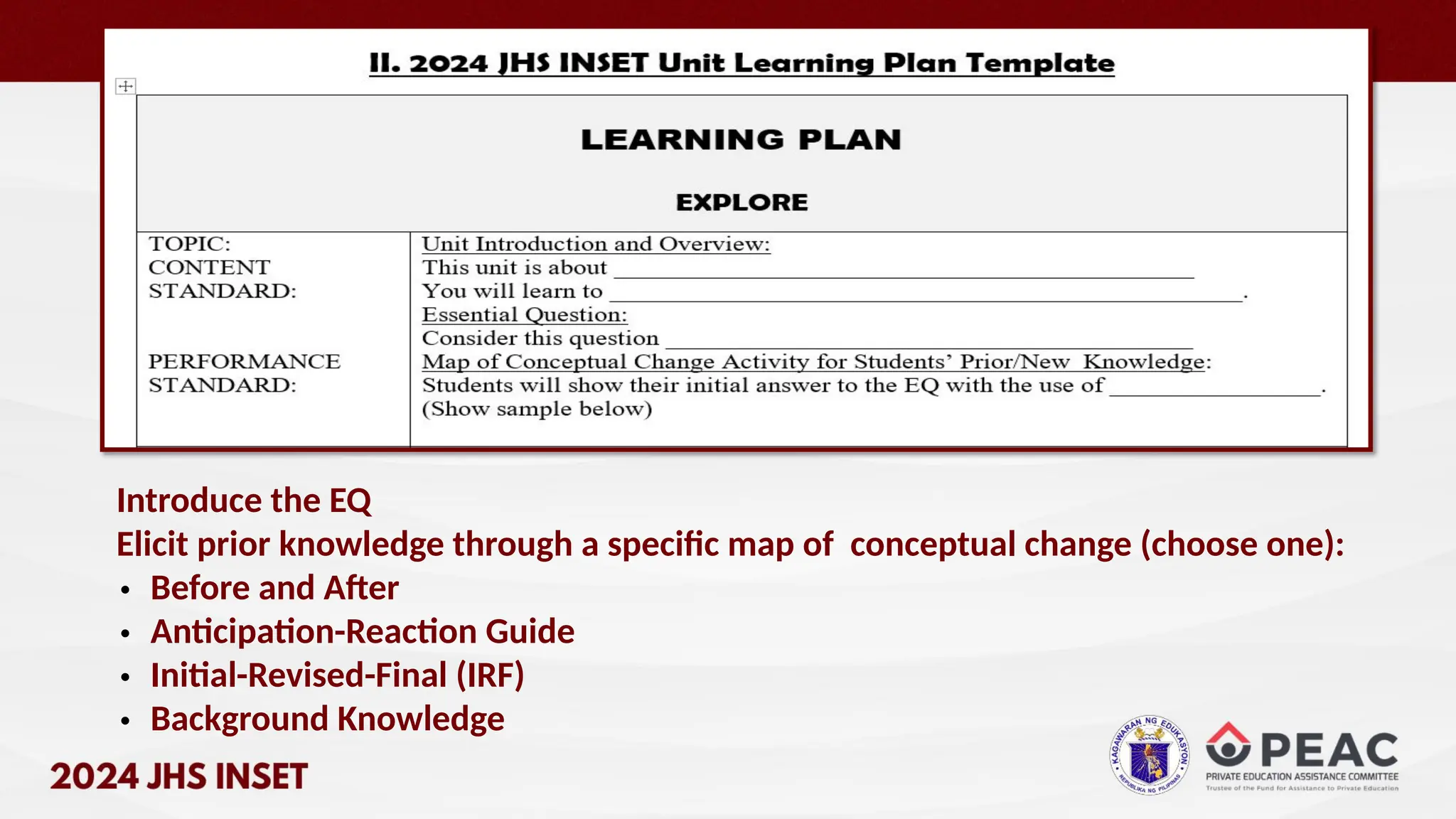
Introduce the EQ
Elicit prior knowledge through a specific map of conceptual change (choose one):
• Before and After
• Anticipation-Reaction Guide
• Initial-Revised-Final (IRF)
• Background Knowledge
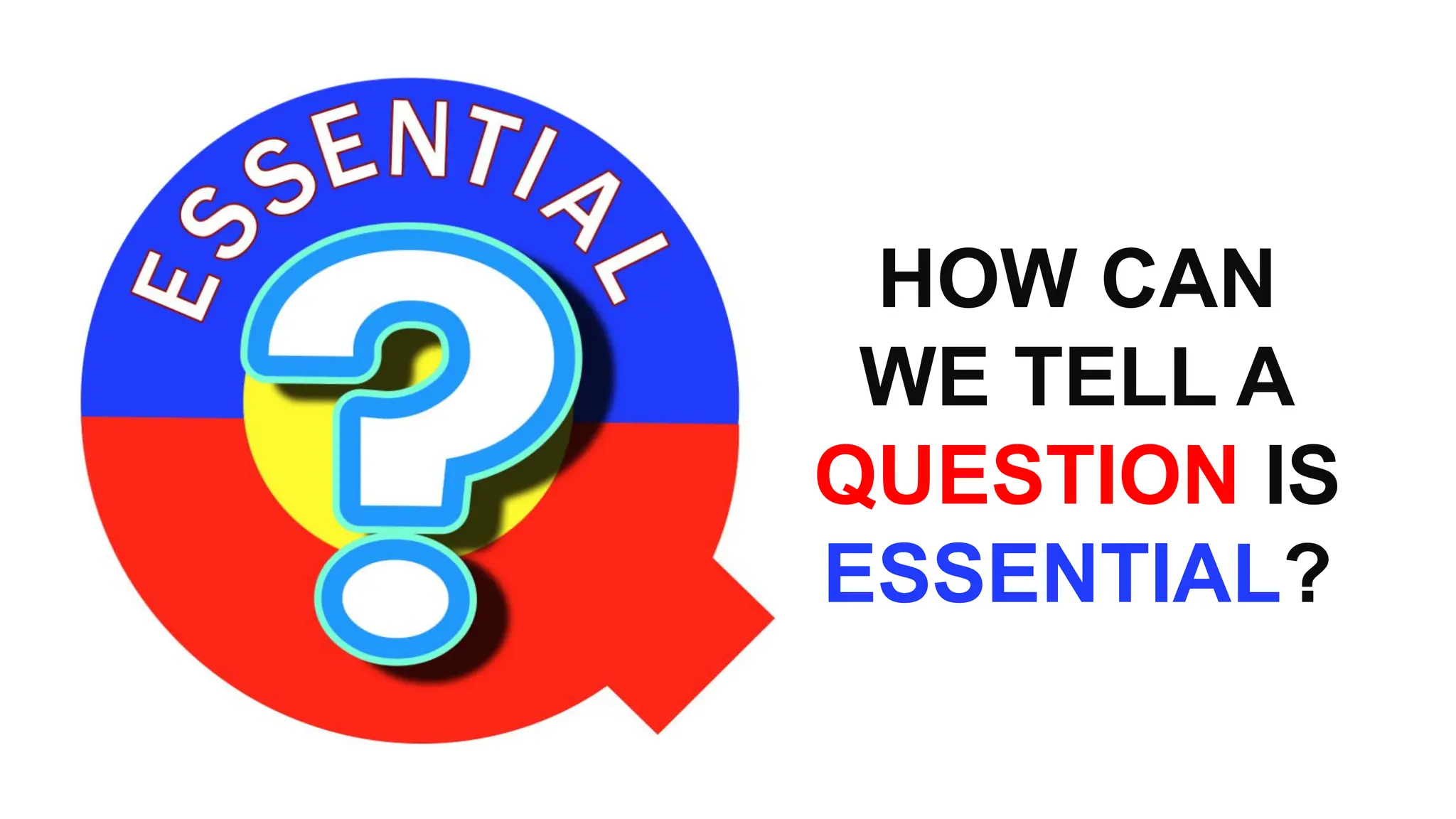
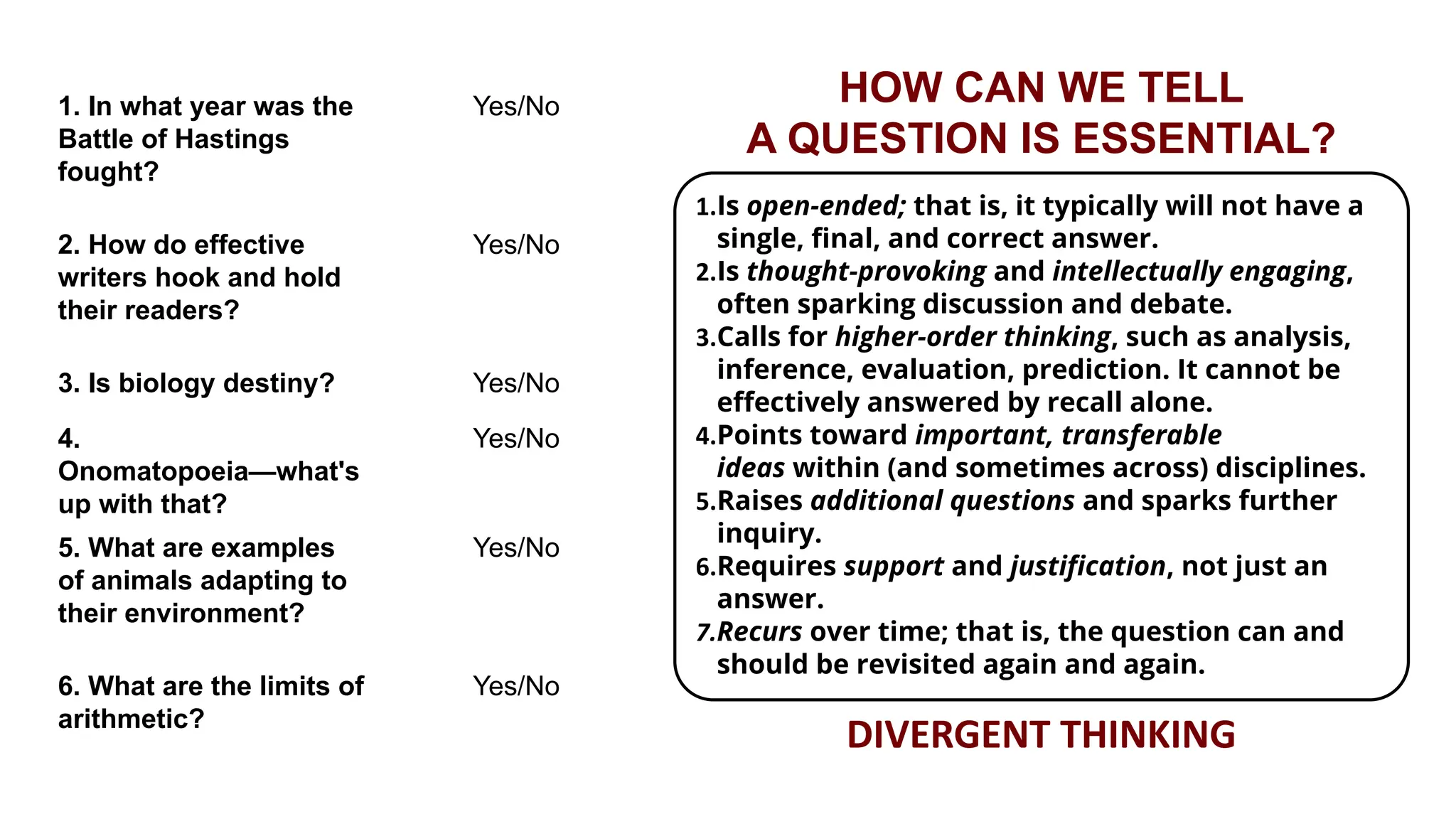
HOW CAN
WE TELL A
QUESTION IS
ESSENTIAL?
https://www.youtube.com/watch?v=wfpeubJgX5s&ab_channel=CLASNetwork
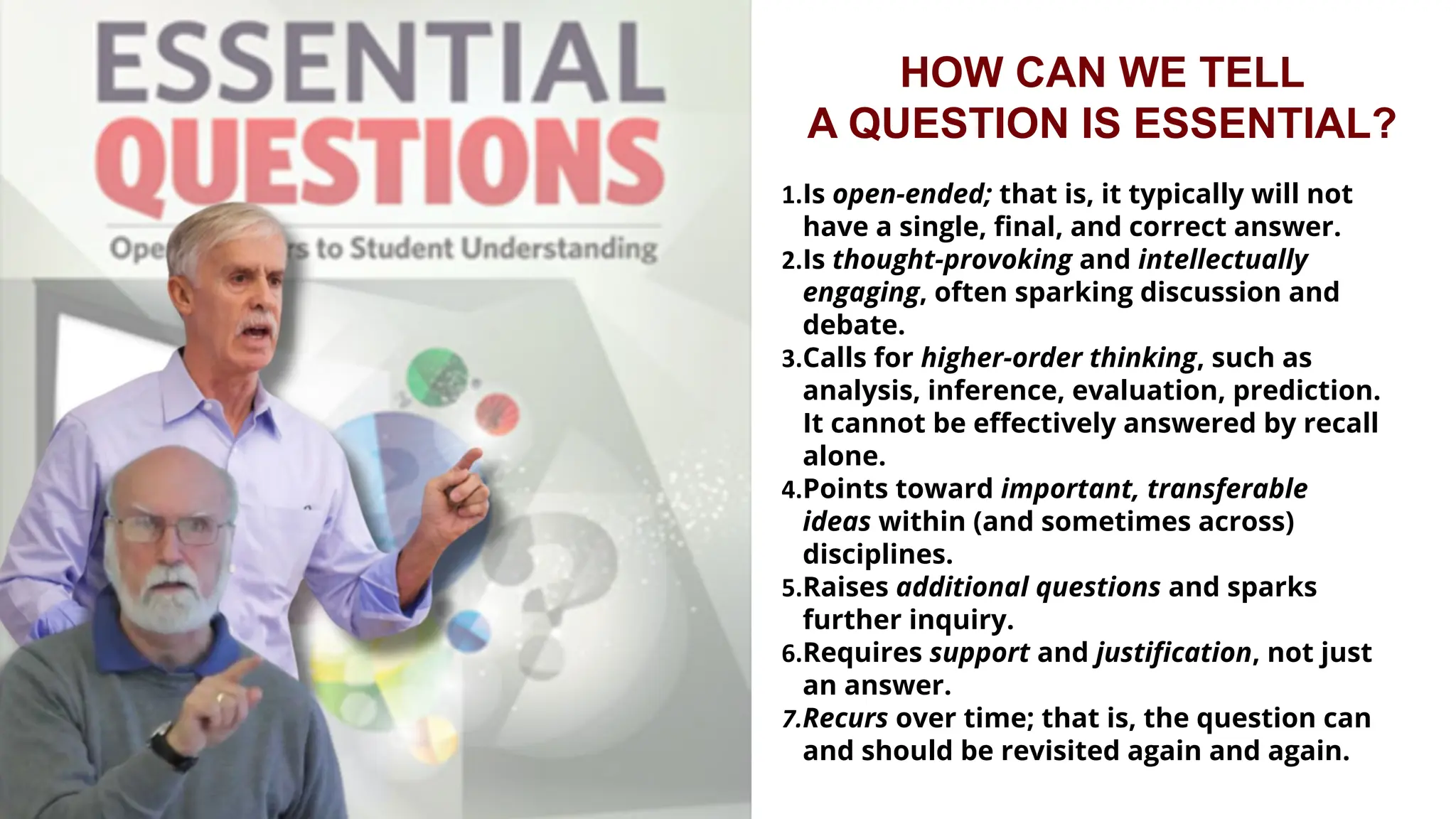
HOW CAN WE TELL
A QUESTION IS ESSENTIAL?
1.Is open-ended; that is, it typically will not
have a single, final, and correct answer.
2.Is thought-provoking and intellectually
engaging, often sparking discussion and
debate.
3.Calls for higher-order thinking, such as
analysis, inference, evaluation, prediction.
It cannot be effectively answered by recall
alone.
4.Points toward important, transferable
ideas within (and sometimes across)
disciplines.
5.Raises additional questions and sparks
further inquiry.
6.Requires support and justification, not just
an answer.
7.Recurs over time; that is, the question can
and should be revisited again and again.
HOW CAN WE TELL
A QUESTION IS ESSENTIAL?
1. In what year was the
Battle of Hastings
fought?
Yes/No
2. How do effective
writers hook and hold
their readers?
Yes/No
3. Is biology destiny? Yes/No
4.
Onomatopoeia—what's
up with that?
Yes/No
5. What are examples
of animals adapting to
their environment?
Yes/No
6. What are the limits of
arithmetic?
Yes/No
1.Is open-ended; that is, it typically will not have a
single, final, and correct answer.
2.Is thought-provoking and intellectually engaging,
often sparking discussion and debate.
3.Calls for higher-order thinking, such as analysis,
inference, evaluation, prediction. It cannot be
effectively answered by recall alone.
4.Points toward important, transferable
ideas within (and sometimes across) disciplines.
5.Raises additional questions and sparks further
inquiry.
6.Requires support and justification, not just an
answer.
7.Recurs over time; that is, the question can and
should be revisited again and again.
DIVERGENT THINKING
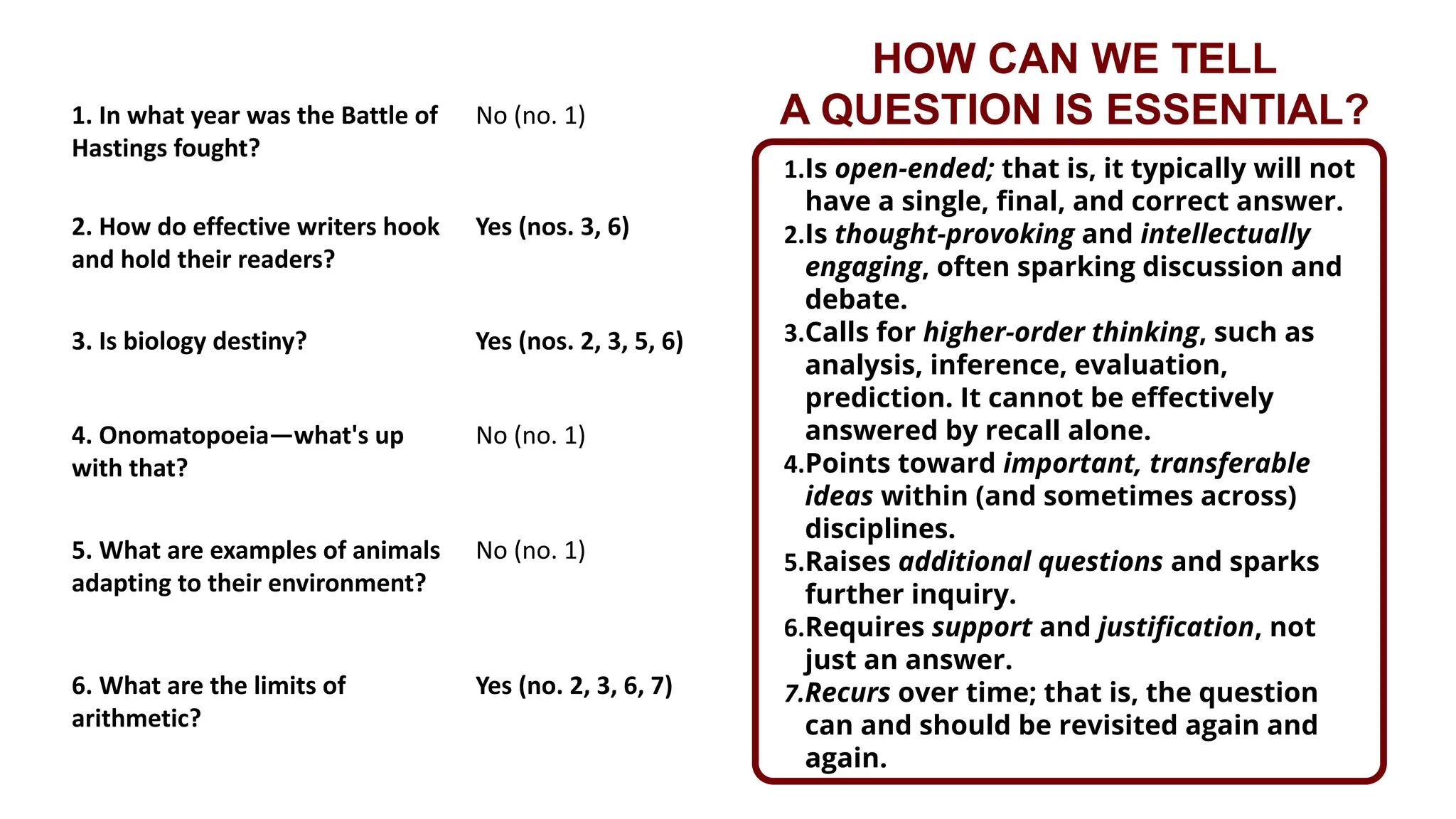
HOW CAN WE TELL
A QUESTION IS ESSENTIAL?
Wiggins & McTighe
1. In what year was the Battle of
Hastings fought?
No (no. 1)
2. How do effective writers hook
and hold their readers?
Yes (nos. 3, 6)
3. Is biology destiny? Yes (nos. 2, 3, 5, 6)
4. Onomatopoeia—what's up
with that?
No (no. 1)
5. What are examples of animals
adapting to their environment?
No (no. 1)
6. What are the limits of
arithmetic?
Yes (no. 2, 3, 6, 7)
1.Is open-ended; that is, it typically will not
have a single, final, and correct answer.
2.Is thought-provoking and intellectually
engaging, often sparking discussion and
debate.
3.Calls for higher-order thinking, such as
analysis, inference, evaluation,
prediction. It cannot be effectively
answered by recall alone.
4.Points toward important, transferable
ideas within (and sometimes across)
disciplines.
5.Raises additional questions and sparks
further inquiry.
6.Requires support and justification, not
just an answer.
7.Recurs over time; that is, the question
can and should be revisited again and
again.
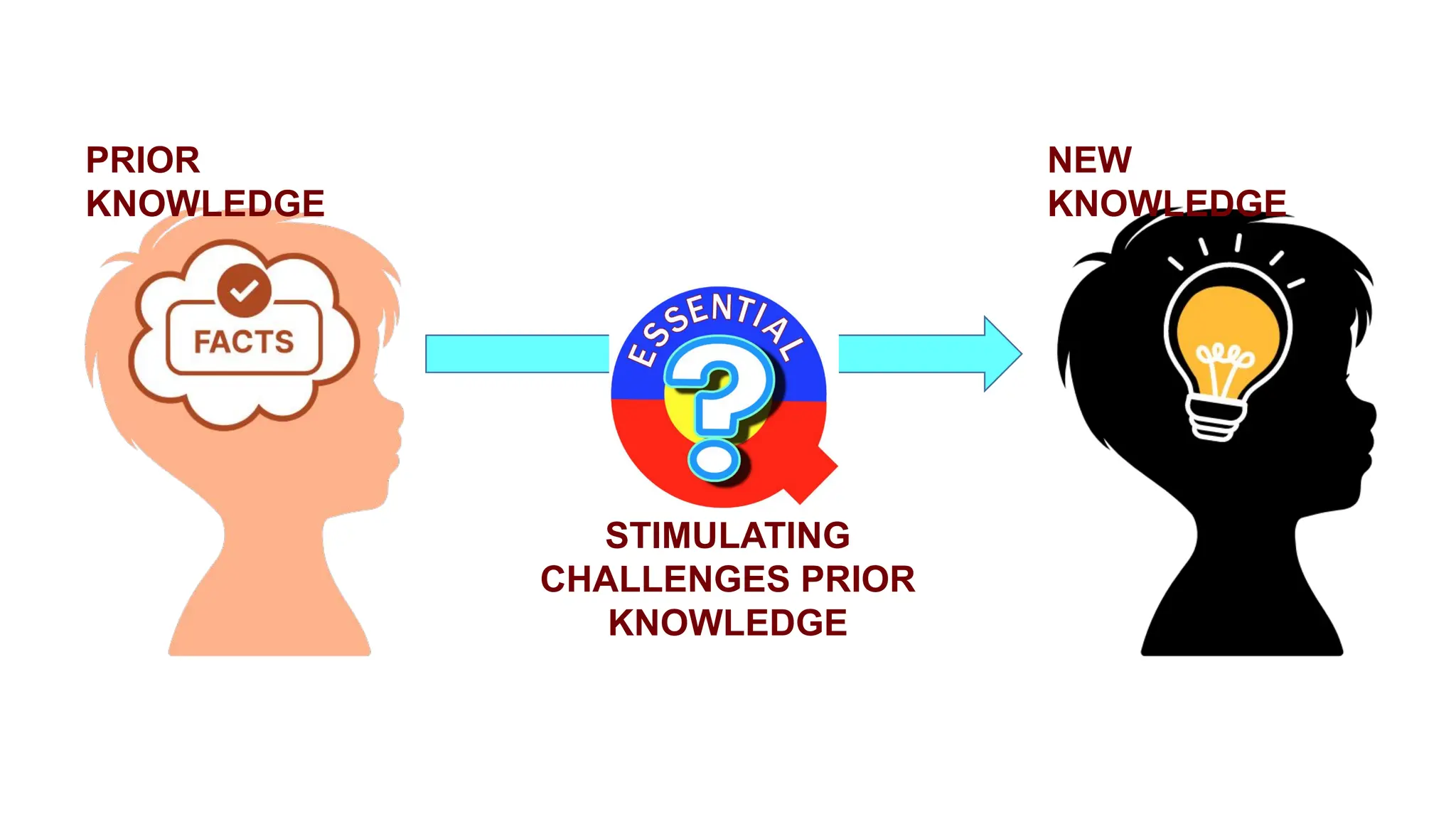
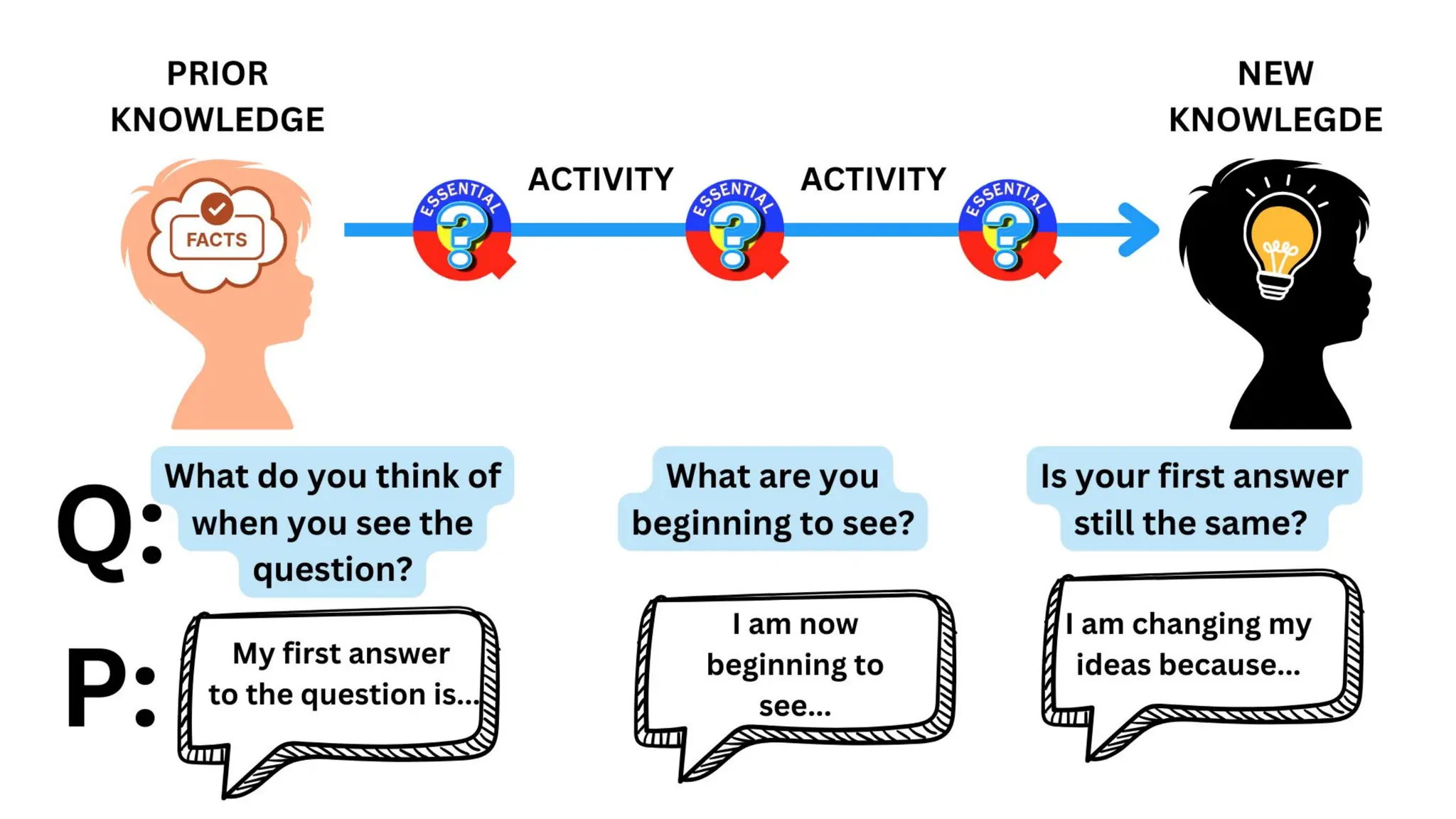
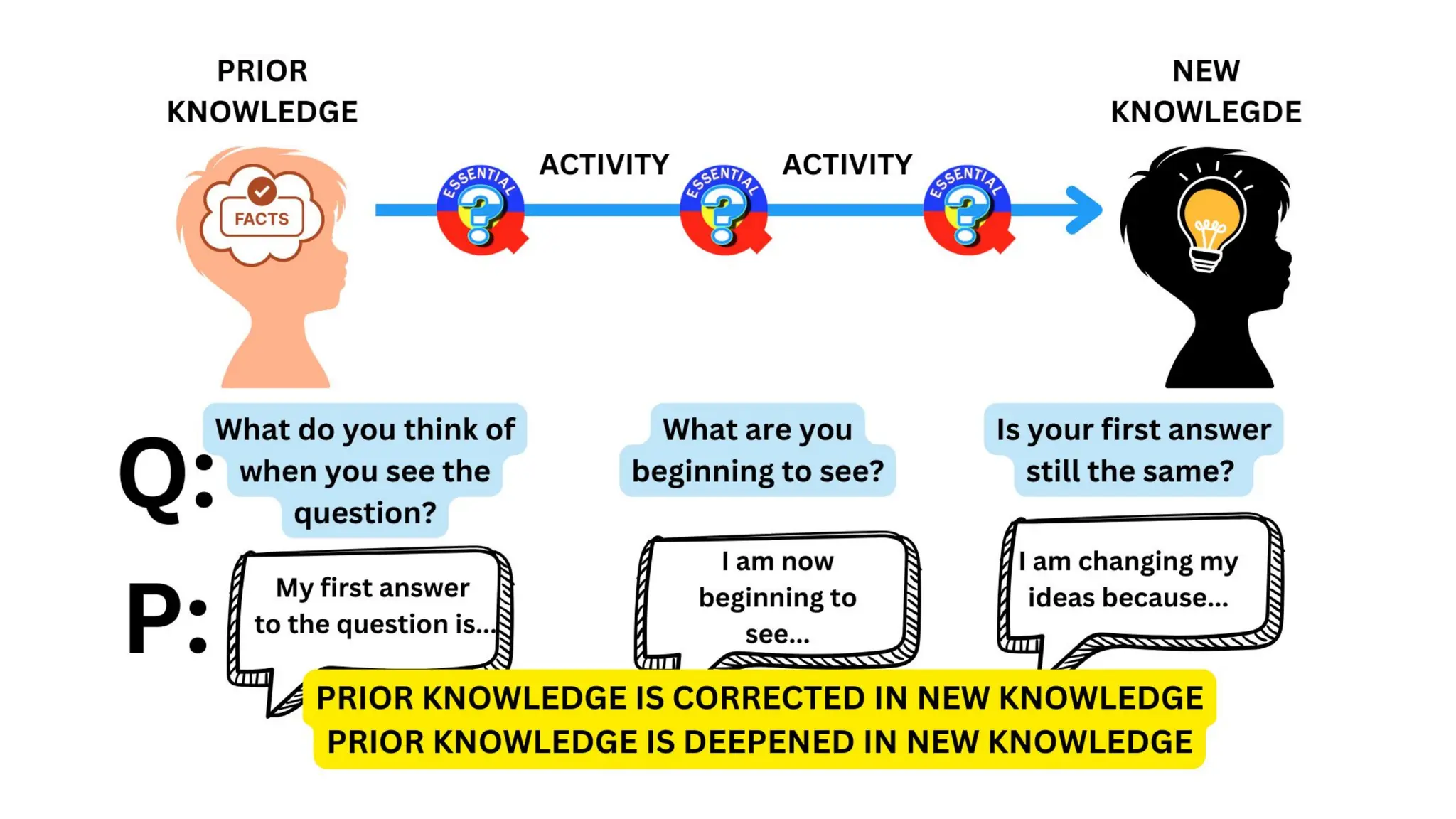
PRIOR
KNOWLEDGE
NEW
KNOWLEDGE
STIMULATING
CHALLENGES PRIOR
KNOWLEDGE
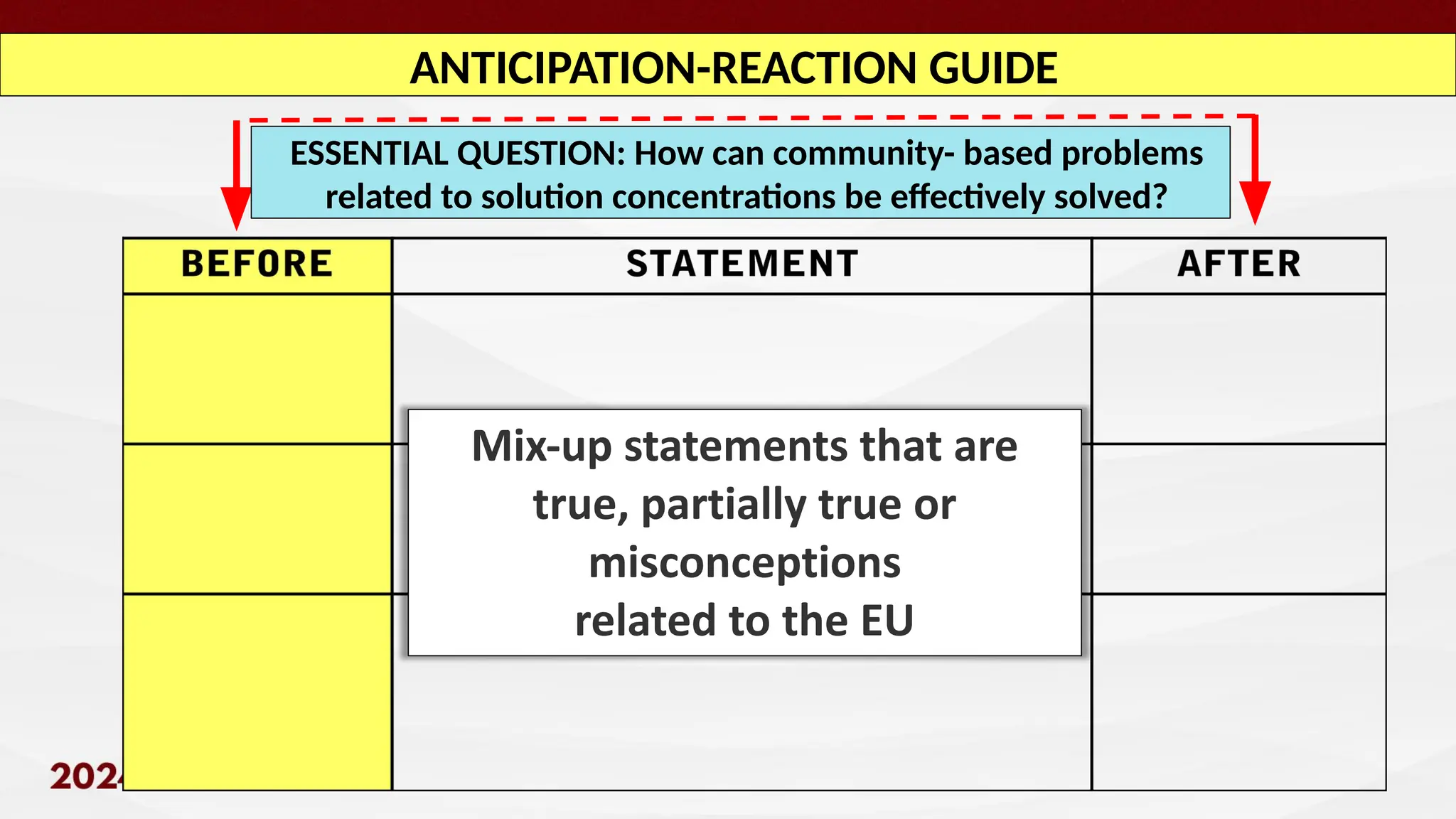
ANTICIPATION-REACTION GUIDE
Mix-up statements that are
true, partially true or
misconceptions
related to the EU
ESSENTIAL QUESTION: How can community- based problems
related to solution concentrations be effectively solved?
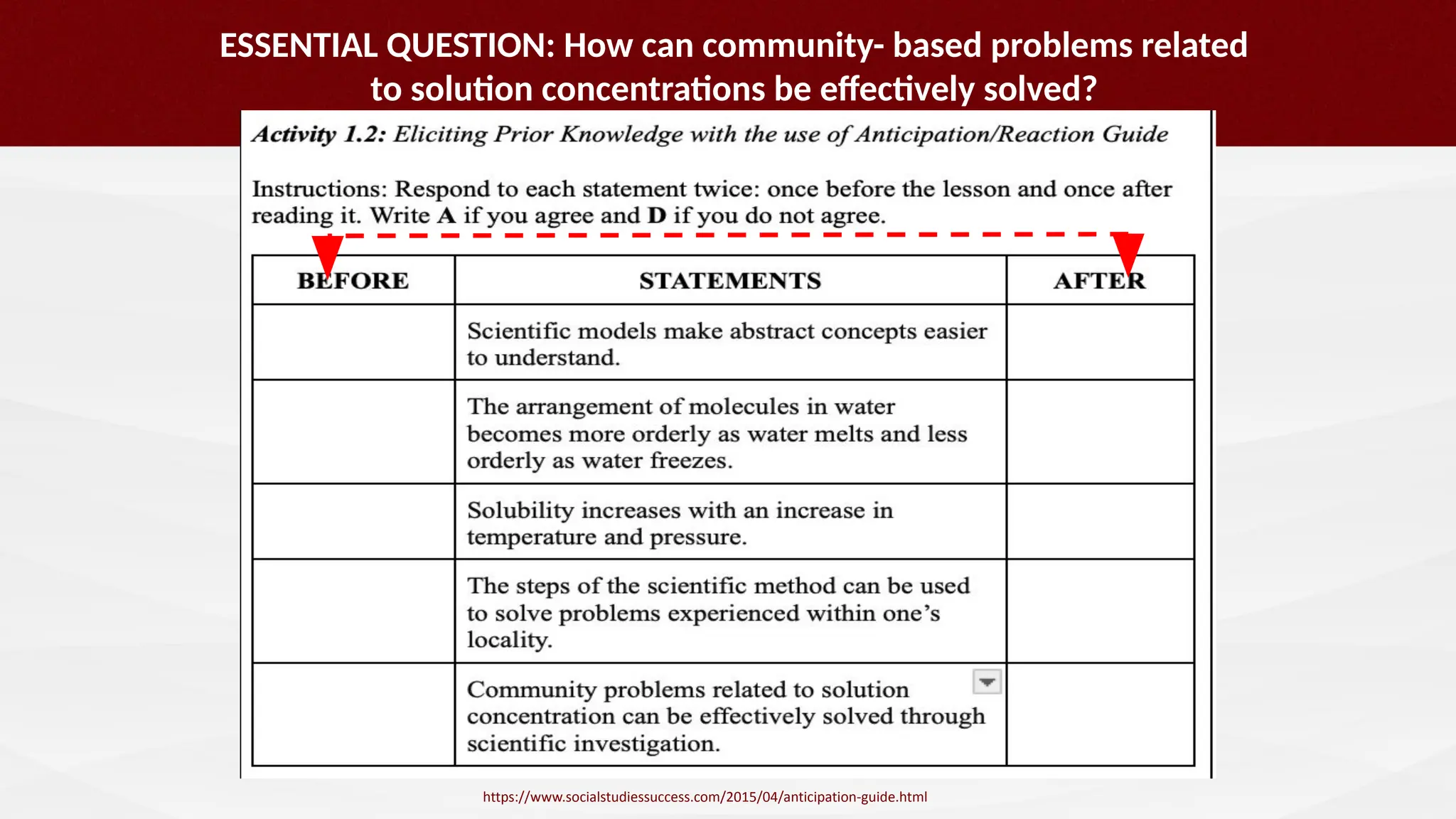
ESSENTIAL QUESTION: How can community- based problems related
to solution concentrations be effectively solved?
https://www.socialstudiessuccess.com/2015/04/anticipation-guide.html
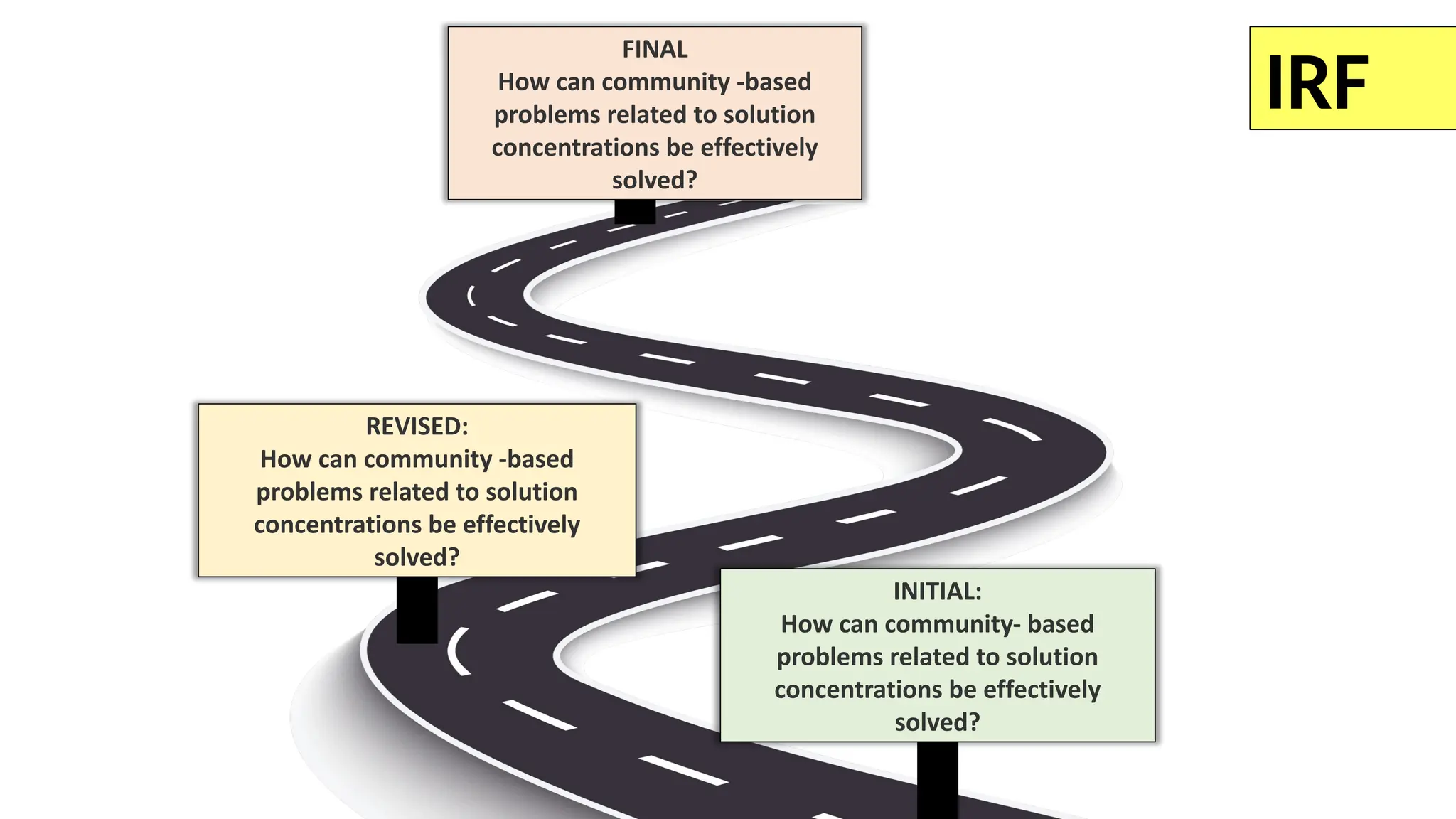
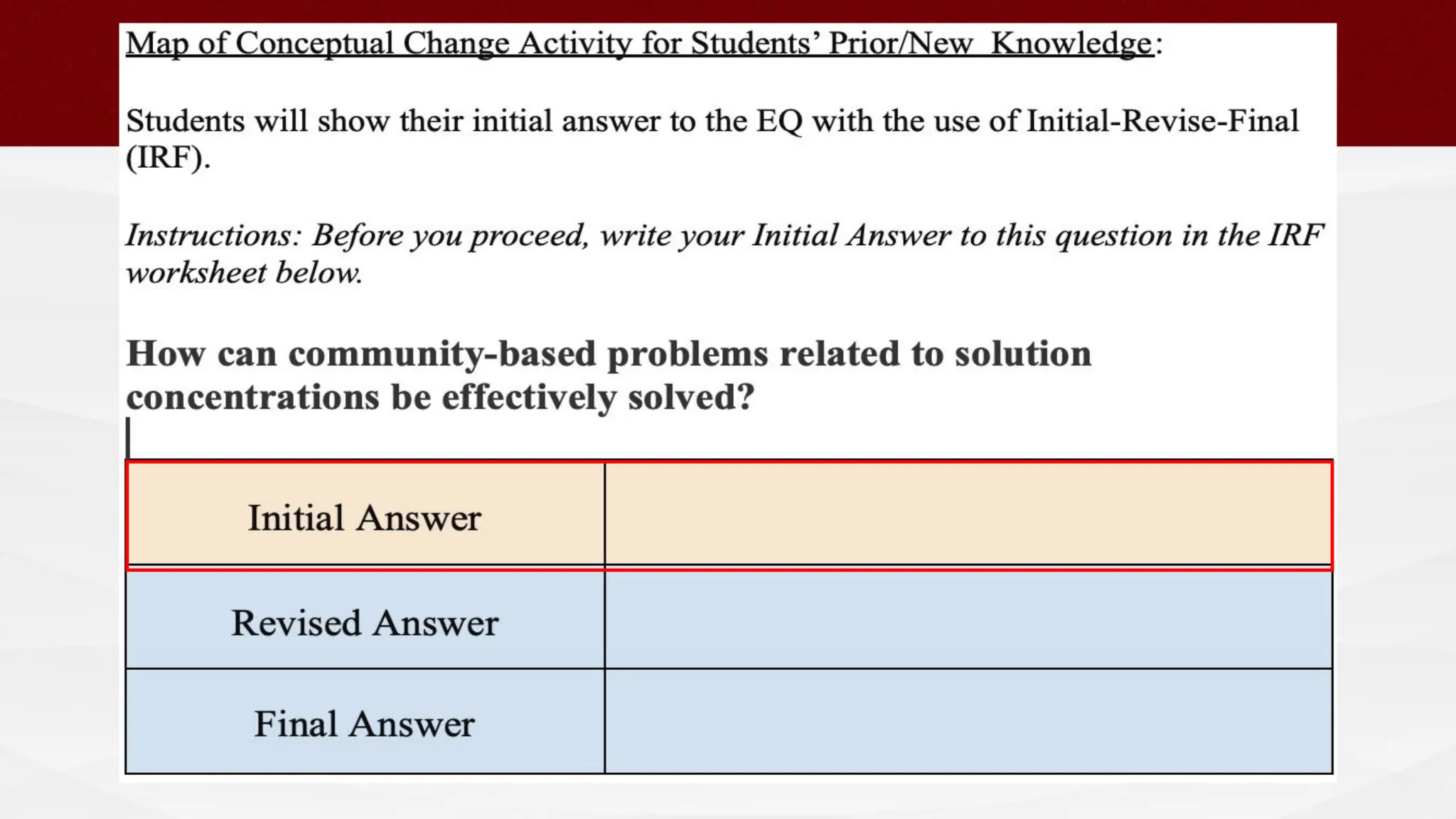
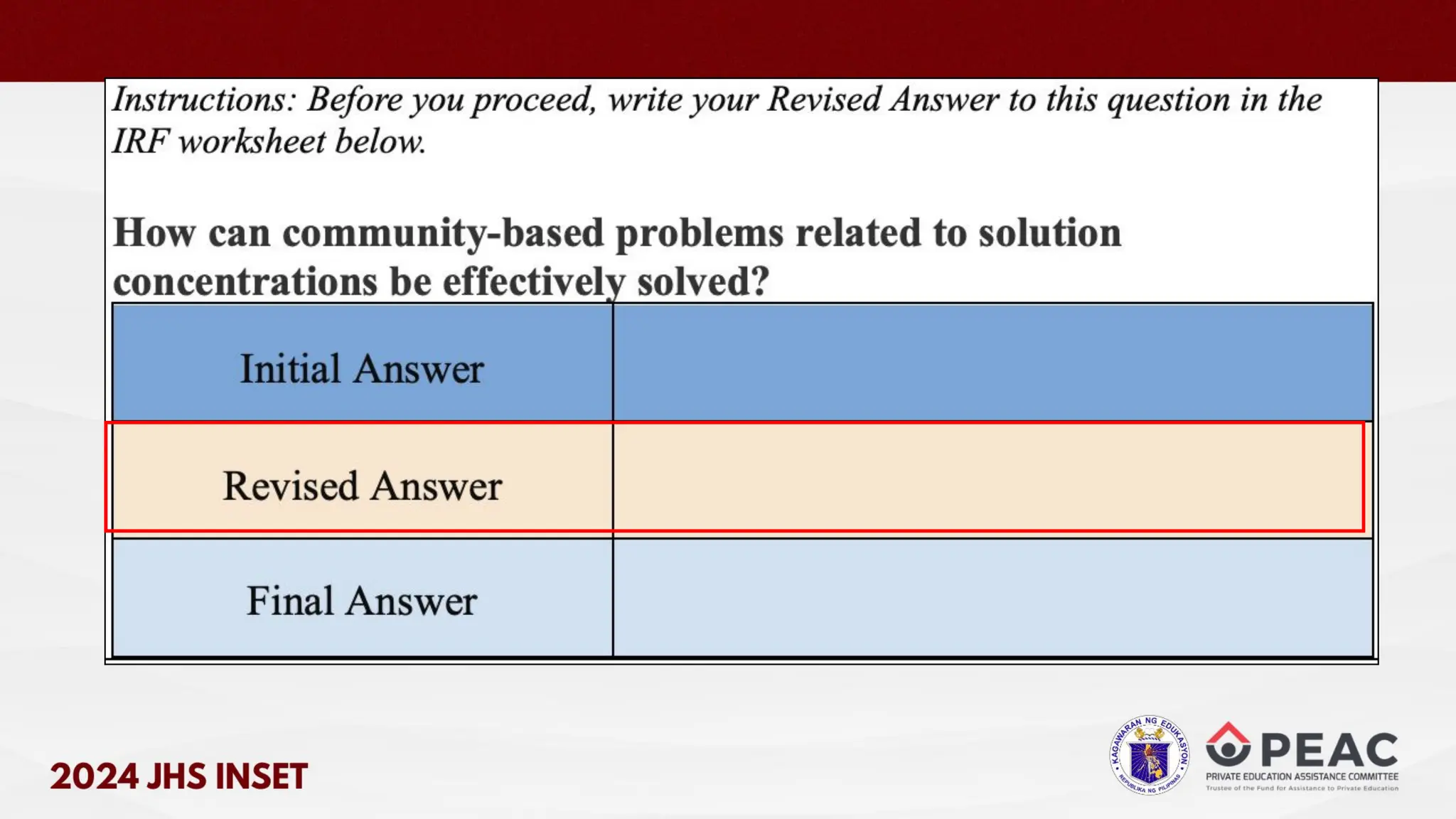
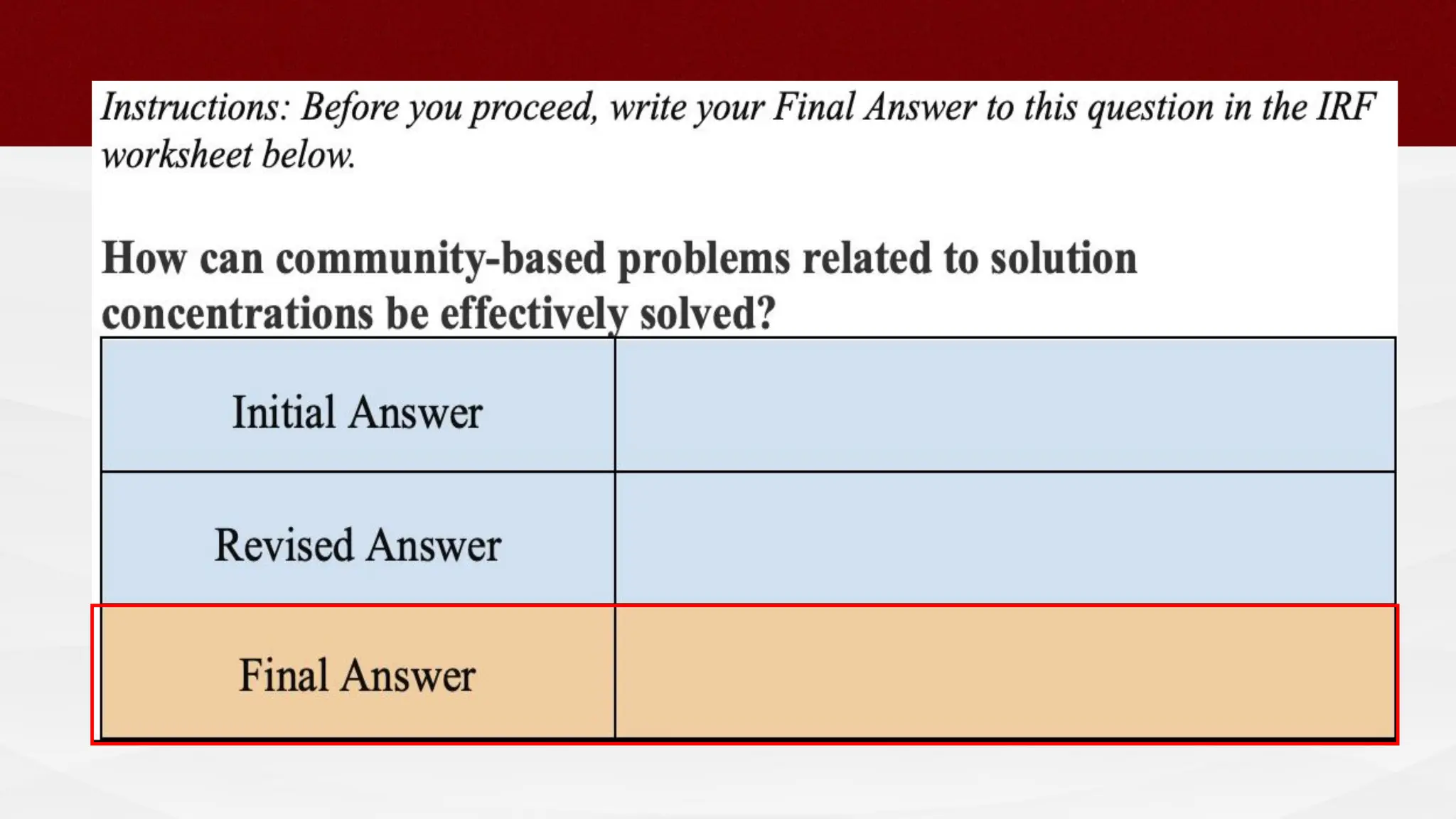
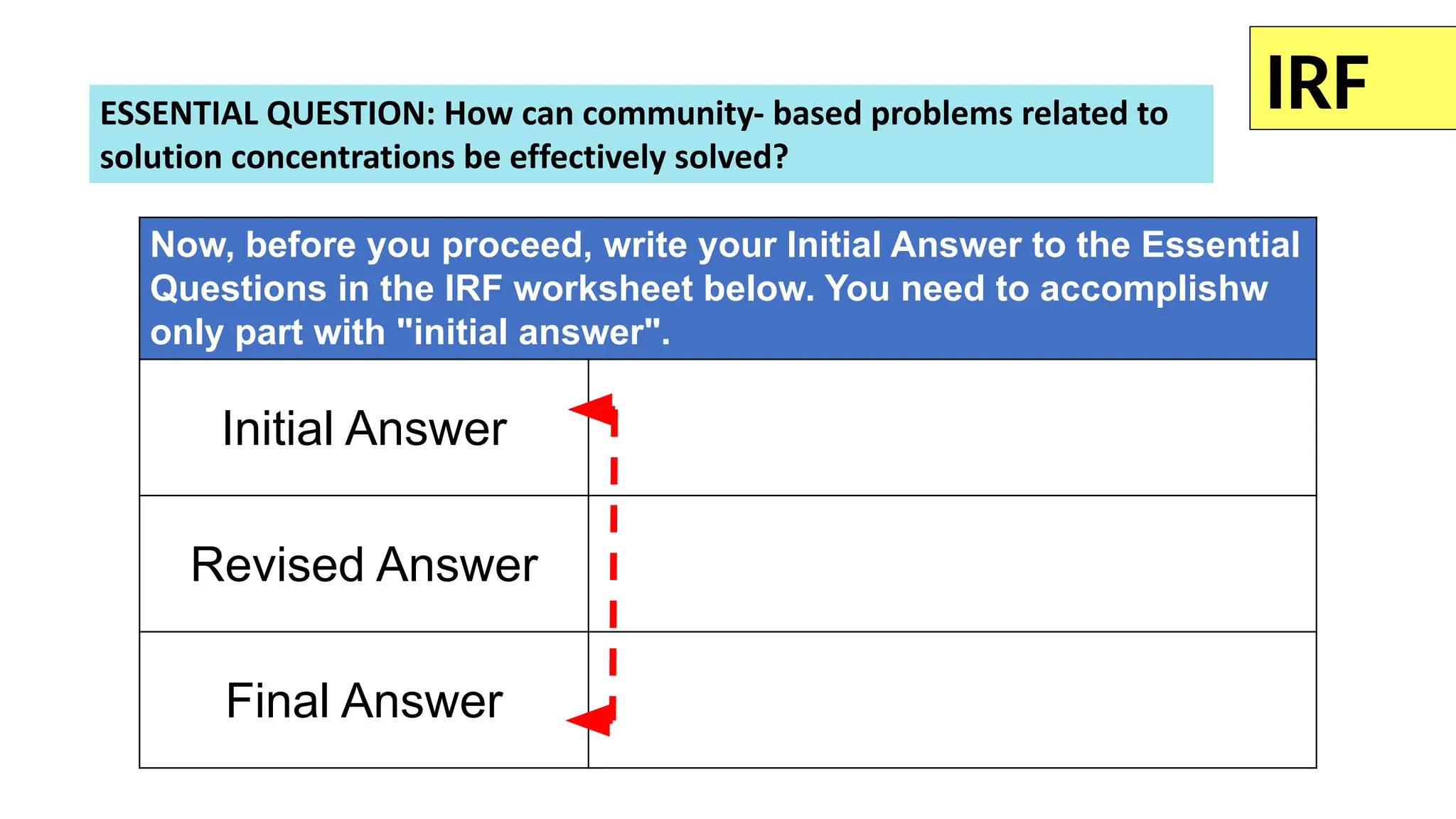
Now, before you proceed, write your Initial Answer to the Essential
Questions in the IRF worksheet below. You need to accomplishw
only part with "initial answer".
Initial Answer
Revised Answer
Final Answer
ESSENTIAL QUESTION: How can community- based problems related to
solution concentrations be effectively solved?
IRF
INITIAL:
How can community- based
problems related to solution
concentrations be effectively
solved?
REVISED:
How can community -based
problems related to solution
concentrations be effectively
solved?
FINAL
How can community -based
problems related to solution
concentrations be effectively
solved?
IRF
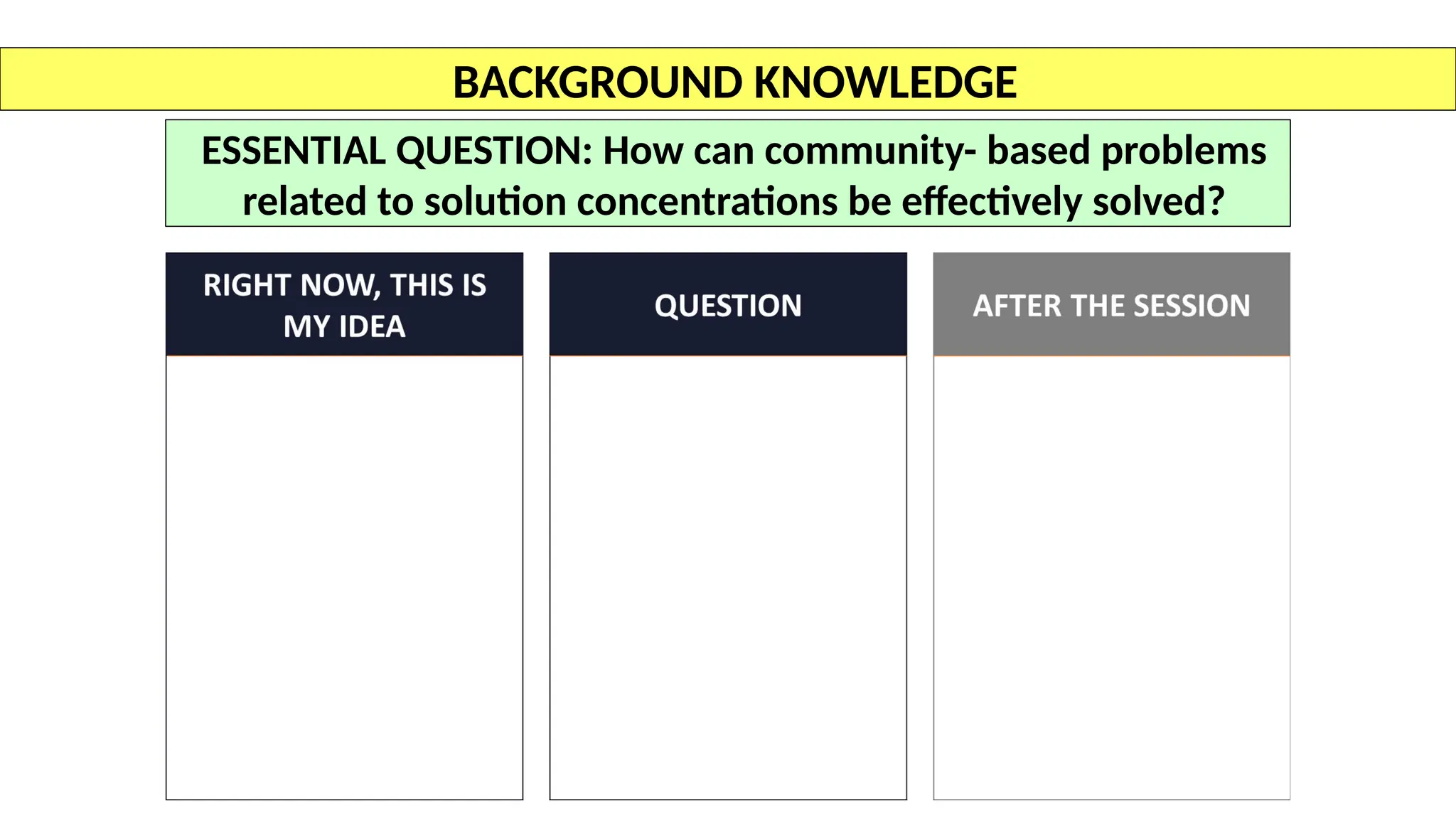
BACKGROUND KNOWLEDGE
ESSENTIAL QUESTION: How can community- based problems
related to solution concentrations be effectively solved?
Introduce the EQ
Elicit prior knowledge through a specific map of conceptual change (choose one):
• Before and After
• Anticipation-Reaction Guide
• Initial-Revised-Final (IRF)
• Background Knowledge
Introduce the EQ
Elicit prior knowledge through a specific map of conceptual change (choose one):
• Before and After
• Anticipation-Reaction Guide
• Initial-Revised-Final (IRF)
• Background Knowledge
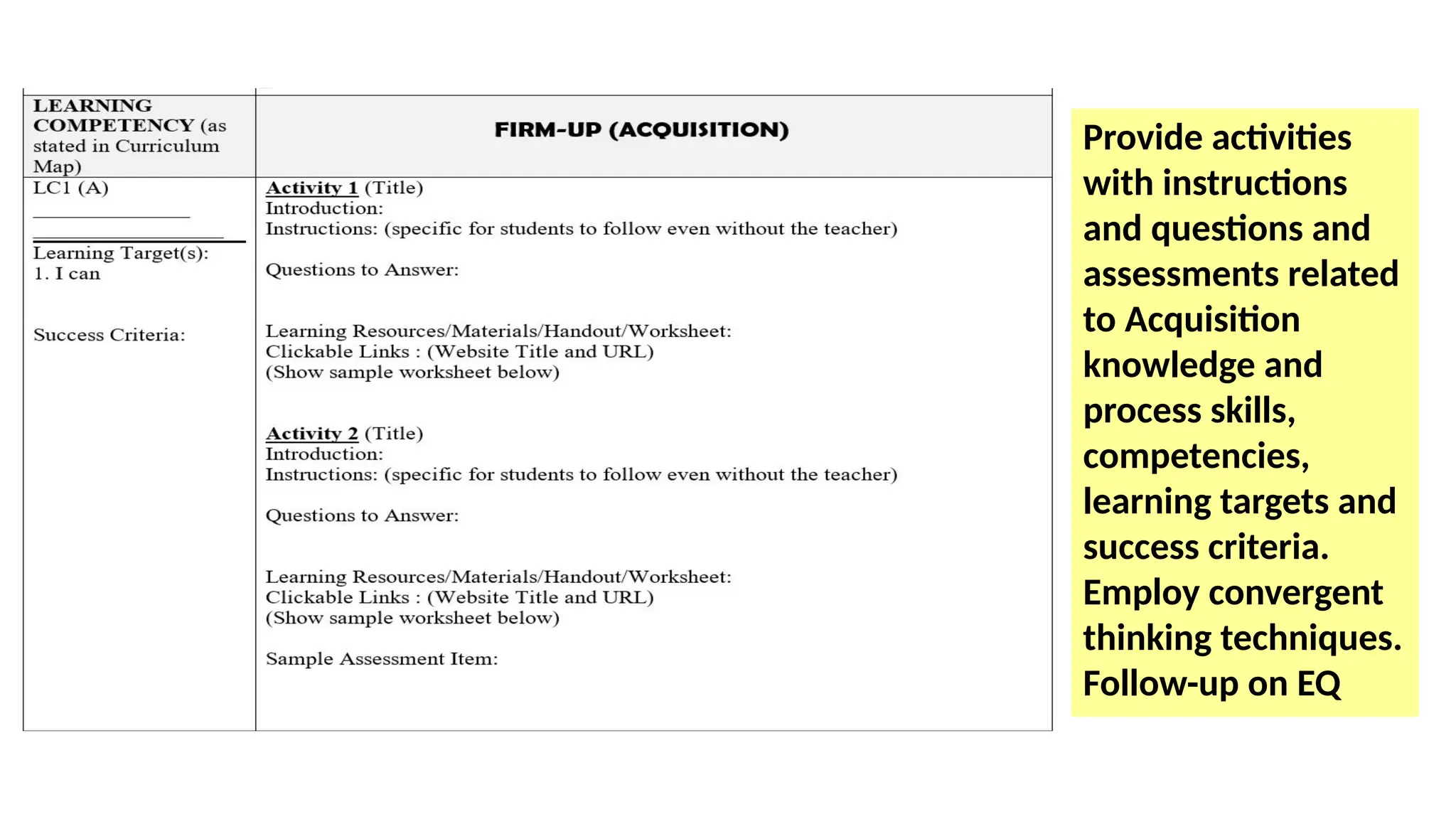
Provide activities
with instructions
and questions and
assessments related
to Acquisition
knowledge and
process skills,
competencies,
learning targets and
success criteria.
Employ convergent
thinking techniques.
Follow-up on EQ
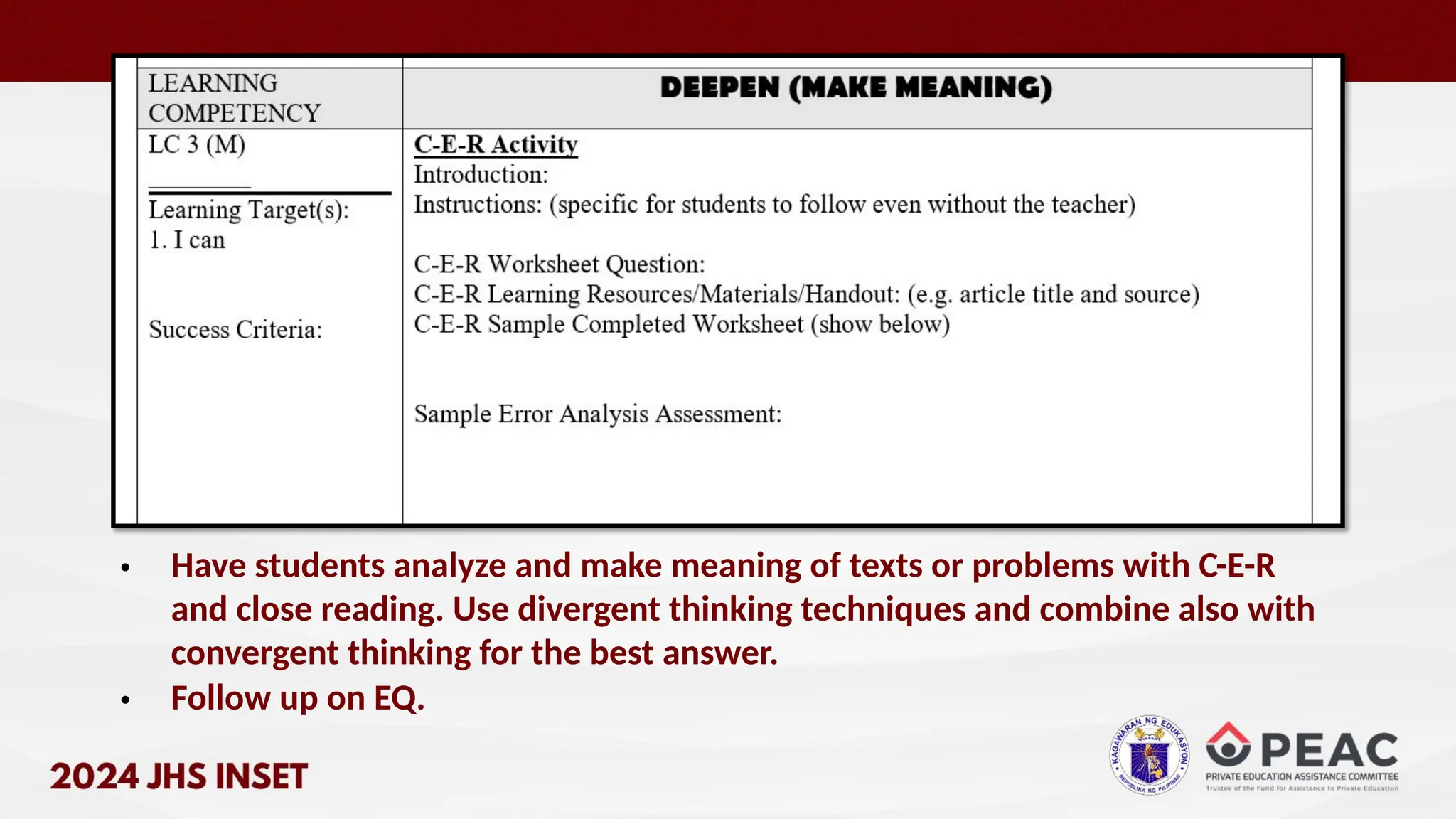
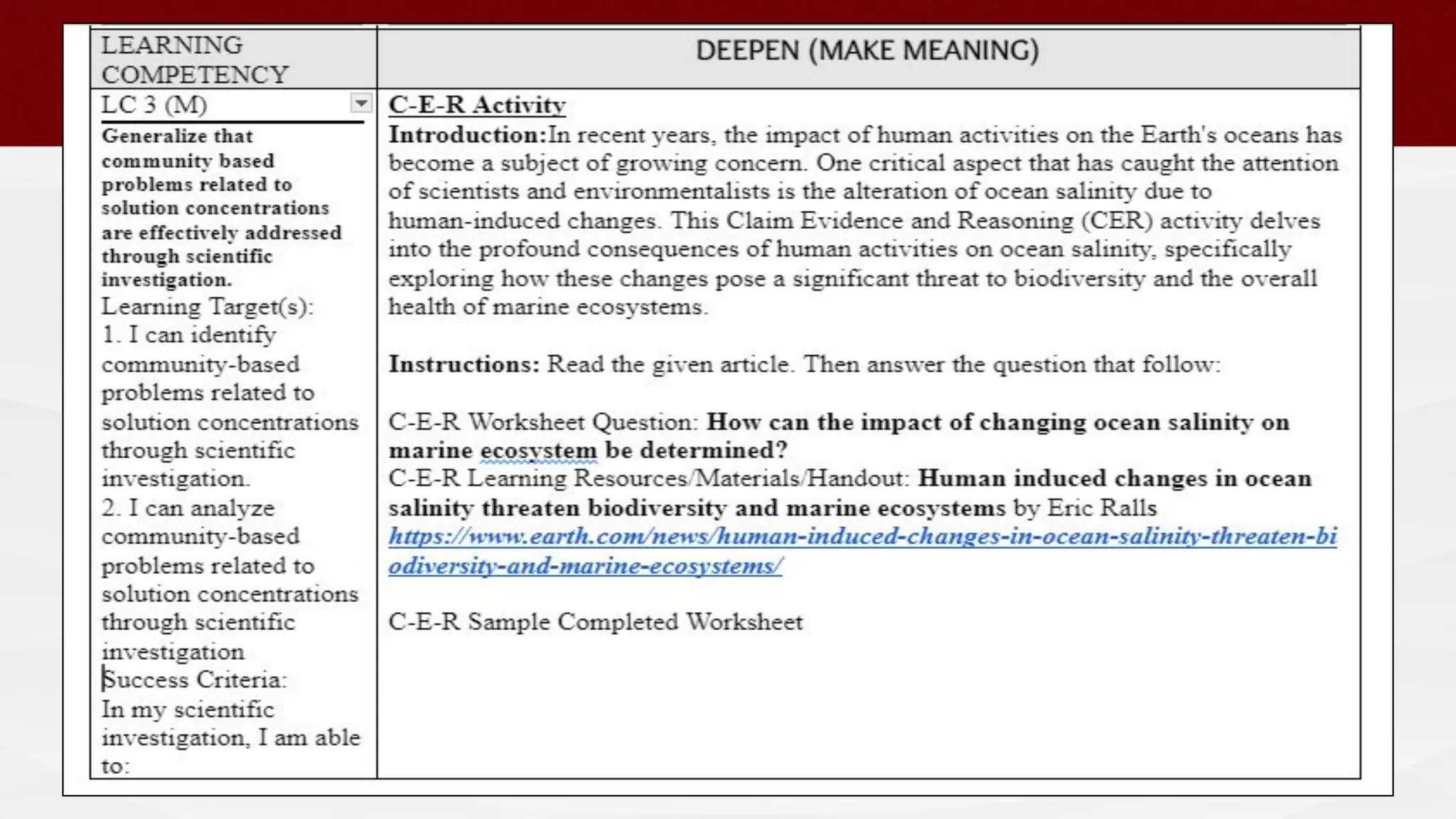
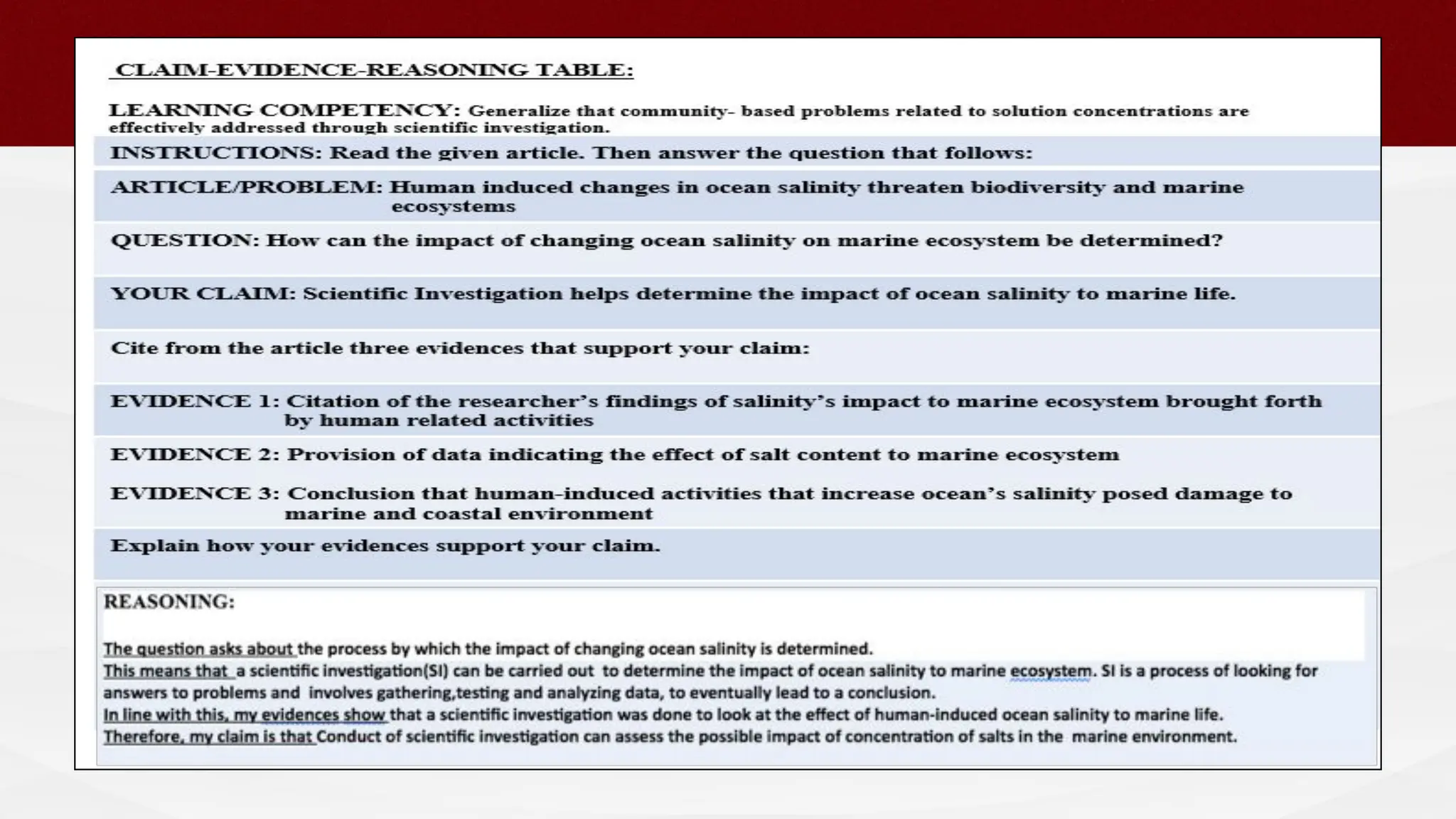
• Have students analyze and make meaning of texts or problems with C-E-R
and close reading. Use divergent thinking techniques and combine also with
convergent thinking for the best answer.
• Follow up on EQ.
SHOW
EXAMPLE
FOR Q1 UNIT TOPIC
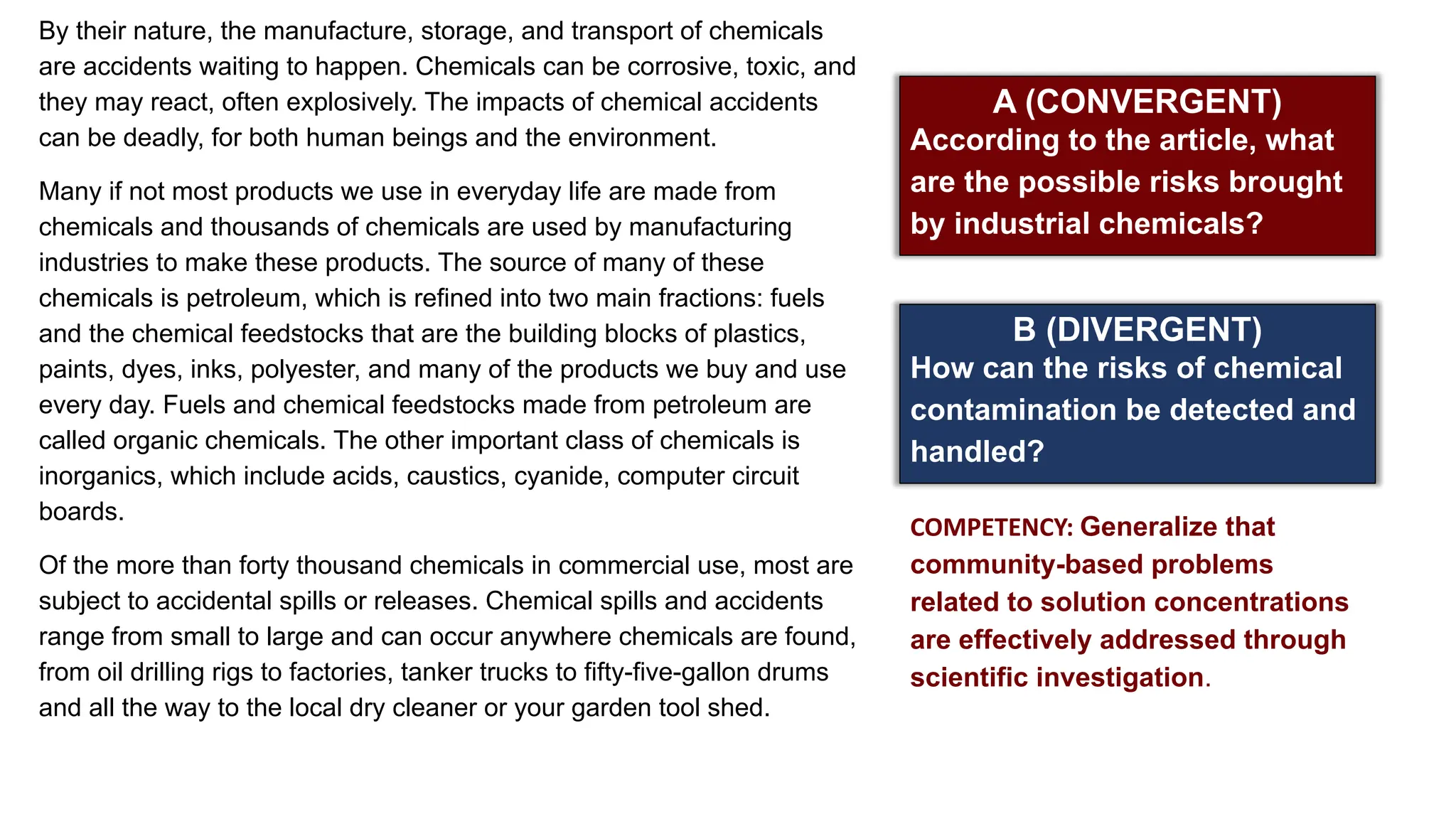
A (CONVERGENT)
According to the article, what
are the possible risks brought
by industrial chemicals?
B (DIVERGENT)
How can the risks of chemical
contamination be detected and
handled?
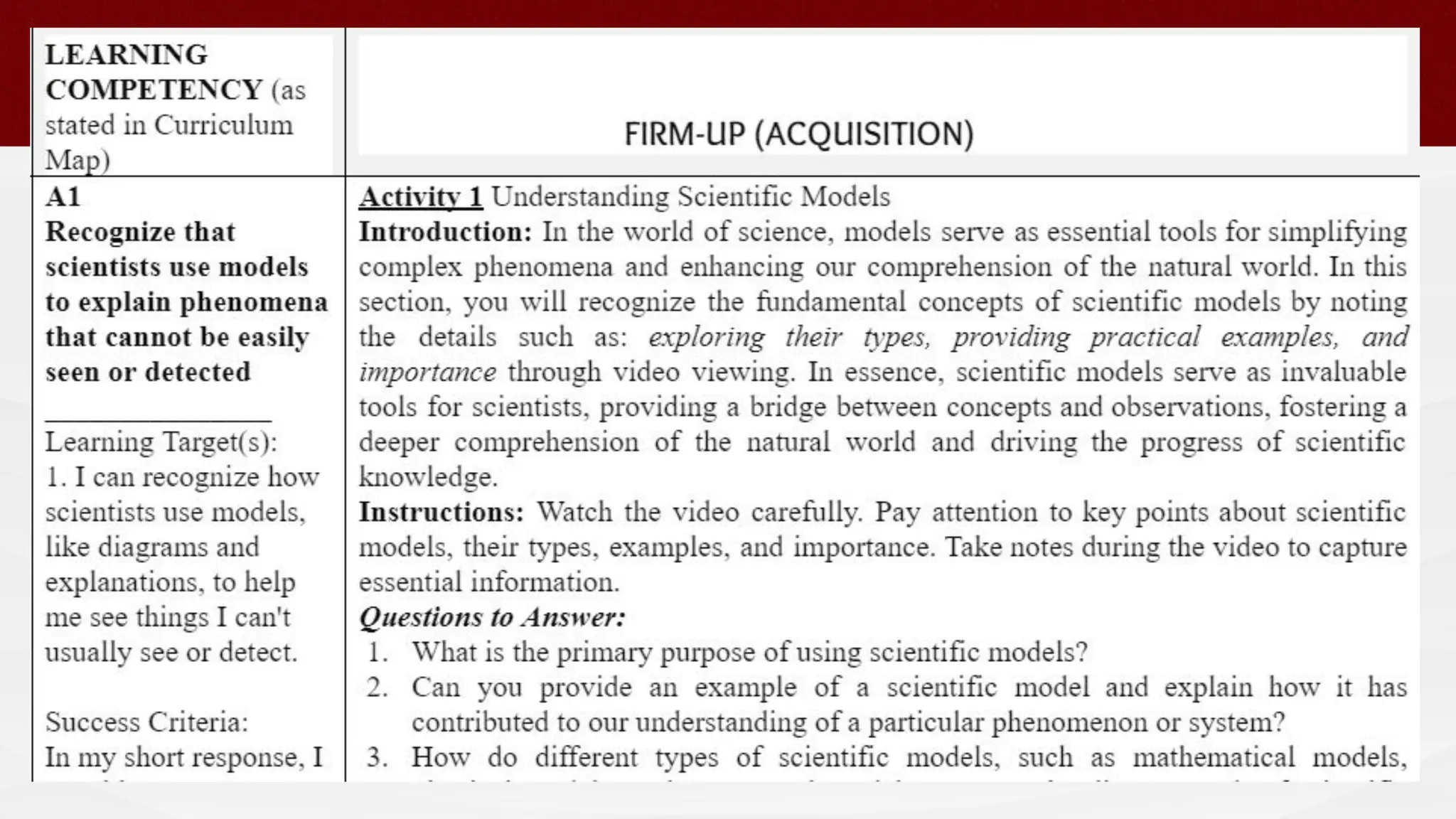
COMPETENCY: Generalize that
community-based problems
related to solution concentrations
are effectively addressed through
scientific investigation.
By their nature, the manufacture, storage, and transport of chemicals
are accidents waiting to happen. Chemicals can be corrosive, toxic, and
they may react, often explosively. The impacts of chemical accidents
can be deadly, for both human beings and the environment.
Many if not most products we use in everyday life are made from
chemicals and thousands of chemicals are used by manufacturing
industries to make these products. The source of many of these
chemicals is petroleum, which is refined into two main fractions: fuels
and the chemical feedstocks that are the building blocks of plastics,
paints, dyes, inks, polyester, and many of the products we buy and use
every day. Fuels and chemical feedstocks made from petroleum are
called organic chemicals. The other important class of chemicals is
inorganics, which include acids, caustics, cyanide, computer circuit
boards.
Of the more than forty thousand chemicals in commercial use, most are
subject to accidental spills or releases. Chemical spills and accidents
range from small to large and can occur anywhere chemicals are found,
from oil drilling rigs to factories, tanker trucks to fifty-five-gallon drums
and all the way to the local dry cleaner or your garden tool shed.
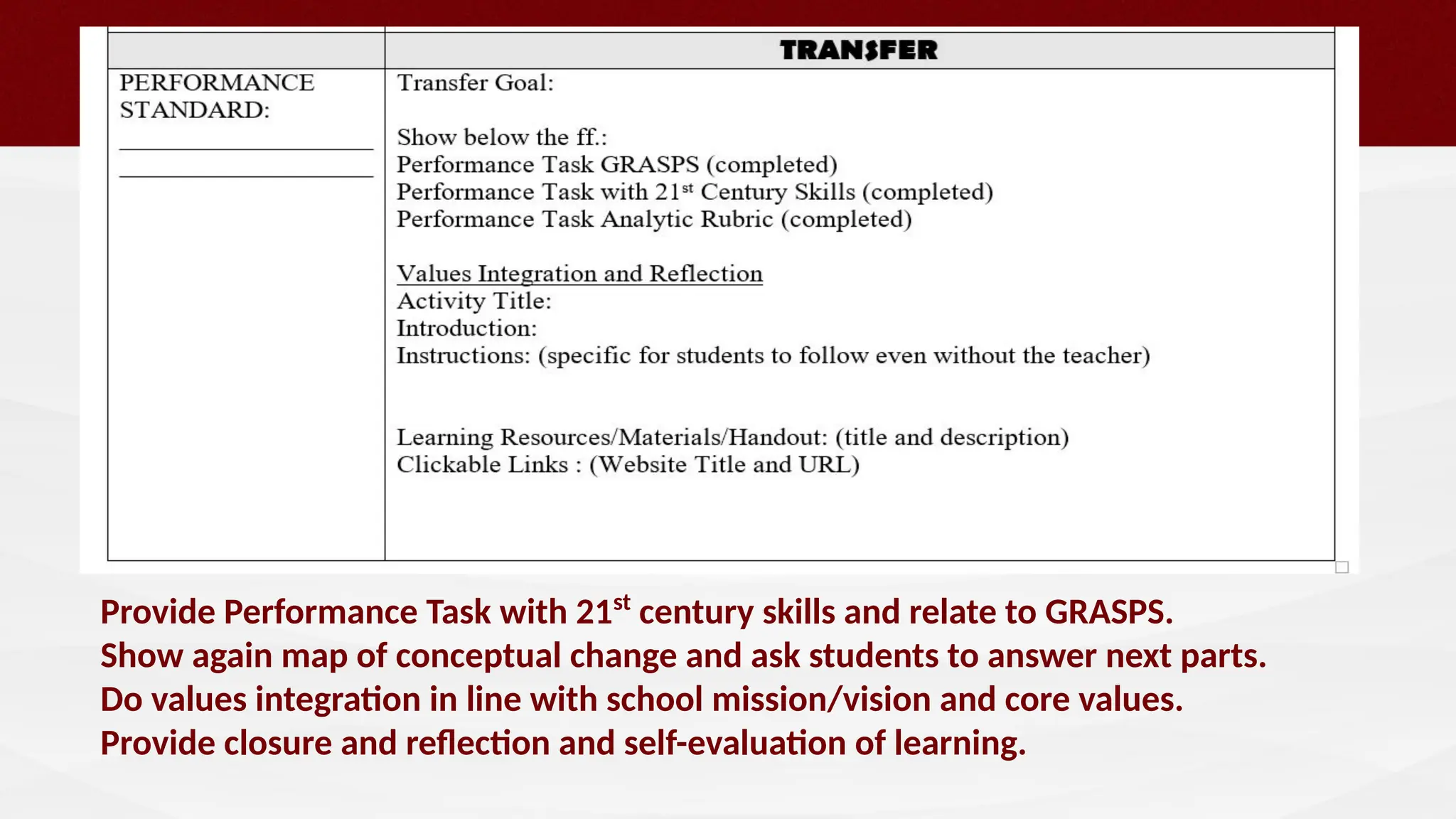
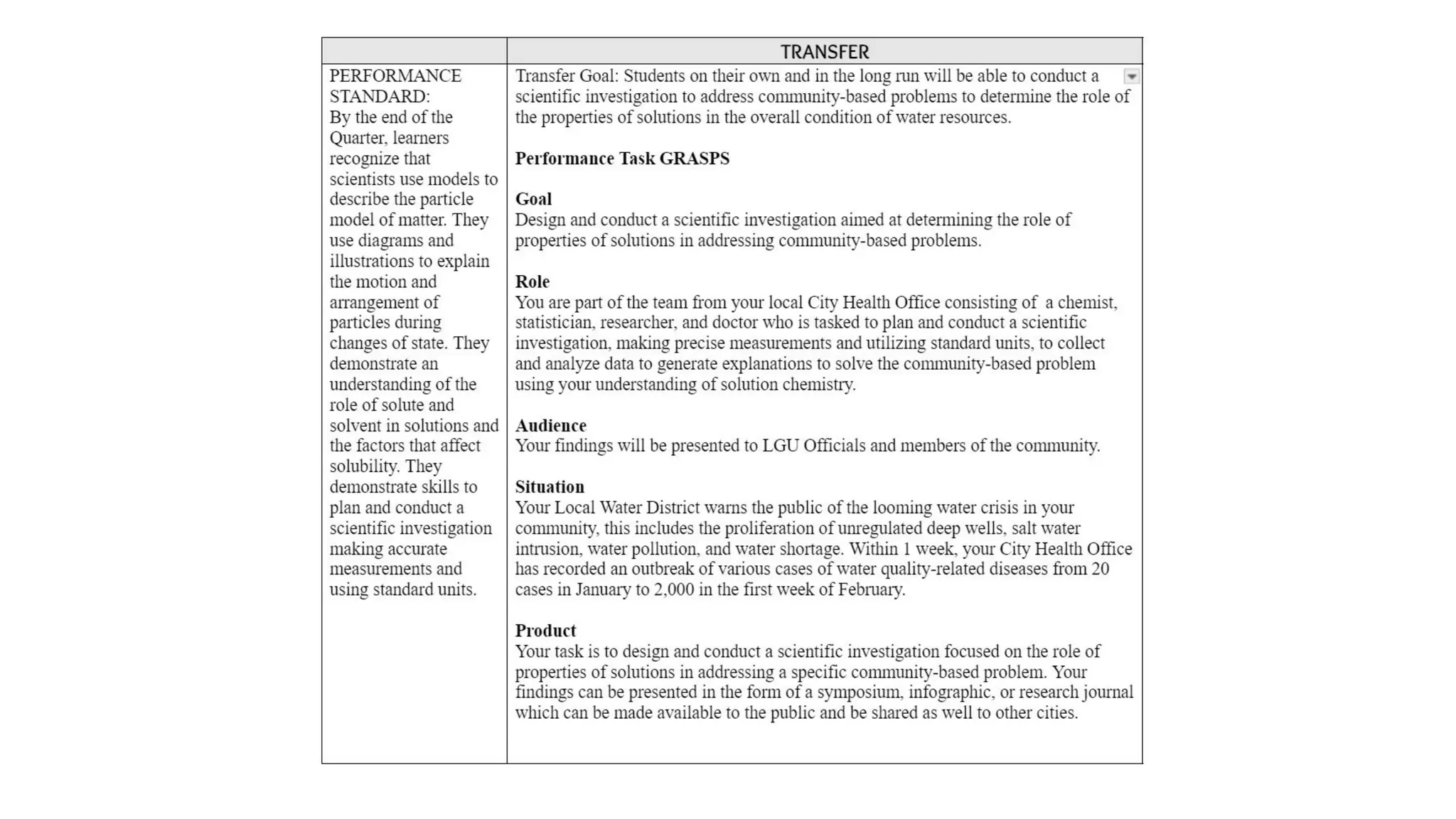
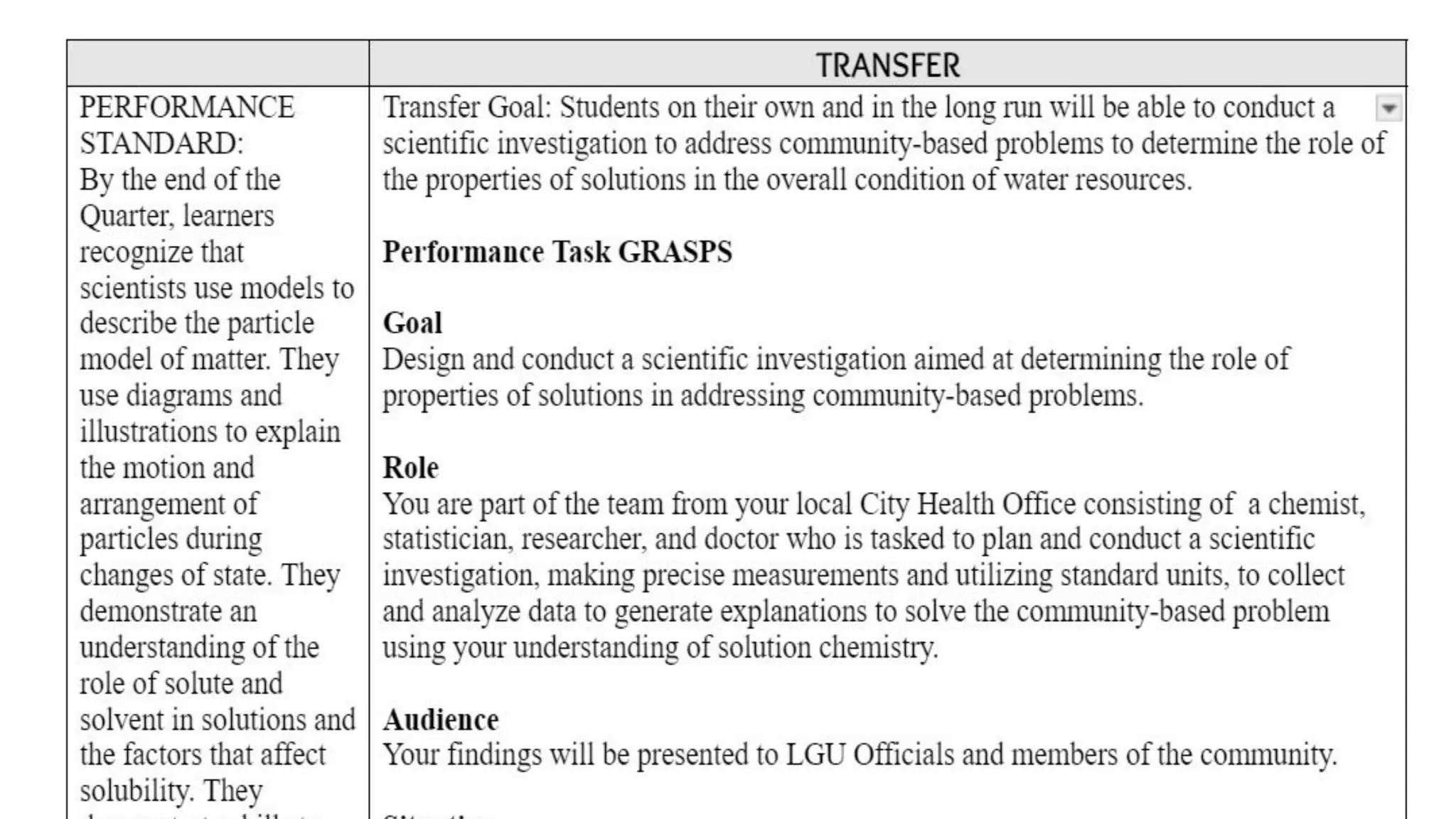
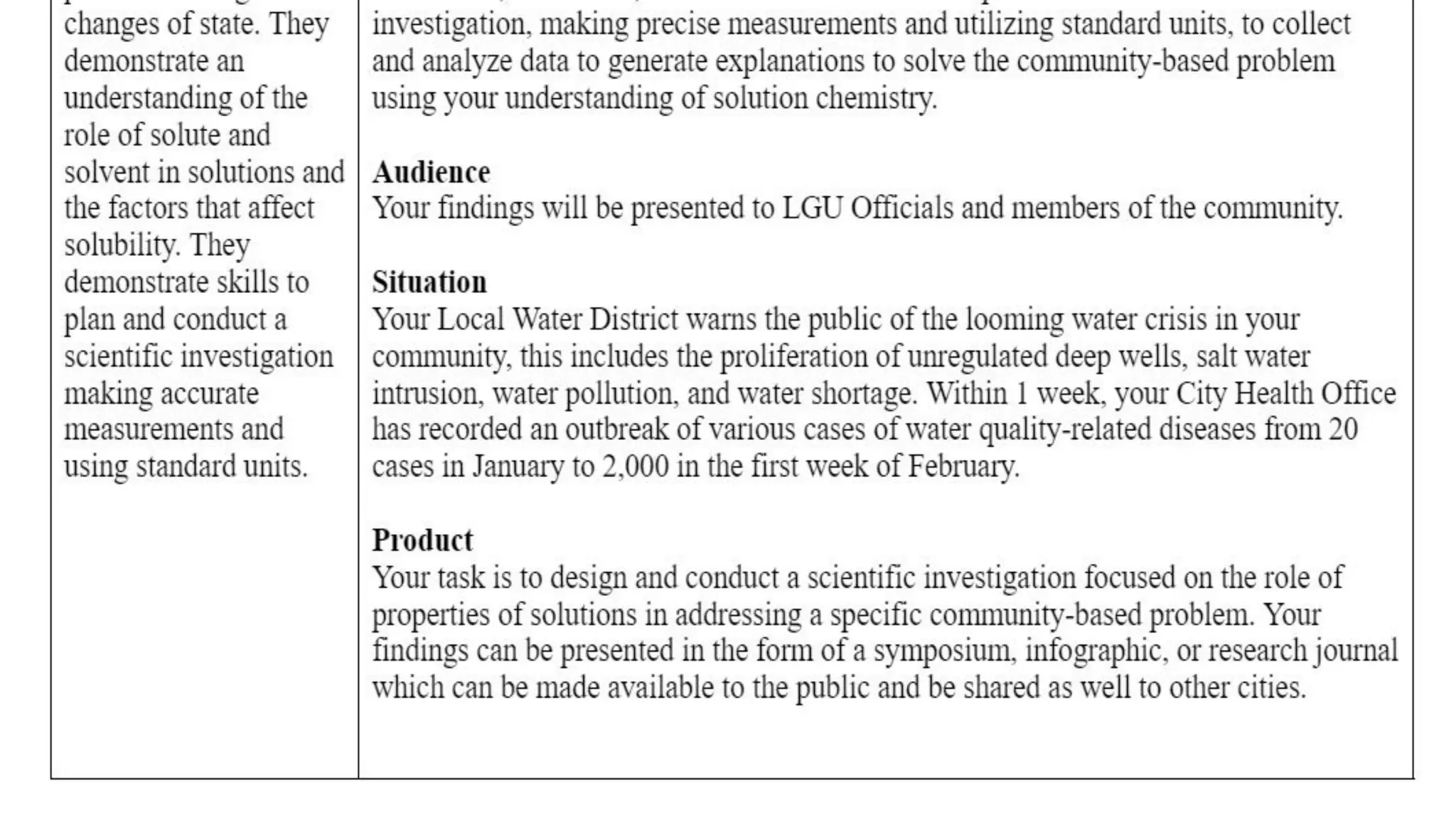
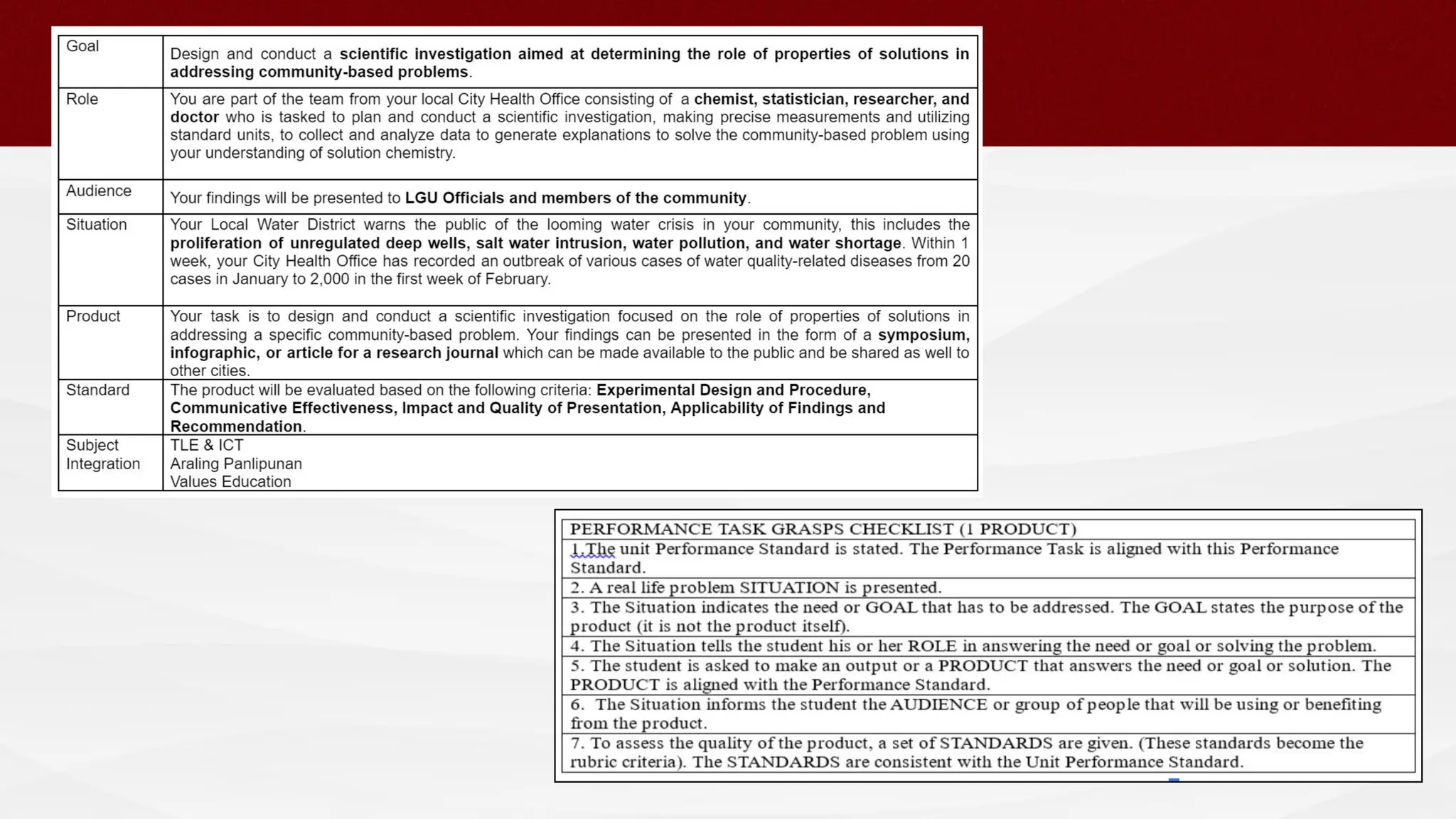
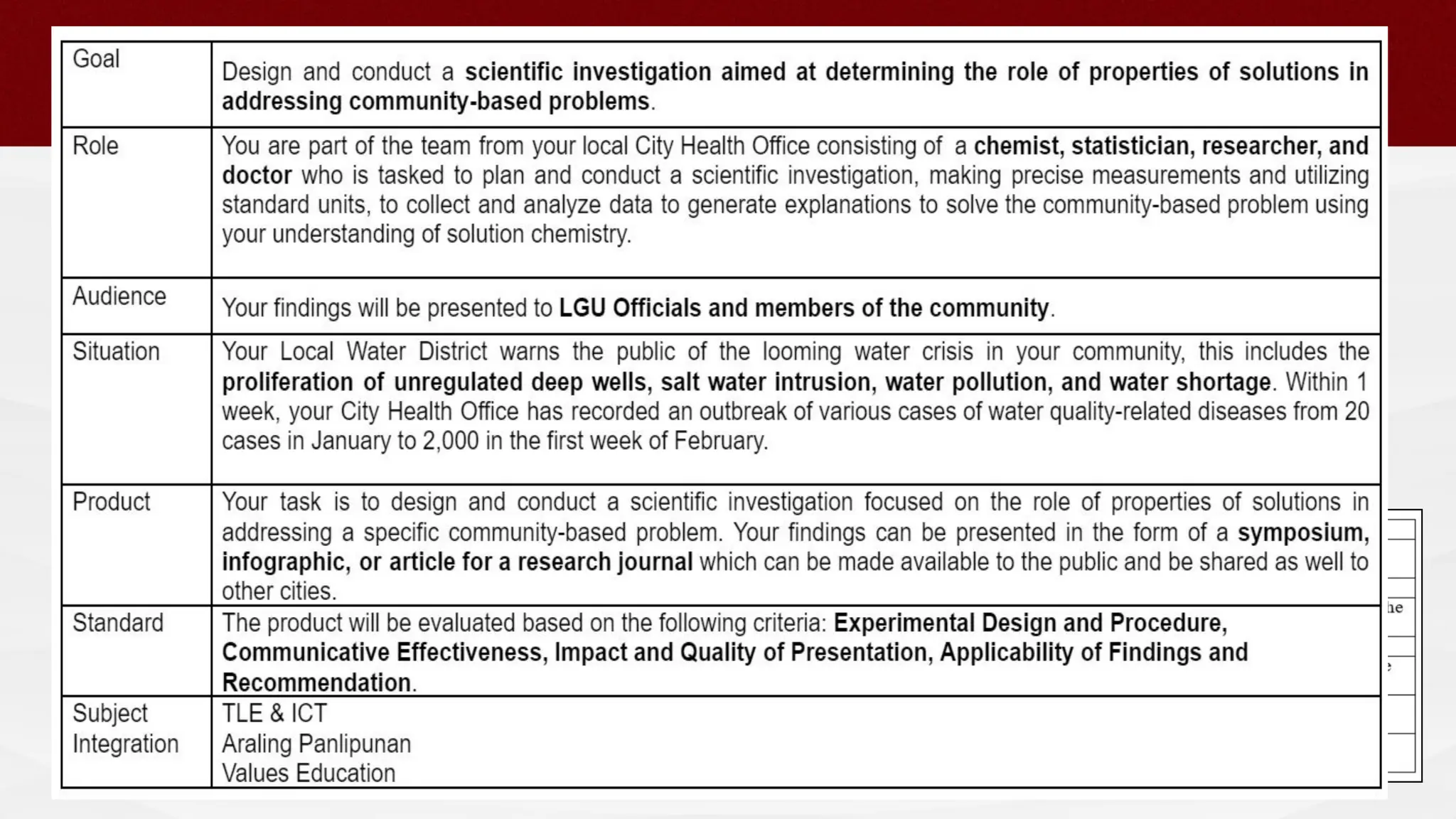
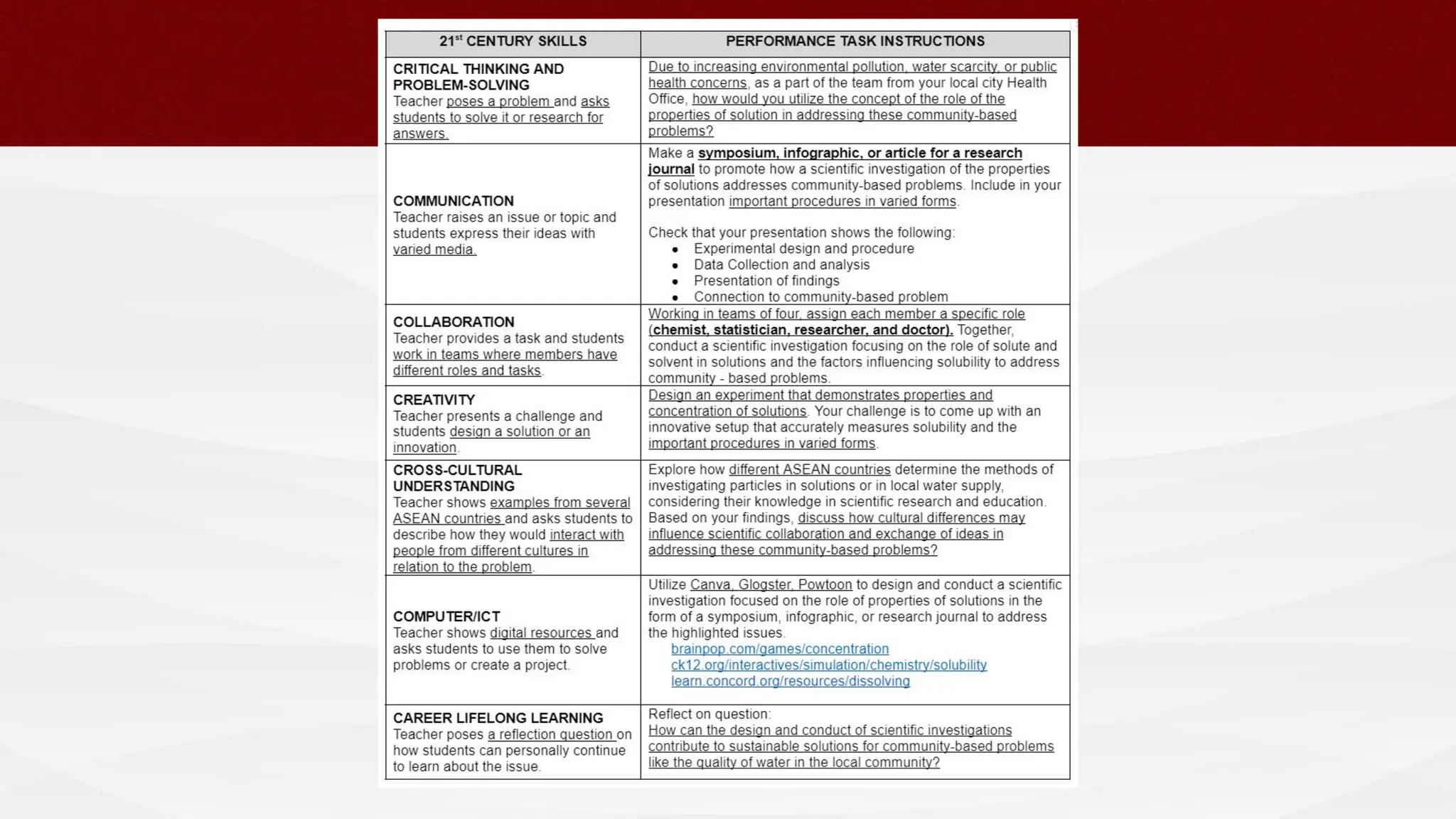
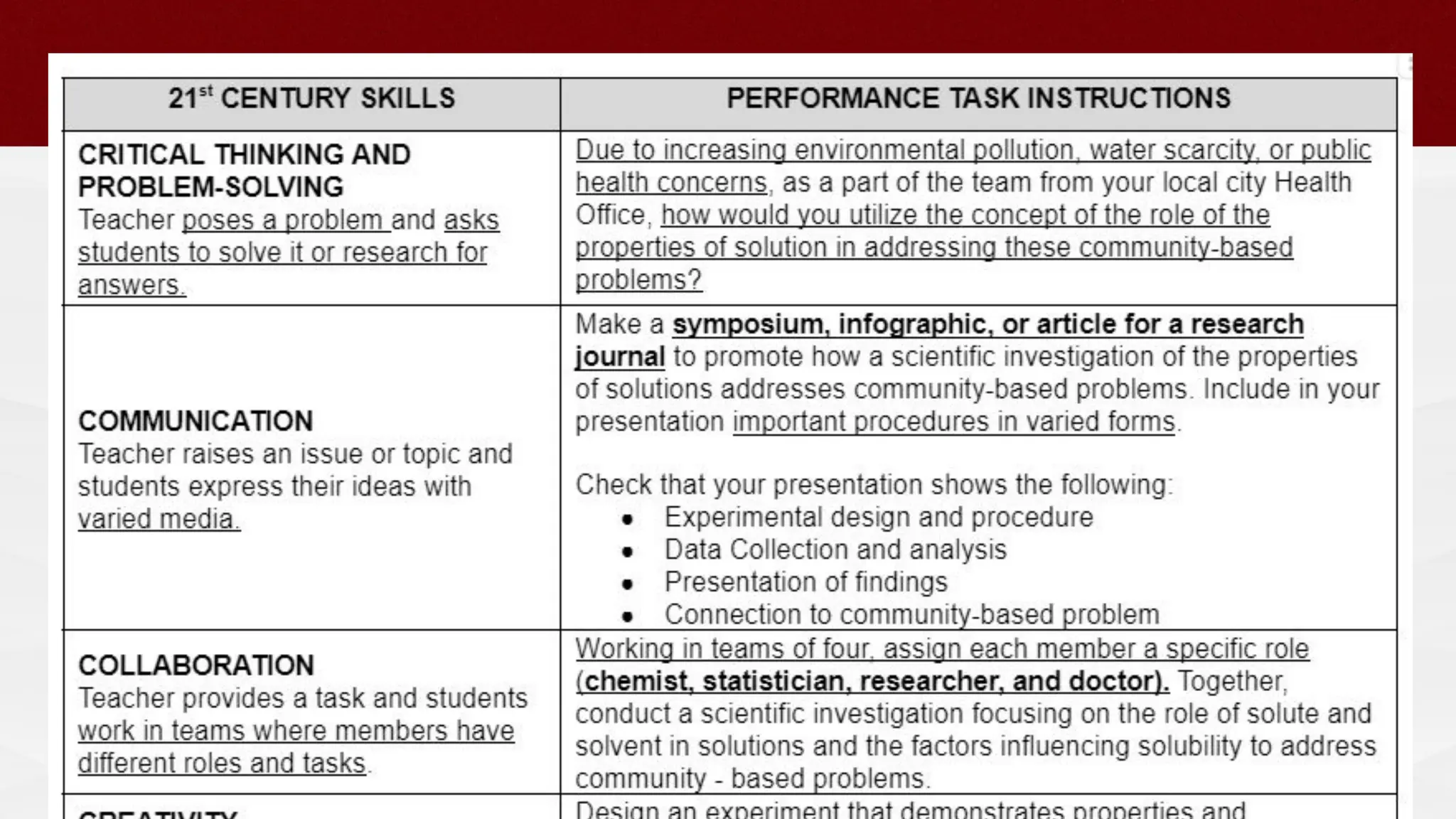
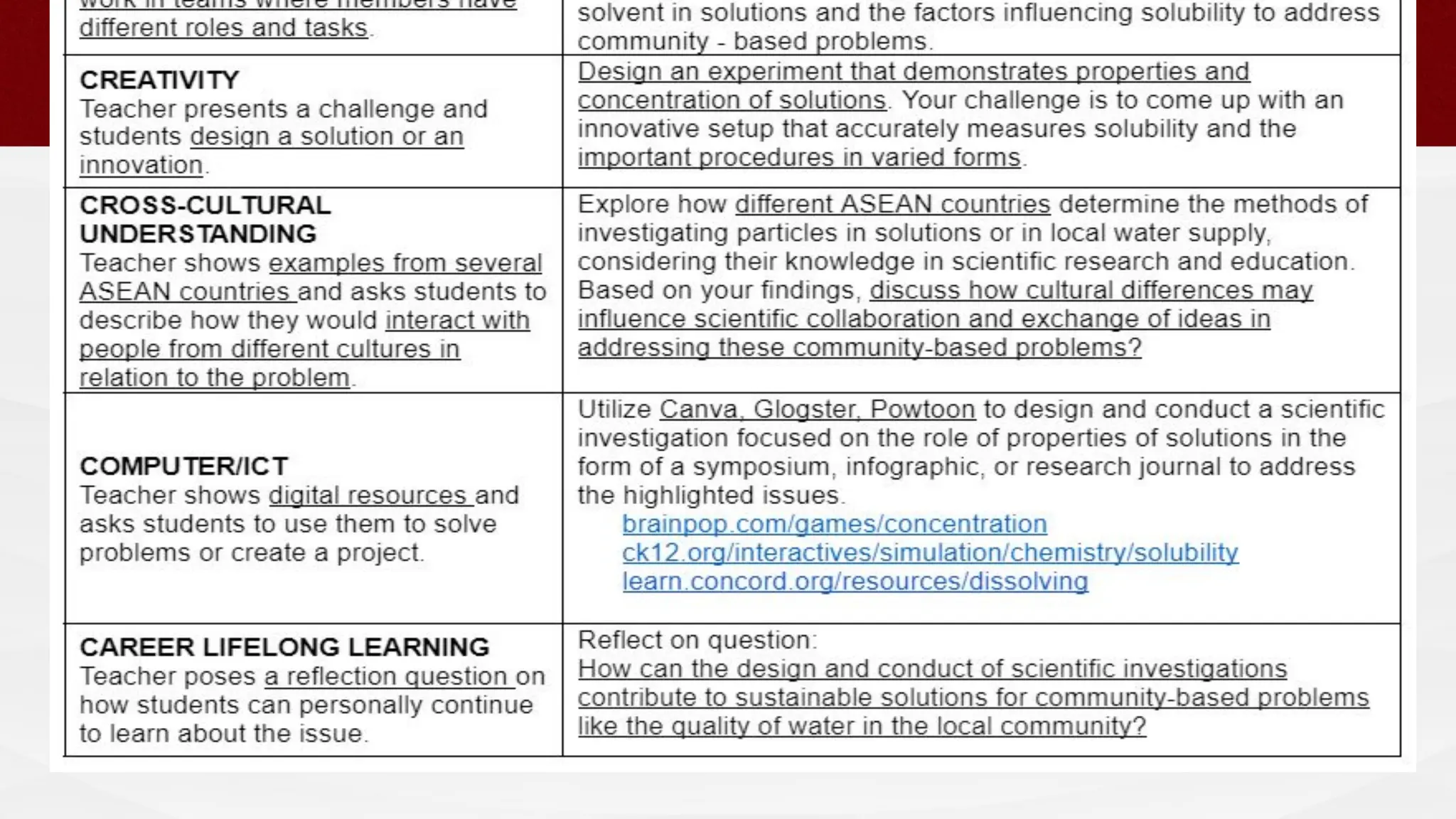
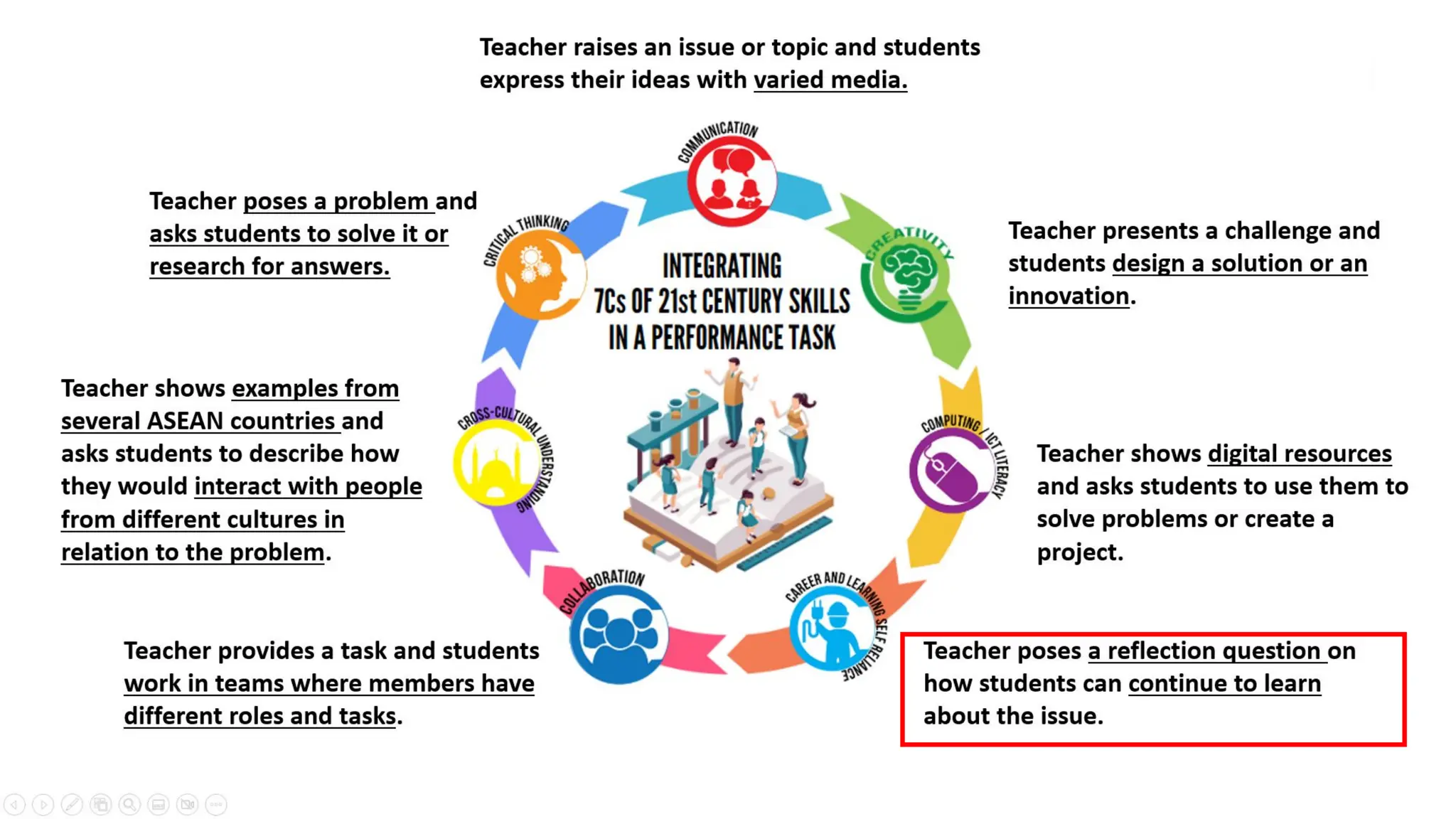
Provide Performance Task with 21st
century skills and relate to GRASPS.
Show again map of conceptual change and ask students to answer next parts.
Do values integration in line with school mission/vision and core values.
Provide closure and reflection and self-evaluation of learning.
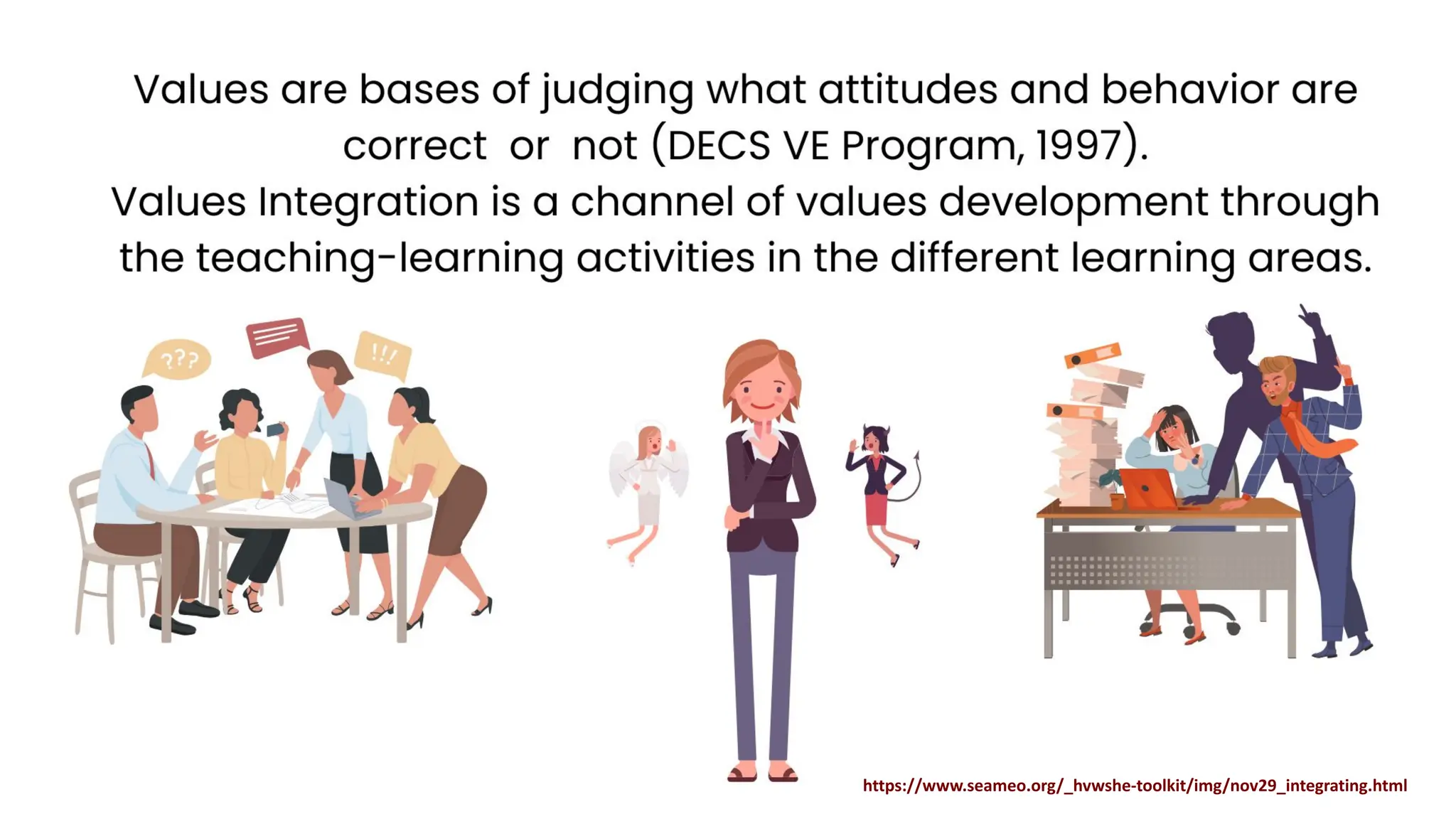
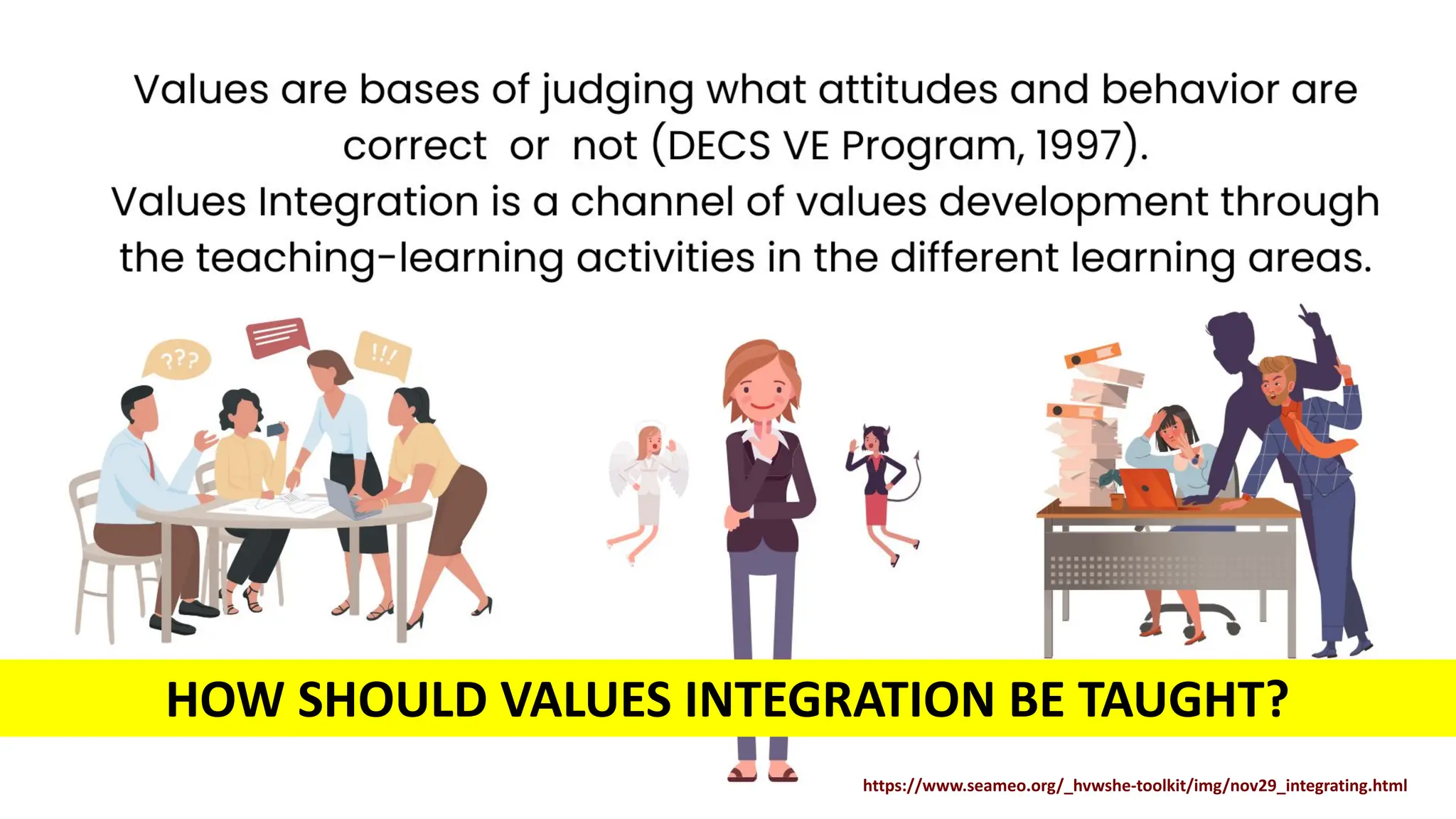
https://www.seameo.org/_hvwshe-toolkit/img/nov29_integrating.html
HOW SHOULD VALUES INTEGRATION BE TAUGHT?
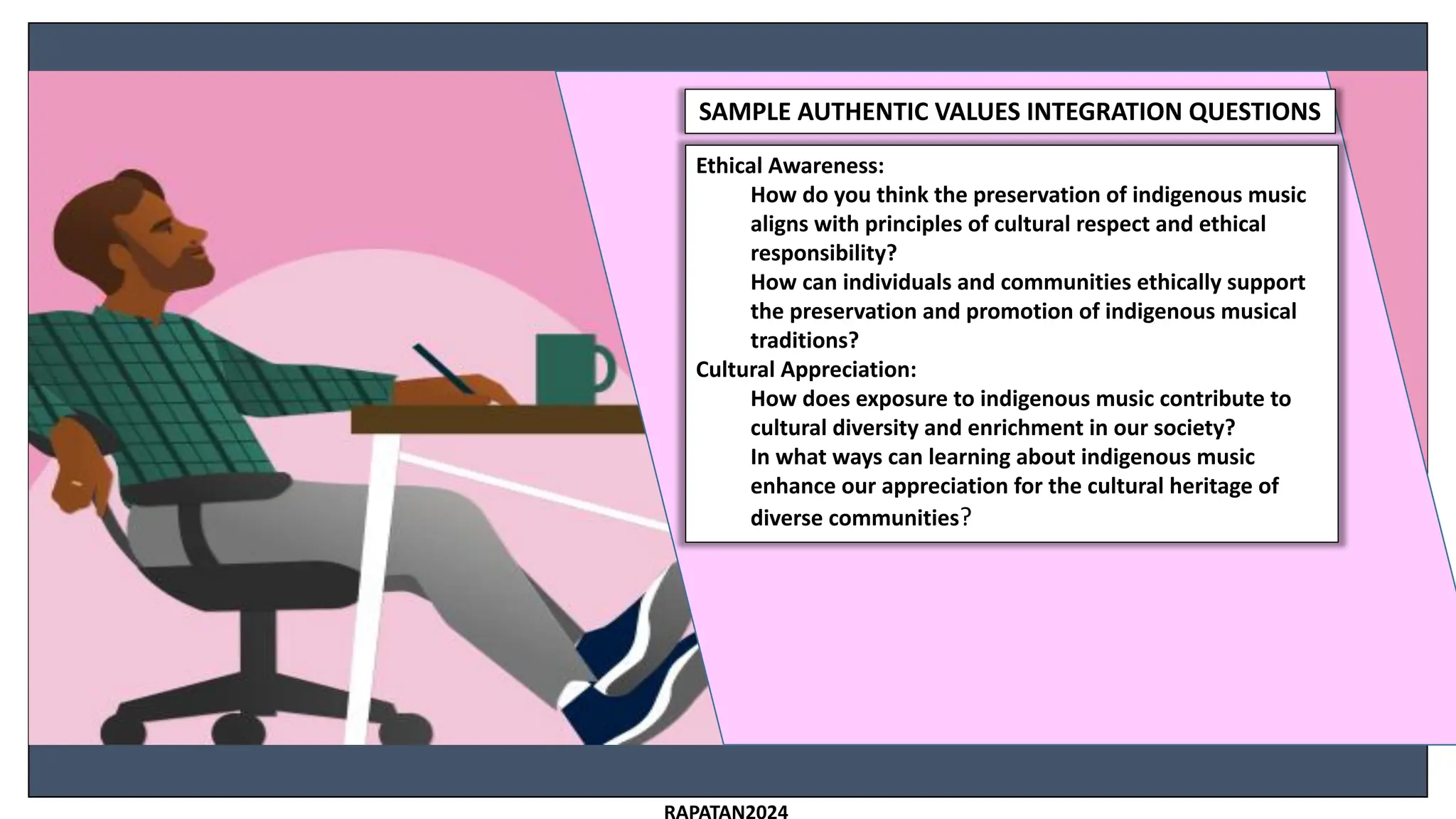
SAMPLE AUTHENTIC VALUES INTEGRATION QUESTIONS
Ethical Awareness:
How do you think the preservation of indigenous music
aligns with principles of cultural respect and ethical
responsibility?
How can individuals and communities ethically support
the preservation and promotion of indigenous musical
traditions?
Cultural Appreciation:
How does exposure to indigenous music contribute to
cultural diversity and enrichment in our society?
In what ways can learning about indigenous music
enhance our appreciation for the cultural heritage of
diverse communities?
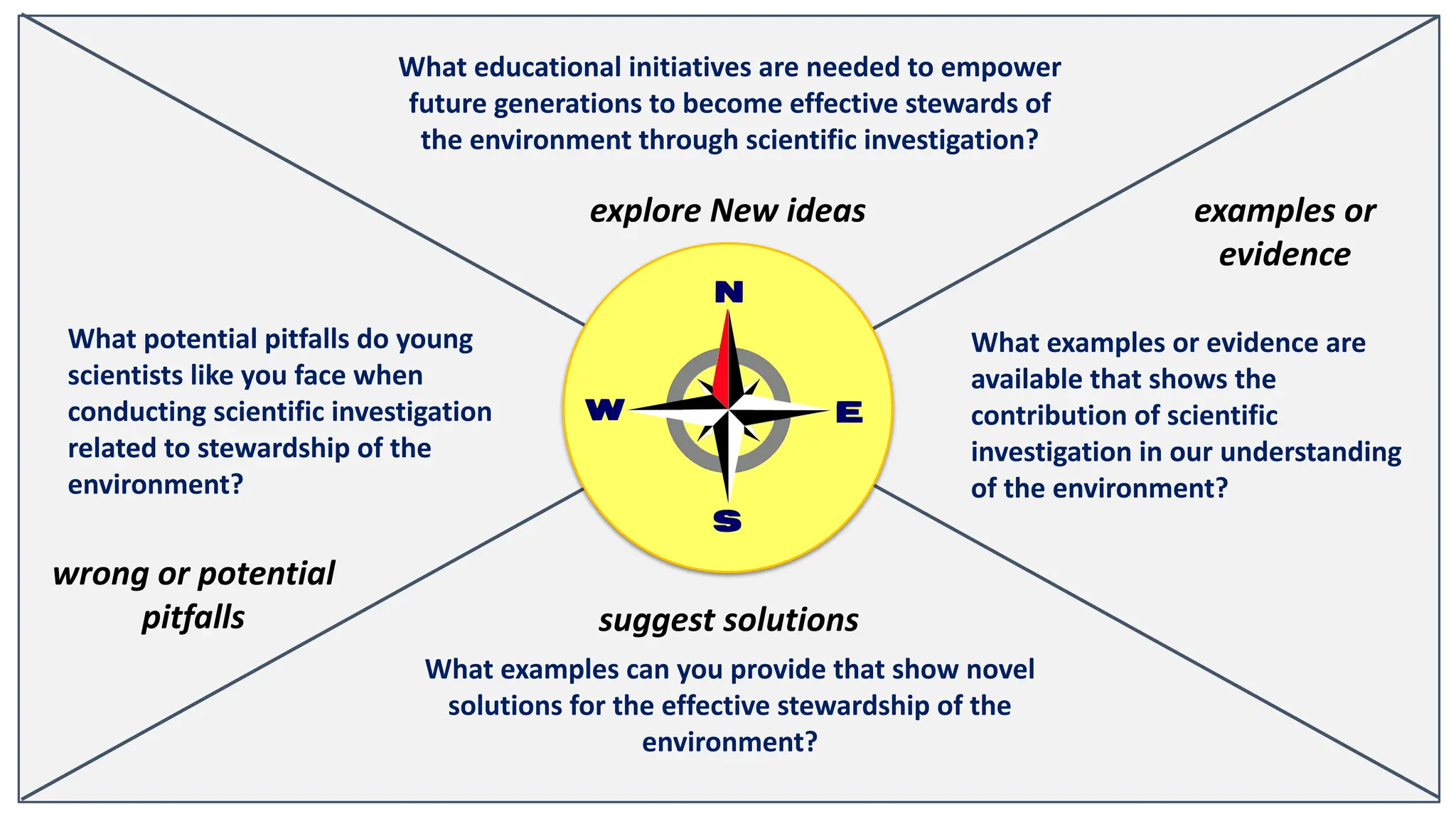
What potential pitfalls do young
scientists like you face when
conducting scientific investigation
related to stewardship of the
environment?
What examples or evidence are
available that shows the
contribution of scientific
investigation in our understanding
of the environment?
What educational initiatives are needed to empower
future generations to become effective stewards of
the environment through scientific investigation?
What examples can you provide that show novel
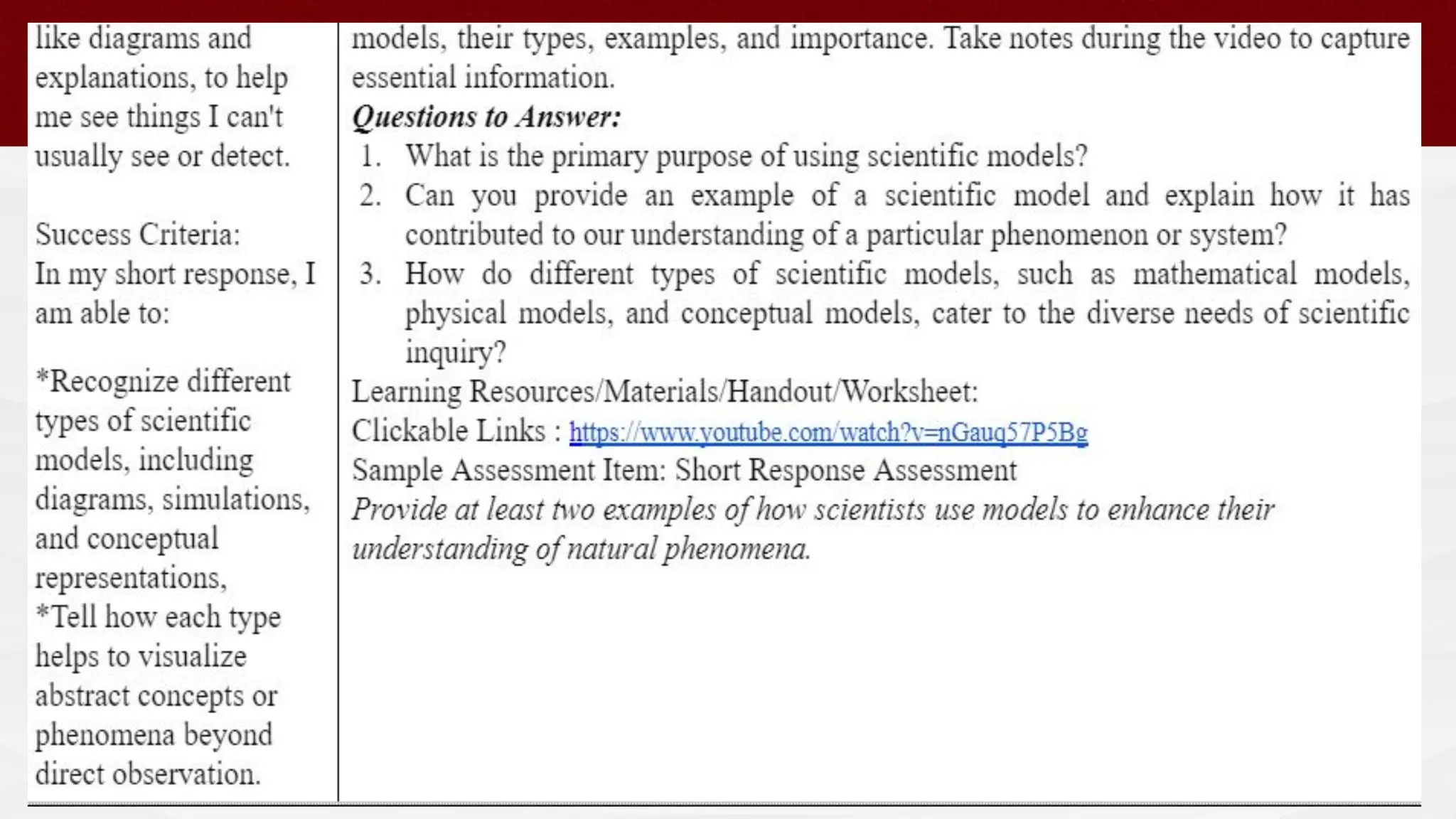
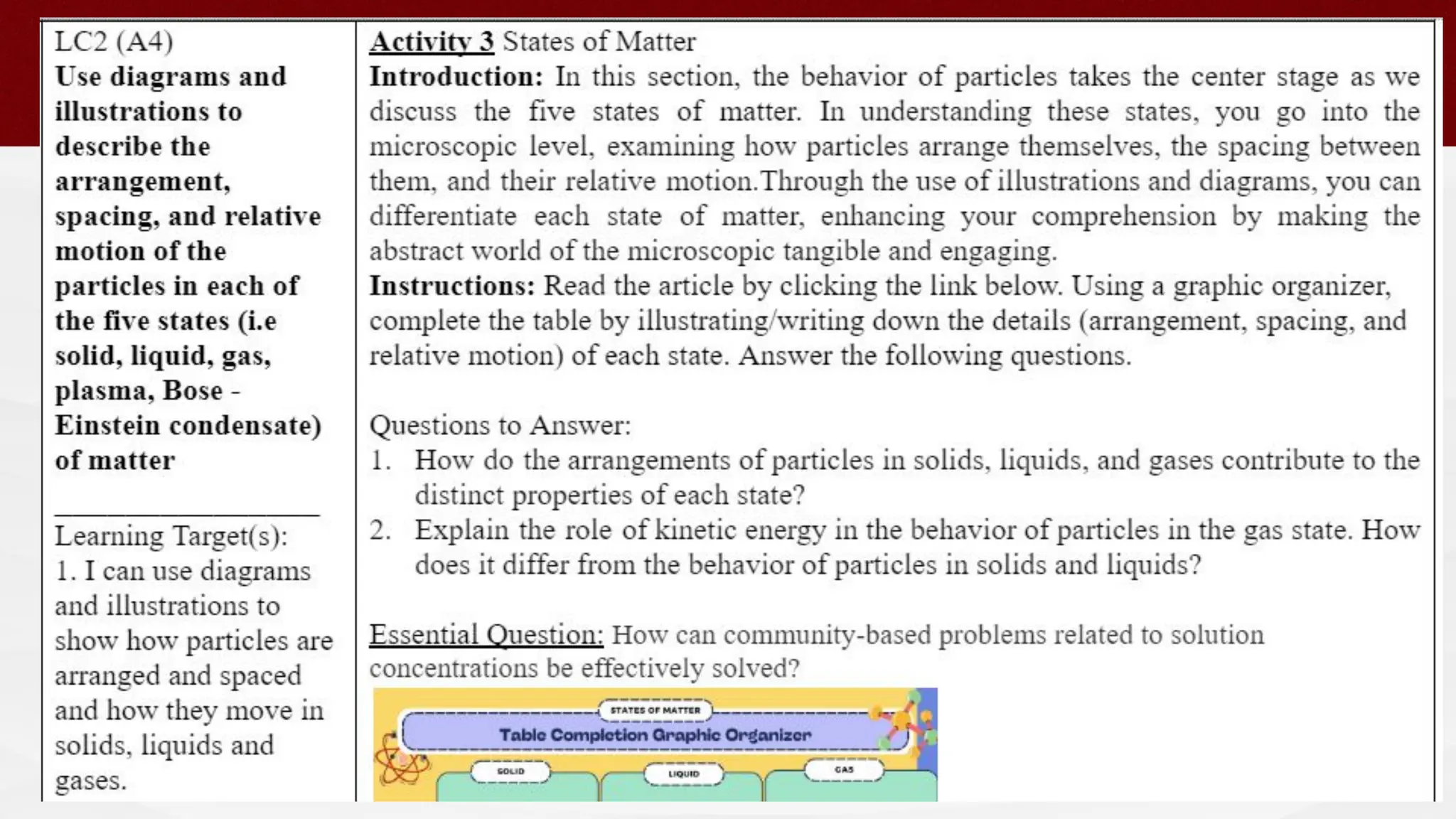
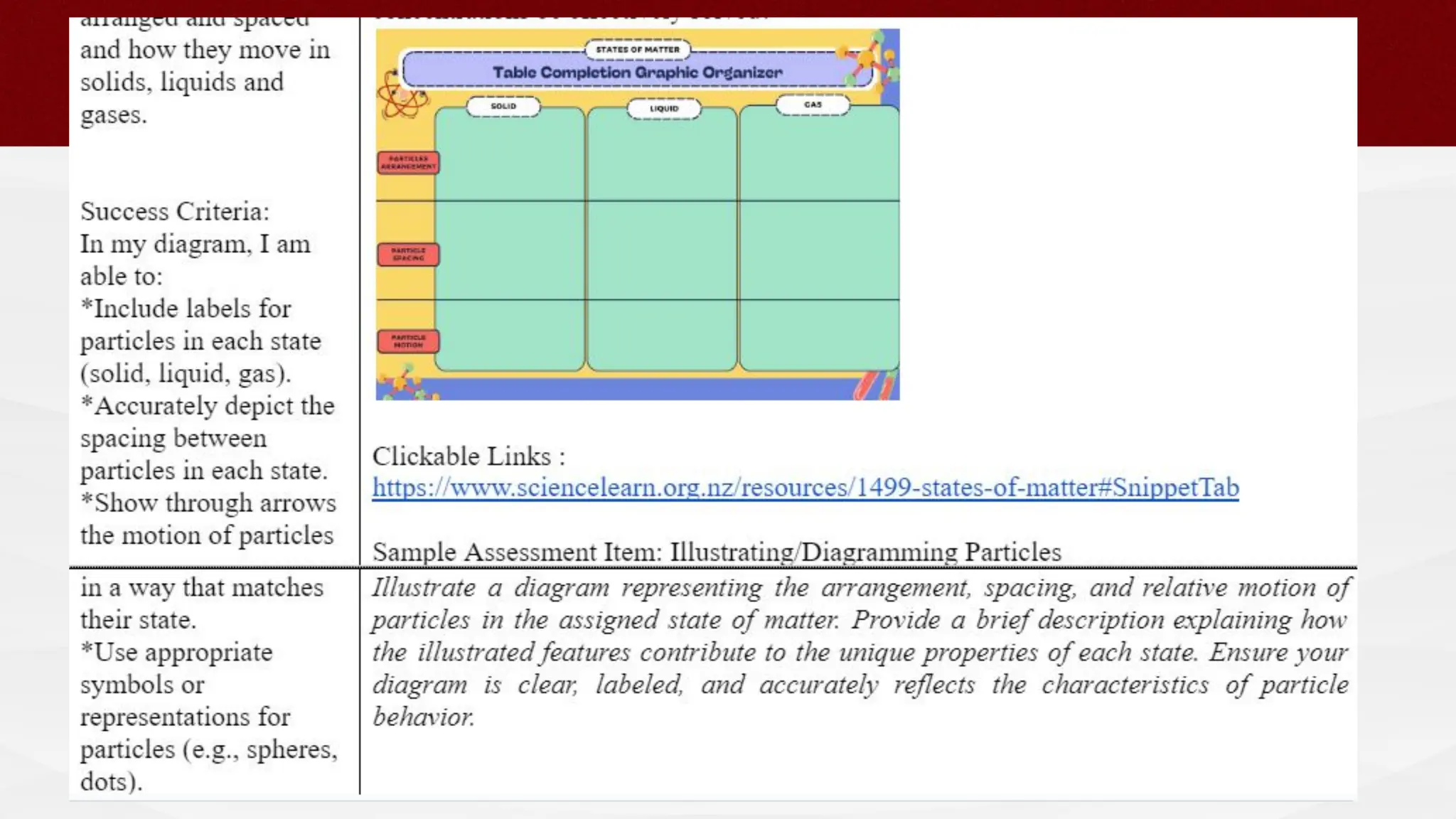
solutions for the effective stewardship of the
environment?
explore New ideas examples or
evidence
suggest solutions
wrong or potential
pitfalls
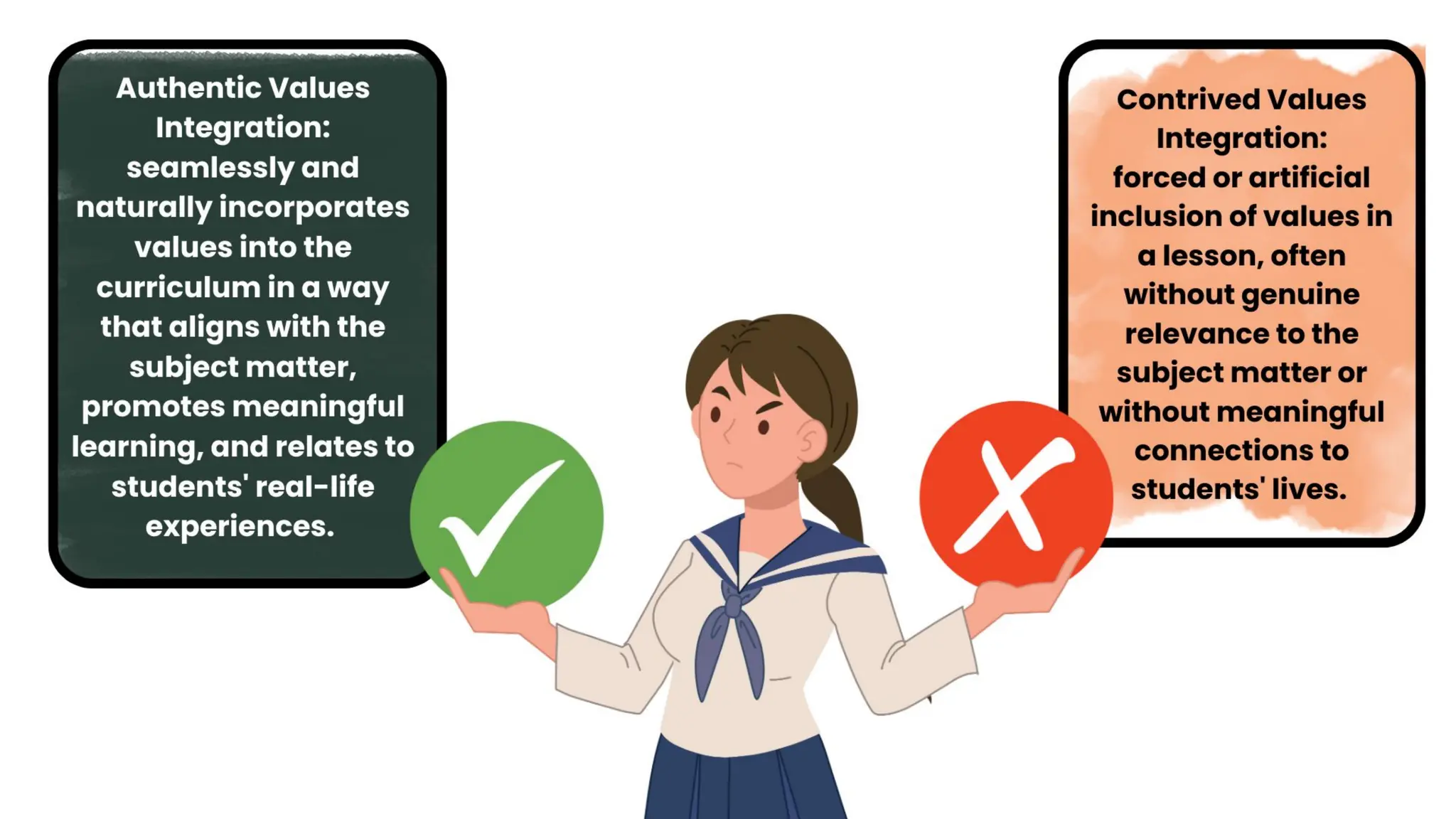
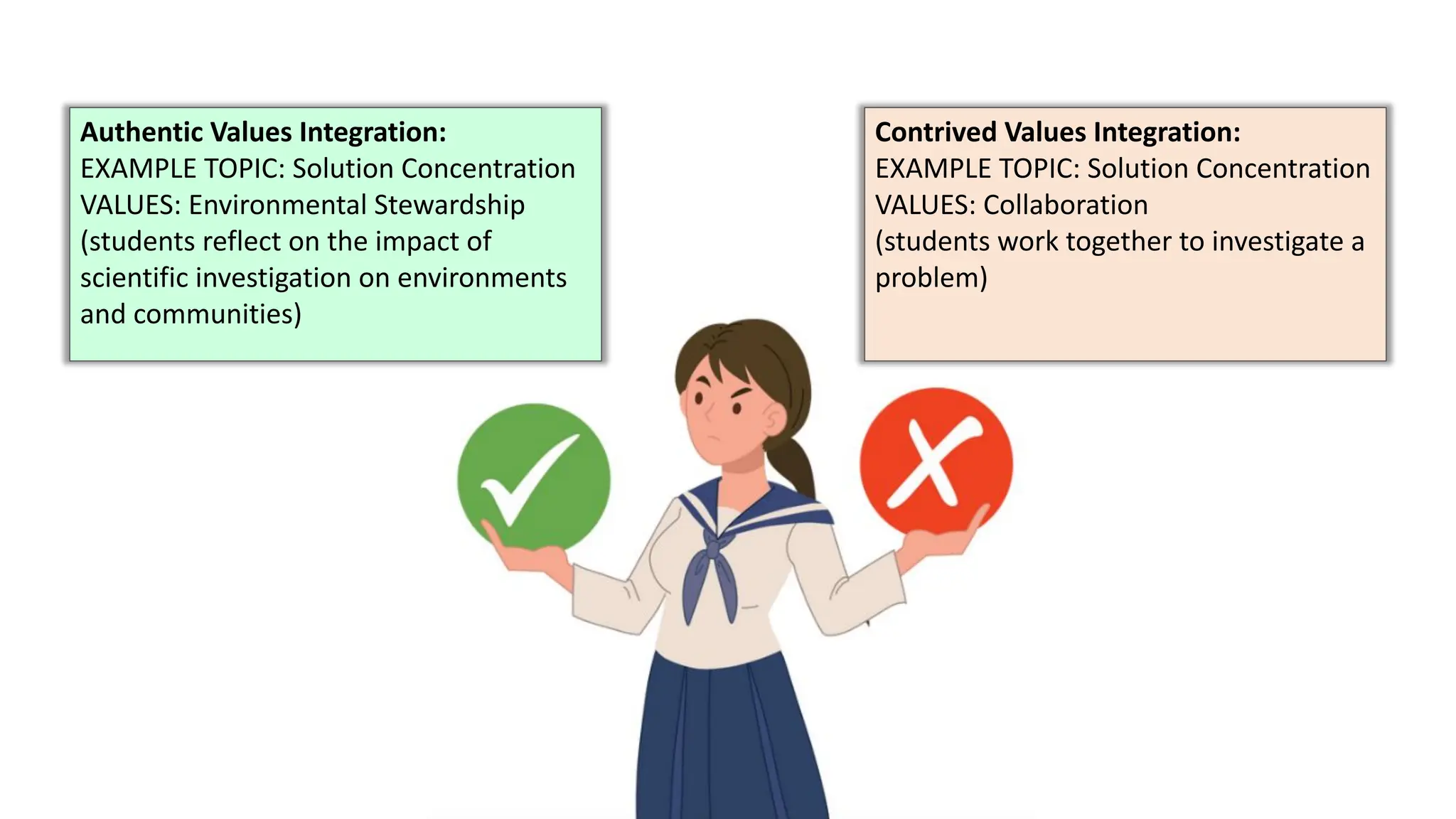
Contrived Values Integration:
EXAMPLE TOPIC: Solution Concentration
VALUES: Collaboration
(students work together to investigate a
problem)
Authentic Values Integration:
EXAMPLE TOPIC: Solution Concentration
VALUES: Environmental Stewardship
(students reflect on the impact of
scientific investigation on environments
and communities)
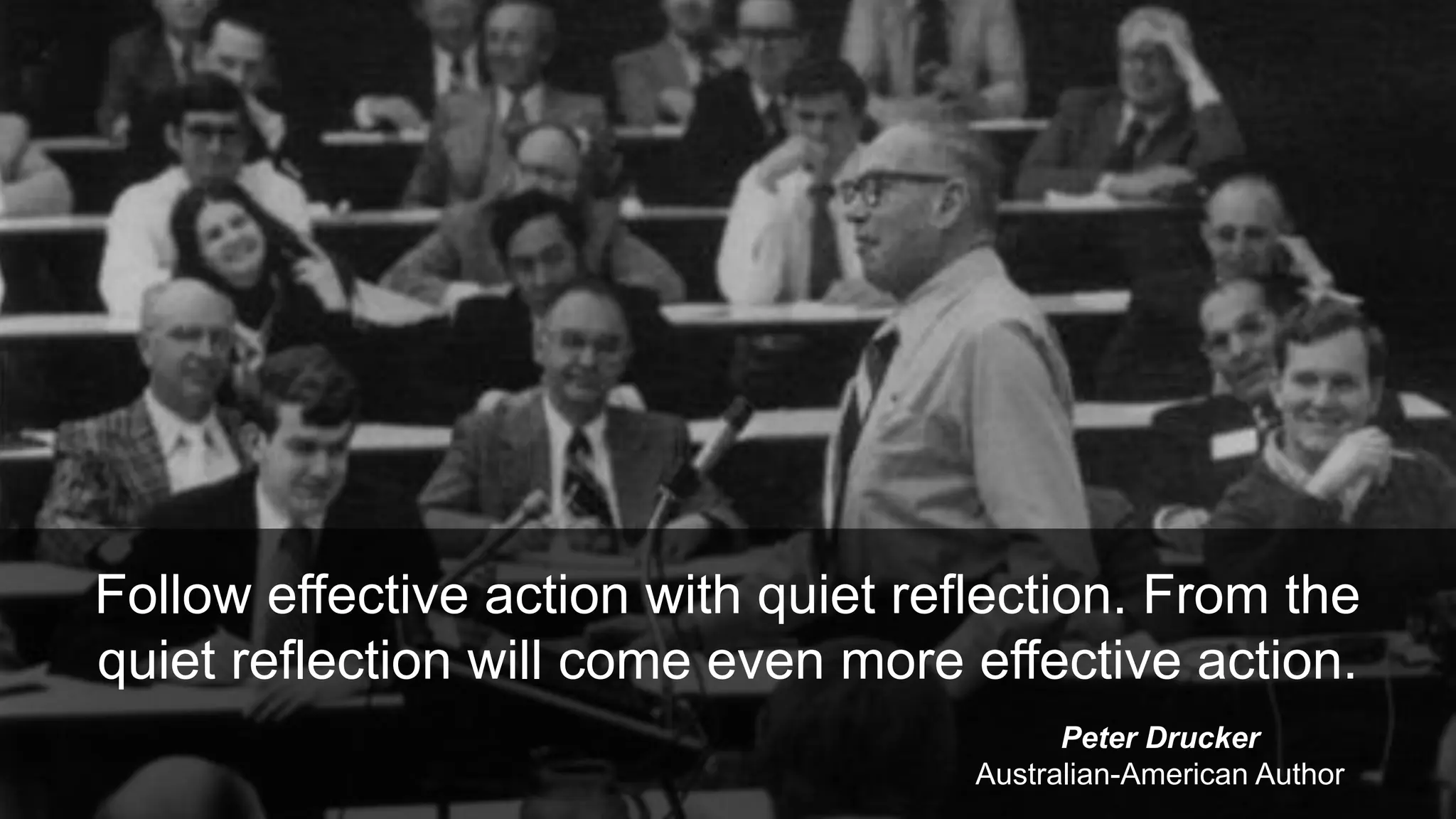
Follow effective action with quiet reflection. From the
quiet reflection will come even more effective action.
Peter Drucker
Australian-American Author
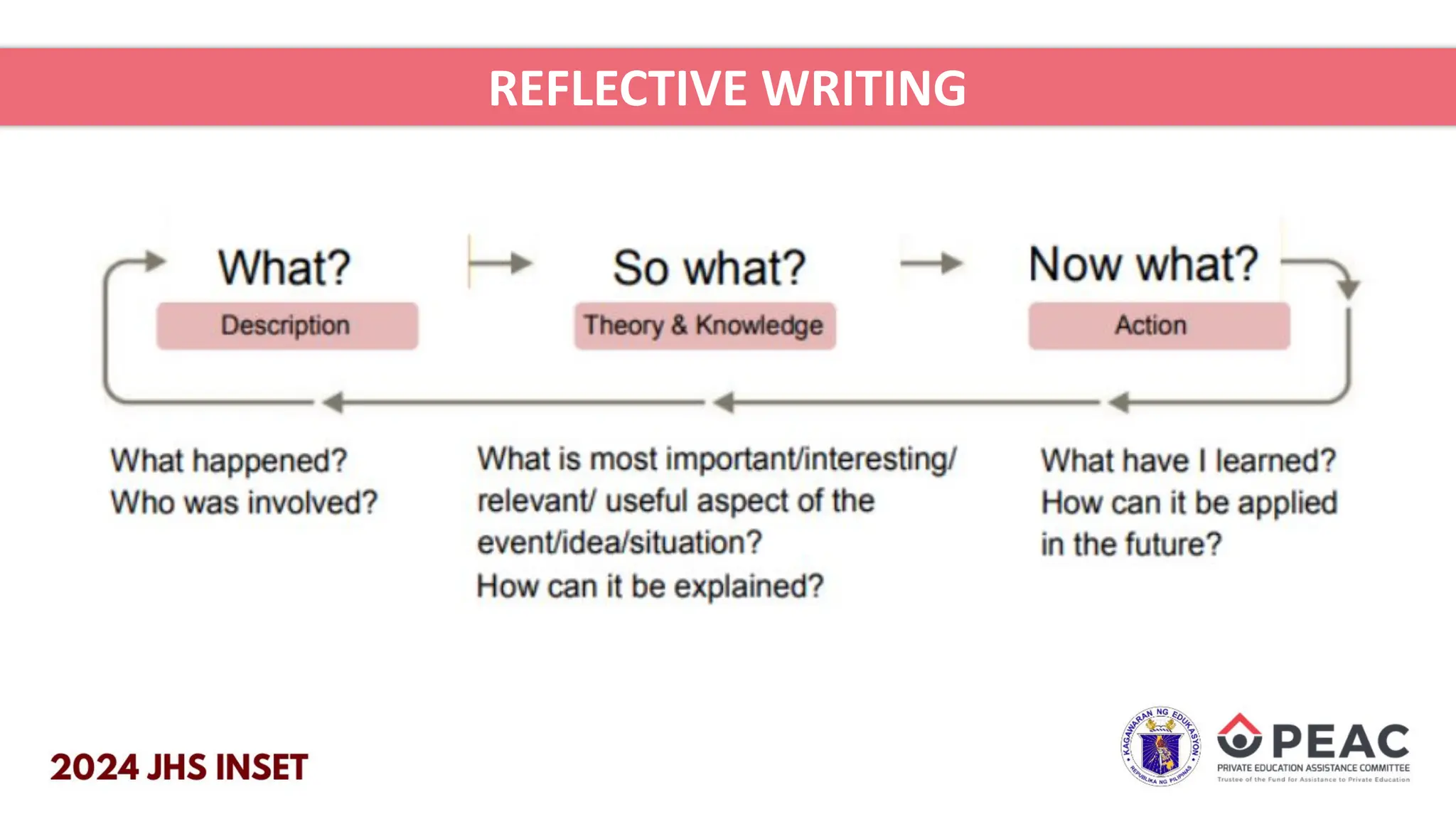
REFLECTIVE WRITING
25 July 2020 41
HOW WILL WE KNOW IF OUR LEARNING
PLANS ARE READY FOR PEAC
RECERTIFICATION?
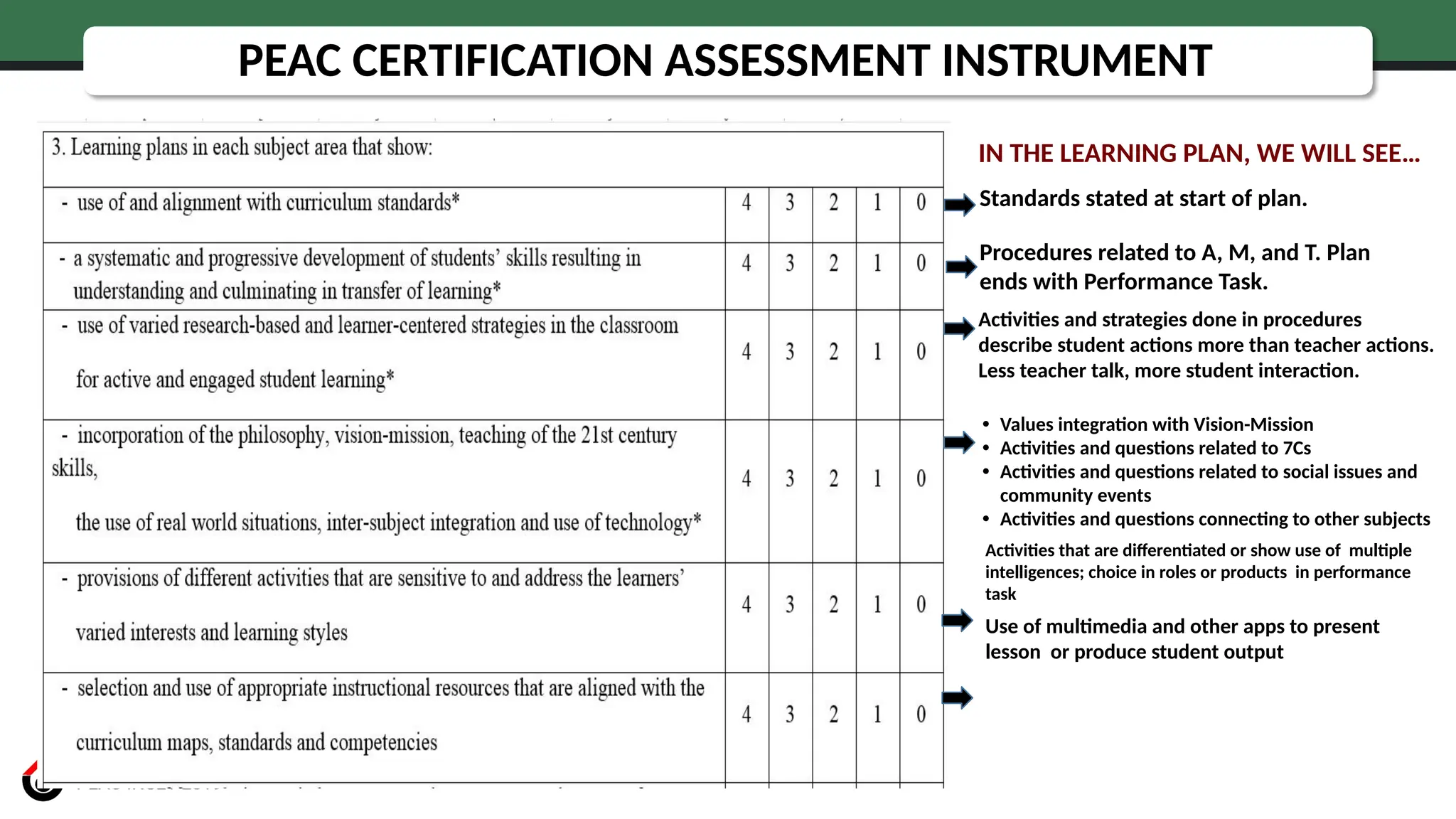
IN THE LEARNING PLAN, WE WILL SEE…
Standards stated at start of plan.
Procedures related to A, M, and T. Plan
ends with Performance Task.
Activities and strategies done in procedures
describe student actions more than teacher actions.
Less teacher talk, more student interaction.
• Values integration with Vision-Mission
• Activities and questions related to 7Cs
• Activities and questions related to social issues and
community events
• Activities and questions connecting to other subjects
Activities that are differentiated or show use of multiple
intelligences; choice in roles or products in performance
task
Use of multimedia and other apps to present
lesson or produce student output
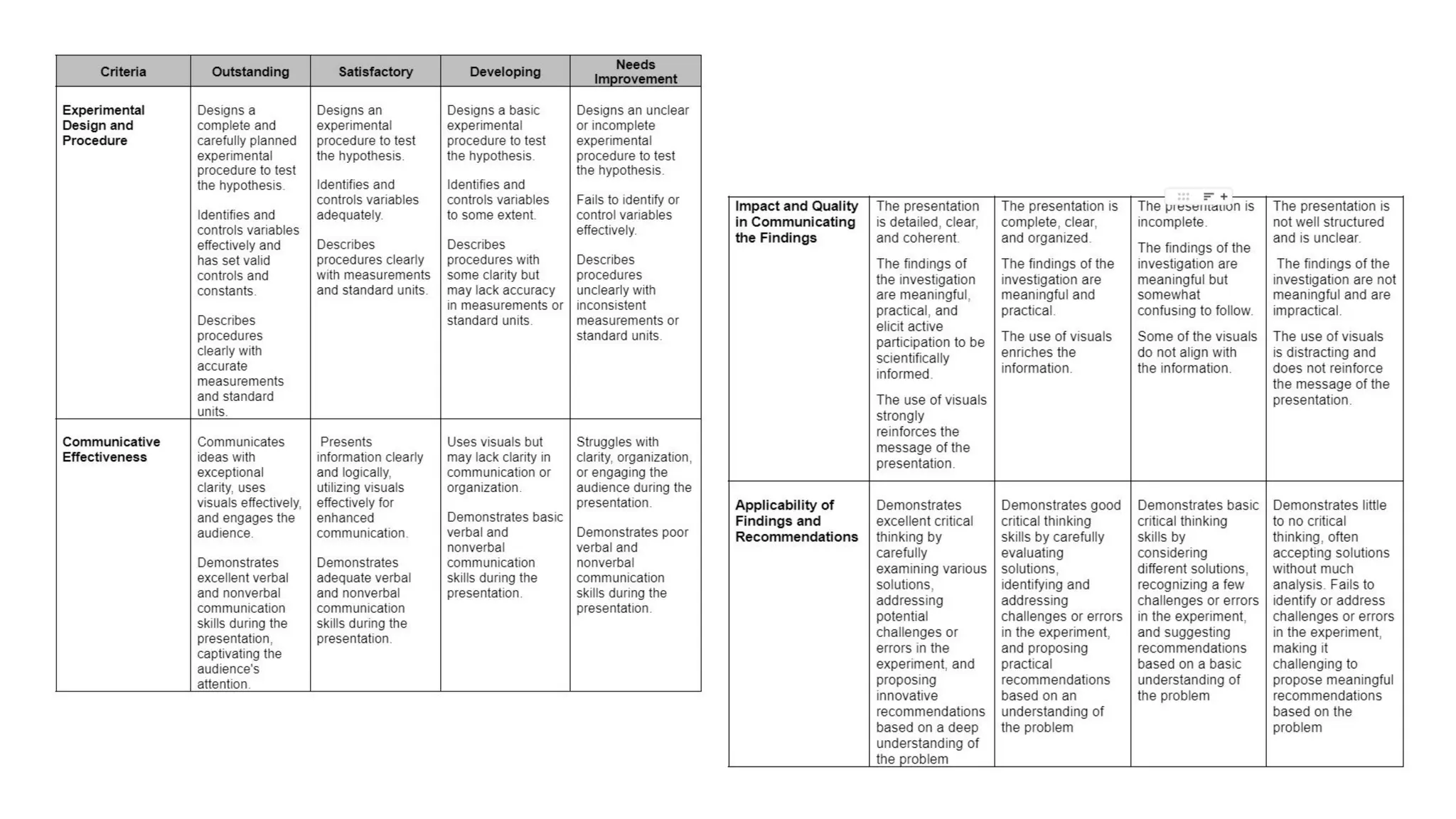
PEAC CERTIFICATION ASSESSMENT INSTRUMENT
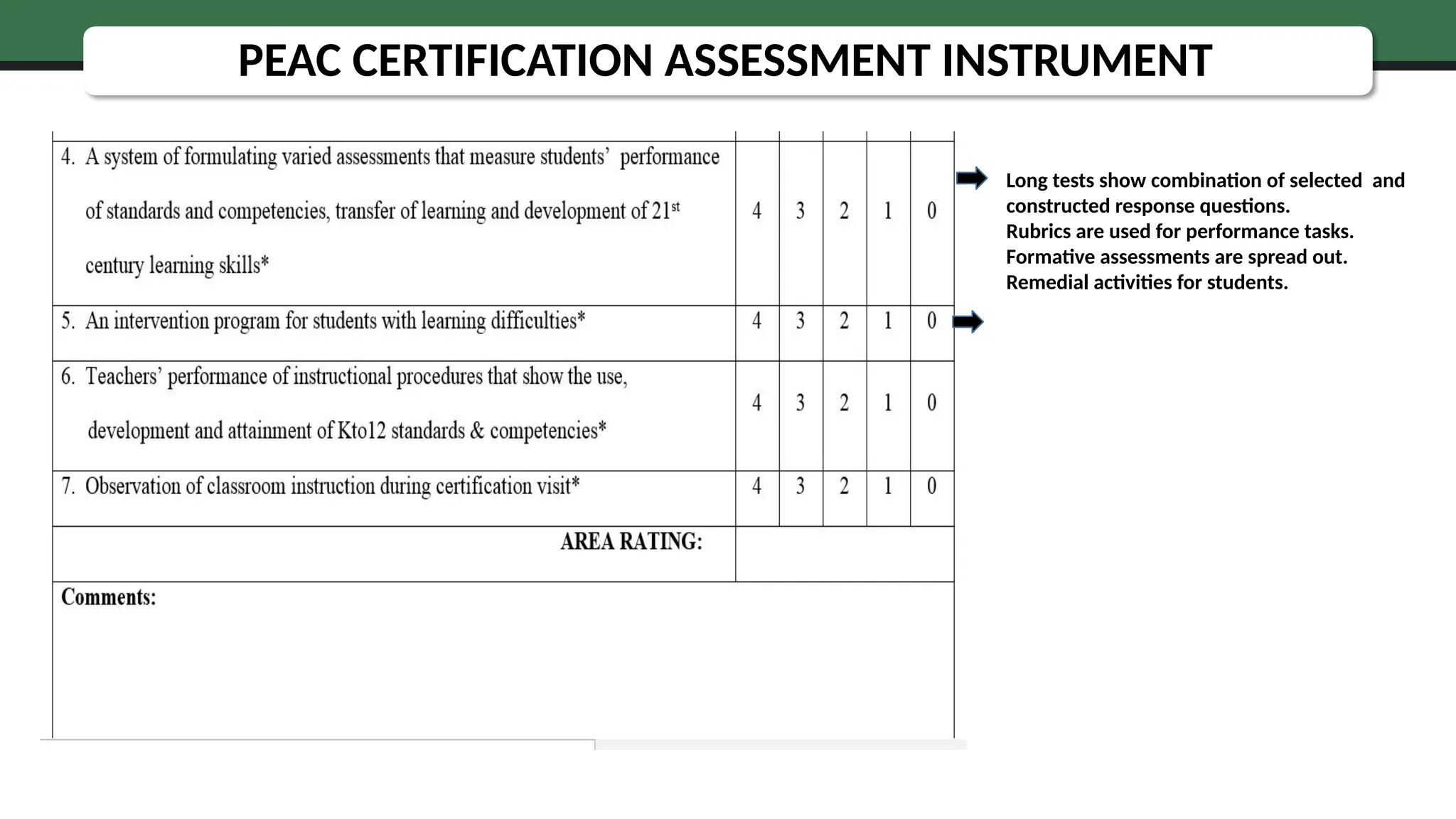
Long tests show combination of selected and
constructed response questions.
Rubrics are used for performance tasks.
Formative assessments are spread out.
Remedial activities for students.
PEAC CERTIFICATION ASSESSMENT INSTRUMENT
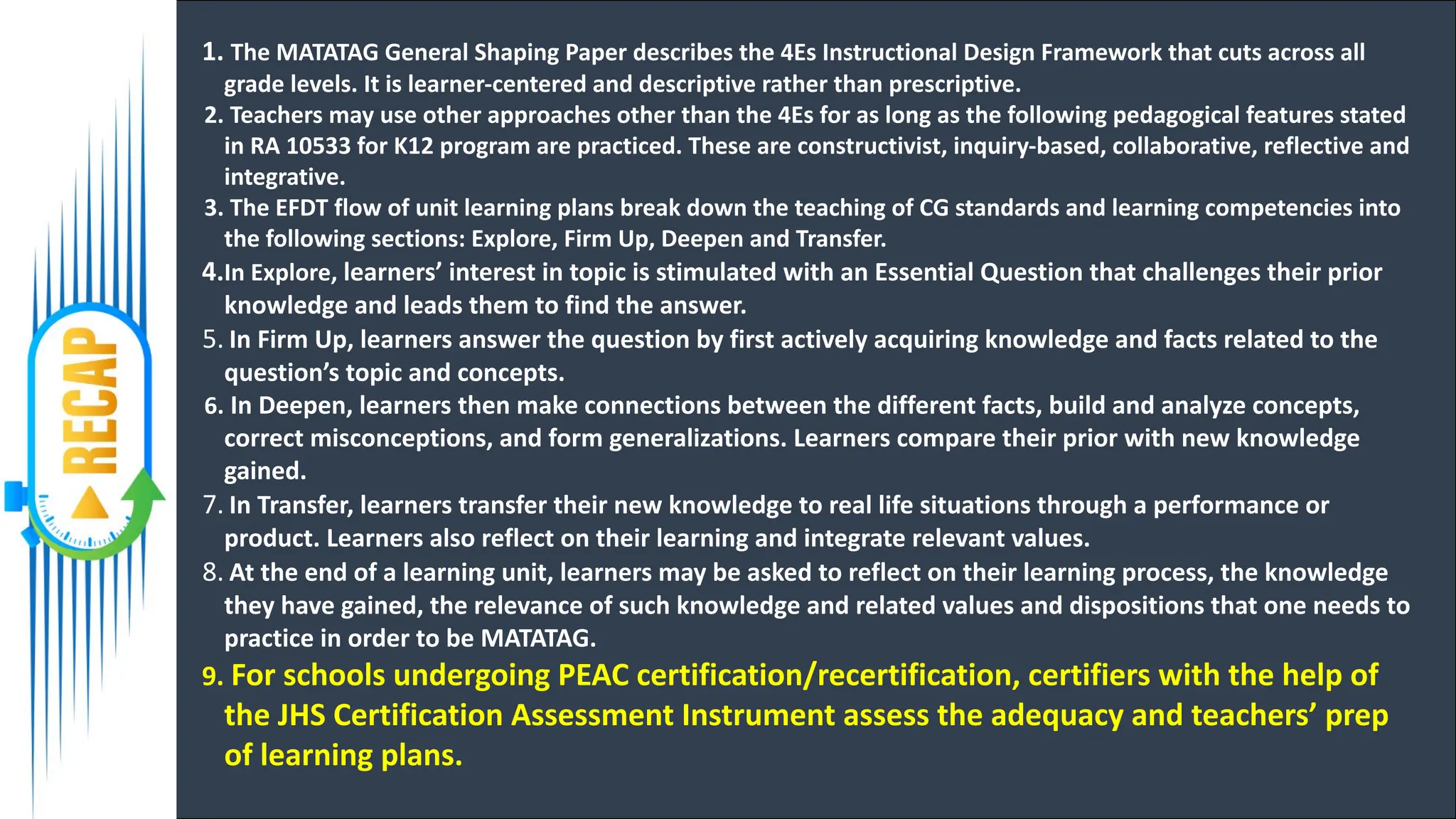
1. What does the MATATAG General Shaping Paper entail regarding instructional design?
1. The MATATAG General Shaping Paper describes the 4Es Instructional Design Framework
that cuts across all grade levels. It is learner-centered and descriptive rather than
prescriptive.
1. What does the MATATAG General Shaping Paper entail regarding instructional design?
2. How do teachers ensure compliance with the pedagogical features outlined in RA 10533
even when utilizing approaches beyond the 4Es framework?
1. The MATATAG General Shaping Paper describes the 4Es Instructional Design Framework that cuts
across all grade levels. It is learner-centered and descriptive rather than prescriptive.
2. Teachers may use other approaches other than the 4Es for as long as the following
pedagogical features stated in RA 10533 for K12 program are practiced. These are
constructivist, inquiry-based, collaborative, reflective and integrative.
1. What does the MATATAG General Shaping Paper entail regarding instructional design?
2. How do teachers ensure compliance with the pedagogical features outlined in RA 10533 even when
utilizing approaches beyond the 4Es framework?
3. What are the key sections involved in the EFDT flow of unit learning plans?
1. The MATATAG General Shaping Paper describes the 4Es Instructional Design Framework that cuts
across all grade levels. It is learner-centered and descriptive rather than prescriptive.
2. Teachers may use other approaches other than the 4Es for as long as the following pedagogical
features stated in RA 10533 for K12 program are practiced. These are constructivist, inquiry-based,
collaborative, reflective and integrative.
3. The EFDT flow of unit learning plans break down the teaching of CG standards and
learning competencies into the following sections: Explore, Firm Up, Deepen and Transfer.
1. What does the MATATAG General Shaping Paper entail regarding instructional design?
2. How do teachers ensure compliance with the pedagogical features outlined in RA 10533 even when
utilizing approaches beyond the 4Es framework?
3. What are the key sections involved in the EFDT flow of unit learning plans?
4. How are learners engaged in the Explore phase of the learning plan?
1. The MATATAG General Shaping Paper describes the 4Es Instructional Design Framework that cuts
across all grade levels. It is learner-centered and descriptive rather than prescriptive.
2. Teachers may use other approaches other than the 4Es for as long as the following pedagogical
features stated in RA 10533 for K12 program are practiced. These are constructivist, inquiry-based,
collaborative, reflective and integrative.
3. The EFDT flow of unit learning plans break down the teaching of CG standards and learning
competencies into the following sections: Explore, Firm Up, Deepen and Transfer.
4. In Explore, learners’ interest in topic is stimulated with an Essential Question that
challenges their prior knowledge and leads them to find the answer.
1. What does the MATATAG General Shaping Paper entail regarding instructional design?
2. How do teachers ensure compliance with the pedagogical features outlined in RA 10533 even when
utilizing approaches beyond the 4Es framework?
3. What are the key sections involved in the EFDT flow of unit learning plans?
4. How are learners engaged in the Explore phase of the learning plan?
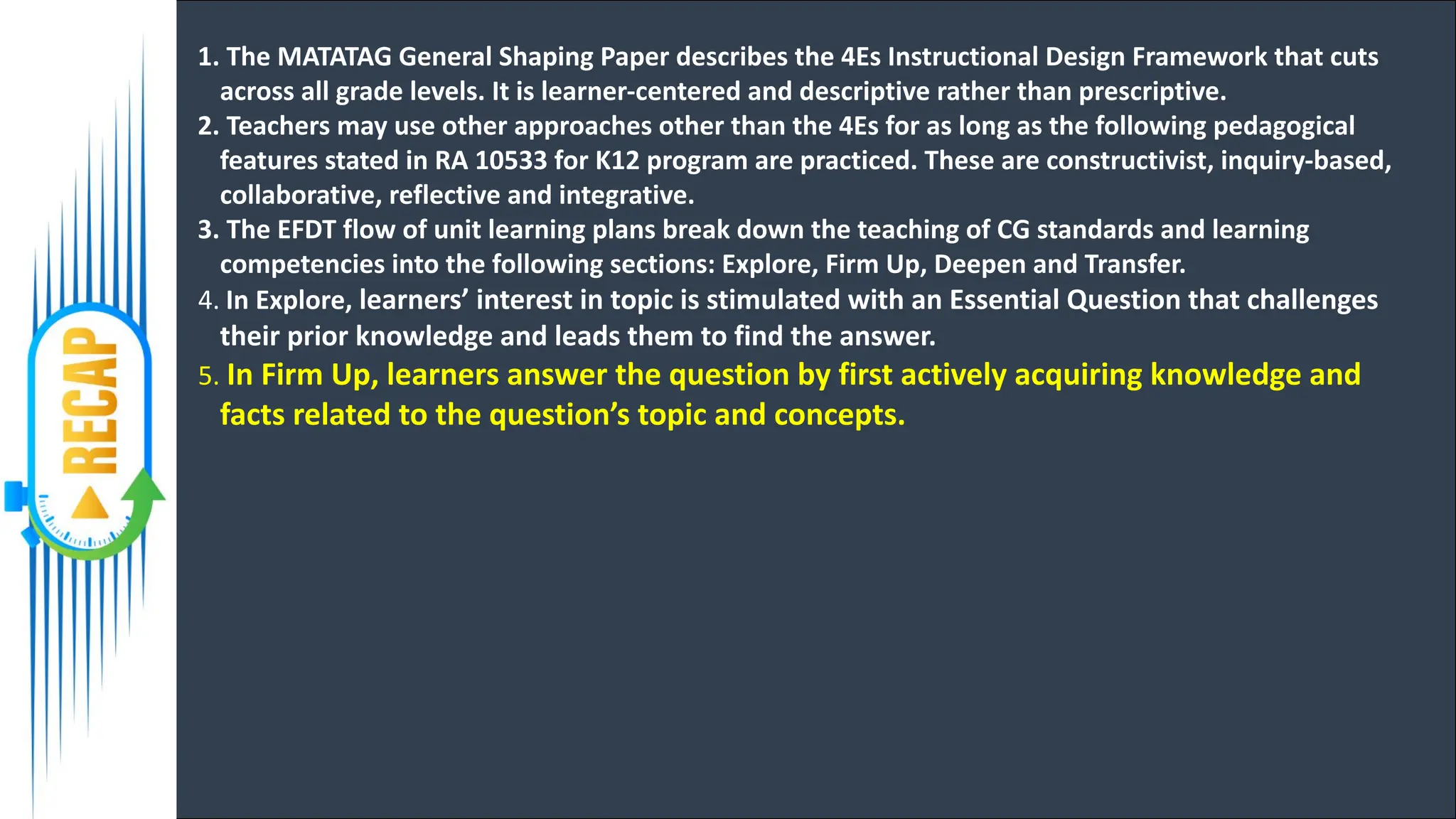
5. What are expected of learners during the Firm Up phase of the learning plan?
1. The MATATAG General Shaping Paper describes the 4Es Instructional Design Framework that cuts
across all grade levels. It is learner-centered and descriptive rather than prescriptive.
2. Teachers may use other approaches other than the 4Es for as long as the following pedagogical
features stated in RA 10533 for K12 program are practiced. These are constructivist, inquiry-based,
collaborative, reflective and integrative.
3. The EFDT flow of unit learning plans break down the teaching of CG standards and learning
competencies into the following sections: Explore, Firm Up, Deepen and Transfer.
4. In Explore, learners’ interest in topic is stimulated with an Essential Question that challenges
their prior knowledge and leads them to find the answer.
5. In Firm Up, learners answer the question by first actively acquiring knowledge and
facts related to the question’s topic and concepts.
1. What does the MATATAG General Shaping Paper entail regarding instructional design?
2. How do teachers ensure compliance with the pedagogical features outlined in RA 10533 even when
utilizing approaches beyond the 4Es framework?
3. What are the key sections involved in the EFDT flow of unit learning plans?
4. How are learners engaged in the Explore phase of the learning plan?
5. What are expected of learners during the Firm Up phase of the learning plan?
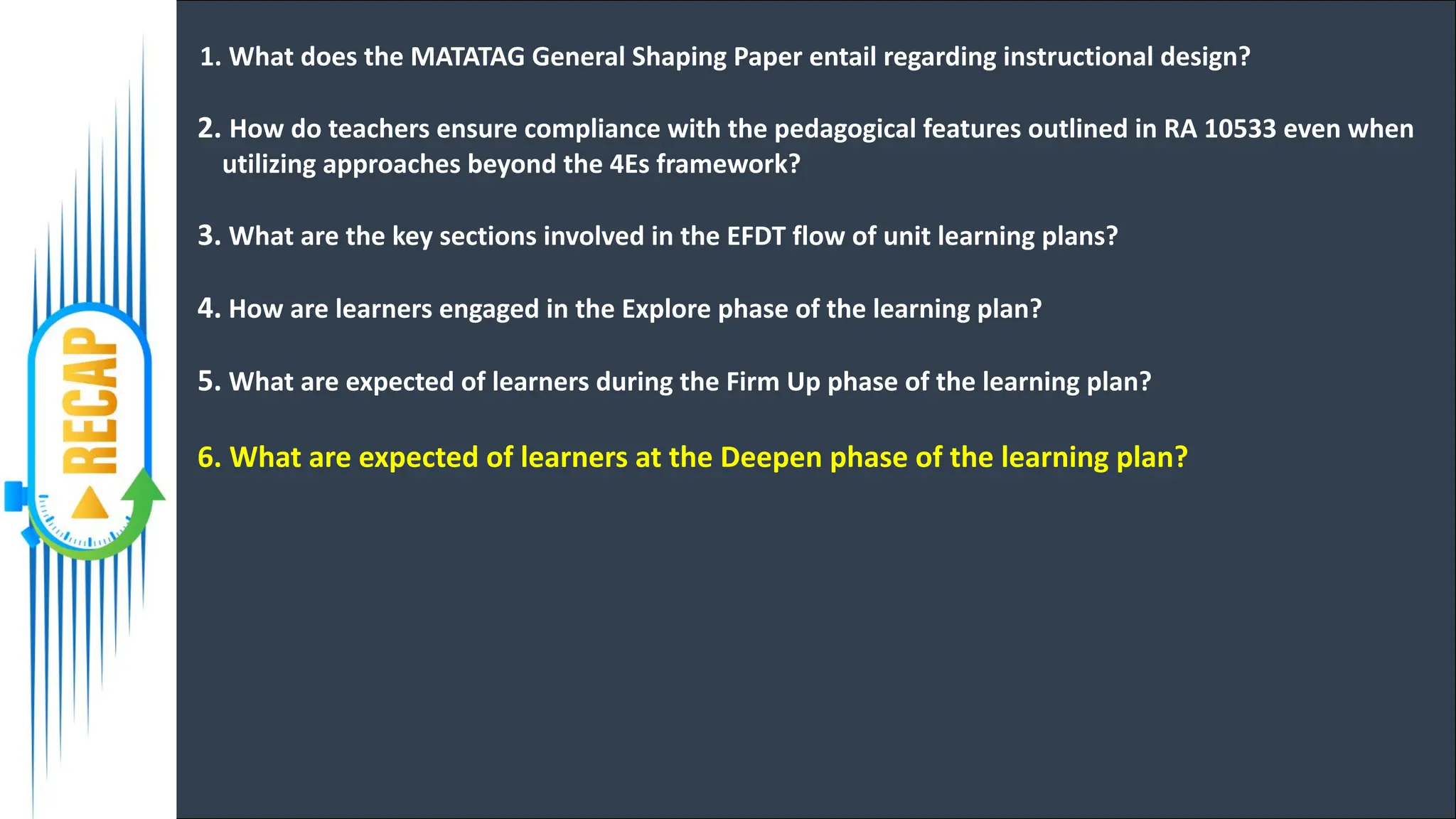
6. What are expected of learners at the Deepen phase of the learning plan?
1. The MATATAG General Shaping Paper describes the 4Es Instructional Design Framework that cuts
across all grade levels. It is learner-centered and descriptive rather than prescriptive.
2. Teachers may use other approaches other than the 4Es for as long as the following pedagogical
features stated in RA 10533 for K12 program are practiced. These are constructivist, inquiry-based,
collaborative, reflective and integrative.
3. The EFDT flow of unit learning plans break down the teaching of CG standards and learning
competencies into the following sections: Explore, Firm Up, Deepen and Transfer.
4. In Explore, learners’ interest in topic is stimulated with an Essential Question that challenges
their prior knowledge and leads them to find the answer.
5. In Firm Up, learners answer the question by first actively acquiring knowledge and facts
related to the question’s topic and concepts.
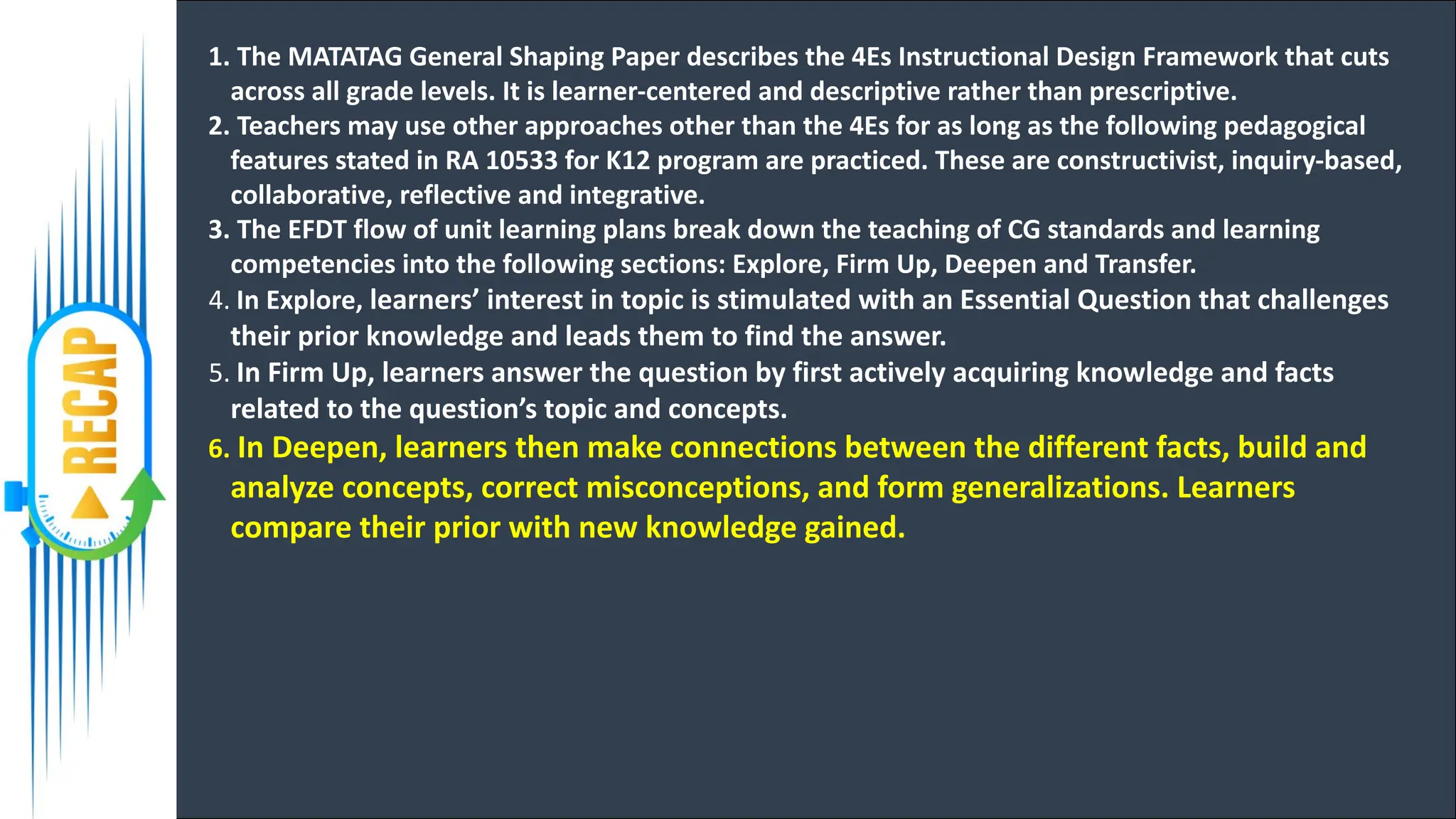
6. In Deepen, learners then make connections between the different facts, build and
analyze concepts, correct misconceptions, and form generalizations. Learners
compare their prior with new knowledge gained.
1. What does the MATATAG General Shaping Paper entail regarding instructional design?
2. How do teachers ensure compliance with the pedagogical features outlined in RA 10533 even when
utilizing approaches beyond the 4Es framework?
3. What are the key sections involved in the EFDT flow of unit learning plans?
4. How are learners engaged in the Explore phase of the learning plan?
5. What are expected of learners during the Firm Up phase of the learning plan?
6. What are expected of learners at the Deepen phase of the learning plan?
7. What are expected of learners during the Transfer phase of the learning plan?
1. The MATATAG General Shaping Paper describes the 4Es Instructional Design Framework that cuts
across all grade levels. It is learner-centered and descriptive rather than prescriptive.
2. Teachers may use other approaches other than the 4Es for as long as the following pedagogical
features stated in RA 10533 for K12 program are practiced. These are constructivist, inquiry-based,
collaborative, reflective and integrative.
3. The EFDT flow of unit learning plans break down the teaching of CG standards and learning
competencies into the following sections: Explore, Firm Up, Deepen and Transfer.
4. In Explore, learners’ interest in topic is stimulated with an Essential Question that challenges
their prior knowledge and leads them to find the answer.
5. In Firm Up, learners answer the question by first actively acquiring knowledge and facts
related to the question’s topic and concepts.
6. In Deepen, learners then make connections between the different facts, build and analyze
concepts, correct misconceptions, and form generalizations. Learners compare their prior with
new knowledge gained.
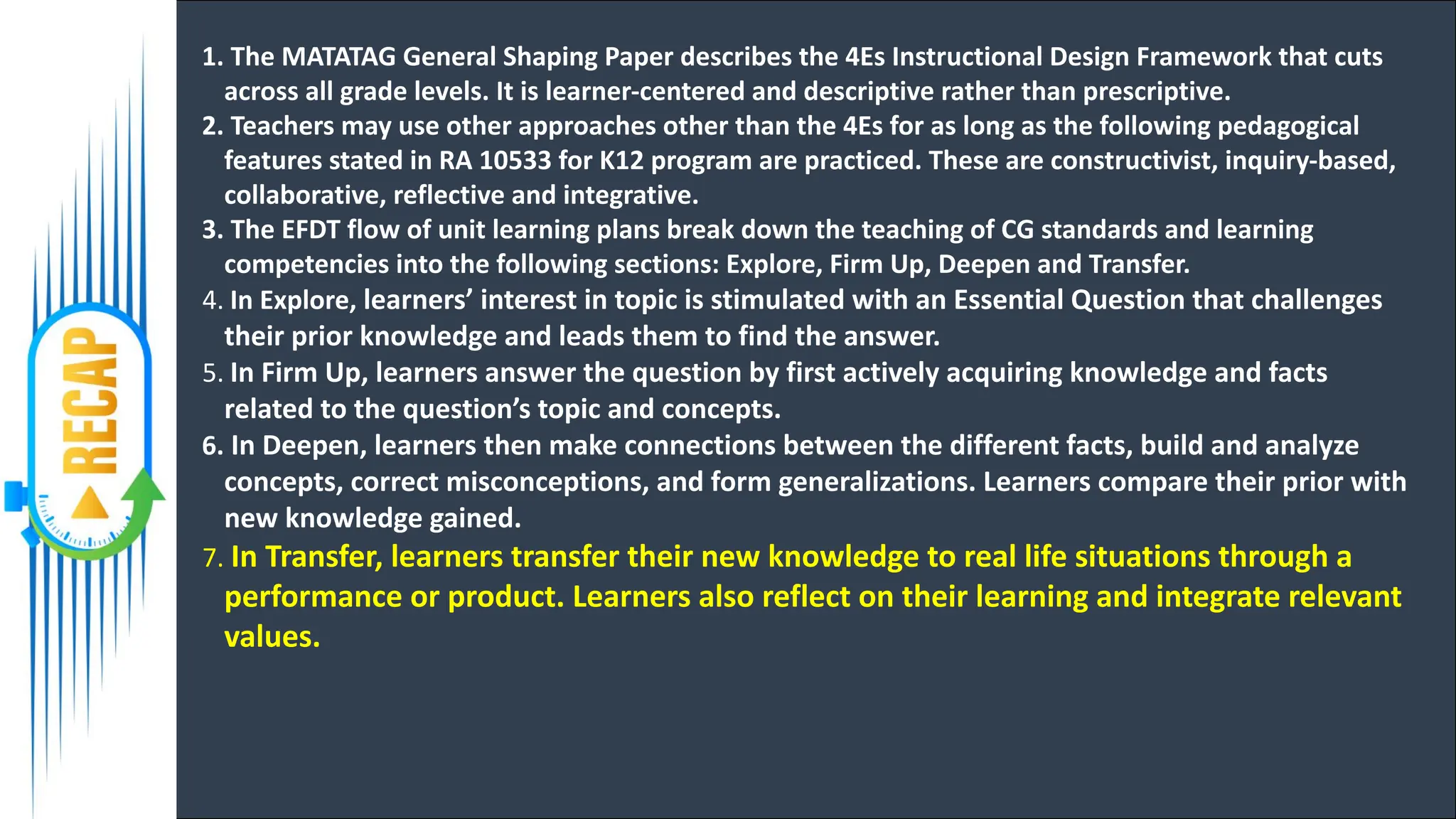
7. In Transfer, learners transfer their new knowledge to real life situations through a
performance or product. Learners also reflect on their learning and integrate relevant
values.
1. What does the MATATAG General Shaping Paper entail regarding instructional design?
2. How do teachers ensure compliance with the pedagogical features outlined in RA 10533 even when
utilizing approaches beyond the 4Es framework?
3. What are the key sections involved in the EFDT flow of unit learning plans?
4. How are learners engaged in the Explore phase of the learning plan?
5. What are expected of learners during the Firm Up phase of the learning plan?
6. What are expected of learners at the Deepen phase of the learning plan?
7. What are expected of learners during the Transfer phase of the learning plan?
8. What can learners be asked to reflect on at the end of a learning unit?
1. The MATATAG General Shaping Paper describes the 4Es Instructional Design Framework that cuts
across all grade levels. It is learner-centered and descriptive rather than prescriptive.
2. Teachers may use other approaches other than the 4Es for as long as the following pedagogical
features stated in RA 10533 for K12 program are practiced. These are constructivist, inquiry-based,
collaborative, reflective and integrative.
3. The EFDT flow of unit learning plans break down the teaching of CG standards and learning
competencies into the following sections: Explore, Firm Up, Deepen and Transfer.
4. In Explore, learners’ interest in topic is stimulated with an Essential Question that challenges
their prior knowledge and leads them to find the answer.
5. In Firm Up, learners answer the question by first actively acquiring knowledge and facts
related to the question’s topic and concepts.
6. In Deepen, learners then make connections between the different facts, build and analyze
concepts, correct misconceptions, and form generalizations. Learners compare their prior with
new knowledge gained.
7. In Transfer, learners transfer their new knowledge to real life situations through a performance
or product. Learners also reflect on their learning and integrate relevant values.
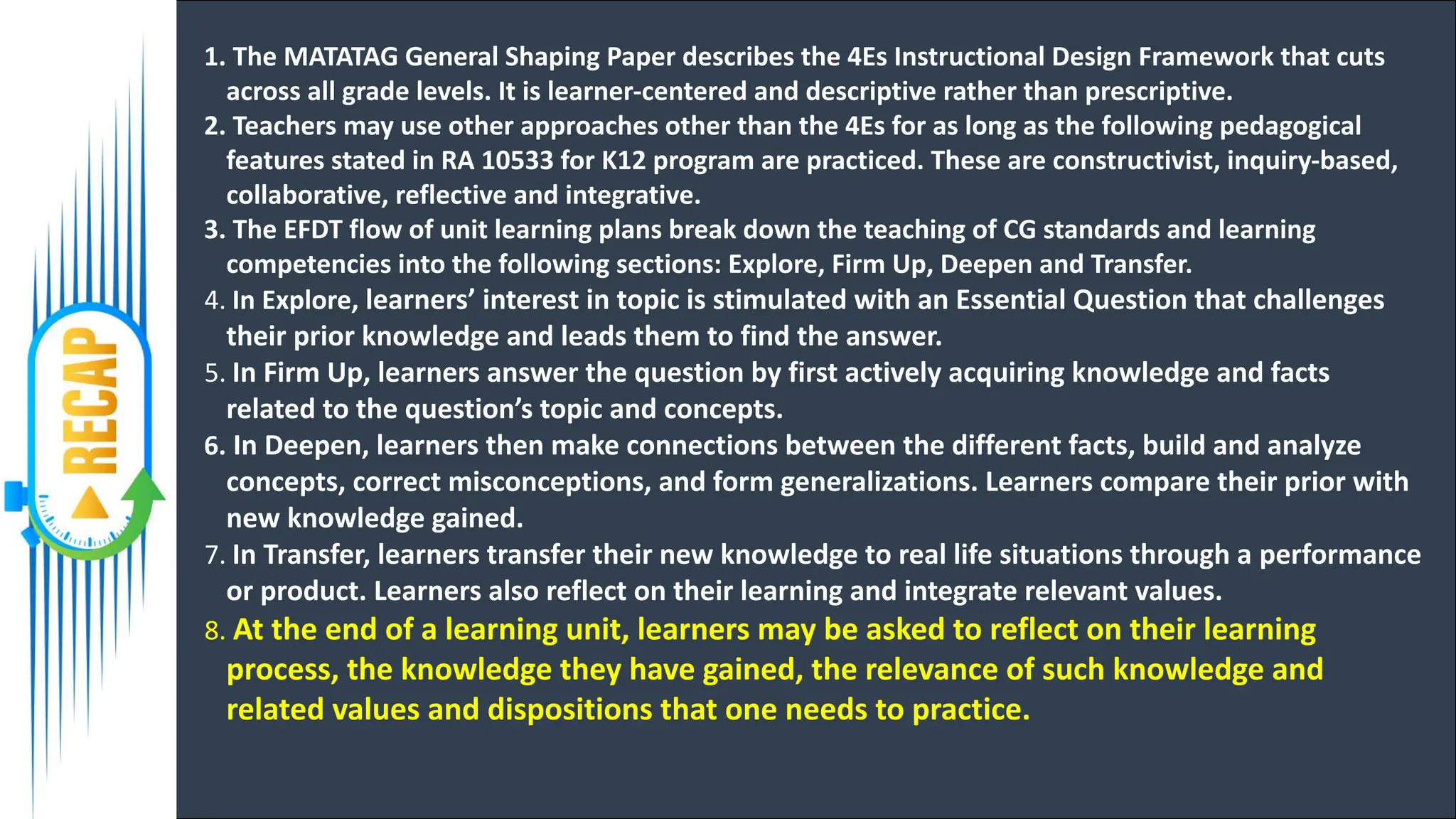
8. At the end of a learning unit, learners may be asked to reflect on their learning
process, the knowledge they have gained, the relevance of such knowledge and
related values and dispositions that one needs to practice.
1. What does the MATATAG General Shaping Paper entail regarding instructional design?
2. How do teachers ensure compliance with the pedagogical features outlined in RA 10533 even when
utilizing approaches beyond the 4Es framework?
3. What are the key sections involved in the EFDT flow of unit learning plans?
4. How are learners engaged in the Explore phase of the learning plan?
5. What are expected of learners during the Firm Up phase of the learning plan?
6. What are expected of learners at the Deepen phase of the learning plan?
7. What are expected of learners during the Transfer phase of the learning plan?
8. What can learners be asked to reflect on at the end of a learning unit?
9. How do we assess the adequacy of the unit learning plan?
1. The MATATAG General Shaping Paper describes the 4Es Instructional Design Framework that cuts across all
grade levels. It is learner-centered and descriptive rather than prescriptive.
2. Teachers may use other approaches other than the 4Es for as long as the following pedagogical features stated
in RA 10533 for K12 program are practiced. These are constructivist, inquiry-based, collaborative, reflective and
integrative.
3. The EFDT flow of unit learning plans break down the teaching of CG standards and learning competencies into
the following sections: Explore, Firm Up, Deepen and Transfer.
4.In Explore, learners’ interest in topic is stimulated with an Essential Question that challenges their prior
knowledge and leads them to find the answer.
5. In Firm Up, learners answer the question by first actively acquiring knowledge and facts related to the
question’s topic and concepts.
6. In Deepen, learners then make connections between the different facts, build and analyze concepts,
correct misconceptions, and form generalizations. Learners compare their prior with new knowledge
gained.
7. In Transfer, learners transfer their new knowledge to real life situations through a performance or
product. Learners also reflect on their learning and integrate relevant values.
8. At the end of a learning unit, learners may be asked to reflect on their learning process, the knowledge
they have gained, the relevance of such knowledge and related values and dispositions that one needs to
practice in order to be MATATAG.
9. For schools undergoing PEAC certification/recertification, certifiers with the help of
the JHS Certification Assessment Instrument assess the adequacy and teachers’ prep
of learning plans.
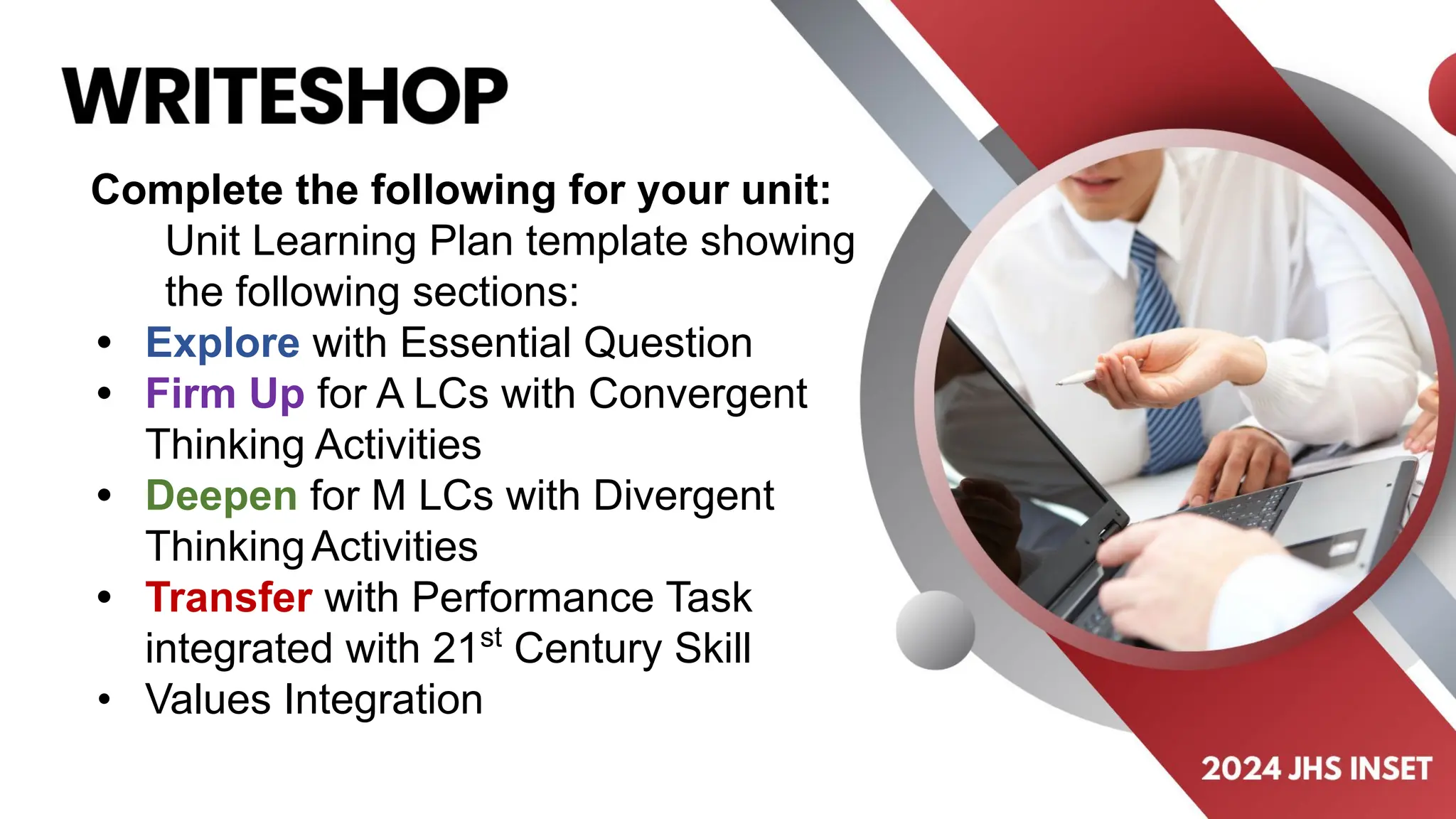
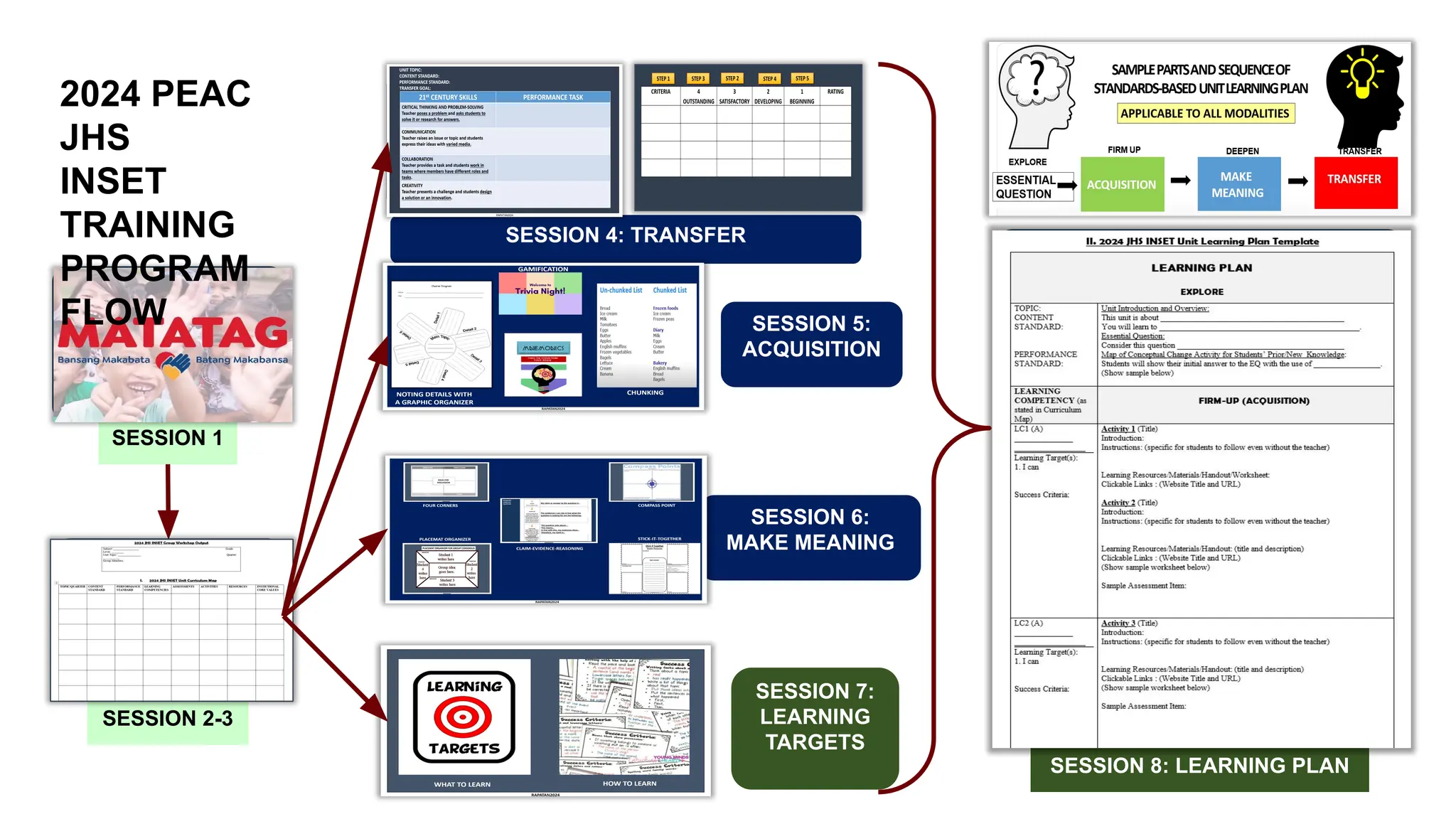
Complete the following for your unit:
Unit Learning Plan template showing
the following sections:
• Explore with Essential Question
• Firm Up for A LCs with Convergent
Thinking Activities
• Deepen for M LCs with Divergent
ThinkingActivities
• Transfer with Performance Task
integrated with 21st
Century Skill
• Values Integration
SESSION 1
SESSION 2-3
SESSION 4: TRANSFER
SESSION 5:
ACQUISITION
SESSION 6:
MAKE MEANING
SESSION 7:
LEARNING
TARGETS
SESSION 8: LEARNING PLAN
2024 PEAC
JHS
INSET
TRAINING
PROGRAM
FLOW
Powerpoint presentation Science Session 8.pptx.pdf

Powerpoint presentation Science Session 8.pptx.pdf

  • 2.
    What you need 1.DepEd MATATAG Curriculum Guide 2. Curriculum Map Template 3. Unit Standards and Competencies Diagram 4. Learning Plan Template
  • 4.
    1. Discuss the4Es Instructional Design Framework of MATATAG Curriculum 2. Compare 4Es with other instructional design frameworks (i.e., 5Es Instructional Model and PEAC EFDT) 3. Relate the key K12 program pedagogical features as stated in RA 10533 4. Explain each section of the EFDT learning plan 5. Point out integration of values education and peace education topics in lessons 6. Discuss PEAC certification criteria for learning plans 7. Write sample EFDT learning plan for a chosen curriculum unit and topic
  • 6.
    4Es Instructional DesignFramework (MATATAG)
  • 8.
    FOUR LEARNING EVENTS ENGAGEEXPLORE EXPERIENCE EMPATHIZE • Capturing Learners’ Interest • Creating a Hook • Provoking Curiosity • Establishing Relevance • Stimulating Inquiry • Hands-On Discovery • Active Investigation • Problem-Solvin g Task • Independent Exploration • Gathering Information • Immersive Learning • Real-world Application • Practical Scenarios • Simulation and Interaction • Authentic Experience • Understanding Others’ Perspective • Fostering Emotional Intelligence • Addressing Diverse Needs • Cultivating a Supportive Environment
  • 9.
  • 11.
    DO THESE EXCLUDEEACH OTHER?
  • 12.
    FOUR LEARNING EVENTS ENGAGEEXPLORE EXPERIENCE EMPATHIZE • Capturing Learners’ Interest • Creating a Hook • Provoking Curiosity • Establishing Relevance • Stimulating Inquiry • Hands-On Discovery • Active Investigation • Problem-Sol ving Task • Independent Exploration • Gathering Information • Immersive Learning • Real-world Application • Practical Scenarios • Simulation and Interaction • Authentic Experience • Understandi ng Others’ Perspective • Fostering Emotional Intelligence • Addressing Diverse Needs • Cultivating a Supportive Environment EXPLORE FIRM UP DEEPEN TRANSFER TRANSFER
  • 13.
  • 14.
  • 15.
  • 16.
  • 17.
  • 18.
  • 19.
    What pedagogical approaches inline with K12 should be part of the instructional design?
  • 20.
    RA 10533 (K12) •Constructivist • Inquiry-based • Reflective • Collaborative • Integrative
  • 22.
    4Es (MATATAG) 5EsEFDT 1. Engage: Learners’ interest and attention to the topic is stimulated. They form an emotional connection with the topic. 1. Engage: Students are engaged with a challenging situation, prior knowledge is activated, questions are provoked. 1. Explore: Learners’ interest in topic is stimulated with an Essential Question that challenges their prior knowledge and leads them to find the answer. 2. Explore: Learners independently discover concepts and ideas in various activities that include experimentation, problem-solving and active learning. 2. Explore: Students investigate a phenomenon, prior knowledge is challenged, ideas are created. 2. Firm Up: Learners answer the question by first actively looking at various sources and acquiring knowledge and facts related to the question’s topic and concepts. 3. Experience: Learners apply acquired knowledge and skills and transfer their learning to real life situations. 3. Explain: Students explain new phenomenon, new knowledge is gained and applied. 3. Deepen: Learners then make connections between the different facts, build and analyze concepts, correct misconceptions, and form generalizations. Learners compare their prior with new knowledge gained. 4. Empathize: Learners connect with the material they are learning and identify their own needs. 4. Elaborate: Students apply their knowledge towards new situations, their knowledge is deepened and extended. 4. Transfer: Learners transfer their new knowledge to real life situations through a performance or product. Learners also reflect on their learning and integrate relevant values. 5. Extend: Students reflect on their knowledge and the learning process, assessment. CONSTRUCTIVIST CONSTRUCTIVIST CONSTRUCTIVIST REFLECTIVE REFLECTIVE REFLECTIVE INTEGRATIVE INQUIRY-BASED INTEGRATIVE INQUIRY-BASED
  • 23.
  • 26.
    Introduce the EQ Elicitprior knowledge through a specific map of conceptual change (choose one): • Before and After • Anticipation-Reaction Guide • Initial-Revised-Final (IRF) • Background Knowledge
  • 27.
    HOW CAN WE TELLA QUESTION IS ESSENTIAL?
  • 28.
  • 29.
    HOW CAN WETELL A QUESTION IS ESSENTIAL? 1.Is open-ended; that is, it typically will not have a single, final, and correct answer. 2.Is thought-provoking and intellectually engaging, often sparking discussion and debate. 3.Calls for higher-order thinking, such as analysis, inference, evaluation, prediction. It cannot be effectively answered by recall alone. 4.Points toward important, transferable ideas within (and sometimes across) disciplines. 5.Raises additional questions and sparks further inquiry. 6.Requires support and justification, not just an answer. 7.Recurs over time; that is, the question can and should be revisited again and again.
  • 30.
    HOW CAN WETELL A QUESTION IS ESSENTIAL? 1. In what year was the Battle of Hastings fought? Yes/No 2. How do effective writers hook and hold their readers? Yes/No 3. Is biology destiny? Yes/No 4. Onomatopoeia—what's up with that? Yes/No 5. What are examples of animals adapting to their environment? Yes/No 6. What are the limits of arithmetic? Yes/No 1.Is open-ended; that is, it typically will not have a single, final, and correct answer. 2.Is thought-provoking and intellectually engaging, often sparking discussion and debate. 3.Calls for higher-order thinking, such as analysis, inference, evaluation, prediction. It cannot be effectively answered by recall alone. 4.Points toward important, transferable ideas within (and sometimes across) disciplines. 5.Raises additional questions and sparks further inquiry. 6.Requires support and justification, not just an answer. 7.Recurs over time; that is, the question can and should be revisited again and again. DIVERGENT THINKING
  • 31.
    HOW CAN WETELL A QUESTION IS ESSENTIAL? Wiggins & McTighe 1. In what year was the Battle of Hastings fought? No (no. 1) 2. How do effective writers hook and hold their readers? Yes (nos. 3, 6) 3. Is biology destiny? Yes (nos. 2, 3, 5, 6) 4. Onomatopoeia—what's up with that? No (no. 1) 5. What are examples of animals adapting to their environment? No (no. 1) 6. What are the limits of arithmetic? Yes (no. 2, 3, 6, 7) 1.Is open-ended; that is, it typically will not have a single, final, and correct answer. 2.Is thought-provoking and intellectually engaging, often sparking discussion and debate. 3.Calls for higher-order thinking, such as analysis, inference, evaluation, prediction. It cannot be effectively answered by recall alone. 4.Points toward important, transferable ideas within (and sometimes across) disciplines. 5.Raises additional questions and sparks further inquiry. 6.Requires support and justification, not just an answer. 7.Recurs over time; that is, the question can and should be revisited again and again.
  • 33.
  • 37.
    ANTICIPATION-REACTION GUIDE Mix-up statementsthat are true, partially true or misconceptions related to the EU ESSENTIAL QUESTION: How can community- based problems related to solution concentrations be effectively solved?
  • 38.
    ESSENTIAL QUESTION: Howcan community- based problems related to solution concentrations be effectively solved? https://www.socialstudiessuccess.com/2015/04/anticipation-guide.html
  • 39.
    Now, before youproceed, write your Initial Answer to the Essential Questions in the IRF worksheet below. You need to accomplishw only part with "initial answer". Initial Answer Revised Answer Final Answer ESSENTIAL QUESTION: How can community- based problems related to solution concentrations be effectively solved? IRF
  • 40.
    INITIAL: How can community-based problems related to solution concentrations be effectively solved? REVISED: How can community -based problems related to solution concentrations be effectively solved? FINAL How can community -based problems related to solution concentrations be effectively solved? IRF
  • 41.
    BACKGROUND KNOWLEDGE ESSENTIAL QUESTION:How can community- based problems related to solution concentrations be effectively solved?
  • 42.
    Introduce the EQ Elicitprior knowledge through a specific map of conceptual change (choose one): • Before and After • Anticipation-Reaction Guide • Initial-Revised-Final (IRF) • Background Knowledge
  • 46.
    Introduce the EQ Elicitprior knowledge through a specific map of conceptual change (choose one): • Before and After • Anticipation-Reaction Guide • Initial-Revised-Final (IRF) • Background Knowledge
  • 47.
    Provide activities with instructions andquestions and assessments related to Acquisition knowledge and process skills, competencies, learning targets and success criteria. Employ convergent thinking techniques. Follow-up on EQ
  • 53.
    • Have studentsanalyze and make meaning of texts or problems with C-E-R and close reading. Use divergent thinking techniques and combine also with convergent thinking for the best answer. • Follow up on EQ.
  • 54.
  • 56.
    A (CONVERGENT) According tothe article, what are the possible risks brought by industrial chemicals? B (DIVERGENT) How can the risks of chemical contamination be detected and handled? COMPETENCY: Generalize that community-based problems related to solution concentrations are effectively addressed through scientific investigation. By their nature, the manufacture, storage, and transport of chemicals are accidents waiting to happen. Chemicals can be corrosive, toxic, and they may react, often explosively. The impacts of chemical accidents can be deadly, for both human beings and the environment. Many if not most products we use in everyday life are made from chemicals and thousands of chemicals are used by manufacturing industries to make these products. The source of many of these chemicals is petroleum, which is refined into two main fractions: fuels and the chemical feedstocks that are the building blocks of plastics, paints, dyes, inks, polyester, and many of the products we buy and use every day. Fuels and chemical feedstocks made from petroleum are called organic chemicals. The other important class of chemicals is inorganics, which include acids, caustics, cyanide, computer circuit boards. Of the more than forty thousand chemicals in commercial use, most are subject to accidental spills or releases. Chemical spills and accidents range from small to large and can occur anywhere chemicals are found, from oil drilling rigs to factories, tanker trucks to fifty-five-gallon drums and all the way to the local dry cleaner or your garden tool shed.
  • 59.
    Provide Performance Taskwith 21st century skills and relate to GRASPS. Show again map of conceptual change and ask students to answer next parts. Do values integration in line with school mission/vision and core values. Provide closure and reflection and self-evaluation of learning.
  • 70.
  • 71.
  • 73.
    SAMPLE AUTHENTIC VALUESINTEGRATION QUESTIONS Ethical Awareness: How do you think the preservation of indigenous music aligns with principles of cultural respect and ethical responsibility? How can individuals and communities ethically support the preservation and promotion of indigenous musical traditions? Cultural Appreciation: How does exposure to indigenous music contribute to cultural diversity and enrichment in our society? In what ways can learning about indigenous music enhance our appreciation for the cultural heritage of diverse communities?
  • 74.
    What potential pitfallsdo young scientists like you face when conducting scientific investigation related to stewardship of the environment? What examples or evidence are available that shows the contribution of scientific investigation in our understanding of the environment? What educational initiatives are needed to empower future generations to become effective stewards of the environment through scientific investigation? What examples can you provide that show novel solutions for the effective stewardship of the environment? explore New ideas examples or evidence suggest solutions wrong or potential pitfalls
  • 75.
    Contrived Values Integration: EXAMPLETOPIC: Solution Concentration VALUES: Collaboration (students work together to investigate a problem) Authentic Values Integration: EXAMPLE TOPIC: Solution Concentration VALUES: Environmental Stewardship (students reflect on the impact of scientific investigation on environments and communities)
  • 77.
    Follow effective actionwith quiet reflection. From the quiet reflection will come even more effective action. Peter Drucker Australian-American Author
  • 80.
  • 85.
    25 July 202041 HOW WILL WE KNOW IF OUR LEARNING PLANS ARE READY FOR PEAC RECERTIFICATION?
  • 86.
    IN THE LEARNINGPLAN, WE WILL SEE… Standards stated at start of plan. Procedures related to A, M, and T. Plan ends with Performance Task. Activities and strategies done in procedures describe student actions more than teacher actions. Less teacher talk, more student interaction. • Values integration with Vision-Mission • Activities and questions related to 7Cs • Activities and questions related to social issues and community events • Activities and questions connecting to other subjects Activities that are differentiated or show use of multiple intelligences; choice in roles or products in performance task Use of multimedia and other apps to present lesson or produce student output PEAC CERTIFICATION ASSESSMENT INSTRUMENT
  • 87.
    Long tests showcombination of selected and constructed response questions. Rubrics are used for performance tasks. Formative assessments are spread out. Remedial activities for students. PEAC CERTIFICATION ASSESSMENT INSTRUMENT
  • 88.
    1. What doesthe MATATAG General Shaping Paper entail regarding instructional design?
  • 89.
    1. The MATATAGGeneral Shaping Paper describes the 4Es Instructional Design Framework that cuts across all grade levels. It is learner-centered and descriptive rather than prescriptive.
  • 90.
    1. What doesthe MATATAG General Shaping Paper entail regarding instructional design? 2. How do teachers ensure compliance with the pedagogical features outlined in RA 10533 even when utilizing approaches beyond the 4Es framework?
  • 91.
    1. The MATATAGGeneral Shaping Paper describes the 4Es Instructional Design Framework that cuts across all grade levels. It is learner-centered and descriptive rather than prescriptive. 2. Teachers may use other approaches other than the 4Es for as long as the following pedagogical features stated in RA 10533 for K12 program are practiced. These are constructivist, inquiry-based, collaborative, reflective and integrative.
  • 92.
    1. What doesthe MATATAG General Shaping Paper entail regarding instructional design? 2. How do teachers ensure compliance with the pedagogical features outlined in RA 10533 even when utilizing approaches beyond the 4Es framework? 3. What are the key sections involved in the EFDT flow of unit learning plans?
  • 93.
    1. The MATATAGGeneral Shaping Paper describes the 4Es Instructional Design Framework that cuts across all grade levels. It is learner-centered and descriptive rather than prescriptive. 2. Teachers may use other approaches other than the 4Es for as long as the following pedagogical features stated in RA 10533 for K12 program are practiced. These are constructivist, inquiry-based, collaborative, reflective and integrative. 3. The EFDT flow of unit learning plans break down the teaching of CG standards and learning competencies into the following sections: Explore, Firm Up, Deepen and Transfer.
  • 94.
    1. What doesthe MATATAG General Shaping Paper entail regarding instructional design? 2. How do teachers ensure compliance with the pedagogical features outlined in RA 10533 even when utilizing approaches beyond the 4Es framework? 3. What are the key sections involved in the EFDT flow of unit learning plans? 4. How are learners engaged in the Explore phase of the learning plan?
  • 95.
    1. The MATATAGGeneral Shaping Paper describes the 4Es Instructional Design Framework that cuts across all grade levels. It is learner-centered and descriptive rather than prescriptive. 2. Teachers may use other approaches other than the 4Es for as long as the following pedagogical features stated in RA 10533 for K12 program are practiced. These are constructivist, inquiry-based, collaborative, reflective and integrative. 3. The EFDT flow of unit learning plans break down the teaching of CG standards and learning competencies into the following sections: Explore, Firm Up, Deepen and Transfer. 4. In Explore, learners’ interest in topic is stimulated with an Essential Question that challenges their prior knowledge and leads them to find the answer.
  • 96.
    1. What doesthe MATATAG General Shaping Paper entail regarding instructional design? 2. How do teachers ensure compliance with the pedagogical features outlined in RA 10533 even when utilizing approaches beyond the 4Es framework? 3. What are the key sections involved in the EFDT flow of unit learning plans? 4. How are learners engaged in the Explore phase of the learning plan? 5. What are expected of learners during the Firm Up phase of the learning plan?
  • 97.
    1. The MATATAGGeneral Shaping Paper describes the 4Es Instructional Design Framework that cuts across all grade levels. It is learner-centered and descriptive rather than prescriptive. 2. Teachers may use other approaches other than the 4Es for as long as the following pedagogical features stated in RA 10533 for K12 program are practiced. These are constructivist, inquiry-based, collaborative, reflective and integrative. 3. The EFDT flow of unit learning plans break down the teaching of CG standards and learning competencies into the following sections: Explore, Firm Up, Deepen and Transfer. 4. In Explore, learners’ interest in topic is stimulated with an Essential Question that challenges their prior knowledge and leads them to find the answer. 5. In Firm Up, learners answer the question by first actively acquiring knowledge and facts related to the question’s topic and concepts.
  • 98.
    1. What doesthe MATATAG General Shaping Paper entail regarding instructional design? 2. How do teachers ensure compliance with the pedagogical features outlined in RA 10533 even when utilizing approaches beyond the 4Es framework? 3. What are the key sections involved in the EFDT flow of unit learning plans? 4. How are learners engaged in the Explore phase of the learning plan? 5. What are expected of learners during the Firm Up phase of the learning plan? 6. What are expected of learners at the Deepen phase of the learning plan?
  • 99.
    1. The MATATAGGeneral Shaping Paper describes the 4Es Instructional Design Framework that cuts across all grade levels. It is learner-centered and descriptive rather than prescriptive. 2. Teachers may use other approaches other than the 4Es for as long as the following pedagogical features stated in RA 10533 for K12 program are practiced. These are constructivist, inquiry-based, collaborative, reflective and integrative. 3. The EFDT flow of unit learning plans break down the teaching of CG standards and learning competencies into the following sections: Explore, Firm Up, Deepen and Transfer. 4. In Explore, learners’ interest in topic is stimulated with an Essential Question that challenges their prior knowledge and leads them to find the answer. 5. In Firm Up, learners answer the question by first actively acquiring knowledge and facts related to the question’s topic and concepts. 6. In Deepen, learners then make connections between the different facts, build and analyze concepts, correct misconceptions, and form generalizations. Learners compare their prior with new knowledge gained.
  • 100.
    1. What doesthe MATATAG General Shaping Paper entail regarding instructional design? 2. How do teachers ensure compliance with the pedagogical features outlined in RA 10533 even when utilizing approaches beyond the 4Es framework? 3. What are the key sections involved in the EFDT flow of unit learning plans? 4. How are learners engaged in the Explore phase of the learning plan? 5. What are expected of learners during the Firm Up phase of the learning plan? 6. What are expected of learners at the Deepen phase of the learning plan? 7. What are expected of learners during the Transfer phase of the learning plan?
  • 101.
    1. The MATATAGGeneral Shaping Paper describes the 4Es Instructional Design Framework that cuts across all grade levels. It is learner-centered and descriptive rather than prescriptive. 2. Teachers may use other approaches other than the 4Es for as long as the following pedagogical features stated in RA 10533 for K12 program are practiced. These are constructivist, inquiry-based, collaborative, reflective and integrative. 3. The EFDT flow of unit learning plans break down the teaching of CG standards and learning competencies into the following sections: Explore, Firm Up, Deepen and Transfer. 4. In Explore, learners’ interest in topic is stimulated with an Essential Question that challenges their prior knowledge and leads them to find the answer. 5. In Firm Up, learners answer the question by first actively acquiring knowledge and facts related to the question’s topic and concepts. 6. In Deepen, learners then make connections between the different facts, build and analyze concepts, correct misconceptions, and form generalizations. Learners compare their prior with new knowledge gained. 7. In Transfer, learners transfer their new knowledge to real life situations through a performance or product. Learners also reflect on their learning and integrate relevant values.
  • 102.
    1. What doesthe MATATAG General Shaping Paper entail regarding instructional design? 2. How do teachers ensure compliance with the pedagogical features outlined in RA 10533 even when utilizing approaches beyond the 4Es framework? 3. What are the key sections involved in the EFDT flow of unit learning plans? 4. How are learners engaged in the Explore phase of the learning plan? 5. What are expected of learners during the Firm Up phase of the learning plan? 6. What are expected of learners at the Deepen phase of the learning plan? 7. What are expected of learners during the Transfer phase of the learning plan? 8. What can learners be asked to reflect on at the end of a learning unit?
  • 103.
    1. The MATATAGGeneral Shaping Paper describes the 4Es Instructional Design Framework that cuts across all grade levels. It is learner-centered and descriptive rather than prescriptive. 2. Teachers may use other approaches other than the 4Es for as long as the following pedagogical features stated in RA 10533 for K12 program are practiced. These are constructivist, inquiry-based, collaborative, reflective and integrative. 3. The EFDT flow of unit learning plans break down the teaching of CG standards and learning competencies into the following sections: Explore, Firm Up, Deepen and Transfer. 4. In Explore, learners’ interest in topic is stimulated with an Essential Question that challenges their prior knowledge and leads them to find the answer. 5. In Firm Up, learners answer the question by first actively acquiring knowledge and facts related to the question’s topic and concepts. 6. In Deepen, learners then make connections between the different facts, build and analyze concepts, correct misconceptions, and form generalizations. Learners compare their prior with new knowledge gained. 7. In Transfer, learners transfer their new knowledge to real life situations through a performance or product. Learners also reflect on their learning and integrate relevant values. 8. At the end of a learning unit, learners may be asked to reflect on their learning process, the knowledge they have gained, the relevance of such knowledge and related values and dispositions that one needs to practice.
  • 104.
    1. What doesthe MATATAG General Shaping Paper entail regarding instructional design? 2. How do teachers ensure compliance with the pedagogical features outlined in RA 10533 even when utilizing approaches beyond the 4Es framework? 3. What are the key sections involved in the EFDT flow of unit learning plans? 4. How are learners engaged in the Explore phase of the learning plan? 5. What are expected of learners during the Firm Up phase of the learning plan? 6. What are expected of learners at the Deepen phase of the learning plan? 7. What are expected of learners during the Transfer phase of the learning plan? 8. What can learners be asked to reflect on at the end of a learning unit? 9. How do we assess the adequacy of the unit learning plan?
  • 105.
    1. The MATATAGGeneral Shaping Paper describes the 4Es Instructional Design Framework that cuts across all grade levels. It is learner-centered and descriptive rather than prescriptive. 2. Teachers may use other approaches other than the 4Es for as long as the following pedagogical features stated in RA 10533 for K12 program are practiced. These are constructivist, inquiry-based, collaborative, reflective and integrative. 3. The EFDT flow of unit learning plans break down the teaching of CG standards and learning competencies into the following sections: Explore, Firm Up, Deepen and Transfer. 4.In Explore, learners’ interest in topic is stimulated with an Essential Question that challenges their prior knowledge and leads them to find the answer. 5. In Firm Up, learners answer the question by first actively acquiring knowledge and facts related to the question’s topic and concepts. 6. In Deepen, learners then make connections between the different facts, build and analyze concepts, correct misconceptions, and form generalizations. Learners compare their prior with new knowledge gained. 7. In Transfer, learners transfer their new knowledge to real life situations through a performance or product. Learners also reflect on their learning and integrate relevant values. 8. At the end of a learning unit, learners may be asked to reflect on their learning process, the knowledge they have gained, the relevance of such knowledge and related values and dispositions that one needs to practice in order to be MATATAG. 9. For schools undergoing PEAC certification/recertification, certifiers with the help of the JHS Certification Assessment Instrument assess the adequacy and teachers’ prep of learning plans.
  • 106.
    Complete the followingfor your unit: Unit Learning Plan template showing the following sections: • Explore with Essential Question • Firm Up for A LCs with Convergent Thinking Activities • Deepen for M LCs with Divergent ThinkingActivities • Transfer with Performance Task integrated with 21st Century Skill • Values Integration
  • 109.
    SESSION 1 SESSION 2-3 SESSION4: TRANSFER SESSION 5: ACQUISITION SESSION 6: MAKE MEANING SESSION 7: LEARNING TARGETS SESSION 8: LEARNING PLAN 2024 PEAC JHS INSET TRAINING PROGRAM FLOW