Poultry - Immune system and
immune response
R.YUVARANI
BTP 13020
College of Poultry Production and
Management
Hosur ,Tamilnadu.
Immunity
• Immunity
– The ability of the body to fight infection and/or foreign
invaders by producing antibodies or killing infected cells. It
is derived from the latin word ‘immunis’ which means free
or exempt . It is the ability of the body to resist infection.
• Immune System
– The system in the body responsible for maintaining
homeostasis by recognizing harmful from non
harmful organisms and produces an appropriate
response.
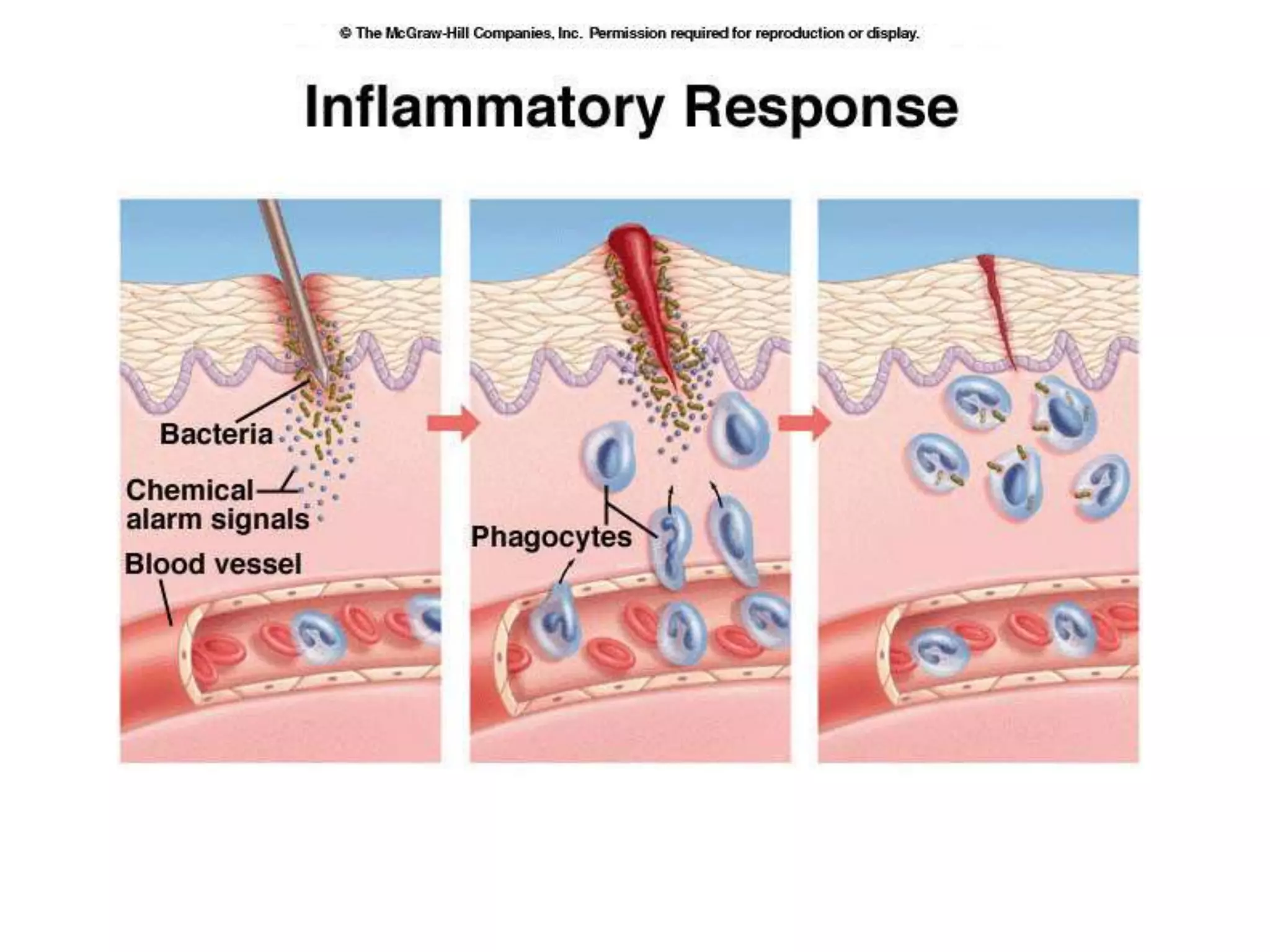
Foreign Invaders
• Called Pathogens
– Viruses, bacteria or
other living thing that
causes disease/immune
response.
• Antigens
– Toxins that pathogens
produce that cause harm
to an organism.
6/22/2017 11:14:01 AM 4
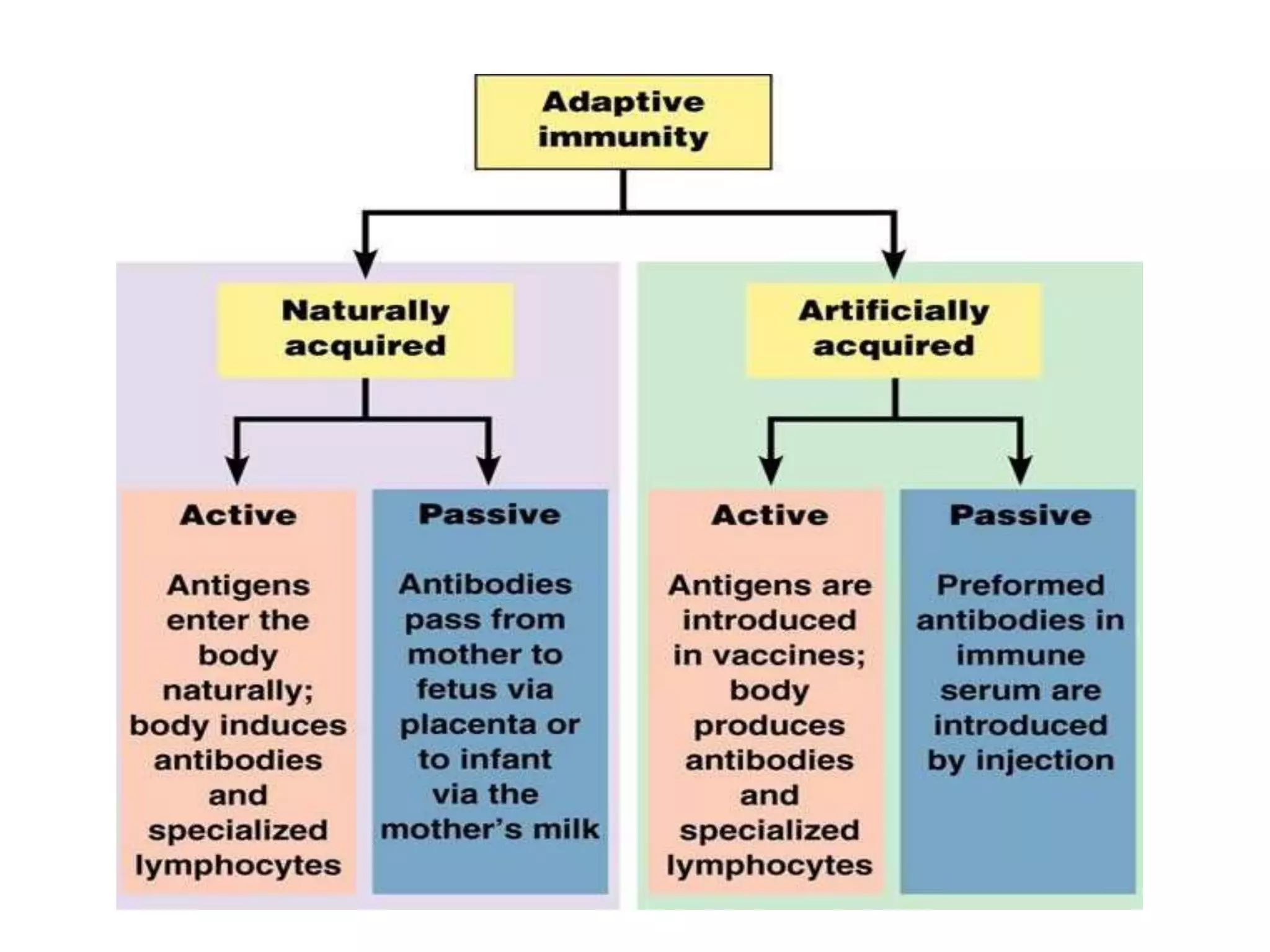
Types of immunity
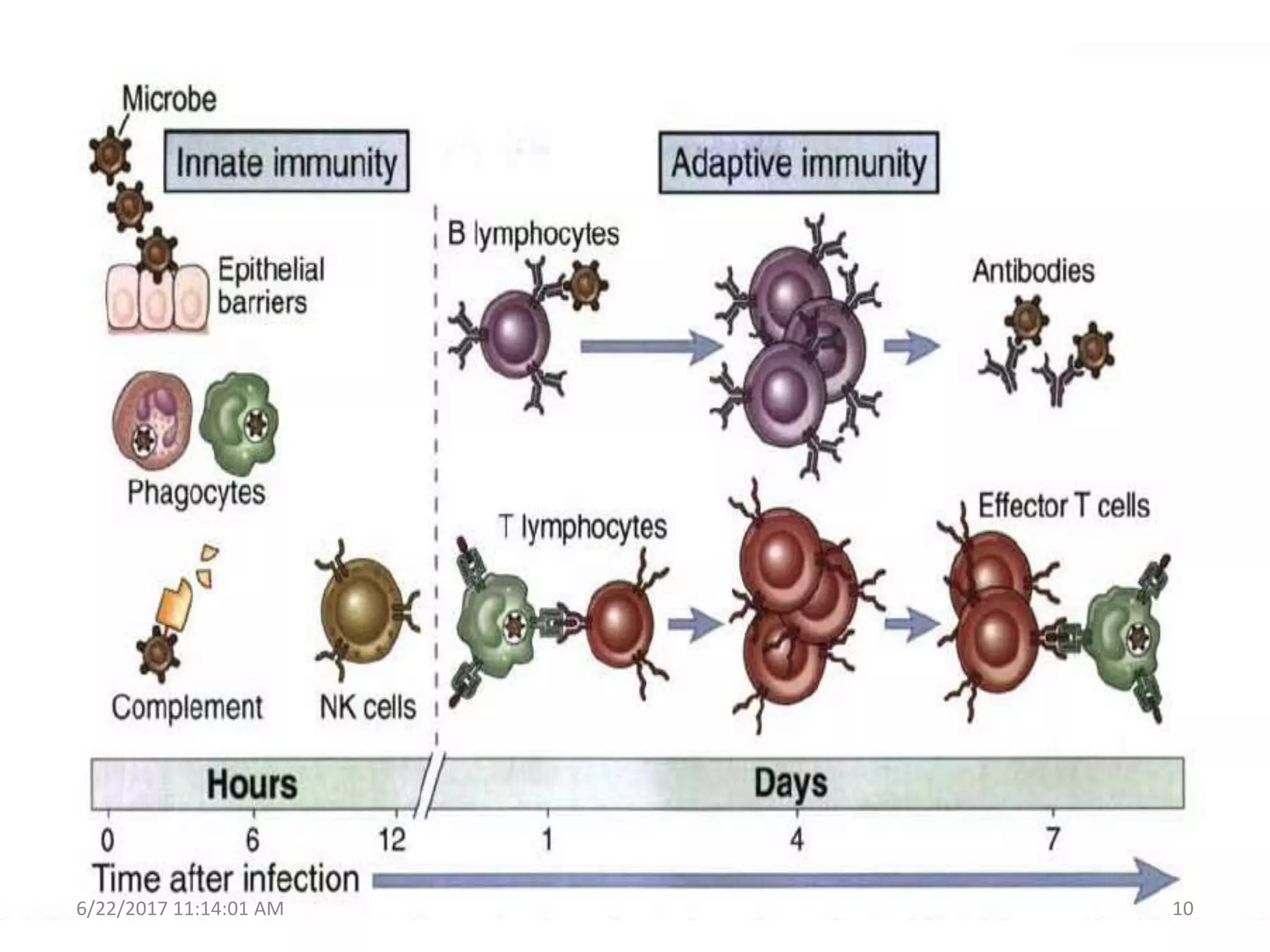
It has two components,
Innate immunity
Acquired or adaptive immunity .
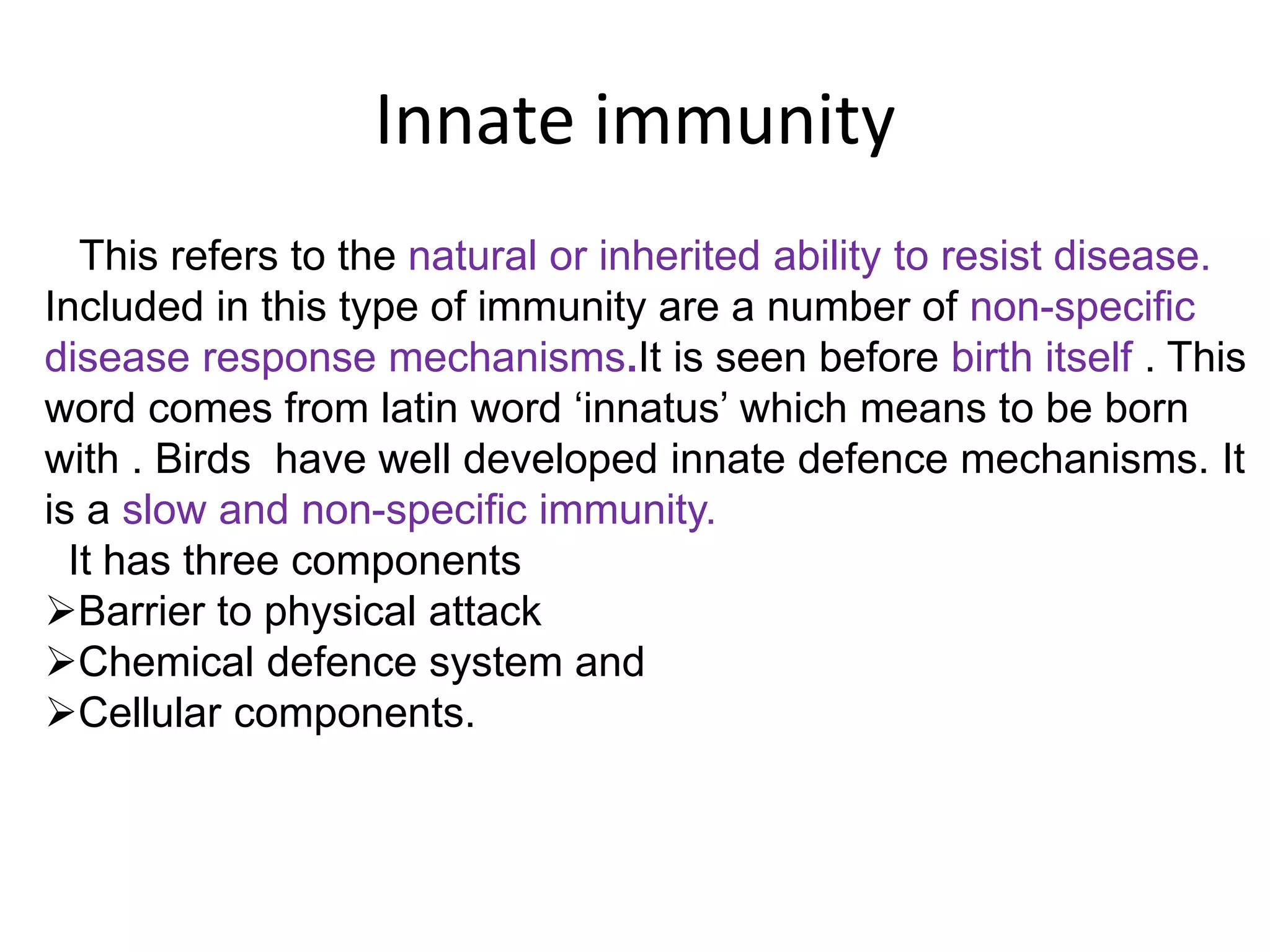
Innate immunity
This refers to the natural or inherited ability to resist disease.
Included in this type of immunity are a number of non-specific
disease response mechanisms.It is seen before birth itself . This
word comes from latin word ‘innatus’ which means to be born
with . Birds have well developed innate defence mechanisms. It
is a slow and non-specific immunity.
It has three components
Barrier to physical attack
Chemical defence system and
Cellular components.
• This refers to immunity provided by immune cells or
antibodies that are produced in response to exposure to an
antigen. These cells and proteins circulate through the body
in the blood.
• It includes targeted recognition of specific molecular
features on the surface of the pathogen.
• It is also called adaptive immunity
6/22/2017 11:14:01 AM 10
T cells B cells
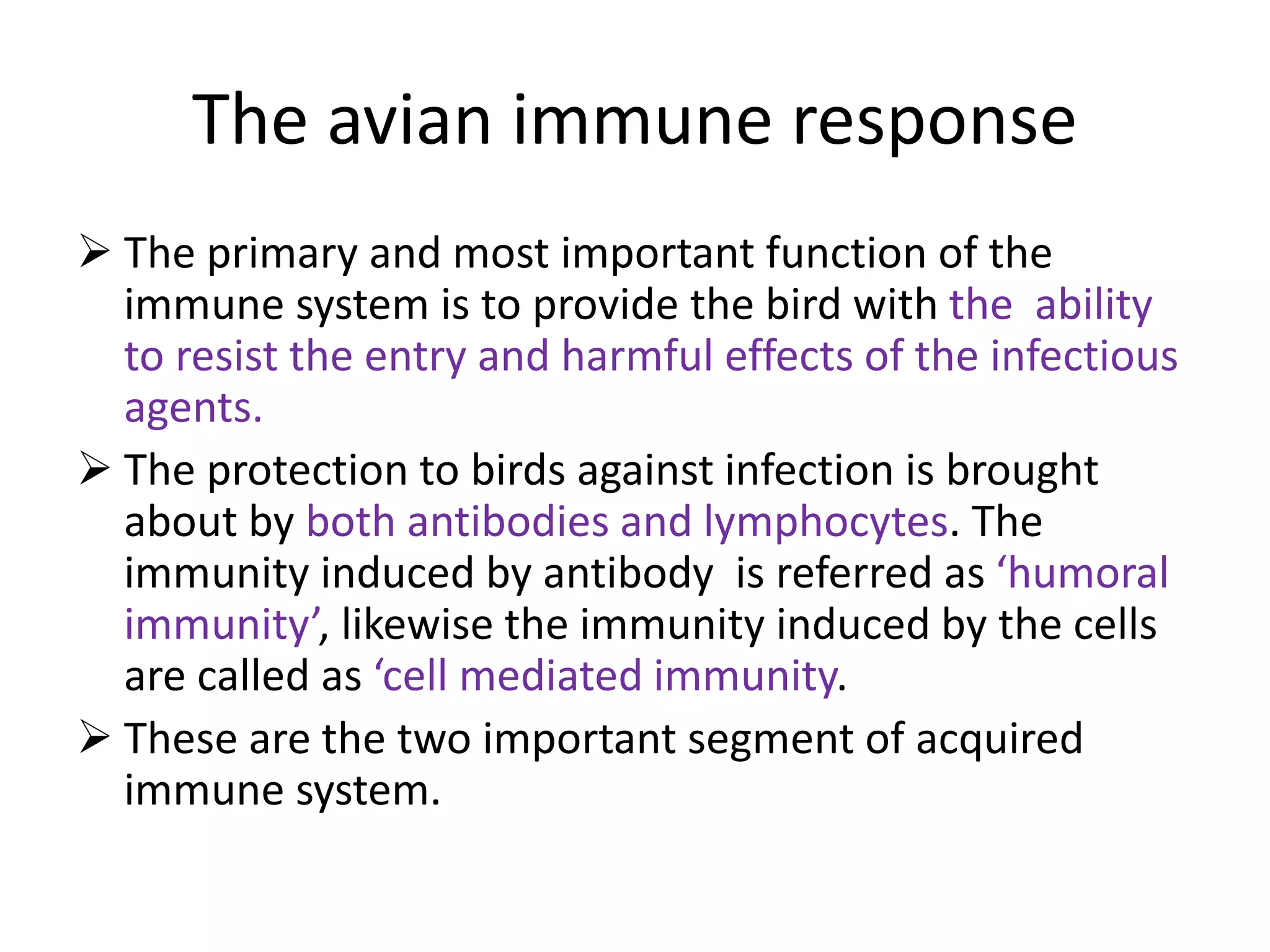
The avian immune response
 The primary and most important function of the
immune system is to provide the bird with the ability
to resist the entry and harmful effects of the infectious
agents.
 The protection to birds against infection is brought
about by both antibodies and lymphocytes. The
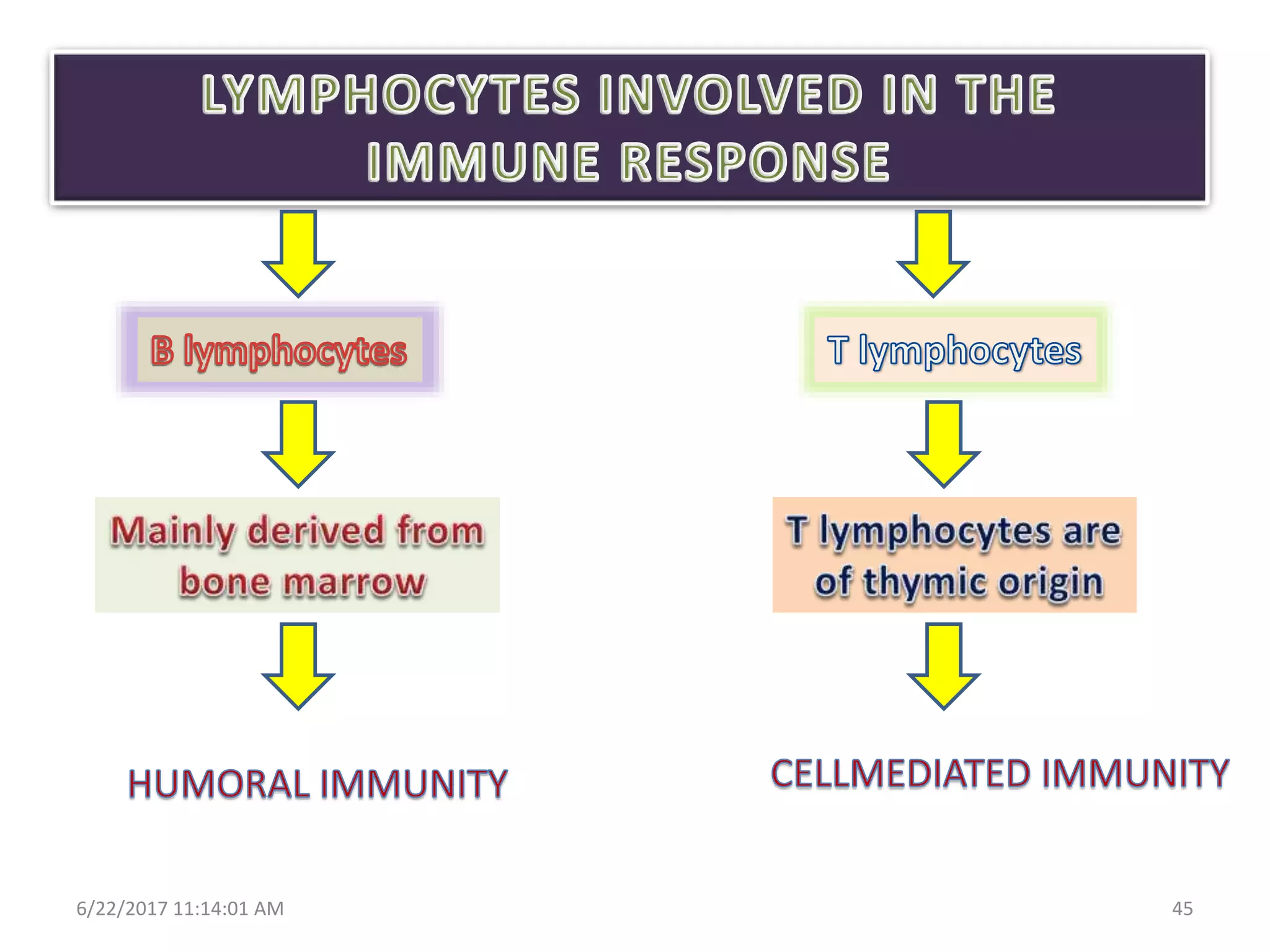
immunity induced by antibody is referred as ‘humoral
immunity’, likewise the immunity induced by the cells
are called as ‘cell mediated immunity.
 These are the two important segment of acquired
immune system.
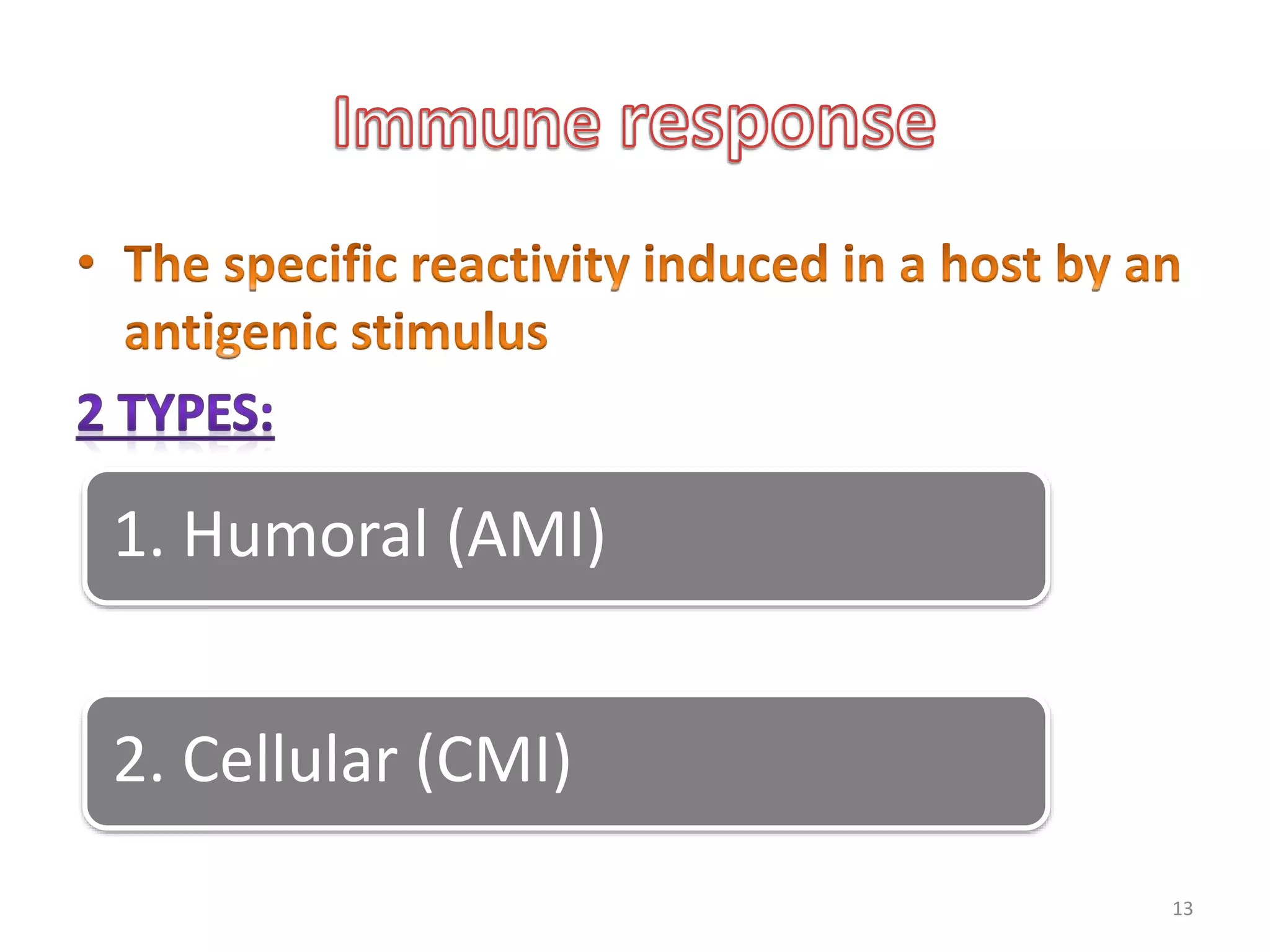
1. Humoral (AMI)
2. Cellular (CMI)
13
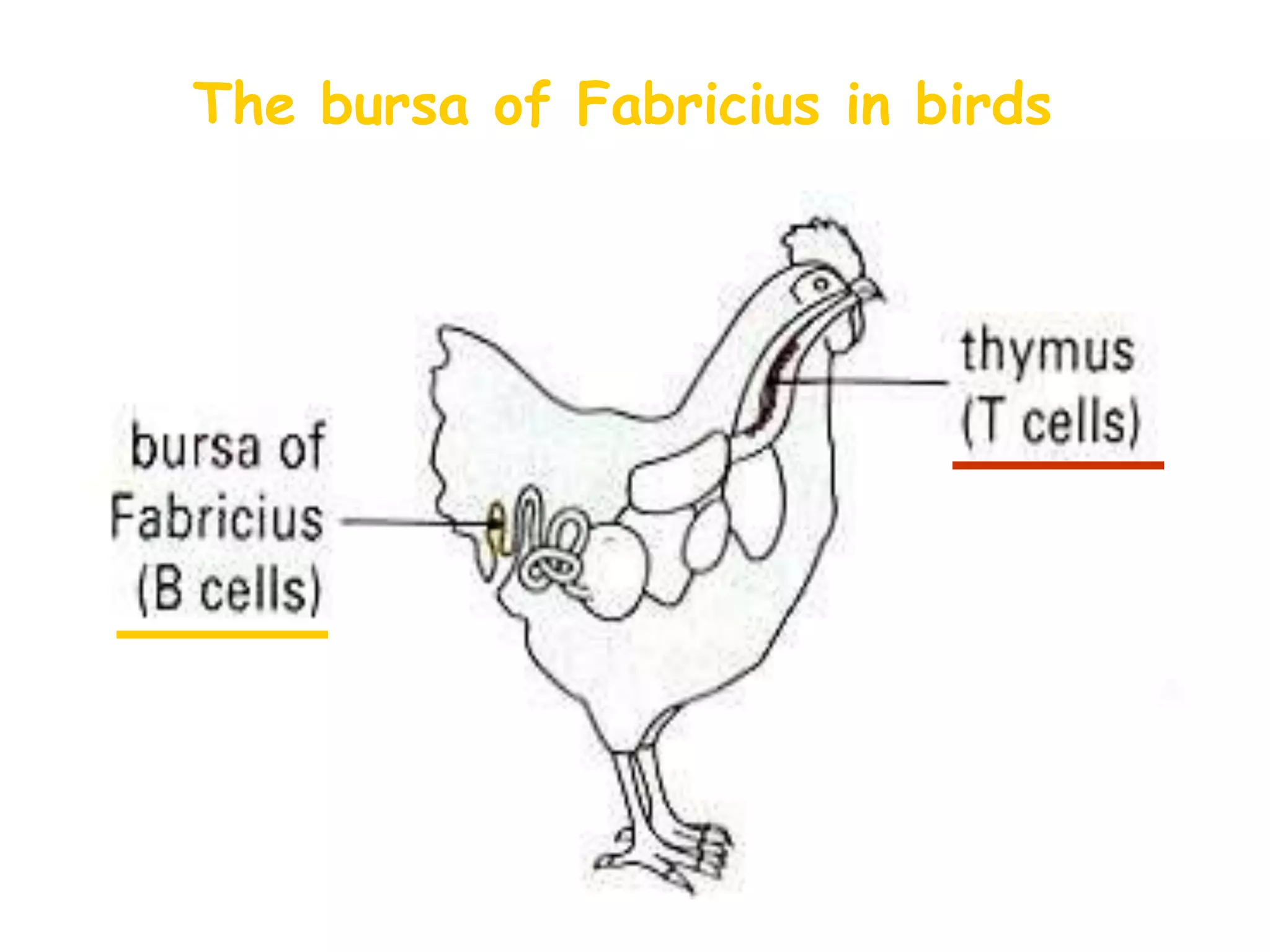
The bursa of Fabricius in birds
Antibody – mediated immune response
• The chicken blood has two types Red cells and White cells
• Normally lymphocytes constitute 60% of white blood cells
• Lymphocytes are produced in the bone marrow from (soft tissue
within the bones)from a cell that has the potentiality to develop
into several types of blood cell. This cell is known as ‘pluripotent
stem cell’ .
• During incubation of the egg , in the developing chick , the
lymphoid stem cells migrate into two different direction through
bloodstream.
• One set (B-cell precursors) goes into bursa of fabricius and another
set of cells (T- cell precursors ) goes into thymus.
• Bursa and thymus are called primary lymphoid organs because they
regulate the production and differentiation of lymphocytes .
Cont…..
• Mature lymphocytes of chicken blood fall into
two major populations , B- lymphocytes or B-
cells and T-lymphocytes or T-cells.
• B –cell mature in bursa and T- mature in
thymus. After maturation B and T cells
migrate to secondary lymphoid organs.
Engulfed by the macrophage
Immobilize the disease organism
Antigen then prevented from attaching to their target cell
Antibodies attach and block the receptors of antigen
B lymphocyte responds by producing antibodies, also produces 'memory' cells
It is exposed to the B-lymphocytes
disease organism (antigen) enters the body
Action of lymphoid stem cells in bursa
• After lymphoid stem cell enter bursa, they undergo a period of processing
and then differentiate into a type of mature lymphocytes called ‘bursa
derived lymphocyte’ or ‘B-lymphocytes’.
• The maturation within the bursa transform them into antibody –
producing cells.
• They are assigned the job of producing antibody.
• By the time bursa disappears around sexual maturity , these antibody
producing B-cell populate the secondary lymphoid organs.
• They are spleen, bone marrow, Hadrian gland, CALT , BALT, GALT .
• This organs enable the bird to effectively produce antibodies to fight
infections , even after the bursa and thymus have disappeared.
Mechanism of producing antibodies by
B-cell
• Following antigenic stimulation , that is ,on contact with the infectious
agent (viruses, bacteria, etc) ,B-cell do not themselves produce antibodies ,
but enlarge , divide repeatedly, and differentiate into another type of cell
which is especially designed to synthesize and secrete large amount of
antibody.
• These cells are called ‘plasma cells’.
• Antibodies are technically called as ‘immunoglobulin's (I)’ and are
proteins made up of amino acids.
• Antibody destroy infectious agent and protect the bird. To fight enemies ,
they are required in large numbers.
• Plasma cell can make to up to a million ( ten lakes ) molecules of antibody
per hour , that is , nearly 300 molecules per second; and these are secreted
soon after they are formed.
Prevention of auto –antibody production by
B-cell
• Each B-cell is first screened by the bursa. Bursa then selectively destroys
such B-cells that react against the body’s own components.this
mechanism is known as ‘negative selection’ or ‘clonal selection’.
• Upto 90 % of the B-cells are thus eliminated through a process known as
‘apoptosis’ or ‘physiological cell death’.
• One specific type of B-cell produces antibodies only against one particular
infectious agent.
• The process is extremely complex. B-cells carry tiny ready made antibodies
on them , against each infectious agent/ antigen present in nature.
• The antibodies ( Ig )act as receptors for infectious agents and are known as
B-cell receptors (BCRs ).
• When bound to B-cell surface this antibody molecule act as an antibody.
• Each B-cell is covered with about 2,00,000 to 5,00,000 antigen receptors.
The infectious agent picks up those particular lymphocytes from the birds
body.
Reaction of antibody against the
infectious agent
• The antibody molecule is made up in such a way
that if we look at it under a high power
microscope , it would look like the letter ‘Y’.
• On the arms of the ‘Y’ are the areas which
recognize the foreign invader ( infectious agent ).
The situation is much like a lock and key , where
a portion of the invader (key ) matches with a
portion on the antibody ( lock).
• When the matching is perfect like a lock and key
,the two attach , and an immune response
begins.
How an antibody operates/works?
Deactivation of a bacterium by an antibody.
Recognition of foreign invader by the
B-cell
• In ‘innate immune system’, the macrophages can engulf infectious agents
and destroy them by powerful enzymes.
• Cells like macrophages , that can ingest ,process, and present an infectious
agent (antigen ) to B-cell , are called ‘antigen –processing (presenting )
cells ‘.
• During the processing , small fragments (broken pieces ) of the infectious
agent are left on the surface of the macrophage.
• In addition , the macrophages sends out chemical messages/signals
(cytokines) which say to body cells ‘come and look’ , here is enemy.
• Various cells, including the B-cell , then come to the site.
• B-cells have on their surface tiny ready-made antibodies ( receptors)
• As the B-cell examines what is on the surface of the macrophage , it tries
lock and key method.
• If there is a matching , a signal is sent inside the B-cell saying that is an
invader ( enemy ) and that something should be done . That something is
the production of antibodies against that infectious agent.
Central Role of Helper T Cells
How do antibodies destroy the disease –
producing organism
• They achieve this by three mechanisms . They are
 Neutralization
 Opsonization
 Complement activation.
opsonization
• If bacteria are coated with antibodies (opsonization ),
they are more easily taken inside and destroyed by
phagocytes of the body.
• Phagocytes is a cell that is able to engulf / eat and
digest bacteria . They include heterophils of blood and
macrophages of tissues.
Neutralization
• Antibodies bind to specific disease-producing
organisms and neutralize them.
• That is , they block the activity of that organism
by coating its surface . This occurs particularly
with viruses.
• Neutralized viruses ( i.e . coated with antibodies )
are unable to attach to surface receptors of body
cells and are therefore prevented from replication
( i.e.multiplication, growth ). As a result , they are
unable to produce disease.
Complement activation
• Antibodies bound to the surface of disease –
producing bacteria can activate complement
and produce new complement proteins.
• These complement proteins attach to
receptors on phagocytes . This makes
phagocytosis and destruction of disease-
producing bacteria easier for phagocytes.
• Phagocytosis is engulfment of bacteria by a
phagocyte.
Consequences of Antibody Binding
Types of antibodies
In chicken 3 main type of antibodies ( Ig ) are produced . They are
 IgM
 IgG
 Ig A
IgM
• IgM is the first antibodies produced in chicken which is actually five of the
Ig’s (IgY ) joined at the tails in a circular fashion.
• The function of IgM is mainly to arrest the entry of infectious agent.
• It prevents the infectious agent from multiplication and causing damage.
• This process is called as “agglutination”
Antibodies
• Y-shaped protein molecule.
• Made up of variable and
constant regions.
• Made up of Heavy and Light
chains.
• Produced by B-Lymphocytes
• Function: Recognize
antigens, bind to and
deactivate them.
– Note: Variable region
recognizes the anitgens.
Types of antibodies
IgG
• It consists of only one ‘y’ and hence five times
smaller than IgM.
• IgG is measured by enzyme – linked immuno
sorbent assay ( ELISA ) test.
• Immunoglobulin cause clumping of the infectious
agents and attach to their surfaces. This facilitates
phagocytosis.
• It is found in highest concentration in blood.
• It plays major role in antibody-mediated defense
mechanisms.
• It is the smallest of the three antibodies and
hence IgG escape from the blood vessels.
IgA
• IgA is the third important antibody in the chicken.
• It is manufactured by B-cell present in tissue just under the
body surfaces.
• It is also produced in epithelial cells which diffuse into
blood stream and into external secretions.
• IgA is produced mainly to protect body surfaces . This
process is known as “immune elimination “.
• IgA can therefore act at three different points to restrict
infectious agents in the intestinal wall , in the lining
intestinal cells , in the intestinal lumen.
• In chicken 30% to 75% of IgA produced in the intestinal
wall diffuse into the blood circulation for reaching the liver.
• By this mechanism infectious agents are eliminated from
the body.
Parental transmission of antibodies
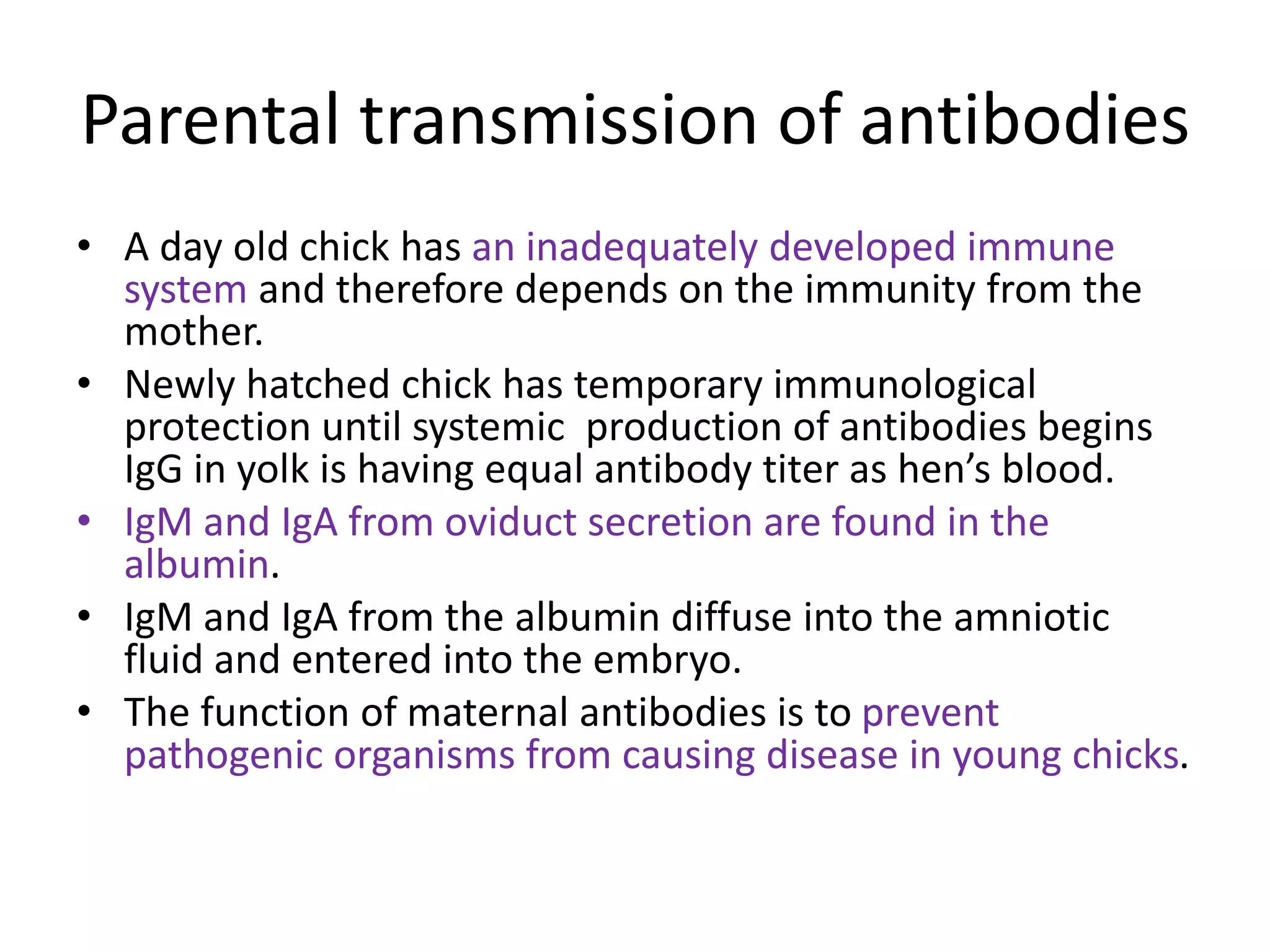
• A day old chick has an inadequately developed immune
system and therefore depends on the immunity from the
mother.
• Newly hatched chick has temporary immunological
protection until systemic production of antibodies begins
IgG in yolk is having equal antibody titer as hen’s blood.
• IgM and IgA from oviduct secretion are found in the
albumin.
• IgM and IgA from the albumin diffuse into the amniotic
fluid and entered into the embryo.
• The function of maternal antibodies is to prevent
pathogenic organisms from causing disease in young chicks.
Cell mediated immune response
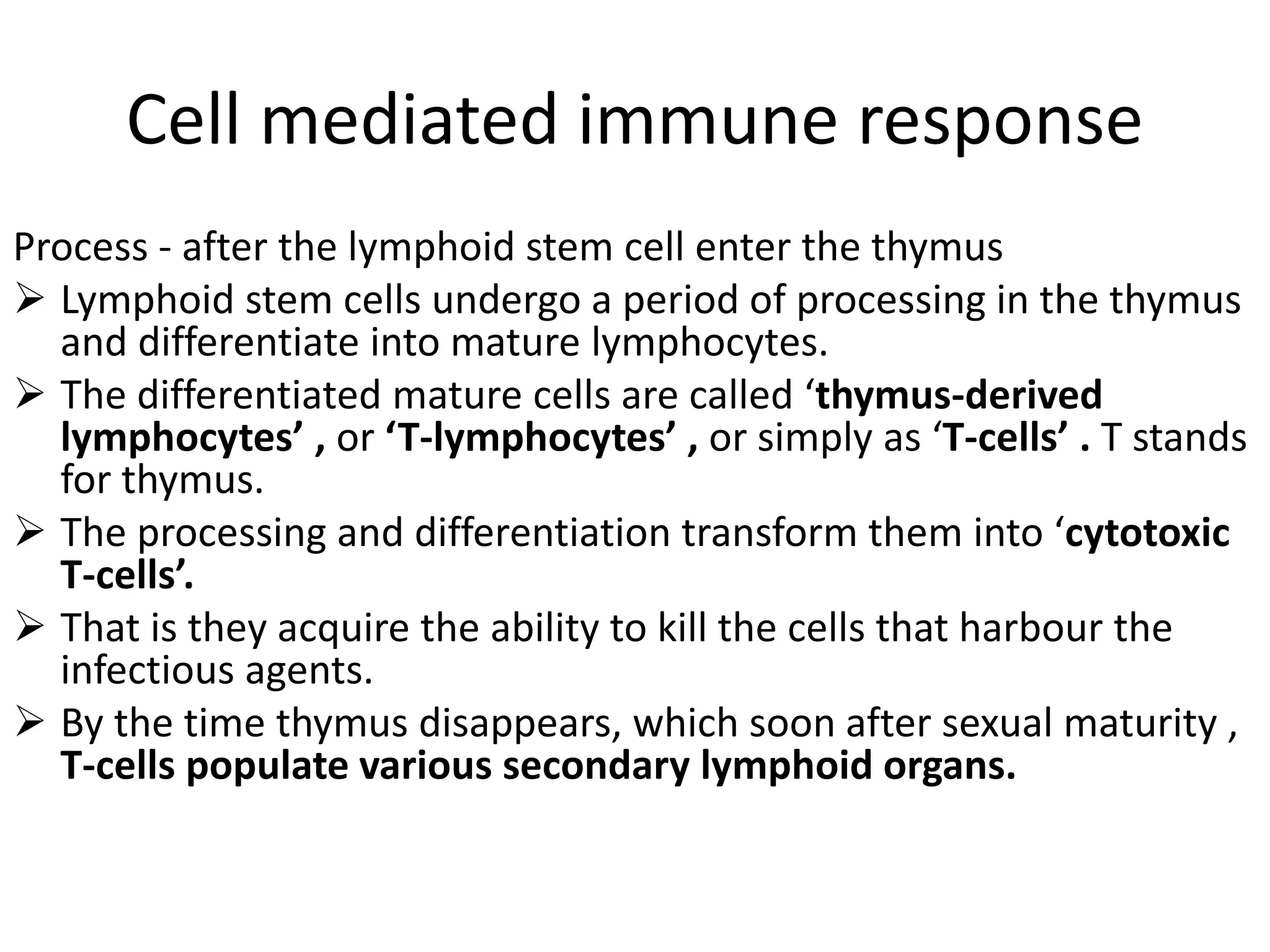
Process - after the lymphoid stem cell enter the thymus
 Lymphoid stem cells undergo a period of processing in the thymus
and differentiate into mature lymphocytes.
 The differentiated mature cells are called ‘thymus-derived
lymphocytes’ , or ‘T-lymphocytes’ , or simply as ‘T-cells’ . T stands
for thymus.
 The processing and differentiation transform them into ‘cytotoxic
T-cells’.
 That is they acquire the ability to kill the cells that harbour the
infectious agents.
 By the time thymus disappears, which soon after sexual maturity ,
T-cells populate various secondary lymphoid organs.
Purpose of the cell-mediated immune response
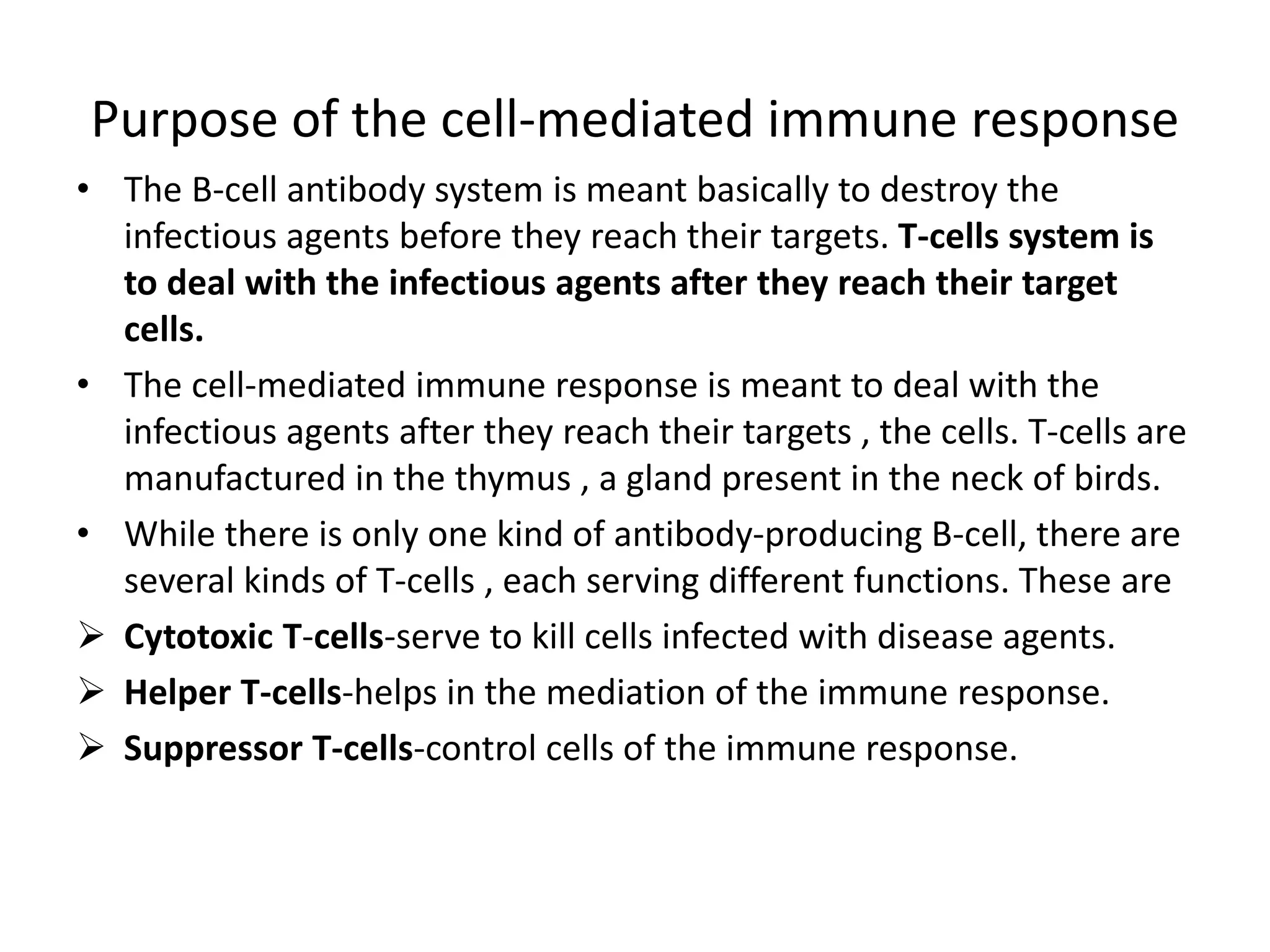
• The B-cell antibody system is meant basically to destroy the
infectious agents before they reach their targets. T-cells system is
to deal with the infectious agents after they reach their target
cells.
• The cell-mediated immune response is meant to deal with the
infectious agents after they reach their targets , the cells. T-cells are
manufactured in the thymus , a gland present in the neck of birds.
• While there is only one kind of antibody-producing B-cell, there are
several kinds of T-cells , each serving different functions. These are
 Cytotoxic T-cells-serve to kill cells infected with disease agents.
 Helper T-cells-helps in the mediation of the immune response.
 Suppressor T-cells-control cells of the immune response.
Action –kinds of cells are destroyed by the cell-
mediated immune response
• Those cells in which the infectious agents grow within and cannnot
be attacked by antibodies are destroyed by the cell-mediated
immune response.
• Since viruses grow within the cells , virus-infected cells and all those
cells in which bacteria or other infectious agents grow within ( as in
avian tuberculosis ) , are destroyed by cytotoxic T-cells to protect
the body from any further damage.
• Cytotoxic T-cells have receptors on their surface for that lock and
key match.
• Each cell possesses about 10,000 – 20000 exactly similar receptors.
• Because all receptors are exactly the same , one T-cell will bind and
kill only one type of infectious agent.
Action of cytotoxic T-cell over the infected cell
• Within a few minutes , cytotxic T-cells bind to infected
cell, leads to the release of granuals into the target cell
at the region of contact.
• From these granules perforins and enzymes are
released.
• Perforins are proteins and their function is to form
holes in the membrane of the target cells. Enzymes
then enter into the target cell through these holes.
• The enzymes activate the ‘suicide enzyme system’ of
the target cell and within seconds the target cell dies.
• Along with the cell , the infectious agents present
within , are killed.
Cytotoxic T Cells Lyse Infected Cells
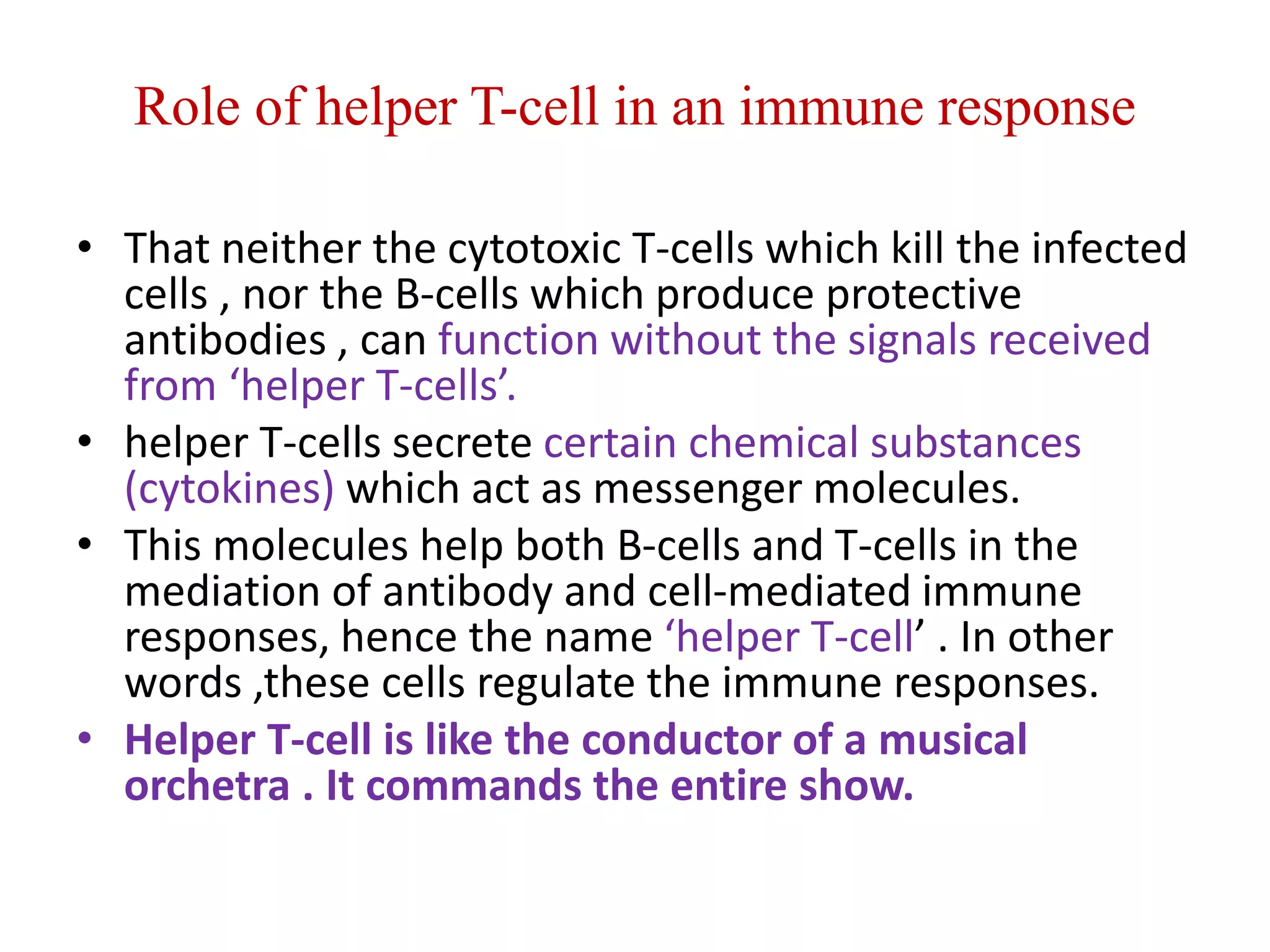
Role of helper T-cell in an immune response
• That neither the cytotoxic T-cells which kill the infected
cells , nor the B-cells which produce protective
antibodies , can function without the signals received
from ‘helper T-cells’.
• helper T-cells secrete certain chemical substances
(cytokines) which act as messenger molecules.
• This molecules help both B-cells and T-cells in the
mediation of antibody and cell-mediated immune
responses, hence the name ‘helper T-cell’ . In other
words ,these cells regulate the immune responses.
• Helper T-cell is like the conductor of a musical
orchetra . It commands the entire show.
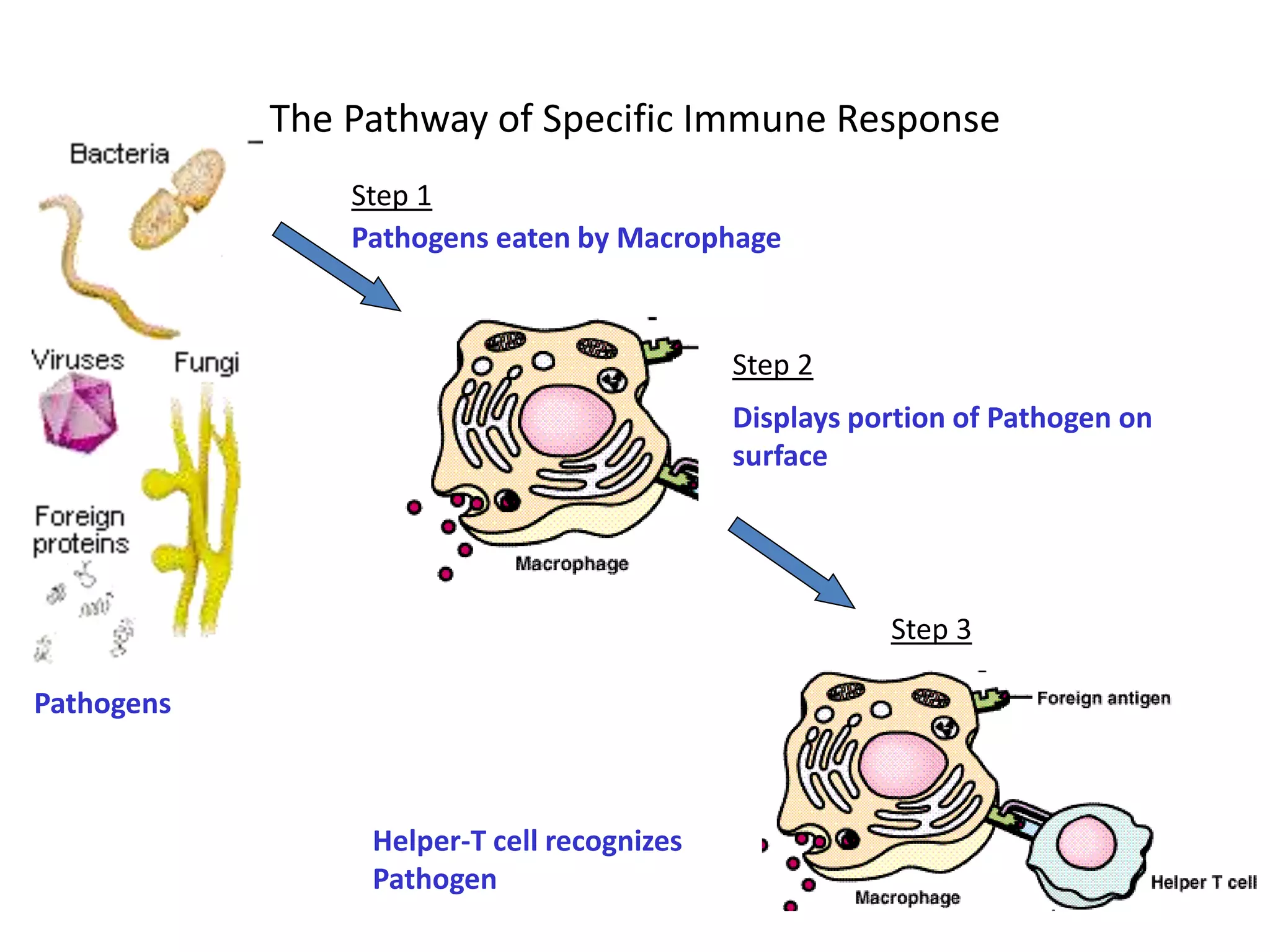
The Pathway of Specific Immune Response
Pathogens
Pathogens eaten by Macrophage
Displays portion of Pathogen on
surface
Helper-T cell recognizes
Pathogen
Step 1
Step 2
Step 3
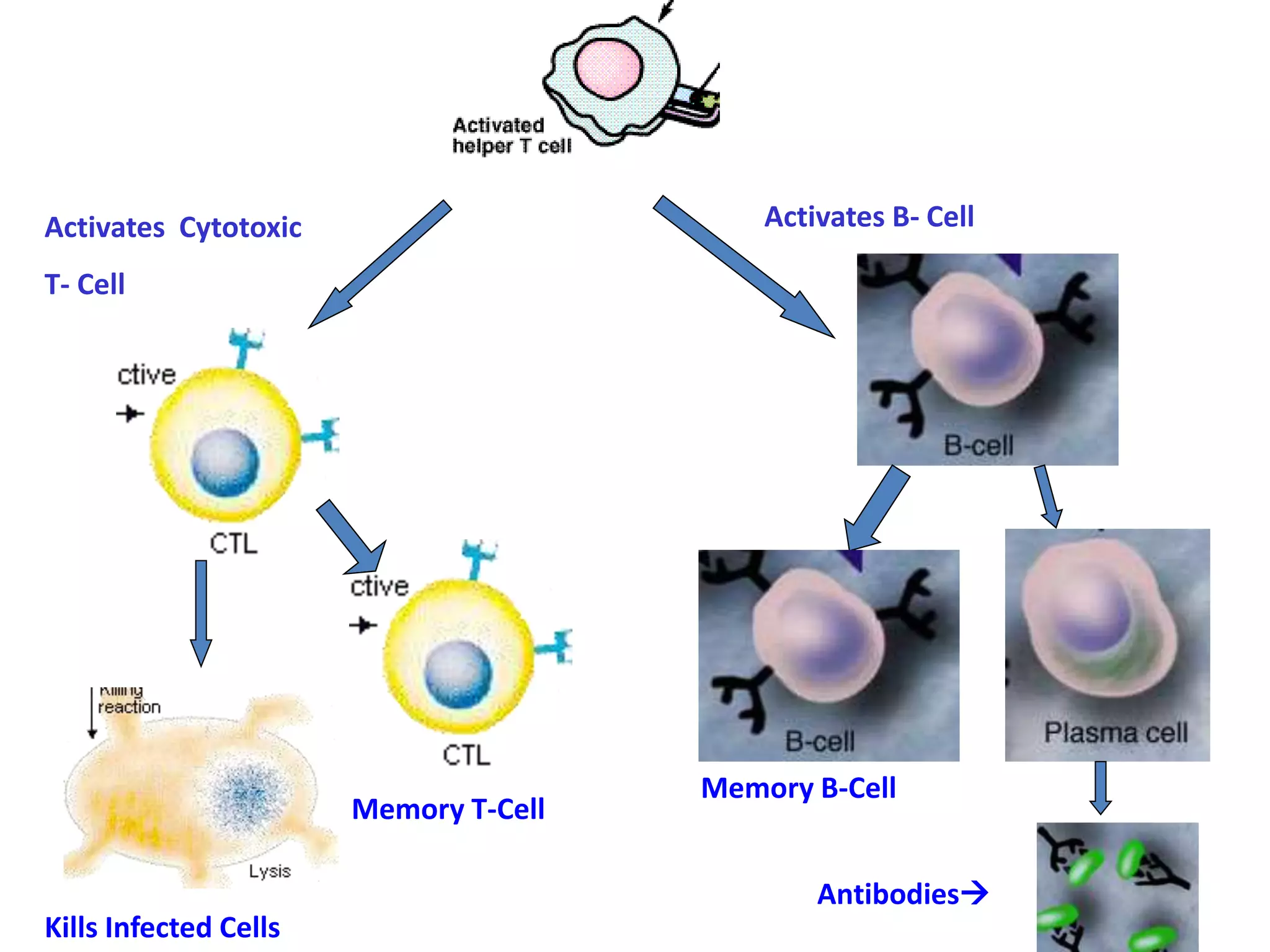
Activates B- CellActivates Cytotoxic
T- Cell
Memory B-Cell
Memory T-Cell
Kills Infected Cells
Antibodies
Role of macrophages in an immune response
• The B –cells and T-cells do not themselves pick
up the infectious agents.
• The infectious agents are first engulfed by a
cell called ‘macrophage’. It is derived from
blood cell known as ‘monocyte ‘.
• Infectious agents are broke down ,processed
and then presented to T-cells and B-cells.
• Macrophages thus acts as ‘antigen-processing’
or ‘antigen-presenting cell’.
Ways to protect chicken against infectious
agents and improve immune response
• Immune response is a complex of events. The basic of any
programme is to ensure that birds are protected in an
effective and well implemented biosecurity programme.
• In innate immune system , protected the birds are by best
management. The innate immunity is intact and acts as a
functional barrier to restrict invasion.
• When birds are forced to breathe poor quality air which are
high in ammonia the defence barrier gets break down.
• The same holds good for feed and feed quality which
contains mycotoxin. The local defence mechanism again
gets break down and make a bird easily prone to intestinal
infections.
6/22/2017 11:14:01 AM 45
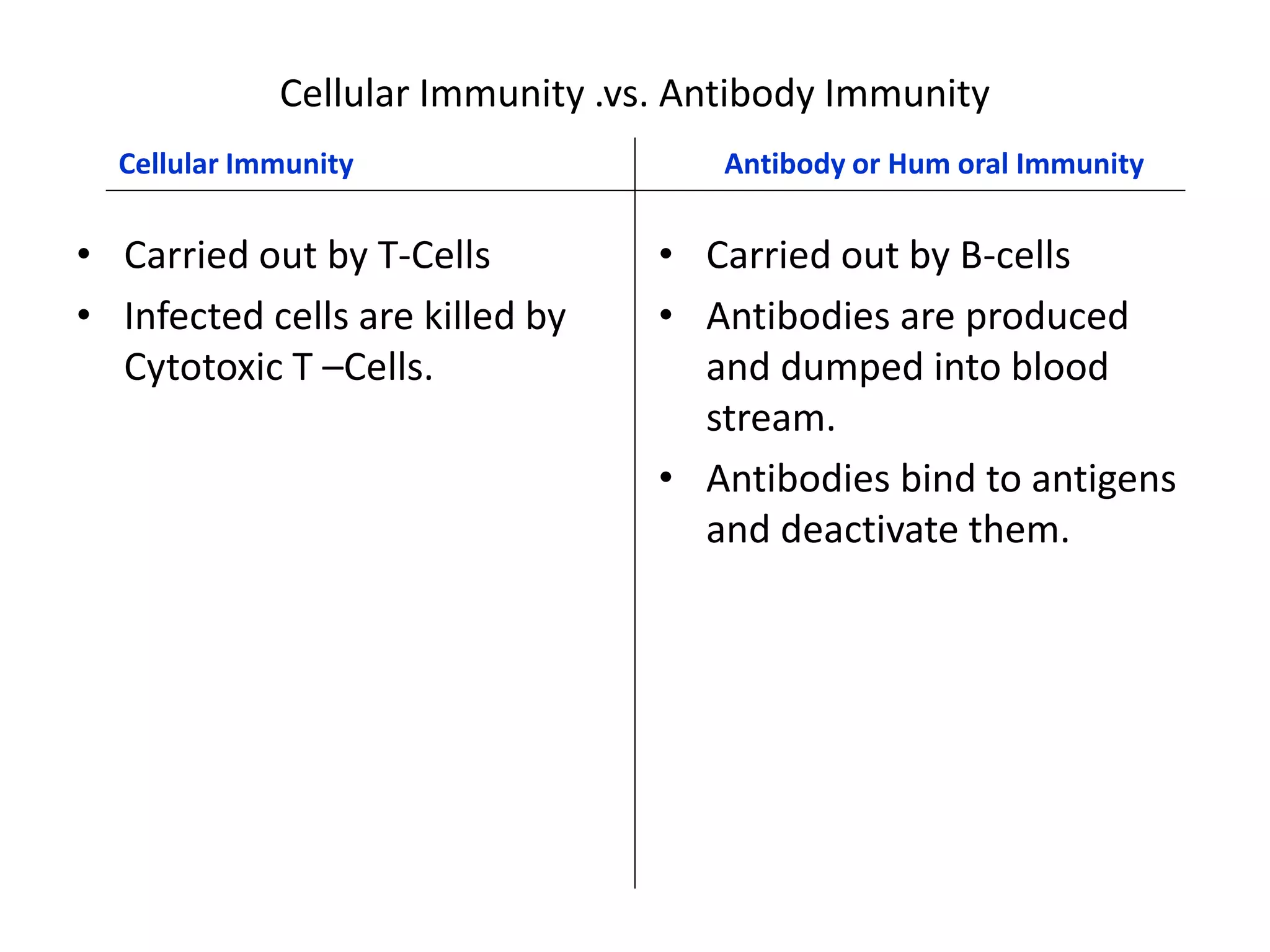
Cellular Immunity .vs. Antibody Immunity
• Carried out by T-Cells
• Infected cells are killed by
Cytotoxic T –Cells.
• Carried out by B-cells
• Antibodies are produced
and dumped into blood
stream.
• Antibodies bind to antigens
and deactivate them.
Cellular Immunity Antibody or Hum oral Immunity
Immune Response Summary
Antigen
Macrophage
Helper T - Cell
Active Cytotoxic
T-Cell
Kills Infected
Cells
Memory T- Cell
Active B - Cell
Plasma Cell
Antibodies
Deactivates
Antigens
Memory B-Cell
Displays copy of antigen on
surface of cell
Cellular Immunity
Antibody Immunity
Primary .vs. Secondary Immune Response
• Primary Immune Response
– This is a response to an invader the First time the invader
infects the body.
• No measurable immune response for first few days.
• Next 10 – 15 days antibody production grows steadily
• Secondary Immune Response
– A more rapid response to an invader the 2nd time it invades
the body.
• Antibody production increases dramatically and in a much shorter
time period..
Properties of the Immune Response
A. Specificity: Unique response against
each each invader
B. Memory: Increased response at next
invasion
C. Discrimination: Ability to distinguish
“self” from “non-self”
Factors Impacting the Immune
Response
• Stress
• Chronic illness
• Exercise
• Nutrients
• Increased IgG and IgM
References
1. Diseases of poultry –by D.Thyagarajan
chapter 3 ,page no:13 to 18
2.Poultry diseases: A guide for farmers and poultry
professionals – by J.L.Vegad
chapter 32,page no : 435 to 454.
3.Immune System -Cells and Cell Products That Protect the Body
Against Disease-ppt
4.Unit 3 – Dynamic Equilibrium.Section 6- Immune System- ppt
Thank you

Poultry immune response

  • 1.
    Poultry - Immunesystem and immune response R.YUVARANI BTP 13020 College of Poultry Production and Management Hosur ,Tamilnadu.
  • 2.
    Immunity • Immunity – Theability of the body to fight infection and/or foreign invaders by producing antibodies or killing infected cells. It is derived from the latin word ‘immunis’ which means free or exempt . It is the ability of the body to resist infection. • Immune System – The system in the body responsible for maintaining homeostasis by recognizing harmful from non harmful organisms and produces an appropriate response.
  • 3.
    Foreign Invaders • CalledPathogens – Viruses, bacteria or other living thing that causes disease/immune response. • Antigens – Toxins that pathogens produce that cause harm to an organism.
  • 4.
  • 6.
    Types of immunity Ithas two components, Innate immunity Acquired or adaptive immunity .
  • 7.
    Innate immunity This refersto the natural or inherited ability to resist disease. Included in this type of immunity are a number of non-specific disease response mechanisms.It is seen before birth itself . This word comes from latin word ‘innatus’ which means to be born with . Birds have well developed innate defence mechanisms. It is a slow and non-specific immunity. It has three components Barrier to physical attack Chemical defence system and Cellular components.
  • 8.
    • This refersto immunity provided by immune cells or antibodies that are produced in response to exposure to an antigen. These cells and proteins circulate through the body in the blood. • It includes targeted recognition of specific molecular features on the surface of the pathogen. • It is also called adaptive immunity
  • 10.
  • 11.
    T cells Bcells
  • 12.
    The avian immuneresponse  The primary and most important function of the immune system is to provide the bird with the ability to resist the entry and harmful effects of the infectious agents.  The protection to birds against infection is brought about by both antibodies and lymphocytes. The immunity induced by antibody is referred as ‘humoral immunity’, likewise the immunity induced by the cells are called as ‘cell mediated immunity.  These are the two important segment of acquired immune system.
  • 13.
    1. Humoral (AMI) 2.Cellular (CMI) 13
  • 14.
    The bursa ofFabricius in birds
  • 15.
    Antibody – mediatedimmune response • The chicken blood has two types Red cells and White cells • Normally lymphocytes constitute 60% of white blood cells • Lymphocytes are produced in the bone marrow from (soft tissue within the bones)from a cell that has the potentiality to develop into several types of blood cell. This cell is known as ‘pluripotent stem cell’ . • During incubation of the egg , in the developing chick , the lymphoid stem cells migrate into two different direction through bloodstream. • One set (B-cell precursors) goes into bursa of fabricius and another set of cells (T- cell precursors ) goes into thymus. • Bursa and thymus are called primary lymphoid organs because they regulate the production and differentiation of lymphocytes .
  • 16.
    Cont….. • Mature lymphocytesof chicken blood fall into two major populations , B- lymphocytes or B- cells and T-lymphocytes or T-cells. • B –cell mature in bursa and T- mature in thymus. After maturation B and T cells migrate to secondary lymphoid organs.
  • 17.
    Engulfed by themacrophage Immobilize the disease organism Antigen then prevented from attaching to their target cell Antibodies attach and block the receptors of antigen B lymphocyte responds by producing antibodies, also produces 'memory' cells It is exposed to the B-lymphocytes disease organism (antigen) enters the body
  • 18.
    Action of lymphoidstem cells in bursa • After lymphoid stem cell enter bursa, they undergo a period of processing and then differentiate into a type of mature lymphocytes called ‘bursa derived lymphocyte’ or ‘B-lymphocytes’. • The maturation within the bursa transform them into antibody – producing cells. • They are assigned the job of producing antibody. • By the time bursa disappears around sexual maturity , these antibody producing B-cell populate the secondary lymphoid organs. • They are spleen, bone marrow, Hadrian gland, CALT , BALT, GALT . • This organs enable the bird to effectively produce antibodies to fight infections , even after the bursa and thymus have disappeared.
  • 19.
    Mechanism of producingantibodies by B-cell • Following antigenic stimulation , that is ,on contact with the infectious agent (viruses, bacteria, etc) ,B-cell do not themselves produce antibodies , but enlarge , divide repeatedly, and differentiate into another type of cell which is especially designed to synthesize and secrete large amount of antibody. • These cells are called ‘plasma cells’. • Antibodies are technically called as ‘immunoglobulin's (I)’ and are proteins made up of amino acids. • Antibody destroy infectious agent and protect the bird. To fight enemies , they are required in large numbers. • Plasma cell can make to up to a million ( ten lakes ) molecules of antibody per hour , that is , nearly 300 molecules per second; and these are secreted soon after they are formed.
  • 20.
    Prevention of auto–antibody production by B-cell • Each B-cell is first screened by the bursa. Bursa then selectively destroys such B-cells that react against the body’s own components.this mechanism is known as ‘negative selection’ or ‘clonal selection’. • Upto 90 % of the B-cells are thus eliminated through a process known as ‘apoptosis’ or ‘physiological cell death’. • One specific type of B-cell produces antibodies only against one particular infectious agent. • The process is extremely complex. B-cells carry tiny ready made antibodies on them , against each infectious agent/ antigen present in nature. • The antibodies ( Ig )act as receptors for infectious agents and are known as B-cell receptors (BCRs ). • When bound to B-cell surface this antibody molecule act as an antibody. • Each B-cell is covered with about 2,00,000 to 5,00,000 antigen receptors. The infectious agent picks up those particular lymphocytes from the birds body.
  • 21.
    Reaction of antibodyagainst the infectious agent • The antibody molecule is made up in such a way that if we look at it under a high power microscope , it would look like the letter ‘Y’. • On the arms of the ‘Y’ are the areas which recognize the foreign invader ( infectious agent ). The situation is much like a lock and key , where a portion of the invader (key ) matches with a portion on the antibody ( lock). • When the matching is perfect like a lock and key ,the two attach , and an immune response begins.
  • 22.
    How an antibodyoperates/works? Deactivation of a bacterium by an antibody.
  • 23.
    Recognition of foreigninvader by the B-cell • In ‘innate immune system’, the macrophages can engulf infectious agents and destroy them by powerful enzymes. • Cells like macrophages , that can ingest ,process, and present an infectious agent (antigen ) to B-cell , are called ‘antigen –processing (presenting ) cells ‘. • During the processing , small fragments (broken pieces ) of the infectious agent are left on the surface of the macrophage. • In addition , the macrophages sends out chemical messages/signals (cytokines) which say to body cells ‘come and look’ , here is enemy. • Various cells, including the B-cell , then come to the site. • B-cells have on their surface tiny ready-made antibodies ( receptors) • As the B-cell examines what is on the surface of the macrophage , it tries lock and key method. • If there is a matching , a signal is sent inside the B-cell saying that is an invader ( enemy ) and that something should be done . That something is the production of antibodies against that infectious agent.
  • 24.
    Central Role ofHelper T Cells
  • 25.
    How do antibodiesdestroy the disease – producing organism • They achieve this by three mechanisms . They are  Neutralization  Opsonization  Complement activation. opsonization • If bacteria are coated with antibodies (opsonization ), they are more easily taken inside and destroyed by phagocytes of the body. • Phagocytes is a cell that is able to engulf / eat and digest bacteria . They include heterophils of blood and macrophages of tissues.
  • 26.
    Neutralization • Antibodies bindto specific disease-producing organisms and neutralize them. • That is , they block the activity of that organism by coating its surface . This occurs particularly with viruses. • Neutralized viruses ( i.e . coated with antibodies ) are unable to attach to surface receptors of body cells and are therefore prevented from replication ( i.e.multiplication, growth ). As a result , they are unable to produce disease.
  • 27.
    Complement activation • Antibodiesbound to the surface of disease – producing bacteria can activate complement and produce new complement proteins. • These complement proteins attach to receptors on phagocytes . This makes phagocytosis and destruction of disease- producing bacteria easier for phagocytes. • Phagocytosis is engulfment of bacteria by a phagocyte.
  • 28.
  • 29.
    Types of antibodies Inchicken 3 main type of antibodies ( Ig ) are produced . They are  IgM  IgG  Ig A IgM • IgM is the first antibodies produced in chicken which is actually five of the Ig’s (IgY ) joined at the tails in a circular fashion. • The function of IgM is mainly to arrest the entry of infectious agent. • It prevents the infectious agent from multiplication and causing damage. • This process is called as “agglutination”
  • 30.
    Antibodies • Y-shaped proteinmolecule. • Made up of variable and constant regions. • Made up of Heavy and Light chains. • Produced by B-Lymphocytes • Function: Recognize antigens, bind to and deactivate them. – Note: Variable region recognizes the anitgens.
  • 31.
  • 32.
    IgG • It consistsof only one ‘y’ and hence five times smaller than IgM. • IgG is measured by enzyme – linked immuno sorbent assay ( ELISA ) test. • Immunoglobulin cause clumping of the infectious agents and attach to their surfaces. This facilitates phagocytosis. • It is found in highest concentration in blood. • It plays major role in antibody-mediated defense mechanisms. • It is the smallest of the three antibodies and hence IgG escape from the blood vessels.
  • 33.
    IgA • IgA isthe third important antibody in the chicken. • It is manufactured by B-cell present in tissue just under the body surfaces. • It is also produced in epithelial cells which diffuse into blood stream and into external secretions. • IgA is produced mainly to protect body surfaces . This process is known as “immune elimination “. • IgA can therefore act at three different points to restrict infectious agents in the intestinal wall , in the lining intestinal cells , in the intestinal lumen. • In chicken 30% to 75% of IgA produced in the intestinal wall diffuse into the blood circulation for reaching the liver. • By this mechanism infectious agents are eliminated from the body.
  • 34.
    Parental transmission ofantibodies • A day old chick has an inadequately developed immune system and therefore depends on the immunity from the mother. • Newly hatched chick has temporary immunological protection until systemic production of antibodies begins IgG in yolk is having equal antibody titer as hen’s blood. • IgM and IgA from oviduct secretion are found in the albumin. • IgM and IgA from the albumin diffuse into the amniotic fluid and entered into the embryo. • The function of maternal antibodies is to prevent pathogenic organisms from causing disease in young chicks.
  • 35.
    Cell mediated immuneresponse Process - after the lymphoid stem cell enter the thymus  Lymphoid stem cells undergo a period of processing in the thymus and differentiate into mature lymphocytes.  The differentiated mature cells are called ‘thymus-derived lymphocytes’ , or ‘T-lymphocytes’ , or simply as ‘T-cells’ . T stands for thymus.  The processing and differentiation transform them into ‘cytotoxic T-cells’.  That is they acquire the ability to kill the cells that harbour the infectious agents.  By the time thymus disappears, which soon after sexual maturity , T-cells populate various secondary lymphoid organs.
  • 36.
    Purpose of thecell-mediated immune response • The B-cell antibody system is meant basically to destroy the infectious agents before they reach their targets. T-cells system is to deal with the infectious agents after they reach their target cells. • The cell-mediated immune response is meant to deal with the infectious agents after they reach their targets , the cells. T-cells are manufactured in the thymus , a gland present in the neck of birds. • While there is only one kind of antibody-producing B-cell, there are several kinds of T-cells , each serving different functions. These are  Cytotoxic T-cells-serve to kill cells infected with disease agents.  Helper T-cells-helps in the mediation of the immune response.  Suppressor T-cells-control cells of the immune response.
  • 37.
    Action –kinds ofcells are destroyed by the cell- mediated immune response • Those cells in which the infectious agents grow within and cannnot be attacked by antibodies are destroyed by the cell-mediated immune response. • Since viruses grow within the cells , virus-infected cells and all those cells in which bacteria or other infectious agents grow within ( as in avian tuberculosis ) , are destroyed by cytotoxic T-cells to protect the body from any further damage. • Cytotoxic T-cells have receptors on their surface for that lock and key match. • Each cell possesses about 10,000 – 20000 exactly similar receptors. • Because all receptors are exactly the same , one T-cell will bind and kill only one type of infectious agent.
  • 38.
    Action of cytotoxicT-cell over the infected cell • Within a few minutes , cytotxic T-cells bind to infected cell, leads to the release of granuals into the target cell at the region of contact. • From these granules perforins and enzymes are released. • Perforins are proteins and their function is to form holes in the membrane of the target cells. Enzymes then enter into the target cell through these holes. • The enzymes activate the ‘suicide enzyme system’ of the target cell and within seconds the target cell dies. • Along with the cell , the infectious agents present within , are killed.
  • 39.
    Cytotoxic T CellsLyse Infected Cells
  • 40.
    Role of helperT-cell in an immune response • That neither the cytotoxic T-cells which kill the infected cells , nor the B-cells which produce protective antibodies , can function without the signals received from ‘helper T-cells’. • helper T-cells secrete certain chemical substances (cytokines) which act as messenger molecules. • This molecules help both B-cells and T-cells in the mediation of antibody and cell-mediated immune responses, hence the name ‘helper T-cell’ . In other words ,these cells regulate the immune responses. • Helper T-cell is like the conductor of a musical orchetra . It commands the entire show.
  • 41.
    The Pathway ofSpecific Immune Response Pathogens Pathogens eaten by Macrophage Displays portion of Pathogen on surface Helper-T cell recognizes Pathogen Step 1 Step 2 Step 3
  • 42.
    Activates B- CellActivatesCytotoxic T- Cell Memory B-Cell Memory T-Cell Kills Infected Cells Antibodies
  • 43.
    Role of macrophagesin an immune response • The B –cells and T-cells do not themselves pick up the infectious agents. • The infectious agents are first engulfed by a cell called ‘macrophage’. It is derived from blood cell known as ‘monocyte ‘. • Infectious agents are broke down ,processed and then presented to T-cells and B-cells. • Macrophages thus acts as ‘antigen-processing’ or ‘antigen-presenting cell’.
  • 44.
    Ways to protectchicken against infectious agents and improve immune response • Immune response is a complex of events. The basic of any programme is to ensure that birds are protected in an effective and well implemented biosecurity programme. • In innate immune system , protected the birds are by best management. The innate immunity is intact and acts as a functional barrier to restrict invasion. • When birds are forced to breathe poor quality air which are high in ammonia the defence barrier gets break down. • The same holds good for feed and feed quality which contains mycotoxin. The local defence mechanism again gets break down and make a bird easily prone to intestinal infections.
  • 45.
  • 46.
    Cellular Immunity .vs.Antibody Immunity • Carried out by T-Cells • Infected cells are killed by Cytotoxic T –Cells. • Carried out by B-cells • Antibodies are produced and dumped into blood stream. • Antibodies bind to antigens and deactivate them. Cellular Immunity Antibody or Hum oral Immunity
  • 47.
    Immune Response Summary Antigen Macrophage HelperT - Cell Active Cytotoxic T-Cell Kills Infected Cells Memory T- Cell Active B - Cell Plasma Cell Antibodies Deactivates Antigens Memory B-Cell Displays copy of antigen on surface of cell Cellular Immunity Antibody Immunity
  • 48.
    Primary .vs. SecondaryImmune Response • Primary Immune Response – This is a response to an invader the First time the invader infects the body. • No measurable immune response for first few days. • Next 10 – 15 days antibody production grows steadily • Secondary Immune Response – A more rapid response to an invader the 2nd time it invades the body. • Antibody production increases dramatically and in a much shorter time period..
  • 49.
    Properties of theImmune Response A. Specificity: Unique response against each each invader B. Memory: Increased response at next invasion C. Discrimination: Ability to distinguish “self” from “non-self”
  • 50.
    Factors Impacting theImmune Response • Stress • Chronic illness • Exercise • Nutrients • Increased IgG and IgM
  • 51.
    References 1. Diseases ofpoultry –by D.Thyagarajan chapter 3 ,page no:13 to 18 2.Poultry diseases: A guide for farmers and poultry professionals – by J.L.Vegad chapter 32,page no : 435 to 454. 3.Immune System -Cells and Cell Products That Protect the Body Against Disease-ppt 4.Unit 3 – Dynamic Equilibrium.Section 6- Immune System- ppt
  • 52.