Potato viruses
a) Potato leaf roll virus
b) Potato virus x
c) Potato virus y
By: Muhammad Ammar
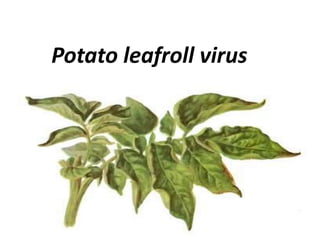
Potato leafroll virus
Classification
• Group: (+)ssRNA
• Family: Luteroviridae
• Genus: Polerovirus
Introduction
• It is one of the most important potato virus
worldwide.
• It can be responsible for individual plant yield
losses over 50%.Annual yield losses causes by
PLRV is 20 million tons globally.
• PLRV was first described by Quanjer in 1916.
Host Species
• This RNA virus infects potatoes and other
members of family Solanaceae.
Symptoms
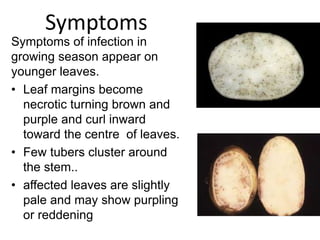
Symptoms of infection in
growing season appear on
younger leaves.
• Leaf margins become
necrotic turning brown and
purple and curl inward
toward the centre of leaves.
• Few tubers cluster around
the stem..
• affected leaves are slightly
pale and may show purpling
or reddening
Potato leaf roll virus symptoms include
upward rolling of leaves
Transmission
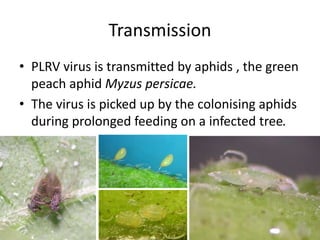
• PLRV virus is transmitted by aphids , the green
peach aphid Myzus persicae.
• The virus is picked up by the colonising aphids
during prolonged feeding on a infected tree.
Management &Control
• This virus requires 12 hours to transmit by the
help of aphid.
• Kill the infected plants
• Systemic and foliar insecticides can be used to
prevent aphid feeding
• Use of Hot Water-Thermotherapy.Hot water
treatment at 55 c for 15- 20 mint
• Methamidophos and Endosulfan use for the
control of aphids.
Potato virus X
Classification
Order: Tymovirales
Family: Alphaflexiviridae
Genus; Potexvirus
Species: Potato virus x
Introduction
 Presence
• It is also known as potato mosaic virus.
• Presence occurs mostly in China, India, Iran, Turkey and Pakistan.
• Host plants/Affected plants
 Brassica rapa
 Nicotiana tabacum
 Solanum Tuberosum
• Growth stage
• Vegetative growing stage of plant mostly affected by this virus.
Symptoms
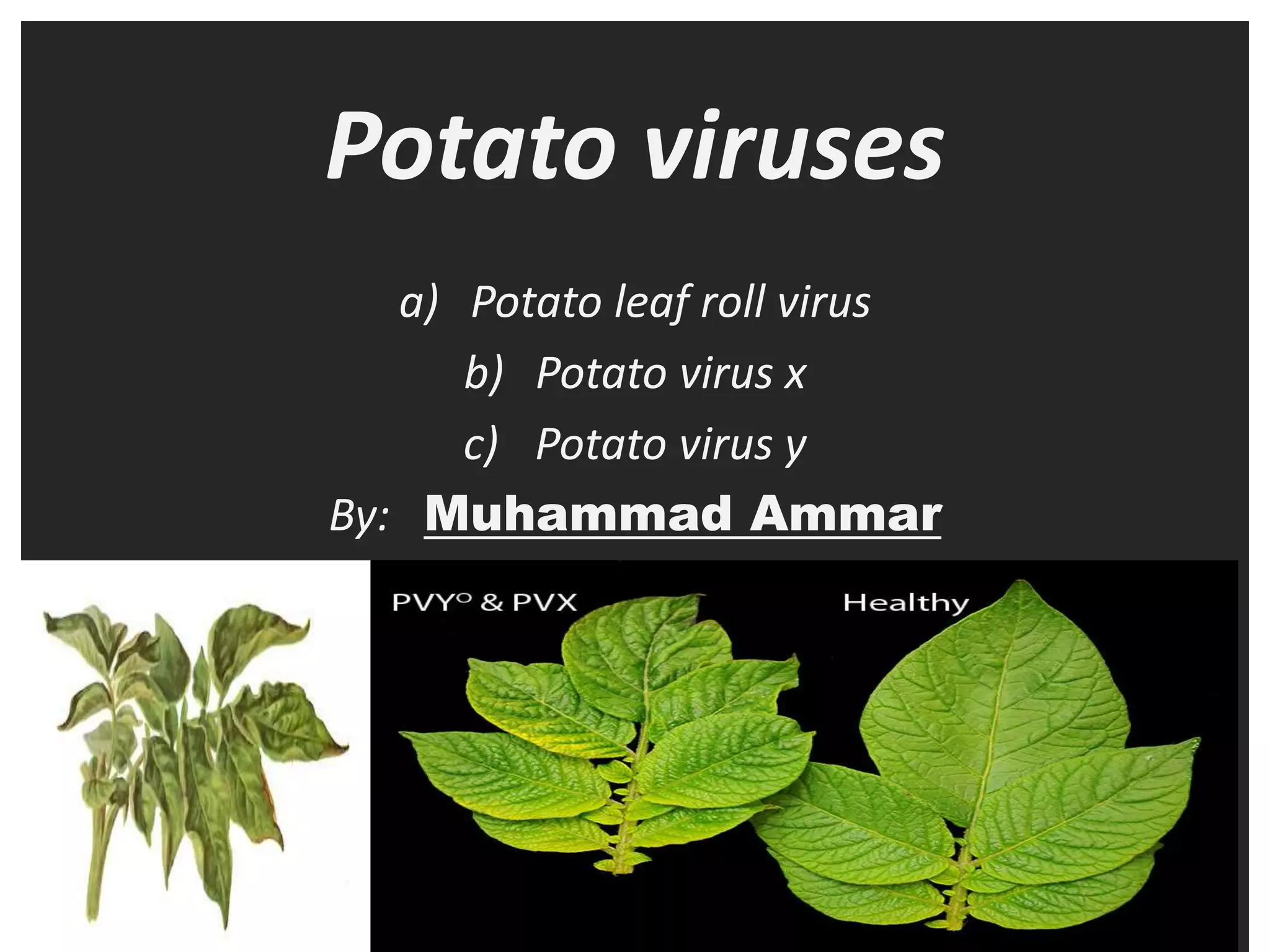
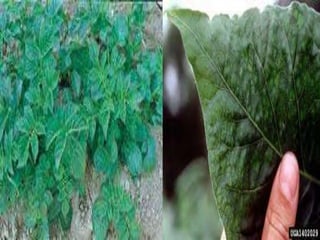
– In potato, causes mild mosaic on leaves
– Inter venial mosaic.
– Mottling with stunting
– Necrosis of leaves.
– Tuber formation occurs in potatoes
– Crinkling
Transmission
• Transmitted mechanically.
• Contact between diseased and healthy plants
• No insect transition.
• No fungal vector transition.
Causes
• Causes mild mosaic.
• Causes no symptoms in most potato varieties.
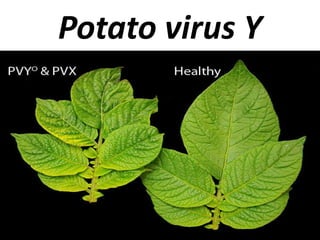
• In presence of potato virus Y, synergy between
two viruses causes severe symptoms in
potatoes.
• Necrotic spotting in tobacco.
Control
 Perennial herb named as Chlorophytum nepalense is
use as a root extract to control the dark viral necrotic
lesions of sprouted potato tuber and plant and
sprouted tubers by potato virus x under glasshouse
conditions.
 These extract contains;
• (a) Chologenic acid
• (b)Kaempferol
• (c)luteolin
• These components have potential to control this virus
Potato virus Y
classfiation
Group:(+)ssRNA
Family:Potyviridae
Gnus: Potyvirus
Spiecis: Potato virus Y
Introduction & Importance
• It is economically important because, in last few
years this virus has led to considerable losses to
South Africa potato industry.
• PVY mostly infects plants in the family of
Solanaceae
• Losses occurs by this virus leads to 10-100%
losses. Host plants:
• (a)Tobacco
• (b)pepper
• (c)Tomato
Transmission
• It is transmitted by insect vectors like aphid
named as Myzus persicae.
• Transmitted by grafting and sap inoculation.
• But some may also remain dormant in seed
potatoes.
• So using the same line of potato for
production leads to increase in viral load and
loss of crop.
Symptoms
Emergence of necrotic PVY(NTN) has led to
more reliable classification tools than simple
serological identification.
Formation of mild mosaic patterns occurs.
Leaf distortion
Death of growing points of plants
Tuber necrosis
Management & control
• Avoid planting seed potato downwind from
commercial fields.
• Prevent the late season virus infection by top-
killing seed potato fields early.
• Plant only certified seeds.
• Eliminate infected potatoes plants and weed
reservoirs of aphids and PVY.
• Chemicals to hinder or prevent aphid
feedings.
Thank you

Potato virus,PLRV, PVX, PVY.

  • 1.
    Potato viruses a) Potatoleaf roll virus b) Potato virus x c) Potato virus y By: Muhammad Ammar
  • 2.
  • 3.
    Classification • Group: (+)ssRNA •Family: Luteroviridae • Genus: Polerovirus
  • 4.
    Introduction • It isone of the most important potato virus worldwide. • It can be responsible for individual plant yield losses over 50%.Annual yield losses causes by PLRV is 20 million tons globally. • PLRV was first described by Quanjer in 1916. Host Species • This RNA virus infects potatoes and other members of family Solanaceae.
  • 5.
    Symptoms Symptoms of infectionin growing season appear on younger leaves. • Leaf margins become necrotic turning brown and purple and curl inward toward the centre of leaves. • Few tubers cluster around the stem.. • affected leaves are slightly pale and may show purpling or reddening
  • 6.
    Potato leaf rollvirus symptoms include upward rolling of leaves
  • 7.
    Transmission • PLRV virusis transmitted by aphids , the green peach aphid Myzus persicae. • The virus is picked up by the colonising aphids during prolonged feeding on a infected tree.
  • 8.
    Management &Control • Thisvirus requires 12 hours to transmit by the help of aphid. • Kill the infected plants • Systemic and foliar insecticides can be used to prevent aphid feeding • Use of Hot Water-Thermotherapy.Hot water treatment at 55 c for 15- 20 mint • Methamidophos and Endosulfan use for the control of aphids.
  • 9.
  • 10.
  • 11.
    Introduction  Presence • Itis also known as potato mosaic virus. • Presence occurs mostly in China, India, Iran, Turkey and Pakistan. • Host plants/Affected plants  Brassica rapa  Nicotiana tabacum  Solanum Tuberosum • Growth stage • Vegetative growing stage of plant mostly affected by this virus.
  • 12.
    Symptoms – In potato,causes mild mosaic on leaves – Inter venial mosaic. – Mottling with stunting – Necrosis of leaves. – Tuber formation occurs in potatoes – Crinkling
  • 13.
    Transmission • Transmitted mechanically. •Contact between diseased and healthy plants • No insect transition. • No fungal vector transition.
  • 14.
    Causes • Causes mildmosaic. • Causes no symptoms in most potato varieties. • In presence of potato virus Y, synergy between two viruses causes severe symptoms in potatoes. • Necrotic spotting in tobacco.
  • 15.
    Control  Perennial herbnamed as Chlorophytum nepalense is use as a root extract to control the dark viral necrotic lesions of sprouted potato tuber and plant and sprouted tubers by potato virus x under glasshouse conditions.  These extract contains; • (a) Chologenic acid • (b)Kaempferol • (c)luteolin • These components have potential to control this virus
  • 17.
  • 18.
  • 19.
    Introduction & Importance •It is economically important because, in last few years this virus has led to considerable losses to South Africa potato industry. • PVY mostly infects plants in the family of Solanaceae • Losses occurs by this virus leads to 10-100% losses. Host plants: • (a)Tobacco • (b)pepper • (c)Tomato
  • 20.
    Transmission • It istransmitted by insect vectors like aphid named as Myzus persicae. • Transmitted by grafting and sap inoculation. • But some may also remain dormant in seed potatoes. • So using the same line of potato for production leads to increase in viral load and loss of crop.
  • 21.
    Symptoms Emergence of necroticPVY(NTN) has led to more reliable classification tools than simple serological identification. Formation of mild mosaic patterns occurs. Leaf distortion Death of growing points of plants Tuber necrosis
  • 22.
    Management & control •Avoid planting seed potato downwind from commercial fields. • Prevent the late season virus infection by top- killing seed potato fields early. • Plant only certified seeds. • Eliminate infected potatoes plants and weed reservoirs of aphids and PVY. • Chemicals to hinder or prevent aphid feedings.
  • 23.

Editor's Notes

  • #6 Tubers develop necrosis