www.biocomes.eu
Powdery mildew
The BIOCOMES project brings together
27 partners developing 11 novel
biological control products for pests
and diseases.
One of these diseases is powdery
mildew. The following slides will explain
more about powdery mildew and our
activities to find a sustainable biocontrol
product to counteract it.
www.biocomes.eu
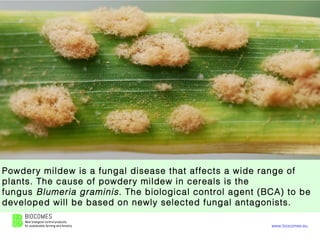
Powdery mildew is a fungal disease that affects a wide range of
plants. The cause of powdery mildew in cereals is the
fungus Blumeria graminis. The biological control agent (BCA) to be
developed will be based on newly selected fungal antagonists.
www.biocomes.eu
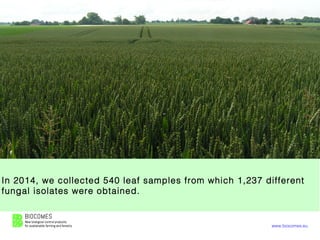
In 2014, we collected 540 leaf samples from which 1,237 different
fungal isolates were obtained.
www.biocomes.eu
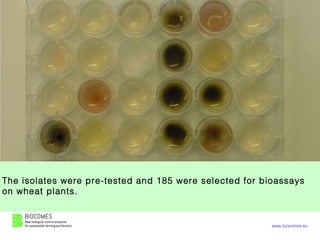
The isolates were pre-tested and 185 were selected for bioassays
on wheat plants.
www.biocomes.eu
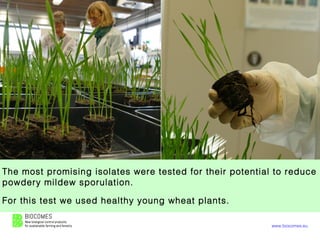
The most promising isolates were tested for their potential to reduce
powdery mildew sporulation.
For this test we used healthy young wheat plants.
www.biocomes.eu
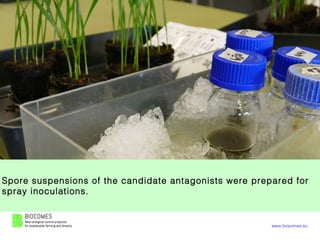
Spore suspensions of the candidate antagonists were prepared for
spray inoculations.
www.biocomes.eu
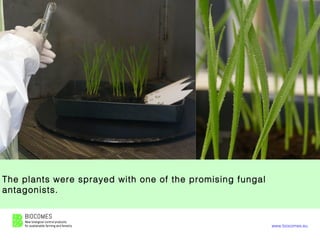
The plants were sprayed with one of the promising fungal
antagonists.
www.biocomes.eu
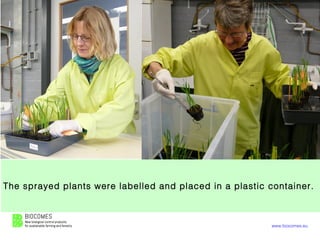
The sprayed plants were labelled and placed in a plastic container.
www.biocomes.eu
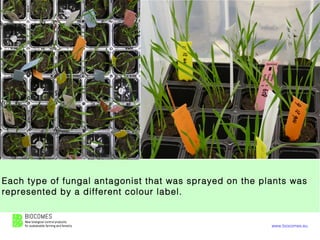
Each type of fungal antagonist that was sprayed on the plants was
represented by a different colour label.
www.biocomes.eu
The healthy wheat plants were then exposed to powdery mildew via
the dry inoculation method.
We collected infected wheat leaves for the dry inoculation method.
www.biocomes.eu
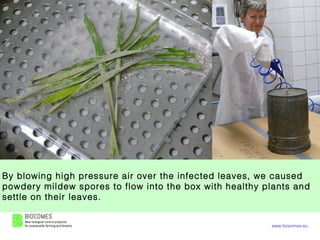
By blowing high pressure air over the infected leaves, we caused
powdery mildew spores to flow into the box with healthy plants and
settle on their leaves.
www.biocomes.eu
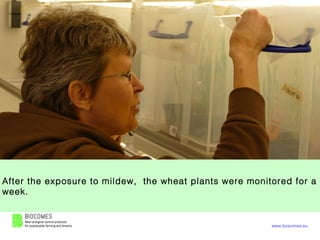
After the exposure to mildew, the wheat plants were monitored for a
week.
www.biocomes.eu
After the first week we measured the areas with pustules.
www.biocomes.eu
Before measuring the plants were scanned. Each antagonist has its
own barcode.
www.biocomes.eu
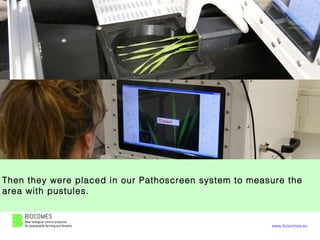
Then they were placed in our Pathoscreen system to measure the
area with pustules.
www.biocomes.eu
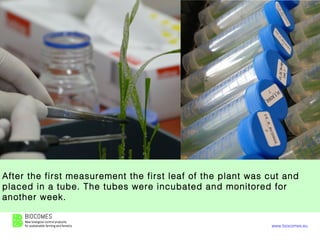
After the first measurement the first leaf of the plant was cut and
placed in a tube. The tubes were incubated and monitored for
another week.
www.biocomes.eu
After the second week of inoculation the powdery mildew spores
were washed off the leaves and counted. Ten isolates looked
promising and will be tested in the open field in 2016
This presentation gives a quick overview
of the first test in the development of a
BCA for powdery mildew on cereals.
Visit our website to read more about our
work on powdery mildew and the other
10 biological control products we will
develop.
www.biocomes.eu
This project has received funding from the
European Union’s Seventh Framework Programme for
research, technological development and demonstration
under grant agreement no
612713

slideshare powdery mildew

  • 1.
    www.biocomes.eu Powdery mildew The BIOCOMESproject brings together 27 partners developing 11 novel biological control products for pests and diseases. One of these diseases is powdery mildew. The following slides will explain more about powdery mildew and our activities to find a sustainable biocontrol product to counteract it.
  • 2.
    www.biocomes.eu Powdery mildew isa fungal disease that affects a wide range of plants. The cause of powdery mildew in cereals is the fungus Blumeria graminis. The biological control agent (BCA) to be developed will be based on newly selected fungal antagonists.
  • 3.
    www.biocomes.eu In 2014, wecollected 540 leaf samples from which 1,237 different fungal isolates were obtained.
  • 4.
    www.biocomes.eu The isolates werepre-tested and 185 were selected for bioassays on wheat plants.
  • 5.
    www.biocomes.eu The most promisingisolates were tested for their potential to reduce powdery mildew sporulation. For this test we used healthy young wheat plants.
  • 6.
    www.biocomes.eu Spore suspensions ofthe candidate antagonists were prepared for spray inoculations.
  • 7.
    www.biocomes.eu The plants weresprayed with one of the promising fungal antagonists.
  • 8.
    www.biocomes.eu The sprayed plantswere labelled and placed in a plastic container.
  • 9.
    www.biocomes.eu Each type offungal antagonist that was sprayed on the plants was represented by a different colour label.
  • 10.
    www.biocomes.eu The healthy wheatplants were then exposed to powdery mildew via the dry inoculation method. We collected infected wheat leaves for the dry inoculation method.
  • 11.
    www.biocomes.eu By blowing highpressure air over the infected leaves, we caused powdery mildew spores to flow into the box with healthy plants and settle on their leaves.
  • 12.
    www.biocomes.eu After the exposureto mildew, the wheat plants were monitored for a week.
  • 13.
    www.biocomes.eu After the firstweek we measured the areas with pustules.
  • 14.
    www.biocomes.eu Before measuring theplants were scanned. Each antagonist has its own barcode.
  • 15.
    www.biocomes.eu Then they wereplaced in our Pathoscreen system to measure the area with pustules.
  • 16.
    www.biocomes.eu After the firstmeasurement the first leaf of the plant was cut and placed in a tube. The tubes were incubated and monitored for another week.
  • 17.
    www.biocomes.eu After the secondweek of inoculation the powdery mildew spores were washed off the leaves and counted. Ten isolates looked promising and will be tested in the open field in 2016
  • 18.
    This presentation givesa quick overview of the first test in the development of a BCA for powdery mildew on cereals. Visit our website to read more about our work on powdery mildew and the other 10 biological control products we will develop. www.biocomes.eu This project has received funding from the European Union’s Seventh Framework Programme for research, technological development and demonstration under grant agreement no 612713