COLLEGE OF AGRICULTURAL TECHNOLOGY
(Affiliated to Tamil Nadu Agricultural University , Coimbatore
Kullapuram (po),via vaigai Dam , Theni -625 562
SUBMITTED BY, COURSE TEACHER,
R.MALARMATHY, Dr.S.PARTHASARTHY,
2015021075 Asst.Professor(Plant pathology)
TOMATO FUSARIUM WILT
HISTORY:
• Fusarium wilt on tomatoes is caused by Fusarium oxysporum
f sp. lycopersici.
• It is a soil born fungus that is found throughout the united
states, especially in warm regions of the country.
• The organism is specific for tomato and is very longlived in all
regions of the united states.
• The diseases develop more quickly in soils that are high in
nitrogen and low in potassium.
ECONOMIC LOSSES:
• Due to high temperature and humidity Fusarium oxysporum f
sp. lycopersici can cause damage.
• It is a soil borne pathogen in the class Hyphomycetes that
cause wilt of tomato as the only host of pathogen and they
reported 10- 90% loss in yield of tomato in temperate region
due to this disease.
SYMPTOMS:
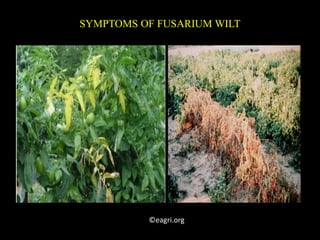
• The first symptom of the disease is clearing of the veinlets and
chlorosis of the leaves.
• The younger leaves may die in succession and the entire may
wilt and die in few days.
• Soon the petiole and the leaves droop and wilt.
• In young plants, symptom consists of clearing of vein let and
drooping of petioles.
• Growth is typically stunted and little or no fruit develops.
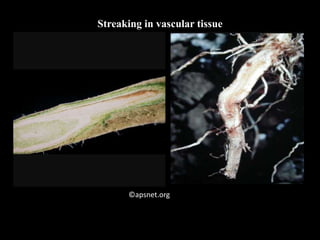
• Brown , vascular tissue can be found when the infected stem is
cut at its base.
• Infected plants often die before maturing.
SYMPTOMS OF FUSARIUM WILT
©eagri.org
Streaking in vascular tissue
©apsnet.org
SYSTEMATIC POSITION:
Kingdom: Fungi
Phylum: Ascomycota
Class: Sordariomycetes
Subclass: Hypocreomycetidae
Order: Hypocreales
Family: Nectriaceae
Genus: Fusarium
Species: Fusarium oxysporum f. sp.
PATHOGEN:
`
`
Casual organism: Fusarium oxysporum f .sp.lycopersici
Mycelium is septate and hyaline. They produce macro
and micro conidia.
Micro conidia are one celled, hyaline, ovoid to
ellipsoid. Two races of pathogen have been identified.
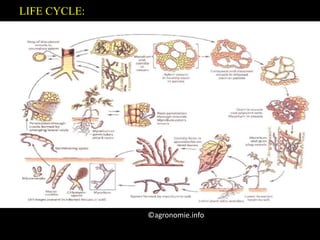
LIFE CYCLE:
Agrios,2005
©agronomie.info
LIFE CYCLE
• Fusarium fungi survives in the soil or associated with plant debris
for up to ten years. The pathogen can colonize as well tomato roots
and then infect the xylem, where by it moves passively through the
plant vascular system.
• Usually, infection into the xylem is favoured by wounds to the roots,
including those caused by root knot nematode.
• Secondary spread of the pathogen from one plant to another seldom
occurs. However, long distance dispersal of the pathogen can occur
by movement of infested soil equipment, it has also been reported
that the pathogen can aerially disseminate under certain environment
condition.
FAVOURABLE CONDITIONS:
• Disease development is favored by warm temperature (27-
28 ̊c),dry weather and acidic soil (PH 5-5.6).
• Rapidly growing, highly succulent tomato plants exposed to
fetilization with ammonium nitrate are especially susceptible
to the disease.
MODE OF SPREAD AND SURVIVAL:
• The fungus is seed borne and soil borne.
• The fungus survives in the soil as chlamydospores or as
saprophytically growing mycelium in infected crop debris for
more than 10 years.
• One of the chief methods of its distribution is by seedling
raised in infected soil.
• Wind spores, surface drainage water and agricultural
implements also help in distribution of the pathogen from field
to field.
IDM:
 The affected plants should be removed and destroyed.
 Spot drench with carbendazim (0.1%) . Crop rotation with a
non-host crop such as cereals.
 To solarize the soil, you must leave a clear plastic trap on the
soil surface for 4-6 weeks during the hottest part of year. Soil
solarization will reduce or eliminate many soil inhabiting pests
including nematodes, fungi, insects, weeds and weed seeds.
• Mycostop is a biological fungicide that will safely protect
crop against wilt caused by Fusarium. Approved for use in
organic crop production, it can be applied as a soil spray or
drench (1-2 gm/100 sq ft) to seedlings ,vegetables. Apply
sufficient water during application to move mycostop into the
root zone.
• Avoid sowing seed produced from Fusarium infected plants.
Commercial seed is generally tested for seed borne
contamination.
REFERENCES
• www.tnau agriportal.com
• https://www.planetneutral.com
• Gupta V.K and Y.S paul,2008, diseases of vegetable crops,
published by kalyani publishers, second edition.
• R.S. Singh, plant diseases, Oxford and IBH publishing co. pvt.
Ltd, New Delhi, 9th edition.

Tomato fusarium wilt

  • 1.
    COLLEGE OF AGRICULTURALTECHNOLOGY (Affiliated to Tamil Nadu Agricultural University , Coimbatore Kullapuram (po),via vaigai Dam , Theni -625 562 SUBMITTED BY, COURSE TEACHER, R.MALARMATHY, Dr.S.PARTHASARTHY, 2015021075 Asst.Professor(Plant pathology) TOMATO FUSARIUM WILT
  • 2.
    HISTORY: • Fusarium wilton tomatoes is caused by Fusarium oxysporum f sp. lycopersici. • It is a soil born fungus that is found throughout the united states, especially in warm regions of the country. • The organism is specific for tomato and is very longlived in all regions of the united states. • The diseases develop more quickly in soils that are high in nitrogen and low in potassium.
  • 3.
    ECONOMIC LOSSES: • Dueto high temperature and humidity Fusarium oxysporum f sp. lycopersici can cause damage. • It is a soil borne pathogen in the class Hyphomycetes that cause wilt of tomato as the only host of pathogen and they reported 10- 90% loss in yield of tomato in temperate region due to this disease.
  • 4.
    SYMPTOMS: • The firstsymptom of the disease is clearing of the veinlets and chlorosis of the leaves. • The younger leaves may die in succession and the entire may wilt and die in few days. • Soon the petiole and the leaves droop and wilt. • In young plants, symptom consists of clearing of vein let and drooping of petioles.
  • 5.
    • Growth istypically stunted and little or no fruit develops. • Brown , vascular tissue can be found when the infected stem is cut at its base. • Infected plants often die before maturing.
  • 6.
    SYMPTOMS OF FUSARIUMWILT ©eagri.org
  • 7.
    Streaking in vasculartissue ©apsnet.org
  • 8.
    SYSTEMATIC POSITION: Kingdom: Fungi Phylum:Ascomycota Class: Sordariomycetes Subclass: Hypocreomycetidae Order: Hypocreales Family: Nectriaceae Genus: Fusarium Species: Fusarium oxysporum f. sp.
  • 9.
    PATHOGEN: ` ` Casual organism: Fusariumoxysporum f .sp.lycopersici Mycelium is septate and hyaline. They produce macro and micro conidia. Micro conidia are one celled, hyaline, ovoid to ellipsoid. Two races of pathogen have been identified.
  • 10.
  • 11.
    LIFE CYCLE • Fusariumfungi survives in the soil or associated with plant debris for up to ten years. The pathogen can colonize as well tomato roots and then infect the xylem, where by it moves passively through the plant vascular system. • Usually, infection into the xylem is favoured by wounds to the roots, including those caused by root knot nematode. • Secondary spread of the pathogen from one plant to another seldom occurs. However, long distance dispersal of the pathogen can occur by movement of infested soil equipment, it has also been reported that the pathogen can aerially disseminate under certain environment condition.
  • 12.
    FAVOURABLE CONDITIONS: • Diseasedevelopment is favored by warm temperature (27- 28 ̊c),dry weather and acidic soil (PH 5-5.6). • Rapidly growing, highly succulent tomato plants exposed to fetilization with ammonium nitrate are especially susceptible to the disease.
  • 13.
    MODE OF SPREADAND SURVIVAL: • The fungus is seed borne and soil borne. • The fungus survives in the soil as chlamydospores or as saprophytically growing mycelium in infected crop debris for more than 10 years. • One of the chief methods of its distribution is by seedling raised in infected soil. • Wind spores, surface drainage water and agricultural implements also help in distribution of the pathogen from field to field.
  • 14.
    IDM:  The affectedplants should be removed and destroyed.  Spot drench with carbendazim (0.1%) . Crop rotation with a non-host crop such as cereals.  To solarize the soil, you must leave a clear plastic trap on the soil surface for 4-6 weeks during the hottest part of year. Soil solarization will reduce or eliminate many soil inhabiting pests including nematodes, fungi, insects, weeds and weed seeds.
  • 15.
    • Mycostop isa biological fungicide that will safely protect crop against wilt caused by Fusarium. Approved for use in organic crop production, it can be applied as a soil spray or drench (1-2 gm/100 sq ft) to seedlings ,vegetables. Apply sufficient water during application to move mycostop into the root zone. • Avoid sowing seed produced from Fusarium infected plants. Commercial seed is generally tested for seed borne contamination.
  • 16.
    REFERENCES • www.tnau agriportal.com •https://www.planetneutral.com • Gupta V.K and Y.S paul,2008, diseases of vegetable crops, published by kalyani publishers, second edition. • R.S. Singh, plant diseases, Oxford and IBH publishing co. pvt. Ltd, New Delhi, 9th edition.