RED ROT OF SUGARCANE
DR. RAJBIR SINGH
Assistant Professor
Department of Plant Pathology
Gochar Mahavidyalaya, Rampur Maniharan, Saharanpur (UP), India
Affiliated to Ch. Charan Singh University, Meerut (UP), India
Email: rajbir25805@yahoo.com, rajbirsingh2810@gmail.com
Cell No. 91-9456613374
Red Rot of Sugarcane
Reported:
• 1893 – by Went from Java
• 1901 - by Barber from Godavari in India
• Butler gave name – red rot
• All sugarcane growing areas
• Epidemic in 1939 – 40 in east UP & Bihar
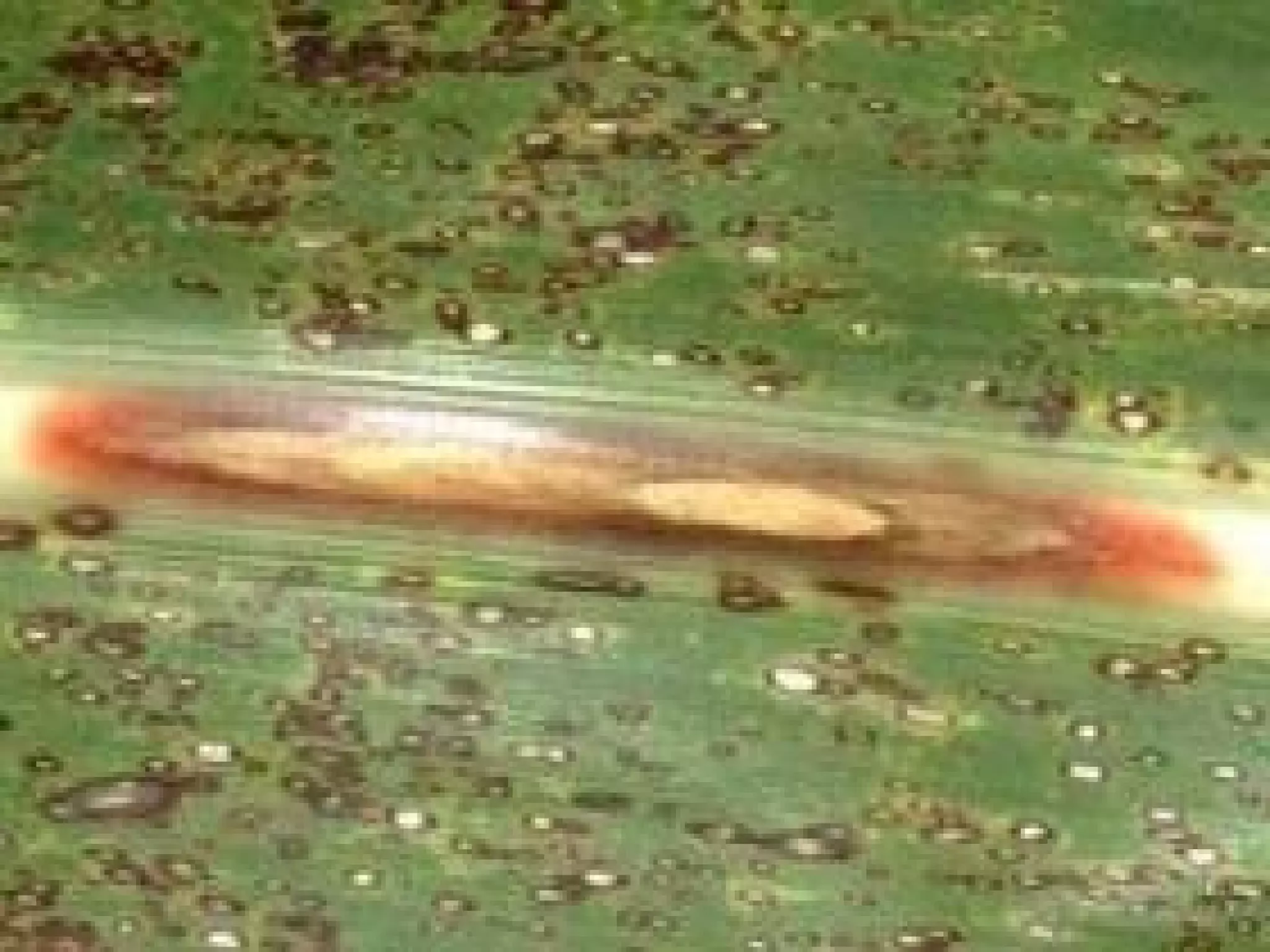
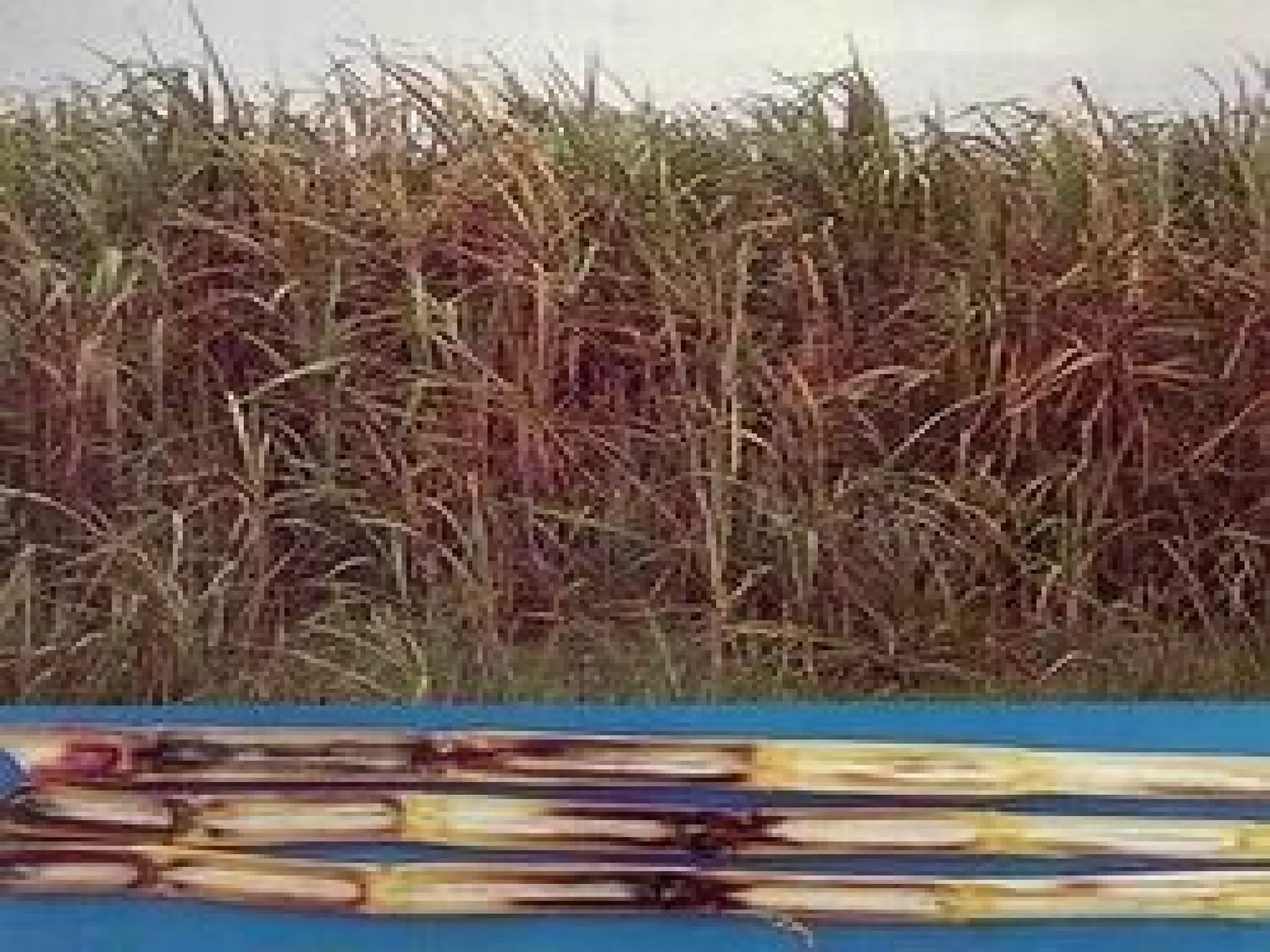
Symptoms:
• Appear after rainy season when pl. growth
stop & sugar formation start
• Third leaf from top start - yellowing
• Later infected cane – shriveled
• Rind shrink
• Cane light in weight & easily broken
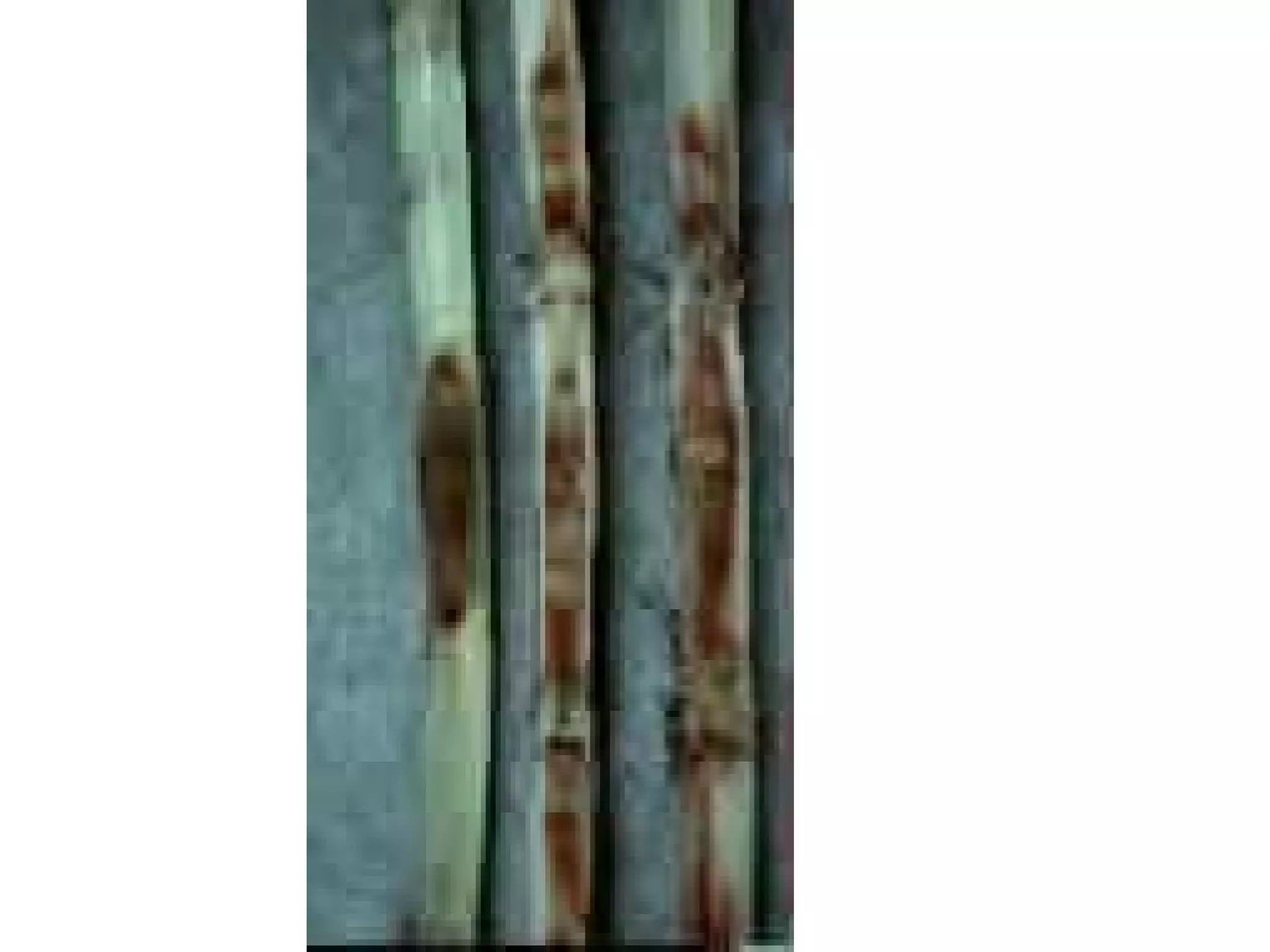
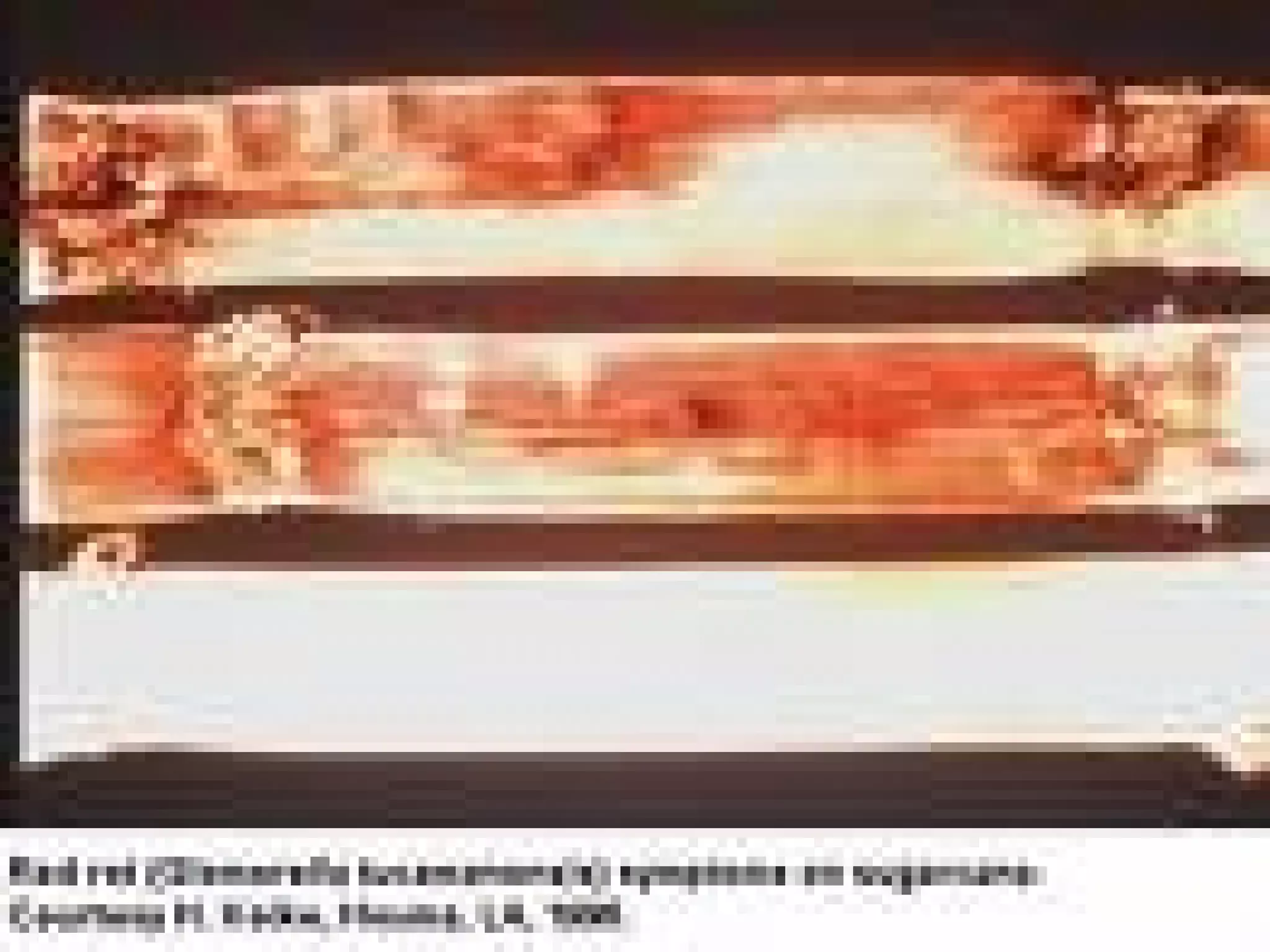
• Reddening of pith with clear area (white) running
• Pith cavity filled with grayish mycelium
• Juce – bed odour & not set well on boiling
due to conversion of sucrose into glucose
• Low quality sugar- conversion into alcohal
• Minute dot like structure (acervuli) near the
diseased node
Pathogen – Colletotrichum falcatum (I. P)
Glomerella tucumanensis (P. S)
• Muddy red color – absorbed by pith – so called red rot
• Pathogen survive in setts / seed canes , infected
stubbles and soil as Chlamydospore
• Disease is soil & seed borne
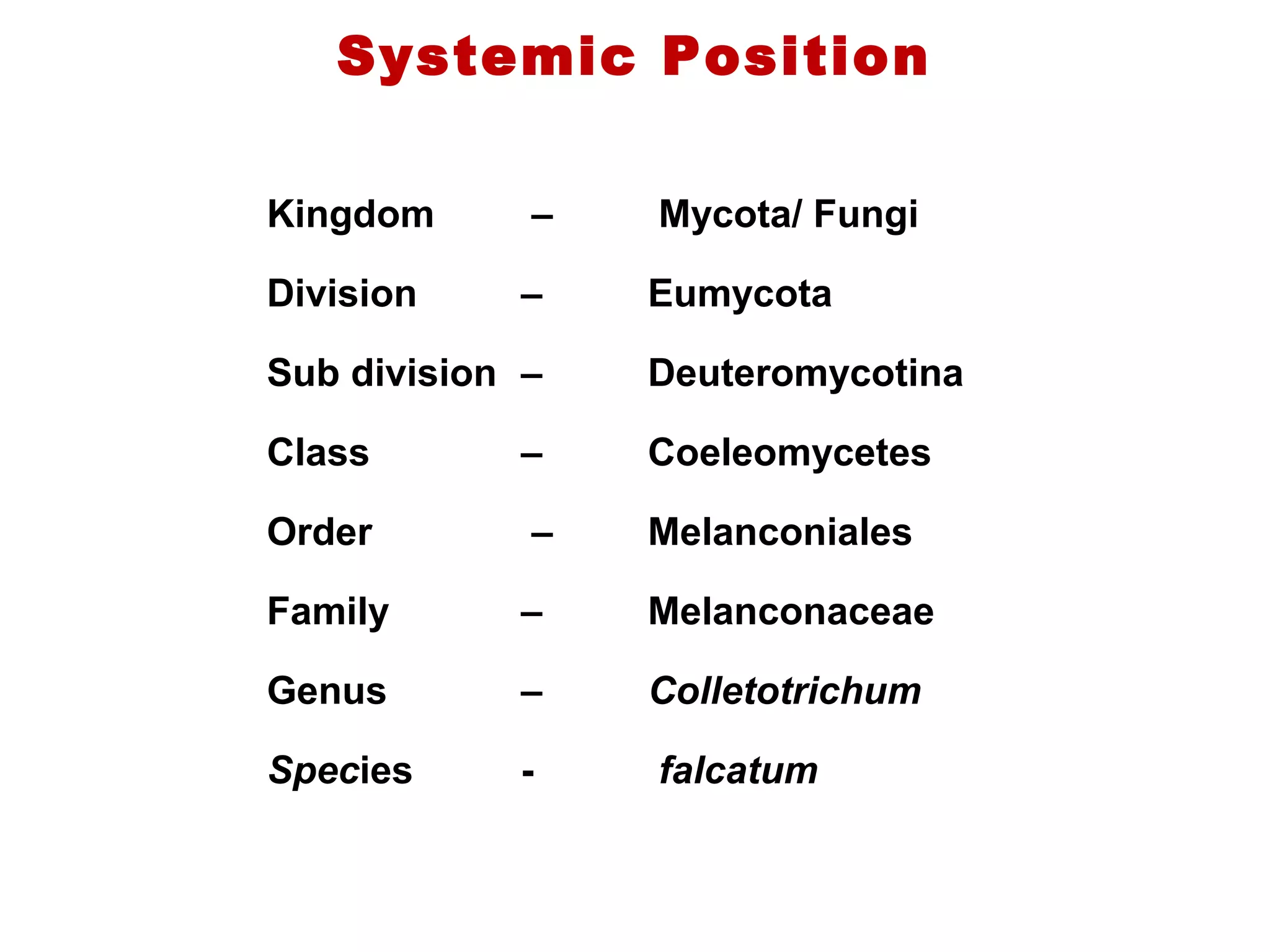
Systemic Position
Kingdom – Mycota/ Fungi
Division – Eumycota
Sub division – Deuteromycotina
Class – Coeleomycetes
Order – Melanconiales
Family – Melanconaceae
Genus – Colletotrichum
Species - falcatum
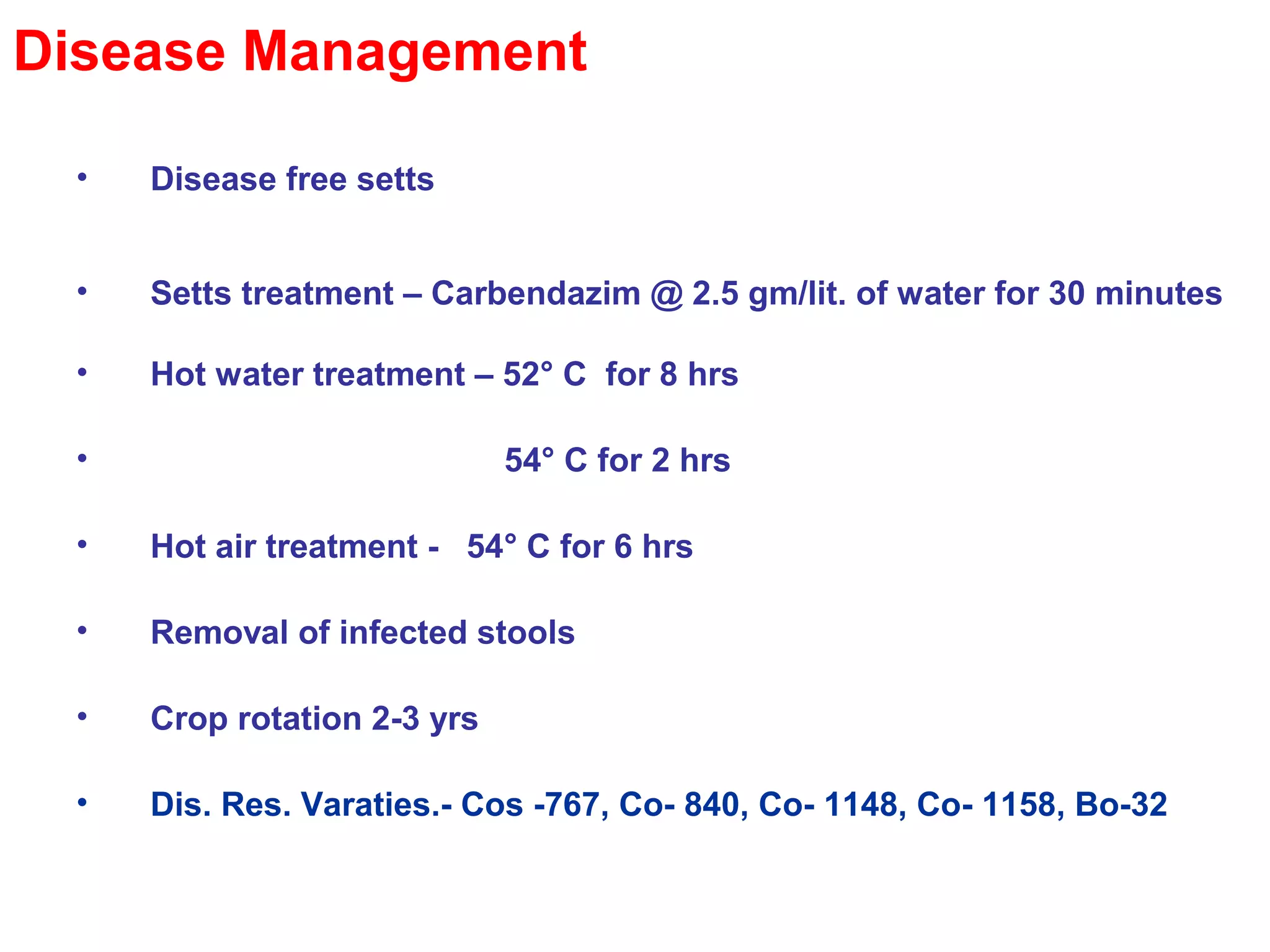
Disease Management
• Disease free setts
• Setts treatment – Carbendazim @ 2.5 gm/lit. of water for 30 minutes
• Hot water treatment – 52° C for 8 hrs
• 54° C for 2 hrs
• Hot air treatment - 54° C for 6 hrs
• Removal of infected stools
• Crop rotation 2-3 yrs
• Dis. Res. Varaties.- Cos -767, Co- 840, Co- 1148, Co- 1158, Bo-32
Thank You

Red rot of sugarcane

  • 1.
    RED ROT OFSUGARCANE DR. RAJBIR SINGH Assistant Professor Department of Plant Pathology Gochar Mahavidyalaya, Rampur Maniharan, Saharanpur (UP), India Affiliated to Ch. Charan Singh University, Meerut (UP), India Email: rajbir25805@yahoo.com, rajbirsingh2810@gmail.com Cell No. 91-9456613374
  • 2.
    Red Rot ofSugarcane Reported: • 1893 – by Went from Java • 1901 - by Barber from Godavari in India • Butler gave name – red rot • All sugarcane growing areas • Epidemic in 1939 – 40 in east UP & Bihar
  • 3.
    Symptoms: • Appear afterrainy season when pl. growth stop & sugar formation start • Third leaf from top start - yellowing • Later infected cane – shriveled • Rind shrink • Cane light in weight & easily broken • Reddening of pith with clear area (white) running
  • 4.
    • Pith cavityfilled with grayish mycelium • Juce – bed odour & not set well on boiling due to conversion of sucrose into glucose • Low quality sugar- conversion into alcohal • Minute dot like structure (acervuli) near the diseased node
  • 10.
    Pathogen – Colletotrichumfalcatum (I. P) Glomerella tucumanensis (P. S) • Muddy red color – absorbed by pith – so called red rot • Pathogen survive in setts / seed canes , infected stubbles and soil as Chlamydospore • Disease is soil & seed borne
  • 11.
    Systemic Position Kingdom –Mycota/ Fungi Division – Eumycota Sub division – Deuteromycotina Class – Coeleomycetes Order – Melanconiales Family – Melanconaceae Genus – Colletotrichum Species - falcatum
  • 12.
    Disease Management • Diseasefree setts • Setts treatment – Carbendazim @ 2.5 gm/lit. of water for 30 minutes • Hot water treatment – 52° C for 8 hrs • 54° C for 2 hrs • Hot air treatment - 54° C for 6 hrs • Removal of infected stools • Crop rotation 2-3 yrs • Dis. Res. Varaties.- Cos -767, Co- 840, Co- 1148, Co- 1158, Bo-32
  • 13.