Downloaded 151 times
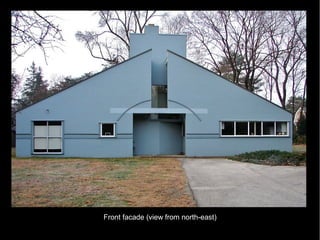
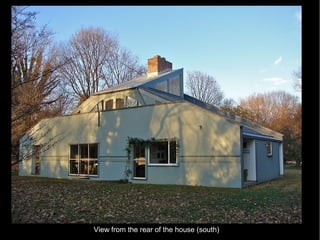
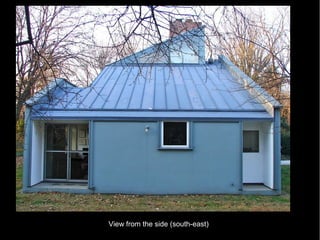
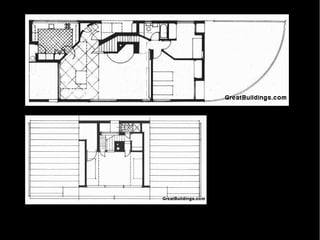
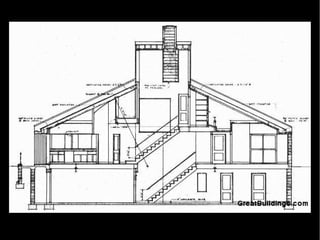
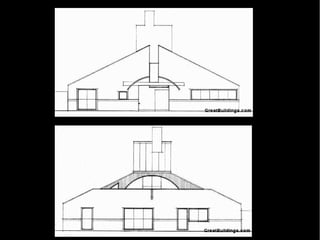
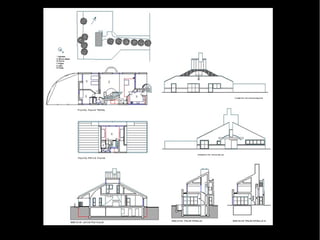
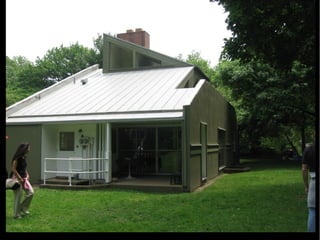
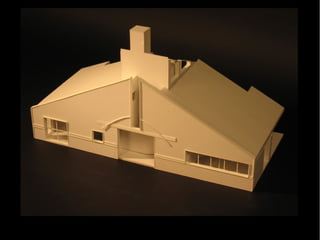
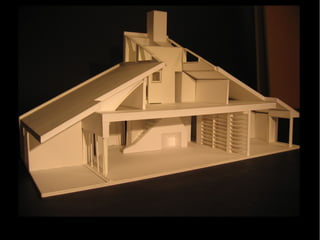



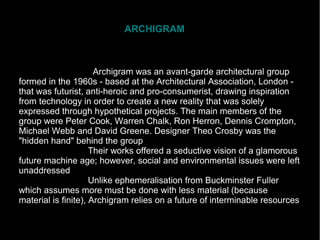


Postmodern architecture emerged in the 1950s as an international style that rejected the minimalism and functionalism of modernism in favor of ornamentation, stylistic eclecticism, and references to historical elements. It became a movement in the late 1970s that continues to influence today's architecture. Postmodern buildings feature diverse aesthetics where styles collide and forms are adopted for their own visual interest over strict functionality. Key figures like Robert Venturi promoted this approach through works like the Vanna Venturi House, which challenged modernist orthodoxy through its manipulated scale and symbolic elements. Experimental groups like Archigram proposed futuristic visions through hypothetical mega-structures and mobile cities that embraced technology and consumerism.


