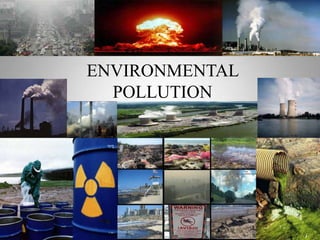
ENVIRONMENTAL
  POLLUTION
Pollution

  Pollution is the introduction of
     contaminants into a natural
      environment that causes
    instability, disorder, harm or
  discomfort to the ecosystem i.e.
physical systems or living organisms.
Types of pollution
Air Pollution
Water Pollution
Thermal Pollution
Soil Pollution
Radioactive Pollution
Air pollution

Imbalance in the quality of air so as
   to cause adverse affects on the
 living organisms existing on earth.
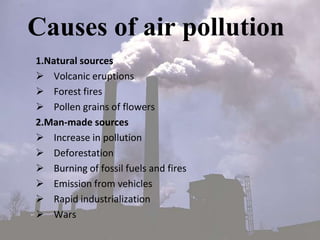
Causes of air pollution
1.Natural sources
 Volcanic eruptions
 Forest fires
 Pollen grains of flowers
2.Man-made sources
 Increase in pollution
 Deforestation
 Burning of fossil fuels and fires
 Emission from vehicles
 Rapid industrialization
 Wars
Control Measures
– Removal of pollutants
– Reduce sulphur content before burning
– Use of energy sources other than fossil fuels
– Legal measures from authorities
– Increased planting of vegetation
Water Pollution
– Contamination of water by addition of
  undesirable organic, inorganic or biological
  substances to water sources
– Natural sources: soil erosion, leaching of
  minerals from of rocks and decay matter.
– Industrial effluents
– Destroys ecosystem and effects human health
Sources of water pollution
• Community waste waters
• Industrial wastes
• Agricultural sources
• Under ground water pollution
• Marine pollution
• Thermal pollution
Control of water pollution
• Treatment of garbage and sewage.
• Chemical treatment.
• Reduction of temperature of waste water.
• Minimize the use of non - degradable
  pesticides.
• Proper enactment of laws by government.
Soil pollution
• Undesirable change in the
  physical, chemical or biological
  property which adversely affects its
  productivity
• Caused by dumping of
  wastes, agrochemicals and as
  indirect result of air pollution
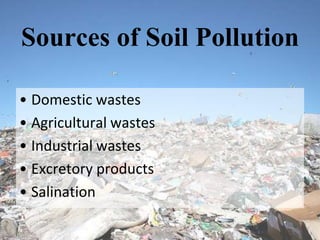
Sources of Soil Pollution

• Domestic wastes
• Agricultural wastes
• Industrial wastes
• Excretory products
• Salination
Control of soil pollution
• Proper disposal of industrial and
  agricultural wastes
• Recycling and recovery of materials
• Minimize the manufacture and use of
  chemical fertilizers
• Reduce the use of pesticides
Radioactive pollution
• Physical pollution that affects air, water and
  soil. Caused by ionizing radiations of harmful
  nature emitted from disintegrating atomic
  nuclei.
• The natural sources include cosmic rays that
  reaches the earth surface and radiations from
  radium 224, uranium 235 thorium 232 etc
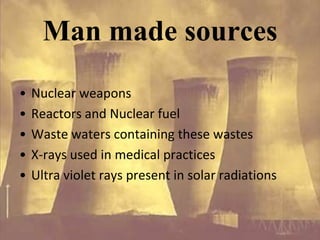
Man made sources
•   Nuclear weapons
•   Reactors and Nuclear fuel
•   Waste waters containing these wastes
•   X-rays used in medical practices
•   Ultra violet rays present in solar radiations
Effects
• Mutation
• Cancer
• Radioactive substances in food chain cause
  retarded growth and bone cancer.
• Increases infant mortality rate
Control measures
• Prevention of leakage of radioactive elements
  from nuclear reactors.
• Proper storage and disposal of nuclear wastes
• Regular monitoring
• Increasing the use of non harmful energy
  sources
Noise pollution
• Unwanted high pitch sound that pollutes the
  environment.
• Maximum tolerable intensity of sound is 85
  decibels
• The main sources are automobiles, aero
  planes, loudspeakers, industries and other
  electro-mechanical devices.
Effects of noise pollution
• Damage to ear drum and impairment to
  hearing.
• Damages heart, liver and brain
• Emotional disturbances and behavioral
  changes
• Leads to anxiety and stress
Control measures
• Design machines with minimum sound
• Proper lubrication maintenance of machines
  and installation of silencers.
• Use of sound absorbing materials
• Use of noise protective devices
Thermal Pollution

The term thermal pollution has been
  used to indicate the detrimental
     effects of heated effluents
discharged by various power plants.
Causes of thermal pollution

 Nuclear power plants
 Coal fired power plants
 Industrial effluents
 Domestic sewage
Control Measures

Cooling towers
Cooling ponds
Artificial lakes
Pollution

Pollution

  • 1.
  • 2.
    Pollution Pollutionis the introduction of contaminants into a natural environment that causes instability, disorder, harm or discomfort to the ecosystem i.e. physical systems or living organisms.
  • 3.
    Types of pollution AirPollution Water Pollution Thermal Pollution Soil Pollution Radioactive Pollution
  • 4.
    Air pollution Imbalance inthe quality of air so as to cause adverse affects on the living organisms existing on earth.
  • 5.
    Causes of airpollution 1.Natural sources  Volcanic eruptions  Forest fires  Pollen grains of flowers 2.Man-made sources  Increase in pollution  Deforestation  Burning of fossil fuels and fires  Emission from vehicles  Rapid industrialization  Wars
  • 6.
    Control Measures – Removalof pollutants – Reduce sulphur content before burning – Use of energy sources other than fossil fuels – Legal measures from authorities – Increased planting of vegetation
  • 7.
    Water Pollution – Contaminationof water by addition of undesirable organic, inorganic or biological substances to water sources – Natural sources: soil erosion, leaching of minerals from of rocks and decay matter. – Industrial effluents – Destroys ecosystem and effects human health
  • 8.
    Sources of waterpollution • Community waste waters • Industrial wastes • Agricultural sources • Under ground water pollution • Marine pollution • Thermal pollution
  • 9.
    Control of waterpollution • Treatment of garbage and sewage. • Chemical treatment. • Reduction of temperature of waste water. • Minimize the use of non - degradable pesticides. • Proper enactment of laws by government.
  • 10.
    Soil pollution • Undesirablechange in the physical, chemical or biological property which adversely affects its productivity • Caused by dumping of wastes, agrochemicals and as indirect result of air pollution
  • 11.
    Sources of SoilPollution • Domestic wastes • Agricultural wastes • Industrial wastes • Excretory products • Salination
  • 12.
    Control of soilpollution • Proper disposal of industrial and agricultural wastes • Recycling and recovery of materials • Minimize the manufacture and use of chemical fertilizers • Reduce the use of pesticides
  • 13.
    Radioactive pollution • Physicalpollution that affects air, water and soil. Caused by ionizing radiations of harmful nature emitted from disintegrating atomic nuclei. • The natural sources include cosmic rays that reaches the earth surface and radiations from radium 224, uranium 235 thorium 232 etc
  • 14.
    Man made sources • Nuclear weapons • Reactors and Nuclear fuel • Waste waters containing these wastes • X-rays used in medical practices • Ultra violet rays present in solar radiations
  • 15.
    Effects • Mutation • Cancer •Radioactive substances in food chain cause retarded growth and bone cancer. • Increases infant mortality rate
  • 16.
    Control measures • Preventionof leakage of radioactive elements from nuclear reactors. • Proper storage and disposal of nuclear wastes • Regular monitoring • Increasing the use of non harmful energy sources
  • 17.
    Noise pollution • Unwantedhigh pitch sound that pollutes the environment. • Maximum tolerable intensity of sound is 85 decibels • The main sources are automobiles, aero planes, loudspeakers, industries and other electro-mechanical devices.
  • 18.
    Effects of noisepollution • Damage to ear drum and impairment to hearing. • Damages heart, liver and brain • Emotional disturbances and behavioral changes • Leads to anxiety and stress
  • 19.
    Control measures • Designmachines with minimum sound • Proper lubrication maintenance of machines and installation of silencers. • Use of sound absorbing materials • Use of noise protective devices
  • 20.
    Thermal Pollution The termthermal pollution has been used to indicate the detrimental effects of heated effluents discharged by various power plants.
  • 21.
    Causes of thermalpollution Nuclear power plants Coal fired power plants Industrial effluents Domestic sewage
  • 22.