Environmental
Pollution
İlayda Guldursun
Pollution
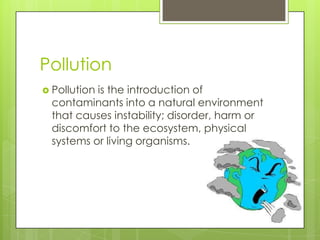
 Pollution

is the introduction of
contaminants into a natural environment
that causes instability; disorder, harm or
discomfort to the ecosystem, physical
systems or living organisms.
Types of Pollution
 Air

Pollution
 Water Pollution
 Thermal Pollution
 Soil Pollution
 Radioactive Pollution
The Importance of Air
 Other

planets have sunlight, but the Earth
is the only planet we know that has air
and water. Without air and water, the
Earth would be unable to sustain life.

Sustain: to continue
Air Pollution
 Air

pollution occurs when the air contains gases,
dust, fumes in harmful amounts. That is, amounts
which could be harmful to the health or comfort
of humans and animals or which could cause
damage to plants and materials.
Causes of Air Pollution
1-Natural Sources
 Volcanic eruptions
 Forest fires
 Pollen grains of
flower

2-Man-made
Sources
• Increase in
pollution
• Deforestation
• Burning of fossil
fuels and fires
• Wars
• Emission from
vehicles
Protecting Clean Water
 Dirty

water is the world's biggest health
risk, and continues to threaten both
quality of life and public health. When
water from rain and melting snow runs off
roofs and roads into our rivers, it picks up
toxic chemicals, dirt, trash.
Sources of Water Pollution
 Community

waste waters
 Industrial wastes
 Agricultural sources
 Under ground water pollution
 Thermal pollution
Soil Pollution
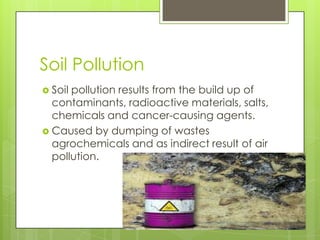
 Soil

pollution results from the build up of
contaminants, radioactive materials, salts,
chemicals and cancer-causing agents.
 Caused by dumping of wastes
agrochemicals and as indirect result of air
pollution.
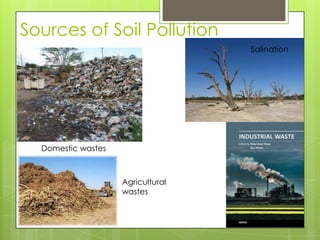
Sources of Soil Pollution
Salination

Domestic wastes

Agricultural
wastes
Control of Soil Pollution
 Proper

disposal od industrial wastes
 Recycling and recovery of materials
 Minimize the manufacture and use od
chemical fertilizers
Radioactive Pollution
 It

is the physical pollution of air, water and
land through nuclear materials.
Radioactive materials that cause pollution
may be materials from commercial or
laboratory processes.
Sources
1-Man made Sources
 Nuclear weapons
 Reactors and nuclear fuel
 Waste waters containing these wastes
 X-rays used in medical practices
Effects
 Mutation
 Cancer
 Increases

infant mortality rate
Noise Pollution
 Unwanted

high pitch sound that pollutes
the environment.
 Maximum tolerable intensity of sound is 85
decibels
Sources
 The

main sources are automobiles, aero
planes, loudspeakers, industries and other
electro mechanical devices.
Effects of Noise Pollution
 Damage

to ear drum and impairment to

hearing.
 Damages heart, liver and brain
Thermal Pollution
 The

term thermal pollution has been used
to indicate the detrimental effects of
heated effluents.
Causes of Thermal Pollution
 Nuclear

power plants
 Coal fired power plants
 Industrial effluents
 Domestic sewage
Control Measures
 Cooling

towers
 Cooling ponds
 Artificial lakes

Environment Pollution

  • 1.
  • 2.
    Pollution  Pollution is theintroduction of contaminants into a natural environment that causes instability; disorder, harm or discomfort to the ecosystem, physical systems or living organisms.
  • 3.
    Types of Pollution Air Pollution  Water Pollution  Thermal Pollution  Soil Pollution  Radioactive Pollution
  • 4.
    The Importance ofAir  Other planets have sunlight, but the Earth is the only planet we know that has air and water. Without air and water, the Earth would be unable to sustain life. Sustain: to continue
  • 5.
    Air Pollution  Air pollutionoccurs when the air contains gases, dust, fumes in harmful amounts. That is, amounts which could be harmful to the health or comfort of humans and animals or which could cause damage to plants and materials.
  • 6.
    Causes of AirPollution 1-Natural Sources  Volcanic eruptions  Forest fires  Pollen grains of flower 2-Man-made Sources • Increase in pollution • Deforestation • Burning of fossil fuels and fires • Wars • Emission from vehicles
  • 7.
    Protecting Clean Water Dirty water is the world's biggest health risk, and continues to threaten both quality of life and public health. When water from rain and melting snow runs off roofs and roads into our rivers, it picks up toxic chemicals, dirt, trash.
  • 8.
    Sources of WaterPollution  Community waste waters  Industrial wastes  Agricultural sources  Under ground water pollution  Thermal pollution
  • 9.
    Soil Pollution  Soil pollutionresults from the build up of contaminants, radioactive materials, salts, chemicals and cancer-causing agents.  Caused by dumping of wastes agrochemicals and as indirect result of air pollution.
  • 10.
    Sources of SoilPollution Salination Domestic wastes Agricultural wastes
  • 11.
    Control of SoilPollution  Proper disposal od industrial wastes  Recycling and recovery of materials  Minimize the manufacture and use od chemical fertilizers
  • 12.
    Radioactive Pollution  It isthe physical pollution of air, water and land through nuclear materials. Radioactive materials that cause pollution may be materials from commercial or laboratory processes.
  • 13.
    Sources 1-Man made Sources Nuclear weapons  Reactors and nuclear fuel  Waste waters containing these wastes  X-rays used in medical practices
  • 14.
    Effects  Mutation  Cancer Increases infant mortality rate
  • 15.
    Noise Pollution  Unwanted highpitch sound that pollutes the environment.  Maximum tolerable intensity of sound is 85 decibels
  • 16.
    Sources  The main sourcesare automobiles, aero planes, loudspeakers, industries and other electro mechanical devices.
  • 17.
    Effects of NoisePollution  Damage to ear drum and impairment to hearing.  Damages heart, liver and brain
  • 18.
    Thermal Pollution  The termthermal pollution has been used to indicate the detrimental effects of heated effluents.
  • 19.
    Causes of ThermalPollution  Nuclear power plants  Coal fired power plants  Industrial effluents  Domestic sewage
  • 20.
    Control Measures  Cooling towers Cooling ponds  Artificial lakes