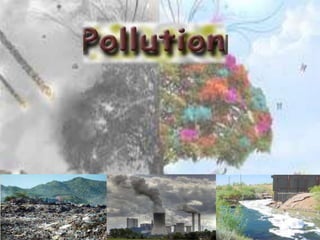
POLLUTION
Types of pollution
Land pollution
Air pollution
Water pollution
Noise pollution
Visual pollution
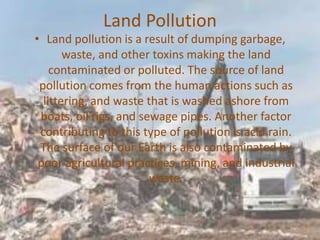
Land Pollution
• Land pollution is a result of dumping garbage,
waste, and other toxins making the land
contaminated or polluted. The source of land
pollution comes from the human actions such as
littering, and waste that is washed ashore from
boats, oil rigs, and sewage pipes. Another factor
contributing to this type of pollution is acid rain.
The surface of our Earth is also contaminated by
poor agricultural practices, mining, and industrial
waste.
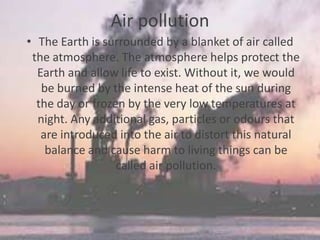
Air pollution
• The Earth is surrounded by a blanket of air called
the atmosphere. The atmosphere helps protect the
Earth and allow life to exist. Without it, we would
be burned by the intense heat of the sun during
the day or frozen by the very low temperatures at
night. Any additional gas, particles or odours that
are introduced into the air to distort this natural
balance and cause harm to living things can be
called air pollution.
Water pollution
• Water pollution is the contamination of water
bodies (e.g. lakes, rivers, oceans, aquifers and
groundwater), very often by human activities.
Water pollution occurs when pollutants are
discharged directly or indirectly into water bodies
without enough treatment to get rid of harmful
compounds. Pollutants get into water mainly by
human causes or factors.
How can it effect the earth?
• Pollution, contamination of Earth’s environment
with materials that interfere with human health,
the quality of life, or the natural functioning of
ecosystems (living organisms and their physical
surroundings). Although some environmental
pollution is a result of natural causes such as
volcanic eruptions, most is caused by human
activities.
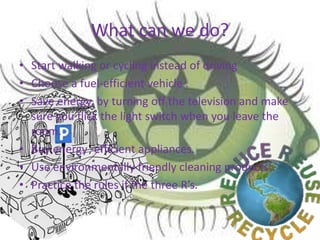
What can we do?
• Start walking or cycling instead of driving
• Choose a fuel-efficient vehicle .
• Save energy, by turning off the television and make
sure you flick the light switch when you leave the
room.
• Buy energy -efficient appliances.
• Use environmentally friendly cleaning products.
• Practice the rules if the three R’s.
Pollution science school project

Pollution science school project

  • 1.
  • 2.
    Types of pollution Landpollution Air pollution Water pollution Noise pollution Visual pollution
  • 3.
    Land Pollution • Landpollution is a result of dumping garbage, waste, and other toxins making the land contaminated or polluted. The source of land pollution comes from the human actions such as littering, and waste that is washed ashore from boats, oil rigs, and sewage pipes. Another factor contributing to this type of pollution is acid rain. The surface of our Earth is also contaminated by poor agricultural practices, mining, and industrial waste.
  • 4.
    Air pollution • TheEarth is surrounded by a blanket of air called the atmosphere. The atmosphere helps protect the Earth and allow life to exist. Without it, we would be burned by the intense heat of the sun during the day or frozen by the very low temperatures at night. Any additional gas, particles or odours that are introduced into the air to distort this natural balance and cause harm to living things can be called air pollution.
  • 5.
    Water pollution • Waterpollution is the contamination of water bodies (e.g. lakes, rivers, oceans, aquifers and groundwater), very often by human activities. Water pollution occurs when pollutants are discharged directly or indirectly into water bodies without enough treatment to get rid of harmful compounds. Pollutants get into water mainly by human causes or factors.
  • 6.
    How can iteffect the earth? • Pollution, contamination of Earth’s environment with materials that interfere with human health, the quality of life, or the natural functioning of ecosystems (living organisms and their physical surroundings). Although some environmental pollution is a result of natural causes such as volcanic eruptions, most is caused by human activities.
  • 7.
    What can wedo? • Start walking or cycling instead of driving • Choose a fuel-efficient vehicle . • Save energy, by turning off the television and make sure you flick the light switch when you leave the room. • Buy energy -efficient appliances. • Use environmentally friendly cleaning products. • Practice the rules if the three R’s.