Polio Virus:-
Name:- Ashwin Vijayan
Grp:- 3_50
General Information
 A poliovirus, the causative agent of polio (also known as poliomyelitis), is
a serotype of the species Enterovirus C, in the family
of Picornaviridae. There are three poliovirus serotypes: types 1, 2, and 3.
 Poliovirus is composed of an RNA genome and a protein capsid. The
genome is a single-stranded positive-sense RNA (+ssRNA) genome that is
about 7500 nucleotides long. The viral particle is about 30 nm in diameter
with icosahedral symmetry. Because of its short genome and its simple
composition—only RNA and a nonenveloped icosahedral protein coat
that encapsulates it—poliovirus is widely regarded as the simplest
significant virus.
Taxonomy
 Kingdom : Orthornavirae
 Phylum : Pisuviricota
 Class : Pisoniviricetes
 Order : Picornavirales
 Family : Picornaviridae
 Genus : Enterovirus
 Species : Enterovirus C.
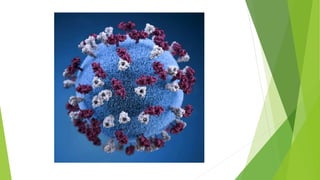
Morphology
 Poliovirus was the first animal virus to be purified and
obtained in crystalline form.
 The viruses are spherical particles about 27nm in
diameter.
 The virion is composed of 60 subunits,each containing
of 4 viral proteins.(VP-1 —VP-4).
 The viral genome is single-stranded positive-sense RNA
.
Replication cycle
 Poliovirus infects human cells by binding to an immunoglobulin-like
receptor, CD155 (also known as the poliovirus receptor or PVR) on the
cell surface.
 Interaction of poliovirus and CD155 facilitates an irreversible
conformational change of the viral particle necessary for viral entry.
 Following attachment to the host cell membrane, entry of the viral nucleic
acid was thought to occur one of two ways: via the formation of a pore in
the plasma membrane through which the RNA is then “injected” into the
host cell cytoplasm, or via virus uptake by receptor-mediated
endocytosis.
 Recent experimental evidence supports the latter hypothesis and
suggests that poliovirus binds to CD155 and is taken up by endocytosis.
Immediately after internalization of the particle, the viral RNA is released.
 After translation, transcription and genome replication which involve a
single process, synthesis of (+) RNA) is realized. For the infecting
(+)RNA to be replicated, multiple copies of (−)RNA must be transcribed
and then used as templates for (+)RNA synthesis. Replicative
intermediates (RIs), which are an association of RNA molecules
consisting of a template RNA and several growing RNAs of varying
length, are seen in both the replication complexes for (−)RNAs and
(+)RNAs.
 For synthesis of each negative-strand and positive-strand RNAs, VPg
protein in the poliovirus works as a primer. RNA-dependent RNA
polymerase of the poliovirus adds two uracil nucleotides (UU) to VPg
protein utilizing the poly(A) tail at the 3′-end of the +ssRNA genome as a
pattern for synthesis of the negative-strand antigenomic RNA. To initiate
this −ssRNA synthesis, the tyrosine hydroxyl of VPg is needed. But for
the initiation of positive strand RNA synthesis, CRE-dependent VPg
uridylation is needed.
 Which means that VPg is once more utilized as a primer however this
time it adds the two uridine triphosphates using a cis-acting replication
element (CRE) as a template.
Origin and serotypes
 Poliovirus is structurally similar to other human enteroviruses
(coxsackieviruses, echoviruses, and rhinoviruses), which also use
immunoglobulin-like molecules to recognize and enter host cells.
 Phylogenetic analysis of the RNA and protein sequences of poliovirus
suggests that it may have evolved from a C-cluster Coxsackie A
virus ancestor, that arose through a mutation within the capsid.
 The distinct speciation of poliovirus probably occurred as a result of a
change in cellular receptor specificity from intercellular adhesion
molecule-1 (ICAM-1), used by C-cluster Coxsackie A viruses, to CD155;
leading to a change in pathogenicity, and allowing the virus to infect
nervous tissue.
 The mutation rate in the virus is relatively high even for an RNA virus with a
synonymous substitution rate of 1.0 x 10⁻² substitutions/site/year and non
synonymous substitution rate of 3.0 x 10⁻⁴ substitutions/site/year. Base
distribution within the genome is not random with adenosine being less
common than expected at the 5' end and higher at the 3' end. Codon use is not
random with codons ending in adenosine being favored and those ending
in cytosine or guanine being avoided. Codon use differs between the three
genotypes and appears to be driven by mutation rather than selection.
 The three serotypes of poliovirus, PV-1, PV-2, and PV-3, each have a slightly
different capsid protein. Capsid proteins define cellular receptor specificity and
virus antigenicity. PV-1 is the most common form encountered in nature, but all
three forms are extremely infectious. As of March 2020, wild PV-1 is highly
localized to regions in Pakistan and Afghanistan. Certification of the eradication
of indigenous transmission occurred in September 2015 for wild PV-2, after last
being detected in 1999, and in October 2019 for wild PV-3, after last being
detected in 2012.
Pathogenesis
 The primary determinant of infection for any virus is its ability to
enter a cell and produce additional infectious particles. The
presence of CD155 is thought to define the animals and tissues that
can be infected by poliovirus. CD155 is found (outside of
laboratories) only on the cells of humans, higher primates, and Old
World monkeys. Poliovirus is, however, strictly a human pathogen,
and does not naturally infect any other species
(although chimpanzees and Old World monkeys can be
experimentally infected).
 The CD155 gene appears to have been subject to positive
selection. The protein has several domains of which domain D1
contains the polio virus binding site. Within this domain, 37 amino
acids are responsible for binding the virus.
 Poliovirus is an enterovirus. Infection occurs via the fecal–oral route,
meaning that one ingests the virus and viral replication occurs in
the gastrointestinal tract. Virus is shed in the feces of infected individuals.
In 95% of cases only a primary, transient presence of viremia (virus in the
bloodstream) occurs, and the poliovirus infection is asymptomatic. In
about 5% of cases, the virus spreads and replicates in other sites such
as brown fat, reticuloendothelial tissue, and muscle. The sustained viral
replication causes secondary viremia and leads to the development of
minor symptoms such as fever, headache, and sore throat. Paralytic
poliomyelitis occurs in less than 1% of poliovirus infections. Paralytic
disease occurs when the virus enters the central nervous system (CNS)
and replicates in motor neurons within the spinal cord, brain stem,
or motor cortex, resulting in the selective destruction of motor neurons
leading to temporary or permanent paralysis. This is a very rare event in
babies, who still have anti-poliovirus antibodies acquired from their
mothers. In rare cases, paralytic poliomyelitis leads to respiratory
arrest and death. In cases of paralytic disease, muscle pain and spasms
are frequently observed prior to onset of weakness and paralysis.
Paralysis typically persists from days to weeks prior to recovery.
 In many respects, the neurological phase of infection is thought to be an
accidental diversion of the normal gastrointestinal infection. The mechanisms
by which poliovirus enters the CNS are poorly understood. Three nonmutual
exclusive hypotheses have been suggested to explain its entry. All theories
require primary viremia. The first hypothesis predicts that virions pass directly
from the blood into the central nervous system by crossing the blood–brain
barrier independent of CD155. A second hypothesis suggests that the virions
are transported from peripheral tissues that have been bathed in the viremic
blood, for example muscle tissue, to the spinal cord through nerve pathways
via retrograde axonal transport. A third hypothesis is that the virus is imported
into the CNS via infected monocytes or macrophages.
 Poliomyelitis is a disease of the central nervous system. However, CD155 is
believed to be present on the surface of most or all human cells. Therefore,
receptor expression does not explain why poliovirus preferentially infects
certain tissues. This suggests that tissue tropism is determined after cellular
infection. Recent work has suggested that the type I interferon response
(specifically that of interferon alpha and beta) is an important factor that defines
which types of cells support poliovirus replication. In mice expressing CD155
(through genetic engineering) but lacking the type I interferon receptor,
poliovirus not only replicates in an expanded repertoire of tissue types, but
these mice are also able to be infected orally with the virus.
Immune system avoidance
 Poliovirus uses two key mechanisms to evade the immune system. First, it can survive
the highly acidic conditions of the stomach, allowing the virus to infect the host and
spread throughout the body via the lymphatic system. Second, because it can replicate
very quickly, the virus overwhelms the host organs before an immune response can be
mounted. If detail is given at the attachment phase; poliovirus with canyons on the virion
surface have virus attachment sites located in pockets at the canyon bases. The canyons
are too narrow for access by antibodies, so the virus attachment sites are protected from
the host's immune surveillance, while the remainder of the virion surface can mutate to
avoid the host's immune response.
 Individuals who are exposed to poliovirus, either through infection or
by immunization with polio vaccine, develop immunity. In immune
individuals, antibodies against poliovirus are present in the tonsils and gastrointestinal
tract (specifically IgA antibodies) and are able to block poliovirus
replication; IgG and IgM antibodies against poliovirus can prevent the spread of the virus
to motor neurons of the central nervous system. Infection with one serotype of poliovirus
does not provide immunity against the other serotypes; however, second attacks within
the same individual are extremely rare.
Laboratory Diagnosis
 Specimens- Stool, throat swab and
cerebrospinal fluid (CSF) are the specimens
used for isolation of the virus.Viruses can be
isolated from faeces for more than 30days
during the illness and from the throat swab
during the illness and from throat swab during
first few days of the illness. The viruses is
rarely isolated from CSF specimens.
 Microscopy- Microscopy of the CSF shows a
predominantly lymphocytic pleocytosis.
 Isolation of the Virus-
 Cell culture – Virus isolation from faeces and
throat swab is carried out by cultivation on
monkey kidney,human amnion,HeLa,Hep-2
,Buffalo green kidney and other cultures.
 The cytopathic effects produced by the virus
are observed within 48hours.
 These consists of cell retraction,increased
refractivity ,cytoplasmic granularity and
nuclear pyknosis
 Identification of serotype is carried out by
performing neutralization test. Differentiation
of a wild virulent virus strain from that of an
attenuated vaccine strain can be done by
virulence test in the monkeys and by
performing polymerase chain reaction (PCR).
 Isolation of poliovirus from faeces does not
indicate a diagnosis of poliomyelitis, as large
numbers of asymptomatic illnesses are seen.
 Hence , isolation of polymyelitis virus from
feces needs to be interpreted carefully along
with clinical presentation of disease.
 SERODIAGNOSIS
 Serodiagnosis is based on demonstration of a fourfold
increase in the antibody titre of the serum collected at
the time of acute illness and the period of
convalescence. Neutralization or complement fixation
test is carried out to demonstrate antibodies.
Neutralizing antibodies appear early and are present
throughout life. However , serodiagnosis is less
frequently used for diagnosis of poliomyelitis .
Treatment and Prophylaxis
 There are no specific medications to treat polio. If you have paralytic
polio, you’ll receive physical therapy. If your breathing muscles are
weakened or paralyzed, you’ll need mechanical ventilation, a machine that
helps you breathe.
 You might be able to improve your symptoms by:
• Drinking fluids (such as water, juice and broth).
• Using heat packs to help muscle aches.
• Taking pain relievers, such as ibuprofen (Advil®, Motrin®).
• Doing physical therapy and any exercise recommended by your
healthcare provider.
• Getting plenty of rest.
Prevention
 The best way to prevent polio is to get vaccinated. Vaccination is usually
done in childhood. If you didn’t get vaccinated as a child or don’t know if
you did, ask your healthcare provider if you should get vaccinated.
 Recommended polio vaccination schedule
 Healthcare officials recommend four polio shots in childhood:
• First shot at 2 months old.
• Second shot at 4 months old.
• Third shot between 6 and 18 months old.
• Booster shot between 4 and 6 years old.
 If you’ve never been vaccinated for polio and it’s recommended you get
vaccinated as an adult, you’ll get three shots:
• Two doses one to two months apart.
• A third dose six to 12 months after the second.
Types of vaccines
 There are two types of polio vaccines: live-attenuated (oral) and inactive.
The inactive vaccine is used in most parts of the world, including the
Americas and Europe. The live vaccine is only used in parts of the world
where polio still occurs naturally.
 Inactivated polio vaccine
The inactive polio vaccine (IPV) contains poliovirus that’s been treated
(“killed”), so it can’t multiply anymore. It has an inactive version of polio
types 1, 2 and 3. IPV is given as a series of shots (injections). You can’t get
sick from an inactive vaccine or spread polio to others after getting it.
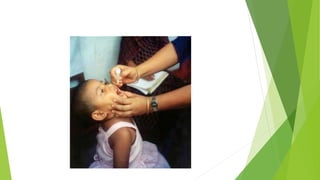
 Oral polio vaccine (live-attenuated)
Oral polio vaccines (OPV) use a live virus that’s been weakened (attenuated),
so it shouldn’t make you sick. OPV can contain one, two or all three types of
polio virus (monovalent, bivalent or trivalent vaccines). You get the vaccine
in a liquid that you swallow.
Poliovirus By Ashwin Vijayan.pptx

Poliovirus By Ashwin Vijayan.pptx

  • 1.
    Polio Virus:- Name:- AshwinVijayan Grp:- 3_50
  • 2.
    General Information  Apoliovirus, the causative agent of polio (also known as poliomyelitis), is a serotype of the species Enterovirus C, in the family of Picornaviridae. There are three poliovirus serotypes: types 1, 2, and 3.  Poliovirus is composed of an RNA genome and a protein capsid. The genome is a single-stranded positive-sense RNA (+ssRNA) genome that is about 7500 nucleotides long. The viral particle is about 30 nm in diameter with icosahedral symmetry. Because of its short genome and its simple composition—only RNA and a nonenveloped icosahedral protein coat that encapsulates it—poliovirus is widely regarded as the simplest significant virus.
  • 3.
    Taxonomy  Kingdom :Orthornavirae  Phylum : Pisuviricota  Class : Pisoniviricetes  Order : Picornavirales  Family : Picornaviridae  Genus : Enterovirus  Species : Enterovirus C.
  • 4.
    Morphology  Poliovirus wasthe first animal virus to be purified and obtained in crystalline form.  The viruses are spherical particles about 27nm in diameter.  The virion is composed of 60 subunits,each containing of 4 viral proteins.(VP-1 —VP-4).  The viral genome is single-stranded positive-sense RNA .
  • 7.
    Replication cycle  Poliovirusinfects human cells by binding to an immunoglobulin-like receptor, CD155 (also known as the poliovirus receptor or PVR) on the cell surface.  Interaction of poliovirus and CD155 facilitates an irreversible conformational change of the viral particle necessary for viral entry.  Following attachment to the host cell membrane, entry of the viral nucleic acid was thought to occur one of two ways: via the formation of a pore in the plasma membrane through which the RNA is then “injected” into the host cell cytoplasm, or via virus uptake by receptor-mediated endocytosis.  Recent experimental evidence supports the latter hypothesis and suggests that poliovirus binds to CD155 and is taken up by endocytosis. Immediately after internalization of the particle, the viral RNA is released.
  • 8.
     After translation,transcription and genome replication which involve a single process, synthesis of (+) RNA) is realized. For the infecting (+)RNA to be replicated, multiple copies of (−)RNA must be transcribed and then used as templates for (+)RNA synthesis. Replicative intermediates (RIs), which are an association of RNA molecules consisting of a template RNA and several growing RNAs of varying length, are seen in both the replication complexes for (−)RNAs and (+)RNAs.  For synthesis of each negative-strand and positive-strand RNAs, VPg protein in the poliovirus works as a primer. RNA-dependent RNA polymerase of the poliovirus adds two uracil nucleotides (UU) to VPg protein utilizing the poly(A) tail at the 3′-end of the +ssRNA genome as a pattern for synthesis of the negative-strand antigenomic RNA. To initiate this −ssRNA synthesis, the tyrosine hydroxyl of VPg is needed. But for the initiation of positive strand RNA synthesis, CRE-dependent VPg uridylation is needed.  Which means that VPg is once more utilized as a primer however this time it adds the two uridine triphosphates using a cis-acting replication element (CRE) as a template.
  • 9.
    Origin and serotypes Poliovirus is structurally similar to other human enteroviruses (coxsackieviruses, echoviruses, and rhinoviruses), which also use immunoglobulin-like molecules to recognize and enter host cells.  Phylogenetic analysis of the RNA and protein sequences of poliovirus suggests that it may have evolved from a C-cluster Coxsackie A virus ancestor, that arose through a mutation within the capsid.  The distinct speciation of poliovirus probably occurred as a result of a change in cellular receptor specificity from intercellular adhesion molecule-1 (ICAM-1), used by C-cluster Coxsackie A viruses, to CD155; leading to a change in pathogenicity, and allowing the virus to infect nervous tissue.
  • 10.
     The mutationrate in the virus is relatively high even for an RNA virus with a synonymous substitution rate of 1.0 x 10⁻² substitutions/site/year and non synonymous substitution rate of 3.0 x 10⁻⁴ substitutions/site/year. Base distribution within the genome is not random with adenosine being less common than expected at the 5' end and higher at the 3' end. Codon use is not random with codons ending in adenosine being favored and those ending in cytosine or guanine being avoided. Codon use differs between the three genotypes and appears to be driven by mutation rather than selection.  The three serotypes of poliovirus, PV-1, PV-2, and PV-3, each have a slightly different capsid protein. Capsid proteins define cellular receptor specificity and virus antigenicity. PV-1 is the most common form encountered in nature, but all three forms are extremely infectious. As of March 2020, wild PV-1 is highly localized to regions in Pakistan and Afghanistan. Certification of the eradication of indigenous transmission occurred in September 2015 for wild PV-2, after last being detected in 1999, and in October 2019 for wild PV-3, after last being detected in 2012.
  • 11.
    Pathogenesis  The primarydeterminant of infection for any virus is its ability to enter a cell and produce additional infectious particles. The presence of CD155 is thought to define the animals and tissues that can be infected by poliovirus. CD155 is found (outside of laboratories) only on the cells of humans, higher primates, and Old World monkeys. Poliovirus is, however, strictly a human pathogen, and does not naturally infect any other species (although chimpanzees and Old World monkeys can be experimentally infected).  The CD155 gene appears to have been subject to positive selection. The protein has several domains of which domain D1 contains the polio virus binding site. Within this domain, 37 amino acids are responsible for binding the virus.
  • 12.
     Poliovirus isan enterovirus. Infection occurs via the fecal–oral route, meaning that one ingests the virus and viral replication occurs in the gastrointestinal tract. Virus is shed in the feces of infected individuals. In 95% of cases only a primary, transient presence of viremia (virus in the bloodstream) occurs, and the poliovirus infection is asymptomatic. In about 5% of cases, the virus spreads and replicates in other sites such as brown fat, reticuloendothelial tissue, and muscle. The sustained viral replication causes secondary viremia and leads to the development of minor symptoms such as fever, headache, and sore throat. Paralytic poliomyelitis occurs in less than 1% of poliovirus infections. Paralytic disease occurs when the virus enters the central nervous system (CNS) and replicates in motor neurons within the spinal cord, brain stem, or motor cortex, resulting in the selective destruction of motor neurons leading to temporary or permanent paralysis. This is a very rare event in babies, who still have anti-poliovirus antibodies acquired from their mothers. In rare cases, paralytic poliomyelitis leads to respiratory arrest and death. In cases of paralytic disease, muscle pain and spasms are frequently observed prior to onset of weakness and paralysis. Paralysis typically persists from days to weeks prior to recovery.
  • 13.
     In manyrespects, the neurological phase of infection is thought to be an accidental diversion of the normal gastrointestinal infection. The mechanisms by which poliovirus enters the CNS are poorly understood. Three nonmutual exclusive hypotheses have been suggested to explain its entry. All theories require primary viremia. The first hypothesis predicts that virions pass directly from the blood into the central nervous system by crossing the blood–brain barrier independent of CD155. A second hypothesis suggests that the virions are transported from peripheral tissues that have been bathed in the viremic blood, for example muscle tissue, to the spinal cord through nerve pathways via retrograde axonal transport. A third hypothesis is that the virus is imported into the CNS via infected monocytes or macrophages.  Poliomyelitis is a disease of the central nervous system. However, CD155 is believed to be present on the surface of most or all human cells. Therefore, receptor expression does not explain why poliovirus preferentially infects certain tissues. This suggests that tissue tropism is determined after cellular infection. Recent work has suggested that the type I interferon response (specifically that of interferon alpha and beta) is an important factor that defines which types of cells support poliovirus replication. In mice expressing CD155 (through genetic engineering) but lacking the type I interferon receptor, poliovirus not only replicates in an expanded repertoire of tissue types, but these mice are also able to be infected orally with the virus.
  • 14.
    Immune system avoidance Poliovirus uses two key mechanisms to evade the immune system. First, it can survive the highly acidic conditions of the stomach, allowing the virus to infect the host and spread throughout the body via the lymphatic system. Second, because it can replicate very quickly, the virus overwhelms the host organs before an immune response can be mounted. If detail is given at the attachment phase; poliovirus with canyons on the virion surface have virus attachment sites located in pockets at the canyon bases. The canyons are too narrow for access by antibodies, so the virus attachment sites are protected from the host's immune surveillance, while the remainder of the virion surface can mutate to avoid the host's immune response.  Individuals who are exposed to poliovirus, either through infection or by immunization with polio vaccine, develop immunity. In immune individuals, antibodies against poliovirus are present in the tonsils and gastrointestinal tract (specifically IgA antibodies) and are able to block poliovirus replication; IgG and IgM antibodies against poliovirus can prevent the spread of the virus to motor neurons of the central nervous system. Infection with one serotype of poliovirus does not provide immunity against the other serotypes; however, second attacks within the same individual are extremely rare.
  • 15.
    Laboratory Diagnosis  Specimens-Stool, throat swab and cerebrospinal fluid (CSF) are the specimens used for isolation of the virus.Viruses can be isolated from faeces for more than 30days during the illness and from the throat swab during the illness and from throat swab during first few days of the illness. The viruses is rarely isolated from CSF specimens.
  • 16.
     Microscopy- Microscopyof the CSF shows a predominantly lymphocytic pleocytosis.  Isolation of the Virus-  Cell culture – Virus isolation from faeces and throat swab is carried out by cultivation on monkey kidney,human amnion,HeLa,Hep-2 ,Buffalo green kidney and other cultures.  The cytopathic effects produced by the virus are observed within 48hours.  These consists of cell retraction,increased refractivity ,cytoplasmic granularity and nuclear pyknosis
  • 17.
     Identification ofserotype is carried out by performing neutralization test. Differentiation of a wild virulent virus strain from that of an attenuated vaccine strain can be done by virulence test in the monkeys and by performing polymerase chain reaction (PCR).  Isolation of poliovirus from faeces does not indicate a diagnosis of poliomyelitis, as large numbers of asymptomatic illnesses are seen.  Hence , isolation of polymyelitis virus from feces needs to be interpreted carefully along with clinical presentation of disease.
  • 18.
     SERODIAGNOSIS  Serodiagnosisis based on demonstration of a fourfold increase in the antibody titre of the serum collected at the time of acute illness and the period of convalescence. Neutralization or complement fixation test is carried out to demonstrate antibodies. Neutralizing antibodies appear early and are present throughout life. However , serodiagnosis is less frequently used for diagnosis of poliomyelitis .
  • 19.
    Treatment and Prophylaxis There are no specific medications to treat polio. If you have paralytic polio, you’ll receive physical therapy. If your breathing muscles are weakened or paralyzed, you’ll need mechanical ventilation, a machine that helps you breathe.  You might be able to improve your symptoms by: • Drinking fluids (such as water, juice and broth). • Using heat packs to help muscle aches. • Taking pain relievers, such as ibuprofen (Advil®, Motrin®). • Doing physical therapy and any exercise recommended by your healthcare provider. • Getting plenty of rest.
  • 20.
    Prevention  The bestway to prevent polio is to get vaccinated. Vaccination is usually done in childhood. If you didn’t get vaccinated as a child or don’t know if you did, ask your healthcare provider if you should get vaccinated.  Recommended polio vaccination schedule  Healthcare officials recommend four polio shots in childhood: • First shot at 2 months old. • Second shot at 4 months old. • Third shot between 6 and 18 months old. • Booster shot between 4 and 6 years old.
  • 22.
     If you’venever been vaccinated for polio and it’s recommended you get vaccinated as an adult, you’ll get three shots: • Two doses one to two months apart. • A third dose six to 12 months after the second.
  • 23.
    Types of vaccines There are two types of polio vaccines: live-attenuated (oral) and inactive. The inactive vaccine is used in most parts of the world, including the Americas and Europe. The live vaccine is only used in parts of the world where polio still occurs naturally.  Inactivated polio vaccine The inactive polio vaccine (IPV) contains poliovirus that’s been treated (“killed”), so it can’t multiply anymore. It has an inactive version of polio types 1, 2 and 3. IPV is given as a series of shots (injections). You can’t get sick from an inactive vaccine or spread polio to others after getting it.  Oral polio vaccine (live-attenuated) Oral polio vaccines (OPV) use a live virus that’s been weakened (attenuated), so it shouldn’t make you sick. OPV can contain one, two or all three types of polio virus (monovalent, bivalent or trivalent vaccines). You get the vaccine in a liquid that you swallow.