Botanical insecticides and their future
perspectives
By,
Bharati Singh
Characteristics of botanical insecticides
• Fast breakdown, Fast action
• Phyto toxicity, selectivity
• IPM friendly, cost and availability

Just because a pesticide is natural, does not
mean it is safe
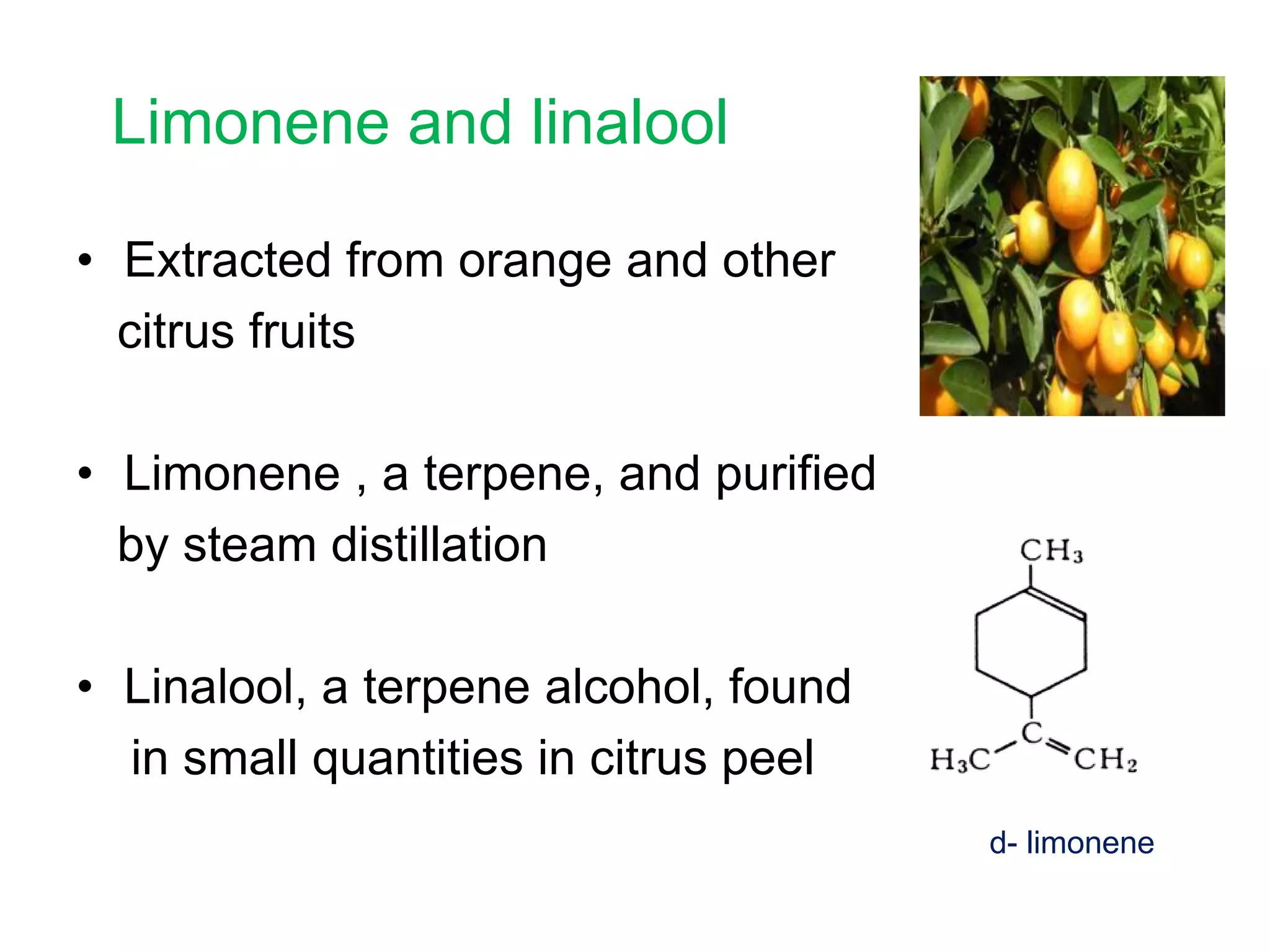
Limonene and linalool
• Extracted from orange and other
citrus fruits
• Limonene , a terpene, and purified
by steam distillation
• Linalool, a terpene alcohol, found
in small quantities in citrus peel
d- limonene
• Limonene often applied with PBO (pyperonil
butoxide)
• Target pests: Fleas, aphids, mites, flies, paper wasp
• Mode of action:

• Act as nerve toxin and stomach poisons(limnonene)
• Affects ion transport and release of acetyl choline
esterase(linalool)
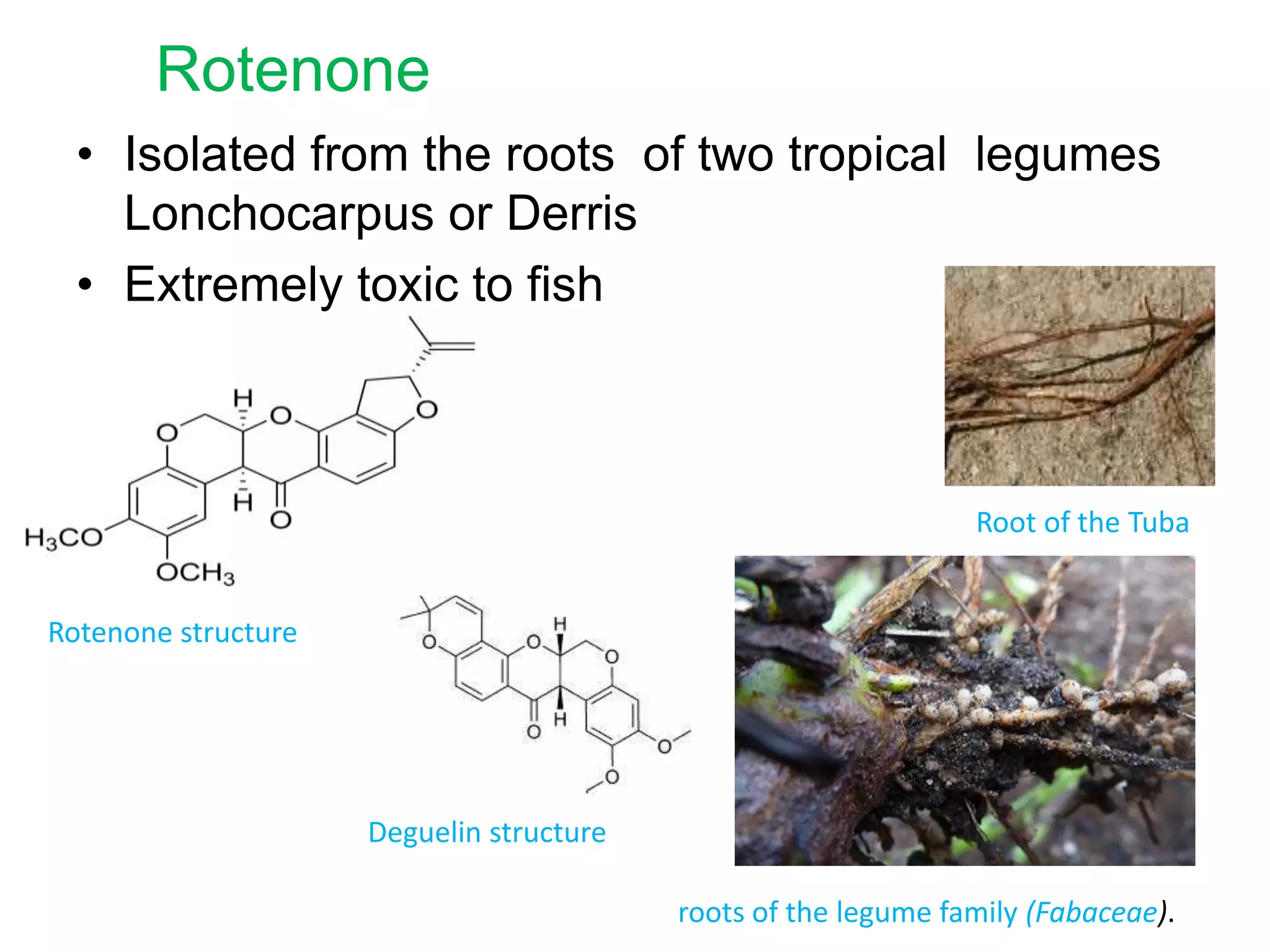
Rotenone
• Isolated from the roots of two tropical legumes
Lonchocarpus or Derris
• Extremely toxic to fish

Root of the Tuba
Rotenone structure

Deguelin structure
roots of the legume family (Fabaceae).
• Target pests: caterpillers, aphids, suckers and other
pests found in fruits and vegetables , certain beetles
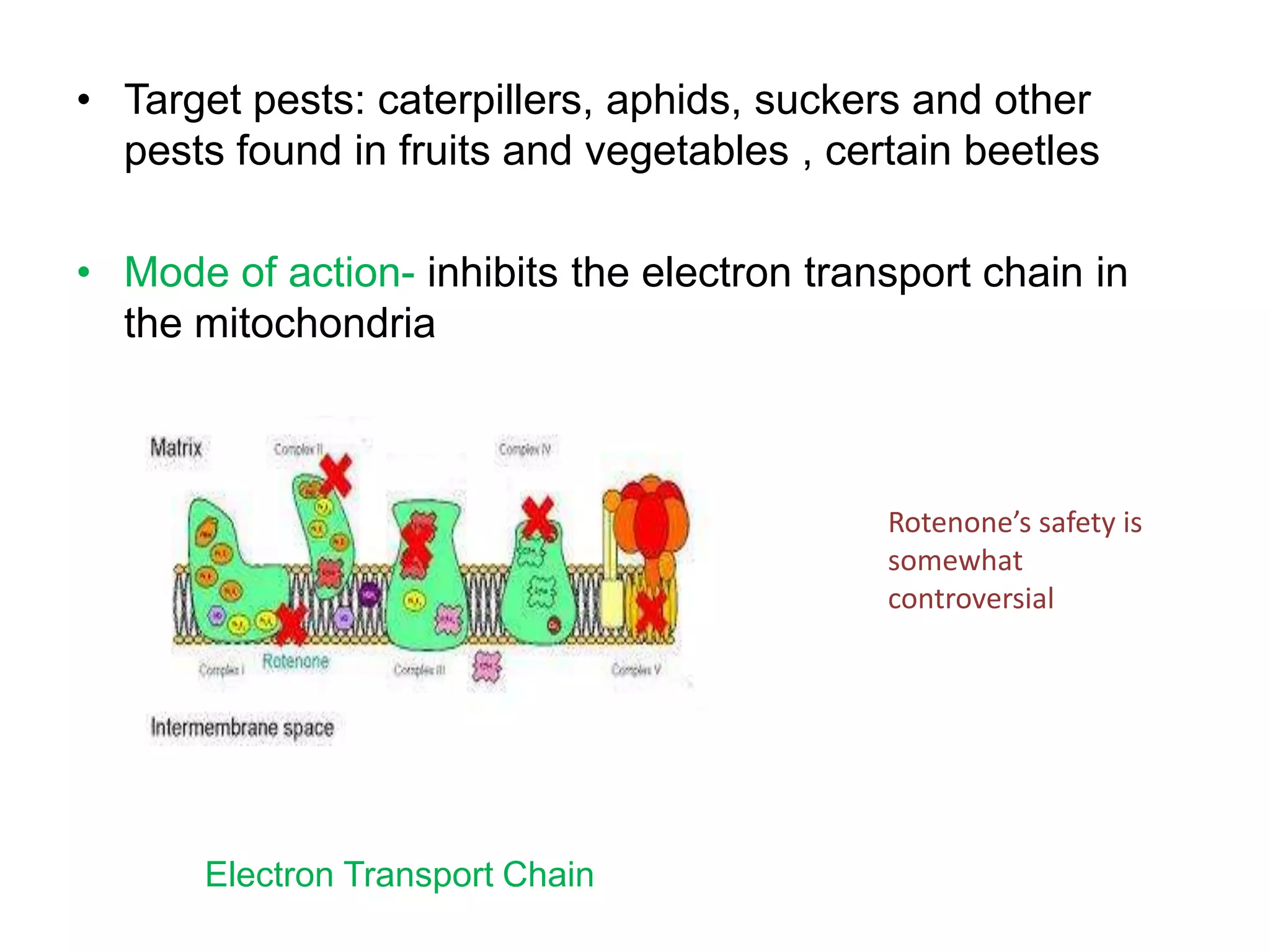
• Mode of action- inhibits the electron transport chain in
the mitochondria

Rotenone’s safety is
somewhat
controversial

Electron Transport Chain
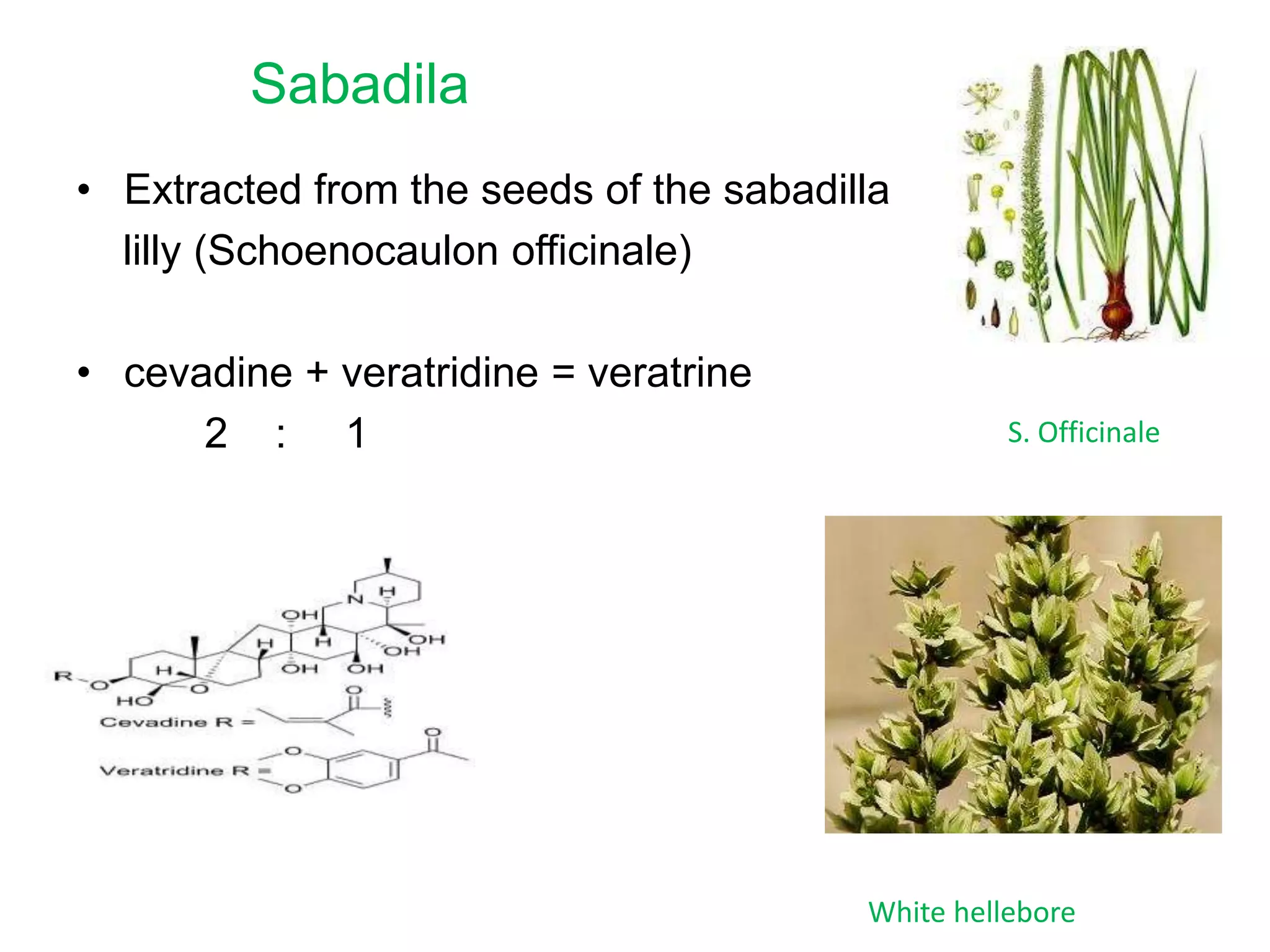
Sabadila
• Extracted from the seeds of the sabadilla
lilly (Schoenocaulon officinale)
• cevadine + veratridine = veratrine
2 : 1

S. Officinale

White hellebore
Mode of action
• Similar to that of the pyrethrins as it affects
the voltage dependent sodium channels of
nerve axons.
• Veratridine causes an increase in the duration
of the action potential
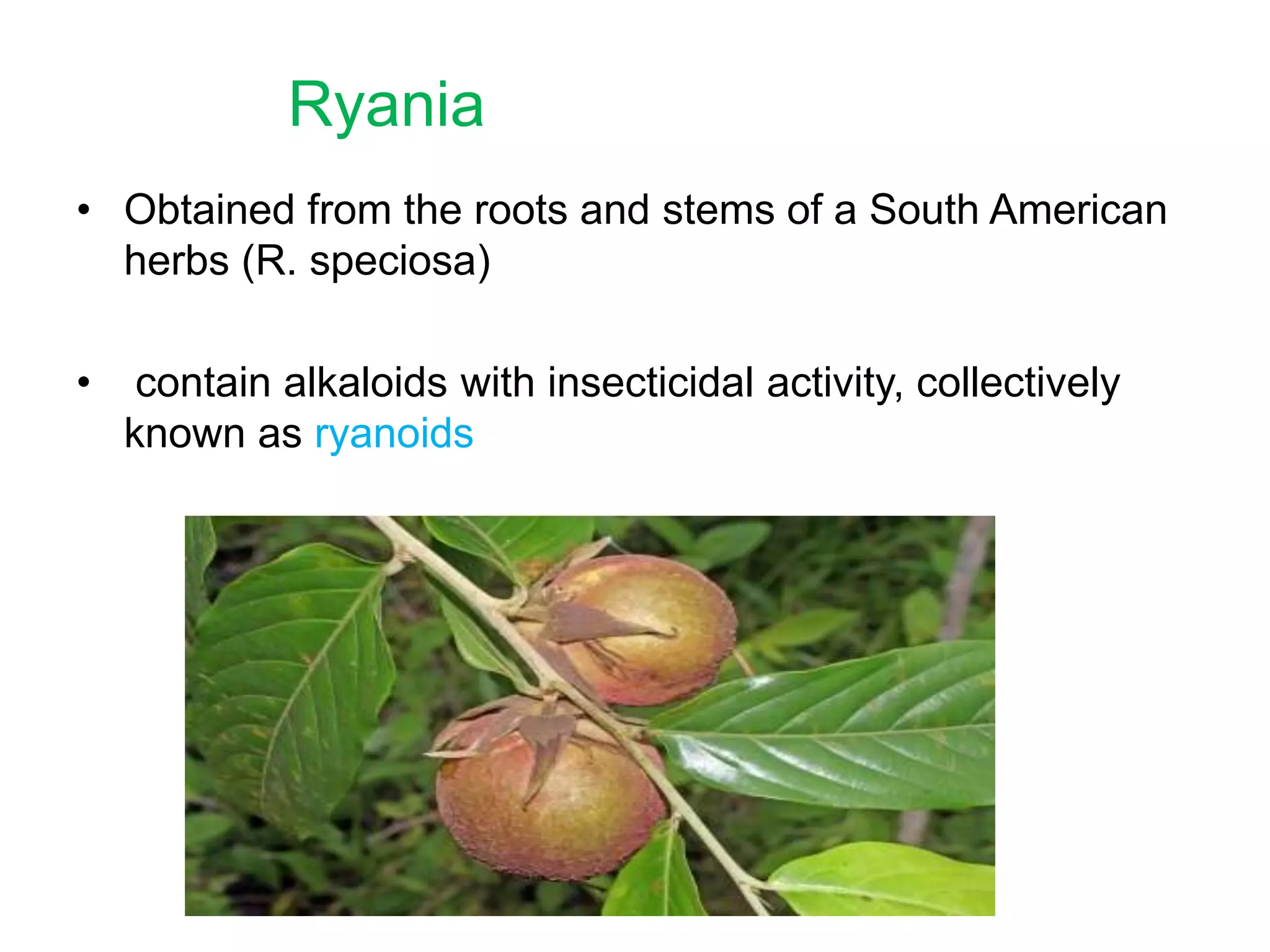
Ryania
• Obtained from the roots and stems of a South American
herbs (R. speciosa)
•

contain alkaloids with insecticidal activity, collectively
known as ryanoids
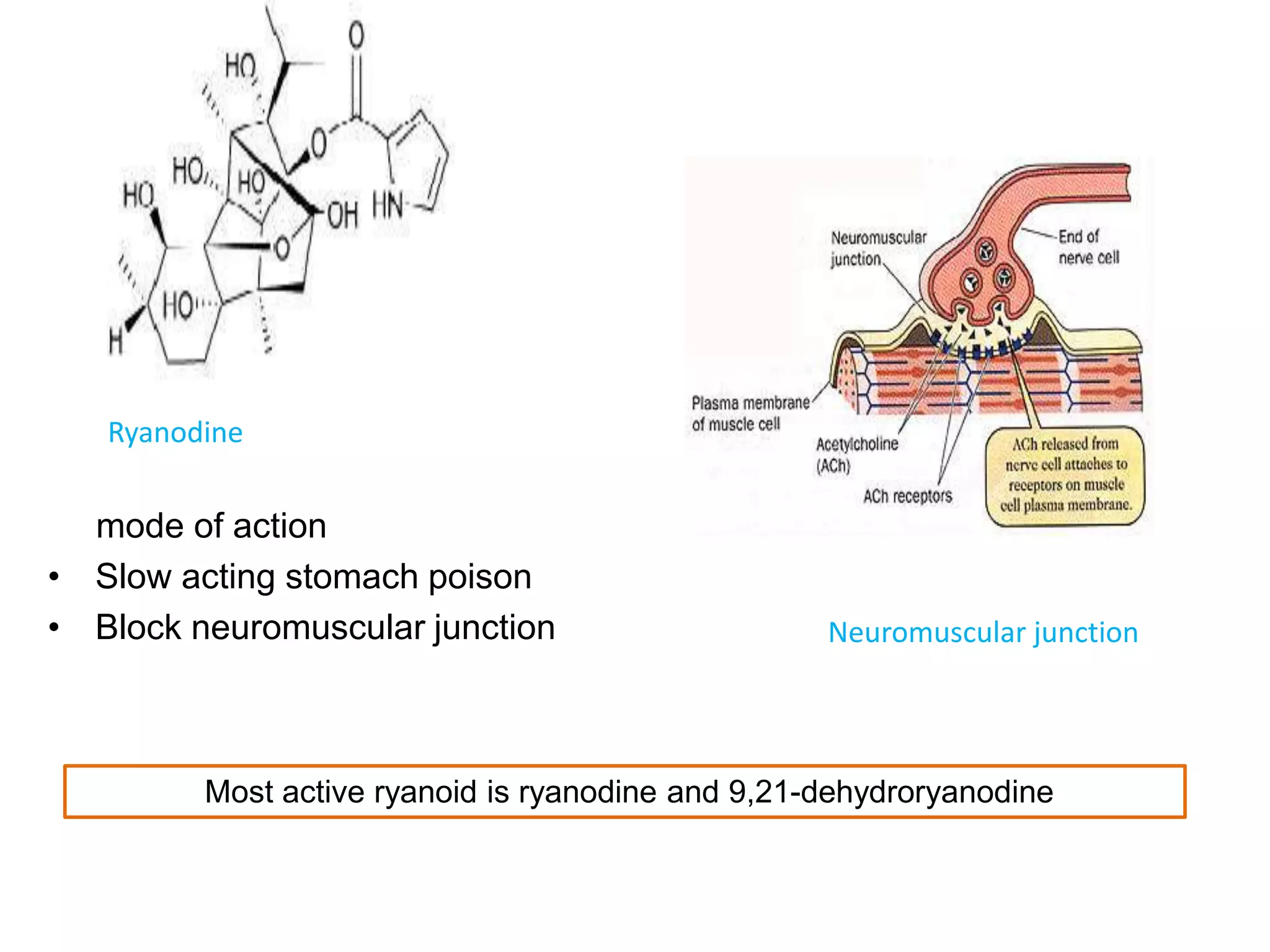
Ryanodine

mode of action
• Slow acting stomach poison
• Block neuromuscular junction

Neuromuscular junction

Most active ryanoid is ryanodine and 9,21-dehydroryanodine
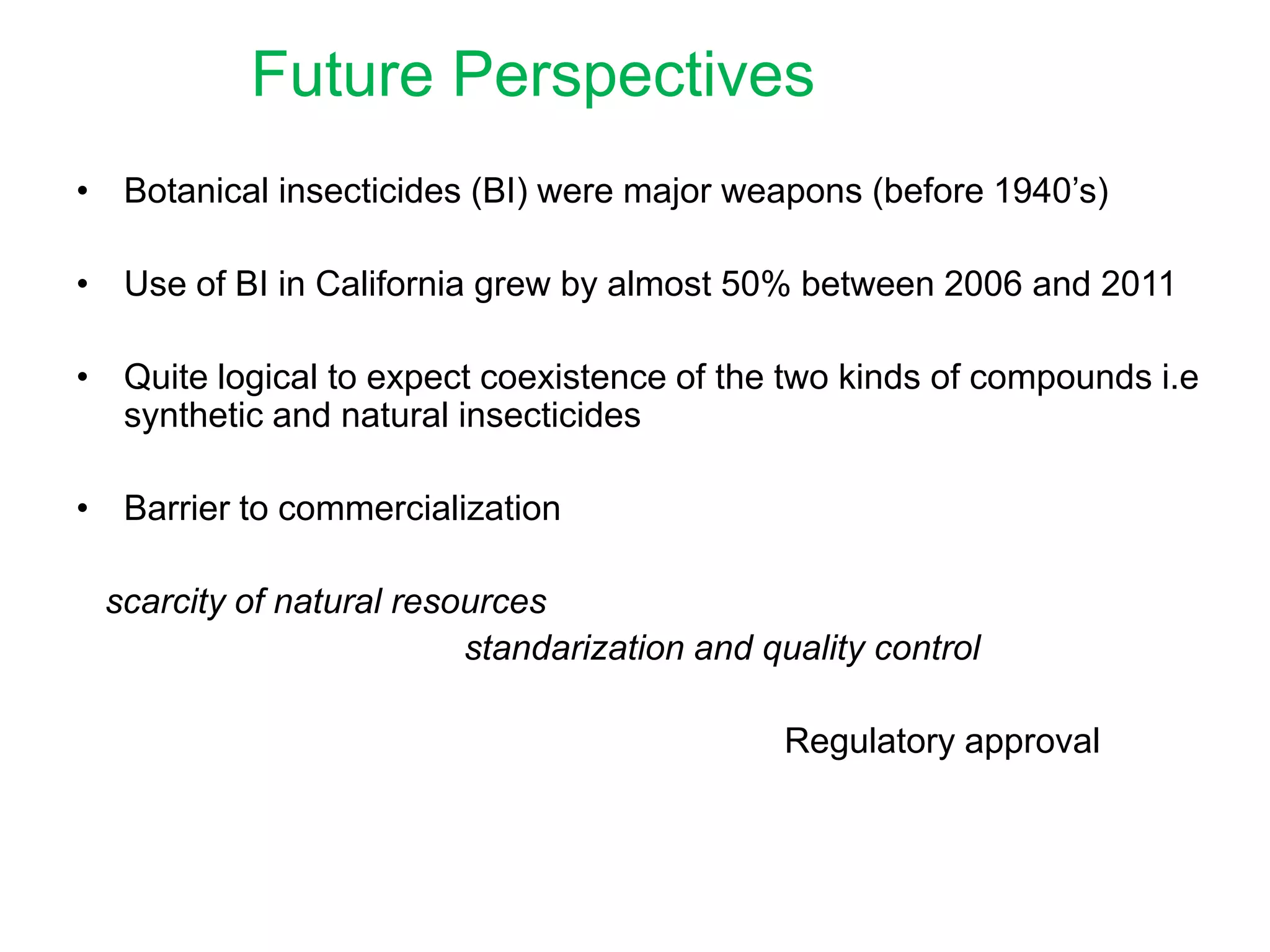
Future Perspectives
• Botanical insecticides (BI) were major weapons (before 1940’s)
• Use of BI in California grew by almost 50% between 2006 and 2011
• Quite logical to expect coexistence of the two kinds of compounds i.e
synthetic and natural insecticides
• Barrier to commercialization
scarcity of natural resources
standarization and quality control
Regulatory approval
References
•

Dayan et al (2009), Bioorganic and medical chemistry 17, 4022- 4034, Natural
products in crop protection

•

Isman (1997) Phytoparasitica 25 (4): 339-344, Neem and other botanical
insecticides:Barriers to commercialization

•

Isman, Annu. Rev. Entomol.2006.51:45-66

•

Martina et al, Agriculturae conspictus scientificus .Vol. 78 (2013) No .2 (8593),Botanical insecticides in plant protection

•

Nikoletta et al, pesticides laboratory,Pesticides of botanical origin: A promising tool in
plant protection
Botanical Insecticides and their Future Perspectives

Botanical Insecticides and their Future Perspectives

  • 1.
    Botanical insecticides andtheir future perspectives By, Bharati Singh
  • 2.
    Characteristics of botanicalinsecticides • Fast breakdown, Fast action • Phyto toxicity, selectivity • IPM friendly, cost and availability Just because a pesticide is natural, does not mean it is safe
  • 3.
    Limonene and linalool •Extracted from orange and other citrus fruits • Limonene , a terpene, and purified by steam distillation • Linalool, a terpene alcohol, found in small quantities in citrus peel d- limonene
  • 4.
    • Limonene oftenapplied with PBO (pyperonil butoxide) • Target pests: Fleas, aphids, mites, flies, paper wasp • Mode of action: • Act as nerve toxin and stomach poisons(limnonene) • Affects ion transport and release of acetyl choline esterase(linalool)
  • 5.
    Rotenone • Isolated fromthe roots of two tropical legumes Lonchocarpus or Derris • Extremely toxic to fish Root of the Tuba Rotenone structure Deguelin structure roots of the legume family (Fabaceae).
  • 6.
    • Target pests:caterpillers, aphids, suckers and other pests found in fruits and vegetables , certain beetles • Mode of action- inhibits the electron transport chain in the mitochondria Rotenone’s safety is somewhat controversial Electron Transport Chain
  • 7.
    Sabadila • Extracted fromthe seeds of the sabadilla lilly (Schoenocaulon officinale) • cevadine + veratridine = veratrine 2 : 1 S. Officinale White hellebore
  • 8.
    Mode of action •Similar to that of the pyrethrins as it affects the voltage dependent sodium channels of nerve axons. • Veratridine causes an increase in the duration of the action potential
  • 9.
    Ryania • Obtained fromthe roots and stems of a South American herbs (R. speciosa) • contain alkaloids with insecticidal activity, collectively known as ryanoids
  • 10.
    Ryanodine mode of action •Slow acting stomach poison • Block neuromuscular junction Neuromuscular junction Most active ryanoid is ryanodine and 9,21-dehydroryanodine
  • 12.
    Future Perspectives • Botanicalinsecticides (BI) were major weapons (before 1940’s) • Use of BI in California grew by almost 50% between 2006 and 2011 • Quite logical to expect coexistence of the two kinds of compounds i.e synthetic and natural insecticides • Barrier to commercialization scarcity of natural resources standarization and quality control Regulatory approval
  • 13.
    References • Dayan et al(2009), Bioorganic and medical chemistry 17, 4022- 4034, Natural products in crop protection • Isman (1997) Phytoparasitica 25 (4): 339-344, Neem and other botanical insecticides:Barriers to commercialization • Isman, Annu. Rev. Entomol.2006.51:45-66 • Martina et al, Agriculturae conspictus scientificus .Vol. 78 (2013) No .2 (8593),Botanical insecticides in plant protection • Nikoletta et al, pesticides laboratory,Pesticides of botanical origin: A promising tool in plant protection