POWDERY MILDEW OF PEA
DR. RAJBIR SINGH
Assistant Professor
Department of Plant Pathology
Gochar Mahavidyalaya, Rampur Maniharan, Saharanpur (UP), India
Affiliated to Ch. Charan Singh University, Meerut (UP), India
Email: rajbir25805@yahoo.com, rajbirsingh2810@gmail.com
Cell No. 91-9456613374
Powdery Mildew of Pea
• All states in India where pea is grown
Symptoms
• Symptoms appear in dry season
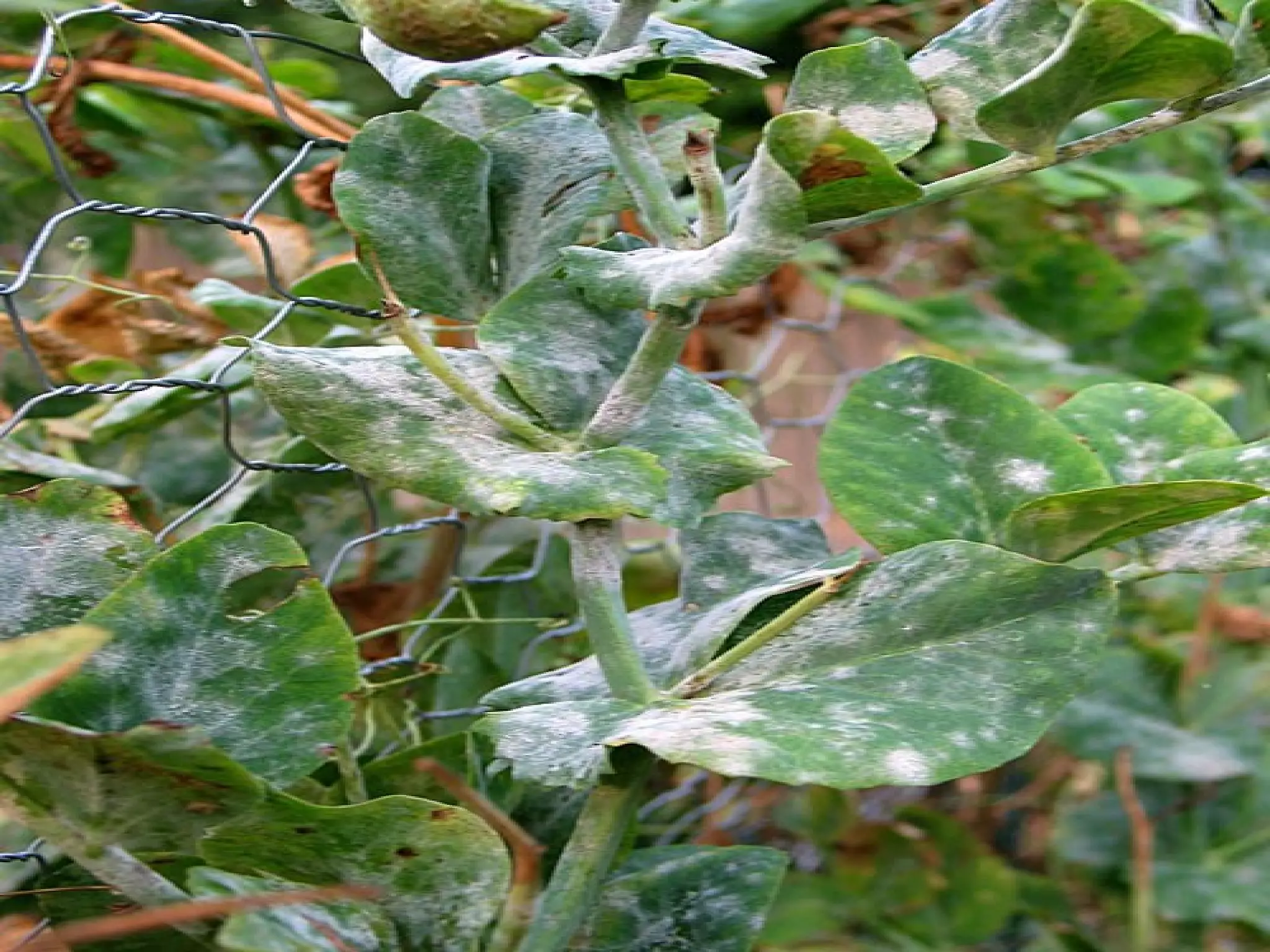
• Firstly on old leaves and then others parts
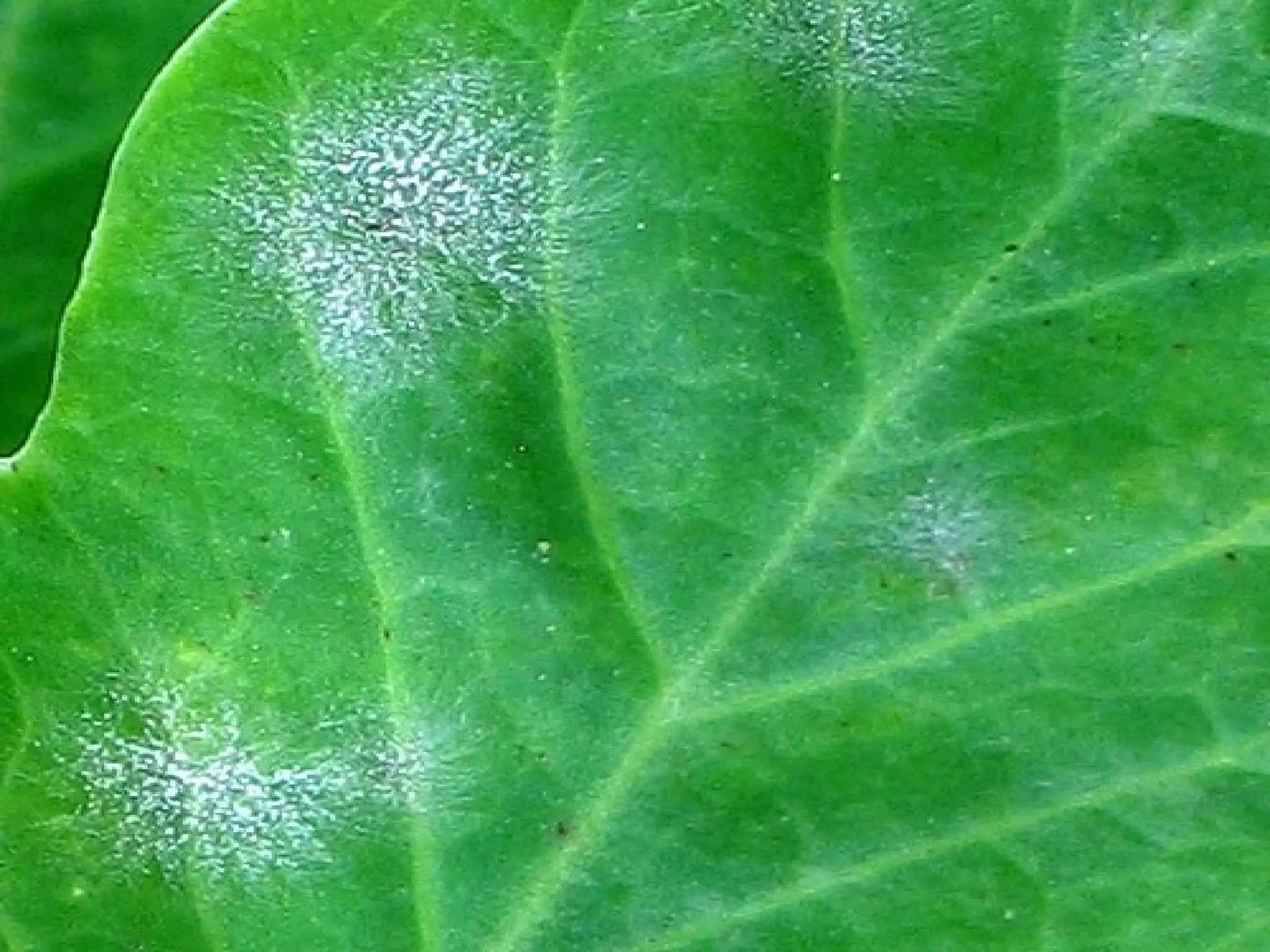
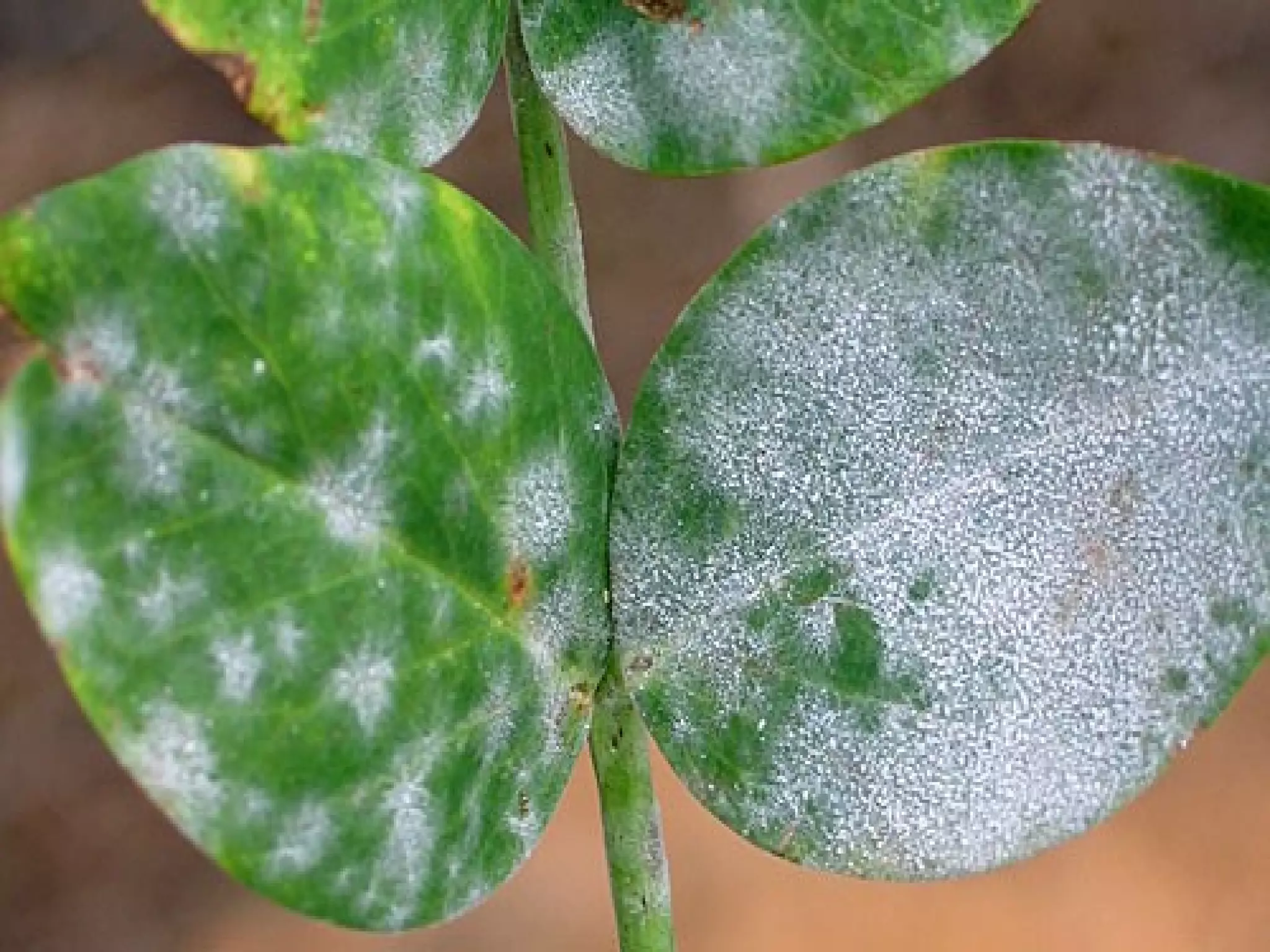
• Formation of powder on both surface of leaves
• Later formation of powdery spots on tendrils, pod etc.
• White powder on plant surface
• Increase respiration and transpiration
• Decrease photosynthesis
• Spots on pod surface – grain small & shrinked - loss in yield
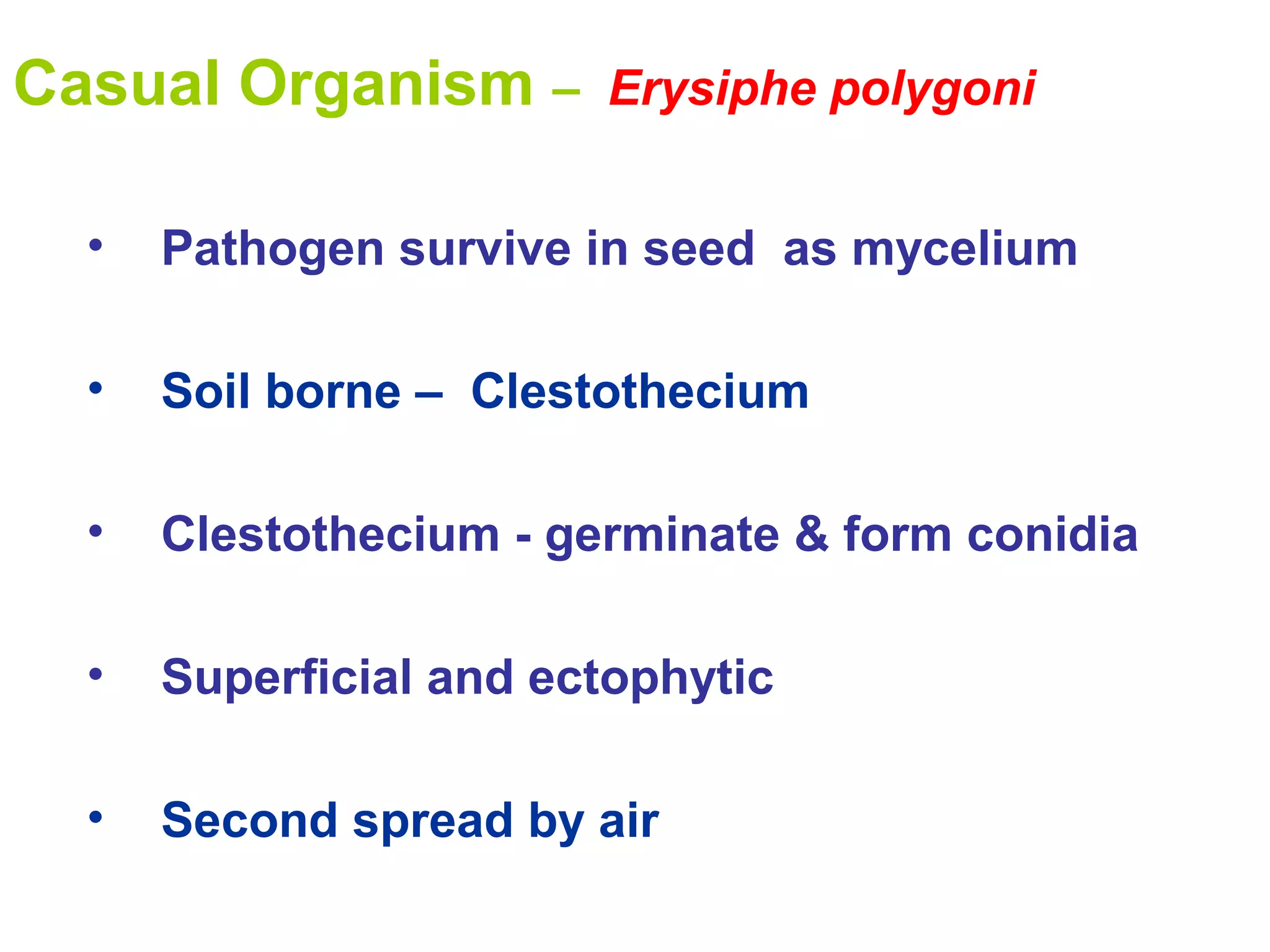
Casual Organism – Erysiphe polygoni
• Pathogen survive in seed as mycelium
• Soil borne – Clestothecium
• Clestothecium - germinate & form conidia
• Superficial and ectophytic
• Second spread by air
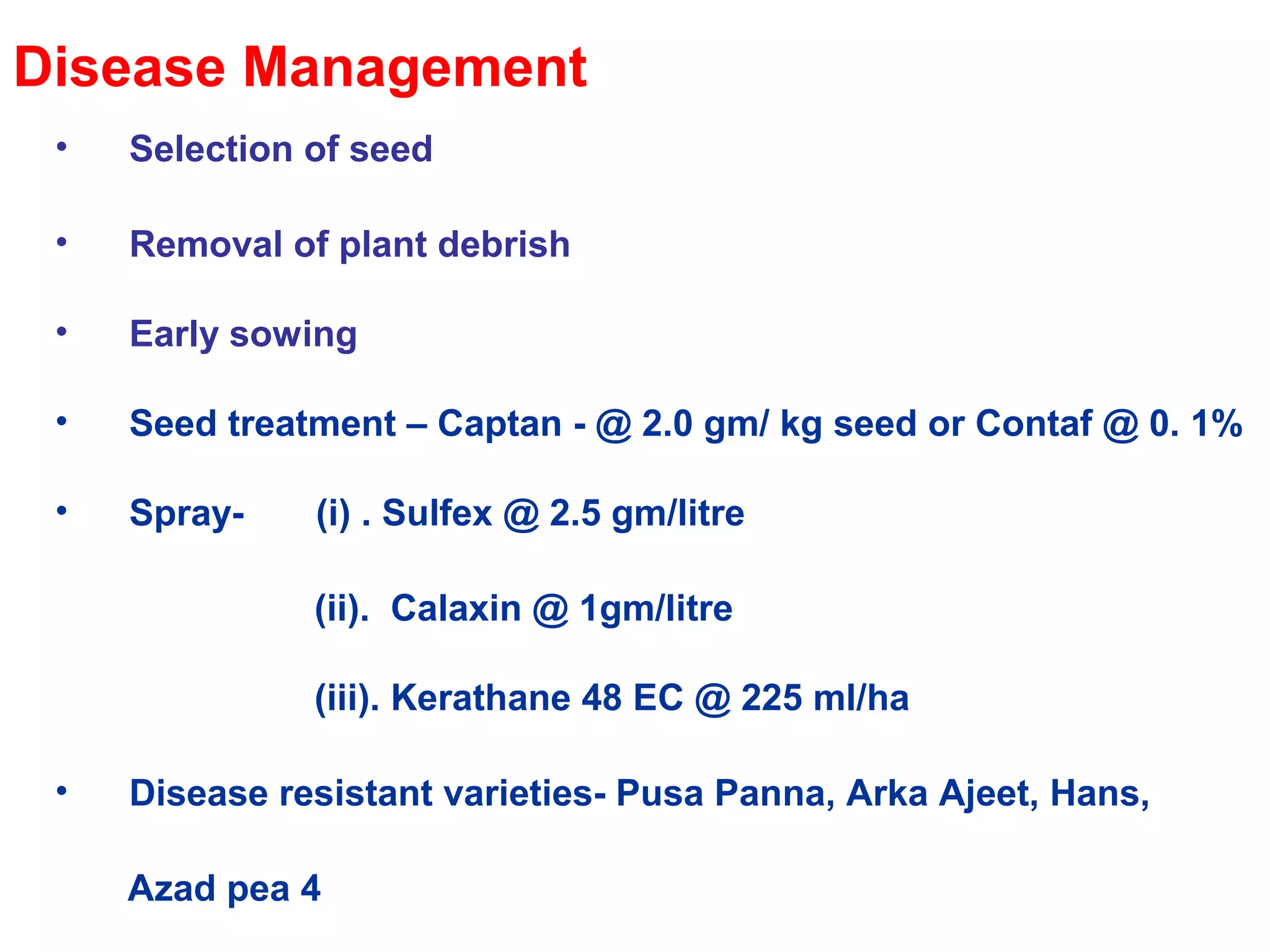
Disease Management
• Selection of seed
• Removal of plant debrish
• Early sowing
• Seed treatment – Captan - @ 2.0 gm/ kg seed or Contaf @ 0. 1%
• Spray- (i) . Sulfex @ 2.5 gm/litre
(ii). Calaxin @ 1gm/litre
(iii). Kerathane 48 EC @ 225 ml/ha
• Disease resistant varieties- Pusa Panna, Arka Ajeet, Hans,
Azad pea 4
Powdery mildew of pea

Powdery mildew of pea

  • 1.
    POWDERY MILDEW OFPEA DR. RAJBIR SINGH Assistant Professor Department of Plant Pathology Gochar Mahavidyalaya, Rampur Maniharan, Saharanpur (UP), India Affiliated to Ch. Charan Singh University, Meerut (UP), India Email: rajbir25805@yahoo.com, rajbirsingh2810@gmail.com Cell No. 91-9456613374
  • 2.
    Powdery Mildew ofPea • All states in India where pea is grown Symptoms • Symptoms appear in dry season • Firstly on old leaves and then others parts • Formation of powder on both surface of leaves • Later formation of powdery spots on tendrils, pod etc. • White powder on plant surface • Increase respiration and transpiration • Decrease photosynthesis • Spots on pod surface – grain small & shrinked - loss in yield
  • 6.
    Casual Organism –Erysiphe polygoni • Pathogen survive in seed as mycelium • Soil borne – Clestothecium • Clestothecium - germinate & form conidia • Superficial and ectophytic • Second spread by air
  • 7.
    Disease Management • Selectionof seed • Removal of plant debrish • Early sowing • Seed treatment – Captan - @ 2.0 gm/ kg seed or Contaf @ 0. 1% • Spray- (i) . Sulfex @ 2.5 gm/litre (ii). Calaxin @ 1gm/litre (iii). Kerathane 48 EC @ 225 ml/ha • Disease resistant varieties- Pusa Panna, Arka Ajeet, Hans, Azad pea 4