In situ TestsIn situ TestsIn situ TestsIn situ Tests
PLATE LOAD TESTPLATE LOAD TESTPLATE LOAD TESTPLATE LOAD TEST
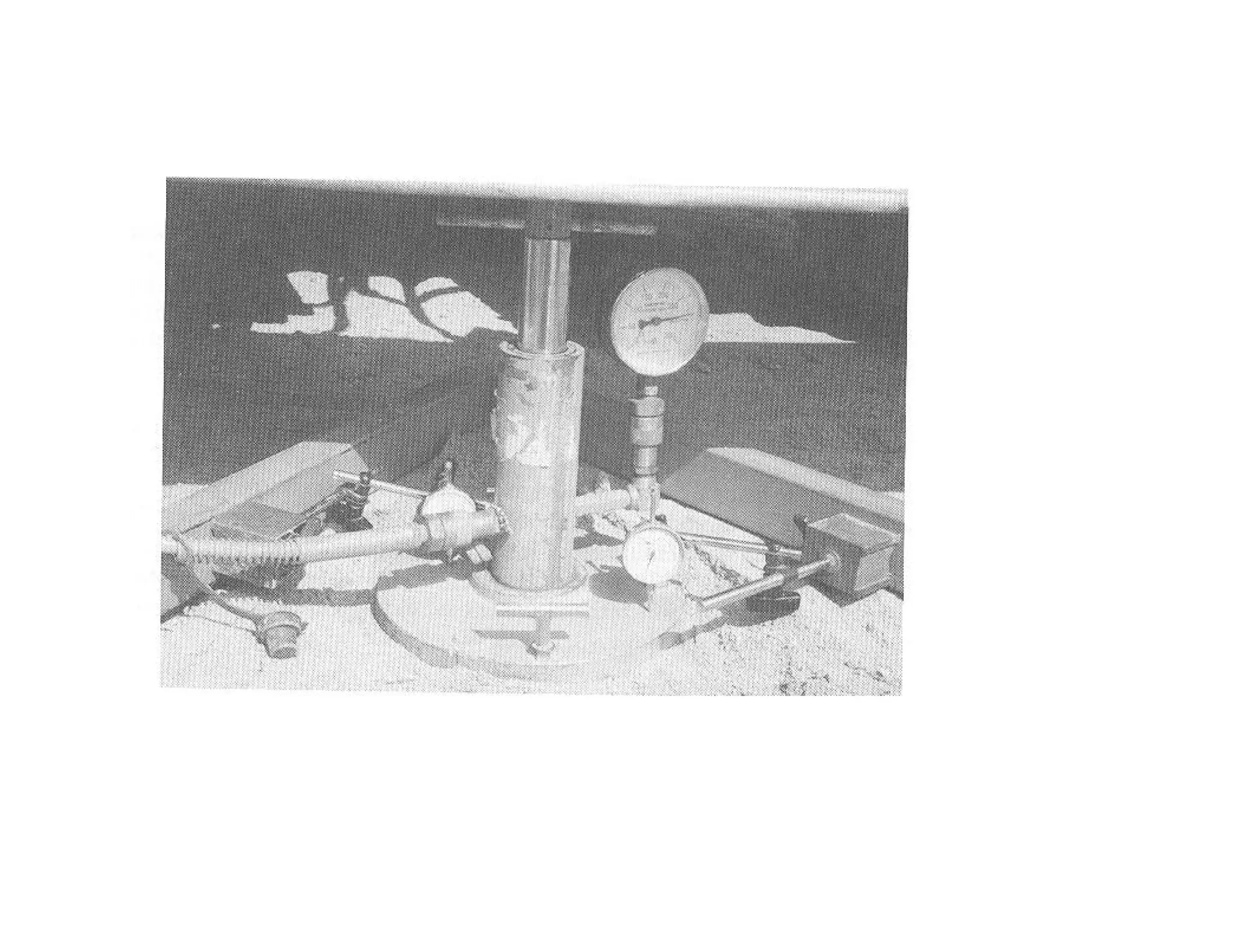
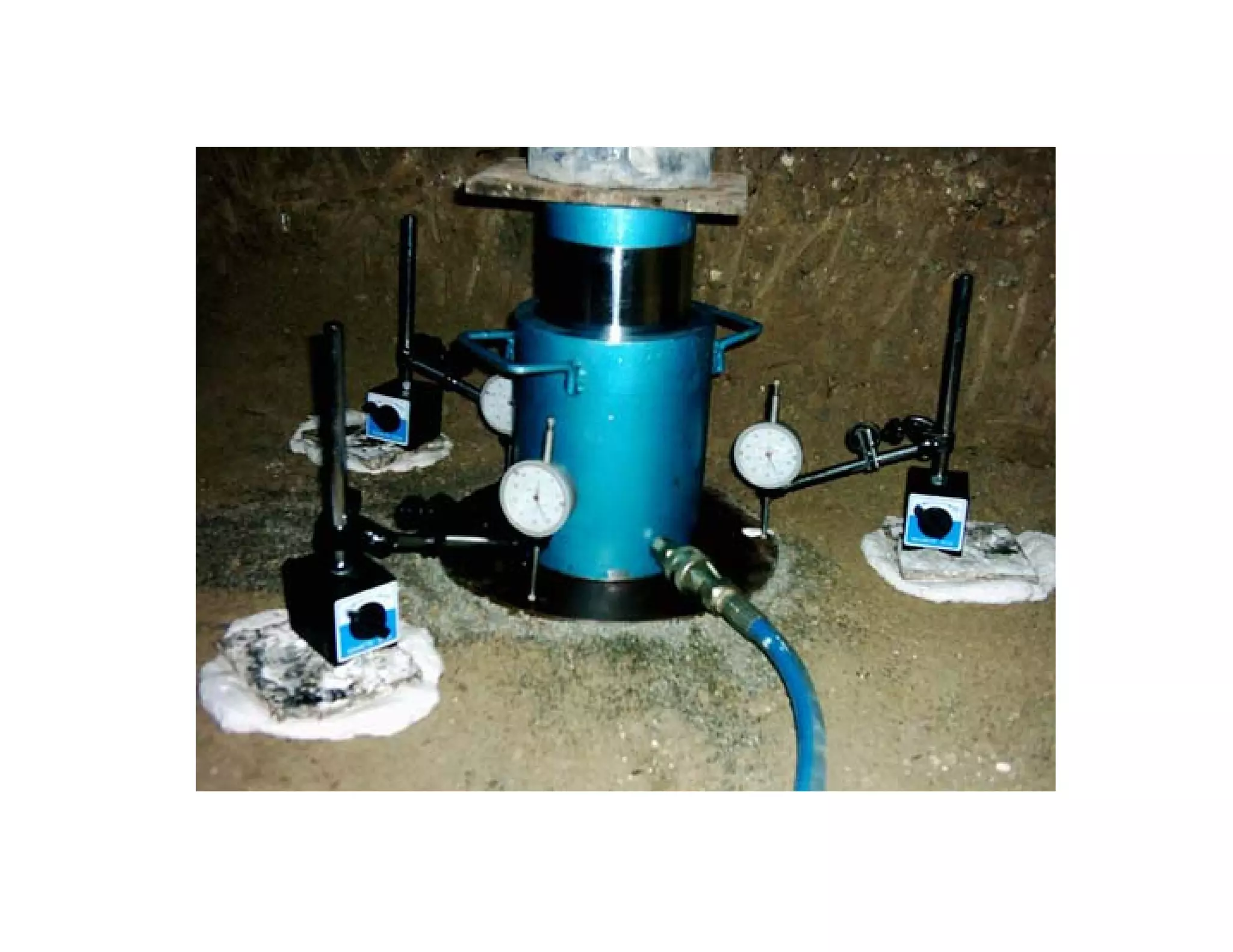
Plate load test
can be used to directly estimate the
settlement of the footing.
performed using standard test procedures such
as outlined in ASTM D 1194-94
Bearing plate , round or square, varying in size,
from 30 to 60 cm and thickness of about 2.5
cm are employed for the test.
Normally a plate of size 30 cm is used in sandy
soils and a larger size in clay soils.
A seating load of about 70 gm/cm2 is first
applied and released after some time.
A higher load is next placed on the plate
and settlements are recorded by means of
the dial gauges.
Observations on every load increment
shall be taken until the rate of settlement
is less than 0.25 mm per hour.
Load increments shall be approximately
one-fifth of the estimated safe bearing
capacity of the soil.
The average of the settlements
recorded by 2 or 3 dial gauges shall be
taken as the settlement of the plate for
each of the load increments.
The test should continue until a total
settlement of 2.5 cm or the settlement
at which the soil fails, whichever is
earlier, is obtained.
After the load is released, the elastic
rebound of the soil should be
recorded.
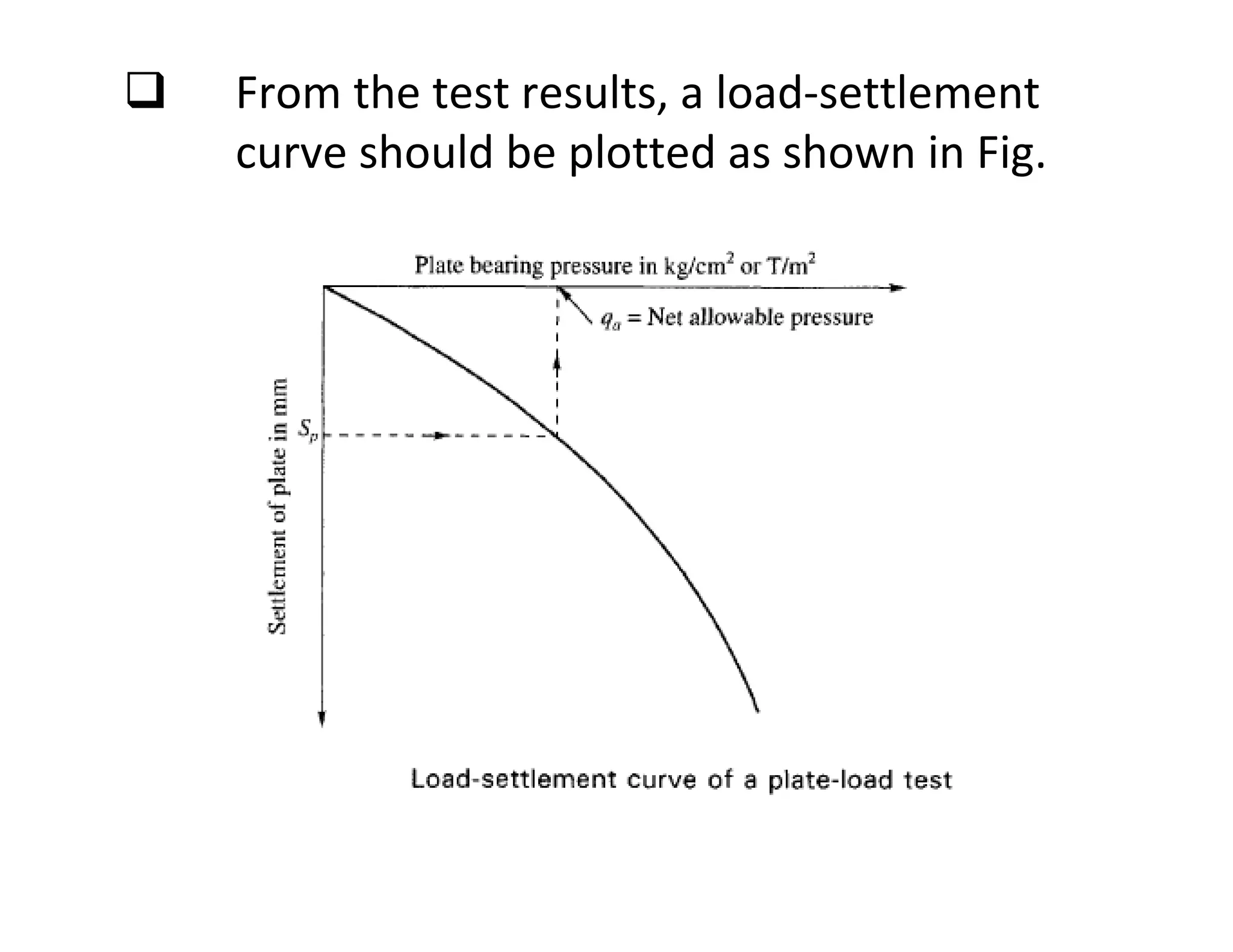
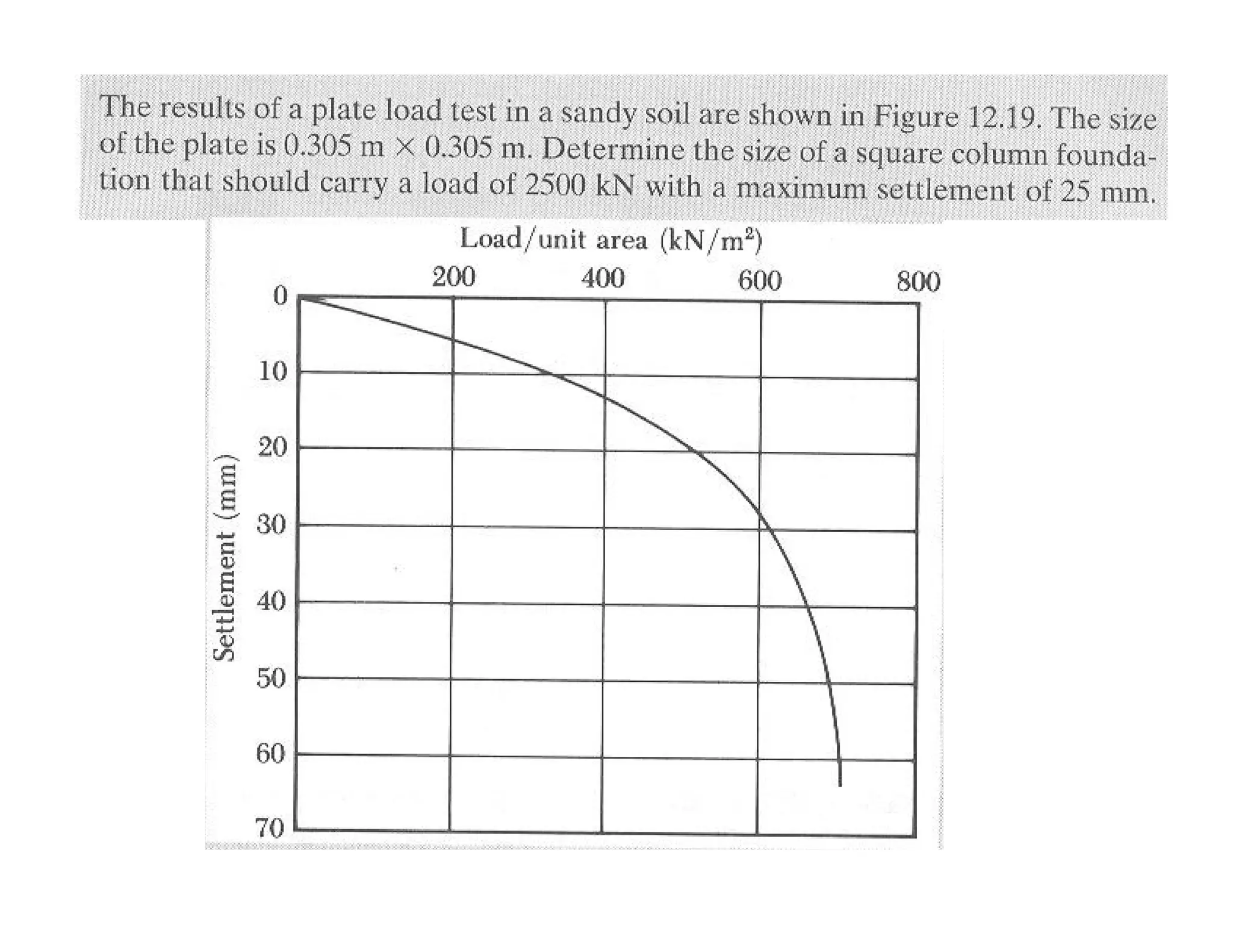
From the test results, a load-settlement
curve should be plotted as shown in Fig.
The allowable pressure on a prototype
foundation for an assumed settlement
may be found by making use of the
following equations suggested by
Terzaghi and Peck (1948) for square footings
in granular soils.
B is in meters and settlement in mm
Square Foundations
Limitations
Since a load test is of short duration, consolidation
settlements cannot be predicted. The test gives
the value of immediate settlement only.
If the underlying soil is sandy in nature immediate
settlement may be taken as the total settlement.
If the soil is a clayey type, the immediate
settlement is only a fraction of the total
settlement. Load tests, therefore, do not have
much significance in clayey soils to determine
allowable pressure on the basis of a settlement
criterion.
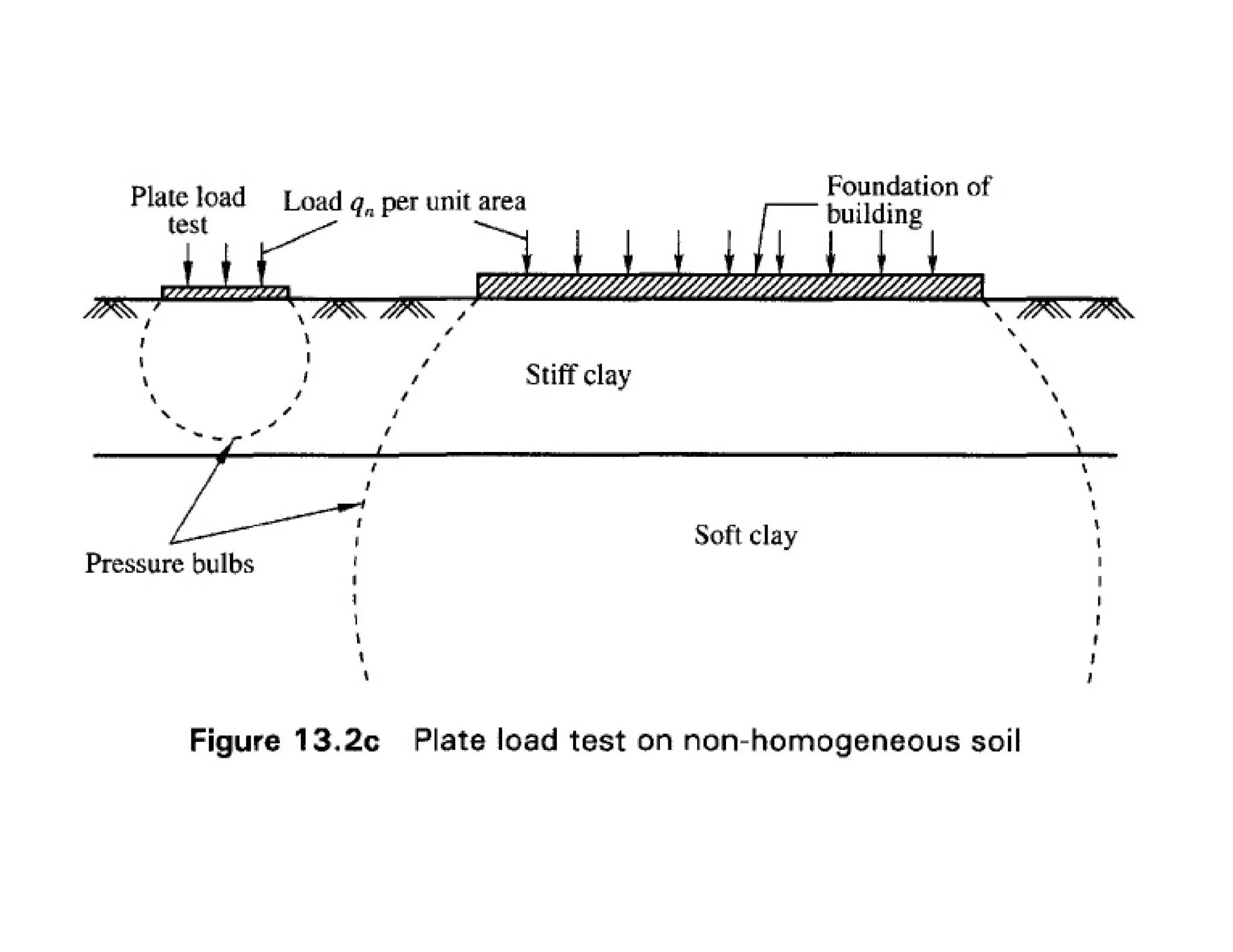
Plate load tests should be used with
caution and the present practice is not to
rely too much on this test. If the soil is not
homogeneous to a great depth, plate load
tests give very misleading results.
.
A plate load test is not recommended in
soils which are not homogeneous at least
to a depth equal to 1 ½ to 2 times the
width of the prototype foundation.
Plate load tests should not be relied on to
determine the ultimate bearing capacity
of sandy soils as the scale effect gives very
misleading results.
However, when the tests are carried on
clay soils, the ultimate bearing capacity as
determined by the test may be taken as
equal to that of the foundation since the
bearing capacity of clay is essentially
independent of the footing size.
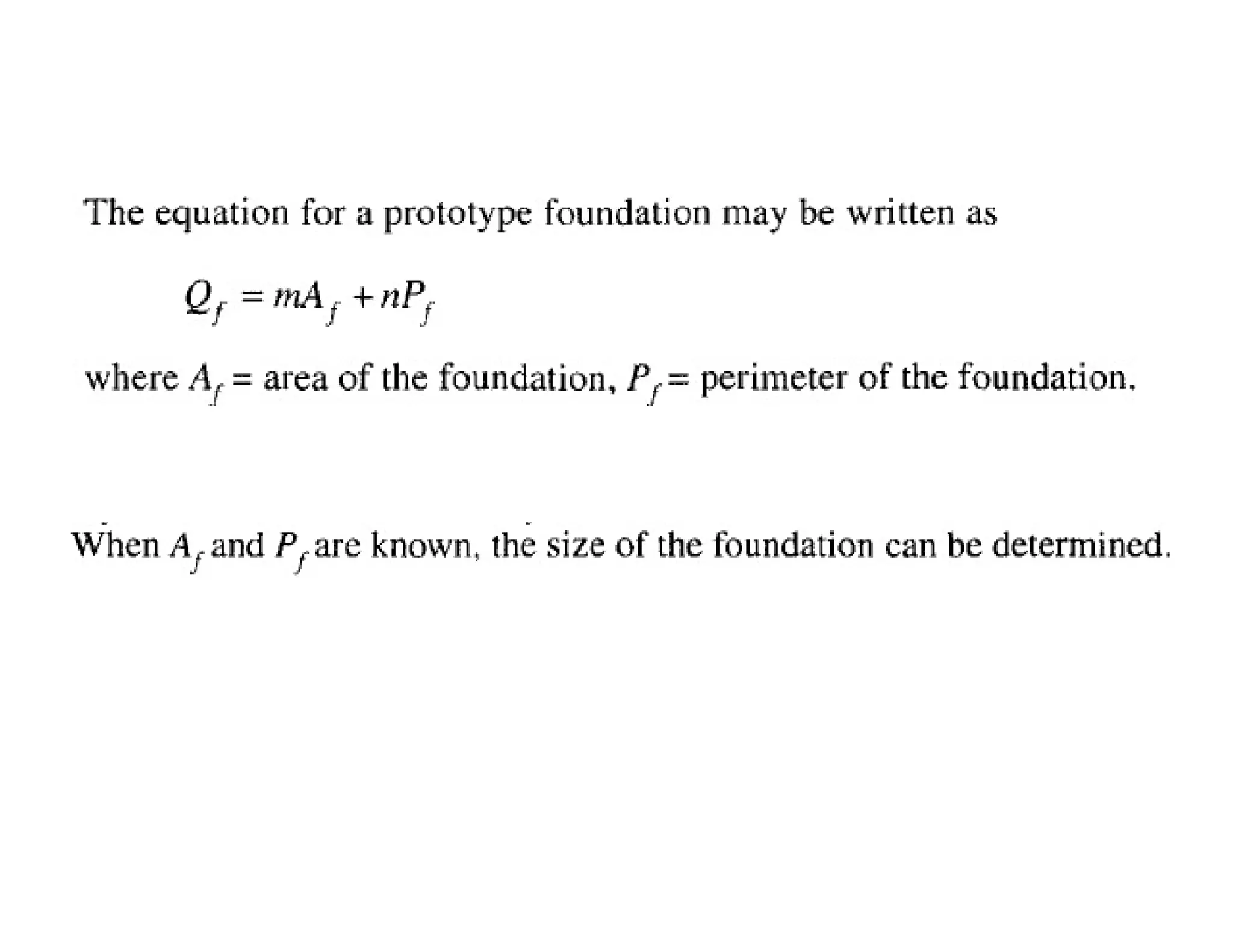
Housel (1929) technique for determining
load bearing capacity of shallow
foundations on settlement consideration
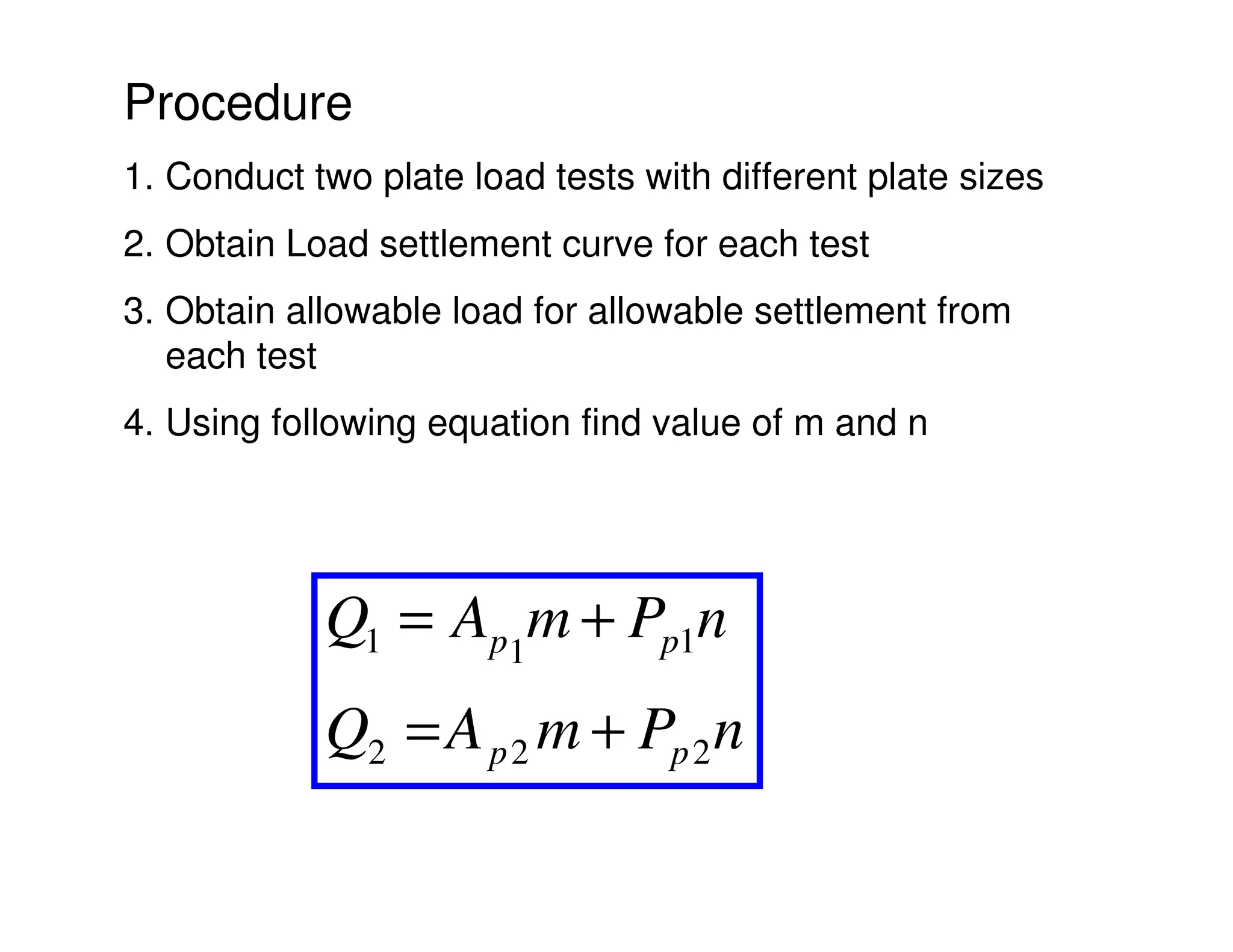
Procedure
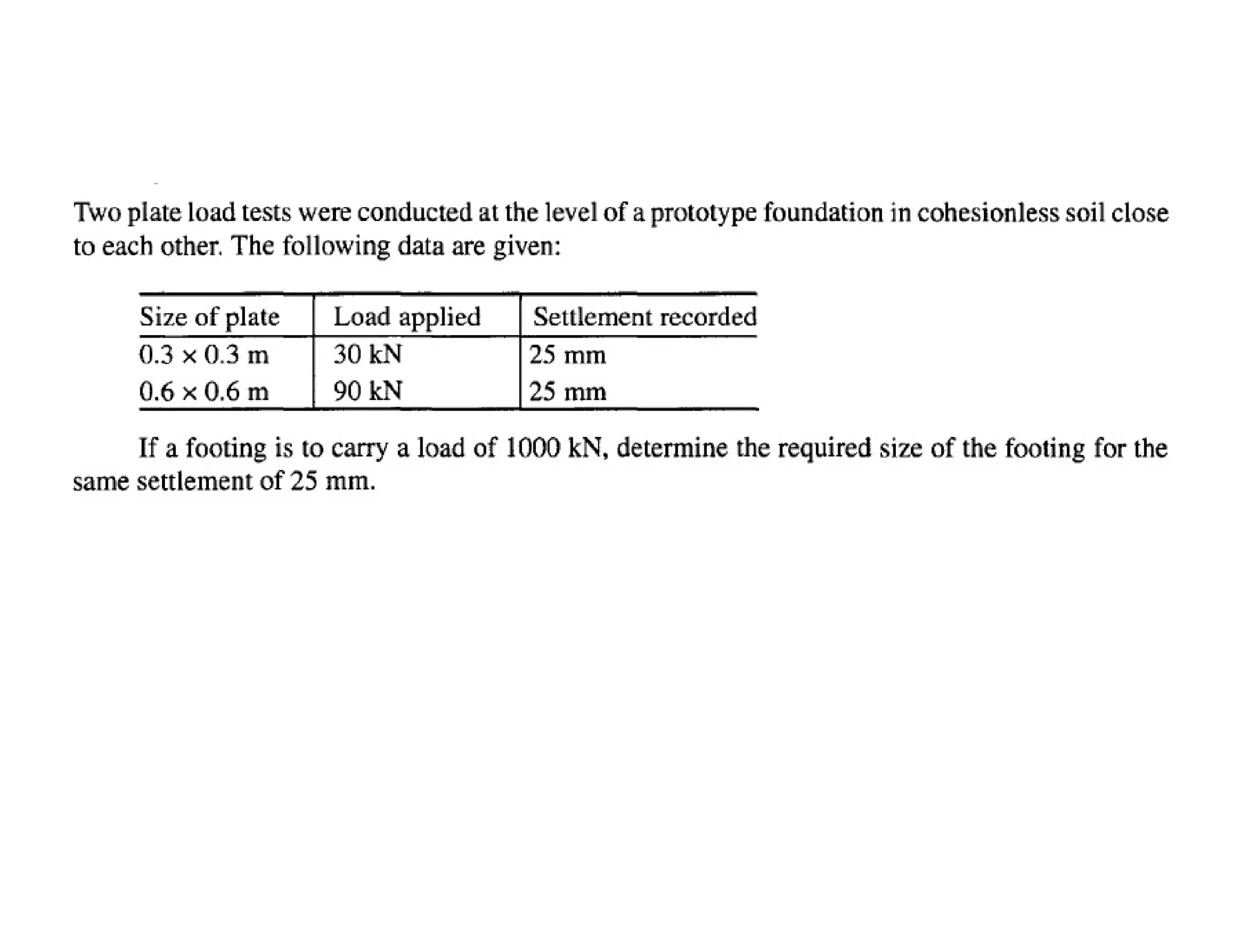
1. Conduct two plate load tests with different plate sizes
2. Obtain Load settlement curve for each test
3. Obtain allowable load for allowable settlement from
each test
4. Using following equation find value of m and n
nPmAQ
nPmAQ
pp
pp
222
111
+=
+=
Plate load test
Plate load test
Plate load test

Plate load test

  • 1.
    In situ TestsInsitu TestsIn situ TestsIn situ Tests
  • 2.
    PLATE LOAD TESTPLATELOAD TESTPLATE LOAD TESTPLATE LOAD TEST
  • 10.
    Plate load test canbe used to directly estimate the settlement of the footing. performed using standard test procedures such as outlined in ASTM D 1194-94 Bearing plate , round or square, varying in size, from 30 to 60 cm and thickness of about 2.5 cm are employed for the test. Normally a plate of size 30 cm is used in sandy soils and a larger size in clay soils.
  • 11.
    A seating loadof about 70 gm/cm2 is first applied and released after some time. A higher load is next placed on the plate and settlements are recorded by means of the dial gauges. Observations on every load increment shall be taken until the rate of settlement is less than 0.25 mm per hour. Load increments shall be approximately one-fifth of the estimated safe bearing capacity of the soil.
  • 12.
    The average ofthe settlements recorded by 2 or 3 dial gauges shall be taken as the settlement of the plate for each of the load increments. The test should continue until a total settlement of 2.5 cm or the settlement at which the soil fails, whichever is earlier, is obtained. After the load is released, the elastic rebound of the soil should be recorded.
  • 13.
    From the testresults, a load-settlement curve should be plotted as shown in Fig.
  • 14.
    The allowable pressureon a prototype foundation for an assumed settlement may be found by making use of the following equations suggested by Terzaghi and Peck (1948) for square footings in granular soils.
  • 16.
    B is inmeters and settlement in mm Square Foundations
  • 18.
    Limitations Since a loadtest is of short duration, consolidation settlements cannot be predicted. The test gives the value of immediate settlement only. If the underlying soil is sandy in nature immediate settlement may be taken as the total settlement. If the soil is a clayey type, the immediate settlement is only a fraction of the total settlement. Load tests, therefore, do not have much significance in clayey soils to determine allowable pressure on the basis of a settlement criterion.
  • 19.
    Plate load testsshould be used with caution and the present practice is not to rely too much on this test. If the soil is not homogeneous to a great depth, plate load tests give very misleading results. .
  • 21.
    A plate loadtest is not recommended in soils which are not homogeneous at least to a depth equal to 1 ½ to 2 times the width of the prototype foundation. Plate load tests should not be relied on to determine the ultimate bearing capacity of sandy soils as the scale effect gives very misleading results.
  • 22.
    However, when thetests are carried on clay soils, the ultimate bearing capacity as determined by the test may be taken as equal to that of the foundation since the bearing capacity of clay is essentially independent of the footing size.
  • 25.
    Housel (1929) techniquefor determining load bearing capacity of shallow foundations on settlement consideration
  • 26.
    Procedure 1. Conduct twoplate load tests with different plate sizes 2. Obtain Load settlement curve for each test 3. Obtain allowable load for allowable settlement from each test 4. Using following equation find value of m and n nPmAQ nPmAQ pp pp 222 111 += +=