PLATE LOADTEST
BY :
SWETHA SHA JAIN
INTRODUCTION :
Plate Load Test is a field test for determining
the ultimate bearing capacity of soil and the likely
settlement under a given load
Total value of load on plate divided by the area of
the steel plate gives the value of ultimate bearing
capacity
Its subdivided into following steps :
* Test setup
* Testing procedure
* Interpretation of results
* Limitation of the test
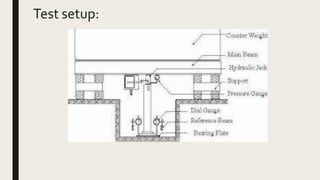
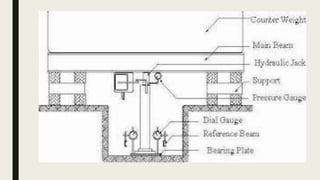
Test setup:
Testing procedure:
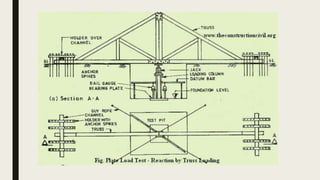
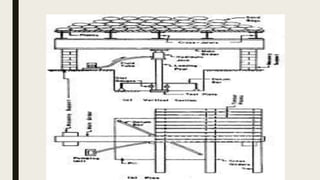
■ The test can be done by two methods .they are :
*gravity method *truss method
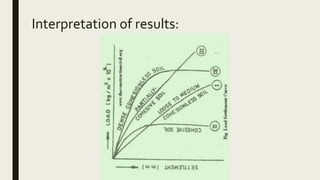
Interpretation of results:
Limitations of plate load test :
■ The test results reflect only the character of the soil located within a depth of
less than twice the width of bearing plate
■ The Plate LoadTest being of short duration, does not give the ultimate
settlements particularly in case of cohesive soils.
■ For clayey soils the bearing capacity (from shear consideration) for a large
foundation, is almost same as that for the smaller test plate.
■ In dense sandy soils the bearing apacity increases with the size of the foundation
and hence the test with smaller size test plate tends to give conservative values
in dense sandy soils.

Plate load test

  • 1.
  • 2.
    INTRODUCTION : Plate LoadTest is a field test for determining the ultimate bearing capacity of soil and the likely settlement under a given load Total value of load on plate divided by the area of the steel plate gives the value of ultimate bearing capacity
  • 3.
    Its subdivided intofollowing steps : * Test setup * Testing procedure * Interpretation of results * Limitation of the test
  • 4.
  • 6.
    Testing procedure: ■ Thetest can be done by two methods .they are : *gravity method *truss method
  • 9.
  • 10.
    Limitations of plateload test : ■ The test results reflect only the character of the soil located within a depth of less than twice the width of bearing plate ■ The Plate LoadTest being of short duration, does not give the ultimate settlements particularly in case of cohesive soils. ■ For clayey soils the bearing capacity (from shear consideration) for a large foundation, is almost same as that for the smaller test plate. ■ In dense sandy soils the bearing apacity increases with the size of the foundation and hence the test with smaller size test plate tends to give conservative values in dense sandy soils.