BACTERIA - BINARY FISSION
FUNGUS -SPORE FORMATION
HYDRA - BUDDING
An existing cell divides
to form two cells.
Under favourable
conditions, rapid
multiplication of of
organisms like
bacteria takes place
by binary fission.
Spores are minute cells
that can survive in
unfavourable
conditions and develop
into new organisms
under favourable
conditions. This is a
type of asexual
reproduction.
Buds are formed in the
parent body. When it
grows, it separates
itself from the parent
body and develops
into a new organisms.
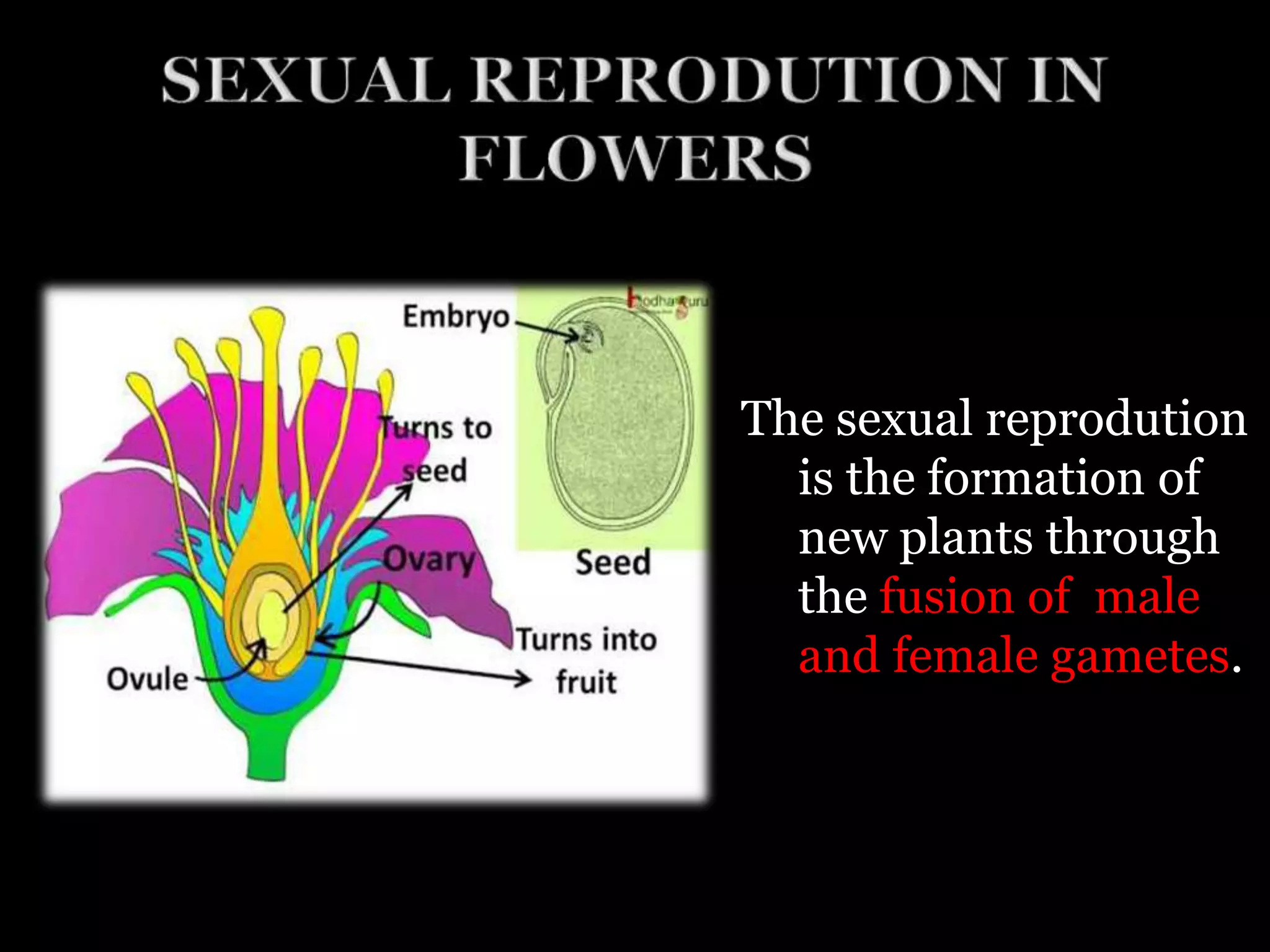
The sexual reprodution
is the formation of
new plants through
the fusion of male
and female gametes.
•Male
reproductive
organ
•STAMEN
•Female
reproductive
organ
•PISTIL
 Bears anthers – it
contains the pollen
grains which produce
male cells / gametes.
 Pistil is composed
of stigma, style
and ovary.
 The ovary produce
female cells /
gametes.
It is the
transfer of
pollengrai
ns into
the stigma
of the
female
flower.
It is an
example
for
mutualis
m
between
plants and
animals.m
ajority of
them are
insects.
 The organisms that helps the plants
to get pollinated is known as
pollinators.
 Certain plants depend on particular
organisms for pollination.
 The shapes and nature of flowers
differ according to the pollinator.
 Most of the plants have more than
one pollinator.
 Wind and water are also comes
under the pollinating agents.
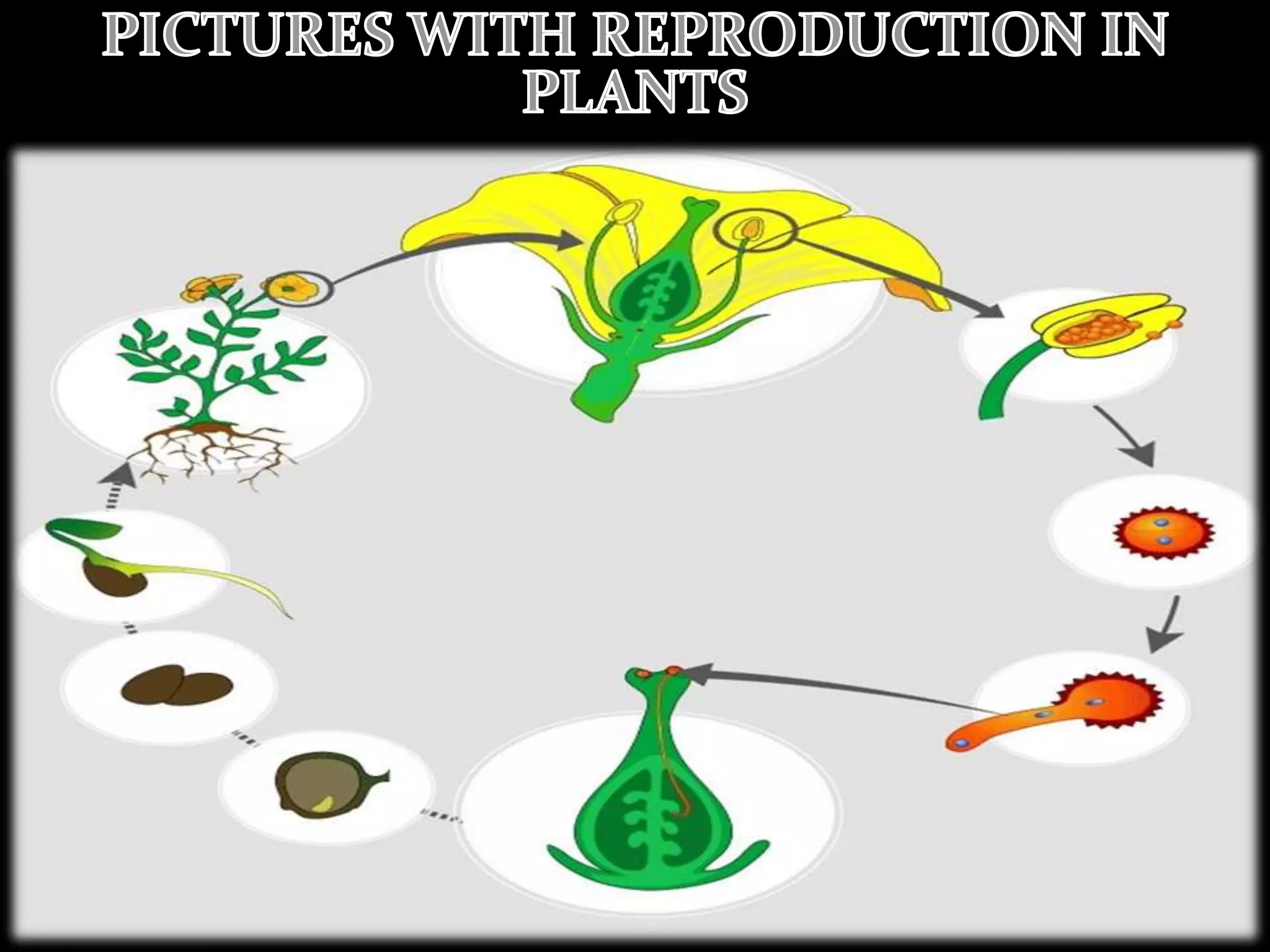
 Pollen grains contains 2
nuclei
1. Generative nucleus
2. Tube nucleus
 Pollen tube develops from pollen grain that
falls into the stigma.
 This grows towards ovary.
 Generative nucleus divides in the pollentube to
form 2 male gametes.
 Tube nucleus disintegrates at this time.
 One male gamete then fuses with egg to form
zygote.
 Another one fuses with the polar nuclei in the
ovary, and endosperm is formed from it.
 Zygote develops into embryo.
 Endosperm becomes the stored food needed for
growth of the embryo.
REPRODUCTION IN PLANTS

REPRODUCTION IN PLANTS

  • 3.
    BACTERIA - BINARYFISSION FUNGUS -SPORE FORMATION HYDRA - BUDDING
  • 4.
    An existing celldivides to form two cells. Under favourable conditions, rapid multiplication of of organisms like bacteria takes place by binary fission.
  • 5.
    Spores are minutecells that can survive in unfavourable conditions and develop into new organisms under favourable conditions. This is a type of asexual reproduction.
  • 6.
    Buds are formedin the parent body. When it grows, it separates itself from the parent body and develops into a new organisms.
  • 7.
    The sexual reprodution isthe formation of new plants through the fusion of male and female gametes.
  • 9.
  • 10.
     Bears anthers– it contains the pollen grains which produce male cells / gametes.
  • 11.
     Pistil iscomposed of stigma, style and ovary.  The ovary produce female cells / gametes.
  • 12.
    It is the transferof pollengrai ns into the stigma of the female flower. It is an example for mutualis m between plants and animals.m ajority of them are insects.
  • 13.
     The organismsthat helps the plants to get pollinated is known as pollinators.  Certain plants depend on particular organisms for pollination.  The shapes and nature of flowers differ according to the pollinator.  Most of the plants have more than one pollinator.  Wind and water are also comes under the pollinating agents.
  • 15.
     Pollen grainscontains 2 nuclei 1. Generative nucleus 2. Tube nucleus
  • 16.
     Pollen tubedevelops from pollen grain that falls into the stigma.  This grows towards ovary.  Generative nucleus divides in the pollentube to form 2 male gametes.  Tube nucleus disintegrates at this time.
  • 17.
     One malegamete then fuses with egg to form zygote.  Another one fuses with the polar nuclei in the ovary, and endosperm is formed from it.  Zygote develops into embryo.  Endosperm becomes the stored food needed for growth of the embryo.