Plant adaptation
to aquatic
Environment
Student name: Afsana Chowdhury
Student id: 20585101
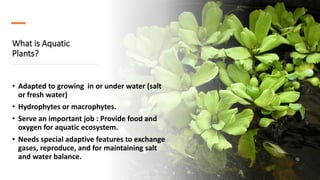
What is Aquatic
Plants?
• Adapted to growing in or under water (salt
or fresh water)
• Hydrophytes or macrophytes.
• Serve an important job : Provide food and
oxygen for aquatic ecosystem.
• Needs special adaptive features to exchange
gases, reproduce, and for maintaining salt
and water balance.
What aquatic plants
need to survive?
• Sunlight - Use sunlight energy to carry out
photosynthesis
• Water and minerals – Need for growth.
• Gas exchange - Oxygen required for Supporting
cellular respiration and Carrying 𝑪𝑶 𝟐 for
photosynthesis.
• Movement of water and mineral
- Absorb water and mineral through their roots but
prepare food in leaves.
- Have to have specialized tissues for carrying water
to the leaves and distributed prepared food to other
part of the body.
How Aquatic Plants Produce Energy ?
• Needs oxygen to produce energy.
• Make their own food through
process of photosynthesis.
• Have chlorophyll that is needed
for photosynthesis.
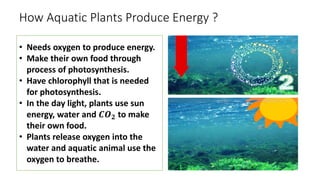
• In the day light, plants use sun
energy, water and 𝑪𝑶 𝟐 to make
their own food.
• Plants release oxygen into the
water and aquatic animal use the
oxygen to breathe.
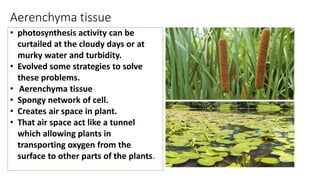
Aerenchyma tissue
• photosynthesis activity can be
curtailed at the cloudy days or at
murky water and turbidity.
• Evolved some strategies to solve
these problems.
• Aerenchyma tissue
• Spongy network of cell.
• Creates air space in plant.
• That air space act like a tunnel
which allowing plants in
transporting oxygen from the
surface to other parts of the plants.
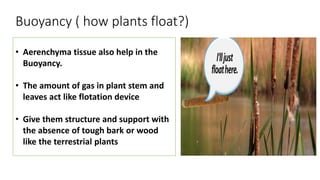
Buoyancy ( how plants float?)
• Aerenchyma tissue also help in the
Buoyancy.
• The amount of gas in plant stem and
leaves act like flotation device
• Give them structure and support with
the absence of tough bark or wood
like the terrestrial plants
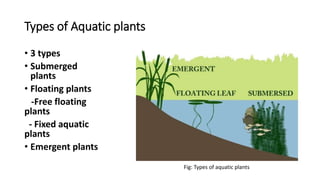
Types of Aquatic plants
• 3 types
• Submerged
plants
• Floating plants
-Free floating
plants
- Fixed aquatic
plants
• Emergent plants
Fig: Types of aquatic plants
Submerged plants
• They are completely submerged
in water
• The highly dissected leaf of plants
help for photosynthesis by
creating notable surface area.
• Presence of no stomata in the
leaves.
• Roots act like an anchor.
- main role is to absorb nutrient
from water.
• Example: Hydrilla, Pondweed
Fig : Hydrilla
Fig: Pondweed
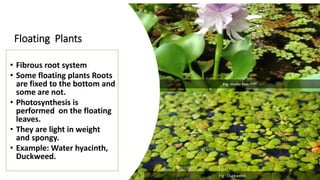
Floating Plants
• Fibrous root system
• Some floating plants Roots
are fixed to the bottom and
some are not.
• Photosynthesis is
performed on the floating
leaves.
• They are light in weight
and spongy.
• Example: Water hyacinth,
Duckweed.
Fig: Water hyacinth
Fig : Duckweed
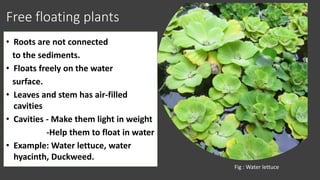
Free floating plants
• Roots are not connected
to the sediments.
• Floats freely on the water
surface.
• Leaves and stem has air-filled
cavities
• Cavities - Make them light in weight
-Help them to float in water
• Example: Water lettuce, water
hyacinth, Duckweed.
Fig : Water lettuce
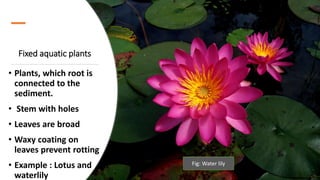
Fixed aquatic plants
• Plants, which root is
connected to the
sediment.
• Stem with holes
• Leaves are broad
• Waxy coating on
leaves prevent rotting
• Example : Lotus and
waterlily
Fig: Water lily
Emergent Plants
• Their basal portion remains
under the surface of the water,
but stem and leaves can be seen
in the air.
• Narrow leaves, tall in height
• The hollow structure and presence
of hard fibers in the stem help the
plants surviving in winds
• Example: Reed, Wild rice etc.
Fig : Reed plants
Fig: Wild rice plants
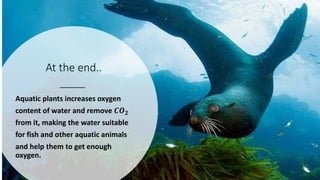
At the end..
Aquatic plants increases oxygen
content of water and remove 𝑪𝑶 𝟐
from it, making the water suitable
for fish and other aquatic animals
and help them to get enough
oxygen.
References
• Beentje, Henk; Hickey, Michael; King, Clive (2001). "The Cambridge Illustrated Glossary of Botanical Terms".
Kew Bulletin. 56 (2): 505. doi:10.2307/4110976.
• Chambers, Patricia A. (September 1987). “Light and Nutrients in the control of aquatic plant Community
Structure. II. Insitu observations”. The journal of Ecology. 75(3): 621-628. Doi:10.2307/2260194. JSTOR
2260194.
• Pedersen, Ole; Colmer, Timothy David; Sand-Jensen, Kaj (2013). "Underwater Photosynthesis of Submerged
Plants–Recent Advances and Methods". Frontiers in Plant Science. doi:10.3389/fpls.2013.00140.
• Shtein, Ilana; Popper, Zoë A.; Harpaz-Saad, Smadar (2017). "Permanently open stomata of aquatic
angiosperms display modified cellulose crystallinity patterns". Plant Signaling & Behavior. 12 (7): e1339858.
doi:10.1080/15592324.2017.1339858.
• Vymazal, Jan (December 2013). "Emergent plants used in free water surface constructed wetlands: A
review". Ecological Engineering. 61: 582–592
That’s all…..
Thank
you
 plant adaptation to aquatic environment

plant adaptation to aquatic environment

  • 1.
    Plant adaptation to aquatic Environment Studentname: Afsana Chowdhury Student id: 20585101
  • 2.
    What is Aquatic Plants? •Adapted to growing in or under water (salt or fresh water) • Hydrophytes or macrophytes. • Serve an important job : Provide food and oxygen for aquatic ecosystem. • Needs special adaptive features to exchange gases, reproduce, and for maintaining salt and water balance.
  • 3.
    What aquatic plants needto survive? • Sunlight - Use sunlight energy to carry out photosynthesis • Water and minerals – Need for growth. • Gas exchange - Oxygen required for Supporting cellular respiration and Carrying 𝑪𝑶 𝟐 for photosynthesis. • Movement of water and mineral - Absorb water and mineral through their roots but prepare food in leaves. - Have to have specialized tissues for carrying water to the leaves and distributed prepared food to other part of the body.
  • 4.
    How Aquatic PlantsProduce Energy ? • Needs oxygen to produce energy. • Make their own food through process of photosynthesis. • Have chlorophyll that is needed for photosynthesis. • In the day light, plants use sun energy, water and 𝑪𝑶 𝟐 to make their own food. • Plants release oxygen into the water and aquatic animal use the oxygen to breathe.
  • 5.
    Aerenchyma tissue • photosynthesisactivity can be curtailed at the cloudy days or at murky water and turbidity. • Evolved some strategies to solve these problems. • Aerenchyma tissue • Spongy network of cell. • Creates air space in plant. • That air space act like a tunnel which allowing plants in transporting oxygen from the surface to other parts of the plants.
  • 6.
    Buoyancy ( howplants float?) • Aerenchyma tissue also help in the Buoyancy. • The amount of gas in plant stem and leaves act like flotation device • Give them structure and support with the absence of tough bark or wood like the terrestrial plants
  • 7.
    Types of Aquaticplants • 3 types • Submerged plants • Floating plants -Free floating plants - Fixed aquatic plants • Emergent plants Fig: Types of aquatic plants
  • 8.
    Submerged plants • Theyare completely submerged in water • The highly dissected leaf of plants help for photosynthesis by creating notable surface area. • Presence of no stomata in the leaves. • Roots act like an anchor. - main role is to absorb nutrient from water. • Example: Hydrilla, Pondweed Fig : Hydrilla Fig: Pondweed
  • 9.
    Floating Plants • Fibrousroot system • Some floating plants Roots are fixed to the bottom and some are not. • Photosynthesis is performed on the floating leaves. • They are light in weight and spongy. • Example: Water hyacinth, Duckweed. Fig: Water hyacinth Fig : Duckweed
  • 10.
    Free floating plants •Roots are not connected to the sediments. • Floats freely on the water surface. • Leaves and stem has air-filled cavities • Cavities - Make them light in weight -Help them to float in water • Example: Water lettuce, water hyacinth, Duckweed. Fig : Water lettuce
  • 11.
    Fixed aquatic plants •Plants, which root is connected to the sediment. • Stem with holes • Leaves are broad • Waxy coating on leaves prevent rotting • Example : Lotus and waterlily Fig: Water lily
  • 12.
    Emergent Plants • Theirbasal portion remains under the surface of the water, but stem and leaves can be seen in the air. • Narrow leaves, tall in height • The hollow structure and presence of hard fibers in the stem help the plants surviving in winds • Example: Reed, Wild rice etc. Fig : Reed plants Fig: Wild rice plants
  • 13.
    At the end.. Aquaticplants increases oxygen content of water and remove 𝑪𝑶 𝟐 from it, making the water suitable for fish and other aquatic animals and help them to get enough oxygen.
  • 14.
    References • Beentje, Henk;Hickey, Michael; King, Clive (2001). "The Cambridge Illustrated Glossary of Botanical Terms". Kew Bulletin. 56 (2): 505. doi:10.2307/4110976. • Chambers, Patricia A. (September 1987). “Light and Nutrients in the control of aquatic plant Community Structure. II. Insitu observations”. The journal of Ecology. 75(3): 621-628. Doi:10.2307/2260194. JSTOR 2260194. • Pedersen, Ole; Colmer, Timothy David; Sand-Jensen, Kaj (2013). "Underwater Photosynthesis of Submerged Plants–Recent Advances and Methods". Frontiers in Plant Science. doi:10.3389/fpls.2013.00140. • Shtein, Ilana; Popper, Zoë A.; Harpaz-Saad, Smadar (2017). "Permanently open stomata of aquatic angiosperms display modified cellulose crystallinity patterns". Plant Signaling & Behavior. 12 (7): e1339858. doi:10.1080/15592324.2017.1339858. • Vymazal, Jan (December 2013). "Emergent plants used in free water surface constructed wetlands: A review". Ecological Engineering. 61: 582–592
  • 15.