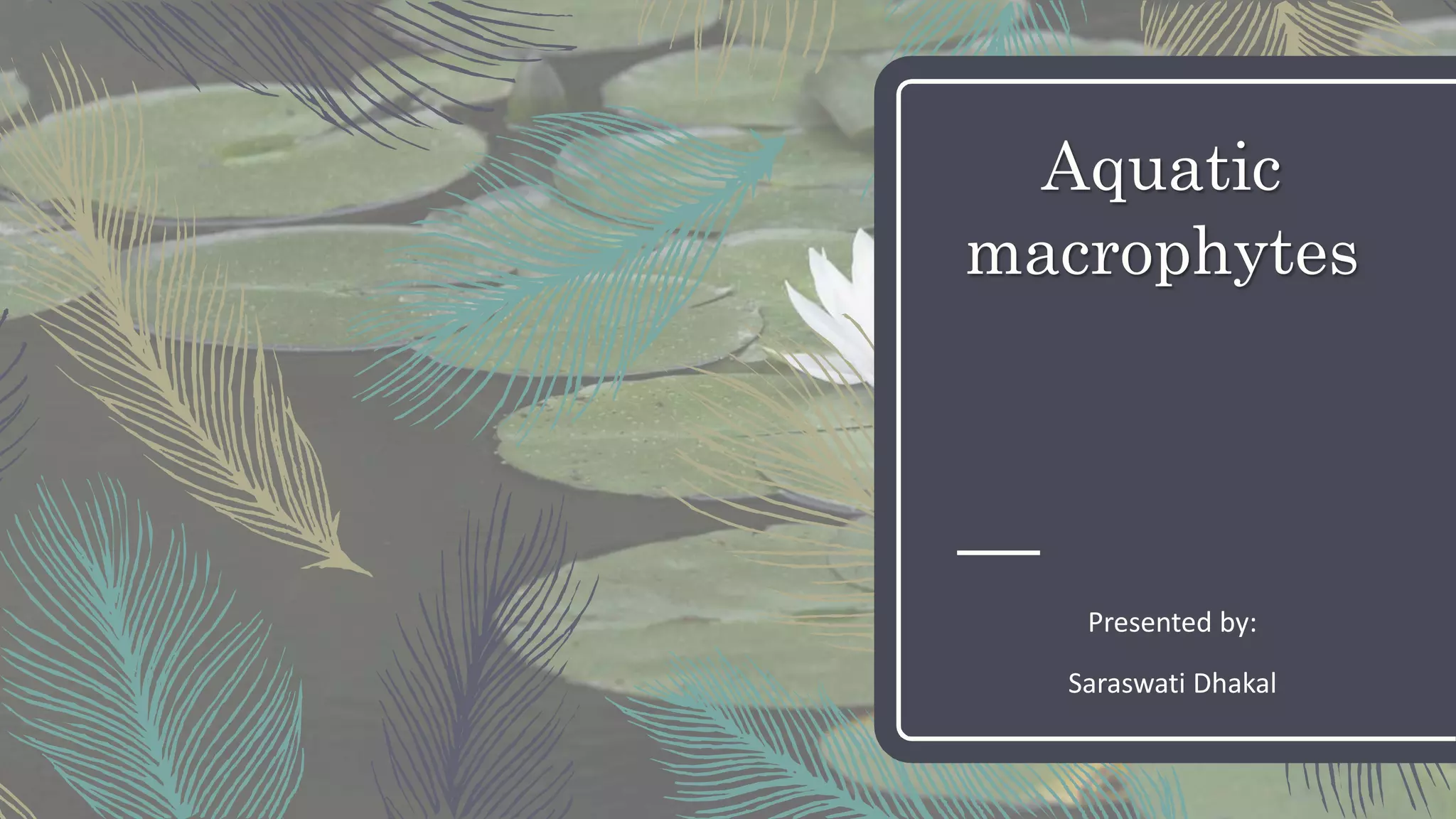

Aquatic
macrophytes
Presented by:
Saraswati Dhakal
Types of aquatic plants
 Free floating
 Floating leaves
 Emergent
 Submerged
 Marginal
Free Floating plants
Those plants which float freely on the water surface, allowing
the plant to be moved around pond by wind and water
current.
Examples: Duckweed, water hyacinth, etc.
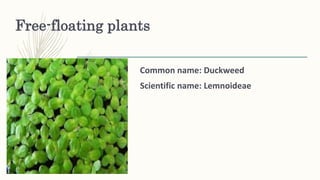
Free-floating plants
Common name: Duckweed
Scientific name: Lemnoideae
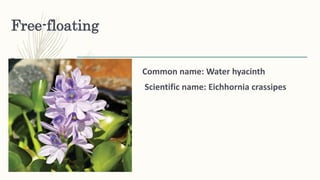
Free-floating
–
– Common name: Water hyacinth
– Scientific name: Eichhornia crassipes
Floating leaves
A water plant which floats on the surface of a pond with its
roots trailing in the water is known as floating plants.
Examples: Azolla, Pistia, etc.
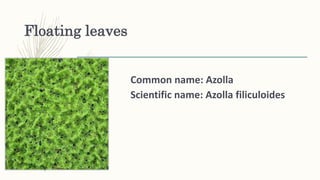
Floating leaves
Common name: Azolla
Scientific name: Azolla filiculoides
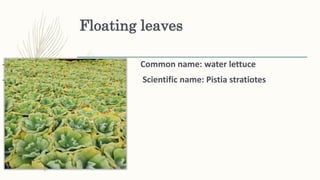
Floating leaves
– Common name: water lettuce
– Scientific name: Pistia stratiotes
Emergent plants
The plants which are rooted in the lake bottom, but their leaves
and stems extend out of water is called emergent plants.
Example: Flowering rush, reed, etc.
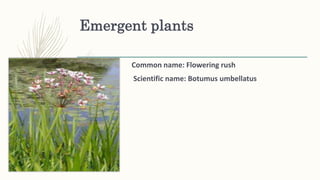
Emergent plants
Common name: Flowering rush
Scientific name: Botumus umbellatus
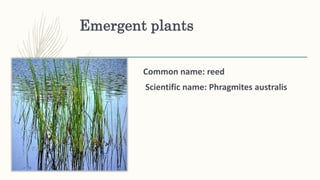
Emergent plants
Common name: reed
Scientific name: Phragmites australis
Sub-merged plants
The plants that are completely under the water and typically
have a root system in the bottom sediment is known as sub-
merged plants.
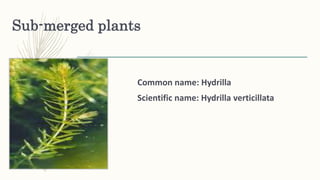
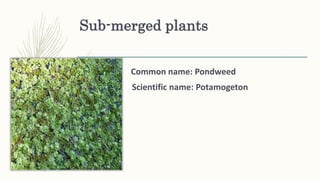
Example: Hydrilla, pondweed, etc.
Sub-merged plants
Common name: Hydrilla
Scientific name: Hydrilla verticillata
Sub-merged plants
Common name: Pondweed
Scientific name: Potamogeton
Marginal plants
Those plants which grow around the margins of the pond
where the water is shallow is known as marginal plants.
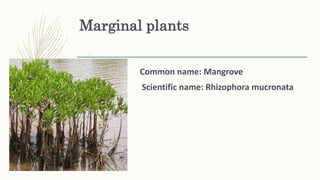
Example: Mangrove, cattails, etc.
Marginal plants
Common name: Mangrove
Scientific name: Rhizophora mucronata
Marginal plants
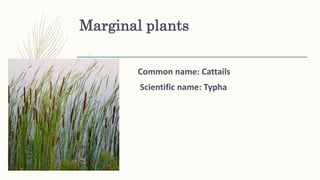
Common name: Cattails
Scientific name: Typha
Thank you!

Aquatic macrophytes in pond