+

NUTRITION
   101

            UT College of Pharmacy
        UTSSHP Nutrition Committee
+
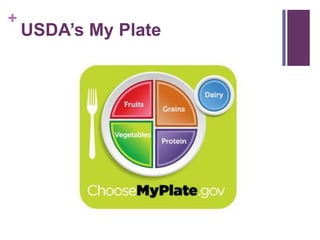
    USDA’s My Plate
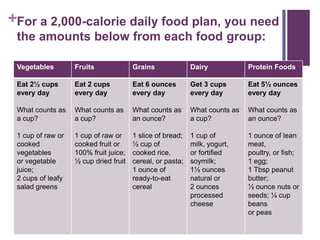
+For a 2,000-calorie daily food plan, you need
 the amounts below from each food group:

 Vegetables        Fruits              Grains              Dairy            Protein Foods

 Eat 2½ cups       Eat 2 cups          Eat 6 ounces        Get 3 cups       Eat 5½ ounces
 every day         every day           every day           every day        every day

 What counts as    What counts as      What counts as      What counts as   What counts as
 a cup?            a cup?              an ounce?           a cup?           an ounce?

 1 cup of raw or   1 cup of raw or     1 slice of bread;   1 cup of         1 ounce of lean
 cooked            cooked fruit or     ½ cup of            milk, yogurt,    meat,
 vegetables        100% fruit juice;   cooked rice,        or fortified     poultry, or fish;
 or vegetable      ½ cup dried fruit   cereal, or pasta;   soymilk;         1 egg;
 juice;                                1 ounce of          1½ ounces        1 Tbsp peanut
 2 cups of leafy                       ready-to-eat        natural or       butter;
 salad greens                          cereal              2 ounces         ½ ounce nuts or
                                                           processed        seeds; ¼ cup
                                                           cheese           beans
                                                                            or peas
+ Cut back on sodium and empty
 calories
  Lookout for salt (sodium) in foods you buy. Compare
  sodium in foods and choose those with a lower number.

  Drink   water instead of sugary drinks.

  Eat   sugary desserts less often.

  Make foods that are high in solid fats—such as cakes,
  cookies, ice cream, pizza, cheese, sausages, and hot
  dogs—occasional choices, not every day foods.

  Limit
       empty calories to less than 260 per day, based on a
  2,000 calorie diet.
+
    Be physically active your way

     Pickactivities you like and do each for at least
     10 minutes at a time. Every bit adds up, and
     health benefits increase as you spend more time
     being active.
     Childrenand adolescents: get 60 minutes or
     more a day.
     Adults:get 2 hours and 30 minutes or more a
     week of activity that requires moderate effort,
     such as brisk walking.
+   What To Look For In A
      Nutrition Label
+
    Serving Size


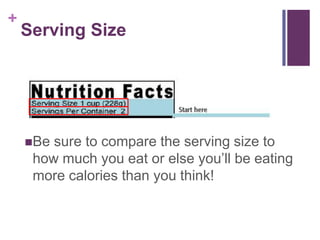
    Be sure to compare the serving size to
     how much you eat or else you’ll be eating
     more calories than you think!
+
    Calories


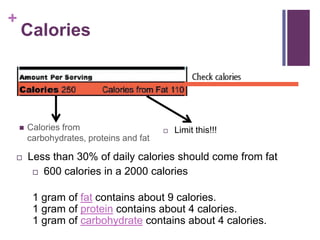
       Calories from                        Limit this!!!
        carbohydrates, proteins and fat

       Less than 30% of daily calories should come from fat
          600 calories in a 2000 calories


         1 gram of fat contains about 9 calories.
         1 gram of protein contains about 4 calories.
         1 gram of carbohydrate contains about 4 calories.
+
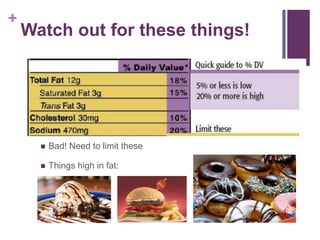
    Watch out for these things!


         Bad! Need to limit these

         Things high in fat:
+
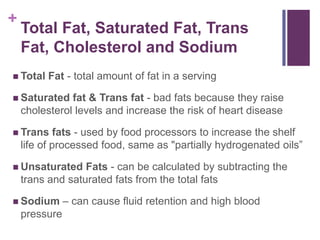
    Total Fat, Saturated Fat, Trans
    Fat, Cholesterol and Sodium
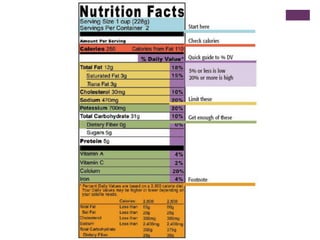
 Total   Fat - total amount of fat in a serving

 Saturated    fat & Trans fat - bad fats because they raise
    cholesterol levels and increase the risk of heart disease

 Trans      fats - used by food processors to increase the shelf
    life of processed food, same as "partially hydrogenated oils‖

 Unsaturated     Fats - can be calculated by subtracting the
    trans and saturated fats from the total fats

 Sodium       – can cause fluid retention and high blood
    pressure
+
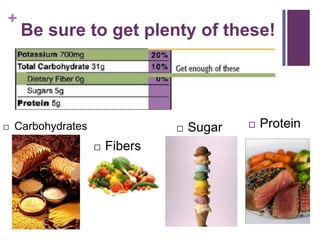
     Be sure to get plenty of these!


   Carbohydrates                   Sugar      Protein
                       Fibers
+
    Carbohydrates
     Broken  down into
     total carbohydrates, fiber, and sugars

    Total Carbohydrates
     Amount of total carbohydrates per serving measured
     in grams
     Combines   all the carbs in a
     food: fiber, sugars, starches, sugar alcohols and
     glycerin
+
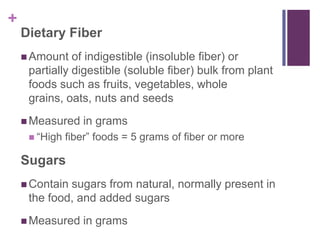
    Dietary Fiber
     Amount   of indigestible (insoluble fiber) or
     partially digestible (soluble fiber) bulk from plant
     foods such as fruits, vegetables, whole
     grains, oats, nuts and seeds
     Measured    in grams
      ―High   fiber‖ foods = 5 grams of fiber or more

    Sugars
     Containsugars from natural, normally present in
     the food, and added sugars
     Measured    in grams
+
    Proteins
 How      much total protein is in a single serving of a
    food
 No   distinction made for the type of protein or the
    source
 Amino   acids and peptides not included since not
    considered whole food proteins
+
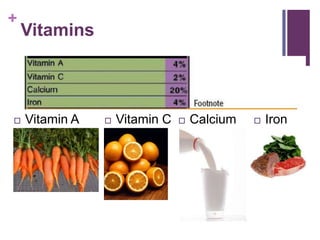
    Vitamins


   Vitamin A      Vitamin C      Calcium      Iron
+
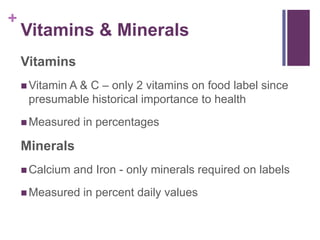
    Vitamins & Minerals
    Vitamins
             & C – only 2 vitamins on food label since
     Vitamin A
     presumable historical importance to health
     Measured    in percentages

    Minerals
     Calcium   and Iron - only minerals required on labels
     Measured    in percent daily values
+


Portion Sizes
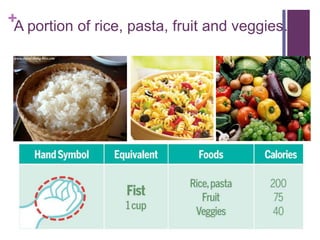
+ portion of rice, pasta, fruit and veggies…
 A
+
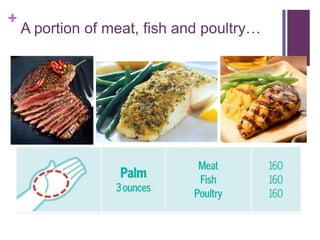
    A portion of meat, fish and poultry…
+
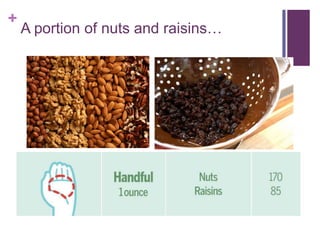
    A portion of nuts and raisins…
+
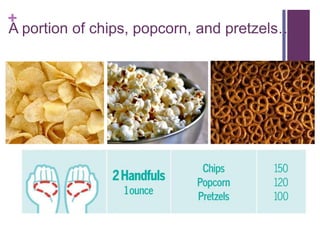
A portion of chips, popcorn, and pretzels…
+
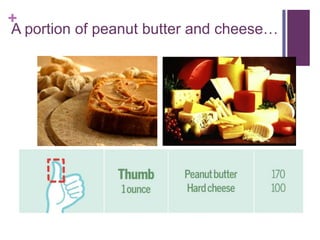
A portion of peanut butter and cheese…
+
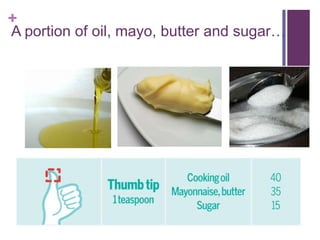
A portion of oil, mayo, butter and sugar…
+

    Making Healthy Choices
    at the Grocery Store
+
    Benefits of Eating Seasonally:
 Eating   seasonally ensures your food is as fresh as
    possible.
 Your   family will be able to enjoy the health benefits of
    eating fresh, unprocessed fruits and vegetables.
 Food    is often of greater nutritive value.
 Reduces    potential exposure to chemicals applied to
    produce prepared for shipping.
 Produce,     meats, eggs and nuts eaten while they are
    plentiful, do not need to be stored.
+
    Benefits of Eating Seasonally:


     Your   food dollar is stretched further.
     Environmentaldamage caused by shipping
     foods thousands of miles is reduced.
     Buying seasonal produce also provides an
     exciting opportunity to try new foods and to
     experiment with seasonal recipes.
     Seasonal    food simply tastes better!
+
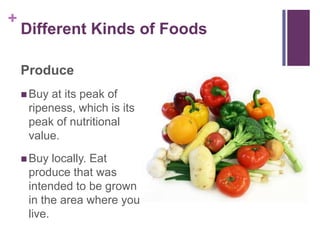
    Different Kinds of Foods

    Produce
     Buy at its peak of
     ripeness, which is its
     peak of nutritional
     value.
     Buy  locally. Eat
     produce that was
     intended to be grown
     in the area where you
     live.
+
    Different Kinds of Foods

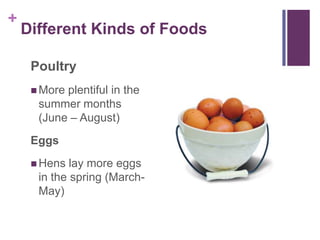
     Poultry
      Moreplentiful in the
      summer months
      (June – August)
     Eggs
      Hens  lay more eggs
      in the spring (March-
      May)
+
    Different Kinds of Foods

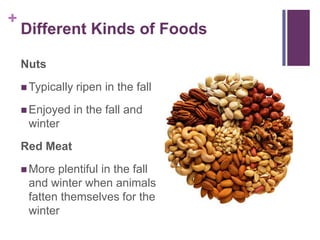
    Nuts
     Typically   ripen in the fall
     Enjoyed     in the fall and
     winter
    Red Meat
     More plentiful in the fall
     and winter when animals
     fatten themselves for the
     winter
+The Environmental Working
 Group’s Shoppers' Guide to
 Pesticides in Produce
 The following twelve foods had       Asparagus
 the lowest pesticide load when
 conventionally grown and are         Sweet peas (frozen)
 the safest conventionally grown
 crops to consume:                    Mango

    Broccoli                         Pineapple

    Eggplant                         Sweet corn (frozen)

    Cabbage                          Avocado

    Banana                           Onion

    Kiwi
+
    Best bet, buy organic
     Some   pesticides are systemic
     Can   not be washed away or peeled off
     Consider buying organic varieties of just the
     foods that have been shown to be more likely to
     have high levels of chemical residues: peaches,
     apples, pears, winter squash, green beans,
     grapes, strawberries, raspberries, spinach, and
     potatoes.

Nutrition 101

  • 1.
    + NUTRITION 101 UT College of Pharmacy UTSSHP Nutrition Committee
  • 2.
    + USDA’s My Plate
  • 3.
    +For a 2,000-caloriedaily food plan, you need the amounts below from each food group: Vegetables Fruits Grains Dairy Protein Foods Eat 2½ cups Eat 2 cups Eat 6 ounces Get 3 cups Eat 5½ ounces every day every day every day every day every day What counts as What counts as What counts as What counts as What counts as a cup? a cup? an ounce? a cup? an ounce? 1 cup of raw or 1 cup of raw or 1 slice of bread; 1 cup of 1 ounce of lean cooked cooked fruit or ½ cup of milk, yogurt, meat, vegetables 100% fruit juice; cooked rice, or fortified poultry, or fish; or vegetable ½ cup dried fruit cereal, or pasta; soymilk; 1 egg; juice; 1 ounce of 1½ ounces 1 Tbsp peanut 2 cups of leafy ready-to-eat natural or butter; salad greens cereal 2 ounces ½ ounce nuts or processed seeds; ¼ cup cheese beans or peas
  • 4.
    + Cut backon sodium and empty calories  Lookout for salt (sodium) in foods you buy. Compare sodium in foods and choose those with a lower number.  Drink water instead of sugary drinks.  Eat sugary desserts less often.  Make foods that are high in solid fats—such as cakes, cookies, ice cream, pizza, cheese, sausages, and hot dogs—occasional choices, not every day foods.  Limit empty calories to less than 260 per day, based on a 2,000 calorie diet.
  • 5.
    + Be physically active your way  Pickactivities you like and do each for at least 10 minutes at a time. Every bit adds up, and health benefits increase as you spend more time being active.  Childrenand adolescents: get 60 minutes or more a day.  Adults:get 2 hours and 30 minutes or more a week of activity that requires moderate effort, such as brisk walking.
  • 6.
    + What To Look For In A Nutrition Label
  • 8.
    + Serving Size Be sure to compare the serving size to how much you eat or else you’ll be eating more calories than you think!
  • 9.
    + Calories  Calories from  Limit this!!! carbohydrates, proteins and fat  Less than 30% of daily calories should come from fat  600 calories in a 2000 calories 1 gram of fat contains about 9 calories. 1 gram of protein contains about 4 calories. 1 gram of carbohydrate contains about 4 calories.
  • 10.
    + Watch out for these things!  Bad! Need to limit these  Things high in fat:
  • 11.
    + Total Fat, Saturated Fat, Trans Fat, Cholesterol and Sodium  Total Fat - total amount of fat in a serving  Saturated fat & Trans fat - bad fats because they raise cholesterol levels and increase the risk of heart disease  Trans fats - used by food processors to increase the shelf life of processed food, same as "partially hydrogenated oils‖  Unsaturated Fats - can be calculated by subtracting the trans and saturated fats from the total fats  Sodium – can cause fluid retention and high blood pressure
  • 12.
    + Be sure to get plenty of these!  Carbohydrates  Sugar  Protein  Fibers
  • 13.
    + Carbohydrates  Broken down into total carbohydrates, fiber, and sugars Total Carbohydrates  Amount of total carbohydrates per serving measured in grams  Combines all the carbs in a food: fiber, sugars, starches, sugar alcohols and glycerin
  • 14.
    + Dietary Fiber  Amount of indigestible (insoluble fiber) or partially digestible (soluble fiber) bulk from plant foods such as fruits, vegetables, whole grains, oats, nuts and seeds  Measured in grams  ―High fiber‖ foods = 5 grams of fiber or more Sugars  Containsugars from natural, normally present in the food, and added sugars  Measured in grams
  • 15.
    + Proteins  How much total protein is in a single serving of a food  No distinction made for the type of protein or the source  Amino acids and peptides not included since not considered whole food proteins
  • 16.
    + Vitamins  Vitamin A  Vitamin C  Calcium  Iron
  • 17.
    + Vitamins & Minerals Vitamins & C – only 2 vitamins on food label since  Vitamin A presumable historical importance to health  Measured in percentages Minerals  Calcium and Iron - only minerals required on labels  Measured in percent daily values
  • 18.
  • 19.
    + portion ofrice, pasta, fruit and veggies… A
  • 20.
    + A portion of meat, fish and poultry…
  • 21.
    + A portion of nuts and raisins…
  • 22.
    + A portion ofchips, popcorn, and pretzels…
  • 23.
    + A portion ofpeanut butter and cheese…
  • 24.
    + A portion ofoil, mayo, butter and sugar…
  • 25.
    + Making Healthy Choices at the Grocery Store
  • 26.
    + Benefits of Eating Seasonally:  Eating seasonally ensures your food is as fresh as possible.  Your family will be able to enjoy the health benefits of eating fresh, unprocessed fruits and vegetables.  Food is often of greater nutritive value.  Reduces potential exposure to chemicals applied to produce prepared for shipping.  Produce, meats, eggs and nuts eaten while they are plentiful, do not need to be stored.
  • 27.
    + Benefits of Eating Seasonally:  Your food dollar is stretched further.  Environmentaldamage caused by shipping foods thousands of miles is reduced.  Buying seasonal produce also provides an exciting opportunity to try new foods and to experiment with seasonal recipes.  Seasonal food simply tastes better!
  • 28.
    + Different Kinds of Foods Produce  Buy at its peak of ripeness, which is its peak of nutritional value.  Buy locally. Eat produce that was intended to be grown in the area where you live.
  • 29.
    + Different Kinds of Foods Poultry  Moreplentiful in the summer months (June – August) Eggs  Hens lay more eggs in the spring (March- May)
  • 30.
    + Different Kinds of Foods Nuts  Typically ripen in the fall  Enjoyed in the fall and winter Red Meat  More plentiful in the fall and winter when animals fatten themselves for the winter
  • 31.
    +The Environmental Working Group’s Shoppers' Guide to Pesticides in Produce The following twelve foods had  Asparagus the lowest pesticide load when conventionally grown and are  Sweet peas (frozen) the safest conventionally grown crops to consume:  Mango  Broccoli  Pineapple  Eggplant  Sweet corn (frozen)  Cabbage  Avocado  Banana  Onion  Kiwi
  • 32.
    + Best bet, buy organic  Some pesticides are systemic  Can not be washed away or peeled off  Consider buying organic varieties of just the foods that have been shown to be more likely to have high levels of chemical residues: peaches, apples, pears, winter squash, green beans, grapes, strawberries, raspberries, spinach, and potatoes.