



Comprehensive Consideration
in Planning an Effective
Reliability Demonstration Test (
更有效的设计可靠性验证试验
)
Dr. Wendai Wang (汪文岱博士
)
©2013 ASQ & Presentation Wang
http://reliabilitycalendar.org/Webina
rs/Chinese.html
http://reliabilitycalendar.org/Webina
rs/Chinese.html
ASQ Reliability Division
Chinese Webinar Series
One of the monthly webinars
on topics of interest to
reliability engineers.
To view recorded webinar (available to ASQ Reliability
Division members only) visit asq.org/reliability
To sign up for the free and available to anyone live
webinars visit reliabilitycalendar.org and select Chinese
Webinars to find links to register for upcoming events
设计更有效的可靠性验证试验
Wendai Wang
wendaiw@gmail.com
May 19, 2013
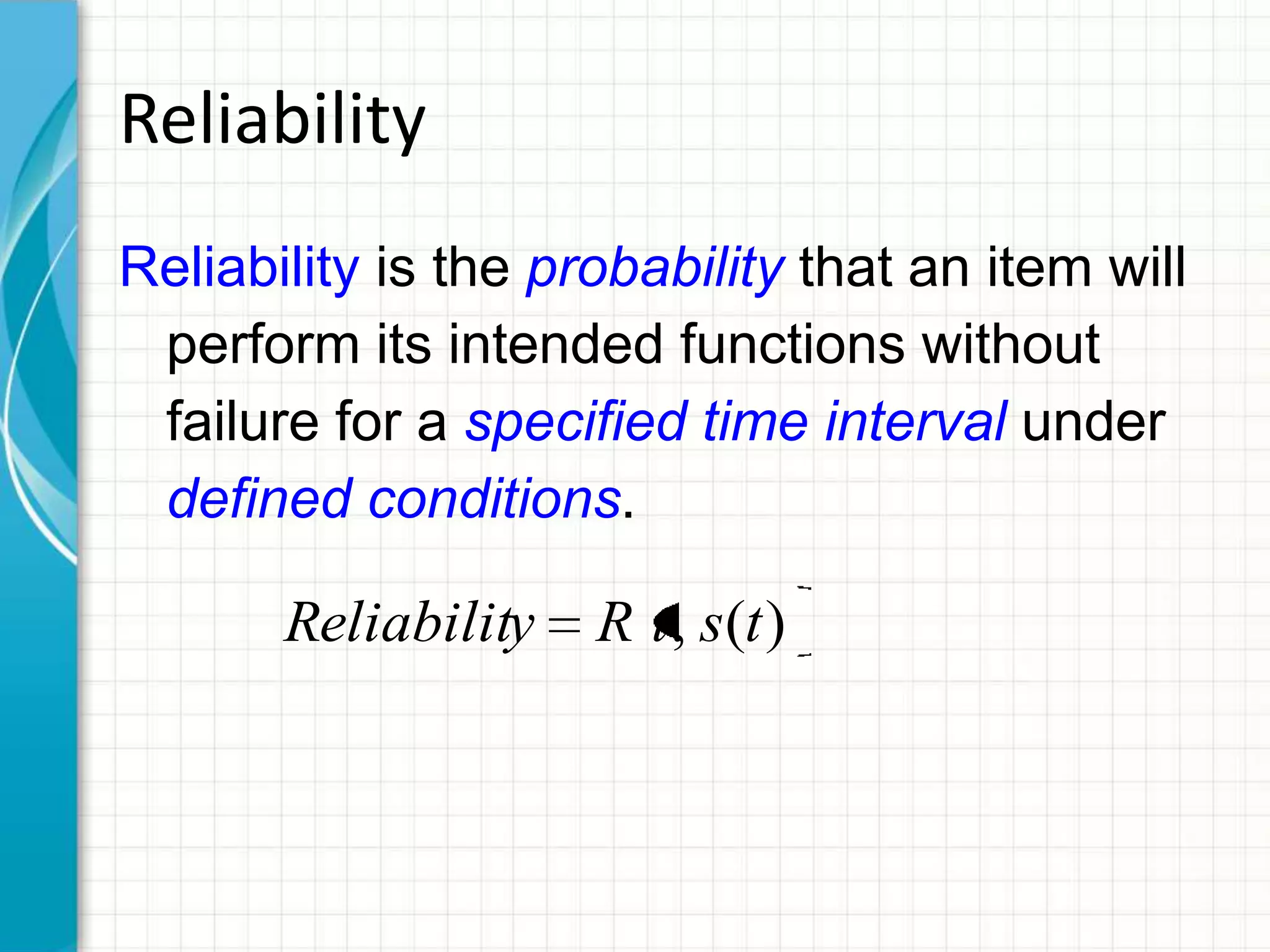
Reliability
Reliability is the probability that an item will
perform its intended functions without
failure for a specified time interval under
defined conditions.
)(, tstRyReliabilit
Reliability Engineering
Reliability Engineering provides the theoretical
and practical tools whereby product’s
reliability (capability) can be specified,
designed in, assessed, tested out,
demonstrated (verified), and monitored with
a desired confidence.
“Reliability Must Be Verified”
Prior to acceptance into production / service, a
product should be evaluated to check
whether the RELIABILITY exhibited under use
conditions exceeds the minimum acceptable
requirement.
Reliability Demonstration Test
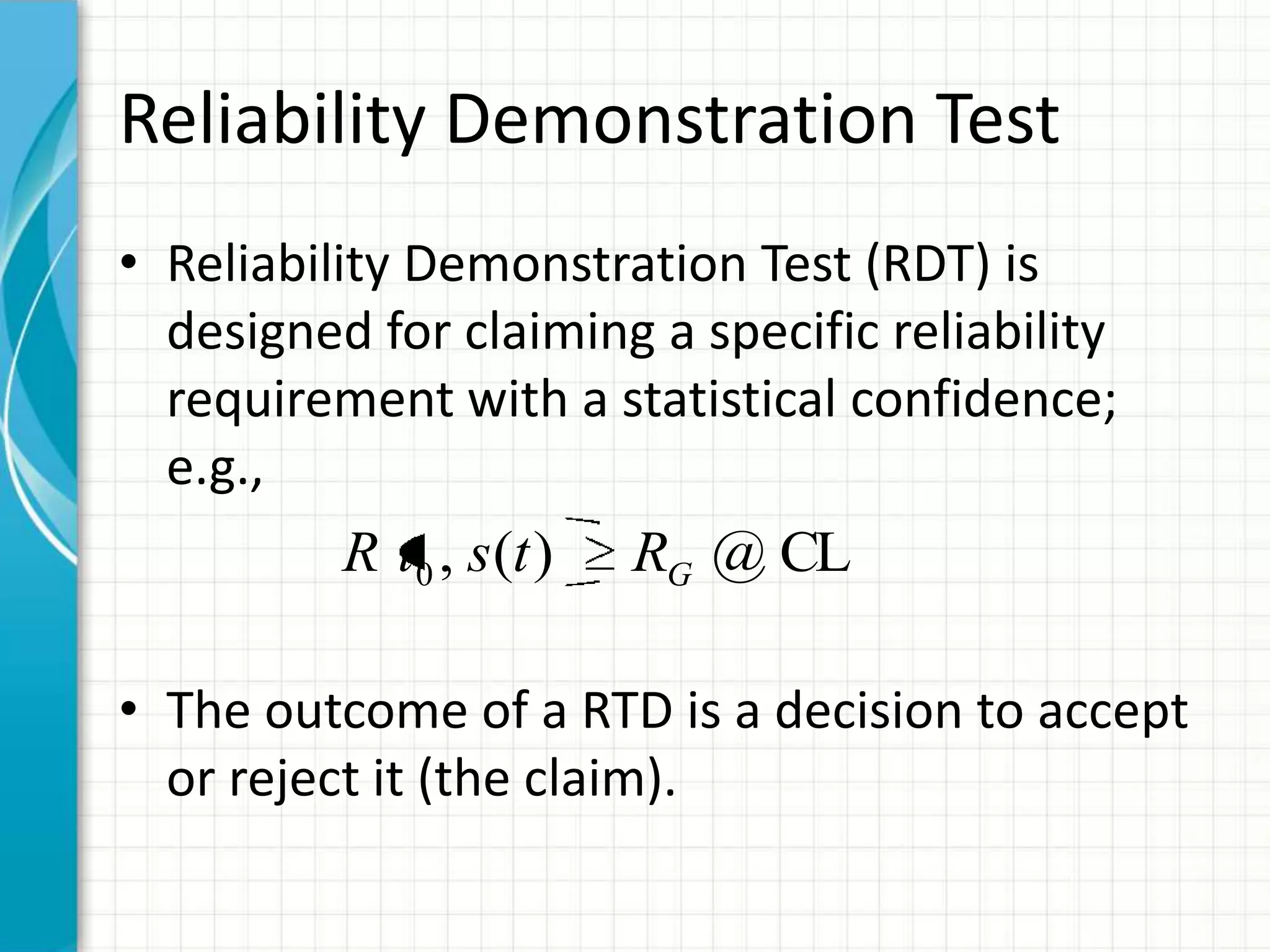
• Reliability Demonstration Test (RDT) is
designed for claiming a specific reliability
requirement with a statistical confidence;
e.g.,
• The outcome of a RTD is a decision to accept
or reject it (the claim).
CL@)(,0 GRtstR
Classic Reliability Demonstration Test
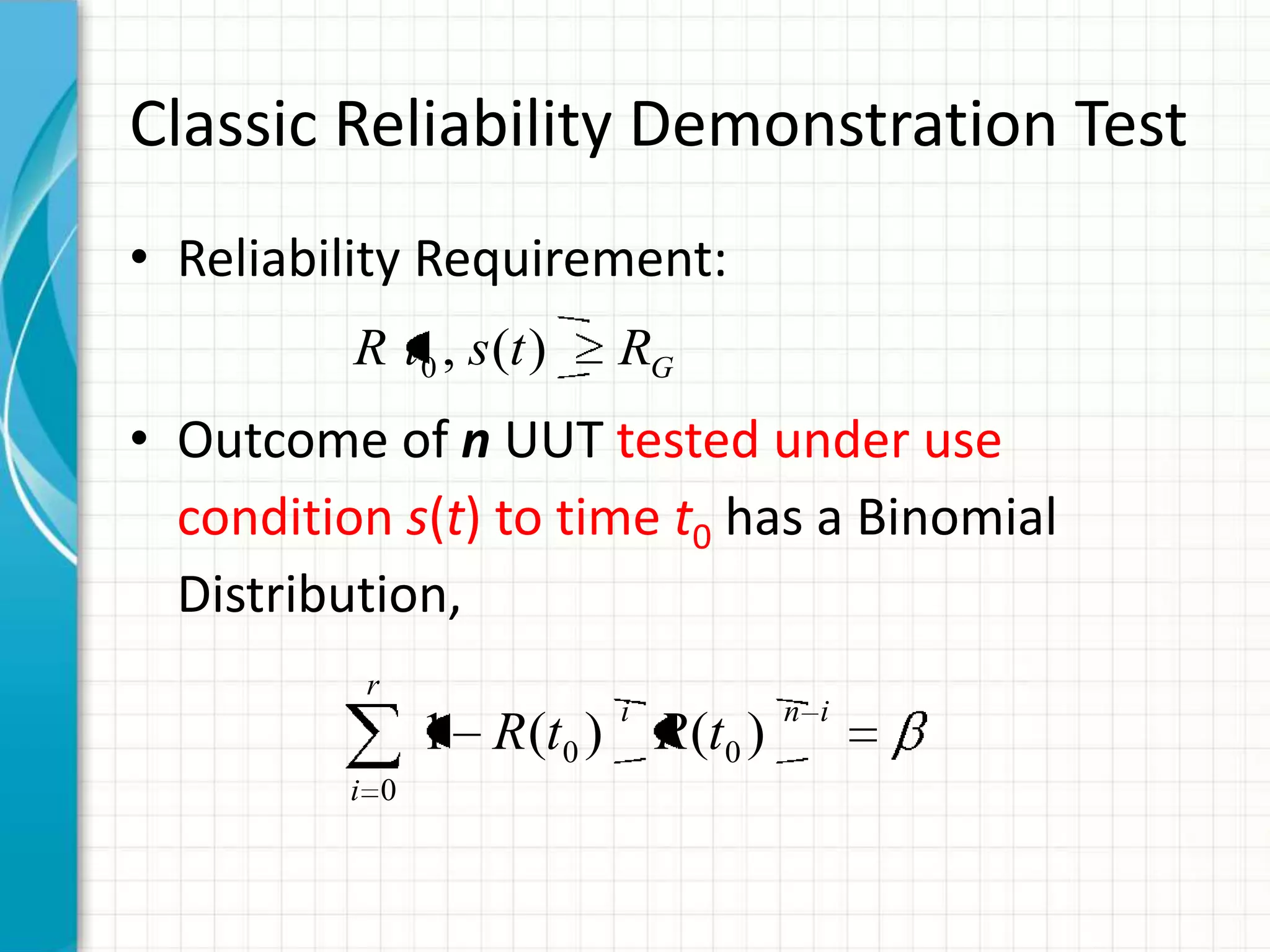
• Reliability Requirement:
• Outcome of n UUT tested under use
condition s(t) to time t0 has a Binomial
Distribution,
r
i
ini
tRtR
0
00 )()(1
GRtstR )(,0
Practically, Zero Failure Test
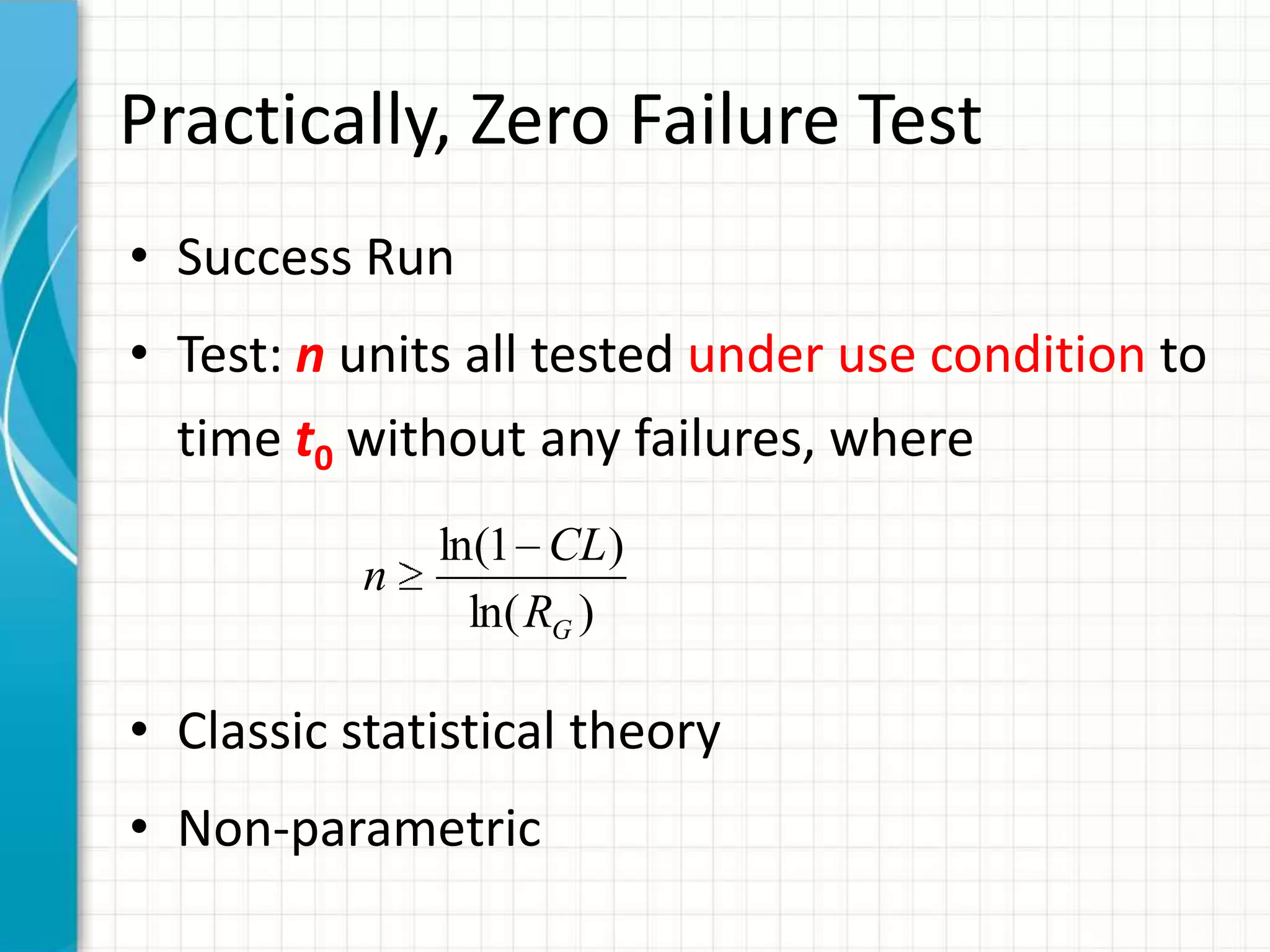
• Success Run
• Test: n units all tested under use condition to
time t0 without any failures, where
• Classic statistical theory
• Non-parametric
)ln(
)1ln(
GR
CL
n
Statistical Inference
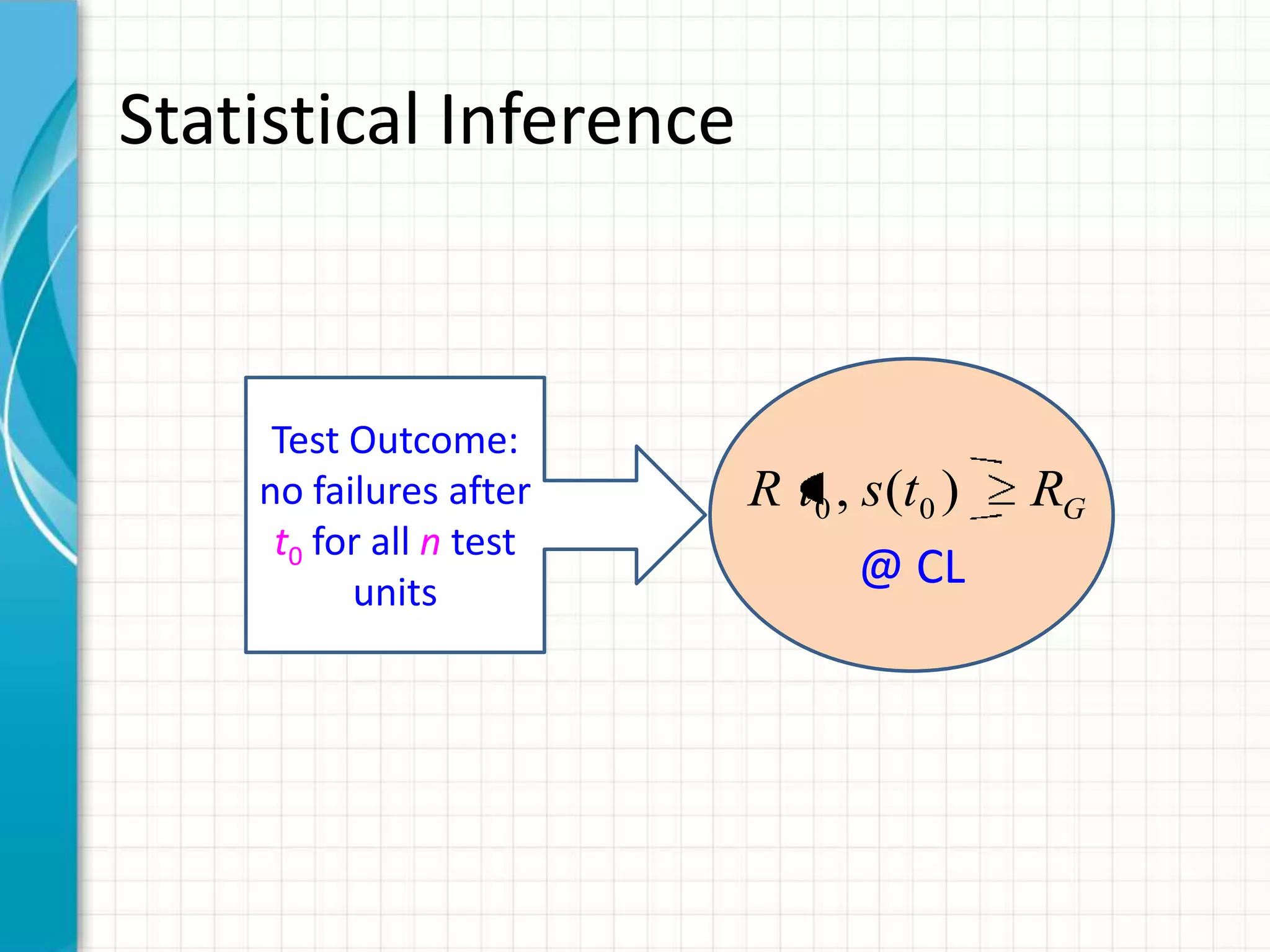
Test Outcome:
no failures after
t0 for all n test
units
@ CL
GRtstR )(, 00
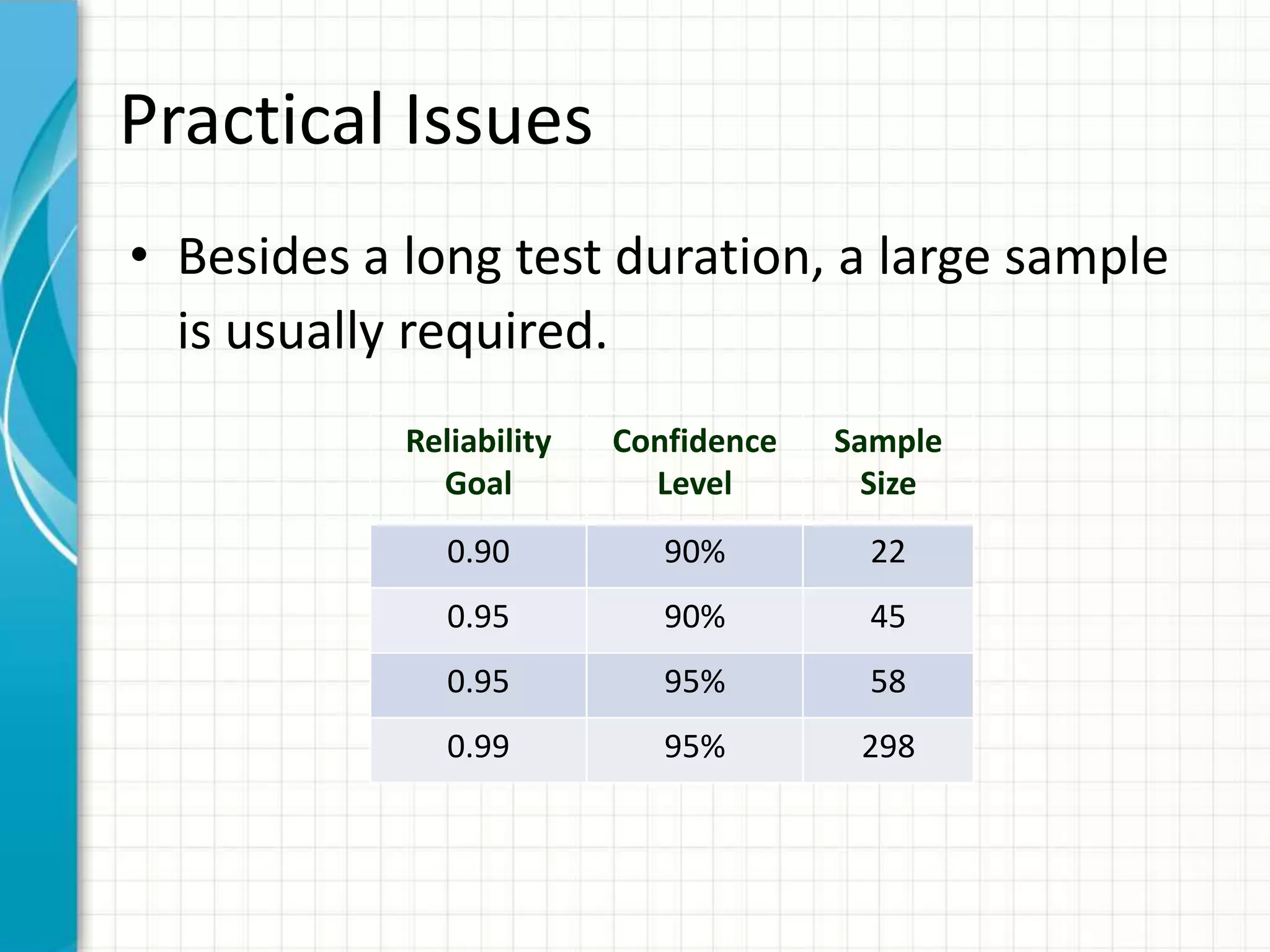
Practical Issues
• Besides a long test duration, a large sample
is usually required.
Reliability
Goal
Confidence
Level
Sample
Size
0.90 90% 22
0.95 90% 45
0.95 95% 58
0.99 95% 298
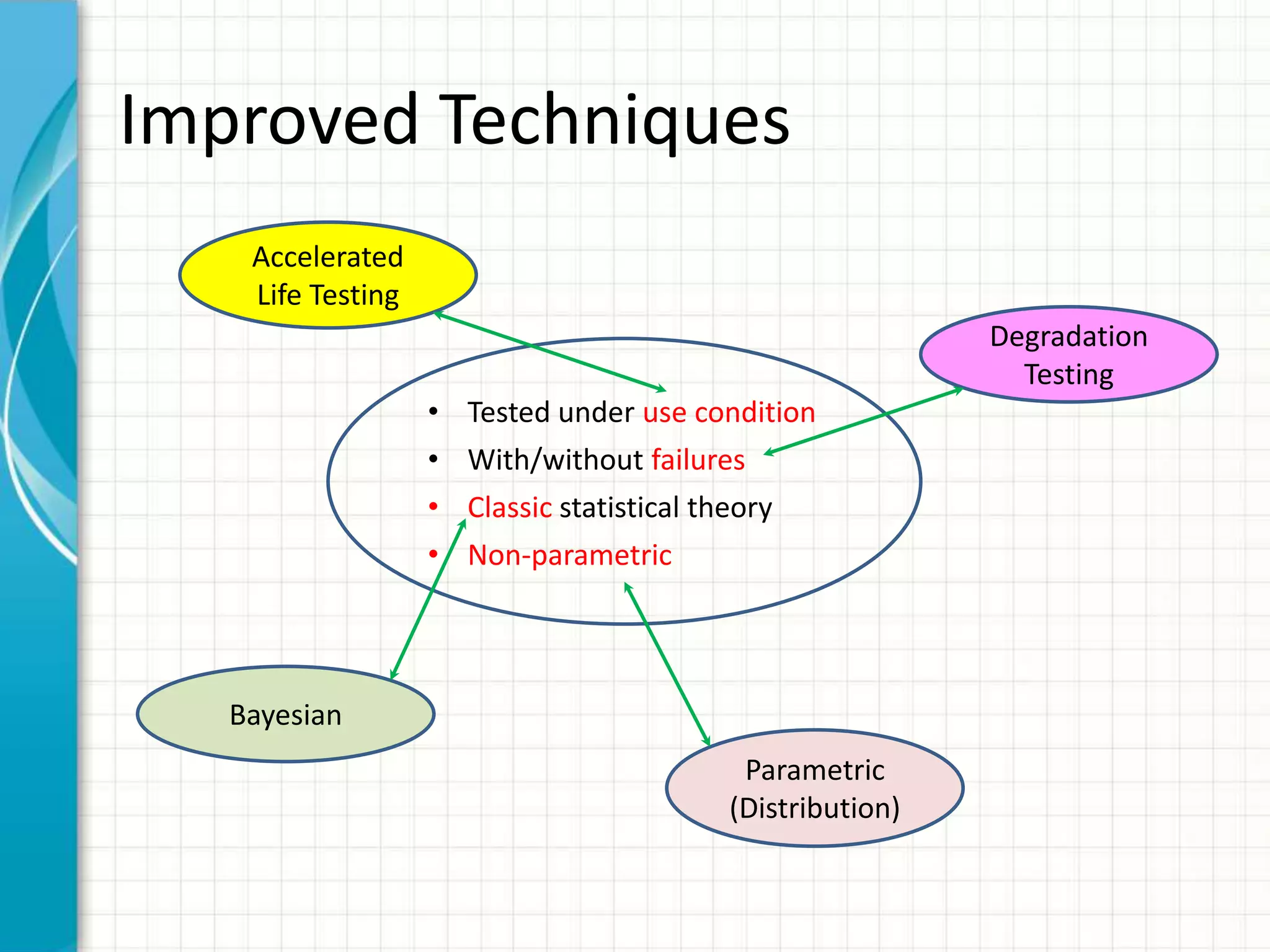
Improved Techniques
• Tested under use condition
• With/without failures
• Classic statistical theory
• Non-parametric
Accelerated
Life Testing
Bayesian
Degradation
Testing
Parametric
(Distribution)
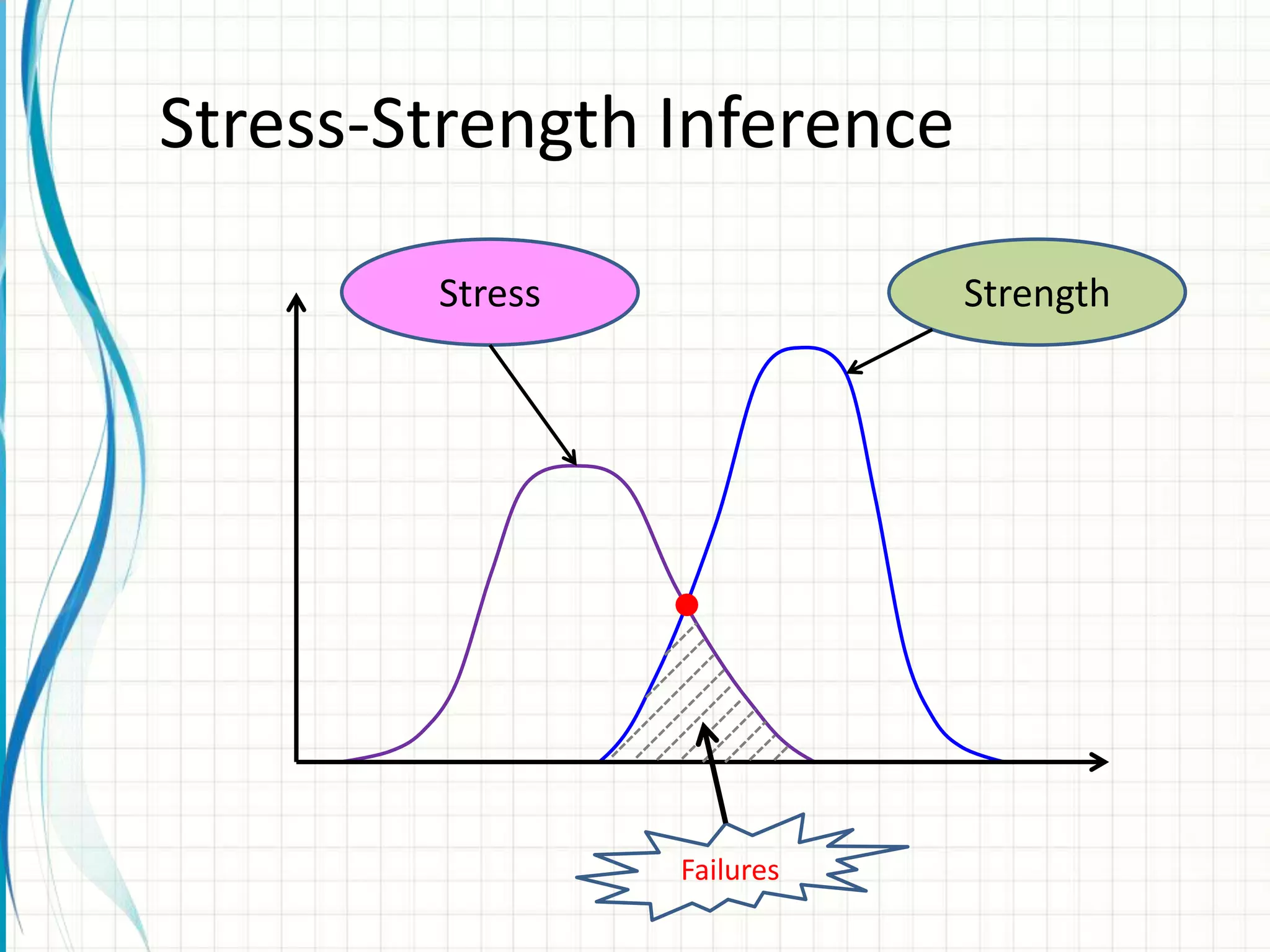
Stress-Strength Inference
Stress Strength
Failures
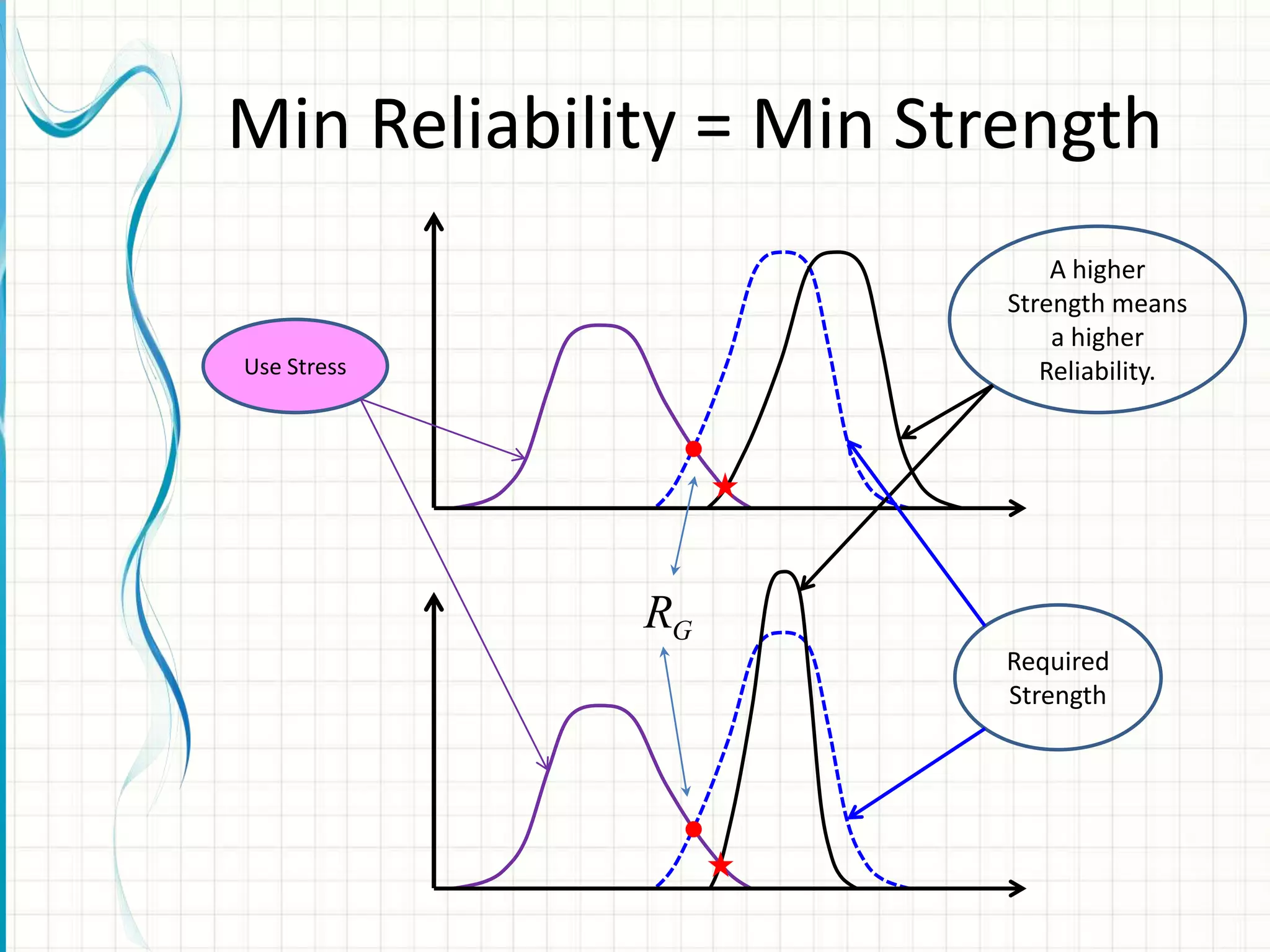
Min Reliability = Min Strength
Use Stress
A higher
Strength means
a higher
Reliability.
GR
Required
Strength
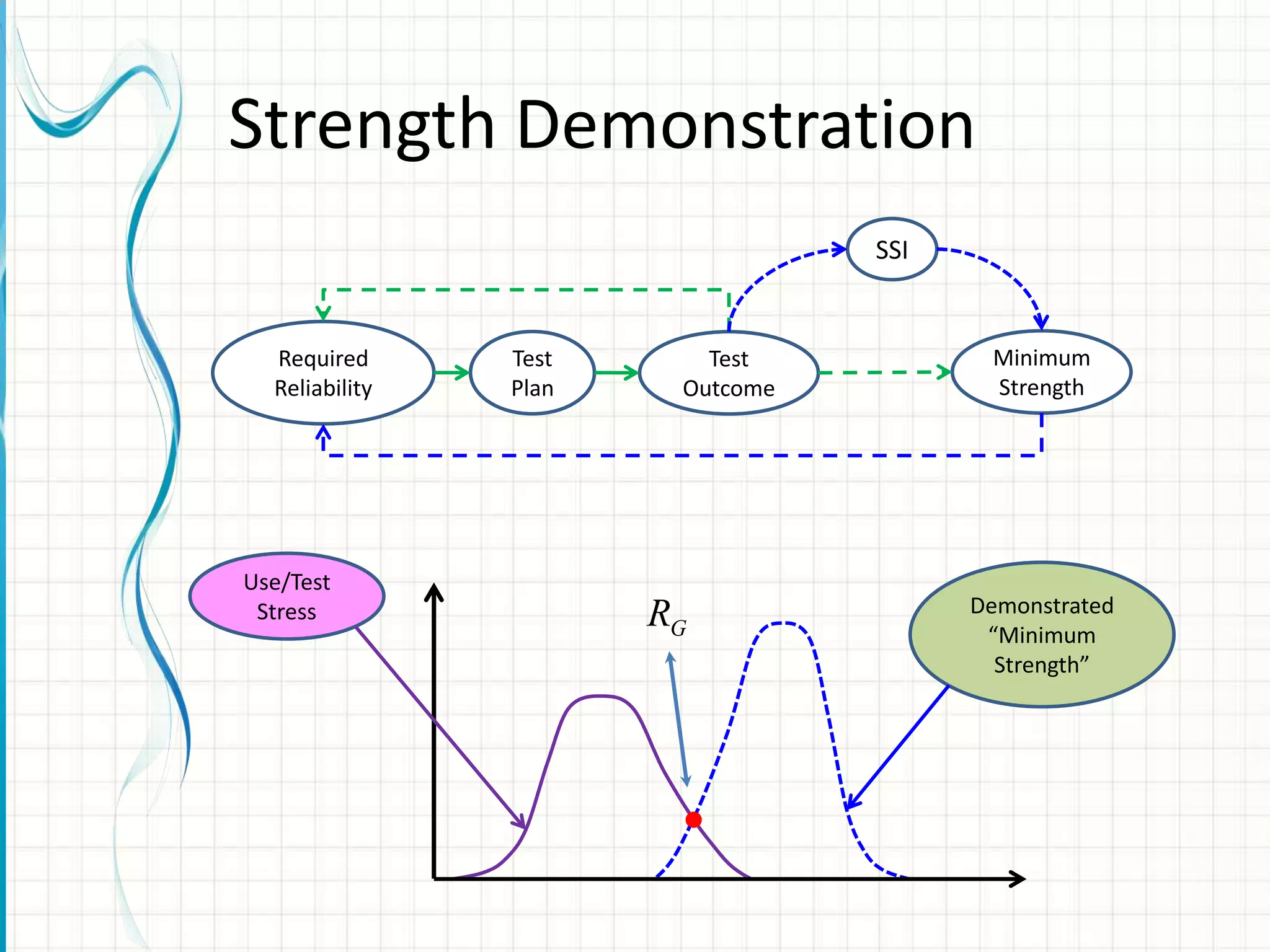
Strength Demonstration
Use/Test
Stress Demonstrated
“Minimum
Strength”
GR
Required
Reliability
Test
Plan
Test
Outcome
Minimum
Strength
SSI
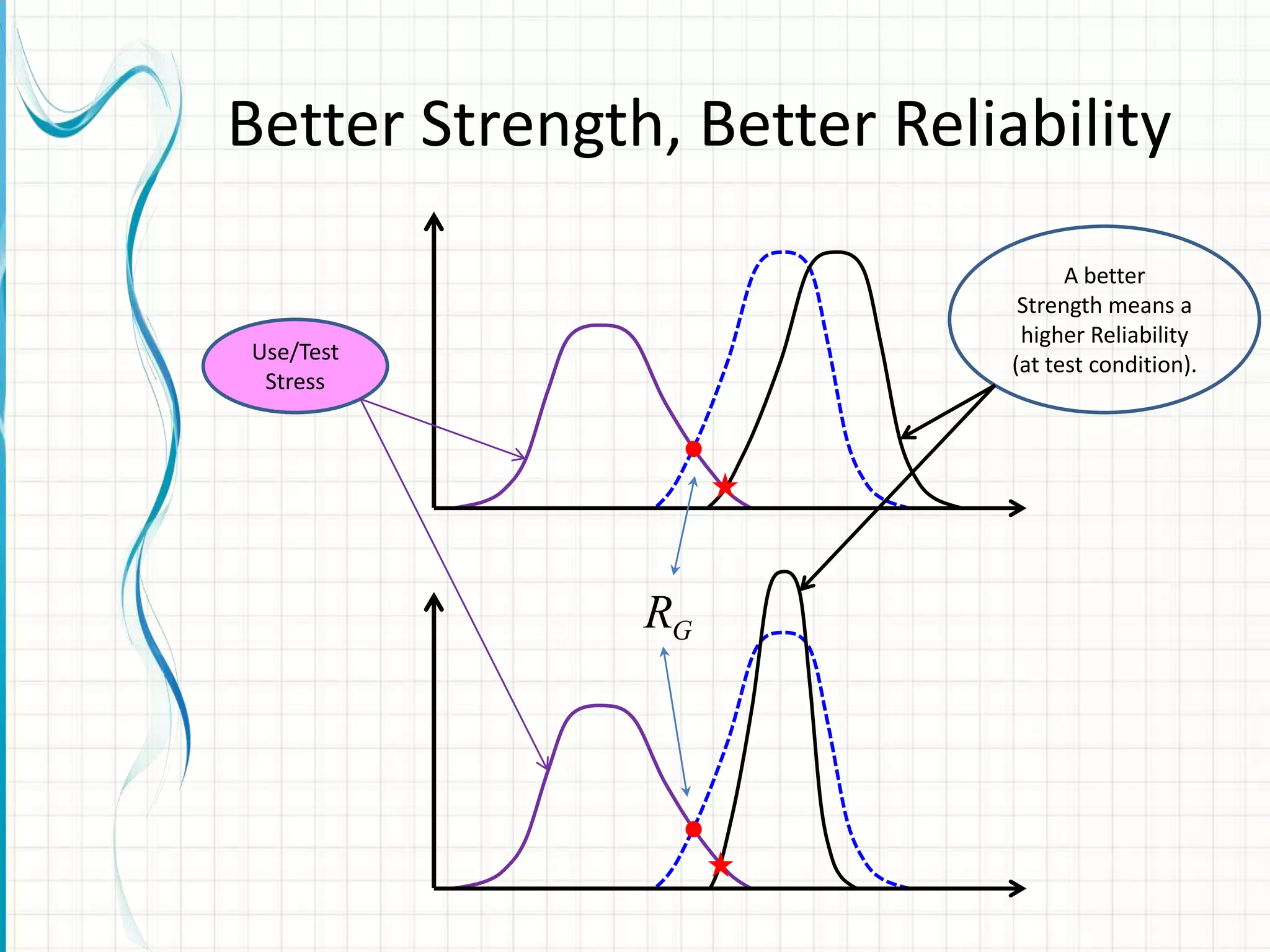
Better Strength, Better Reliability
Use/Test
Stress
A better
Strength means a
higher Reliability
(at test condition).
GR
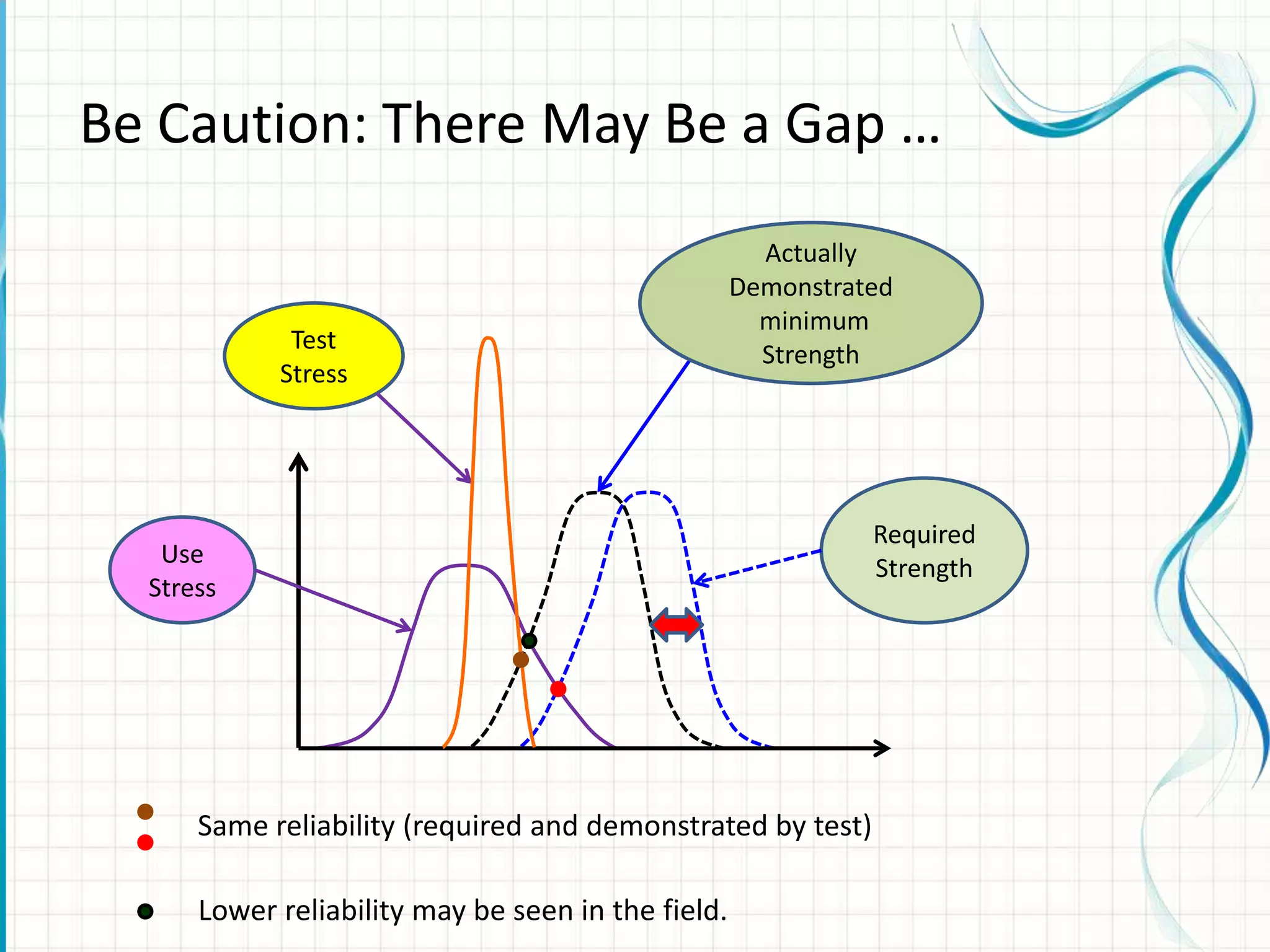
Be Caution: There May Be a Gap …
Test
Stress
Required
Strength
Use
Stress
Actually
Demonstrated
minimum
Strength
Same reliability (required and demonstrated by test)
Lower reliability may be seen in the field.
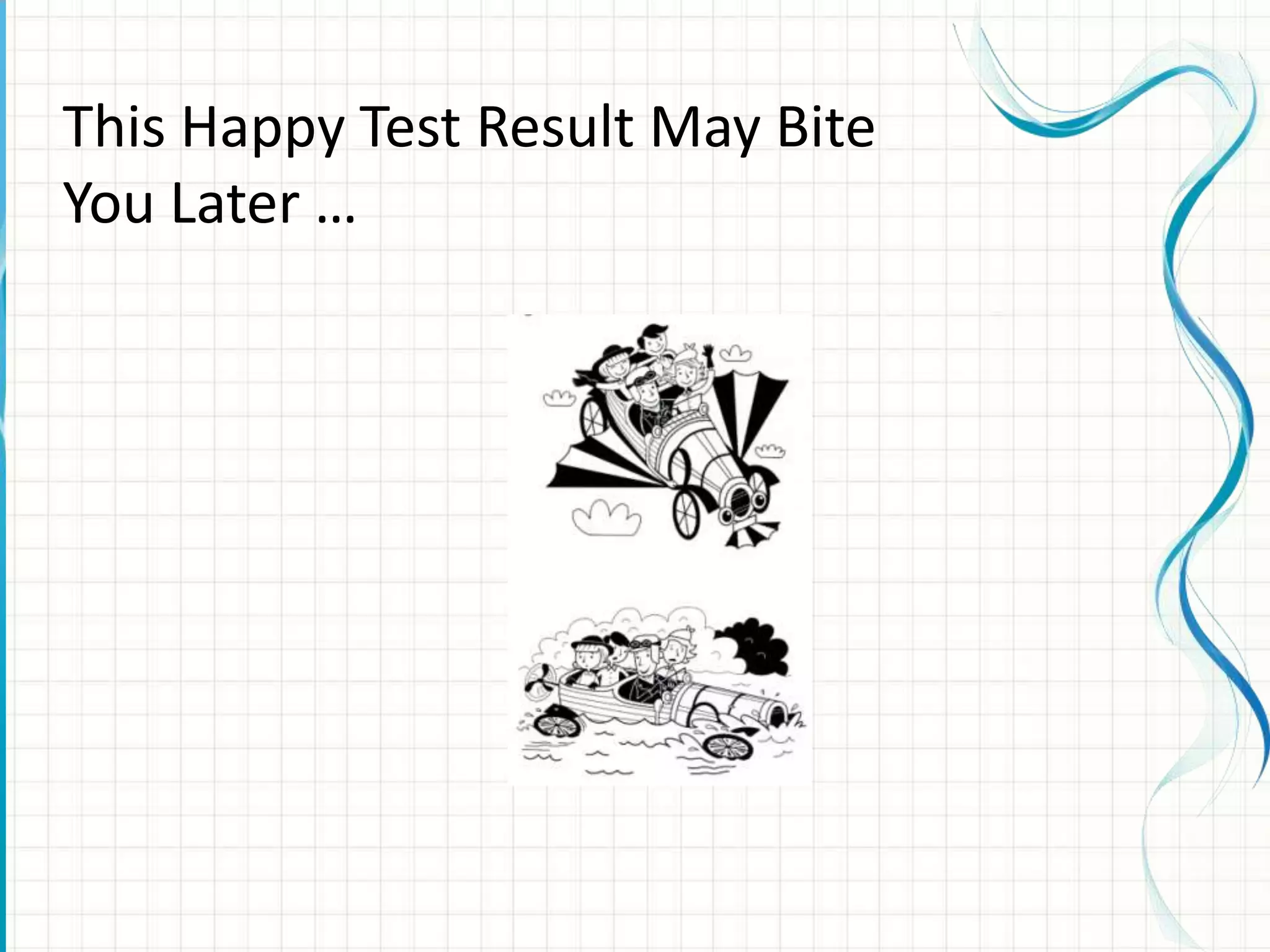
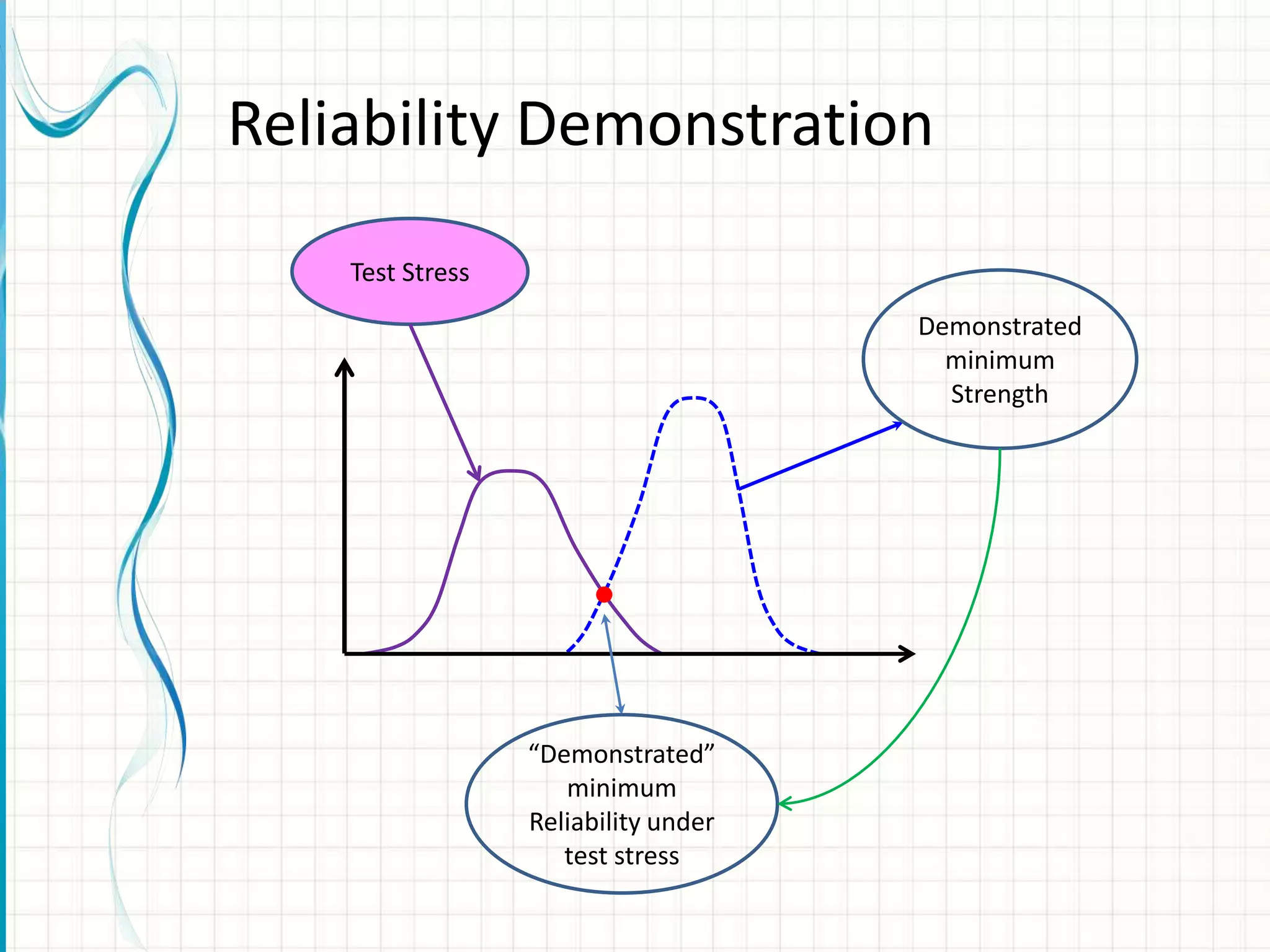
This Happy Test Result May Bite
You Later …
Test Stress
Demonstrated
minimum
Strength
Reliability Demonstration
“Demonstrated”
minimum
Reliability under
test stress
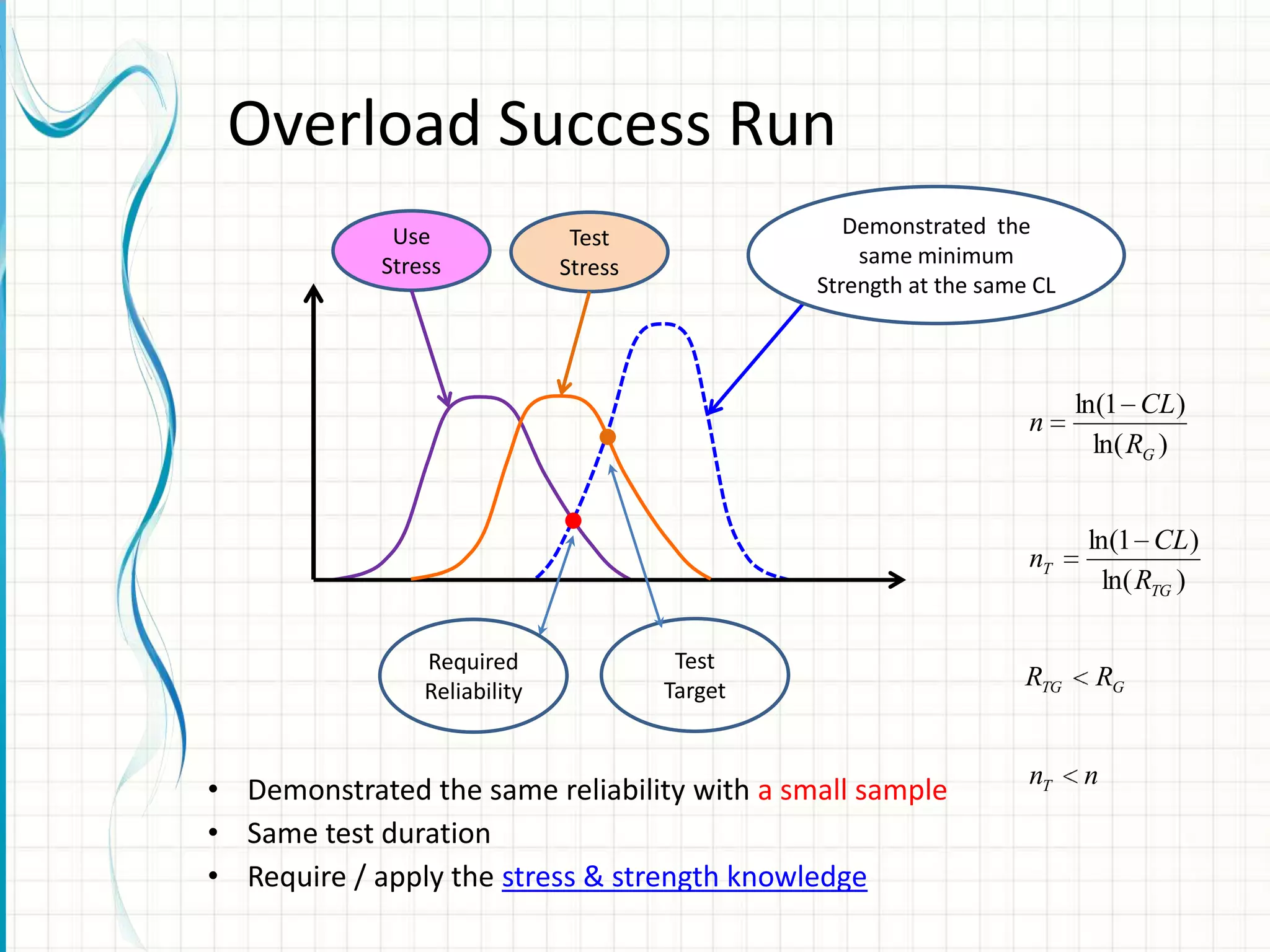
Use
Stress
Demonstrated the
same minimum
Strength at the same CL
Overload Success Run
Test
Stress
Required
Reliability
Test
Target
• Demonstrated the same reliability with a small sample
• Same test duration
• Require / apply the stress & strength knowledge
)ln(
)1ln(
TG
T
R
CL
n
)ln(
)1ln(
GR
CL
n
GTG RR
nnT
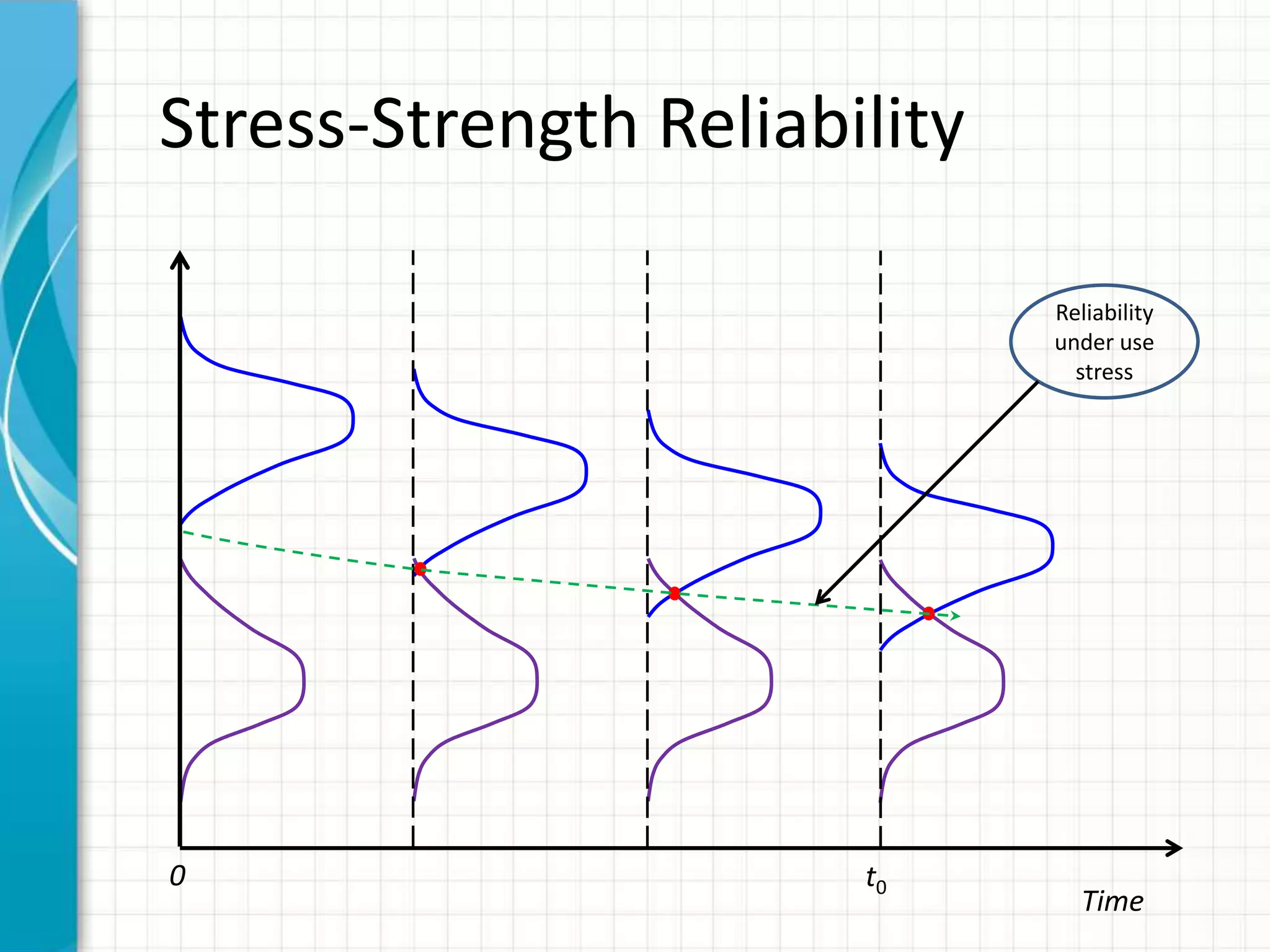
Stress-Strength Reliability
t00
Time
Reliability
under use
stress
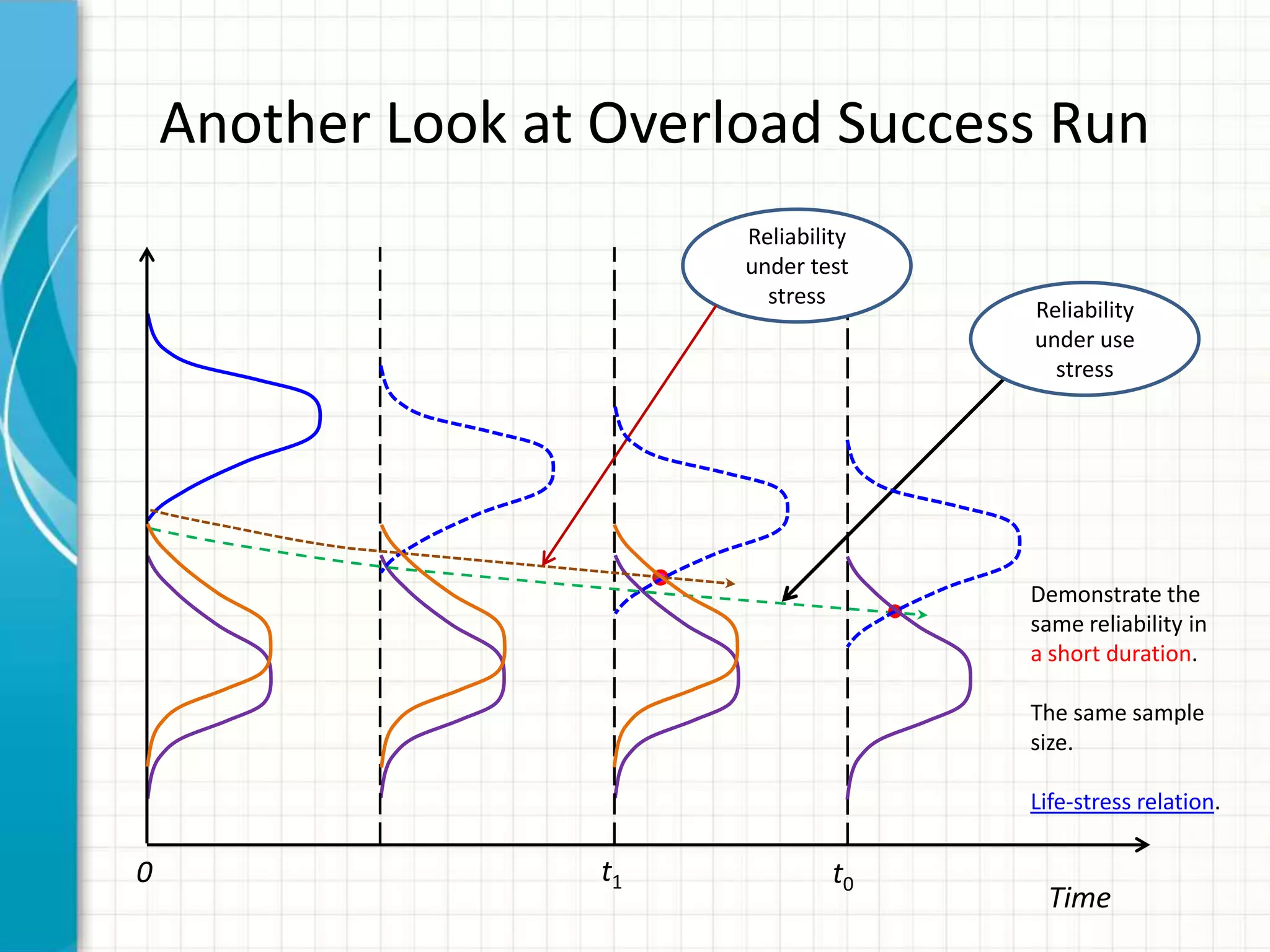
Another Look at Overload Success Run
t00
Time
Reliability
under test
stress
Reliability
under use
stress
t1
Demonstrate the
same reliability in
a short duration.
The same sample
size.
Life-stress relation.
Composite Overload Success Run
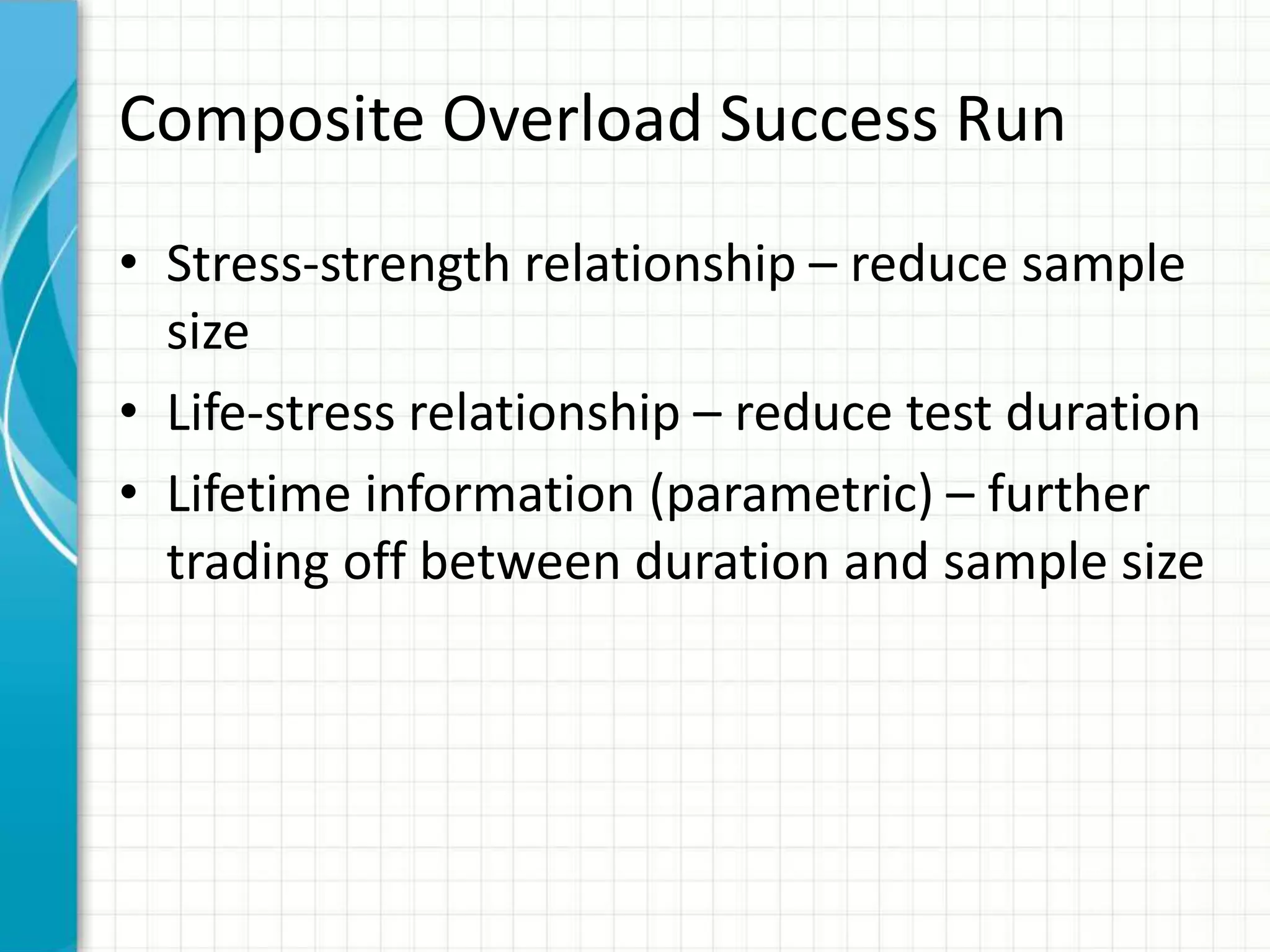
• Stress-strength relationship – reduce sample
size
• Life-stress relationship – reduce test duration
• Lifetime information (parametric) – further
trading off between duration and sample size
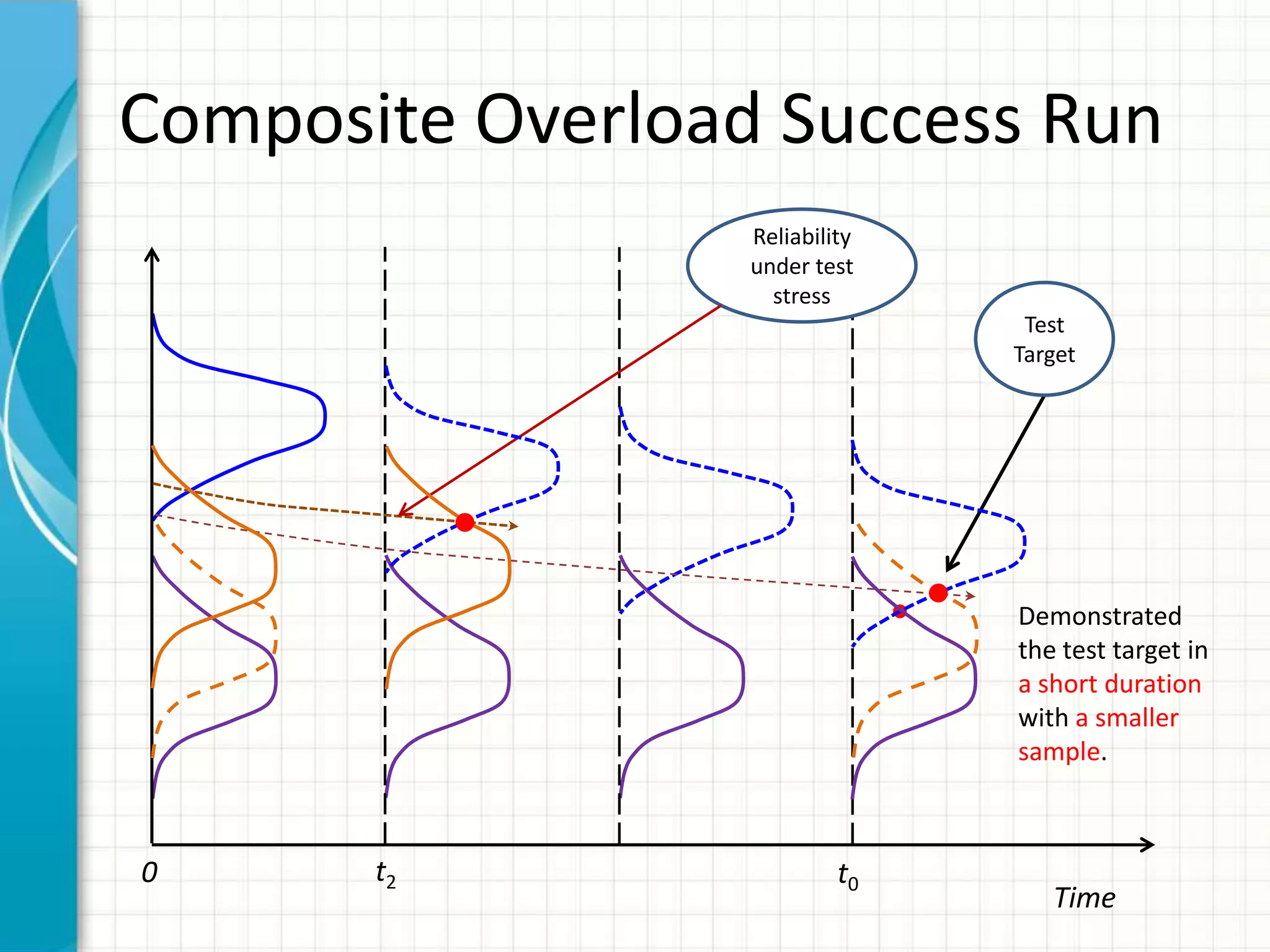
Composite Overload Success Run
t00
Time
Reliability
under test
stress
Test
Target
t2
Demonstrated
the test target in
a short duration
with a smaller
sample.
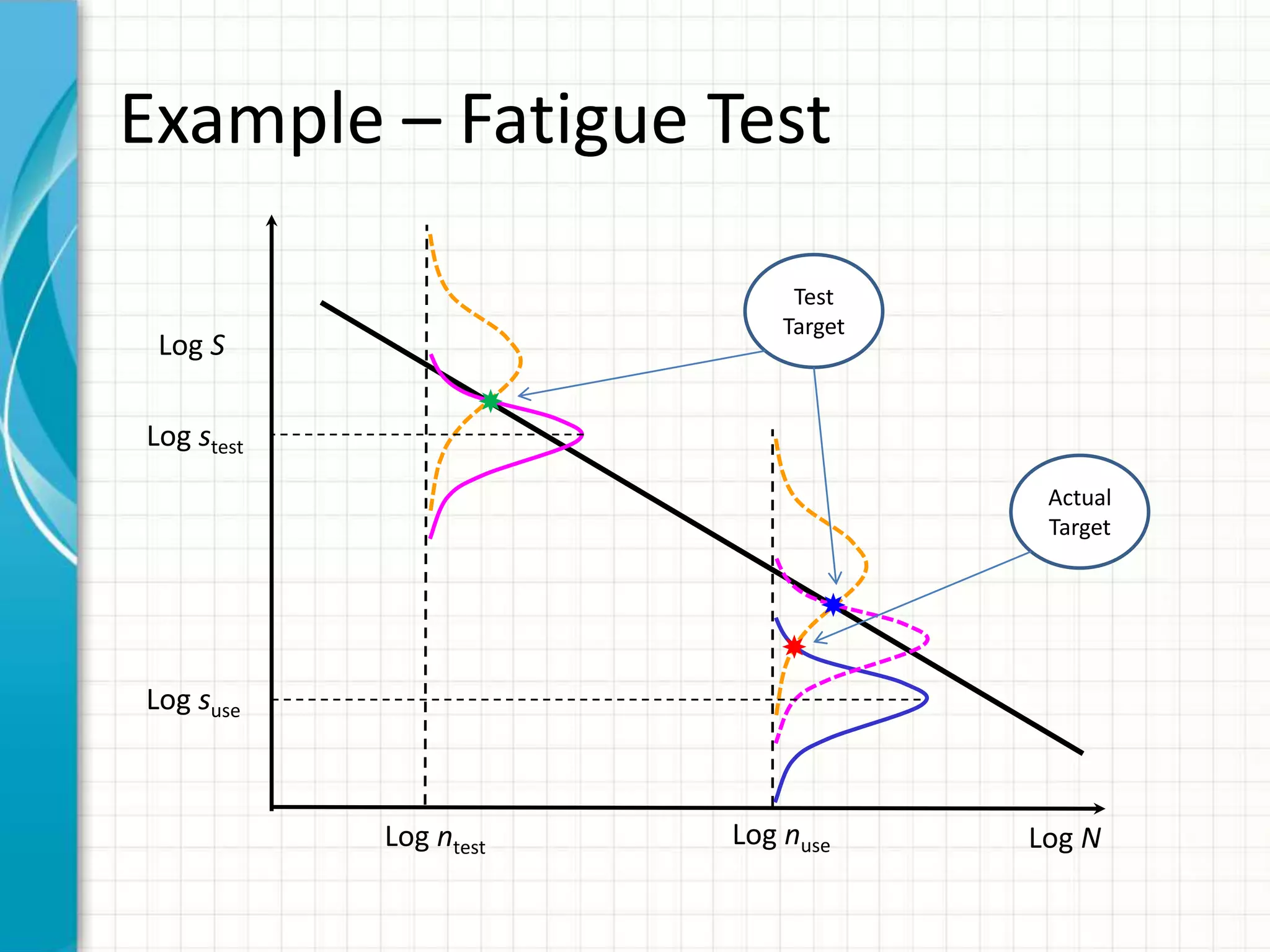
Example – Fatigue Test
Log S
Log NLog nuseLog ntest
Log stest
Test
Target
Actual
Target
Log suse
Example –
Summary
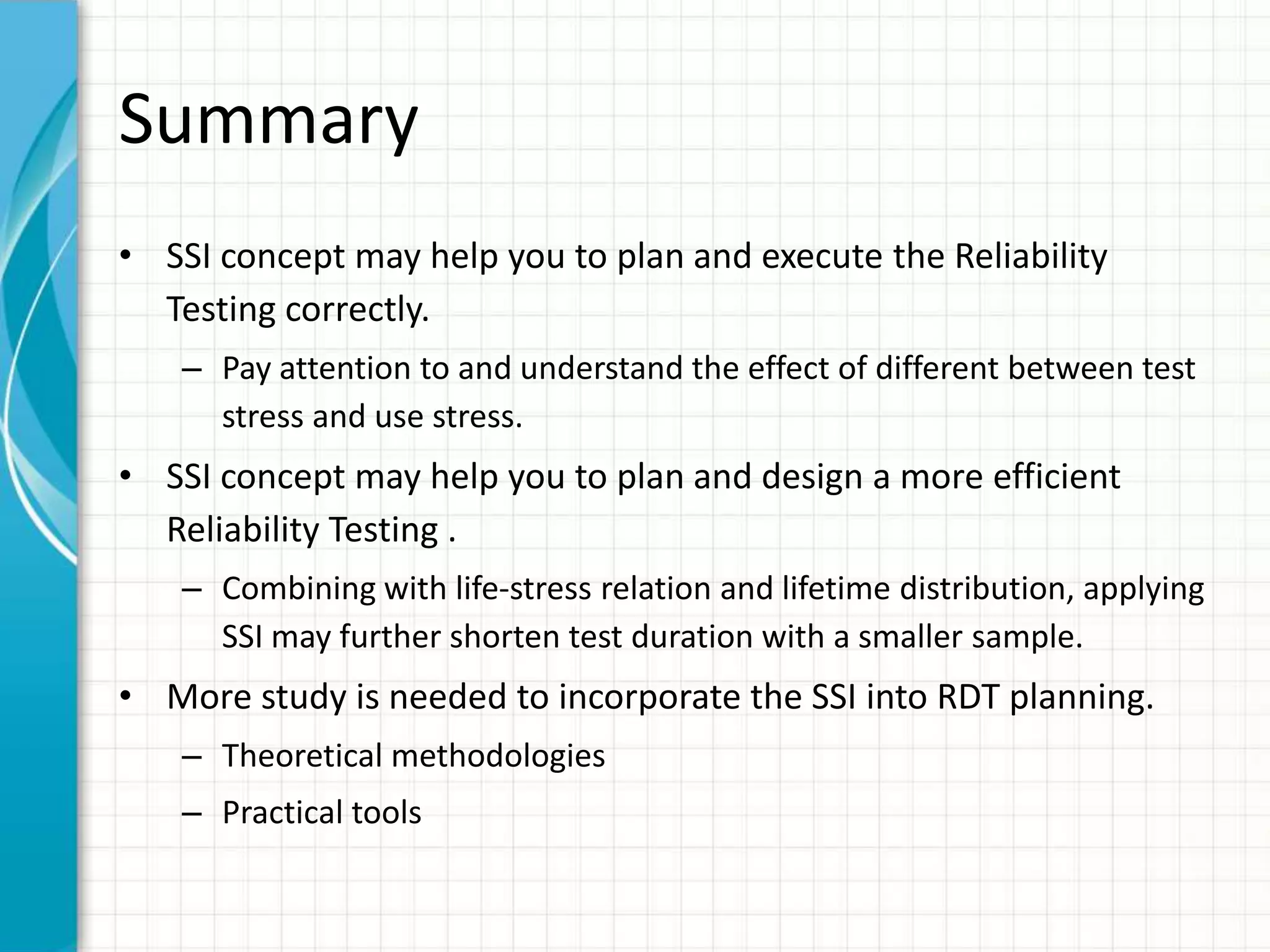
• SSI concept may help you to plan and execute the Reliability
Testing correctly.
– Pay attention to and understand the effect of different between test
stress and use stress.
• SSI concept may help you to plan and design a more efficient
Reliability Testing .
– Combining with life-stress relation and lifetime distribution, applying
SSI may further shorten test duration with a smaller sample.
• More study is needed to incorporate the SSI into RDT planning.
– Theoretical methodologies
– Practical tools
THANKS
AND
ANY QUESTIONS?

Plan a more effective rdt