Flange
Manufacturing
1
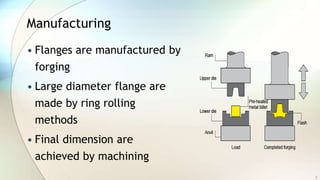
Manufacturing
• Flanges are manufactured by
forging
• Large diameter flange are
made by ring rolling
methods
• Final dimension are
achieved by machining
2
Heat treatment
• Normalizing
• Solution annealing
• Tempering
• Quenching
• Stress relieving
• Combination of above
3
Hydrostatic Test
• Not required unless specifically
requested by purchaser
• Code mandate that flange shall
be able to withstand under
pressure test of rating of
finished part.
4
Non Destructive testing
• Ultrasonic test
• Magnetic particle test
• Liquid penetrant test
• Positive Material Identification
5
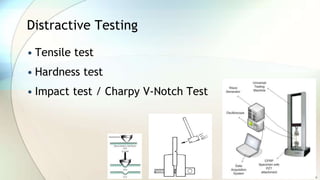
Distractive Testing
• Tensile test
• Hardness test
• Impact test / Charpy V-Notch Test
6
Metallurgical Test
• Chemical Analysis of
− Raw material
− Product
• Special test
− Grain size (AS & SS)
− IGC- Intergranular Corrosion Test(SS)
− Ferrite (SS)
− HIC- Hydrogen-induced Cracking
− SSC- Sulfide Stress Corrosion Cracking
7
Visual Inspection
• Check for any surface imperfection and overall
product quality
• Check for unfinished machine surface
• Check for any serration damage on flange face
• Being a machined product no surface defect is
acceptable.
8
Dimension Standard
• Dimension of flanged to confirm
− ASME B16.5- Pipe Flanges and Flanged Fittings NPS ½” to
24”
− ASME B16.47- Large Diameter Steel Flanges NPS 26” to
60”
• Flange are classified as per their pressure
temperature ratings which are designated as 150#,
300#, 400#, 600#, 900#, 1500# and 2500#
9
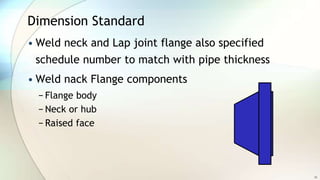
Dimension Standard
• Weld neck and Lap joint flange also specified
schedule number to match with pipe thickness
• Weld nack Flange components
− Flange body
− Neck or hub
− Raised face
10
Dimension inspection
• Following to be confirm during inspection
− Outer & Inner Diameter
− Bolt Circle & Bolt hole Diameter
− Hub Diameter & thickness of weld end
− Length of the Hub
− Straightness and alignment of bolt hole
• Permissible tolerances are given in B16.5 and
B16.47 standard
11
Marking
• Following shall be marked on flange body
− Manufacturer logo
− ASTM material code
− Material Grade
− Service rating (Pressure-temperature Class)
− Size
− Thickness (Schedule)
− Heat No
− Special marking QT (Quenched and tempered) or W
(Repair by welding)
VP 6” CL300 Sch80 A105 WNRF ABC12
12
Marking
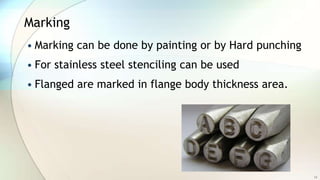
• Marking can be done by painting or by Hard punching
• For stainless steel stenciling can be used
• Flanged are marked in flange body thickness area.
13
What you have learned?
• Heat Treatment
• Chemical & mechanical testing
• Hydro Testing
• Visual & Dimensional Inspection
• Markings
14
See you
in the next lecture…
15

Pipe Flange Manufacturing, Testing ,Inspection and Marking

  • 1.
  • 2.
    Manufacturing • Flanges aremanufactured by forging • Large diameter flange are made by ring rolling methods • Final dimension are achieved by machining 2
  • 3.
    Heat treatment • Normalizing •Solution annealing • Tempering • Quenching • Stress relieving • Combination of above 3
  • 4.
    Hydrostatic Test • Notrequired unless specifically requested by purchaser • Code mandate that flange shall be able to withstand under pressure test of rating of finished part. 4
  • 5.
    Non Destructive testing •Ultrasonic test • Magnetic particle test • Liquid penetrant test • Positive Material Identification 5
  • 6.
    Distractive Testing • Tensiletest • Hardness test • Impact test / Charpy V-Notch Test 6
  • 7.
    Metallurgical Test • ChemicalAnalysis of − Raw material − Product • Special test − Grain size (AS & SS) − IGC- Intergranular Corrosion Test(SS) − Ferrite (SS) − HIC- Hydrogen-induced Cracking − SSC- Sulfide Stress Corrosion Cracking 7
  • 8.
    Visual Inspection • Checkfor any surface imperfection and overall product quality • Check for unfinished machine surface • Check for any serration damage on flange face • Being a machined product no surface defect is acceptable. 8
  • 9.
    Dimension Standard • Dimensionof flanged to confirm − ASME B16.5- Pipe Flanges and Flanged Fittings NPS ½” to 24” − ASME B16.47- Large Diameter Steel Flanges NPS 26” to 60” • Flange are classified as per their pressure temperature ratings which are designated as 150#, 300#, 400#, 600#, 900#, 1500# and 2500# 9
  • 10.
    Dimension Standard • Weldneck and Lap joint flange also specified schedule number to match with pipe thickness • Weld nack Flange components − Flange body − Neck or hub − Raised face 10
  • 11.
    Dimension inspection • Followingto be confirm during inspection − Outer & Inner Diameter − Bolt Circle & Bolt hole Diameter − Hub Diameter & thickness of weld end − Length of the Hub − Straightness and alignment of bolt hole • Permissible tolerances are given in B16.5 and B16.47 standard 11
  • 12.
    Marking • Following shallbe marked on flange body − Manufacturer logo − ASTM material code − Material Grade − Service rating (Pressure-temperature Class) − Size − Thickness (Schedule) − Heat No − Special marking QT (Quenched and tempered) or W (Repair by welding) VP 6” CL300 Sch80 A105 WNRF ABC12 12
  • 13.
    Marking • Marking canbe done by painting or by Hard punching • For stainless steel stenciling can be used • Flanged are marked in flange body thickness area. 13
  • 14.
    What you havelearned? • Heat Treatment • Chemical & mechanical testing • Hydro Testing • Visual & Dimensional Inspection • Markings 14
  • 15.
    See you in thenext lecture… 15