Learning &
Memory
By
Dr. Faraza Javaid
Learning
DEFINITION
Learning is defined as the process by which
new information is acquired. It alters the
behavior of a person on the basis of past
experience.
CLASSIFICATION OF LEARNING
Learning is classified into two types:
1. Non-associative learning
2. Associative learning
Non-associative
Learning
Non-associative learning involves response of
a person to only one type of stimulus. It is
based on two factors:
i. Habituation
ii. Sensitization
Non-associative
Learning
Habituation
Habituation means getting used to something,
to which a person is constantly exposed.
When a person is exposed to a stimulus
repeatedly, he starts ignoring the stimulus
slowly.
During first experience, the event (stimulus) is
novel and evokes a response. However, it
evokes less response when it is repeated.
Finally, the person is habituated to the event
(stimulus) and ignores it.
Non-associative
Learning
Sensitization
Sensitization is a process by which the body is
made to become more sensitive to a stimulus. It
is called amplification of response.
When a stimulus is applied repeatedly,
habituation occurs. But, if the same stimulus is
combined with another type of stimulus, which
may be pleasant or unpleasant, the person
becomes more sensitive to original stimulus.
Associative Learning
Associative learning is a complex process. It
involves learning about relations between two
or more stimuli at a time.
Classic example of associative learning is the
conditioned reflex.
Memory
DEFINITION
Memory is defined as the ability to recall past
experience or information. It is also defined as
retention of learned materials.
There are various degrees of memory. Some
memories remain only for few seconds, while
others last for hours, days, months or even
years together.
Memory
PHYSIOLOGICAL BASIS OF MEMORY
Memory is stored in brain by the alteration of
synaptic transmission between the neurons
involved in memory.
Storage of memory may be facilitated or
habituated depending upon many factors, such
as neurotransmitter, synaptic transmission,
functional status of brain, etc.
Memory
Facilitation
Facilitation is the process by which memory
storage is enhanced. It involves increase in
synaptic transmission and increased
postsynaptic activity.
Often, facilitation is referred as positive
memory. The process involved in facilitation of
memory is called memory sensitization.
Memory
Habituation
Habituation is the process by which memory
storage is attenuated (attenuation = decrease in
strength, effect or value). It involves reduction
in synaptic transmission and slow stoppage of
postsynaptic activity.
Sometimes, habituation is referred as negative
memory.
Basis for Short-term
Memory
Basic mechanism of memory is the development
of new neuronal circuits by the formation of
new synapses and facilitation of synaptic
transmission.
Number of presynaptic terminals and size of the
terminals are also increased. This forms the
basis of short-term memory.
Consolidation of
Memory
The process by which a short-term memory is
crystallized into a long-term memory is called
memory consolidation.
Consolidation causes permanent facilitation of
synapses. It is possible by rehearsal
mechanism, i.e. rehearsal of same information
again and again accelerates and potentiates the
degree of transfer of short-term memory into
long-term memory.
This is what happens in memorizing a poem or a
phrase.
Basis for Long-term
Memory
When neuronal circuit is reinforced by constant
activity, memory is consolidated and encoded
into different areas of the brain.
This encoding makes memory a permanent or a
long-term memory.
Molecular basis of
Memory
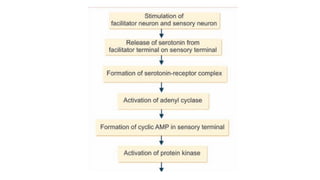
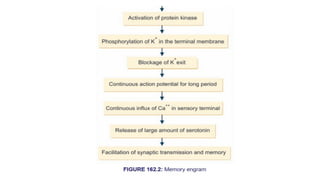
Memory Engram
Molecular basis of memory can be explained by
memory engram.
Memory engram is a process by which memory
is facilitated and stored in the brain by means of
structural and biochemical changes.
Often, it is also called memory trace.
Molecular basis of
Memory
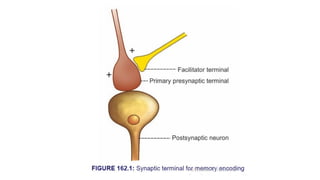
Molecular Basis of Facilitation
In this process, the neurotransmitter serotonin
plays major role. Calcium ions increase the
release of serotonin, which facilitates the
synaptic transmission to a great extent, leading
to memory storage.
Abnormalities due to
Memory
Amnesia
Loss of memory is known as amnesia.
Dementia
Dementia is the progressive deterioration of
intellect, emotional control, social behavior and
motivation associated with loss of memory.
Alzheimer Disease
Alzheimer disease is a progressive
neurodegenerative disease. It is due to
degeneration, loss of function and death of
neurons in many parts of brain, particularly
cerebral hemispheres, hippocampus and pons.
Thank You

PHYSIOLOGY & TYPES OF LEARNING & MEMORY.pptx

  • 1.
  • 2.
    Learning DEFINITION Learning is definedas the process by which new information is acquired. It alters the behavior of a person on the basis of past experience. CLASSIFICATION OF LEARNING Learning is classified into two types: 1. Non-associative learning 2. Associative learning
  • 3.
    Non-associative Learning Non-associative learning involvesresponse of a person to only one type of stimulus. It is based on two factors: i. Habituation ii. Sensitization
  • 4.
    Non-associative Learning Habituation Habituation means gettingused to something, to which a person is constantly exposed. When a person is exposed to a stimulus repeatedly, he starts ignoring the stimulus slowly. During first experience, the event (stimulus) is novel and evokes a response. However, it evokes less response when it is repeated. Finally, the person is habituated to the event (stimulus) and ignores it.
  • 5.
    Non-associative Learning Sensitization Sensitization is aprocess by which the body is made to become more sensitive to a stimulus. It is called amplification of response. When a stimulus is applied repeatedly, habituation occurs. But, if the same stimulus is combined with another type of stimulus, which may be pleasant or unpleasant, the person becomes more sensitive to original stimulus.
  • 6.
    Associative Learning Associative learningis a complex process. It involves learning about relations between two or more stimuli at a time. Classic example of associative learning is the conditioned reflex.
  • 7.
    Memory DEFINITION Memory is definedas the ability to recall past experience or information. It is also defined as retention of learned materials. There are various degrees of memory. Some memories remain only for few seconds, while others last for hours, days, months or even years together.
  • 8.
    Memory PHYSIOLOGICAL BASIS OFMEMORY Memory is stored in brain by the alteration of synaptic transmission between the neurons involved in memory. Storage of memory may be facilitated or habituated depending upon many factors, such as neurotransmitter, synaptic transmission, functional status of brain, etc.
  • 9.
    Memory Facilitation Facilitation is theprocess by which memory storage is enhanced. It involves increase in synaptic transmission and increased postsynaptic activity. Often, facilitation is referred as positive memory. The process involved in facilitation of memory is called memory sensitization.
  • 10.
    Memory Habituation Habituation is theprocess by which memory storage is attenuated (attenuation = decrease in strength, effect or value). It involves reduction in synaptic transmission and slow stoppage of postsynaptic activity. Sometimes, habituation is referred as negative memory.
  • 11.
    Basis for Short-term Memory Basicmechanism of memory is the development of new neuronal circuits by the formation of new synapses and facilitation of synaptic transmission. Number of presynaptic terminals and size of the terminals are also increased. This forms the basis of short-term memory.
  • 12.
    Consolidation of Memory The processby which a short-term memory is crystallized into a long-term memory is called memory consolidation. Consolidation causes permanent facilitation of synapses. It is possible by rehearsal mechanism, i.e. rehearsal of same information again and again accelerates and potentiates the degree of transfer of short-term memory into long-term memory. This is what happens in memorizing a poem or a phrase.
  • 13.
    Basis for Long-term Memory Whenneuronal circuit is reinforced by constant activity, memory is consolidated and encoded into different areas of the brain. This encoding makes memory a permanent or a long-term memory.
  • 14.
    Molecular basis of Memory MemoryEngram Molecular basis of memory can be explained by memory engram. Memory engram is a process by which memory is facilitated and stored in the brain by means of structural and biochemical changes. Often, it is also called memory trace.
  • 15.
    Molecular basis of Memory MolecularBasis of Facilitation In this process, the neurotransmitter serotonin plays major role. Calcium ions increase the release of serotonin, which facilitates the synaptic transmission to a great extent, leading to memory storage.
  • 19.
    Abnormalities due to Memory Amnesia Lossof memory is known as amnesia. Dementia Dementia is the progressive deterioration of intellect, emotional control, social behavior and motivation associated with loss of memory. Alzheimer Disease Alzheimer disease is a progressive neurodegenerative disease. It is due to degeneration, loss of function and death of neurons in many parts of brain, particularly cerebral hemispheres, hippocampus and pons.
  • 20.