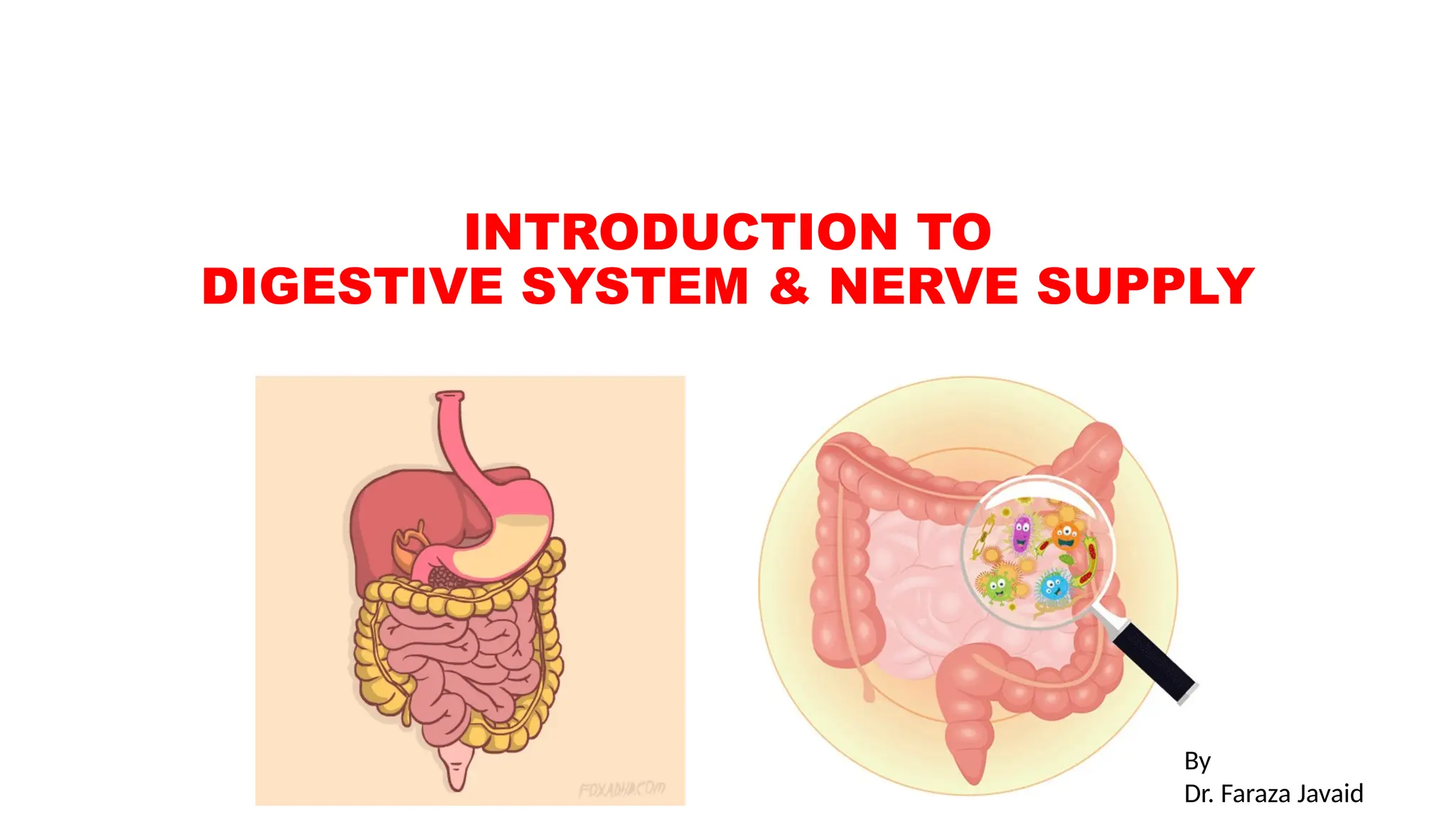
INTRODUCTION TO
DIGESTIVE SYSTEM & NERVE SUPPLY
By
Dr. Faraza Javaid
INTRODUCTION
Digestive system is made up of gastrointestinal tract (GI tract) or
alimentary canal and accessory organs, which help in the
process of digestion and absorption. GI tract is a tubular
structure extending from the mouth up to anus, with a length of
about 30 feet.
Digestion
Digestion is defined as the mechanical process by which food is
broken down into simple chemical substances that can be
absorbed and used as nutrients by the body.
A normal young healthy adult consumes about 1 kg of solid diet
and about 1 to 2 liter of liquid diet every day.
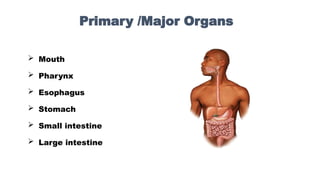
Primary /Major Organs
 Mouth
 Pharynx
 Esophagus
 Stomach
 Small intestine
 Large intestine
Accessory Organs
i. Teeth
ii. Tongue
iii. Salivary glands
iv. Exocrine part of pancreas
v. Liver
vi. Gallbladder.
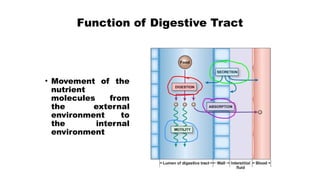
• Movement of the
nutrient
molecules from
the external
environment to
the internal
environment
Function of Digestive Tract
The Digestive Tract
• Six Functions of the Digestive System
1. Ingestion
2. Mechanical processing
3. Digestion
4. Secretion
5. Absorption
6. Excretion
The Digestive Tract
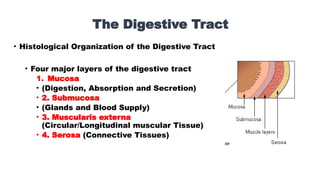
• Histological Organization of the Digestive Tract
• Four major layers of the digestive tract
1. Mucosa
• (Digestion, Absorption and Secretion)
• 2. Submucosa
• (Glands and Blood Supply)
• 3. Muscularis externa
(Circular/Longitudinal muscular Tissue)
• 4. Serosa (Connective Tissues)
NERVE SUPPLY TO
GASTROINTESTINAL TRACT
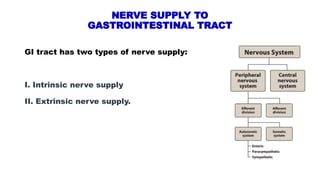
GI tract has two types of nerve supply:
I. Intrinsic nerve supply
II. Extrinsic nerve supply.
INTRINSIC NERVE SUPPLY –
ENTERIC NERVOUS SYSTEM
Intrinsic nerves to GI tract form the enteric nervous system
that controls all the secretions and movements of GI tract.
Enteric nervous system is present within the wall of GI tract
from esophagus to anus.
Nerve fibers of this system are interconnected and form two
major networks called:
1. Auerbach plexus
2. Meissner plexus
Auerbach Plexus/ Myenteric Nerve Plexus
Major function of this plexus is to regulate the movements of GI
tract.
Some nerve fibers of this plexus accelerate the movements by
secreting the excitatory neurotransmitter substances like
acetylcholine, serotonin and substance P.
Other fibers of this plexus inhibit the GI motility by secreting the
inhibitory neurotransmitters such as vasoactive intestinal
polypeptide (VIP), neurotensin and enkephalin.
Meissner Nerve Plexus
Function of Meissner plexus is the regulation of secretory
functions of GI tract.
EXTRINSIC NERVE SUPPLY
Extrinsic nerves that control the enteric nervous system are from autonomic
nervous system. Both sympathetic and parasympathetic divisions of
autonomic nervous system innervate the GI tract.
Sympathetic Nerve Fibers
Sympathetic nerve fibers inhibit the movements and decrease the secretions
of GI tract by secreting the neurotransmitter noradrenaline.
Parasympathetic Nerve Fibers
Parasympathetic nerve fibers accelerate the movements and increase the
secretions of GI tract.
The neurotransmitter secreted by the parasympathetic nerve fibers is
acetylcholine (Ach).
THANK YOU

INTRODUCTION TO DIGESTIVE SYSTEM & NERVE SUPPLY.pptx

  • 1.
    INTRODUCTION TO DIGESTIVE SYSTEM& NERVE SUPPLY By Dr. Faraza Javaid
  • 2.
    INTRODUCTION Digestive system ismade up of gastrointestinal tract (GI tract) or alimentary canal and accessory organs, which help in the process of digestion and absorption. GI tract is a tubular structure extending from the mouth up to anus, with a length of about 30 feet. Digestion Digestion is defined as the mechanical process by which food is broken down into simple chemical substances that can be absorbed and used as nutrients by the body. A normal young healthy adult consumes about 1 kg of solid diet and about 1 to 2 liter of liquid diet every day.
  • 3.
    Primary /Major Organs Mouth  Pharynx  Esophagus  Stomach  Small intestine  Large intestine
  • 4.
    Accessory Organs i. Teeth ii.Tongue iii. Salivary glands iv. Exocrine part of pancreas v. Liver vi. Gallbladder.
  • 5.
    • Movement ofthe nutrient molecules from the external environment to the internal environment Function of Digestive Tract
  • 6.
    The Digestive Tract •Six Functions of the Digestive System 1. Ingestion 2. Mechanical processing 3. Digestion 4. Secretion 5. Absorption 6. Excretion
  • 7.
    The Digestive Tract •Histological Organization of the Digestive Tract • Four major layers of the digestive tract 1. Mucosa • (Digestion, Absorption and Secretion) • 2. Submucosa • (Glands and Blood Supply) • 3. Muscularis externa (Circular/Longitudinal muscular Tissue) • 4. Serosa (Connective Tissues)
  • 8.
    NERVE SUPPLY TO GASTROINTESTINALTRACT GI tract has two types of nerve supply: I. Intrinsic nerve supply II. Extrinsic nerve supply.
  • 9.
    INTRINSIC NERVE SUPPLY– ENTERIC NERVOUS SYSTEM Intrinsic nerves to GI tract form the enteric nervous system that controls all the secretions and movements of GI tract. Enteric nervous system is present within the wall of GI tract from esophagus to anus. Nerve fibers of this system are interconnected and form two major networks called: 1. Auerbach plexus 2. Meissner plexus
  • 10.
    Auerbach Plexus/ MyentericNerve Plexus Major function of this plexus is to regulate the movements of GI tract. Some nerve fibers of this plexus accelerate the movements by secreting the excitatory neurotransmitter substances like acetylcholine, serotonin and substance P. Other fibers of this plexus inhibit the GI motility by secreting the inhibitory neurotransmitters such as vasoactive intestinal polypeptide (VIP), neurotensin and enkephalin. Meissner Nerve Plexus Function of Meissner plexus is the regulation of secretory functions of GI tract.
  • 11.
    EXTRINSIC NERVE SUPPLY Extrinsicnerves that control the enteric nervous system are from autonomic nervous system. Both sympathetic and parasympathetic divisions of autonomic nervous system innervate the GI tract. Sympathetic Nerve Fibers Sympathetic nerve fibers inhibit the movements and decrease the secretions of GI tract by secreting the neurotransmitter noradrenaline. Parasympathetic Nerve Fibers Parasympathetic nerve fibers accelerate the movements and increase the secretions of GI tract. The neurotransmitter secreted by the parasympathetic nerve fibers is acetylcholine (Ach).
  • 12.