Page 1 of 3
Class: Grade 10 Physics Lab worksheet Mark:
Name: Subject: Reflection of light
Experiment 1
Diffuse reflection and regular reflection
Materials:
- Plane mirror
- Mat paper
- Light source (narrow beam or laser)
Procedure:
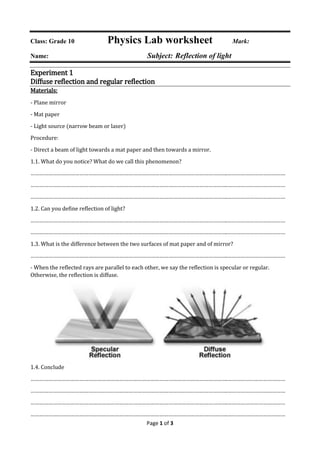
- Direct a beam of light towards a mat paper and then towards a mirror.
1.1. What do you notice? What do we call this phenomenon?
…………………………………………………………………………………………………………………….…………………………………
…………………………………………………………………………………………………………………….…………………………………
…………………………………………………………………………………………………………………….…………………………………
1.2. Can you define reflection of light?
…………………………………………………………………………………………………………………….…………………………………
…………………………………………………………………………………………………………………….…………………………………
1.3. What is the difference between the two surfaces of mat paper and of mirror?
…………………………………………………………………………………………………………………….…………………………………
- When the reflected rays are parallel to each other, we say the reflection is specular or regular.
Otherwise, the reflection is diffuse.
1.4. Conclude
…………………………………………………………………………………………………………………….…………………………………
…………………………………………………………………………………………………………………….…………………………………
…………………………………………………………………………………………………………………….…………………………………
…………………………………………………………………………………………………………………….…………………………………
Page 2 of 3
Experiment 2
Laws of reflection
Materials:
- Plane mirror
- Graduated disk
- Light source (narrow beam or laser)
Procedure:
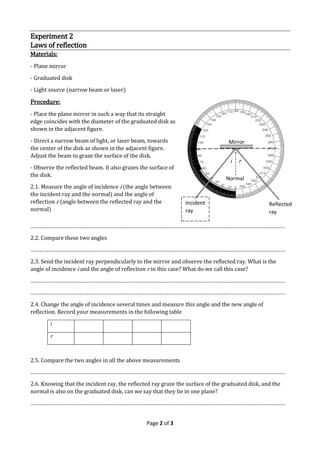
- Place the plane mirror in such a way that its straight
edge coincides with the diameter of the graduated disk as
shown in the adjacent figure.
- Direct a narrow beam of light, or laser beam, towards
the center of the disk as shown in the adjacent figure.
Adjust the beam to graze the surface of the disk.
- Observe the reflected beam. It also grazes the surface of
the disk.
2.1. Measure the angle of incidence i (the angle between
the incident ray and the normal) and the angle of
reflection r (angle between the reflected ray and the
normal)
…………………………………………………………………………………………………………………….…………………………………
2.2. Compare these two angles
…………………………………………………………………………………………………………………….…………………………………
2.3. Send the incident ray perpendicularly to the mirror and observe the reflected ray. What is the
angle of incidence i and the angle of reflection r in this case? What do we call this case?
…………………………………………………………………………………………………………………….…………………………………
…………………………………………………………………………………………………………………….…………………………………
2.4. Change the angle of incidence several times and measure this angle and the new angle of
reflection. Record your measurements in the following table
i
r
2.5. Compare the two angles in all the above measurements
…………………………………………………………………………………………………………………….…………………………………
2.6. Knowing that the incident ray, the reflected ray graze the surface of the graduated disk, and the
normal is also on the graduated disk, can we say that they lie in one plane?
…………………………………………………………………………………………………………………….…………………………………
Mirror
Incident
ray
Reflected
ray
Normal
i r
Page 3 of 3
2.7. From this experiment, we can conclude two laws of reflection related to the incident ray, the
reflected ray and the normal. State these two laws:
…………………………………………………………………………………………………………………….…………………………………
…………………………………………………………………………………………………………………….…………………………………
…………………………………………………………………………………………………………………….…………………………………
…………………………………………………………………………………………………………………….…………………………………
…………………………………………………………………………………………………………………….…………………………………
Experiment 3
Reversibility of light
Materials:
Same as in experiment 2
Procedure:
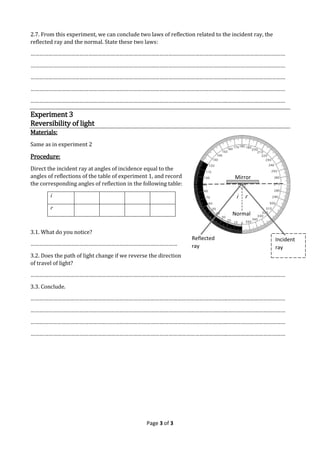
Direct the incident ray at angles of incidence equal to the
angles of reflections of the table of experiment 1, and record
the corresponding angles of reflection in the following table:
i
r
3.1. What do you notice?
………………………………………………………………………………………
3.2. Does the path of light change if we reverse the direction
of travel of light?
…………………………………………………………………………………………………………………….…………………………………
3.3. Conclude.
…………………………………………………………………………………………………………………….…………………………………
…………………………………………………………………………………………………………………….…………………………………
…………………………………………………………………………………………………………………….…………………………………
…………………………………………………………………………………………………………………….…………………………………
Mirror
Reflected
ray
Incident
ray
Normal
i r

Physics lab worksheet reflection

  • 1.
    Page 1 of3 Class: Grade 10 Physics Lab worksheet Mark: Name: Subject: Reflection of light Experiment 1 Diffuse reflection and regular reflection Materials: - Plane mirror - Mat paper - Light source (narrow beam or laser) Procedure: - Direct a beam of light towards a mat paper and then towards a mirror. 1.1. What do you notice? What do we call this phenomenon? …………………………………………………………………………………………………………………….………………………………… …………………………………………………………………………………………………………………….………………………………… …………………………………………………………………………………………………………………….………………………………… 1.2. Can you define reflection of light? …………………………………………………………………………………………………………………….………………………………… …………………………………………………………………………………………………………………….………………………………… 1.3. What is the difference between the two surfaces of mat paper and of mirror? …………………………………………………………………………………………………………………….………………………………… - When the reflected rays are parallel to each other, we say the reflection is specular or regular. Otherwise, the reflection is diffuse. 1.4. Conclude …………………………………………………………………………………………………………………….………………………………… …………………………………………………………………………………………………………………….………………………………… …………………………………………………………………………………………………………………….………………………………… …………………………………………………………………………………………………………………….…………………………………
  • 2.
    Page 2 of3 Experiment 2 Laws of reflection Materials: - Plane mirror - Graduated disk - Light source (narrow beam or laser) Procedure: - Place the plane mirror in such a way that its straight edge coincides with the diameter of the graduated disk as shown in the adjacent figure. - Direct a narrow beam of light, or laser beam, towards the center of the disk as shown in the adjacent figure. Adjust the beam to graze the surface of the disk. - Observe the reflected beam. It also grazes the surface of the disk. 2.1. Measure the angle of incidence i (the angle between the incident ray and the normal) and the angle of reflection r (angle between the reflected ray and the normal) …………………………………………………………………………………………………………………….………………………………… 2.2. Compare these two angles …………………………………………………………………………………………………………………….………………………………… 2.3. Send the incident ray perpendicularly to the mirror and observe the reflected ray. What is the angle of incidence i and the angle of reflection r in this case? What do we call this case? …………………………………………………………………………………………………………………….………………………………… …………………………………………………………………………………………………………………….………………………………… 2.4. Change the angle of incidence several times and measure this angle and the new angle of reflection. Record your measurements in the following table i r 2.5. Compare the two angles in all the above measurements …………………………………………………………………………………………………………………….………………………………… 2.6. Knowing that the incident ray, the reflected ray graze the surface of the graduated disk, and the normal is also on the graduated disk, can we say that they lie in one plane? …………………………………………………………………………………………………………………….………………………………… Mirror Incident ray Reflected ray Normal i r
  • 3.
    Page 3 of3 2.7. From this experiment, we can conclude two laws of reflection related to the incident ray, the reflected ray and the normal. State these two laws: …………………………………………………………………………………………………………………….………………………………… …………………………………………………………………………………………………………………….………………………………… …………………………………………………………………………………………………………………….………………………………… …………………………………………………………………………………………………………………….………………………………… …………………………………………………………………………………………………………………….………………………………… Experiment 3 Reversibility of light Materials: Same as in experiment 2 Procedure: Direct the incident ray at angles of incidence equal to the angles of reflections of the table of experiment 1, and record the corresponding angles of reflection in the following table: i r 3.1. What do you notice? ……………………………………………………………………………………… 3.2. Does the path of light change if we reverse the direction of travel of light? …………………………………………………………………………………………………………………….………………………………… 3.3. Conclude. …………………………………………………………………………………………………………………….………………………………… …………………………………………………………………………………………………………………….………………………………… …………………………………………………………………………………………………………………….………………………………… …………………………………………………………………………………………………………………….………………………………… Mirror Reflected ray Incident ray Normal i r