
Physical examination
Mr. ABHAY RAJPOOT
Physical examination
•Physical examination is defined as a complete
assessment of a patient’s physical and mental
status.
•A physical assessment is the systematic
collection of objective information that is
directly observed or is elicited through
examination techniques
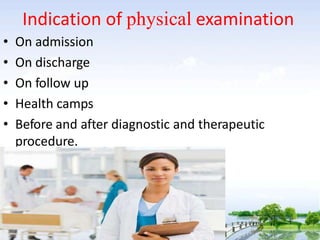
Indication of physical examination
• On admission
• On discharge
• On follow up
• Health camps
• Before and after diagnostic and therapeutic
procedure.
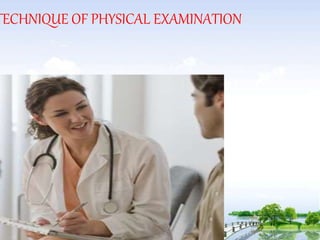
TECHNIQUE OF PHYSICAL EXAMINATION
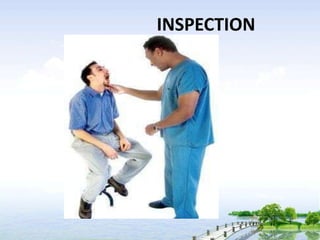
INSPECTION
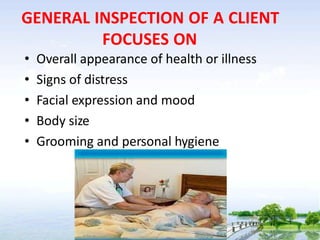
GENERAL INSPECTION OF A CLIENT
FOCUSES ON
• Overall appearance of health or illness
• Signs of distress
• Facial expression and mood
• Body size
• Grooming and personal hygiene
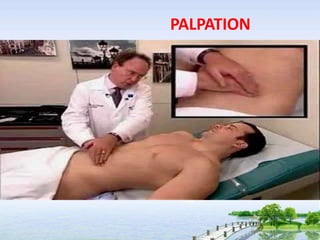
PALPATION
PRINCIPLES OF PALPATION
• Examiner should have short fingernails.
• Examiner should warm your hands prior to placing
them on the patient.
• Encourage the patient to continue to breathe
normally throughout the palpation.
• If pain is experienced during the palpation.
discontinue the palpation immediately.
• Inform the patient where, when, and how the
touch will occur, especially when the patient
cannot see what examiner is doing.
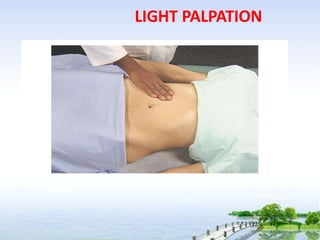
LIGHT PALPATION
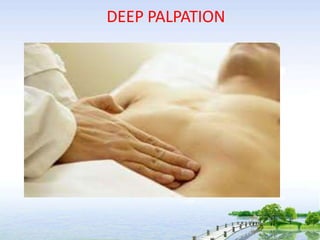
DEEP PALPATION
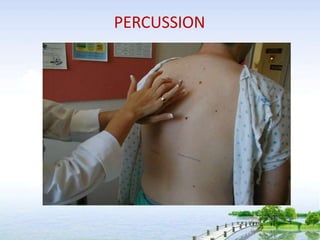
PERCUSSION
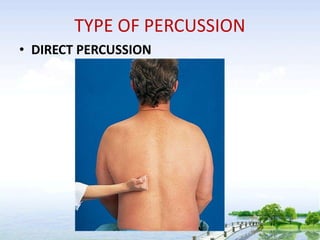
TYPE OF PERCUSSION
• DIRECT PERCUSSION
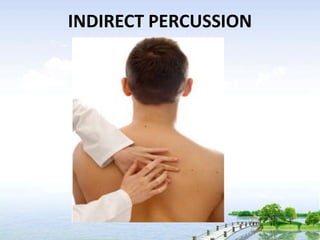
INDIRECT PERCUSSION
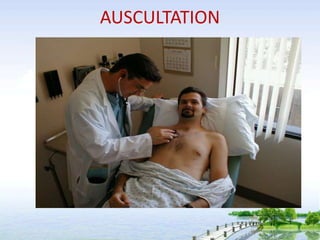
AUSCULTATION
FOUR CHARACTERISTICS OF SOUND
• 1.Pitch (ranging from high and low):frequency or
number of oscillations generated per second by
vibrating object
• 2. Loudness (ranging from soft to loud): amplitude
of sound
• 3. Quality (gurgling or swishing)
• 4. Duration (short, medium or long)
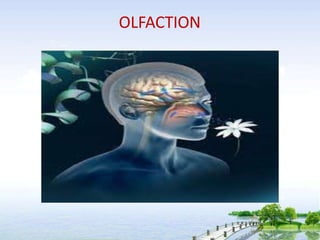
OLFACTION
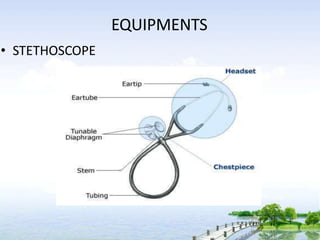
EQUIPMENTS
• STETHOSCOPE
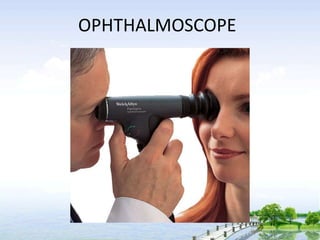
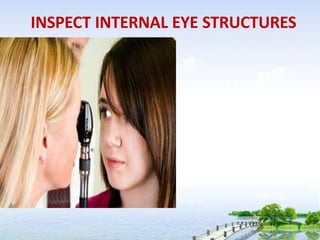
OPHTHALMOSCOPE
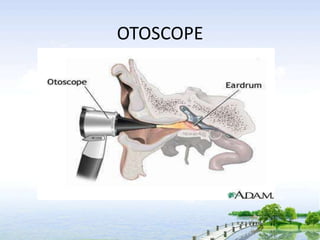
OTOSCOPE
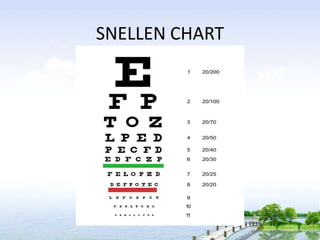
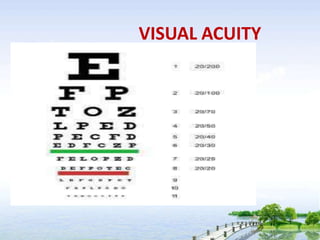
SNELLEN CHART
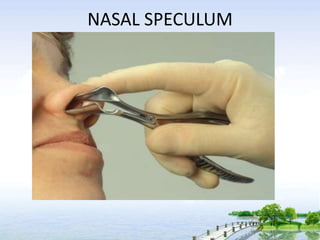
NASAL SPECULUM
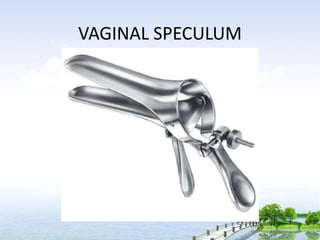
VAGINAL SPECULUM
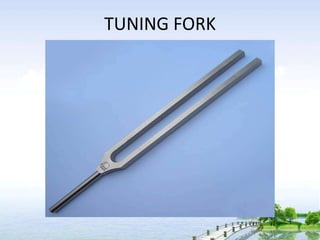
TUNING FORK
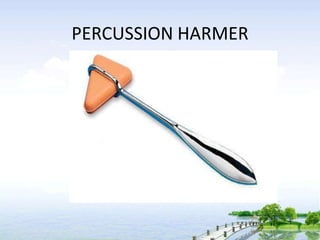
PERCUSSION HARMER
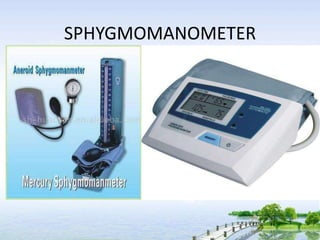
SPHYGMOMANOMETER
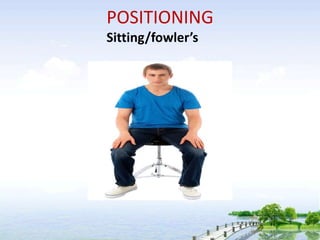
POSITIONING
Sitting/fowler’s
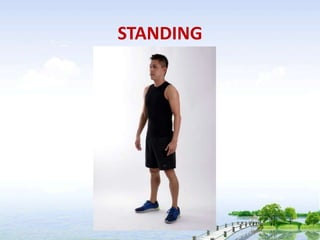
STANDING
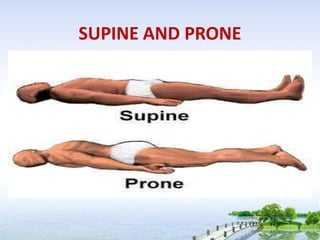
SUPINE AND PRONE
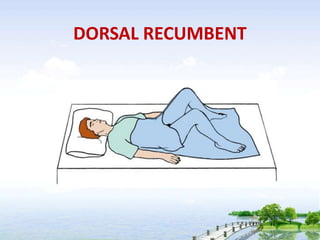
DORSAL RECUMBENT
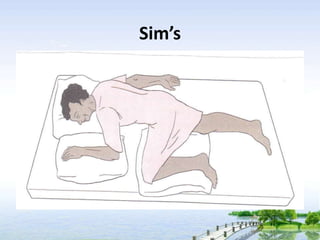
Sim’s
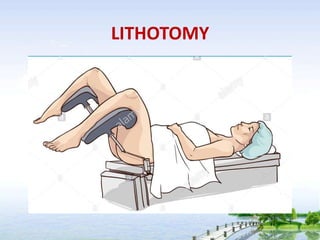
LITHOTOMY
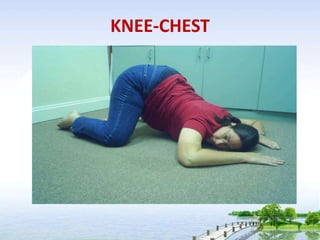
KNEE-CHEST
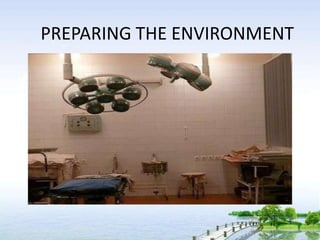
PREPARING THE ENVIRONMENT
PREPARING THE PATIENT
• PSYCHOLOGICAL PREPERATION
PHYSICAL PREPERATION
ARTICLES REQUIRED
• Screen to provide privacy
• Bowl for antiseptic lotion
• Kidney tray and paper bag
• Weighing machine and height scale
• Patient gown
ARTICLES REQUIRED
• Bath blanket to cover the patient
• Draw sheet to cover patient’s chest
• Square drum containing test tube,
gauze piece, cotton swab, specimen
bottle, swabsticks
• Gloves
• lubricant
ARTICLES REQUIRED
• Torch
• Ophthalmoscope
• Snellen’s chart
• Book for colour blindness
• Pen
• Flash card
• Autoscope with speculum of different sizes
• Percussion Hammer
• Tuning fork
ARTICLES REQUIRED
• Nasal speculum
• Mouth gag
• Laryngeal mirror
• Tongue depressor
• Stethoscope
• Inch tape
ARTICLES REQUIRED
• Sterile tray for vaginal examination
• Proctoscope
• Vitals Tray
ARTICLES FOR NEUROLOGICAL
EXAMINATION
• Powder, soap
• Snellen’s chart
• Pencil or pen
• Cotton wicks
• Torch
• Tuning fork
• Salt, sugar
ARTICLES FOR NEUROLOGICAL
EXAMINATION
•Tongue depressor
•2 test tubes one with hot water and other
with cold water
•Safety pins
•Sharp object like key
•Reading material to assess eyes and
language of person
•Knee harmer
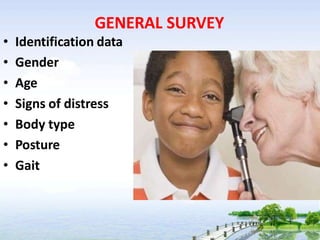
GENERAL SURVEY
• Identification data
• Gender
• Age
• Signs of distress
• Body type
• Posture
• Gait
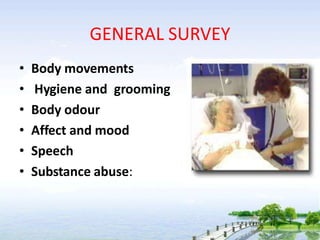
GENERAL SURVEY
• Body movements
• Hygiene and grooming
• Body odour
• Affect and mood
• Speech
• Substance abuse:
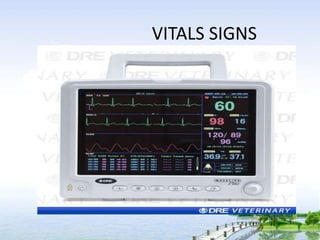
VITALS SIGNS
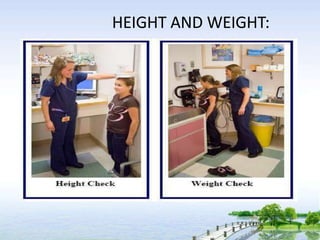
HEIGHT AND WEIGHT:
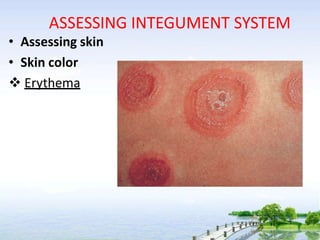
ASSESSING INTEGUMENT SYSTEM
• Assessing skin
• Skin color
 Erythema
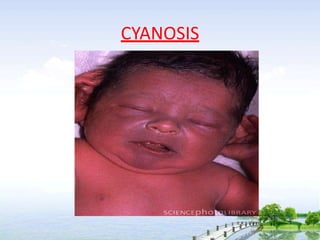
CYANOSIS
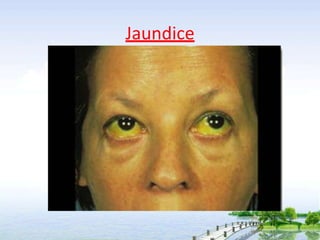
Jaundice
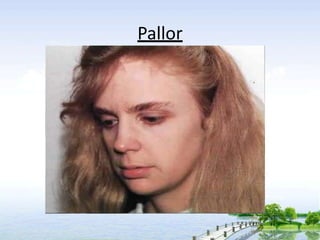
Pallor
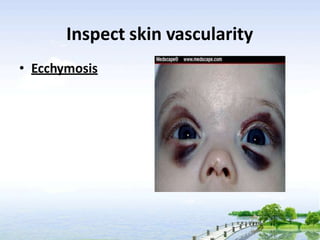
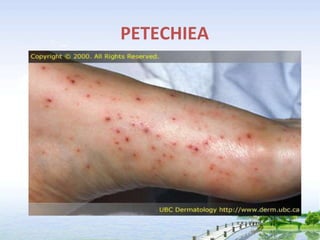
Inspect skin vascularity
• Ecchymosis
PETECHIEA
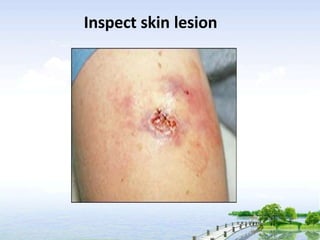
Inspect skin lesion
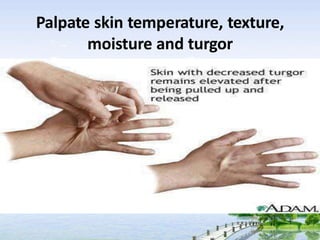
Palpate skin temperature, texture,
moisture and turgor
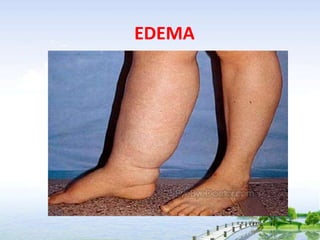
EDEMA
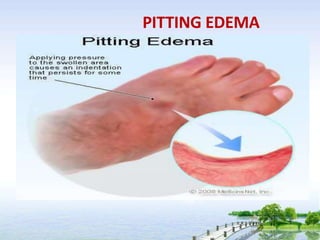
PITTING EDEMA
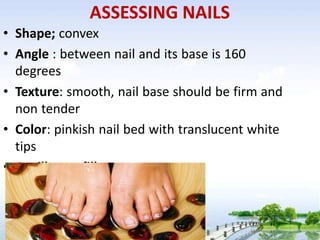
ASSESSING NAILS
• Shape; convex
• Angle : between nail and its base is 160
degrees
• Texture: smooth, nail base should be firm and
non tender
• Color: pinkish nail bed with translucent white
tips
• Capillary refill
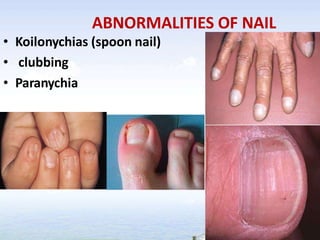
ABNORMALITIES OF NAIL
• Koilonychias (spoon nail)
• clubbing
• Paranychia
ASSESSING HAIR AND SCALP
• color,
• texture and distribution.
• Thickness and lubrication of hair
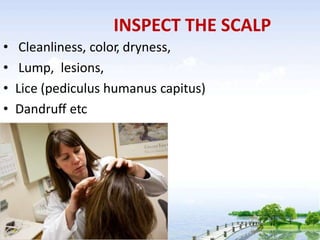
INSPECT THE SCALP
• Cleanliness, color, dryness,
• Lump, lesions,
• Lice (pediculus humanus capitus)
• Dandruff etc
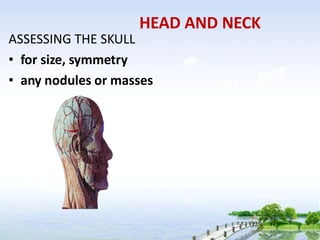
HEAD AND NECK
ASSESSING THE SKULL
• for size, symmetry
• any nodules or masses
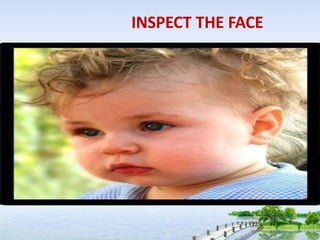
INSPECT THE FACE
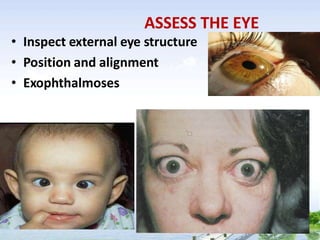
ASSESS THE EYE
• Inspect external eye structure
• Position and alignment
• Exophthalmoses
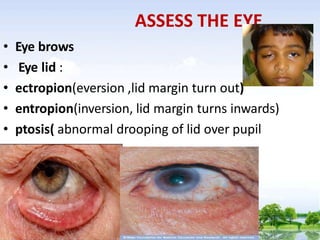
ASSESS THE EYE
• Eye brows
• Eye lid :
• ectropion(eversion ,lid margin turn out)
• entropion(inversion, lid margin turns inwards)
• ptosis( abnormal drooping of lid over pupil
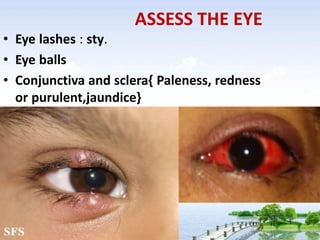
ASSESS THE EYE
• Eye lashes : sty.
• Eye balls
• Conjunctiva and sclera{ Paleness, redness
or purulent,jaundice}
ASSESS THE EYE
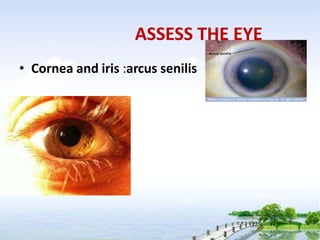
• Cornea and iris :arcus senilis
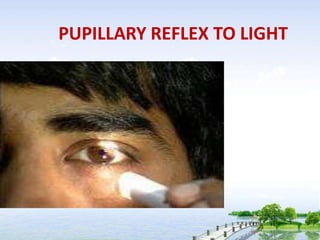
PUPILLARY REFLEX TO LIGHT
VISUAL ACUITY
INSPECT INTERNAL EYE STRUCTURES
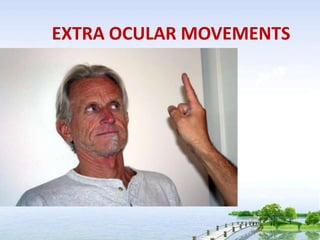
EXTRA OCULAR MOVEMENTS
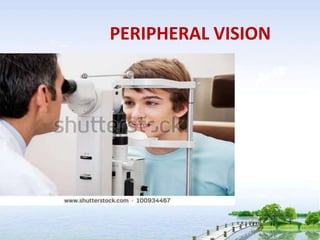
PERIPHERAL VISION
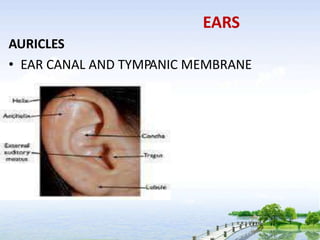
EARS
AURICLES
• EAR CANAL AND TYMPANIC MEMBRANE
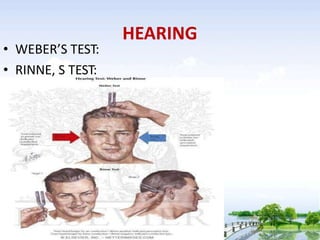
HEARING
• WEBER’S TEST:
• RINNE, S TEST:
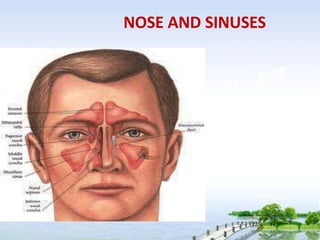
NOSE AND SINUSES
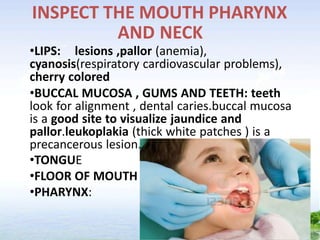
INSPECT THE MOUTH PHARYNX
AND NECK
•LIPS: lesions ,pallor (anemia),
cyanosis(respiratory cardiovascular problems),
cherry colored
•BUCCAL MUCOSA , GUMS AND TEETH: teeth
look for alignment , dental caries.buccal mucosa
is a good site to visualize jaundice and
pallor.leukoplakia (thick white patches ) is a
precancerous lesion.
•TONGUE
•FLOOR OF MOUTH
•PHARYNX:
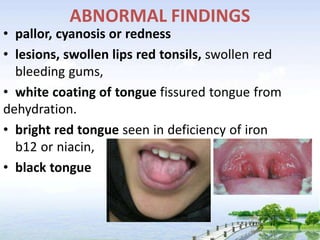
ABNORMAL FINDINGS
• pallor, cyanosis or redness
• lesions, swollen lips red tonsils, swollen red
bleeding gums,
• white coating of tongue fissured tongue from
dehydration.
• bright red tongue seen in deficiency of iron
b12 or niacin,
• black tongue
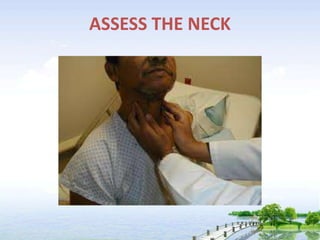
ASSESS THE NECK
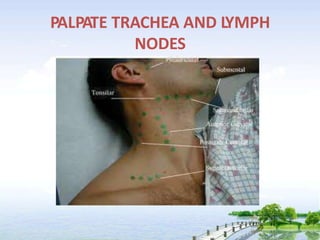
PALPATE TRACHEA AND LYMPH
NODES
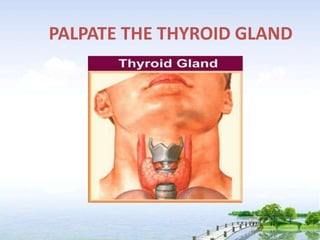
PALPATE THE THYROID GLAND
ASSESS THE THORAX AND LUNGS
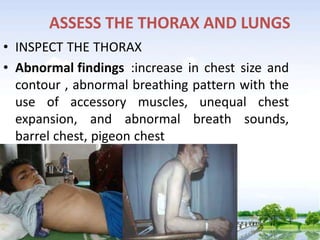
• INSPECT THE THORAX
• Abnormal findings :increase in chest size and
contour , abnormal breathing pattern with the
use of accessory muscles, unequal chest
expansion, and abnormal breath sounds,
barrel chest, pigeon chest
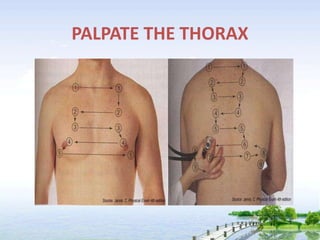
PALPATE THE THORAX
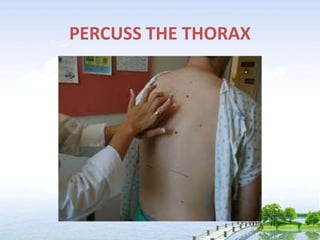
PERCUSS THE THORAX
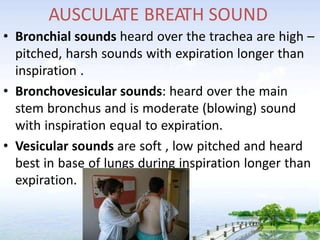
AUSCULATE BREATH SOUND
• Bronchial sounds heard over the trachea are high –
pitched, harsh sounds with expiration longer than
inspiration .
• Bronchovesicular sounds: heard over the main
stem bronchus and is moderate (blowing) sound
with inspiration equal to expiration.
• Vesicular sounds are soft , low pitched and heard
best in base of lungs during inspiration longer than
expiration.
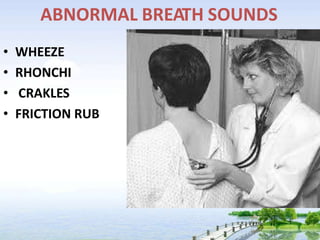
ABNORMAL BREATH SOUNDS
• WHEEZE
• RHONCHI
• CRAKLES
• FRICTION RUB
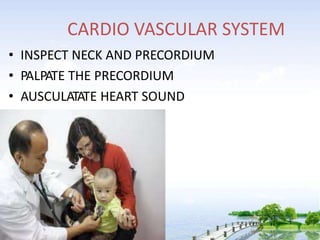
CARDIO VASCULAR SYSTEM
• INSPECT NECK AND PRECORDIUM
• PALPATE THE PRECORDIUM
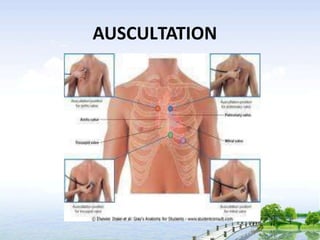
• AUSCULATATE HEART SOUND
AUSCULTATION
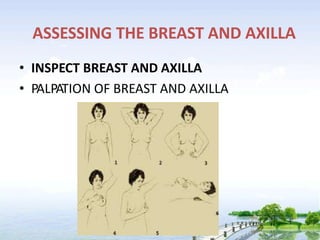
ASSESSING THE BREAST AND AXILLA
• INSPECT BREAST AND AXILLA
• PALPATION OF BREAST AND AXILLA
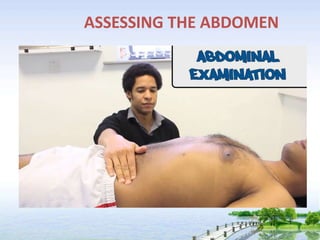
ASSESSING THE ABDOMEN
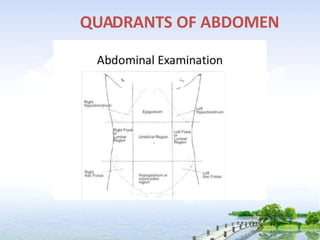
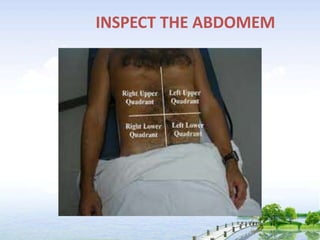
QUADRANTS OF ABDOMEN
INSPECT THE ABDOMEM
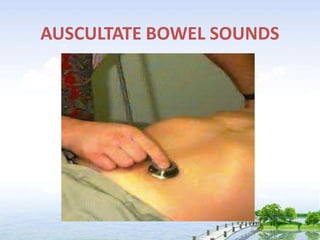
AUSCULTATE BOWEL SOUNDS
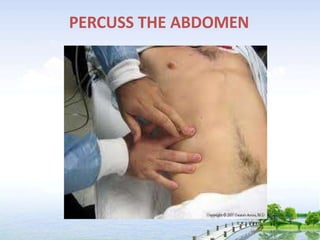
PERCUSS THE ABDOMEN
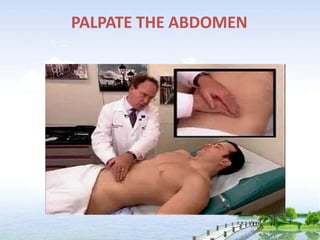
PALPATE THE ABDOMEN
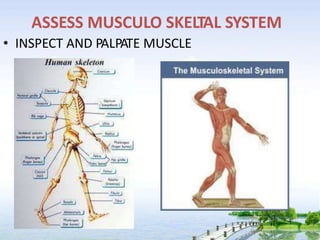
ASSESS MUSCULO SKELTAL SYSTEM
• INSPECT AND PALPATE MUSCLE
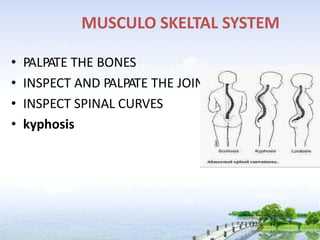
MUSCULO SKELTAL SYSTEM
• PALPATE THE BONES
• INSPECT AND PALPATE THE JOINTS
• INSPECT SPINAL CURVES
• kyphosis
AFTER CARE
• Make the patient comfortable
• Recording and reporting
• Replace all articles

Physical Examination