
THE TECHNIQUES OF
PHYSICAL EXAMINATION
PREPARED BY:
USHA RANI KANDULA,
ASSISTANT PROFESSOR,
DEPARTMENT OF ADULT HEALTH NURSING,
ARSI UNIVERSITY,ASELLA,ETHIOPIA,
EAST AFRICA.
TECHNIQUES OF PHYSICAL EXAMINATION
The skills used in physical examination include
inspection,
palpation,
percussion,
auscultation, and sometimes
olfaction.
will use these skills in that order, with one
exception:
When performing an abdominal assessment,
perform auscultation before percussion and
palpation to avoid disturbing the abdominal
sounds.
INSPECTION
Inspection is the use of sight to gather data.
will begin to use inspection the moment you
meet the client and continue as you observe the
person’s gait, personal hygiene, and behavior
during the general survey.
You will also use inspection and such
abnormalities as-
Edema,
Masses, or
 Areas of tenderness.
-As we begin and move through the assessment
of each body system, always inform the client that
you are about to touch him, and use a gentle
approach.
-Be certain your hands are warm.
PALPATION
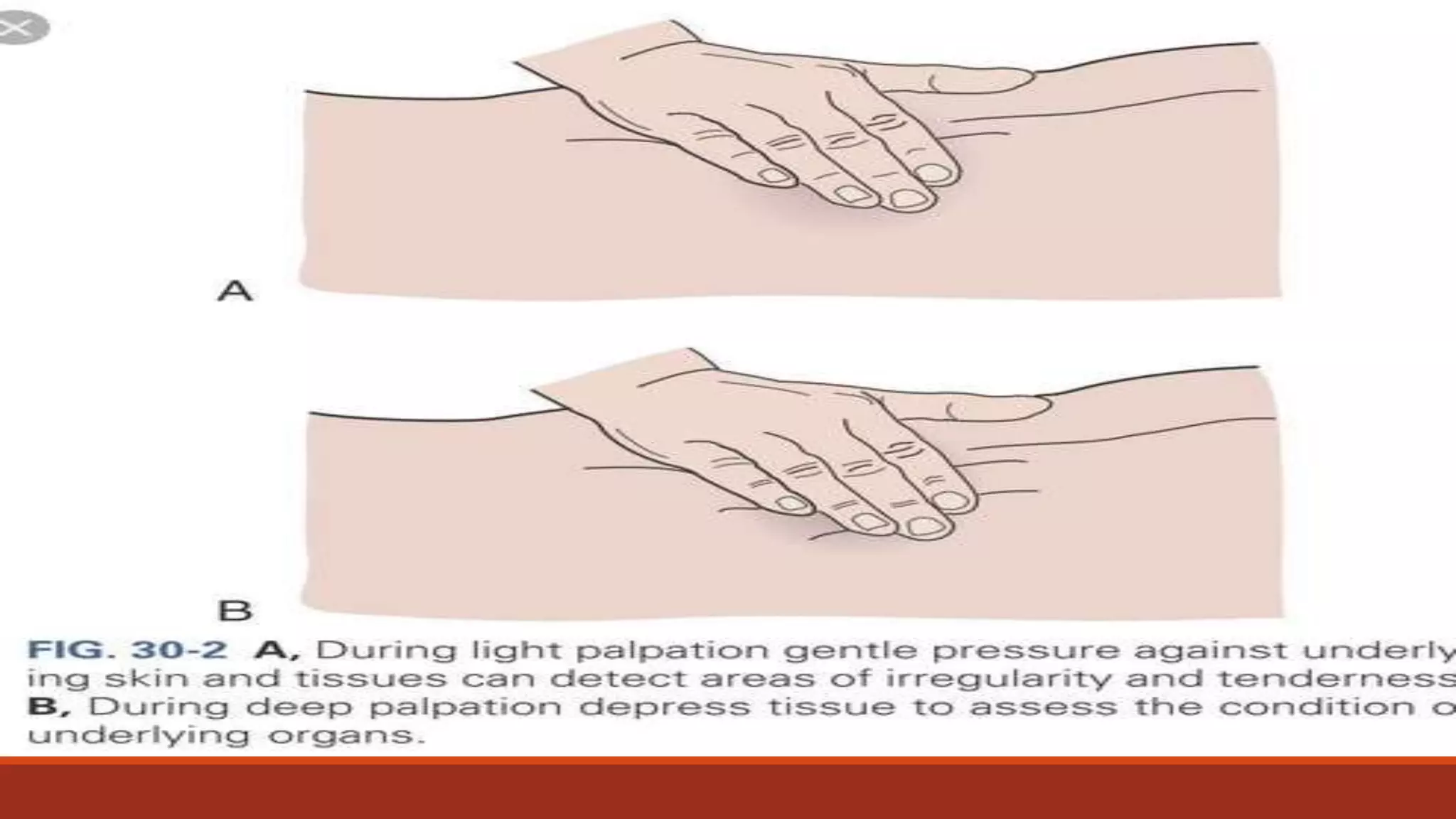
Begin with light pressure to detect surface
characteristics.
-Then move to deep palpation to assess the
underlying structures.
-Examine last any areas of discomfort or
sensitivity.
Following is a list of the most common palpation
techniques, using different parts of the hand.
FINGERTIPS:
Use for fine tactile discrimination, including
assessment of skin texture,
swelling,
and specific locations of pulsations and
masses.
Dorsum of hand: Use for temperature
determination.
■ Palmar surface of hand: Use for locating
general area of pulsations.
Grasping with fingers and thumb:
Use to detect the position, shape, and
consistency of a mass.
PERCUSSION
Percussion is tapping your fingers on the skin
using short strokes.
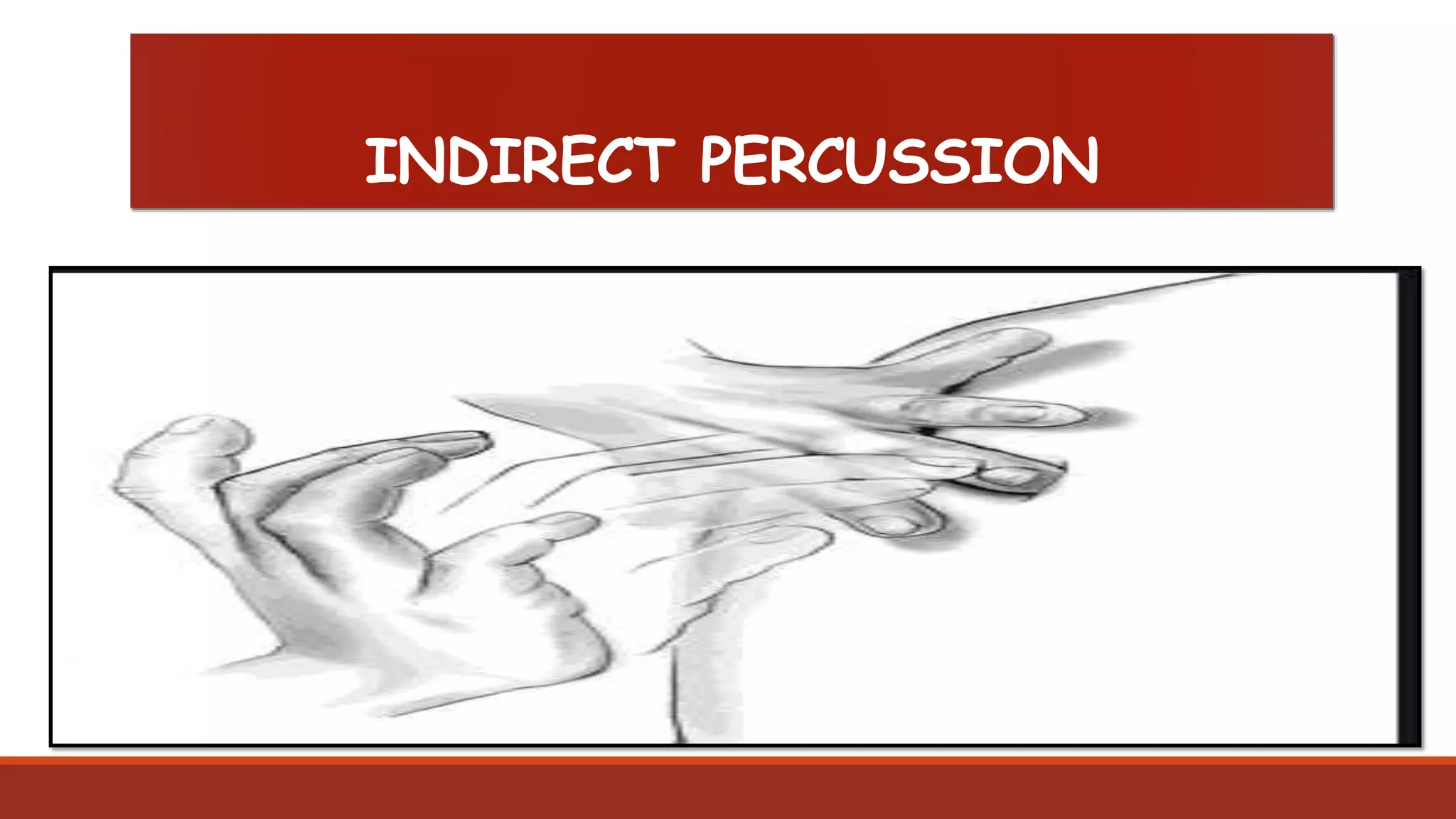
INDIRECT PERCUSSION
-Tapping (percussing) produces vibrations, and
the resulting sound allows you to determine
location,
size, and
 density of underlying structures.
Percussion is especially useful when
assessing the abdomen and lungs.
Percussion takes practice.
DIRECT AUSCULTATION
-Direct auscultation is listening without using an
instrument.
INDIRECT AUSCULTATION
-If use of a stethoscope, you have already
performed direct auscultation.
INDIRECT AUSCULTATION
-Indirect auscultation is listening with the help
of a stethoscope.
-The stethoscope has two end pieces, the
diaphragm and the bell.
-Use the diaphragm to listen to high-pitched
sounds that normally occur in the heart, lungs,
and abdomen.
-Press the diaphragm hard enough to produce
an obvious ring on the patient’s skin.
-Use the bell to hear low-pitched sounds, such as
extra heart sounds (murmurs) or turbulent blood
flow, known as bruits.
-Apply the bell lightly with just enough pressure
to produce an air seal with its entire surrounding.
OLFACTION
-To improve your skill in indirect auscultation,
Olfaction is the use of the sense of smell to gather
data.
-Finally, unless this is an initial assessment,
review the nursing plan of care and keep it in
mind as you examine the patient.
-The assessment data may lead to
modification or updating of the care plan.
-If the client is unable to sit, assist him to a
position on his back with the head of the bed
elevated.
-A patient with a cervical spine problem
would need a neck roll when lying supine.
GENERAL EXAMINATION
DRESS, GROOMING, AND HYGIENE
-A client’s ability to dress and perform personal
hygiene is affected by physical and emotional
well-being.
-An unkempt appearance may reflect chronic
pain, fatigue, depression, or low self-esteem.
-Poor hygiene may indicate a self-care deficit
of physical or mental origin, or lack of easily
accessible bathroom facilities.
MENTAL STATUS
-Mental state includes level of consciousness and
capacity to interact.
-If the client has an altered mental status, ask a
family member about the onset of the change.
-Lethargy may be due to medications;
depression; or a neurological, thyroid, liver,
kidney, or cardiovascular disorder.
-Confusion and irritability may indicate
hypoxia or medication side effects.
-Inability to provide a health history or to recall
information may indicate a neurological disorder.
VITAL SIGNS
-You should assess vital signs as a part
of the general survey and with
subsequent assessments.
HEIGHT AND WEIGHT
-Height and weight provide valuable
information about your client’s growth and
development, nutritional status, overall general
health, and risk for various diseases such as
diabetes and heart disease.
-These data are important for proper
dosing of medication.
-For adults who can stand, measure height
and weight using a platform scale with a
sliding ruler.
-For growth charts for males and females from
birth to 20 years of age, Body mass index (BMI)
evaluates the relationship between height and
weight.
-You can calculate the BMI for adults
using a BMI calculator or table.
THANKING YOU

The techniques of physical examination

  • 1.
    THE TECHNIQUES OF PHYSICALEXAMINATION PREPARED BY: USHA RANI KANDULA, ASSISTANT PROFESSOR, DEPARTMENT OF ADULT HEALTH NURSING, ARSI UNIVERSITY,ASELLA,ETHIOPIA, EAST AFRICA.
  • 2.
    TECHNIQUES OF PHYSICALEXAMINATION The skills used in physical examination include inspection, palpation, percussion, auscultation, and sometimes olfaction.
  • 3.
    will use theseskills in that order, with one exception: When performing an abdominal assessment, perform auscultation before percussion and palpation to avoid disturbing the abdominal sounds.
  • 4.
    INSPECTION Inspection is theuse of sight to gather data. will begin to use inspection the moment you meet the client and continue as you observe the person’s gait, personal hygiene, and behavior during the general survey.
  • 5.
    You will alsouse inspection and such abnormalities as- Edema, Masses, or  Areas of tenderness.
  • 6.
    -As we beginand move through the assessment of each body system, always inform the client that you are about to touch him, and use a gentle approach. -Be certain your hands are warm.
  • 7.
    PALPATION Begin with lightpressure to detect surface characteristics.
  • 9.
    -Then move todeep palpation to assess the underlying structures. -Examine last any areas of discomfort or sensitivity.
  • 10.
    Following is alist of the most common palpation techniques, using different parts of the hand.
  • 11.
    FINGERTIPS: Use for finetactile discrimination, including assessment of skin texture, swelling, and specific locations of pulsations and masses.
  • 12.
    Dorsum of hand:Use for temperature determination. ■ Palmar surface of hand: Use for locating general area of pulsations.
  • 13.
    Grasping with fingersand thumb: Use to detect the position, shape, and consistency of a mass.
  • 14.
    PERCUSSION Percussion is tappingyour fingers on the skin using short strokes.
  • 15.
  • 16.
    -Tapping (percussing) producesvibrations, and the resulting sound allows you to determine location, size, and  density of underlying structures.
  • 17.
    Percussion is especiallyuseful when assessing the abdomen and lungs. Percussion takes practice.
  • 18.
    DIRECT AUSCULTATION -Direct auscultationis listening without using an instrument.
  • 19.
    INDIRECT AUSCULTATION -If useof a stethoscope, you have already performed direct auscultation.
  • 20.
    INDIRECT AUSCULTATION -Indirect auscultationis listening with the help of a stethoscope. -The stethoscope has two end pieces, the diaphragm and the bell.
  • 21.
    -Use the diaphragmto listen to high-pitched sounds that normally occur in the heart, lungs, and abdomen.
  • 22.
    -Press the diaphragmhard enough to produce an obvious ring on the patient’s skin.
  • 23.
    -Use the bellto hear low-pitched sounds, such as extra heart sounds (murmurs) or turbulent blood flow, known as bruits.
  • 24.
    -Apply the belllightly with just enough pressure to produce an air seal with its entire surrounding.
  • 25.
    OLFACTION -To improve yourskill in indirect auscultation, Olfaction is the use of the sense of smell to gather data.
  • 26.
    -Finally, unless thisis an initial assessment, review the nursing plan of care and keep it in mind as you examine the patient.
  • 27.
    -The assessment datamay lead to modification or updating of the care plan.
  • 28.
    -If the clientis unable to sit, assist him to a position on his back with the head of the bed elevated.
  • 29.
    -A patient witha cervical spine problem would need a neck roll when lying supine.
  • 30.
  • 31.
    DRESS, GROOMING, ANDHYGIENE -A client’s ability to dress and perform personal hygiene is affected by physical and emotional well-being.
  • 32.
    -An unkempt appearancemay reflect chronic pain, fatigue, depression, or low self-esteem.
  • 33.
    -Poor hygiene mayindicate a self-care deficit of physical or mental origin, or lack of easily accessible bathroom facilities.
  • 34.
    MENTAL STATUS -Mental stateincludes level of consciousness and capacity to interact.
  • 35.
    -If the clienthas an altered mental status, ask a family member about the onset of the change.
  • 36.
    -Lethargy may bedue to medications; depression; or a neurological, thyroid, liver, kidney, or cardiovascular disorder.
  • 37.
    -Confusion and irritabilitymay indicate hypoxia or medication side effects.
  • 38.
    -Inability to providea health history or to recall information may indicate a neurological disorder.
  • 39.
    VITAL SIGNS -You shouldassess vital signs as a part of the general survey and with subsequent assessments.
  • 40.
    HEIGHT AND WEIGHT -Heightand weight provide valuable information about your client’s growth and development, nutritional status, overall general health, and risk for various diseases such as diabetes and heart disease.
  • 41.
    -These data areimportant for proper dosing of medication.
  • 42.
    -For adults whocan stand, measure height and weight using a platform scale with a sliding ruler.
  • 43.
    -For growth chartsfor males and females from birth to 20 years of age, Body mass index (BMI) evaluates the relationship between height and weight.
  • 44.
    -You can calculatethe BMI for adults using a BMI calculator or table.
  • 45.