By
Mr. Vincent Ejakait
10/5/2017Psychnebppt. 2
 Series of interactions between the nurse
and the patient in which the nurse assists
the patient to attain positive behavioral
change
10/5/2017Psychnebppt. 3
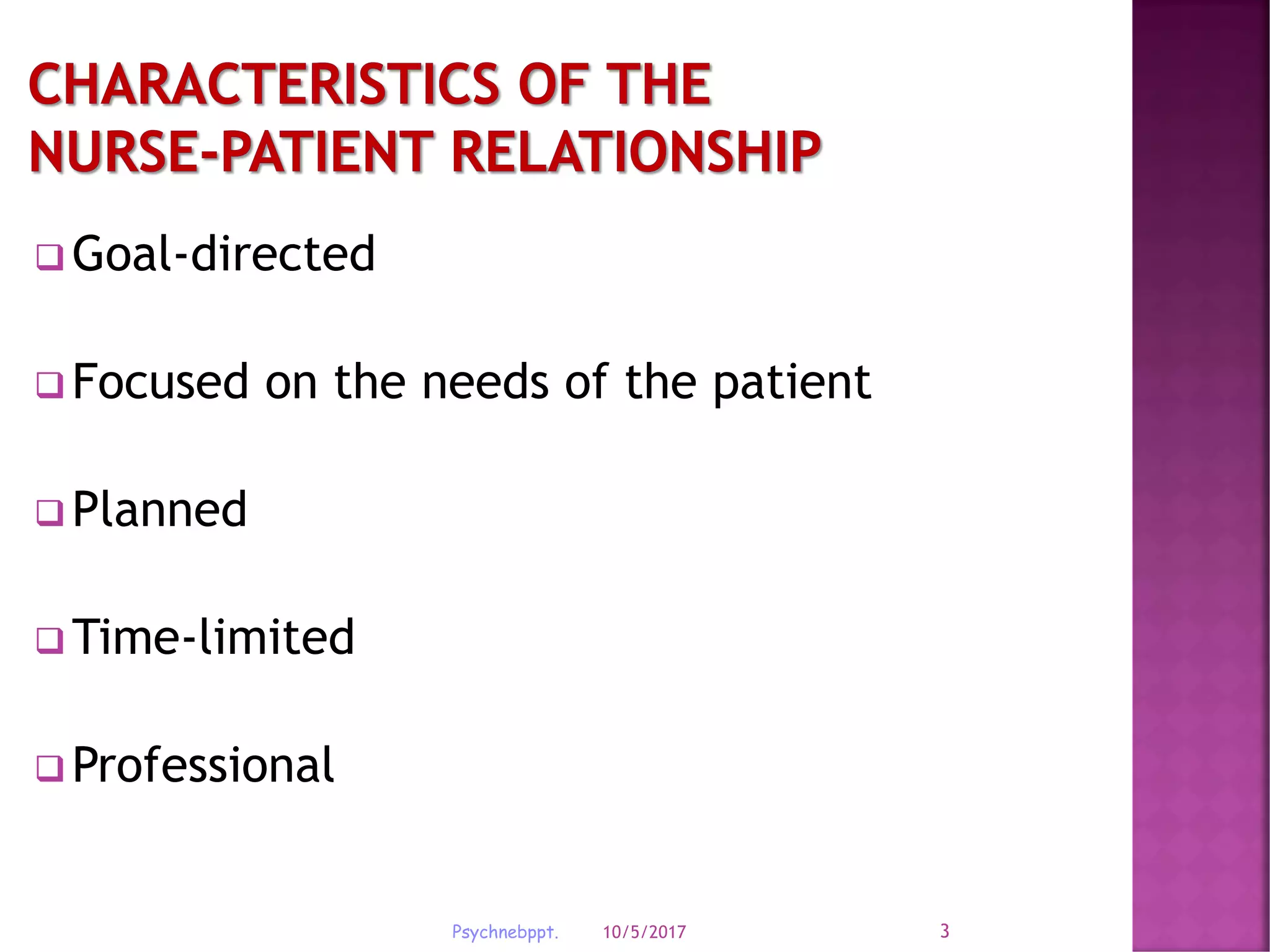
 Goal-directed
 Focused on the needs of the patient
 Planned
 Time-limited
 Professional
10/5/2017Psychnebppt. 4
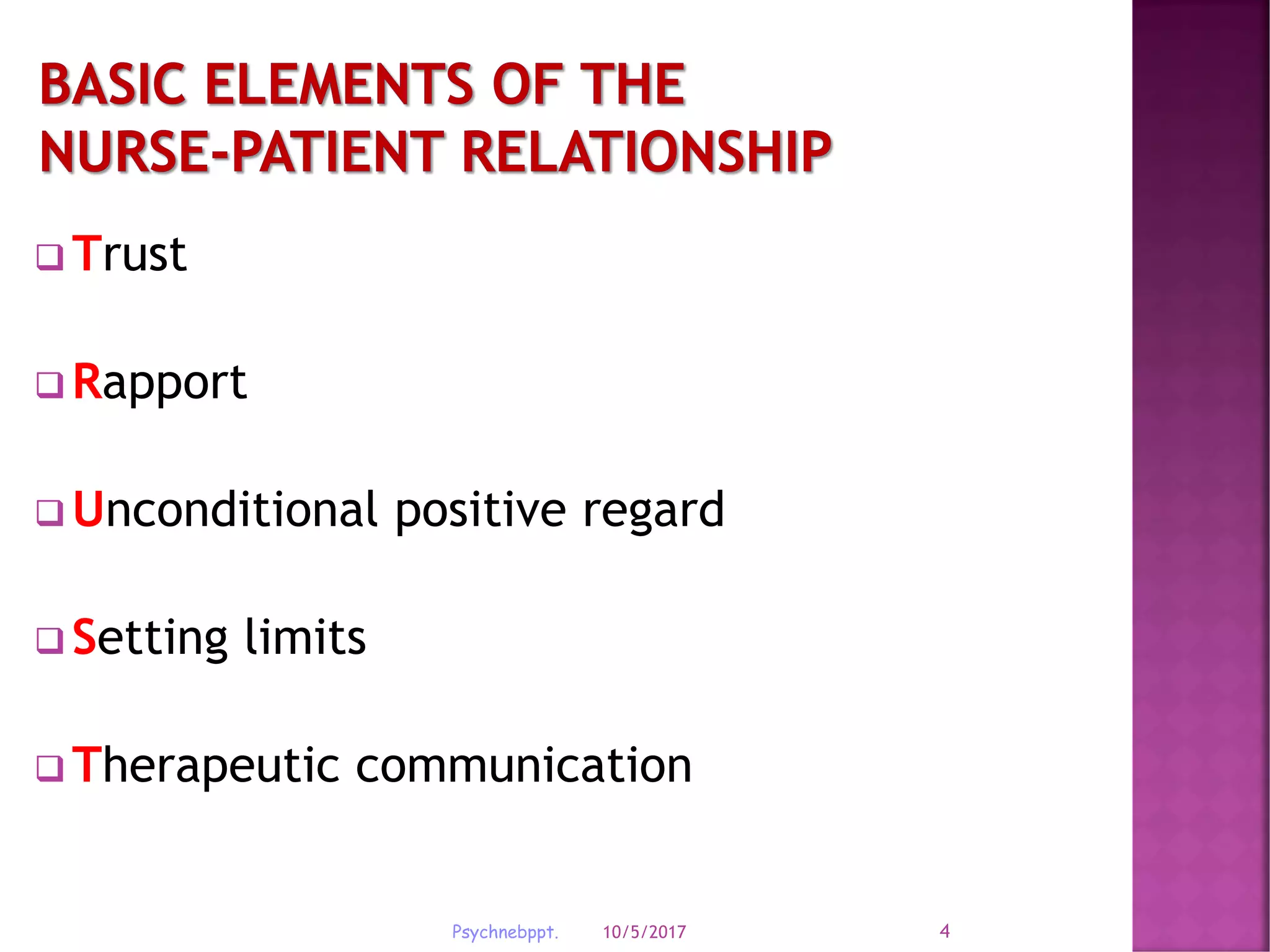
 Trust
 Rapport
 Unconditional positive regard
 Setting limits
 Therapeutic communication
10/5/2017Psychnebppt. 5
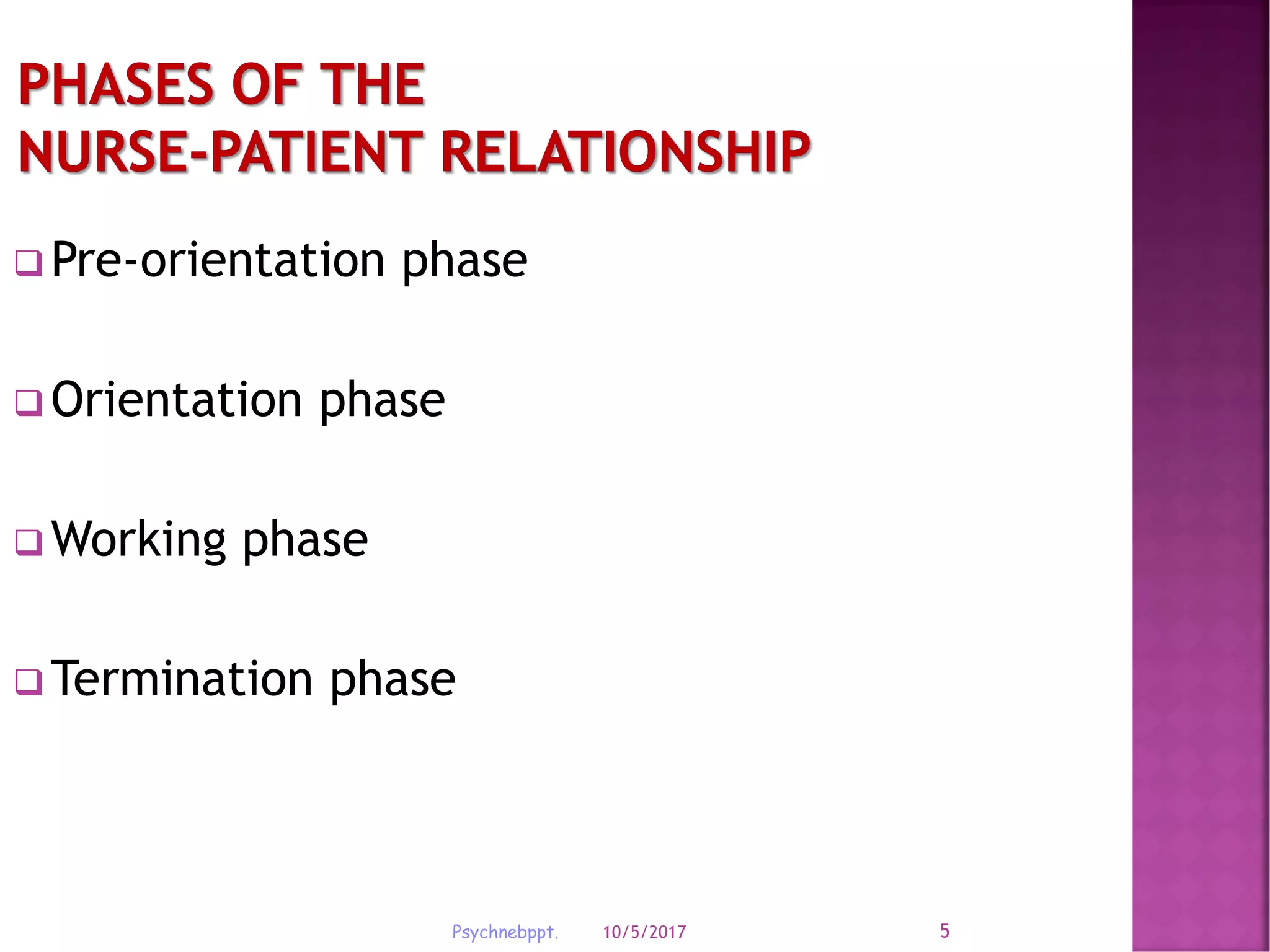
 Pre-orientation phase
 Orientation phase
 Working phase
 Termination phase
10/5/2017Psychnebppt. 6
 Begins when the nurse is assigned to a patient
 Phase of Nurse-Patient Relationship in which
the patient is excluded as an actual
participant
 Nurse feels certain degree of anxiety
10/5/2017Psychnebppt. 7
 Includes all of what the nurse thinks and
does before interacting with the patient
 Tasks include data gathering, planning for
the first interaction
 Major task is to develop self-awareness
10/5/2017Psychnebppt. 8
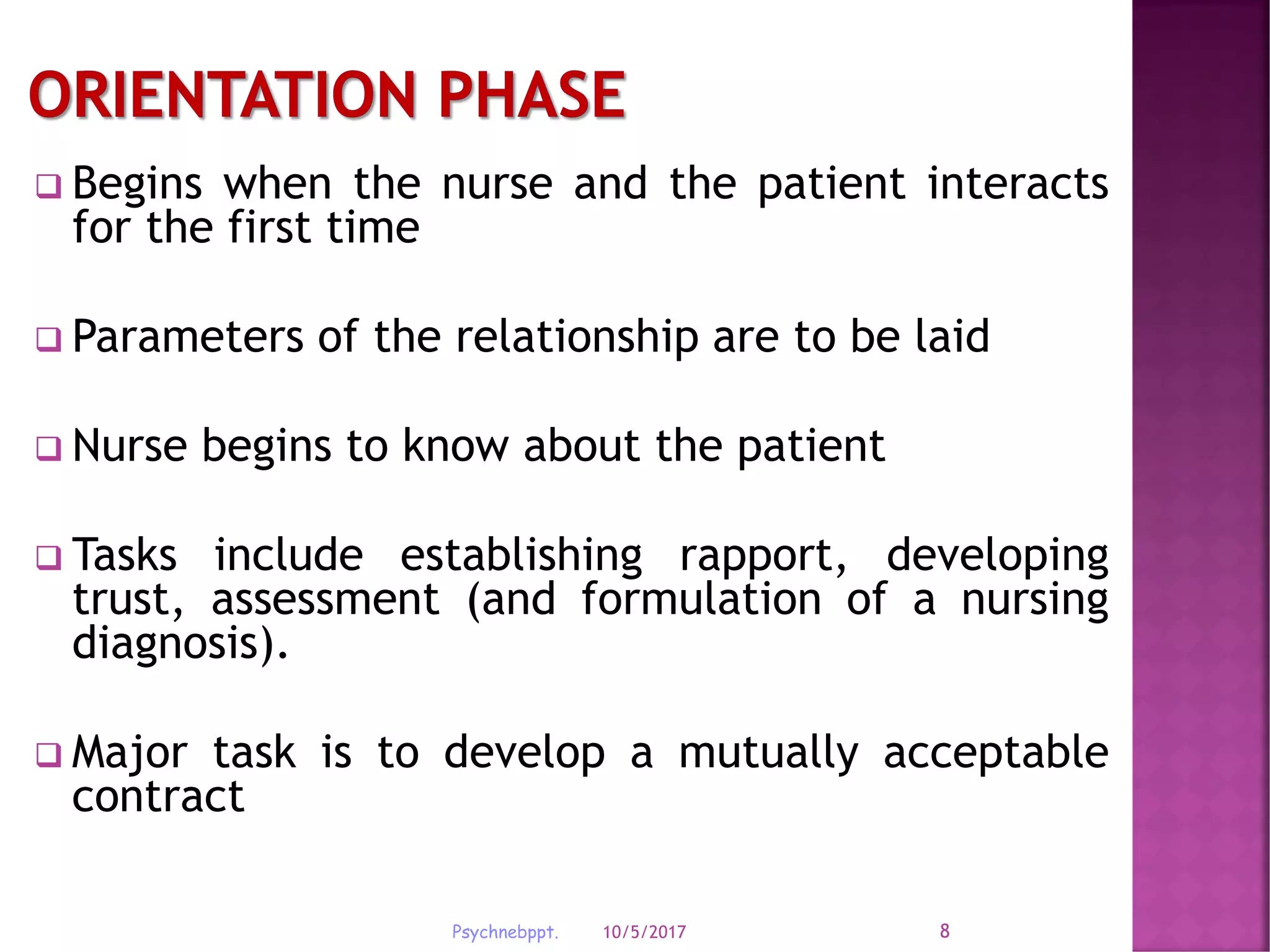
 Begins when the nurse and the patient interacts
for the first time
 Parameters of the relationship are to be laid
 Nurse begins to know about the patient
 Tasks include establishing rapport, developing
trust, assessment (and formulation of a nursing
diagnosis).
 Major task is to develop a mutually acceptable
contract
10/5/2017Psychnebppt. 9
 It is highly individualized
 More structured than the orientation phase
 The longest and most productive phase of the nurse-
patient relationship
 Limit-setting is employed
 Tasks include planning and implementation
 Major task is identification and resolution of the
patient’s problems
10/5/2017Psychnebppt. 10
 It is a gradual weaning process
 It is a mutual agreement
 It involves feelings of anxiety, fear and loss
 It should be recognized in the orientation phase
 Tasks include evaluation
 Major task is to assist patient to review what has been
learned and to transfer his learning to his relationship
with others
10/5/2017Psychnebppt. 11
 Occurs when the client displaces onto the
nurse attitudes and feelings that the client
originally experience in other relationships
 These patterns are automatic and unconscious
 Example:
A client falls in love with the nurse.
10/5/2017Psychnebppt. 12
 Occurs when the nurse displaces onto the client
attitudes or feelings from his or her past.
 Example:
 A female nurse who has teenage children and who is
experiencing extreme frustration with an adolescent client
may respond by adopting a parental or chastising tone.
 The nurse is countertransfering her own attitudes
and feelings toward her children onto the client.
 Development of ambivalent feelings
toward self-exploration
10/5/2017Psychnebppt. 13
10/5/2017Psychnebppt. 14
10/5/2017Psychnebppt. 15
 The nurse views the patient as a holistic
human being.
 The nurse accepts the patient as a unique
human being..
 The nurse should focus on the patient’s
strengths and assets.
 The nurse views the patient’s behavior non-
judgmentally.
 The nurse has the potential for rapport.
10/5/2017Psychnebppt. 17
 Review definition of mental hygiene
 Interventions aimed at the promotion of mental
health and lowering incidences by altering the
stressors.
Examples:
Health education
Information dissemination
Counseling
10/5/2017Psychnebppt. 18
 Interventions that limit the severity of a disorder.
 Has two components:
Case finding.
Prompt treatment.
Examples:
Crisis intervention
Administration of medications
10/5/2017Psychnebppt. 19
 Interventions aimed at reducing the disability
after a disorder.
 Has two components:
Prevention of complication
Active program of rehabilitation
Examples:
Alcoholics Anonymous groups.
Occupational therapy

Therapeutic nurse patient relationship in psychiatry

  • 1.
  • 2.
    10/5/2017Psychnebppt. 2  Seriesof interactions between the nurse and the patient in which the nurse assists the patient to attain positive behavioral change
  • 3.
    10/5/2017Psychnebppt. 3  Goal-directed Focused on the needs of the patient  Planned  Time-limited  Professional
  • 4.
    10/5/2017Psychnebppt. 4  Trust Rapport  Unconditional positive regard  Setting limits  Therapeutic communication
  • 5.
    10/5/2017Psychnebppt. 5  Pre-orientationphase  Orientation phase  Working phase  Termination phase
  • 6.
    10/5/2017Psychnebppt. 6  Beginswhen the nurse is assigned to a patient  Phase of Nurse-Patient Relationship in which the patient is excluded as an actual participant  Nurse feels certain degree of anxiety
  • 7.
    10/5/2017Psychnebppt. 7  Includesall of what the nurse thinks and does before interacting with the patient  Tasks include data gathering, planning for the first interaction  Major task is to develop self-awareness
  • 8.
    10/5/2017Psychnebppt. 8  Beginswhen the nurse and the patient interacts for the first time  Parameters of the relationship are to be laid  Nurse begins to know about the patient  Tasks include establishing rapport, developing trust, assessment (and formulation of a nursing diagnosis).  Major task is to develop a mutually acceptable contract
  • 9.
    10/5/2017Psychnebppt. 9  Itis highly individualized  More structured than the orientation phase  The longest and most productive phase of the nurse- patient relationship  Limit-setting is employed  Tasks include planning and implementation  Major task is identification and resolution of the patient’s problems
  • 10.
    10/5/2017Psychnebppt. 10  Itis a gradual weaning process  It is a mutual agreement  It involves feelings of anxiety, fear and loss  It should be recognized in the orientation phase  Tasks include evaluation  Major task is to assist patient to review what has been learned and to transfer his learning to his relationship with others
  • 11.
    10/5/2017Psychnebppt. 11  Occurswhen the client displaces onto the nurse attitudes and feelings that the client originally experience in other relationships  These patterns are automatic and unconscious  Example: A client falls in love with the nurse.
  • 12.
    10/5/2017Psychnebppt. 12  Occurswhen the nurse displaces onto the client attitudes or feelings from his or her past.  Example:  A female nurse who has teenage children and who is experiencing extreme frustration with an adolescent client may respond by adopting a parental or chastising tone.  The nurse is countertransfering her own attitudes and feelings toward her children onto the client.
  • 13.
     Development ofambivalent feelings toward self-exploration 10/5/2017Psychnebppt. 13
  • 14.
  • 15.
    10/5/2017Psychnebppt. 15  Thenurse views the patient as a holistic human being.  The nurse accepts the patient as a unique human being..  The nurse should focus on the patient’s strengths and assets.  The nurse views the patient’s behavior non- judgmentally.  The nurse has the potential for rapport.
  • 17.
    10/5/2017Psychnebppt. 17  Reviewdefinition of mental hygiene  Interventions aimed at the promotion of mental health and lowering incidences by altering the stressors. Examples: Health education Information dissemination Counseling
  • 18.
    10/5/2017Psychnebppt. 18  Interventionsthat limit the severity of a disorder.  Has two components: Case finding. Prompt treatment. Examples: Crisis intervention Administration of medications
  • 19.
    10/5/2017Psychnebppt. 19  Interventionsaimed at reducing the disability after a disorder.  Has two components: Prevention of complication Active program of rehabilitation Examples: Alcoholics Anonymous groups. Occupational therapy