Chapter 3:  Matter and Its Changes
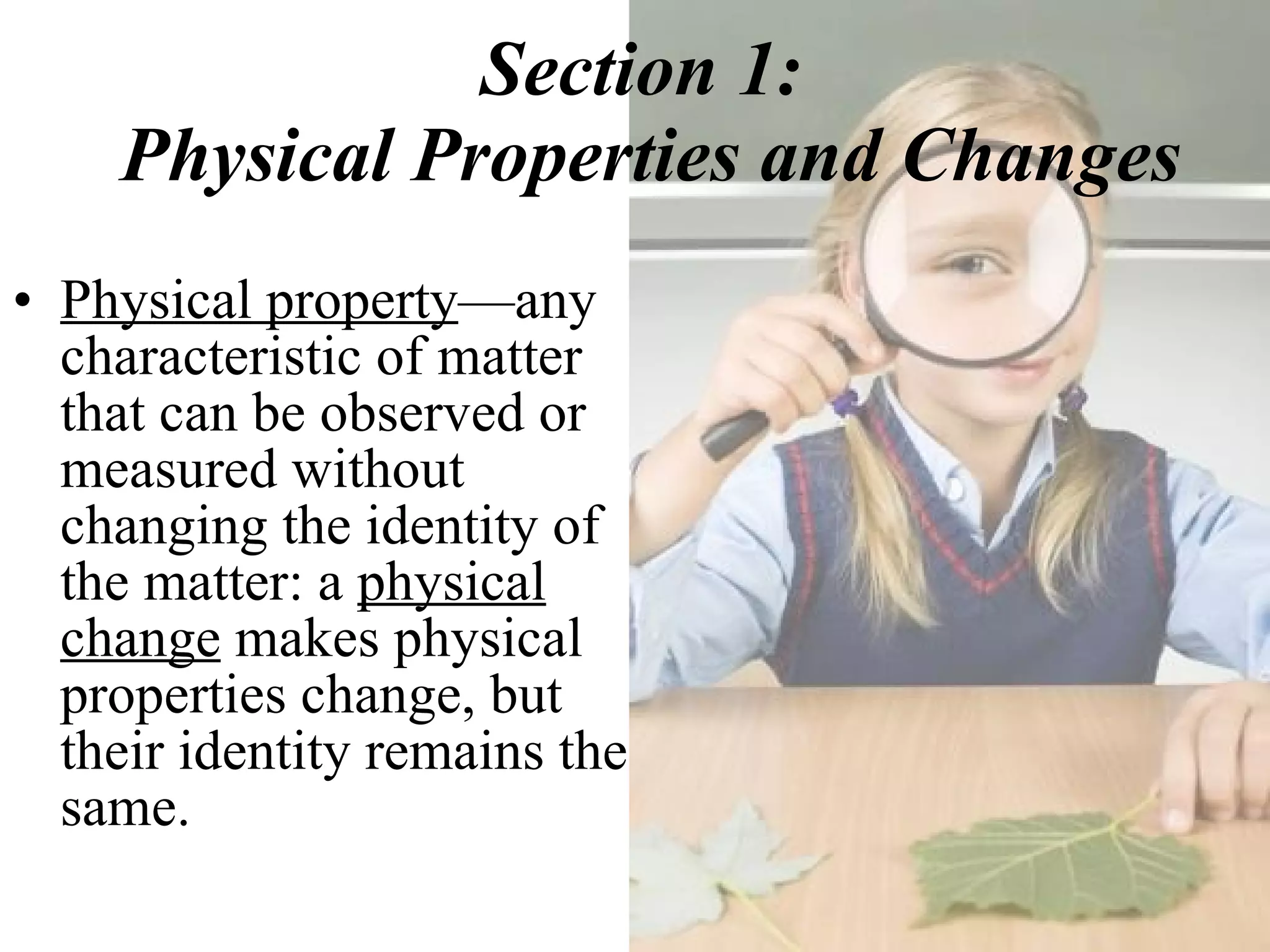
Section 1:  Physical Properties and Changes Physical property —any characteristic of matter that can be observed or measured without changing the identity of the matter: a  physical change  makes physical properties change, but their identity remains the same.
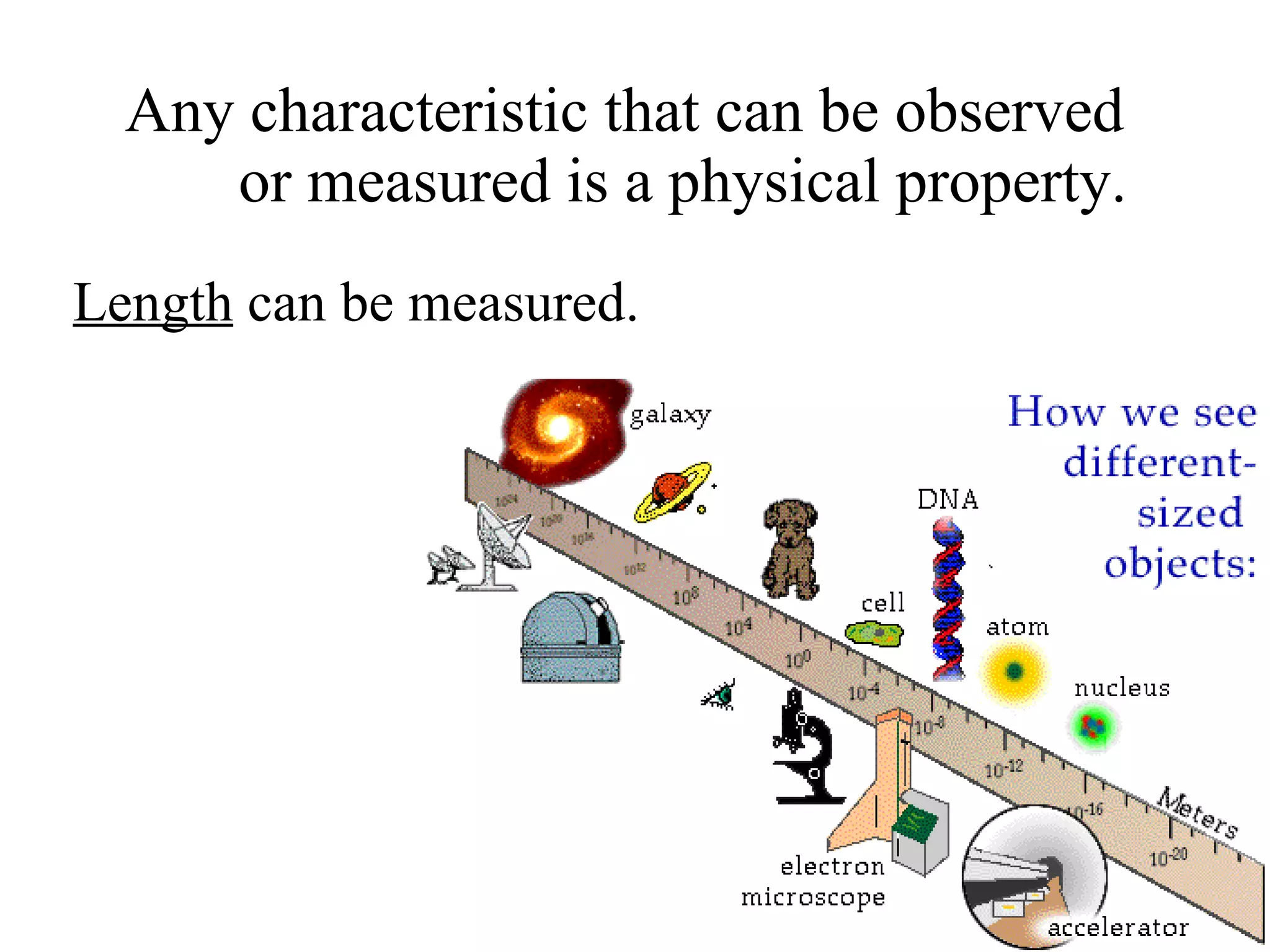
Any characteristic that can be observed or measured is a physical property.                                                                     Length  can be measured.
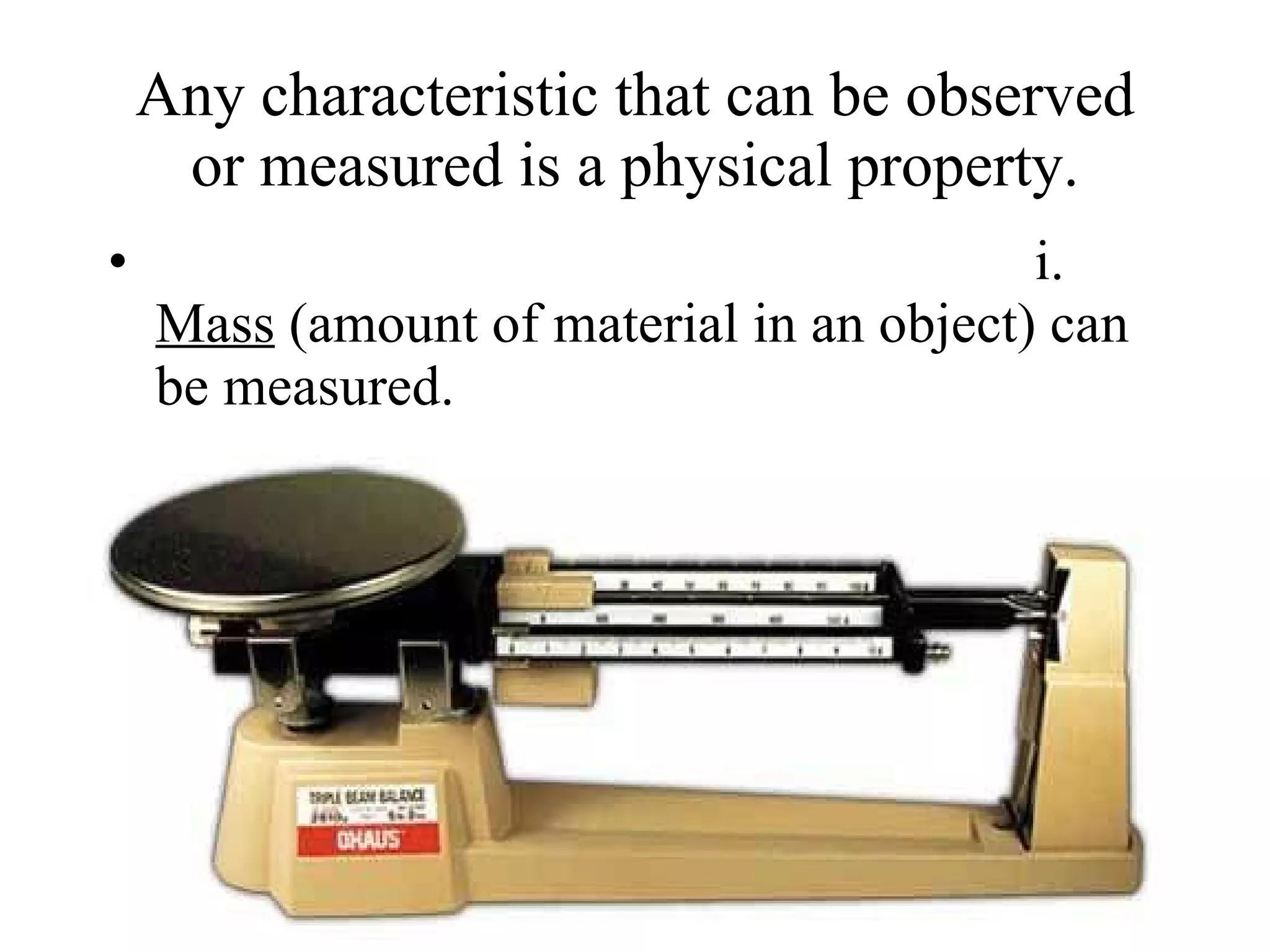
Any characteristic that can be observed or measured is a physical property.                                                               i.       Mass  (amount of material in an object) can be measured.
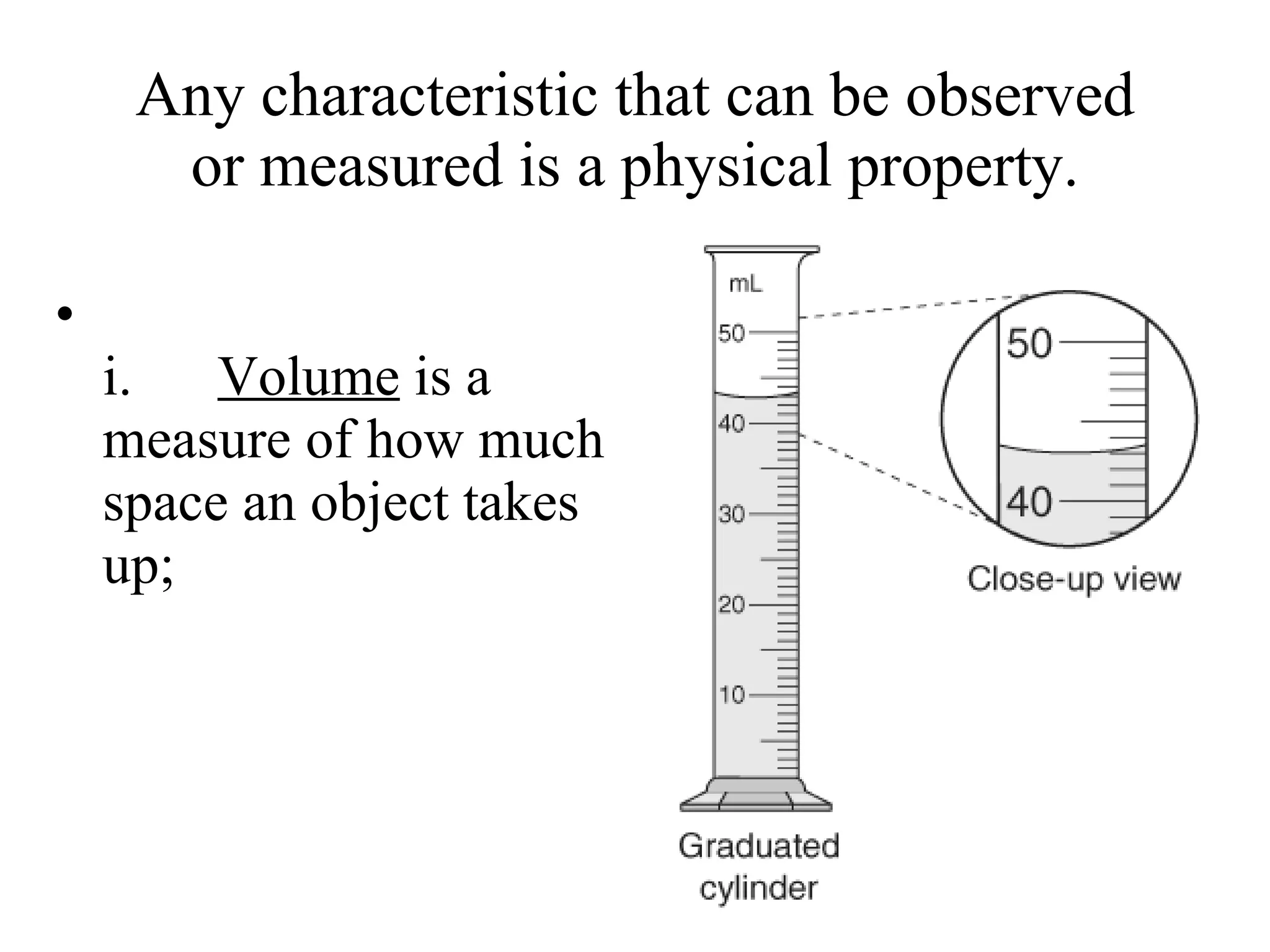
Any characteristic that can be observed or measured is a physical property.                                       i.       Volume  is a measure of how much space an object takes up;
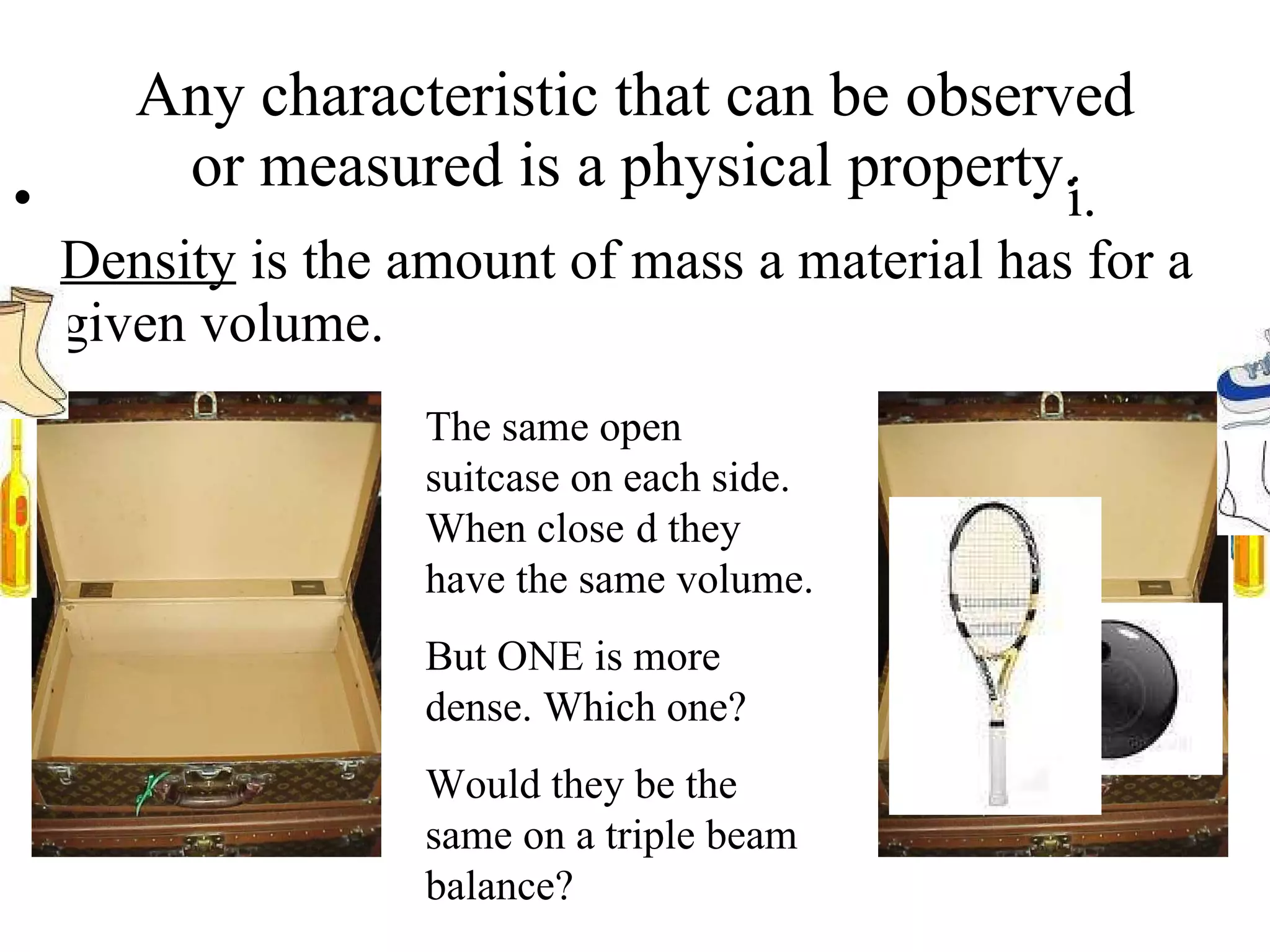
Any characteristic that can be observed or measured is a physical property.                                                                i.       Density  is the amount of mass a material has for a given volume.  The same open suitcase on each side. When close   d they have the same volume.  But ONE is more dense. Which one? Would they be the same on a triple beam balance?
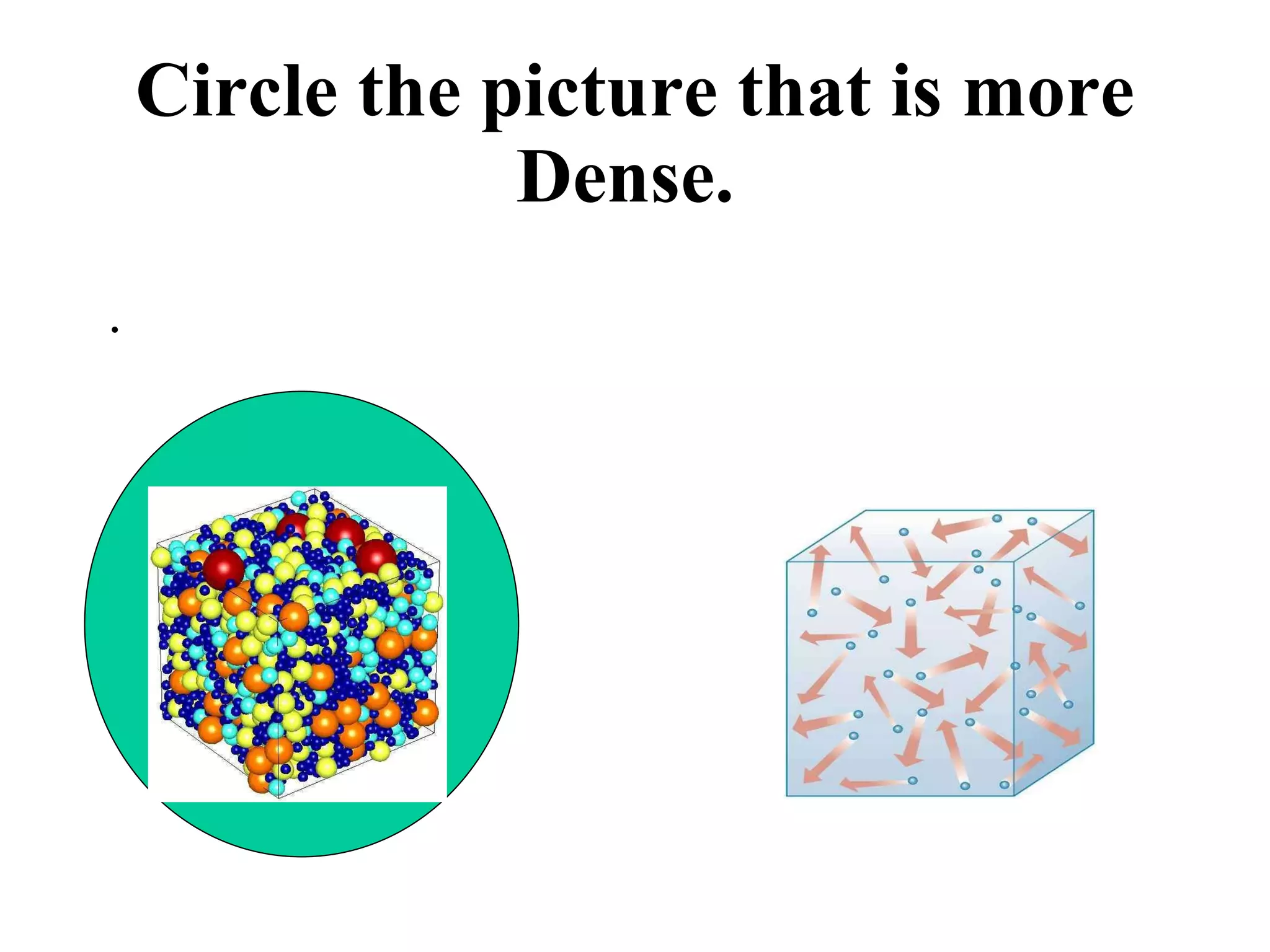
Circle the picture that is more Dense.  .
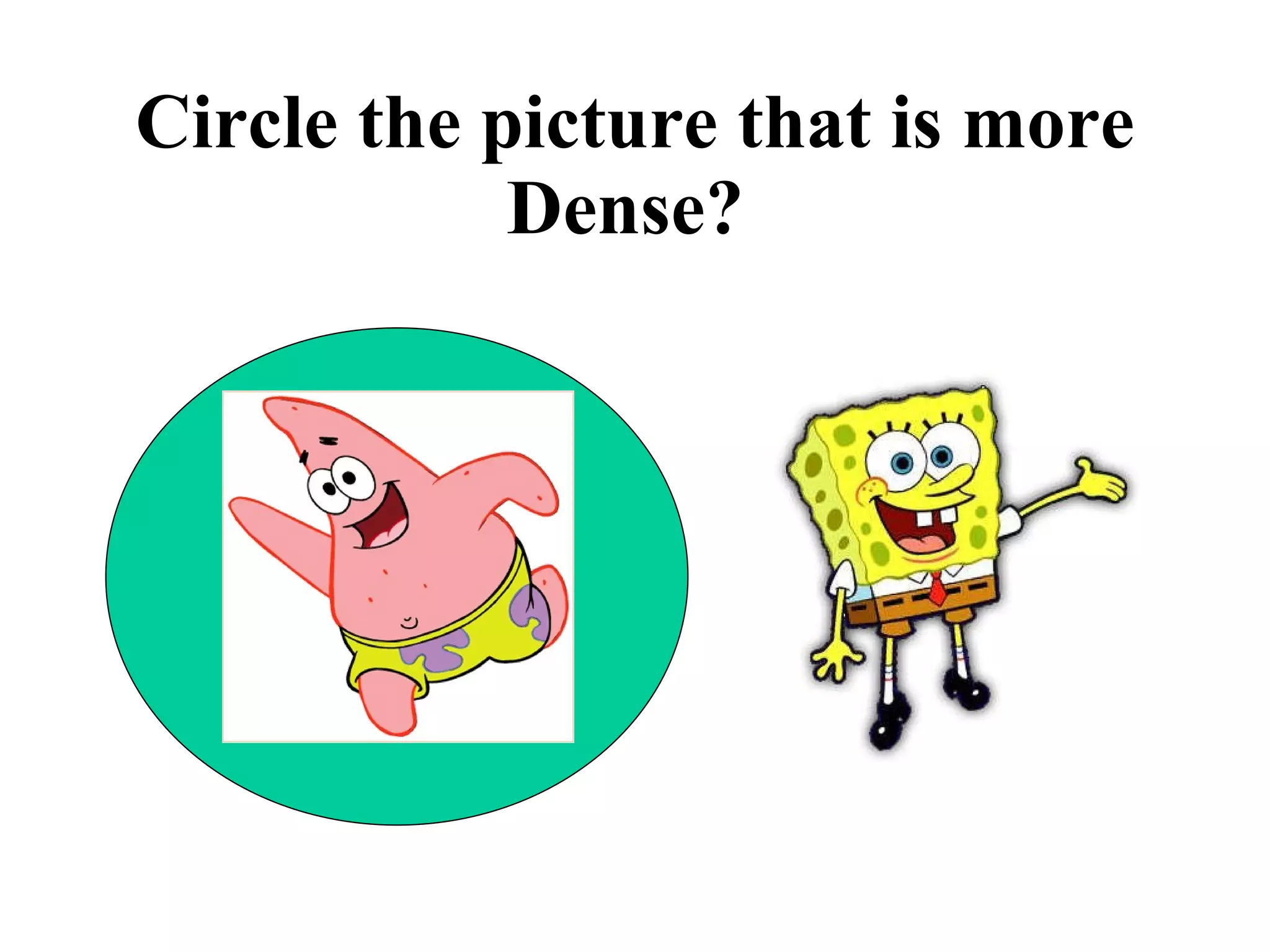
Circle the picture that is more Dense?
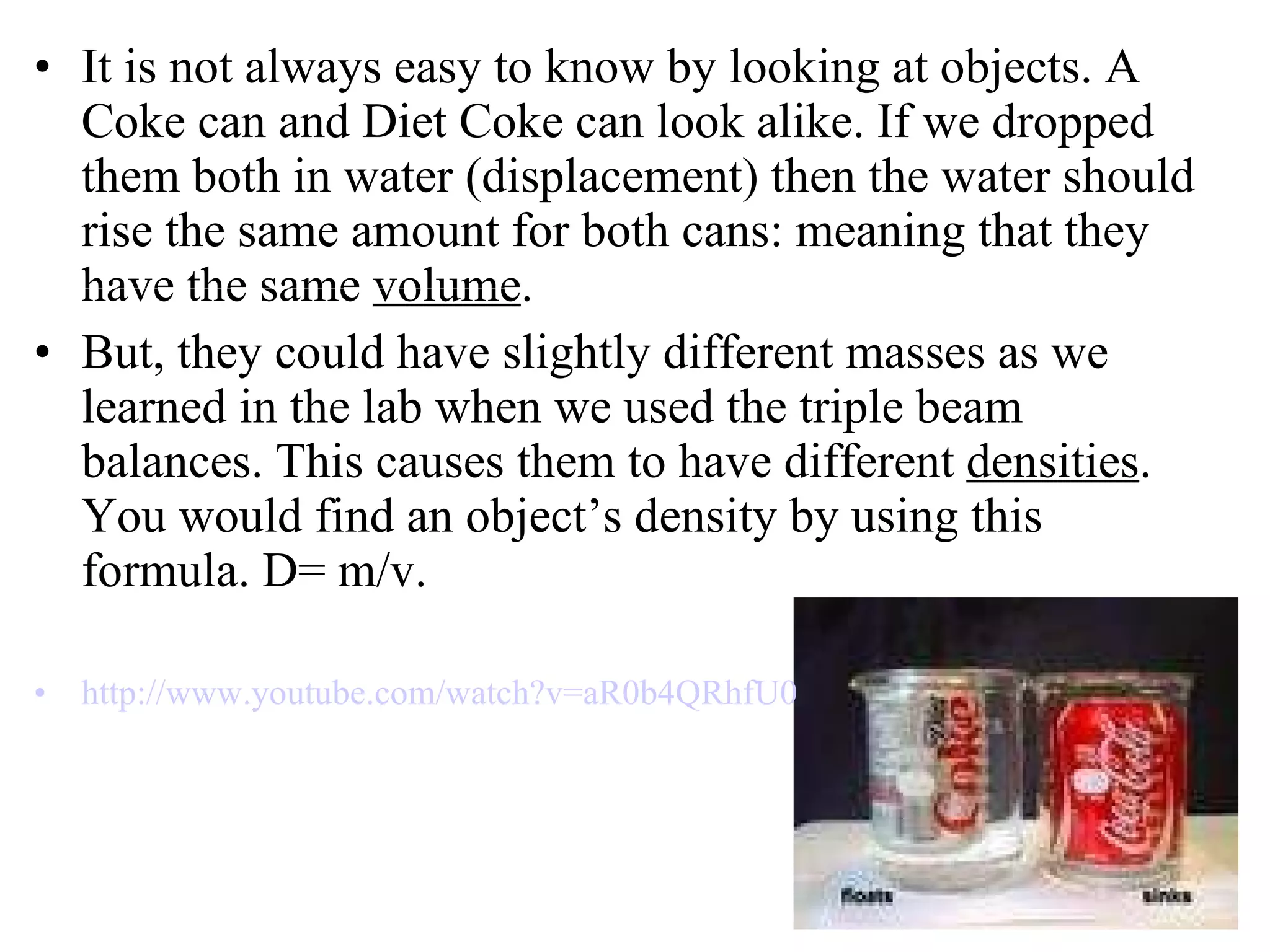
It is not always easy to know by looking at objects. A Coke can and Diet Coke can look alike. If we dropped them both in water (displacement) then the water should rise the same amount for both cans: meaning that they have the same  volume .  But, they could have slightly different masses as we learned in the lab when we used the triple beam balances. This causes them to have different  densities . You would find an object’s density by using this formula. D= m/v. http:// www.youtube.com/watch?v =aR0b4QRhfU0
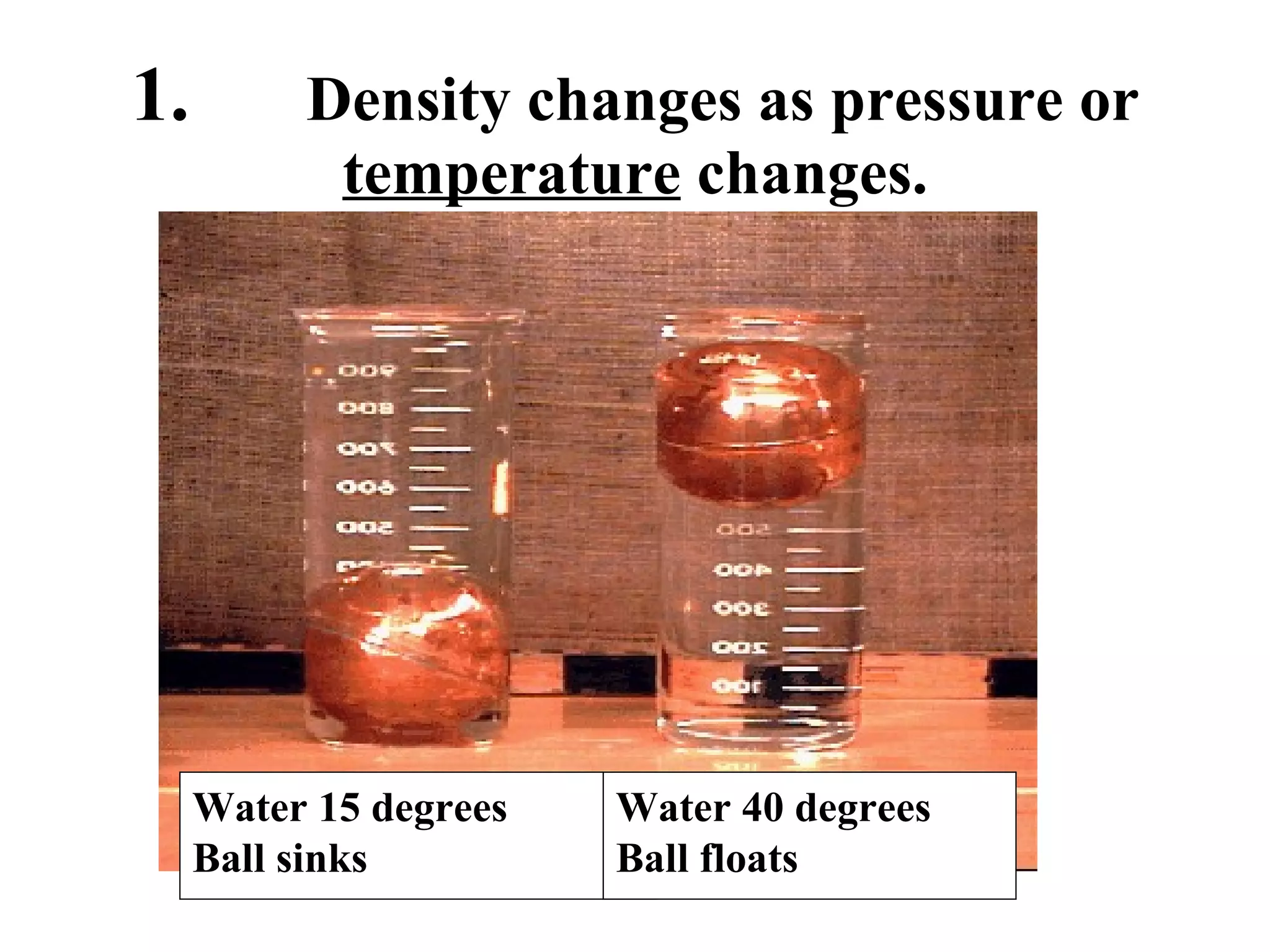
1.       Density changes as pressure or  temperature  changes. Water 15 degrees Ball sinks Water 40 degrees  Ball floats
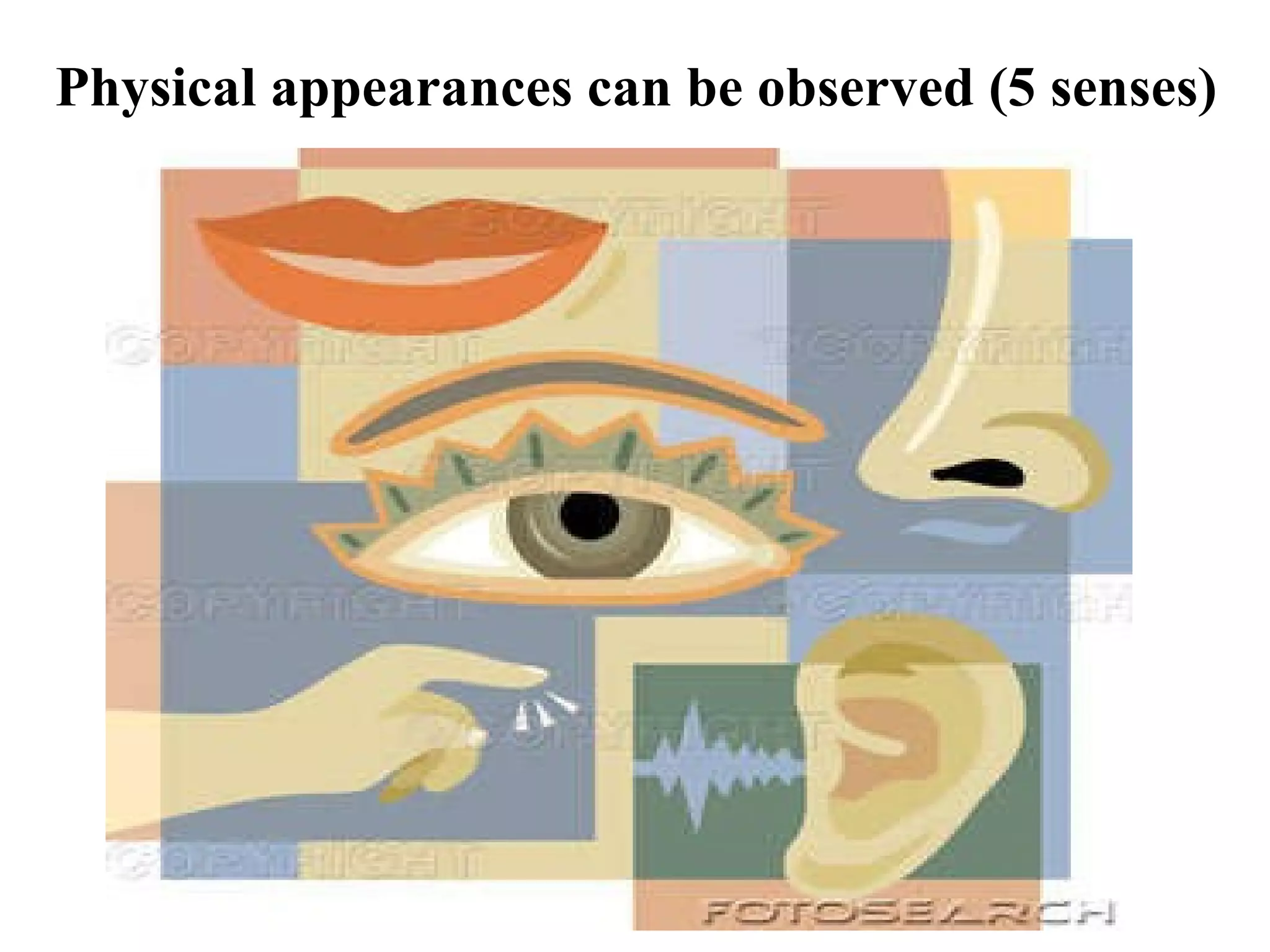
    Physical appearances can be observed (5 senses)
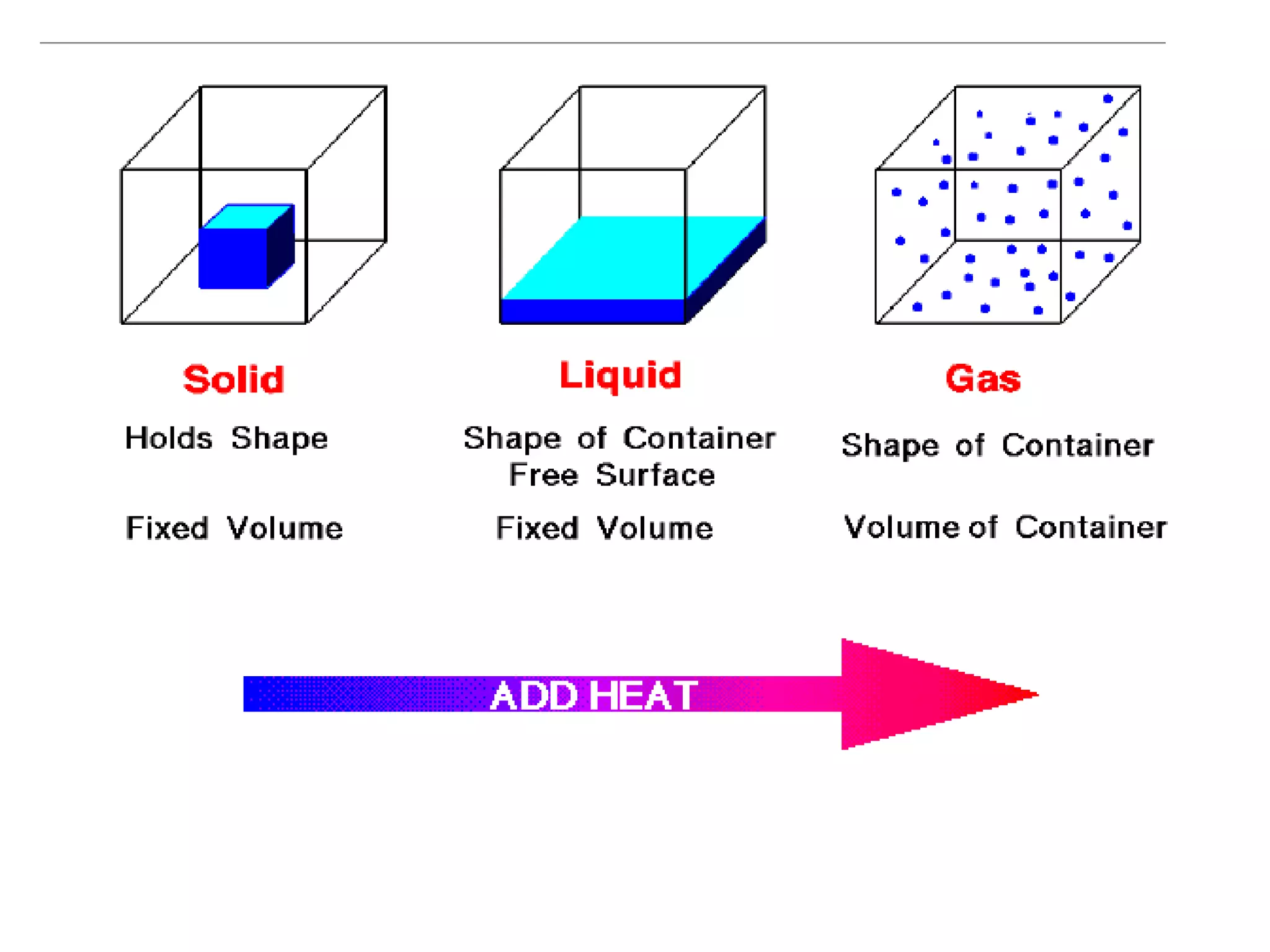
Solid , liquid , gas and plasma are four states of matter. An object’s state of matter depends on its temperature and pressure. http://myweb.tiscali.co.uk/nickpower/web-content/chempmf.html http://www.bbc.co.uk/schools/scienceclips/ages/9_10/gases_fs.shtml
 
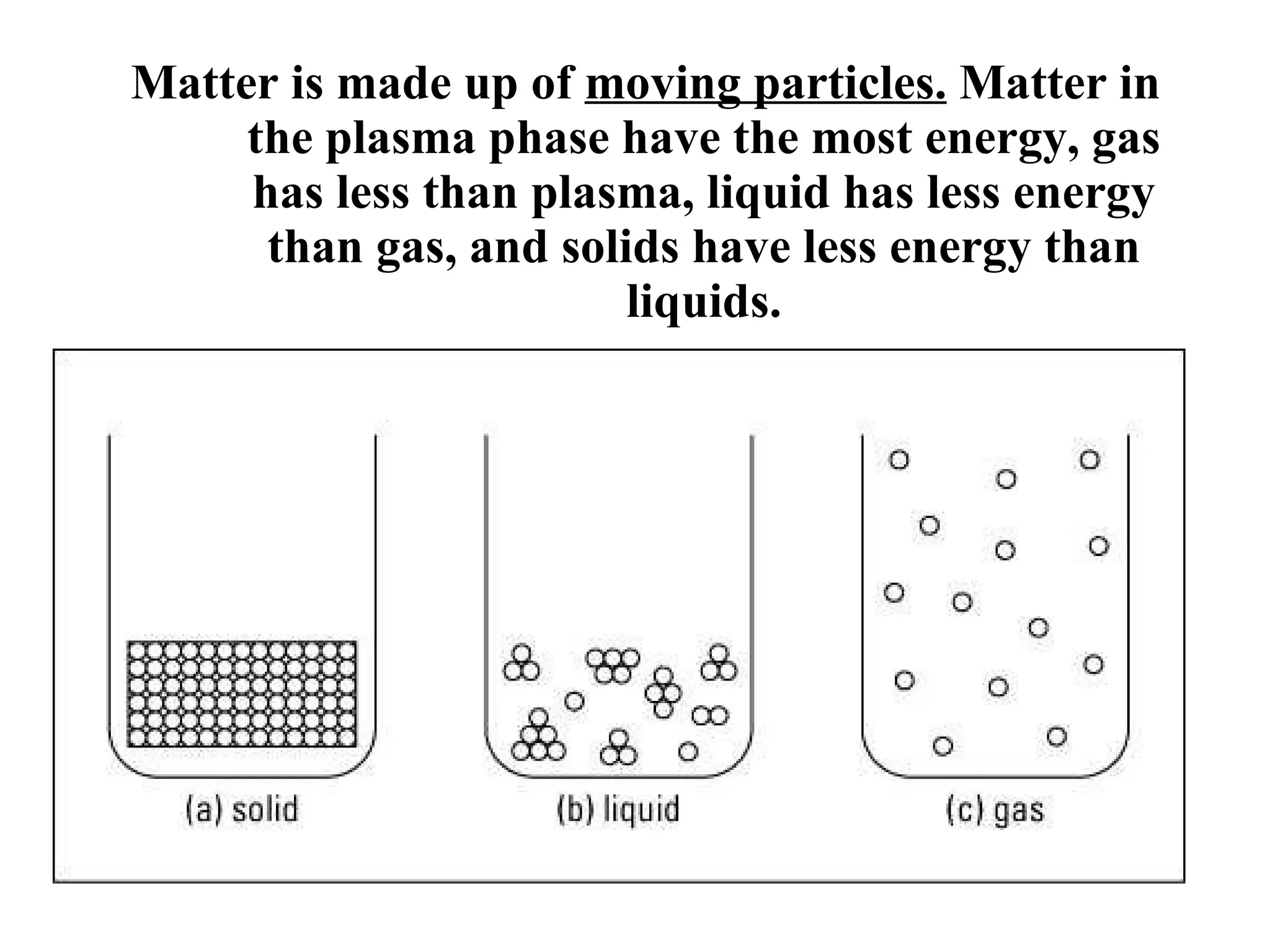
Matter is made up of  moving particles.  Matter in the plasma phase have the most energy, gas has less than plasma, liquid has less energy than gas, and solids have less energy than liquids.
http:// www.harcourtschool.com/activity/states_of_matter / http://www.bbc.co.uk/schools/scienceclips/ages/9_10/gases_fs.shtml http://www.bgfl.org/bgfl/custom/resources_ftp/client_ftp/ks3/science/changing_matter/index.htm
Melting point —temperature at which a solid becomes a liquid (ice melting) Boiling point —temperature at which a liquid becomes a gas (water boiling) Metallic properties can include luster, malleability, ductility, and magnetism. Physical properties can be used to identify, classify, and separate substances. http://www.bbc.co.uk/schools/scienceclips/ages/9_10/changing_state_fs.shtml
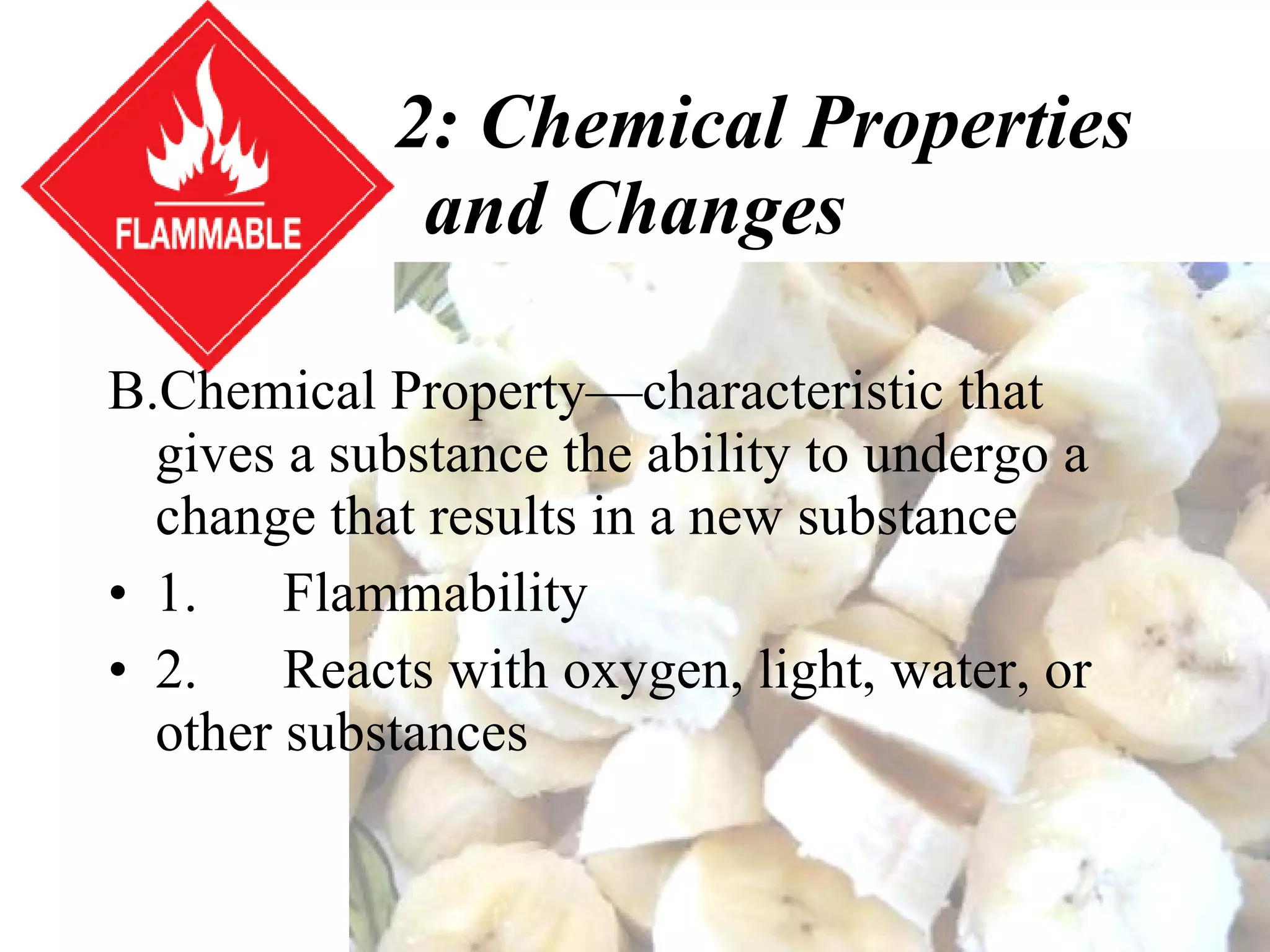
Section 2: Chemical Properties and Changes Chemical Property—characteristic that gives a substance the ability to undergo a change that results in a new substance 1.      Flammability 2.      Reacts with oxygen, light, water, or other substances
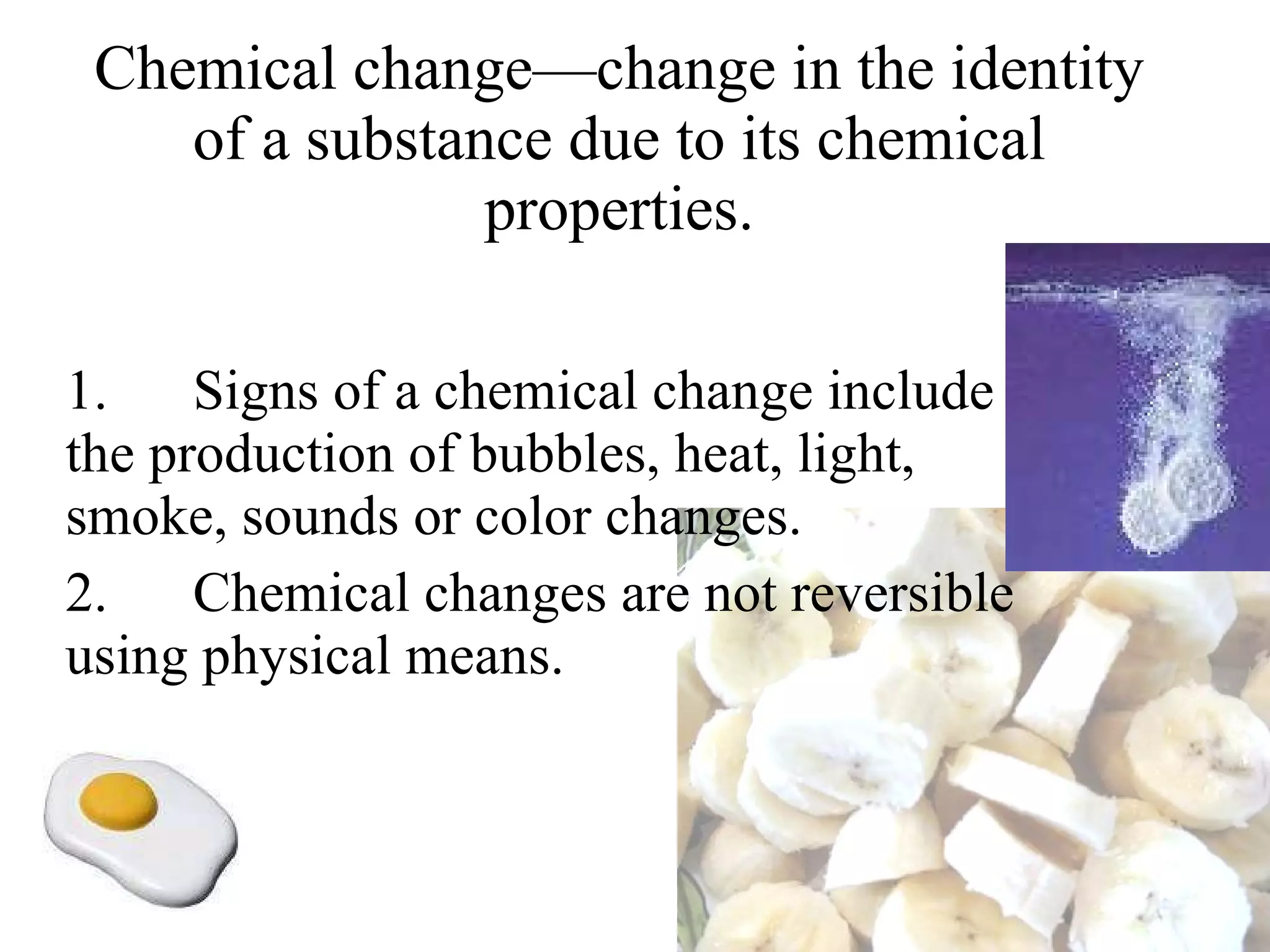
Chemical change—change in the identity of a substance due to its chemical properties. 1.      Signs of a chemical change include the production of bubbles, heat, light, smoke, sounds or color changes. 2.      Chemical changes are not reversible using physical means.
http://www.bbc.co.uk/schools/scienceclips/ages/10_11/rev_irrev_changes_fs.shtml
Law of conservation of mass—mass is never lost or gained in a chemical reaction. 1.      When material is burned, residue is less massive than original material 2.      Ash, smoke, and gases escaped into the air—(they are still considered matter.) 3.      Their mass was not lost, only relocated.
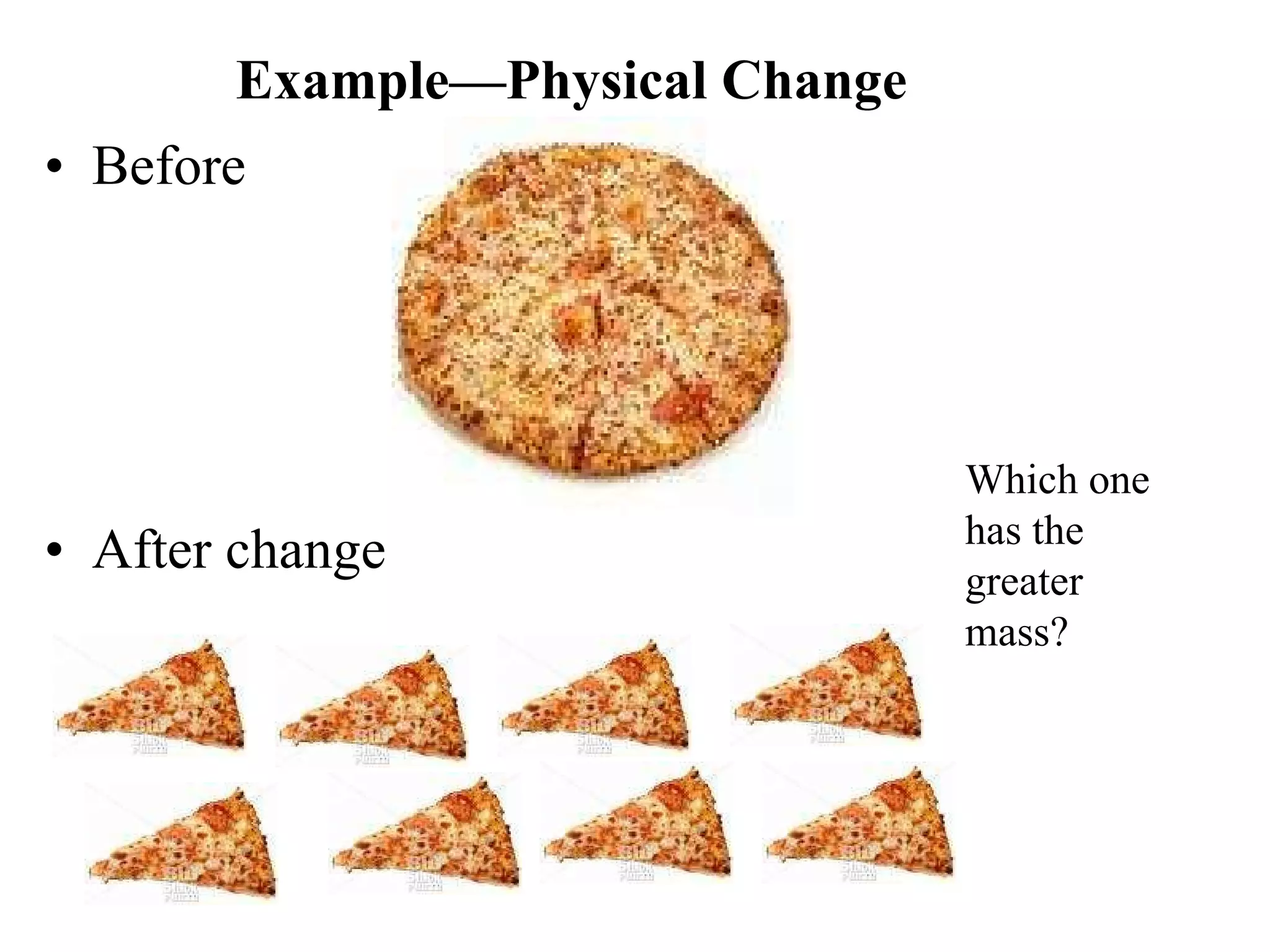
Example—Physical Change Before  After change Which one has the greater mass?
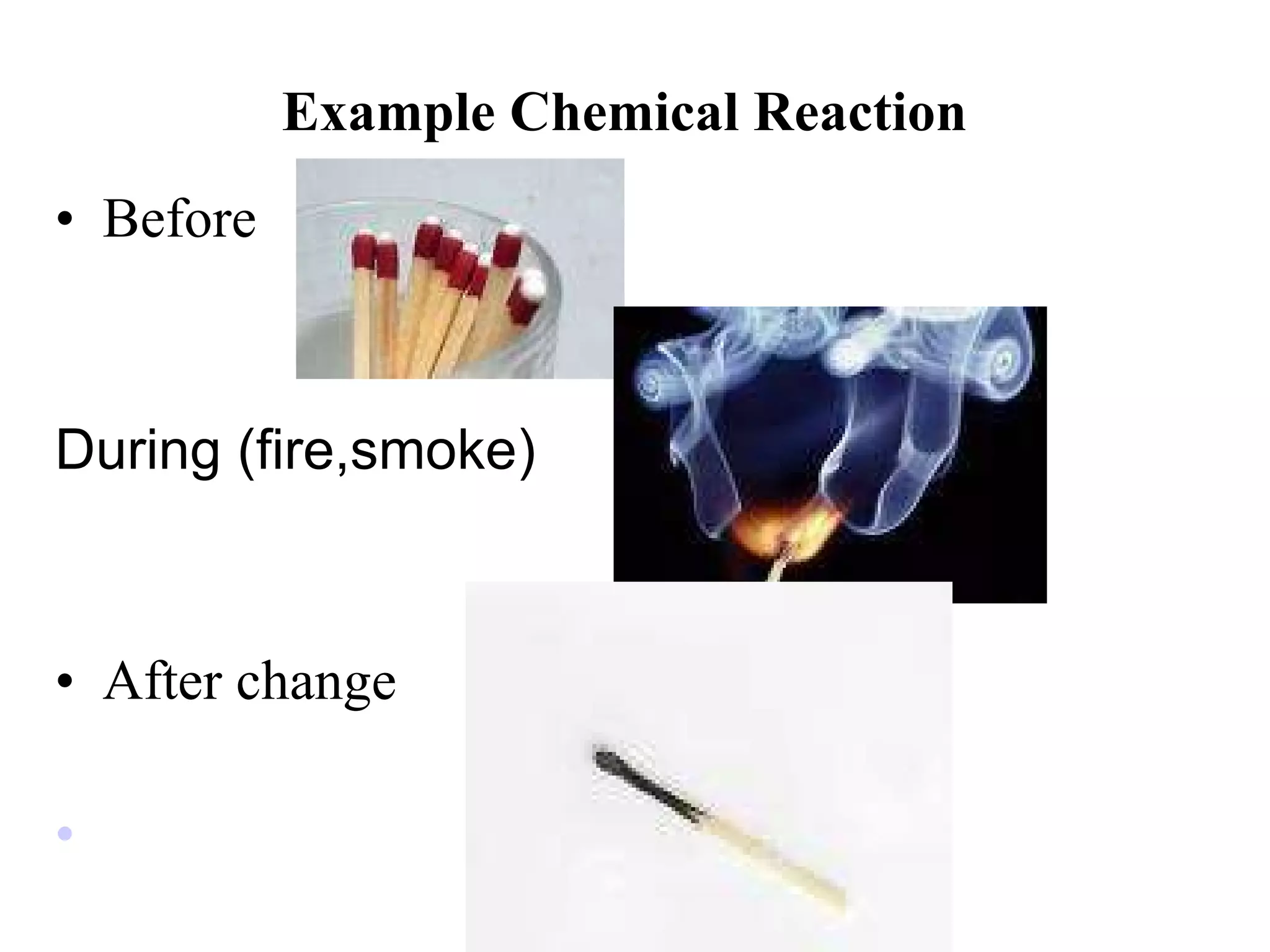
Example Chemical Reaction Before During (fire,smoke) After change
Physical changes… no loss of mass http:// www.youtube.com/watch?v =YtLEWVu815o

Physical/ Chemical ppt

  • 1.
    Chapter 3: Matter and Its Changes
  • 2.
    Section 1: Physical Properties and Changes Physical property —any characteristic of matter that can be observed or measured without changing the identity of the matter: a physical change makes physical properties change, but their identity remains the same.
  • 3.
    Any characteristic thatcan be observed or measured is a physical property.                                                                    Length can be measured.
  • 4.
    Any characteristic thatcan be observed or measured is a physical property.                                                               i.      Mass (amount of material in an object) can be measured.
  • 5.
    Any characteristic thatcan be observed or measured is a physical property.                                      i.      Volume is a measure of how much space an object takes up;
  • 6.
    Any characteristic thatcan be observed or measured is a physical property.                                                               i.      Density is the amount of mass a material has for a given volume. The same open suitcase on each side. When close d they have the same volume. But ONE is more dense. Which one? Would they be the same on a triple beam balance?
  • 7.
    Circle the picturethat is more Dense. .
  • 8.
    Circle the picturethat is more Dense?
  • 9.
    It is notalways easy to know by looking at objects. A Coke can and Diet Coke can look alike. If we dropped them both in water (displacement) then the water should rise the same amount for both cans: meaning that they have the same volume . But, they could have slightly different masses as we learned in the lab when we used the triple beam balances. This causes them to have different densities . You would find an object’s density by using this formula. D= m/v. http:// www.youtube.com/watch?v =aR0b4QRhfU0
  • 10.
    1.      Densitychanges as pressure or temperature changes. Water 15 degrees Ball sinks Water 40 degrees Ball floats
  • 11.
        Physicalappearances can be observed (5 senses)
  • 12.
    Solid , liquid, gas and plasma are four states of matter. An object’s state of matter depends on its temperature and pressure. http://myweb.tiscali.co.uk/nickpower/web-content/chempmf.html http://www.bbc.co.uk/schools/scienceclips/ages/9_10/gases_fs.shtml
  • 13.
  • 14.
    Matter is madeup of moving particles. Matter in the plasma phase have the most energy, gas has less than plasma, liquid has less energy than gas, and solids have less energy than liquids.
  • 15.
    http:// www.harcourtschool.com/activity/states_of_matter /http://www.bbc.co.uk/schools/scienceclips/ages/9_10/gases_fs.shtml http://www.bgfl.org/bgfl/custom/resources_ftp/client_ftp/ks3/science/changing_matter/index.htm
  • 16.
    Melting point —temperatureat which a solid becomes a liquid (ice melting) Boiling point —temperature at which a liquid becomes a gas (water boiling) Metallic properties can include luster, malleability, ductility, and magnetism. Physical properties can be used to identify, classify, and separate substances. http://www.bbc.co.uk/schools/scienceclips/ages/9_10/changing_state_fs.shtml
  • 17.
    Section 2: ChemicalProperties and Changes Chemical Property—characteristic that gives a substance the ability to undergo a change that results in a new substance 1.      Flammability 2.      Reacts with oxygen, light, water, or other substances
  • 18.
    Chemical change—change inthe identity of a substance due to its chemical properties. 1.      Signs of a chemical change include the production of bubbles, heat, light, smoke, sounds or color changes. 2.      Chemical changes are not reversible using physical means.
  • 19.
  • 20.
    Law of conservationof mass—mass is never lost or gained in a chemical reaction. 1.      When material is burned, residue is less massive than original material 2.      Ash, smoke, and gases escaped into the air—(they are still considered matter.) 3.      Their mass was not lost, only relocated.
  • 21.
    Example—Physical Change Before After change Which one has the greater mass?
  • 22.
    Example Chemical ReactionBefore During (fire,smoke) After change
  • 23.
    Physical changes… noloss of mass http:// www.youtube.com/watch?v =YtLEWVu815o