PHYLUM COELENTERATAPHYLUM COELENTERATA
(CNIDARIANS)(CNIDARIANS)
Pages 323- 325Pages 323- 325
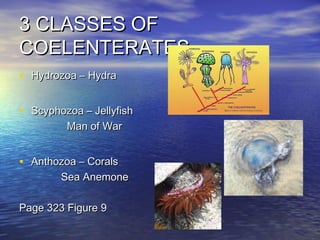
3 CLASSES OF3 CLASSES OF
COELENTERATESCOELENTERATES
• Hydrozoa – HydraHydrozoa – Hydra
• Scyphozoa – JellyfishScyphozoa – Jellyfish
Man of WarMan of War
• Anthozoa – CoralsAnthozoa – Corals
Sea AnemoneSea Anemone
Page 323 Figure 9Page 323 Figure 9
PHYSICALPHYSICAL
CHARACTERISTICSCHARACTERISTICS
1.1. Where do theyWhere do they livelive??
All live in water – most in salt water butAll live in water – most in salt water but
the hydra lives in fresh waterthe hydra lives in fresh water
2.2. SymmetrySymmetry – radial (see page 316)– radial (see page 316)
3.3. Body StructureBody Structure – is more complex than a– is more complex than a
sponge (therefore they can eat largersponge (therefore they can eat larger
animals)animals)
4.4. Cellular Structure –Cellular Structure –
a.a. like alike a sacsac with one opening – mouth-like structure where foodwith one opening – mouth-like structure where food
enters and leaves (not like the sponge)enters and leaves (not like the sponge)
b.b. 2 cell layers :2 cell layers : ectodermectoderm – protects and covers outside– protects and covers outside
endodermendoderm – inner layer that lines the– inner layer that lines the
sac-like digestive cavitysac-like digestive cavity
***they have specialized cells***they have specialized cells
c.c. **organized tissues – muscle tissue and a nerve net**organized tissues – muscle tissue and a nerve net
Why? Refer to page 323Why? Refer to page 323
d.d. Central cavity with only 1 opening called theCentral cavity with only 1 opening called the gastrovascular cavitygastrovascular cavity
- this is the opening (mouth) where food enters and- this is the opening (mouth) where food enters and
leavesleaves
e.e. All have tentacles withAll have tentacles with nematocystsnematocysts
tentacles – arm like projections surrounding the mouthtentacles – arm like projections surrounding the mouth
nematocyst – stinging cells on the tentacles whichnematocyst – stinging cells on the tentacles which
shoot poisonous threads or dartsshoot poisonous threads or darts
Body FormsBody Forms
• Polyp diagram – page 324Polyp diagram – page 324
• See overhead diagramSee overhead diagram
• Medusa diagram – page 324Medusa diagram – page 324
• See overhead diagramSee overhead diagram
LOCOMOTIONLOCOMOTION
1.1. Stays in place – attached to rockStays in place – attached to rock
examples: sea anemone and coralexamples: sea anemone and coral
2.2. MedusaMedusa
example: jellyfishexample: jellyfish
move around – swim by pumping water in and out ofmove around – swim by pumping water in and out of
digestive cavitydigestive cavity
calledcalled jet propulsionjet propulsion – pumping water in and out of– pumping water in and out of
cavitycavity
3.3. PolypPolyp
example: hydraexample: hydra
crawlscrawls
See diagramSee diagram
FOOD GETTINGFOOD GETTING
*captures food with nematocysts by*captures food with nematocysts by
paralyzing small animals that swim intoparalyzing small animals that swim into
tentaclestentacles
• Nematocyst fire poison dartsNematocyst fire poison darts
• Paralyzes preyParalyzes prey
• Tentacles bring food to mouthTentacles bring food to mouth
REPRODUCTIONREPRODUCTION
1.1. Sexually – sperm and eggSexually – sperm and egg
**separate sexes**separate sexes
2.2. Asexually –Asexually –
Budding example: HydraBudding example: Hydra
RegenerationRegeneration

Phylum coelenterata

  • 1.
  • 2.
    3 CLASSES OF3CLASSES OF COELENTERATESCOELENTERATES • Hydrozoa – HydraHydrozoa – Hydra • Scyphozoa – JellyfishScyphozoa – Jellyfish Man of WarMan of War • Anthozoa – CoralsAnthozoa – Corals Sea AnemoneSea Anemone Page 323 Figure 9Page 323 Figure 9
  • 3.
    PHYSICALPHYSICAL CHARACTERISTICSCHARACTERISTICS 1.1. Where dotheyWhere do they livelive?? All live in water – most in salt water butAll live in water – most in salt water but the hydra lives in fresh waterthe hydra lives in fresh water 2.2. SymmetrySymmetry – radial (see page 316)– radial (see page 316) 3.3. Body StructureBody Structure – is more complex than a– is more complex than a sponge (therefore they can eat largersponge (therefore they can eat larger animals)animals)
  • 4.
    4.4. Cellular Structure–Cellular Structure – a.a. like alike a sacsac with one opening – mouth-like structure where foodwith one opening – mouth-like structure where food enters and leaves (not like the sponge)enters and leaves (not like the sponge) b.b. 2 cell layers :2 cell layers : ectodermectoderm – protects and covers outside– protects and covers outside endodermendoderm – inner layer that lines the– inner layer that lines the sac-like digestive cavitysac-like digestive cavity ***they have specialized cells***they have specialized cells c.c. **organized tissues – muscle tissue and a nerve net**organized tissues – muscle tissue and a nerve net Why? Refer to page 323Why? Refer to page 323 d.d. Central cavity with only 1 opening called theCentral cavity with only 1 opening called the gastrovascular cavitygastrovascular cavity - this is the opening (mouth) where food enters and- this is the opening (mouth) where food enters and leavesleaves e.e. All have tentacles withAll have tentacles with nematocystsnematocysts tentacles – arm like projections surrounding the mouthtentacles – arm like projections surrounding the mouth nematocyst – stinging cells on the tentacles whichnematocyst – stinging cells on the tentacles which shoot poisonous threads or dartsshoot poisonous threads or darts
  • 5.
    Body FormsBody Forms •Polyp diagram – page 324Polyp diagram – page 324 • See overhead diagramSee overhead diagram • Medusa diagram – page 324Medusa diagram – page 324 • See overhead diagramSee overhead diagram
  • 6.
    LOCOMOTIONLOCOMOTION 1.1. Stays inplace – attached to rockStays in place – attached to rock examples: sea anemone and coralexamples: sea anemone and coral 2.2. MedusaMedusa example: jellyfishexample: jellyfish move around – swim by pumping water in and out ofmove around – swim by pumping water in and out of digestive cavitydigestive cavity calledcalled jet propulsionjet propulsion – pumping water in and out of– pumping water in and out of cavitycavity 3.3. PolypPolyp example: hydraexample: hydra crawlscrawls See diagramSee diagram
  • 7.
    FOOD GETTINGFOOD GETTING *capturesfood with nematocysts by*captures food with nematocysts by paralyzing small animals that swim intoparalyzing small animals that swim into tentaclestentacles • Nematocyst fire poison dartsNematocyst fire poison darts • Paralyzes preyParalyzes prey • Tentacles bring food to mouthTentacles bring food to mouth
  • 8.
    REPRODUCTIONREPRODUCTION 1.1. Sexually –sperm and eggSexually – sperm and egg **separate sexes**separate sexes 2.2. Asexually –Asexually – Budding example: HydraBudding example: Hydra RegenerationRegeneration