Brief History of Solar Cells
• Dates back to French physicist Antoine-Cesar Becquerel
of 1839 .
– He observed that shining light on an electrode submerged in a
conductive solution would create an electric current.
• By 1941 Russell Ohl had invented the first silicon solar
cell.
• The energy crisis of the 1970s sparked an interest but the
prices were too high.
• Now they are becoming more cost effective.
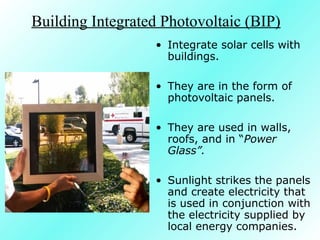
Building Integrated Photovoltaic (BIP)
• Integrate solar cells with
buildings.
• They are in the form of
photovoltaic panels.
• They are used in walls,
roofs, and in “Power
Glass”.
• Sunlight strikes the panels
and create electricity that
is used in conjunction with
the electricity supplied by
local energy companies.
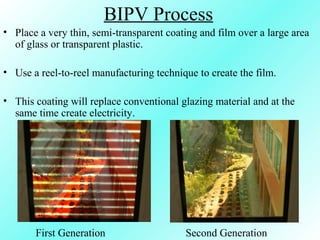
BIPV Process
• Place a very thin, semi-transparent coating and film over a large area
of glass or transparent plastic.
• Use a reel-to-reel manufacturing technique to create the film.
• This coating will replace conventional glazing material and at the
same time create electricity.
Second GenerationFirst Generation
Applications
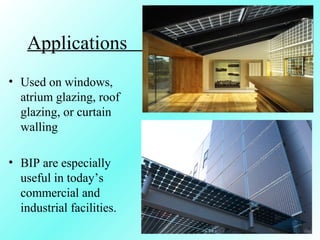
• Used on windows,
atrium glazing, roof
glazing, or curtain
walling
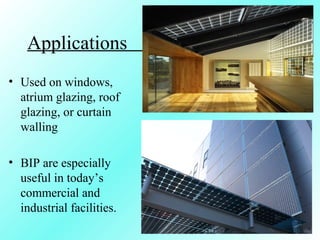
• BIP are especially
useful in today’s
commercial and
industrial facilities.
Applications
• Used on windows,
atrium glazing, roof
glazing, or curtain
walling
• BIP are especially
useful in today’s
commercial and
industrial facilities.

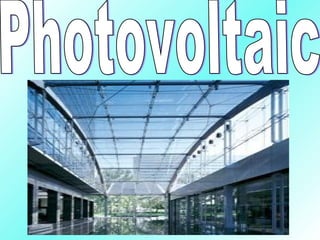
Photovoltic solar-cell

  • 2.
    Brief History ofSolar Cells • Dates back to French physicist Antoine-Cesar Becquerel of 1839 . – He observed that shining light on an electrode submerged in a conductive solution would create an electric current. • By 1941 Russell Ohl had invented the first silicon solar cell. • The energy crisis of the 1970s sparked an interest but the prices were too high. • Now they are becoming more cost effective.
  • 3.
    Building Integrated Photovoltaic(BIP) • Integrate solar cells with buildings. • They are in the form of photovoltaic panels. • They are used in walls, roofs, and in “Power Glass”. • Sunlight strikes the panels and create electricity that is used in conjunction with the electricity supplied by local energy companies.
  • 4.
    BIPV Process • Placea very thin, semi-transparent coating and film over a large area of glass or transparent plastic. • Use a reel-to-reel manufacturing technique to create the film. • This coating will replace conventional glazing material and at the same time create electricity. Second GenerationFirst Generation
  • 5.
    Applications • Used onwindows, atrium glazing, roof glazing, or curtain walling • BIP are especially useful in today’s commercial and industrial facilities.
  • 6.
    Applications • Used onwindows, atrium glazing, roof glazing, or curtain walling • BIP are especially useful in today’s commercial and industrial facilities.