Photoshop Background
Making a Gradient
Backgrounds
When you design in Photoshop, you have a lot of raster
tools to work with. Often the sight of a completely white
screen tends to intimidate most students. We will create
a very simple background using the gradient tool and
bend a soft pattern into it.
DOCUMENT
SEETINGS
Open Adobe Photoshop and
create a new letter size
landscape document as shown
here.
COLOR
SETTINGS
After your document is open double
click on the foreground color
swatch and change it to a dark blue
as shown.
FOREGROUND
COLOR
SWATCH
DRAG TO
HERE
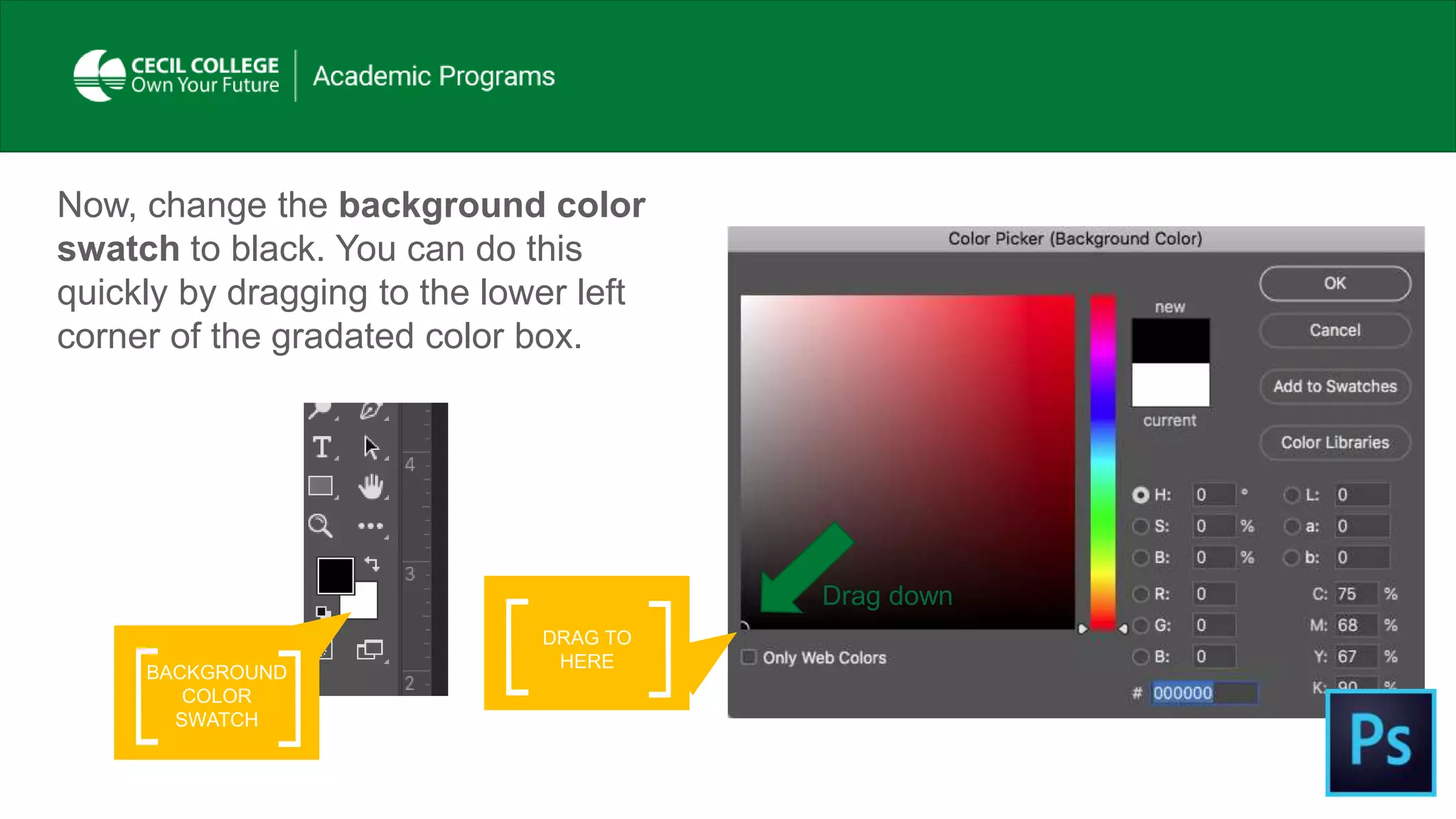
Now, change the background color
swatch to black. You can do this
quickly by dragging to the lower left
corner of the gradated color box.
BACKGROUND
COLOR
SWATCH
Drag down
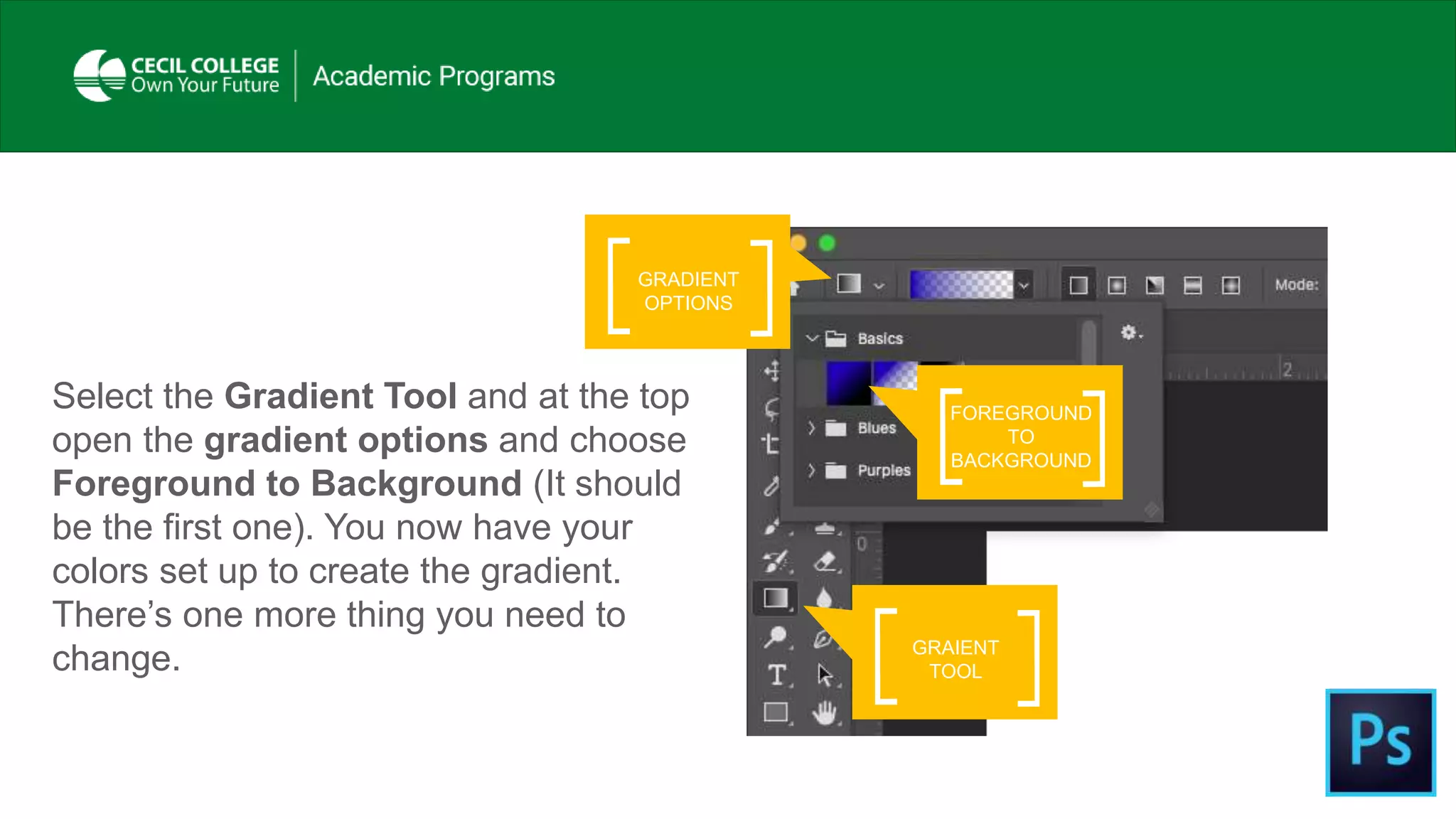
Select the Gradient Tool and at the top
open the gradient options and choose
Foreground to Background (It should
be the first one). You now have your
colors set up to create the gradient.
There’s one more thing you need to
change. GRAIENT
TOOL
FOREGROUND
TO
BACKGROUND
GRADIENT
OPTIONS
RADIAL
GRADIENT
You want to select the Radial Gradient instead of the
default Lineal Gradient.
With the Gradient Tool
click in the center of the
document and drag to the
right edge. Holding down
the Shift key to constraint
the movement to
horizontal. Once you get
to the edge release the
mouse button, and then
the Shift key.
Your document should look like
this with the blue in the center
and the edges should be black.
NEW
LAYERIn the layers panel, click on the Create
a New Layer icon along the bottom.
This will create a new layer above the
background. The icon shows a
checkerboard, meaning it’s an empty
layer with nothing in it.
CREATE A
NEW LAYER
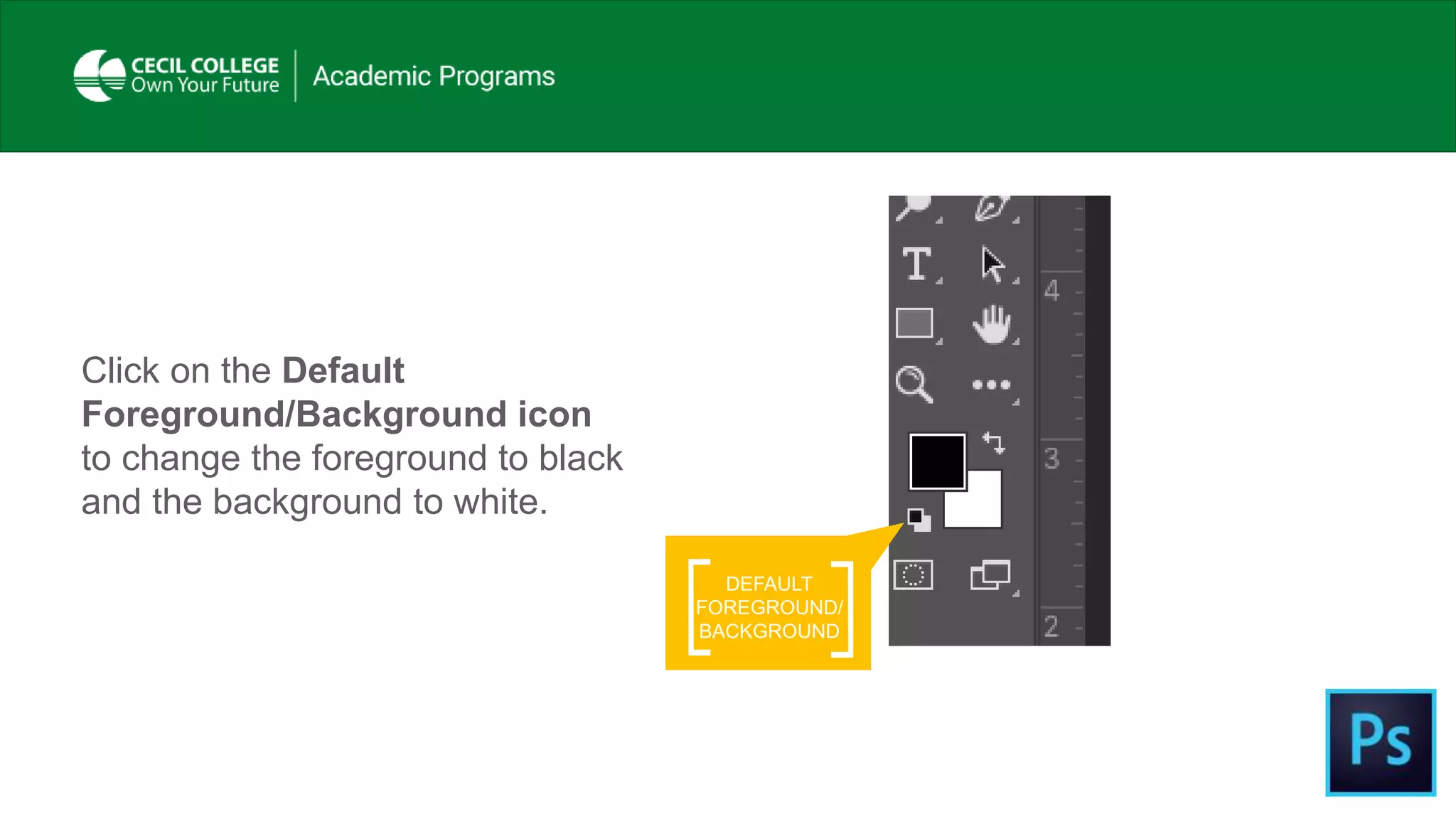
Click on the Default
Foreground/Background icon
to change the foreground to black
and the background to white.
DEFAULT
FOREGROUND/
BACKGROUND
LAYER FILLED
WITH WHITE
Press the Command
and Delete Keys to fill
the layer with the
background color
(White). The layer is now
filled with white. Since
nothing was selected,
everything was filled.
With the new layer still
selected, go to
Filter/Render/Clouds.
That filter should create
a look similar to this.
This is a great filter for
creating a random
pattern and is used a lot.
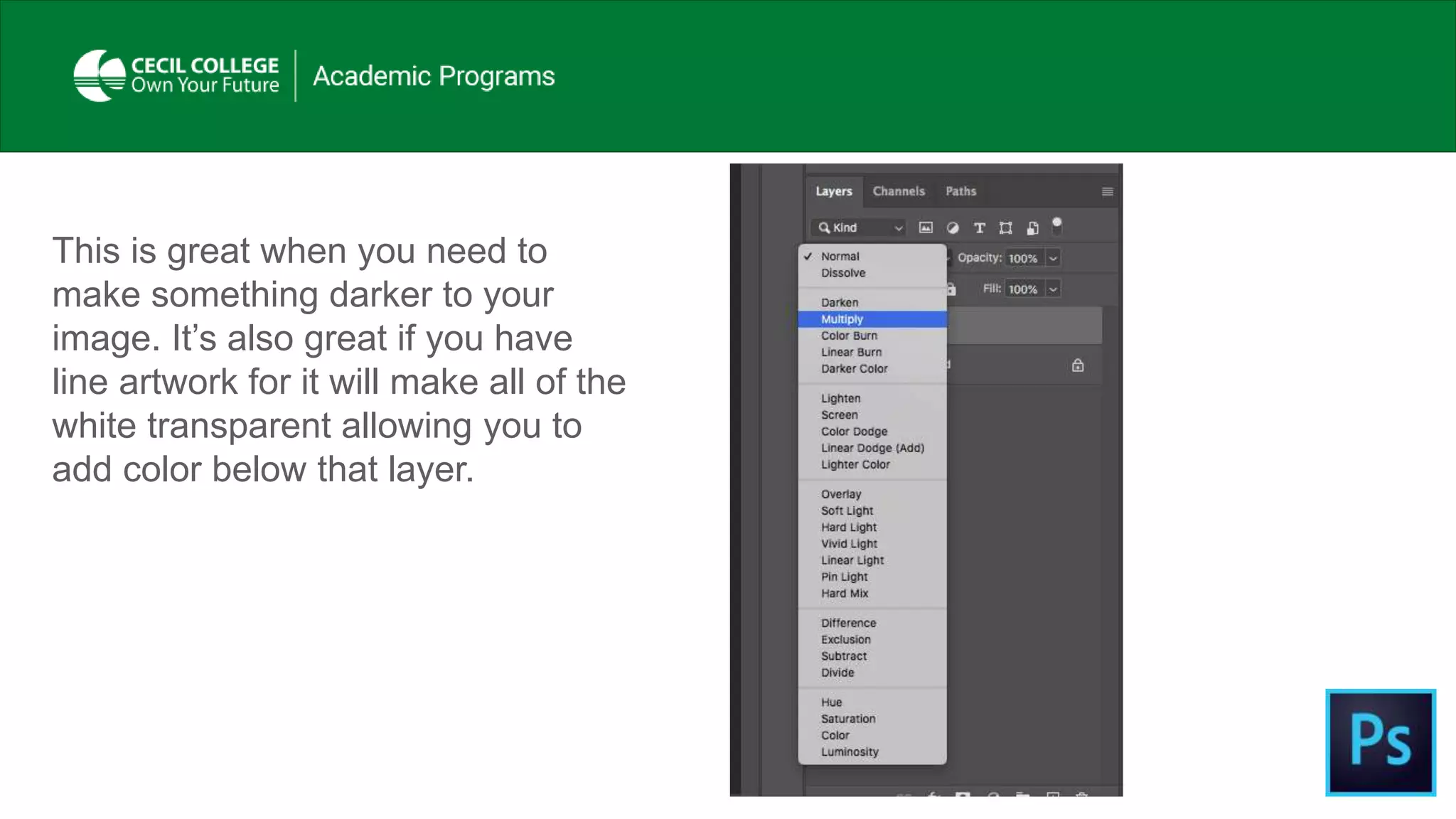
With that layer sill selected, change
the layer’s mode to Multiply.
Multiply will keep the darker
shades and make white
transparent. LAYER
MODE
This is great when you need to
make something darker to your
image. It’s also great if you have
line artwork for it will make all of the
white transparent allowing you to
add color below that layer.
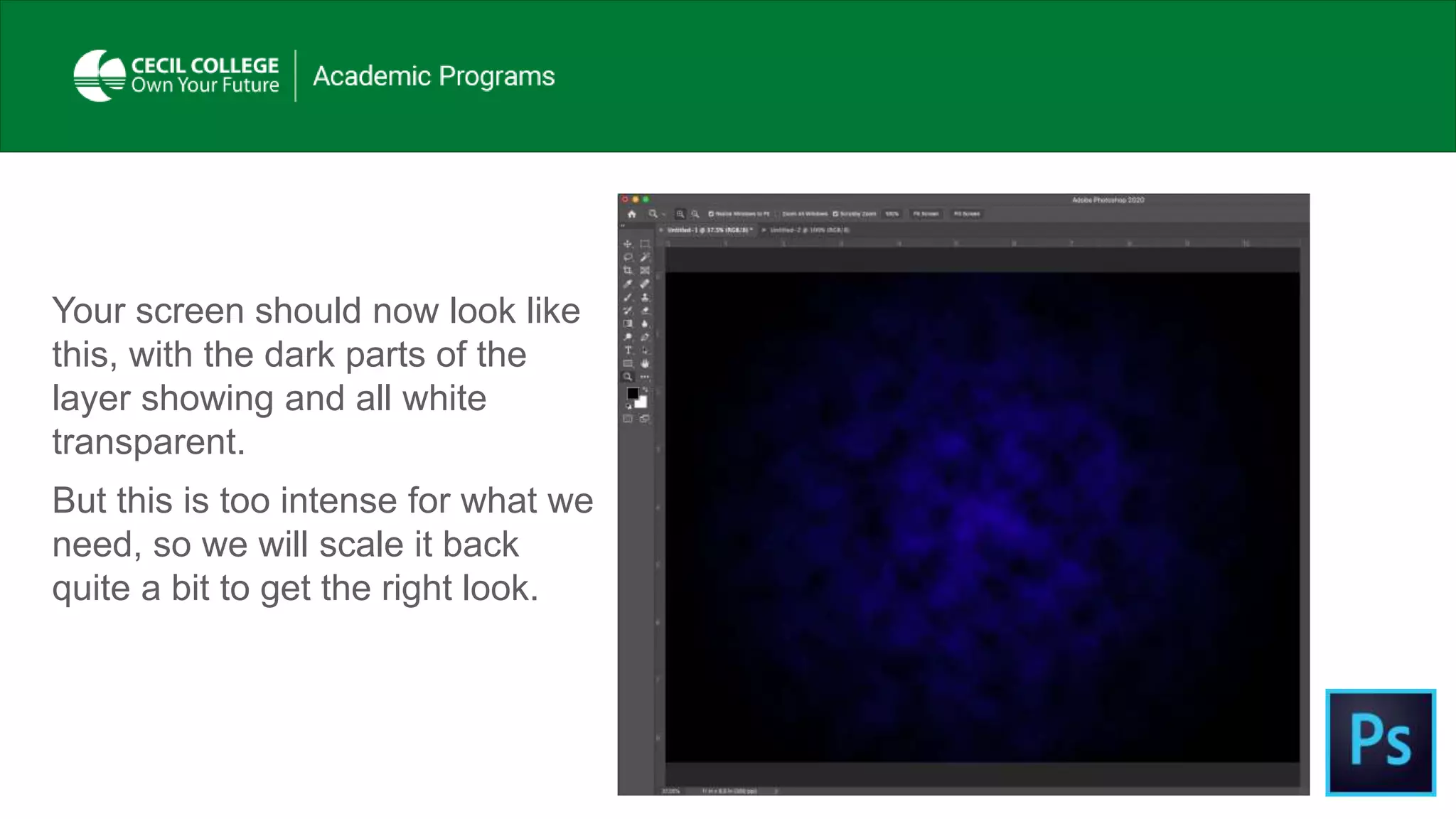
Your screen should now look like
this, with the dark parts of the
layer showing and all white
transparent.
But this is too intense for what we
need, so we will scale it back
quite a bit to get the right look.
In the Layer’s Panel, adjust the
new layer’s Opacity to 25% which
will soften the effect, so it won’t be
so harsh.
LAYER”S
OPACITY
Your screen should now look like
this, with the dark parts of the
layer showing mush lighter, and
all white transparent.
Finally, so that the background
doesn’t look too artificial, we’ll
introduce some noise into the
image.
Go to Filter/Noise/Add Noise…
For the Noise setting, adjust the
amount to 20% so it’s not real
noticeable, and check the
Monochromatic box because
we don’t want to introduce any
color to the equation.
AMOUNT
MONOCHROMATIC
Your file should look like this.
The noise may not be too
noticeable, but it’s there.
This concludes creating one type
of background in Photoshop.
Next week we’ll add more to the
file.

Photoshop Background

  • 1.
  • 2.
    Backgrounds When you designin Photoshop, you have a lot of raster tools to work with. Often the sight of a completely white screen tends to intimidate most students. We will create a very simple background using the gradient tool and bend a soft pattern into it.
  • 3.
    DOCUMENT SEETINGS Open Adobe Photoshopand create a new letter size landscape document as shown here.
  • 4.
    COLOR SETTINGS After your documentis open double click on the foreground color swatch and change it to a dark blue as shown. FOREGROUND COLOR SWATCH
  • 5.
    DRAG TO HERE Now, changethe background color swatch to black. You can do this quickly by dragging to the lower left corner of the gradated color box. BACKGROUND COLOR SWATCH Drag down
  • 6.
    Select the GradientTool and at the top open the gradient options and choose Foreground to Background (It should be the first one). You now have your colors set up to create the gradient. There’s one more thing you need to change. GRAIENT TOOL FOREGROUND TO BACKGROUND GRADIENT OPTIONS
  • 7.
    RADIAL GRADIENT You want toselect the Radial Gradient instead of the default Lineal Gradient.
  • 8.
    With the GradientTool click in the center of the document and drag to the right edge. Holding down the Shift key to constraint the movement to horizontal. Once you get to the edge release the mouse button, and then the Shift key.
  • 9.
    Your document shouldlook like this with the blue in the center and the edges should be black.
  • 10.
    NEW LAYERIn the layerspanel, click on the Create a New Layer icon along the bottom. This will create a new layer above the background. The icon shows a checkerboard, meaning it’s an empty layer with nothing in it. CREATE A NEW LAYER
  • 11.
    Click on theDefault Foreground/Background icon to change the foreground to black and the background to white. DEFAULT FOREGROUND/ BACKGROUND
  • 12.
    LAYER FILLED WITH WHITE Pressthe Command and Delete Keys to fill the layer with the background color (White). The layer is now filled with white. Since nothing was selected, everything was filled.
  • 13.
    With the newlayer still selected, go to Filter/Render/Clouds.
  • 14.
    That filter shouldcreate a look similar to this. This is a great filter for creating a random pattern and is used a lot.
  • 15.
    With that layersill selected, change the layer’s mode to Multiply. Multiply will keep the darker shades and make white transparent. LAYER MODE
  • 16.
    This is greatwhen you need to make something darker to your image. It’s also great if you have line artwork for it will make all of the white transparent allowing you to add color below that layer.
  • 17.
    Your screen shouldnow look like this, with the dark parts of the layer showing and all white transparent. But this is too intense for what we need, so we will scale it back quite a bit to get the right look.
  • 18.
    In the Layer’sPanel, adjust the new layer’s Opacity to 25% which will soften the effect, so it won’t be so harsh. LAYER”S OPACITY
  • 19.
    Your screen shouldnow look like this, with the dark parts of the layer showing mush lighter, and all white transparent.
  • 20.
    Finally, so thatthe background doesn’t look too artificial, we’ll introduce some noise into the image. Go to Filter/Noise/Add Noise…
  • 21.
    For the Noisesetting, adjust the amount to 20% so it’s not real noticeable, and check the Monochromatic box because we don’t want to introduce any color to the equation. AMOUNT MONOCHROMATIC
  • 22.
    Your file shouldlook like this. The noise may not be too noticeable, but it’s there. This concludes creating one type of background in Photoshop. Next week we’ll add more to the file.