Where can we see the relationship between photon frequency and energy? The Photoelectric Effect
LEDs emit photons of a particular frequency They start to do this when provided with enough energy from a power supply We can measure the amount of energy required by measuring the voltage when it just starts to ‘shine’ To review
LEDs and Quantum Behaviour
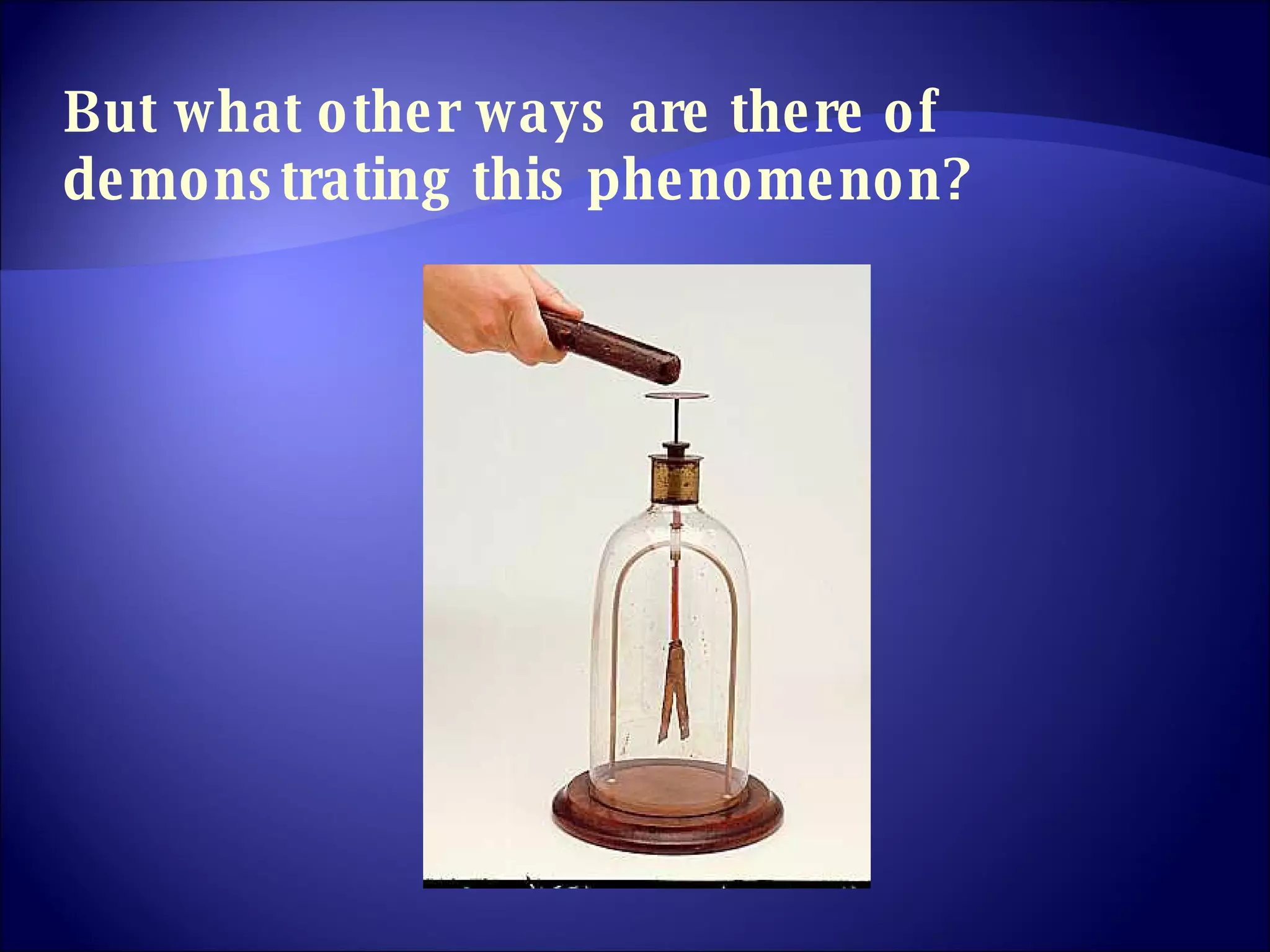
But what other ways are there of demonstrating this phenomenon?
Photo Electric Effect
Photo Electric Effect Here the frequency of the absorbed light is compared with the potential difference needed to stop electrons emitted from clean metal surfaces. The photoelectrons are emitted from a photocathode on the left-hand side of the photocell shown above and they just climb a potential hill described as ∆ V  in the diagram. Note that ∆ V  is adjusted until the current in the circuit just drops to zero. We call the ∆ V  the stopping p.d. In the photoelectric effect a single photon transfers all of its energy to a single electron within the metal. However, the electron will not emerge with the full photon energy because some energy is required to remove an electron from the metal. If the electron receives its energy when it is at the surface of the metal the energy required to remove it is known as the work function which is given the symbol  φ . Each metal has its own unique work function. For this electron we can say that  hf  = e ∆ V  +  φ
That means that electron will emerge with the  maximum  kinetic energy  which is measured by e ∆ V.  By conservation of energy this is   equal to   hf  -  φ If the electron receives its energy when it is below the surface of the metal, some kinetic energy is lost as the electron travels to the surface and the  electron has less than the maximum amount of kinetic energy when it is released from the surface. In this case the electron will emerge with a kinetic energy  hf  –  φ – energy lost as electron travels to surface The experiment above is designed to measure just the maximum kinetic energy of the emerging electron. For this situation we have the equation  e ∆ V=  hf  -  φ which was first published by Albert Einstein in one of his famous 1905 papers. This equation is testable as indicated by the diagram above, since  ∆ V  and  f  are both measurable.
You should note that a minimum frequency of radiation,  f 0, is needed to eject an electron from a metal. If the frequency of the radiation is below this, no electrons will be ejected. If the frequency is above this value the number of electrons ejected per second will depend on the intensity of the radiation since a brighter light means more photons falling on the metal per second.  However, the maximum kinetic energy of the ejected electrons will be independent of intensity. This follows from Einstein’s equation above and is easily confirmed by experiment. The bottom right-hand panel of the diagram above shows that graphs for different metals will have identical gradients but different intercepts. The gradient equals the Planck constant,  h , which is a fundamental constant. The intercept is related to the work  function,  φ.
Spectral Lines and Energy Levels

Photoelectric Effect Summary Notes

  • 1.
    Where can wesee the relationship between photon frequency and energy? The Photoelectric Effect
  • 2.
    LEDs emit photonsof a particular frequency They start to do this when provided with enough energy from a power supply We can measure the amount of energy required by measuring the voltage when it just starts to ‘shine’ To review
  • 3.
  • 4.
    But what otherways are there of demonstrating this phenomenon?
  • 5.
  • 6.
    Photo Electric EffectHere the frequency of the absorbed light is compared with the potential difference needed to stop electrons emitted from clean metal surfaces. The photoelectrons are emitted from a photocathode on the left-hand side of the photocell shown above and they just climb a potential hill described as ∆ V in the diagram. Note that ∆ V is adjusted until the current in the circuit just drops to zero. We call the ∆ V the stopping p.d. In the photoelectric effect a single photon transfers all of its energy to a single electron within the metal. However, the electron will not emerge with the full photon energy because some energy is required to remove an electron from the metal. If the electron receives its energy when it is at the surface of the metal the energy required to remove it is known as the work function which is given the symbol φ . Each metal has its own unique work function. For this electron we can say that hf = e ∆ V + φ
  • 7.
    That means thatelectron will emerge with the maximum kinetic energy which is measured by e ∆ V. By conservation of energy this is equal to hf - φ If the electron receives its energy when it is below the surface of the metal, some kinetic energy is lost as the electron travels to the surface and the electron has less than the maximum amount of kinetic energy when it is released from the surface. In this case the electron will emerge with a kinetic energy hf – φ – energy lost as electron travels to surface The experiment above is designed to measure just the maximum kinetic energy of the emerging electron. For this situation we have the equation e ∆ V= hf - φ which was first published by Albert Einstein in one of his famous 1905 papers. This equation is testable as indicated by the diagram above, since ∆ V and f are both measurable.
  • 8.
    You should notethat a minimum frequency of radiation, f 0, is needed to eject an electron from a metal. If the frequency of the radiation is below this, no electrons will be ejected. If the frequency is above this value the number of electrons ejected per second will depend on the intensity of the radiation since a brighter light means more photons falling on the metal per second. However, the maximum kinetic energy of the ejected electrons will be independent of intensity. This follows from Einstein’s equation above and is easily confirmed by experiment. The bottom right-hand panel of the diagram above shows that graphs for different metals will have identical gradients but different intercepts. The gradient equals the Planck constant, h , which is a fundamental constant. The intercept is related to the work function, φ.
  • 9.
    Spectral Lines andEnergy Levels