Downloaded 584 times
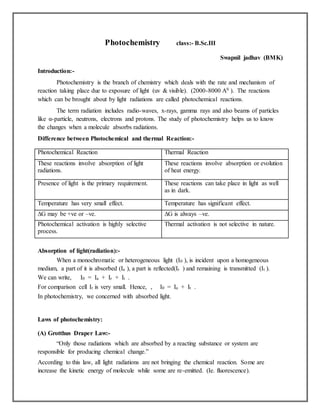
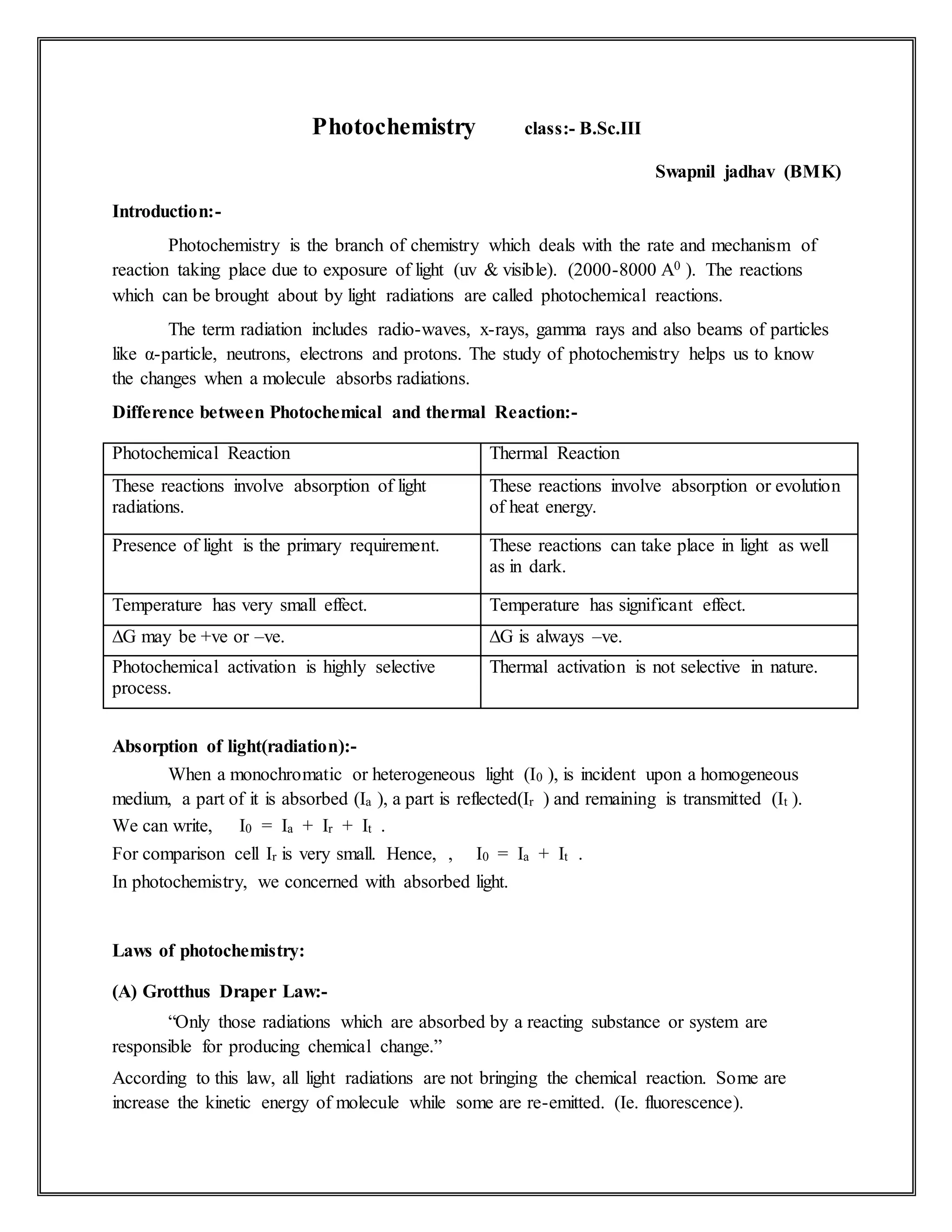
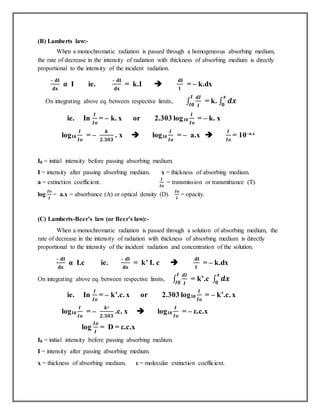
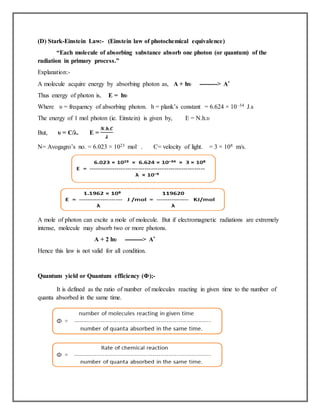
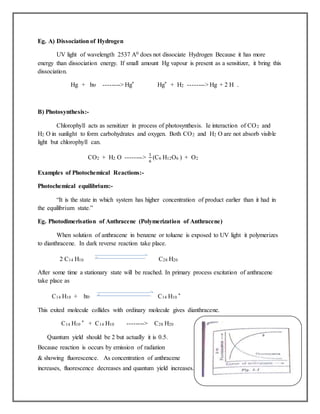
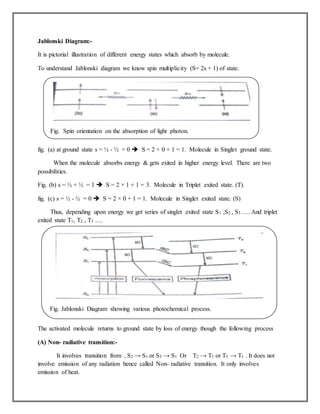
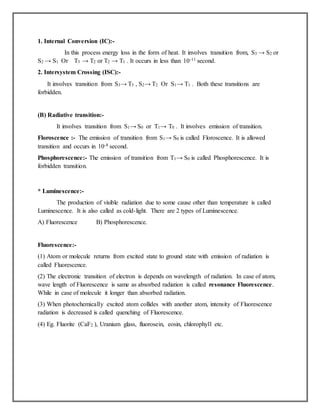
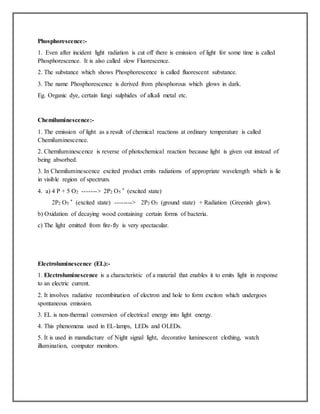

1. Photochemistry is the study of chemical reactions caused by the absorption of light. It involves photochemical reactions, which require light for initiation, as well as photophysical processes during the de-excitation of excited molecules. 2. Key concepts in photochemistry include Grotthuss-Draper law, Lambert's law, Beer's law, and Stark-Einstein law of photochemical equivalence. Quantum yield determines the efficiency of photochemical reactions. 3. Photochemistry examines differences between photochemical and thermal reactions. It also explores photochemical processes like fluorescence, phosphorescence, internal conversion, and intersystem crossing depicted in Jablonski diagrams.


![PHASE TRANSFER CATALYSIS [PTC]](https://cdn.slidesharecdn.com/ss_thumbnails/64-191219161253-thumbnail.jpg?width=640&height=640&fit=bounds)


