photographic elements Chapter 3 continued
Focus Sharp focus is an accepted standard The question of where to focus is usually very obvious, but can be used as a design element Focus is so engrained into us that whatever is in focus becomes the point of attention You have to make the decision of what to focus on what kind of depth of field you want. In dark situations you may be limited to shallow depth of field, but in brighter situations it is a choice you will need to make
Focus Focus contains a directionality from unsharp to sharp Think about your lens ’s focal length and its affect on focus and depth of field
Focus and movement from focus
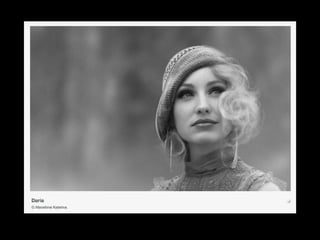
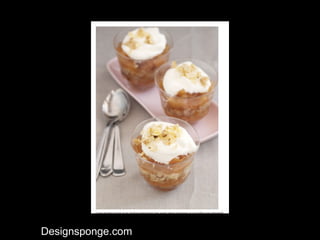
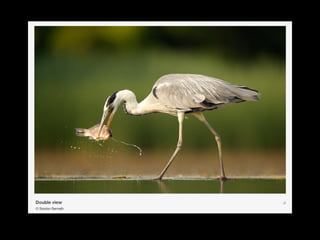
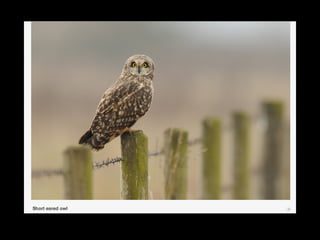
Selective Focus Choosing one specific are to focus on gives to viewer a clear idea of what the photographer wants them to look at Having the out of focus parts of the frame still be intelligible helps this affect also Selective focus is a decision in depth of field
selective focus


Designsponge.com
Designsponge.com
Designsponge.com
Designsponge.com
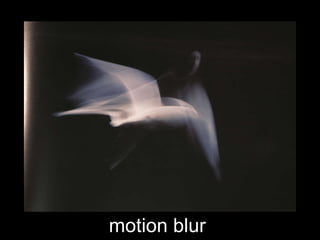
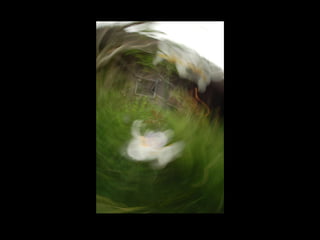
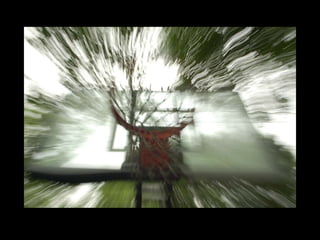
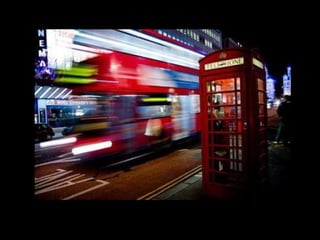
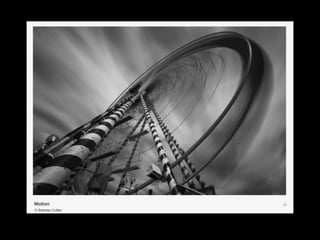
Motion The range of sharp to unsharp can also be controlled with the use of motion and motion blur Motion blur can be caused by camera shake(a jerky ghosting effect), streaking from a moving subject, and panning…there are also combinations of these There is also a technique called rear curtain shutter technique in which the subject is blurred from a long exposure and then a flash is shot off at the end of the exposure to superimpose a sharp shot on top of the blurred shot
motion
motion blur


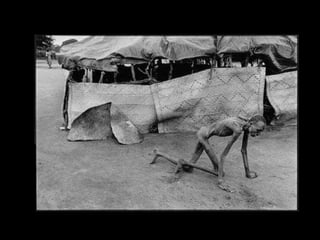
Moment Only completely static objects do not concern timing Timing can concern milliseconds of a quick action or the hours waited to get the best light for a shot The  “Decisive Moment”  is that moment when the elements in motion are in balance Henri Cartier-Bresson This action, whatever it may be, inevitably affects the design of the photograph As a photographer, you must try to anticipate the composition as the objects move in your scene
Moment/repetitive action
anticipation


Optics Photography is made optically, so lens type is very important to the design process Focal length affects the geometry of the image as well as the focus and depth of field Some lenses can also change the shape of objects, like fisheye or tilt lenses The focal length affects the angle of view and thus affects the linear structure of an image as well as depth perception and size relationships
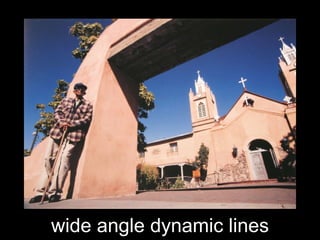
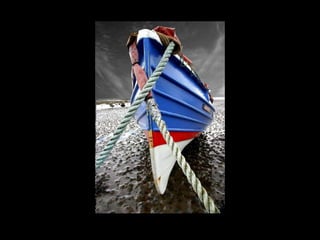
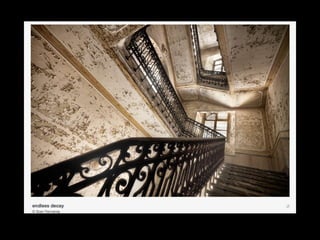
Wide angle optics Shorter focal length means wider angle of view  Taken with little foreground there will be little change made to the perception of depth, but with a foreground a wide angle lens gives and impressive sense of depth Wide angle also tends to produce diagonal lines which increases dynamic tension They also encourage a subjective point of view drawing the viewer into the scene On the edges of a wide angle lens there is a stretching effect which helps to envelope the viewer like a circle It also emphasizes that the scene continues beyond the frame
optics/wide angle
wide angle dynamic lines
wide angle perspective effects


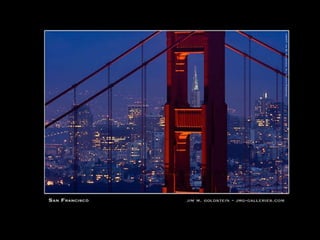
Telephoto Optics Telephoto lenses have a strong tendency to compress objects  Make objects that are far apart appear closer together With a telephoto lens, you are taking the photo from further away and this give a more objective view
optics/400mm
telephoto compression


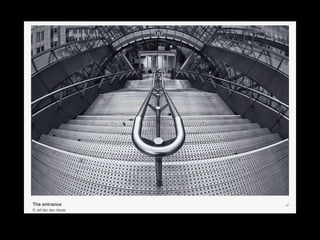
Fisheye Circular fisheye allows you to see the round edges of the lense Full frame fisheye covers the entire sensor filling the rectangular frame
 
 
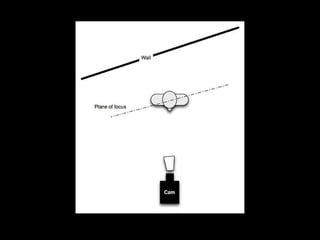
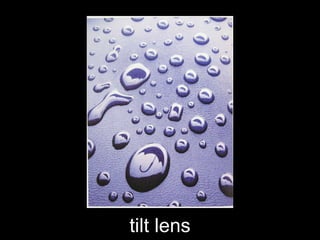
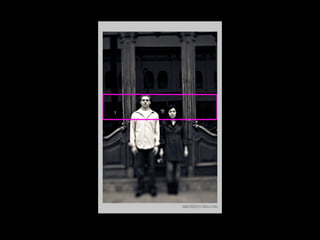
Tilt Lens Titling the lens tilts the plane of focus  Even at the smallest aperture you can distribute the focus at will The sensor or film plane can also be tilted which will have this affect on the focus but will also stretch the image in the direction the sensor is tilted
 
tilt lens


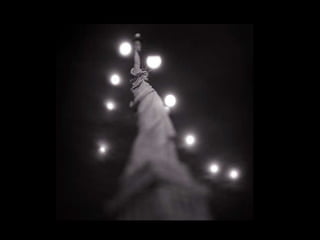
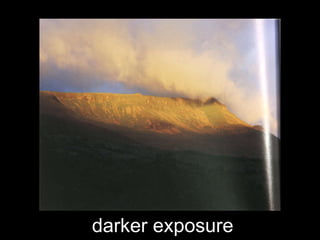
Exposure Exposure also plays a role Exposure is assumed to have one possibility We tend to look at the brightest thing in the image first High contrast calls attention to darks and lights while low contrast allows the eye to wander over the image
lighter exposure
darker exposure
Flare -happens when you point your camera at a light source -Can take on many different appearances -it’s helpful to have an object halfway block the light -consider using a polarizing filter if you want strong starburst type flare **Flare is technically considered incorrect
Flare
Flare
Flare
 
Glare -glare is often mistaken for flare FLARE AND GLARE ARE NOT THE SAME -glare happens when a bright light is REFLECTED off of a shiny object
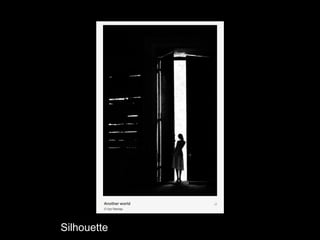
Silhouette -you must have your subject in a relatively dark place with a strong light coming from behind -you are using backlighting to make a creative exposure -meter the light coming from behind your subject rather than on your subject -bracket to make sure you got a pure silhouette
Silhouette
Silhouette

Photo Design-Chapter 3-Photo Elements

  • 1.
  • 2.
    Focus Sharp focusis an accepted standard The question of where to focus is usually very obvious, but can be used as a design element Focus is so engrained into us that whatever is in focus becomes the point of attention You have to make the decision of what to focus on what kind of depth of field you want. In dark situations you may be limited to shallow depth of field, but in brighter situations it is a choice you will need to make
  • 3.
    Focus Focus containsa directionality from unsharp to sharp Think about your lens ’s focal length and its affect on focus and depth of field
  • 4.
  • 5.
    Selective Focus Choosingone specific are to focus on gives to viewer a clear idea of what the photographer wants them to look at Having the out of focus parts of the frame still be intelligible helps this affect also Selective focus is a decision in depth of field
  • 6.
  • 7.
  • 8.
  • 9.
  • 10.
  • 11.
  • 12.
  • 13.
  • 14.
    Motion The rangeof sharp to unsharp can also be controlled with the use of motion and motion blur Motion blur can be caused by camera shake(a jerky ghosting effect), streaking from a moving subject, and panning…there are also combinations of these There is also a technique called rear curtain shutter technique in which the subject is blurred from a long exposure and then a flash is shot off at the end of the exposure to superimpose a sharp shot on top of the blurred shot
  • 15.
  • 16.
  • 17.
  • 18.
  • 19.
  • 20.
  • 21.
  • 22.
  • 23.
  • 24.
    Moment Only completelystatic objects do not concern timing Timing can concern milliseconds of a quick action or the hours waited to get the best light for a shot The “Decisive Moment” is that moment when the elements in motion are in balance Henri Cartier-Bresson This action, whatever it may be, inevitably affects the design of the photograph As a photographer, you must try to anticipate the composition as the objects move in your scene
  • 25.
  • 26.
  • 27.
  • 28.
  • 29.
  • 30.
  • 31.
  • 32.
    Optics Photography ismade optically, so lens type is very important to the design process Focal length affects the geometry of the image as well as the focus and depth of field Some lenses can also change the shape of objects, like fisheye or tilt lenses The focal length affects the angle of view and thus affects the linear structure of an image as well as depth perception and size relationships
  • 33.
    Wide angle opticsShorter focal length means wider angle of view Taken with little foreground there will be little change made to the perception of depth, but with a foreground a wide angle lens gives and impressive sense of depth Wide angle also tends to produce diagonal lines which increases dynamic tension They also encourage a subjective point of view drawing the viewer into the scene On the edges of a wide angle lens there is a stretching effect which helps to envelope the viewer like a circle It also emphasizes that the scene continues beyond the frame
  • 34.
  • 35.
  • 36.
  • 37.
  • 38.
  • 39.
  • 40.
  • 41.
  • 42.
  • 43.
  • 44.
  • 45.
    Telephoto Optics Telephotolenses have a strong tendency to compress objects Make objects that are far apart appear closer together With a telephoto lens, you are taking the photo from further away and this give a more objective view
  • 46.
  • 47.
  • 48.
  • 49.
  • 50.
  • 51.
    Fisheye Circular fisheyeallows you to see the round edges of the lense Full frame fisheye covers the entire sensor filling the rectangular frame
  • 52.
  • 53.
  • 54.
    Tilt Lens Titlingthe lens tilts the plane of focus Even at the smallest aperture you can distribute the focus at will The sensor or film plane can also be tilted which will have this affect on the focus but will also stretch the image in the direction the sensor is tilted
  • 55.
  • 56.
  • 57.
  • 58.
  • 59.
  • 60.
    Exposure Exposure alsoplays a role Exposure is assumed to have one possibility We tend to look at the brightest thing in the image first High contrast calls attention to darks and lights while low contrast allows the eye to wander over the image
  • 61.
  • 62.
  • 63.
    Flare -happens whenyou point your camera at a light source -Can take on many different appearances -it’s helpful to have an object halfway block the light -consider using a polarizing filter if you want strong starburst type flare **Flare is technically considered incorrect
  • 64.
  • 65.
  • 66.
  • 67.
  • 68.
    Glare -glare isoften mistaken for flare FLARE AND GLARE ARE NOT THE SAME -glare happens when a bright light is REFLECTED off of a shiny object
  • 69.
    Silhouette -you musthave your subject in a relatively dark place with a strong light coming from behind -you are using backlighting to make a creative exposure -meter the light coming from behind your subject rather than on your subject -bracket to make sure you got a pure silhouette
  • 70.
  • 71.