Lighting in
Photography
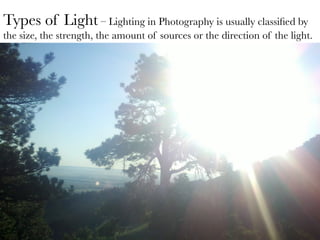
Types of Light – Lighting in Photography is usually classified by
the size, the strength, the amount of sources or the direction of the light.
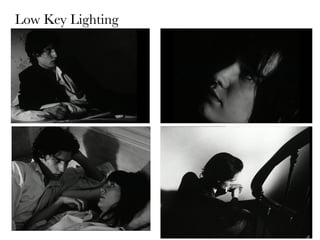
Low Key Lighting
Low Key Lighting
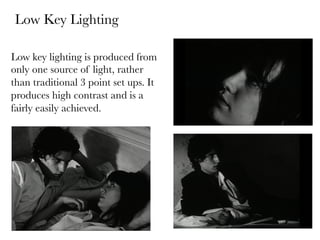
Low key lighting is produced from
only one source of light, rather
than traditional 3 point set ups. It
produces high contrast and is a
fairly easily achieved.
High Key Lighting
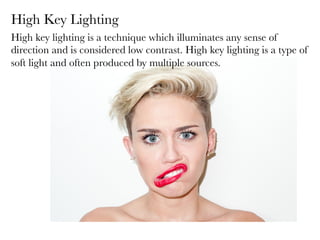
High key lighting is a technique which illuminates any sense of
direction and is considered low contrast. High key lighting is a type of
soft light and often produced by multiple sources.
Soft Light

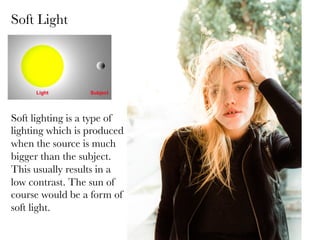
Soft lighting is a type of
lighting which is produced
when the source is much
bigger than the subject.
This usually results in a
low contrast. The sun of
course would be a form of
soft light.
Hard Light

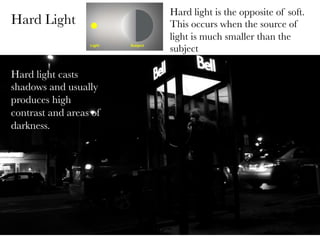
Hard light casts
shadows and usually
produces high
contrast and areas of
darkness.


Hard light is the opposite of soft.
This occurs when the source of
light is much smaller than the
subject
Portrait lighting
techniques
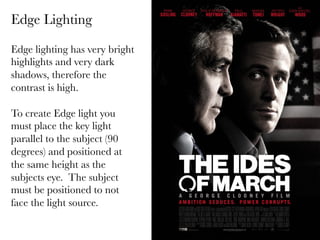
Edge Lighting
Edge lighting has very bright
highlights and very dark
shadows, therefore the
contrast is high.

To create Edge light you
must place the key light
parallel to the subject (90
degrees) and positioned at
the same height as the
subjects eye. The subject
must be positioned to not
face the light source.
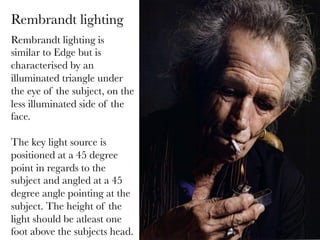
Rembrandt lighting
Rembrandt lighting is
similar to Edge but is
characterised by an
illuminated triangle under
the eye of the subject, on the
less illuminated side of the
face.

The key light source is
positioned at a 45 degree
point in regards to the
subject and angled at a 45
degree angle pointing at the
subject. The height of the
light should be atleast one
foot above the subjects head.
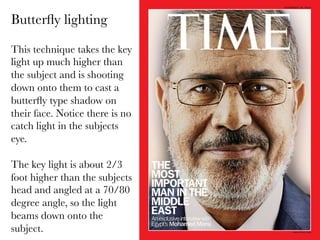
Butterfly lighting
This technique takes the key
light up much higher than
the subject and is shooting 
down onto them to cast a
butterfly type shadow on
their face. Notice there is no
catch light in the subjects
eye.

The key light is about 2/3
foot higher than the subjects
head and angled at a 70/80
degree angle, so the light
beams down onto the
subject.
Why do we need to know this?

We can study images we like the look of and be able to identify their
technique and mimic it in our own images, developing higher
quality images for our final piece.

Reflect on our own images critically and identify strengths and
weaknesses and technical understanding.

Insert key terminology into our written studies when analysing. This
will tick the higher grade boundaries by demonstrating good or even
sophisticated levels of technical understanding.

Lighting recap

  • 1.
  • 2.
    Types of Light– Lighting in Photography is usually classified by the size, the strength, the amount of sources or the direction of the light.
  • 3.
  • 4.
    Low Key Lighting Lowkey lighting is produced from only one source of light, rather than traditional 3 point set ups. It produces high contrast and is a fairly easily achieved.
  • 5.
    High Key Lighting Highkey lighting is a technique which illuminates any sense of direction and is considered low contrast. High key lighting is a type of soft light and often produced by multiple sources.
  • 6.
    Soft Light Soft lightingis a type of lighting which is produced when the source is much bigger than the subject. This usually results in a low contrast. The sun of course would be a form of soft light.
  • 7.
    Hard Light Hard lightcasts shadows and usually produces high contrast and areas of darkness.   Hard light is the opposite of soft. This occurs when the source of light is much smaller than the subject
  • 8.
  • 9.
    Edge Lighting Edge lightinghas very bright highlights and very dark shadows, therefore the contrast is high. To create Edge light you must place the key light parallel to the subject (90 degrees) and positioned at the same height as the subjects eye. The subject must be positioned to not face the light source.
  • 10.
    Rembrandt lighting Rembrandt lightingis similar to Edge but is characterised by an illuminated triangle under the eye of the subject, on the less illuminated side of the face. The key light source is positioned at a 45 degree point in regards to the subject and angled at a 45 degree angle pointing at the subject. The height of the light should be atleast one foot above the subjects head.
  • 11.
    Butterfly lighting This techniquetakes the key light up much higher than the subject and is shooting down onto them to cast a butterfly type shadow on their face. Notice there is no catch light in the subjects eye. The key light is about 2/3 foot higher than the subjects head and angled at a 70/80 degree angle, so the light beams down onto the subject.
  • 12.
    Why do weneed to know this? We can study images we like the look of and be able to identify their technique and mimic it in our own images, developing higher quality images for our final piece. Reflect on our own images critically and identify strengths and weaknesses and technical understanding. Insert key terminology into our written studies when analysing. This will tick the higher grade boundaries by demonstrating good or even sophisticated levels of technical understanding.