Studio Lighting Techniques

-Rembrandt
-Butterfly
-Edge

Of course whilst shooting these techniques you must consider what
Aperture, Shutter Speed and I.S.O to use to gain the correct exposure. It
should look as it looks to your eye.


This is the last of the 3 technical inductions
1.Relatioship of Aperture, Shutter speed and I.S.O
2.Night Photography
3.Studio Lighting techniques
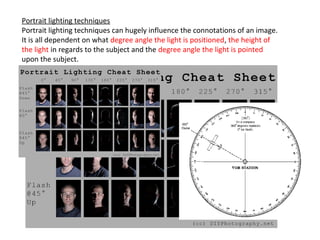
Portrait lighting techniques
Portrait lighting techniques can hugely influence the connotations of an image.
It is all dependent on what degree angle the light is positioned, the height of
the light in regards to the subject and the degree angle the light is pointed
upon the subject.
Key light
                                 Highlights, lowlights
                                                          Degree angle of light

                            Contrast


                      Portrait Lighting Key Words

Height of the light
                                                              Fill light


               Hard/Soft Light
                                                     Degree angle of the position of light
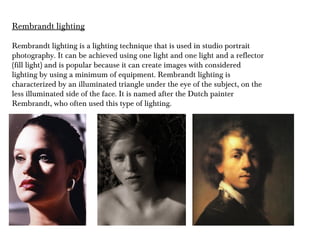
Rembrandt lighting

Rembrandt lighting is a lighting technique that is used in studio portrait
photography. It can be achieved using one light and one light and a reflector
(fill light) and is popular because it can create images with considered
lighting by using a minimum of equipment. Rembrandt lighting is
characterized by an illuminated triangle under the eye of the subject, on the
less illuminated side of the face. It is named after the Dutch painter
Rembrandt, who often used this type of lighting.
Rembrandt lighting set up


Umbrella key light
source is positioned
at a 45 degree point
in regards to the
subject and angled                     Subject
at a 45 degree angle
pointing at the
subject.


  The height is around a
                                                                                    Reflector
  foot and a half above
  the subjects head
                                        Camera


  Note the subject is not looking or body pointing into the camera
  The single light source is sometimes counter balanced with a reflector (Fill light)
  placed approximately 45 degrees offset to the shadowed side of the face. This
  reduces contrast and begins to light the image softly rather than hard.
Butterfly Lighting

This technique takes the key light up much higher than the subject and is shooting
down onto them to cast a butterfly type shadow on their face. It is thought to
project
more glamorous and complimentary connotations than other techniques. As you
can see it was often used on 1950s film stars.
Butterfly Lighting technique


                                                                   The subject looks and the
                                                                   body is positioned straight
                                                                   Into the lens, the camera
                                                                   Is directly in front of them


The light is position, again, directly in front of them, but obviously not in the way of the
camera
The key light is about 2/3 foot higher than the subjects head and angled at a 70/80 degree
angle, so the light beams down onto the subject.
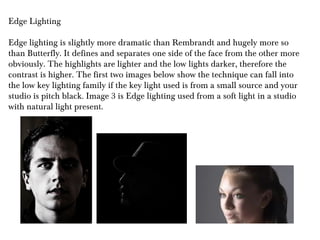
Edge Lighting

Edge lighting is slightly more dramatic than Rembrandt and hugely more so
than Butterfly. It defines and separates one side of the face from the other more
obviously. The highlights are lighter and the low lights darker, therefore the
contrast is higher. The first two images below show the technique can fall into
the low key lighting family if the key light used is from a small source and your
studio is pitch black. Image 3 is Edge lighting used from a soft light in a studio
with natural light present.
Edge Lighting Set up

                       Direct the subject to look the specific direction (25 degrees)
                       So the light source will only capture half of the face


                                                              Again you can add
The key light is                                               fill light in the
parallel to the                                               form of a reflector.
subject (90 degrees)                                          Where you place
and positioned at                                             the reflector will
the same height as                                            dictate the
the subjects eye                                              strength of the
                                                              contrast.
Your task
1)In groups of 4, capture perfectly lit and exposed (correct use of the
three key settings) portrait images via the;
Rembrandt technique with and without fill
Butterfly technique without any fill
Edge technique with and without fill
2)Demonstrate and reflect upon your studio set up for each image via
a establishing shot and multiple stills images, if you wish, in
combination with a written element.
3)Show any technical errors via a print out image and discuss why
and how they are flawed and how you put this right.

Tip;Print your (5) perfectly lit images via a Kiosk or Photo printer,
and the error images within your reflection can be printed on
college/regular printers

Portrait lighting

  • 1.
    Studio Lighting Techniques -Rembrandt -Butterfly -Edge Ofcourse whilst shooting these techniques you must consider what Aperture, Shutter Speed and I.S.O to use to gain the correct exposure. It should look as it looks to your eye. This is the last of the 3 technical inductions 1.Relatioship of Aperture, Shutter speed and I.S.O 2.Night Photography 3.Studio Lighting techniques
  • 2.
    Portrait lighting techniques Portraitlighting techniques can hugely influence the connotations of an image. It is all dependent on what degree angle the light is positioned, the height of the light in regards to the subject and the degree angle the light is pointed upon the subject.
  • 3.
    Key light Highlights, lowlights Degree angle of light Contrast Portrait Lighting Key Words Height of the light Fill light Hard/Soft Light Degree angle of the position of light
  • 4.
    Rembrandt lighting Rembrandt lightingis a lighting technique that is used in studio portrait photography. It can be achieved using one light and one light and a reflector (fill light) and is popular because it can create images with considered lighting by using a minimum of equipment. Rembrandt lighting is characterized by an illuminated triangle under the eye of the subject, on the less illuminated side of the face. It is named after the Dutch painter Rembrandt, who often used this type of lighting.
  • 5.
    Rembrandt lighting setup Umbrella key light source is positioned at a 45 degree point in regards to the subject and angled Subject at a 45 degree angle pointing at the subject. The height is around a Reflector foot and a half above the subjects head Camera Note the subject is not looking or body pointing into the camera The single light source is sometimes counter balanced with a reflector (Fill light) placed approximately 45 degrees offset to the shadowed side of the face. This reduces contrast and begins to light the image softly rather than hard.
  • 6.
    Butterfly Lighting This techniquetakes the key light up much higher than the subject and is shooting down onto them to cast a butterfly type shadow on their face. It is thought to project more glamorous and complimentary connotations than other techniques. As you can see it was often used on 1950s film stars.
  • 7.
    Butterfly Lighting technique The subject looks and the body is positioned straight Into the lens, the camera Is directly in front of them The light is position, again, directly in front of them, but obviously not in the way of the camera The key light is about 2/3 foot higher than the subjects head and angled at a 70/80 degree angle, so the light beams down onto the subject.
  • 8.
    Edge Lighting Edge lightingis slightly more dramatic than Rembrandt and hugely more so than Butterfly. It defines and separates one side of the face from the other more obviously. The highlights are lighter and the low lights darker, therefore the contrast is higher. The first two images below show the technique can fall into the low key lighting family if the key light used is from a small source and your studio is pitch black. Image 3 is Edge lighting used from a soft light in a studio with natural light present.
  • 9.
    Edge Lighting Setup Direct the subject to look the specific direction (25 degrees) So the light source will only capture half of the face Again you can add The key light is fill light in the parallel to the form of a reflector. subject (90 degrees) Where you place and positioned at the reflector will the same height as dictate the the subjects eye strength of the contrast.
  • 10.
    Your task 1)In groupsof 4, capture perfectly lit and exposed (correct use of the three key settings) portrait images via the; Rembrandt technique with and without fill Butterfly technique without any fill Edge technique with and without fill 2)Demonstrate and reflect upon your studio set up for each image via a establishing shot and multiple stills images, if you wish, in combination with a written element. 3)Show any technical errors via a print out image and discuss why and how they are flawed and how you put this right. Tip;Print your (5) perfectly lit images via a Kiosk or Photo printer, and the error images within your reflection can be printed on college/regular printers