PHARMACOLOGY- PART
II
DEEPTHI P.R.

1st YEAR MDS
DEPT.OF CONSERVATIVE DENTISTRY & ENDODONTICS
CONTENTS
 Mechanism of drug Detoxication in the Body.
 Intolerance, Tolerance, Cumulative action, Synergism, Antagonism.
 Dosage, Classification of Drugs
CONTENTS
 Fate of a drug
 Reactions:
synthetic

non- synthetic
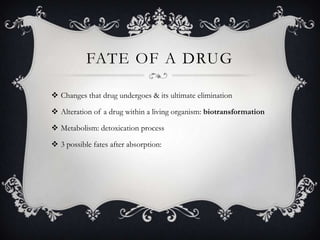
FATE OF A DRUG
 Changes that drug undergoes & its ultimate elimination
 Alteration of a drug within a living organism: biotransformation
 Metabolism: detoxication process

 3 possible fates after absorption:
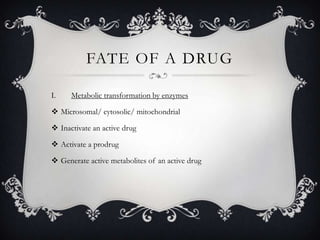
FATE OF A DRUG
I.

Metabolic transformation by enzymes
 Microsomal/ cytosolic/ mitochondrial
 Inactivate an active drug

 Activate a prodrug
 Generate active metabolites of an active drug
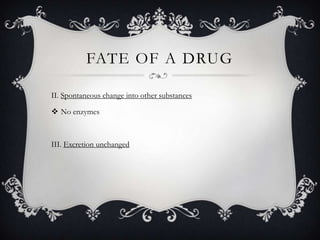
FATE OF A DRUG
II. Spontaneous change into other substances
 No enzymes

III. Excretion unchanged
FATE OF A DRUG
 Less polar, lipid soluble  more polar, water soluble: excretion by
kidneys
 Already polar & soluble: excreted as such- aminoglycosides

 Activation/ inactivation/ modification
 Reactions:
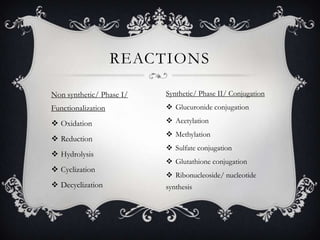
REACTIONS
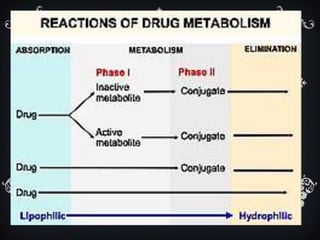
Non synthetic/ Phase I/

Synthetic/ Phase II/ Conjugation

Functionalization

 Glucuronide conjugation

 Oxidation

 Acetylation

 Reduction
 Hydrolysis
 Cyclization
 Decyclization

 Methylation
 Sulfate conjugation
 Glutathione conjugation
 Ribonucleoside/ nucleotide
synthesis
REACTIONS
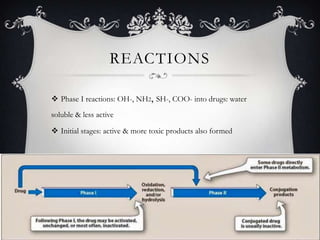
 Phase I reactions: OH-, NH2, SH-, COO- into drugs: water
soluble & less active
 Initial stages: active & more toxic products also formed
REACTIONS
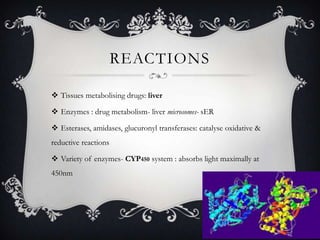
 Tissues metabolising drugs: liver
 Enzymes : drug metabolism- liver microsomes- sER
 Esterases, amidases, glucuronyl transferases: catalyse oxidative &

reductive reactions
 Variety of enzymes- CYP450 system : absorbs light maximally at
450nm
REACTIONS
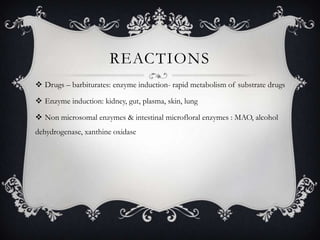
 Drugs – barbiturates: enzyme induction- rapid metabolism of substrate drugs
 Enzyme induction: kidney, gut, plasma, skin, lung
 Non microsomal enzymes & intestinal microfloral enzymes : MAO, alcohol
dehydrogenase, xanthine oxidase
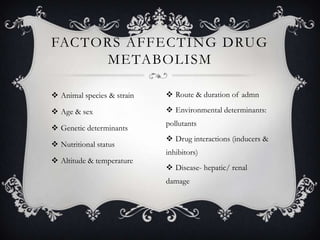
FACTORS AFFECTING DRUG
METABOLISM
 Animal species & strain

 Route & duration of admn

 Age & sex

 Environmental determinants:

 Genetic determinants

 Nutritional status
 Altitude & temperature

pollutants

 Drug interactions (inducers &
inhibitors)
 Disease- hepatic/ renal
damage
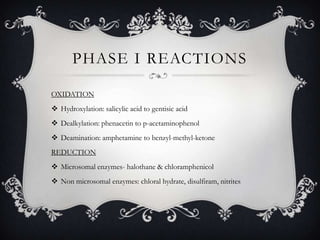
PHASE I REACTIONS
OXIDATION
 Hydroxylation: salicylic acid to gentisic acid
 Dealkylation: phenacetin to p-acetaminophenol

 Deamination: amphetamine to benzyl-methyl-ketone
REDUCTION
 Microsomal enzymes- halothane & chloramphenicol
 Non microsomal enzymes: chloral hydrate, disulfiram, nitrites
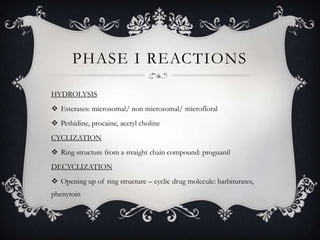
PHASE I REACTIONS
HYDROLYSIS
 Esterases: microsomal/ non microsomal/ microfloral
 Pethidine, procaine, acetyl choline

CYCLIZATION
 Ring structure from a straight chain compound: proguanil
DECYCLIZATION
 Opening up of ring structure – cyclic drug molecule: barbiturates,

phenytoin
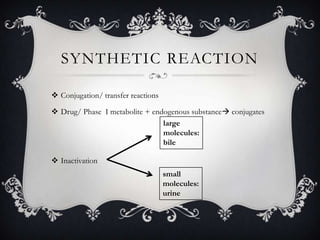
SYNTHETIC REACTION
 Conjugation/ transfer reactions
 Drug/ Phase I metabolite + endogenous substance conjugates
large
molecules:
bile
 Inactivation
small
molecules:
urine
SYNTHETIC REACTION
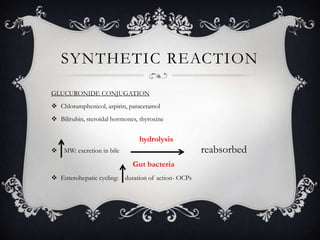
GLUCURONIDE CONJUGATION
 Chloramphenicol, aspirin, paracetamol
 Bilirubin, steroidal hormones, thyroxine

hydrolysis


MW: excretion in bile

Gut bacteria
 Enterohepatic cycling: duration of action- OCPs

reabsorbed
SYNTHETIC REACTION
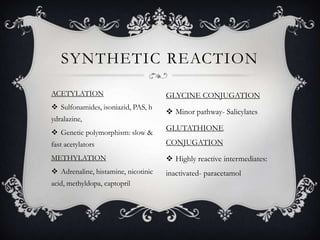
ACETYLATION
 Sulfonamides, isoniazid, PAS, h
ydralazine,
 Genetic polymorphism: slow &

GLYCINE CONJUGATION
 Minor pathway- Salicylates
GLUTATHIONE

fast acetylators

CONJUGATION

METHYLATION

 Highly reactive intermediates:

 Adrenaline, histamine, nicotinic

inactivated- paracetamol

acid, methyldopa, captopril
SYNTHETIC REACTION
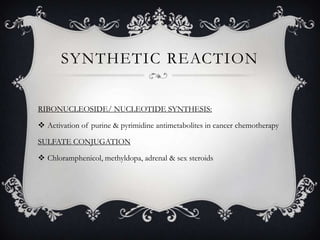
RIBONUCLEOSIDE/ NUCLEOTIDE SYNTHESIS:
 Activation of purine & pyrimidine antimetabolites in cancer chemotherapy

SULFATE CONJUGATION
 Chloramphenicol, methyldopa, adrenal & sex steroids
E N Z Y M E S O F I N T E R M E D I A RY
M E TA B O L I S M
 Alcohol: alcohol dehydrogenase
 Allopurinol: xanthine oxidase
 SCh & procaine: plasma cholinesterase
 Adrenaline: mono amino oxidase

Majority: microsomal & non microsomal drug metabolising enzymes
TOLERANCE
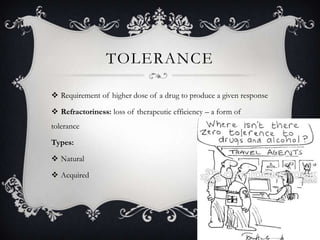
 Requirement of higher dose of a drug to produce a given response
 Refractoriness: loss of therapeutic efficiency – a form of
tolerance

Types:
 Natural
 Acquired
NATURAL TOLERANCE
 Innate/ congenital tolerance
 Species/Racial/ individual: inherently less sensitive to the drug
 Rabbits: atropine

 Black races : mydriatics
 Some individuals: hyporesponders –
alcohol, β-blockers
ACQUIRED TOLERANCE
 Repeated administration: in initially responsive
 Seen with most drugs: significant in CNS depressants
 Opiates, barbiturates, nitrites, xanthines

 Not with: atropine, sodium nitroprusside, digitalis, cocaine
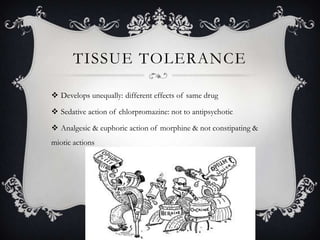
TISSUE TOLERANCE
 Develops unequally: different effects of same drug
 Sedative action of chlorpromazine: not to antipsychotic
 Analgesic & euphoric action of morphine & not constipating &

miotic actions
CROSS TOLERANCE
 Tolerance to pharmacologically related drugs
 Alcoholics: barbiturates & general anesthetics
 Partial: morphine & barbiturates

 Complete: morphine & pethidine
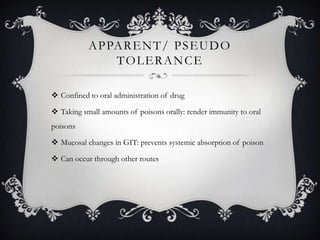
A P PA R E N T / P S E U D O
TOLERANCE
 Confined to oral administration of drug
 Taking small amounts of poisons orally: render immunity to oral
poisons

 Mucosal changes in GIT: prevents systemic absorption of poison
 Can occur through other routes
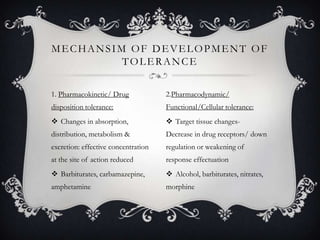
MECHANSIM OF DEVELOPMENT OF
TOLERANCE
1. Pharmacokinetic/ Drug

2.Pharmacodynamic/

disposition tolerance:

Functional/Cellular tolerance:

 Changes in absorption,

 Target tissue changes-

distribution, metabolism &

Decrease in drug receptors/ down

excretion: effective concentration

regulation or weakening of

at the site of action reduced

response effectuation

 Barbiturates, carbamazepine,

 Alcohol, barbiturates, nitrates,

amphetamine

morphine
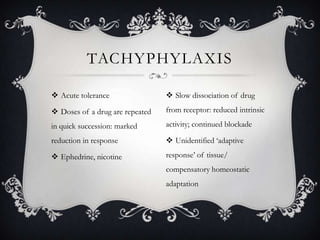
TACHYPHYLAXIS
 Acute tolerance

 Slow dissociation of drug

 Doses of a drug are repeated

from receptor: reduced intrinsic

in quick succession: marked

activity; continued blockade

reduction in response

 Unidentified ‘adaptive

 Ephedrine, nicotine

response’ of tissue/
compensatory homeostatic
adaptation
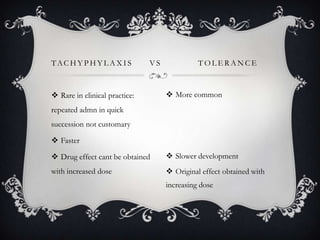
TACHYPHYLA X IS

VS

 Rare in clinical practice:

TOLERANCE

 More common

repeated admn in quick
succession not customary

 Faster
 Drug effect cant be obtained

 Slower development

with increased dose

 Original effect obtained with
increasing dose
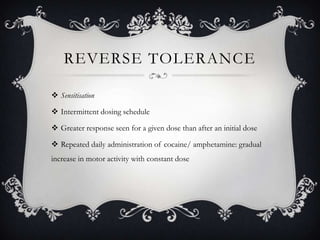
REVERSE TOLERANCE
 Sensitisation
 Intermittent dosing schedule
 Greater response seen for a given dose than after an initial dose

 Repeated daily administration of cocaine/ amphetamine: gradual
increase in motor activity with constant dose
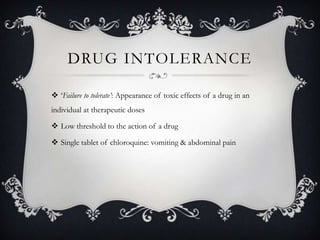
DRUG INTOLERANCE
 ‘Failure to tolerate’: Appearance of toxic effects of a drug in an
individual at therapeutic doses
 Low threshold to the action of a drug

 Single tablet of chloroquine: vomiting & abdominal pain
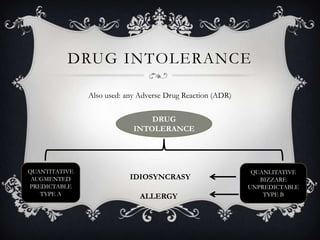
DRUG INTOLERANCE
Also used: any Adverse Drug Reaction (ADR)
DRUG
INTOLERANCE

QUANTITATIVE
AUGMENTED
PREDICTABLE
TYPE A

IDIOSYNCRASY
ALLERGY

QUANLITATIVE
BIZZARE
UNPREDICTABLE
TYPE B
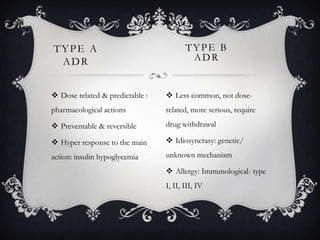
TYPE A
ADR

TYPE B
ADR

 Dose related & predictable :

 Less common, not dose-

pharmacological actions

related, more serious, require

 Preventable & reversible

drug withdrawal

 Hyper response to the main

 Idiosyncrasy: genetic/

action: insulin hypoglycemia

unknown mechanism
 Allergy: Immunological- type
I, II, III, IV
IDIOSYNCRASY
 Genetically determined abnormal reactivity: uncharacteristic
reaction with drug
 Due to individual peculiarities

 Chloramphenicol: non- dose related serious aplastic anemia
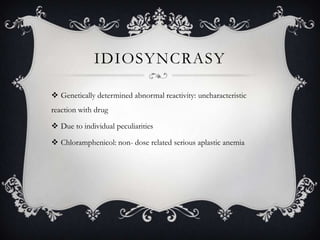
ALLERGY
Type I/
Anaphylactic
reactions:
Urticaria
angioedema
bronchospasm
anaphylactic shock Type II/ Cytolytic
reactions:
Thrombocytopenia
agranulocytosis
aplastic anemia
hemolysis
SLE

Type III/
retarded,
Arthus
reaction:
Rashes, serum
sickness,
polyateritis
nodosa, SJS

Type IV/ Delayed
hypersensitivity
reactions:
Contact
dermatitis, rashes,
fever,
photosensitisation
TREATMENT OF ALLERGY
Anaphylactic shock/ laryngeal angioedema:

 Immediate stoppage of

 Patient in reclining position, O2 admn

offending drug

at high flow rate, CPR

 Mild rxns: self subsiding

 Inj. Adrenaline 0.5mg (0.5 ml of 1 in

 Antihistamines: type I rxns & 100 solution) im
skin rashes

 chlorpheniramine 10-20 mg i.m/ slow
i.v
 i.v. hydrocortisone sodium succinate
100-200 mg- severe/ recurrent cases
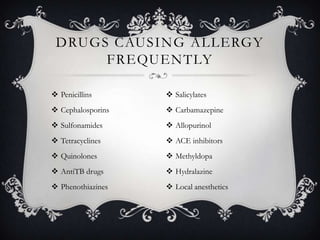
DRUGS CAUSING ALLERGY
FREQUENTLY
 Penicillins

 Salicylates

 Cephalosporins

 Carbamazepine

 Sulfonamides

 Allopurinol

 Tetracyclines

 ACE inhibitors

 Quinolones

 Methyldopa

 AntiTB drugs

 Hydralazine

 Phenothiazines

 Local anesthetics
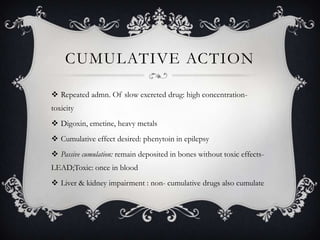
CUMULATIVE ACTION
 Repeated admn. Of slow excreted drug: high concentrationtoxicity
 Digoxin, emetine, heavy metals

 Cumulative effect desired: phenytoin in epilepsy
 Passive cumulation: remain deposited in bones without toxic effectsLEAD;Toxic: once in blood
 Liver & kidney impairment : non- cumulative drugs also cumulate
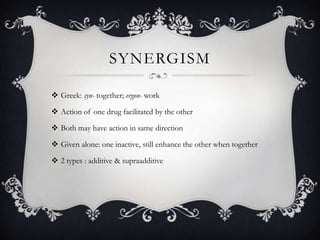
SYNERGISM
 Greek: syn- together; ergon- work
 Action of one drug facilitated by the other
 Both may have action in same direction

 Given alone: one inactive, still enhance the other when together
 2 types : additive & supraadditive
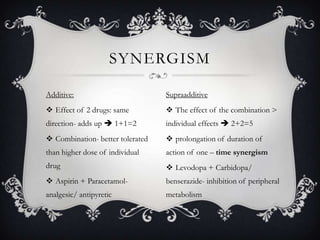
SYNERGISM
Additive:

Supraadditive

 Effect of 2 drugs: same

 The effect of the combination >

direction- adds up  1+1=2

individual effects  2+2=5

 Combination- better tolerated

 prolongation of duration of

than higher dose of individual

action of one – time synergism

drug

 Levodopa + Carbidopa/

 Aspirin + Paracetamol-

benserazide- inhibition of peripheral

analgesic/ antipyretic

metabolism
ANTAGONISM
 Phenomenon of opposing actions of two drugs on the same physiological system
 Effect of drugs A+B< effect of drug A + effect of drug B
 One is inactive & decreases the effect of the other
 Physical
 Chemical
 Physiological/ Functional
 Receptor
ANTAGONISM
Physical:
 Physical property
 Charcoal adsorbs alkaloids: poisoning

Chemical:
 Chemical reaction of 2 drugs: inactive product
 KMnO4 + alkaloids- gastric lavage in poisoning
 Chelating agents + toxic heavy metals
ANTAGONISM
Physiological/ functional

Receptor:

 Different receptors/

 Antagonist drug blocks the

mechanisms- opposite effects on
same function
 Opposing pharmacological

receptor action of agonist

 Specific & profound

actions

pharmacological effect

 Glucagon & insulin on blood

 Antagonists: selective

sugar level

 Competitive/ non competitive
COMPETITIVE
ANTAGONISM
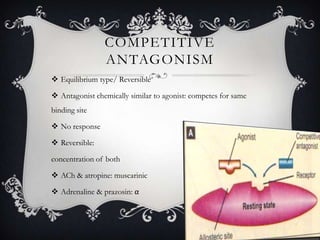
 Equilibrium type/ Reversible
 Antagonist chemically similar to agonist: competes for same
binding site
 No response

 Reversible:
concentration of both
 ACh & atropine: muscarinic
 Adrenaline & prazosin: α
COMPETITIVE
ANTAGONISM
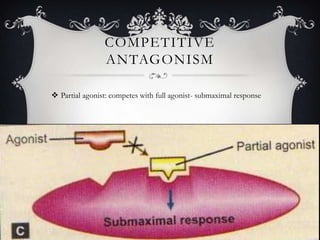
 Partial agonist: competes with full agonist- submaximal response
NONCOMPETITIVE
ANTAGONISM
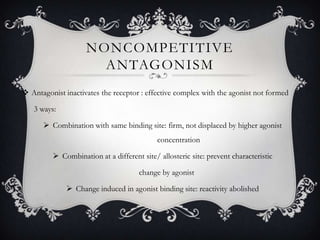
 Antagonist inactivates the receptor : effective complex with the agonist not formed
3 ways:
 Combination with same binding site: firm, not displaced by higher agonist

concentration
 Combination at a different site/ allosteric site: prevent characteristic
change by agonist
 Change induced in agonist binding site: reactivity abolished
NONCOMPETITIVE
ANTAGONISM
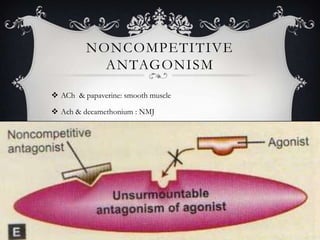
 ACh & papaverine: smooth muscle
 Ach & decamethonium : NMJ
 Reversible/ irreversible effect
SIGNIFICANCE OF
ANTAGONISM
 Correcting adverse effects: chlorpromazine & benzhexol
 Treating drug poisoning: morphine with naloxone
 Predicting drug combinations which would reduce drug efficacy:

penicillin & tetracycline inferior to penicillin alone in pneumococcal
meningitis
CONTENTS
 Dose
 Fixed dose ratio combinations
 Factors necessitating dose modification
- body size

- age
- sex
- race &genetics
- pathological states

- other drugs
DRUG DOSAGE
‘DOSE’
 The appropriate amount of a drug needed to produce a certain degree
of response in a patient
 Qualified in terms of the chosen response:
 Aspirin: 0.3- 0.6g - headache
60-150mg - antiplatelet action
3-5g – rheumatoid arthritis
DRUG DOSAGE
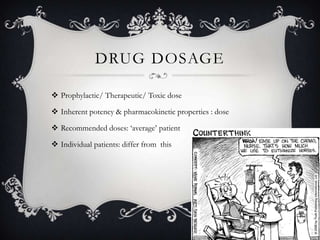
 Prophylactic/ Therapeutic/ Toxic dose
 Inherent potency & pharmacokinetic properties : dose
 Recommended doses: ‘average’ patient

 Individual patients: differ from this
DRUG DOSAGE
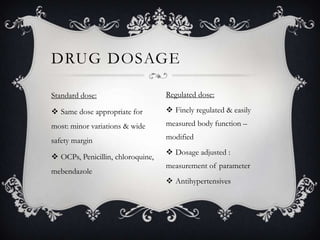
Standard dose:

Regulated dose:

 Same dose appropriate for

 Finely regulated & easily

most: minor variations & wide

measured body function –

safety margin

modified

 OCPs, Penicillin, chloroquine,
mebendazole

 Dosage adjusted :
measurement of parameter
 Antihypertensives
DRUG DOSAGE
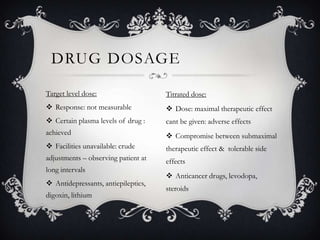
Target level dose:

Titrated dose:

 Response: not measurable

 Dose: maximal therapeutic effect

 Certain plasma levels of drug :

cant be given: adverse effects

achieved

 Compromise between submaximal

 Facilities unavailable: crude

therapeutic effect & tolerable side

adjustments – observing patient at

effects

long intervals
 Antidepressants, antiepileptics,

digoxin, lithium

 Anticancer drugs, levodopa,
steroids
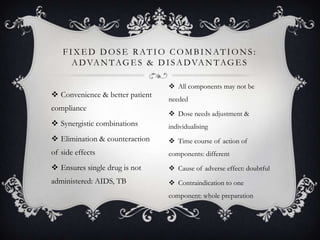
FIXED DOSE RATIO COMBINATIONS:
A D VA N T A G E S & D I S A D VA N T A G E S
 Convenience & better patient
compliance

 All components may not be
needed
 Dose needs adjustment &

 Synergistic combinations

individualising

 Elimination & counteraction

 Time course of action of

of side effects

components: different

 Ensures single drug is not

 Cause of adverse effect: doubtful

administered: AIDS, TB

 Contraindication to one

component: whole preparation
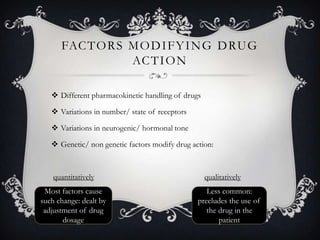
FAC T O R S M O D I F Y I N G D RU G
AC T I O N
 Different pharmacokinetic handling of drugs
 Variations in number/ state of receptors
 Variations in neurogenic/ hormonal tone

 Genetic/ non genetic factors modify drug action:

quantitatively

Most factors cause
such change: dealt by
adjustment of drug
dosage

qualitatively

Less common:
precludes the use of
the drug in the
patient
FAC T O R S N E C E S S I TAT I N G
D O S E M O D I F I C AT I O N
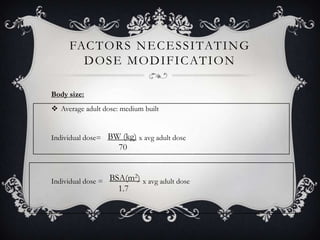
Body size:
 Average adult dose: medium built

Individual dose= BW (kg) x avg adult dose

70
2
Individual dose = BSA(m ) x avg adult dose

1.7
FAC T O R S N E C E S S I TAT I N G
D O S E M O D I F I C AT I O N
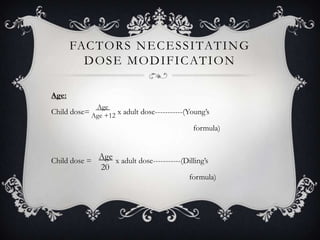
Age:
Age

Child dose= Age +12 x adult dose-----------(Young’s
formula)
Child dose = Age x adult dose-----------(Dilling’s

20

formula)
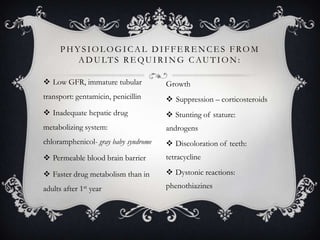
PHYSIOLOGICAL DIFFERENCES FROM
A D U LT S R E Q U I R I N G C A U T I O N :
 Low GFR, immature tubular

Growth

transport: gentamicin, penicillin

 Suppression – corticosteroids

 Inadequate hepatic drug

 Stunting of stature:

metabolizing system:

androgens

chloramphenicol- gray baby syndrome

 Discoloration of teeth:

 Permeable blood brain barrier

tetracycline

 Faster drug metabolism than in

 Dystonic reactions:

adults after 1st year

phenothiazines
FAC T O R S N E C E S S I TAT I N G
D O S E M O D I F I C AT I O N
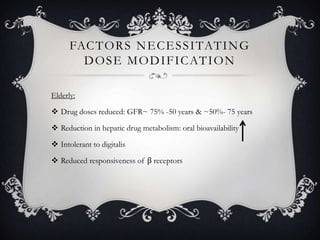
Elderly:
 Drug doses reduced: GFR~ 75% -50 years & ~50%- 75 years
 Reduction in hepatic drug metabolism: oral bioavailability

 Intolerant to digitalis
 Reduced responsiveness of β receptors
FACTORS NECESSITATING
DOSE MODIFICATION
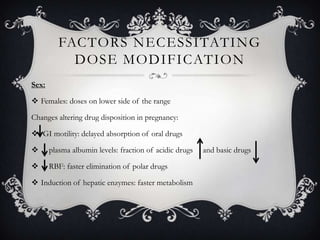
Sex:
 Females: doses on lower side of the range
Changes altering drug disposition in pregnancy:
 GI motility: delayed absorption of oral drugs


plasma albumin levels: fraction of acidic drugs



RBF: faster elimination of polar drugs

 Induction of hepatic enzymes: faster metabolism

and basic drugs
FAC T O R S N E C E S S I TAT I N G
D O S E M O D I F I C AT I O N
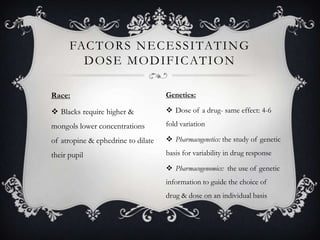
Race:

Genetics:

 Blacks require higher &

 Dose of a drug- same effect: 4-6

mongols lower concentrations

fold variation

of atropine & ephedrine to dilate

 Pharmacogenetics: the study of genetic

their pupil

basis for variability in drug response
 Pharmacogenomics: the use of genetic
information to guide the choice of

drug & dose on an individual basis
PATHOLOGICAL STATES
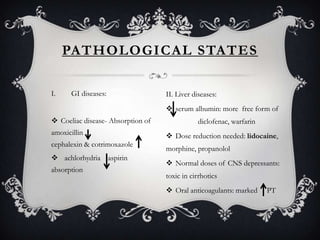
I.

GI diseases:

II. Liver diseases:
 serum albumin: more free form of

 Coeliac disease- Absorption of
amoxicillin
cephalexin & cotrimoxazole
 achlorhydria aspirin
absorption

diclofenac, warfarin
 Dose reduction needed: lidocaine,
morphine, propanolol
 Normal doses of CNS depressants:
toxic in cirrhotics
 Oral anticoagulants: marked

PT
PATHOLOGICAL STATES
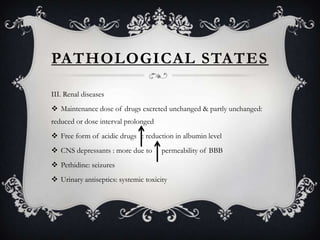
III. Renal diseases
 Maintenance dose of drugs excreted unchanged & partly unchanged:
reduced or dose interval prolonged
 Free form of acidic drugs : reduction in albumin level
 CNS depressants : more due to

permeability of BBB

 Pethidine: seizures
 Urinary antiseptics: systemic toxicity
PATHOLOGICAL STATES
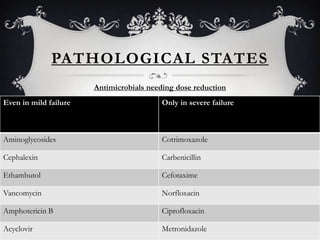
Antimicrobials needing dose reduction
Even in mild failure

Only in severe failure

Aminoglycosides

Cotrimoxazole

Cephalexin

Carbenicillin

Ethambutol

Cefotaxime

Vancomycin

Norfloxacin

Amphotericin B

Ciprofloxacin

Acyclovir

Metronidazole
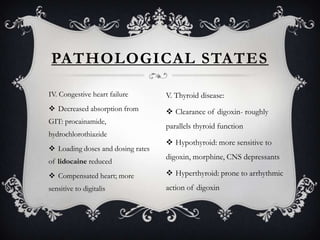
PATHOLOGICAL STATES
IV. Congestive heart failure

V. Thyroid disease:

 Decreased absorption from

 Clearance of digoxin- roughly

GIT: procainamide,
hydrochlorothiazide
 Loading doses and dosing rates
of lidocaine reduced

parallels thyroid function

 Hypothyroid: more sensitive to
digoxin, morphine, CNS depressants

 Compensated heart; more

 Hyperthyroid: prone to arrhythmic

sensitive to digitalis

action of digoxin
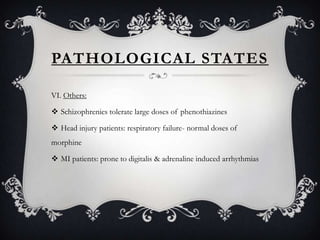
PATHOLOGICAL STATES
VI. Others:
 Schizophrenics tolerate large doses of phenothiazines
 Head injury patients: respiratory failure- normal doses of

morphine
 MI patients: prone to digitalis & adrenaline induced arrhythmias
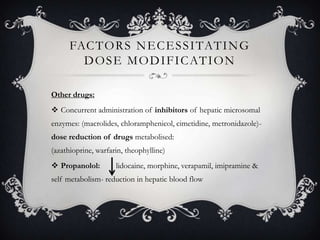
FAC T O R S N E C E S S I TAT I N G
D O S E M O D I F I C AT I O N
Other drugs:
 Concurrent administration of inhibitors of hepatic microsomal
enzymes: (macrolides, chloramphenicol, cimetidine, metronidazole)-

dose reduction of drugs metabolised:
(azathioprine, warfarin, theophylline)
 Propanolol:

lidocaine, morphine, verapamil, imipramine &

self metabolism- reduction in hepatic blood flow
FAC T O R S N E C E S S I TAT I N G
D O S E M O D I F I C AT I O N
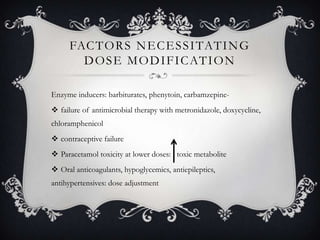
Enzyme inducers: barbiturates, phenytoin, carbamzepine failure of antimicrobial therapy with metronidazole, doxycycline,
chloramphenicol

 contraceptive failure
 Paracetamol toxicity at lower doses: toxic metabolite
 Oral anticoagulants, hypoglycemics, antiepileptics,
antihypertensives: dose adjustment
CLASSIFICATION OF DRUGS
 Single, rational classification system: not possible
 Requirements of chemists, pharmacologists, doctors differ
 Categorised according to the convenience of the discussing group
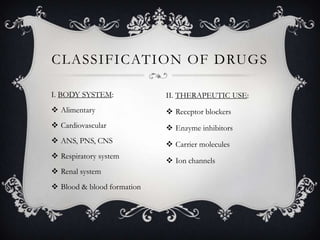
CLASSIFICATION OF DRUGS
I. BODY SYSTEM:

II. THERAPEUTIC USE:

 Alimentary

 Receptor blockers

 Cardiovascular

 Enzyme inhibitors

 ANS, PNS, CNS

 Carrier molecules

 Respiratory system
 Renal system
 Blood & blood formation

 Ion channels
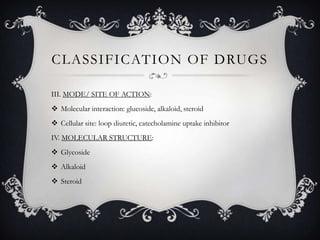
CLASSIFICATION OF DRUGS
III. MODE/ SITE OF ACTION:
 Molecular interaction: glucoside, alkaloid, steroid
 Cellular site: loop diuretic, catecholamine uptake inhibitor

IV. MOLECULAR STRUCTURE:
 Glycoside
 Alkaloid
 Steroid
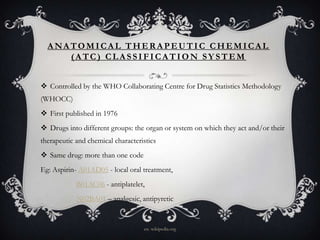
ANATOMICAL THERAPEUTIC CHEMICAL
(ATC) CLASSIFICATION SYSTEM
 Controlled by the WHO Collaborating Centre for Drug Statistics Methodology
(WHOCC)
 First published in 1976
 Drugs into different groups: the organ or system on which they act and/or their

therapeutic and chemical characteristics
 Same drug: more than one code
Eg: Aspirin- A01AD05 - local oral treatment,
B01AC06 - antiplatelet,
N02BA01 – analgesic, antipyretic

en. wikipedia.org
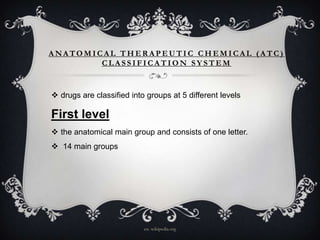
ANATOMICAL THERAPEUTIC CHEMICAL (ATC)
CLASSIFICATION SYSTEM

 drugs are classified into groups at 5 different levels

First level
 the anatomical main group and consists of one letter.
 14 main groups

en. wikipedia.org
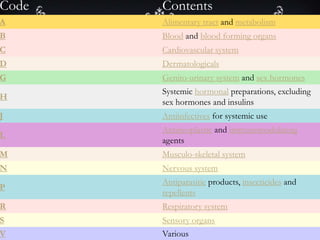
Code

Contents

A

Alimentary tract and metabolism

B

Blood and blood forming organs

C

Cardiovascular system

D

Dermatologicals

G

Genito-urinary system and sex hormones

H

Systemic hormonal preparations, excluding
sex hormones and insulins

J

Antiinfectives for systemic use

L

Antineoplastic and immunomodulating
agents

M

Musculo-skeletal system

N

Nervous system

P

Antiparasitic products, insecticides and
repellents

R

Respiratory system

S

Sensory organs

V

Various
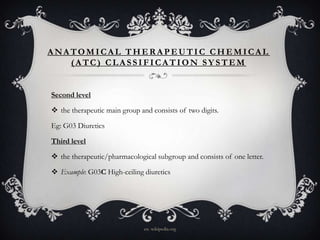
ANATOMICAL THERAPEUTIC CHEMICAL
(ATC) CLASSIFICATION SYSTEM

Second level
 the therapeutic main group and consists of two digits.
Eg: G03 Diuretics

Third level
 the therapeutic/pharmacological subgroup and consists of one letter.
 Example: G03C High-ceiling diuretics

en. wikipedia.org
ANATOMICAL THERAPEUTIC CHEMICAL
(ATC) CLASSIFICATION SYSTEM

Fourth level
 the chemical/therapeutic/pharmacological subgroup and consists of
one letter.
Eg: G03CA Sulfonamides
Fifth level
 the chemical substance and consists of two digits.
Eg: G03CA01 Furosemide

en. wikipedia.org
BIBLIOGRAPHY
 Pharmacology & Pharmacotherapeutics- Satoskar, Bhandarkar,
Rege: 9th edition
 Essentials of Medical Pharmacology- Tripathi, 6th edition

 Clinical Pharmacology- Bennett, Brown- 9th edition
 Textbook of Dental Pharmacology- Sharma, Sharma, Gupta
 en. Wikipedia.com
THANK YOU!!!!

Drug detoxication, Tolerance, Intolerance, Combined effects, Dosage, Classification

  • 1.
    PHARMACOLOGY- PART II DEEPTHI P.R. 1stYEAR MDS DEPT.OF CONSERVATIVE DENTISTRY & ENDODONTICS
  • 2.
    CONTENTS  Mechanism ofdrug Detoxication in the Body.  Intolerance, Tolerance, Cumulative action, Synergism, Antagonism.  Dosage, Classification of Drugs
  • 4.
    CONTENTS  Fate ofa drug  Reactions: synthetic non- synthetic
  • 5.
    FATE OF ADRUG  Changes that drug undergoes & its ultimate elimination  Alteration of a drug within a living organism: biotransformation  Metabolism: detoxication process  3 possible fates after absorption:
  • 6.
    FATE OF ADRUG I. Metabolic transformation by enzymes  Microsomal/ cytosolic/ mitochondrial  Inactivate an active drug  Activate a prodrug  Generate active metabolites of an active drug
  • 7.
    FATE OF ADRUG II. Spontaneous change into other substances  No enzymes III. Excretion unchanged
  • 8.
    FATE OF ADRUG  Less polar, lipid soluble  more polar, water soluble: excretion by kidneys  Already polar & soluble: excreted as such- aminoglycosides  Activation/ inactivation/ modification  Reactions:
  • 9.
    REACTIONS Non synthetic/ PhaseI/ Synthetic/ Phase II/ Conjugation Functionalization  Glucuronide conjugation  Oxidation  Acetylation  Reduction  Hydrolysis  Cyclization  Decyclization  Methylation  Sulfate conjugation  Glutathione conjugation  Ribonucleoside/ nucleotide synthesis
  • 10.
    REACTIONS  Phase Ireactions: OH-, NH2, SH-, COO- into drugs: water soluble & less active  Initial stages: active & more toxic products also formed
  • 11.
    REACTIONS  Tissues metabolisingdrugs: liver  Enzymes : drug metabolism- liver microsomes- sER  Esterases, amidases, glucuronyl transferases: catalyse oxidative & reductive reactions  Variety of enzymes- CYP450 system : absorbs light maximally at 450nm
  • 12.
    REACTIONS  Drugs –barbiturates: enzyme induction- rapid metabolism of substrate drugs  Enzyme induction: kidney, gut, plasma, skin, lung  Non microsomal enzymes & intestinal microfloral enzymes : MAO, alcohol dehydrogenase, xanthine oxidase
  • 13.
    FACTORS AFFECTING DRUG METABOLISM Animal species & strain  Route & duration of admn  Age & sex  Environmental determinants:  Genetic determinants  Nutritional status  Altitude & temperature pollutants  Drug interactions (inducers & inhibitors)  Disease- hepatic/ renal damage
  • 14.
    PHASE I REACTIONS OXIDATION Hydroxylation: salicylic acid to gentisic acid  Dealkylation: phenacetin to p-acetaminophenol  Deamination: amphetamine to benzyl-methyl-ketone REDUCTION  Microsomal enzymes- halothane & chloramphenicol  Non microsomal enzymes: chloral hydrate, disulfiram, nitrites
  • 15.
    PHASE I REACTIONS HYDROLYSIS Esterases: microsomal/ non microsomal/ microfloral  Pethidine, procaine, acetyl choline CYCLIZATION  Ring structure from a straight chain compound: proguanil DECYCLIZATION  Opening up of ring structure – cyclic drug molecule: barbiturates, phenytoin
  • 16.
    SYNTHETIC REACTION  Conjugation/transfer reactions  Drug/ Phase I metabolite + endogenous substance conjugates large molecules: bile  Inactivation small molecules: urine
  • 17.
    SYNTHETIC REACTION GLUCURONIDE CONJUGATION Chloramphenicol, aspirin, paracetamol  Bilirubin, steroidal hormones, thyroxine hydrolysis  MW: excretion in bile Gut bacteria  Enterohepatic cycling: duration of action- OCPs reabsorbed
  • 18.
    SYNTHETIC REACTION ACETYLATION  Sulfonamides,isoniazid, PAS, h ydralazine,  Genetic polymorphism: slow & GLYCINE CONJUGATION  Minor pathway- Salicylates GLUTATHIONE fast acetylators CONJUGATION METHYLATION  Highly reactive intermediates:  Adrenaline, histamine, nicotinic inactivated- paracetamol acid, methyldopa, captopril
  • 19.
    SYNTHETIC REACTION RIBONUCLEOSIDE/ NUCLEOTIDESYNTHESIS:  Activation of purine & pyrimidine antimetabolites in cancer chemotherapy SULFATE CONJUGATION  Chloramphenicol, methyldopa, adrenal & sex steroids
  • 21.
    E N ZY M E S O F I N T E R M E D I A RY M E TA B O L I S M  Alcohol: alcohol dehydrogenase  Allopurinol: xanthine oxidase  SCh & procaine: plasma cholinesterase  Adrenaline: mono amino oxidase Majority: microsomal & non microsomal drug metabolising enzymes
  • 23.
    TOLERANCE  Requirement ofhigher dose of a drug to produce a given response  Refractoriness: loss of therapeutic efficiency – a form of tolerance Types:  Natural  Acquired
  • 24.
    NATURAL TOLERANCE  Innate/congenital tolerance  Species/Racial/ individual: inherently less sensitive to the drug  Rabbits: atropine  Black races : mydriatics  Some individuals: hyporesponders – alcohol, β-blockers
  • 25.
    ACQUIRED TOLERANCE  Repeatedadministration: in initially responsive  Seen with most drugs: significant in CNS depressants  Opiates, barbiturates, nitrites, xanthines  Not with: atropine, sodium nitroprusside, digitalis, cocaine
  • 26.
    TISSUE TOLERANCE  Developsunequally: different effects of same drug  Sedative action of chlorpromazine: not to antipsychotic  Analgesic & euphoric action of morphine & not constipating & miotic actions
  • 27.
    CROSS TOLERANCE  Toleranceto pharmacologically related drugs  Alcoholics: barbiturates & general anesthetics  Partial: morphine & barbiturates  Complete: morphine & pethidine
  • 28.
    A P PAR E N T / P S E U D O TOLERANCE  Confined to oral administration of drug  Taking small amounts of poisons orally: render immunity to oral poisons  Mucosal changes in GIT: prevents systemic absorption of poison  Can occur through other routes
  • 29.
    MECHANSIM OF DEVELOPMENTOF TOLERANCE 1. Pharmacokinetic/ Drug 2.Pharmacodynamic/ disposition tolerance: Functional/Cellular tolerance:  Changes in absorption,  Target tissue changes- distribution, metabolism & Decrease in drug receptors/ down excretion: effective concentration regulation or weakening of at the site of action reduced response effectuation  Barbiturates, carbamazepine,  Alcohol, barbiturates, nitrates, amphetamine morphine
  • 30.
    TACHYPHYLAXIS  Acute tolerance Slow dissociation of drug  Doses of a drug are repeated from receptor: reduced intrinsic in quick succession: marked activity; continued blockade reduction in response  Unidentified ‘adaptive  Ephedrine, nicotine response’ of tissue/ compensatory homeostatic adaptation
  • 31.
    TACHYPHYLA X IS VS Rare in clinical practice: TOLERANCE  More common repeated admn in quick succession not customary  Faster  Drug effect cant be obtained  Slower development with increased dose  Original effect obtained with increasing dose
  • 32.
    REVERSE TOLERANCE  Sensitisation Intermittent dosing schedule  Greater response seen for a given dose than after an initial dose  Repeated daily administration of cocaine/ amphetamine: gradual increase in motor activity with constant dose
  • 33.
    DRUG INTOLERANCE  ‘Failureto tolerate’: Appearance of toxic effects of a drug in an individual at therapeutic doses  Low threshold to the action of a drug  Single tablet of chloroquine: vomiting & abdominal pain
  • 34.
    DRUG INTOLERANCE Also used:any Adverse Drug Reaction (ADR) DRUG INTOLERANCE QUANTITATIVE AUGMENTED PREDICTABLE TYPE A IDIOSYNCRASY ALLERGY QUANLITATIVE BIZZARE UNPREDICTABLE TYPE B
  • 35.
    TYPE A ADR TYPE B ADR Dose related & predictable :  Less common, not dose- pharmacological actions related, more serious, require  Preventable & reversible drug withdrawal  Hyper response to the main  Idiosyncrasy: genetic/ action: insulin hypoglycemia unknown mechanism  Allergy: Immunological- type I, II, III, IV
  • 36.
    IDIOSYNCRASY  Genetically determinedabnormal reactivity: uncharacteristic reaction with drug  Due to individual peculiarities  Chloramphenicol: non- dose related serious aplastic anemia
  • 37.
    ALLERGY Type I/ Anaphylactic reactions: Urticaria angioedema bronchospasm anaphylactic shockType II/ Cytolytic reactions: Thrombocytopenia agranulocytosis aplastic anemia hemolysis SLE Type III/ retarded, Arthus reaction: Rashes, serum sickness, polyateritis nodosa, SJS Type IV/ Delayed hypersensitivity reactions: Contact dermatitis, rashes, fever, photosensitisation
  • 38.
    TREATMENT OF ALLERGY Anaphylacticshock/ laryngeal angioedema:  Immediate stoppage of  Patient in reclining position, O2 admn offending drug at high flow rate, CPR  Mild rxns: self subsiding  Inj. Adrenaline 0.5mg (0.5 ml of 1 in  Antihistamines: type I rxns & 100 solution) im skin rashes  chlorpheniramine 10-20 mg i.m/ slow i.v  i.v. hydrocortisone sodium succinate 100-200 mg- severe/ recurrent cases
  • 39.
    DRUGS CAUSING ALLERGY FREQUENTLY Penicillins  Salicylates  Cephalosporins  Carbamazepine  Sulfonamides  Allopurinol  Tetracyclines  ACE inhibitors  Quinolones  Methyldopa  AntiTB drugs  Hydralazine  Phenothiazines  Local anesthetics
  • 40.
    CUMULATIVE ACTION  Repeatedadmn. Of slow excreted drug: high concentrationtoxicity  Digoxin, emetine, heavy metals  Cumulative effect desired: phenytoin in epilepsy  Passive cumulation: remain deposited in bones without toxic effectsLEAD;Toxic: once in blood  Liver & kidney impairment : non- cumulative drugs also cumulate
  • 41.
    SYNERGISM  Greek: syn-together; ergon- work  Action of one drug facilitated by the other  Both may have action in same direction  Given alone: one inactive, still enhance the other when together  2 types : additive & supraadditive
  • 42.
    SYNERGISM Additive: Supraadditive  Effect of2 drugs: same  The effect of the combination > direction- adds up  1+1=2 individual effects  2+2=5  Combination- better tolerated  prolongation of duration of than higher dose of individual action of one – time synergism drug  Levodopa + Carbidopa/  Aspirin + Paracetamol- benserazide- inhibition of peripheral analgesic/ antipyretic metabolism
  • 43.
    ANTAGONISM  Phenomenon ofopposing actions of two drugs on the same physiological system  Effect of drugs A+B< effect of drug A + effect of drug B  One is inactive & decreases the effect of the other  Physical  Chemical  Physiological/ Functional  Receptor
  • 44.
    ANTAGONISM Physical:  Physical property Charcoal adsorbs alkaloids: poisoning Chemical:  Chemical reaction of 2 drugs: inactive product  KMnO4 + alkaloids- gastric lavage in poisoning  Chelating agents + toxic heavy metals
  • 45.
    ANTAGONISM Physiological/ functional Receptor:  Differentreceptors/  Antagonist drug blocks the mechanisms- opposite effects on same function  Opposing pharmacological receptor action of agonist  Specific & profound actions pharmacological effect  Glucagon & insulin on blood  Antagonists: selective sugar level  Competitive/ non competitive
  • 46.
    COMPETITIVE ANTAGONISM  Equilibrium type/Reversible  Antagonist chemically similar to agonist: competes for same binding site  No response  Reversible: concentration of both  ACh & atropine: muscarinic  Adrenaline & prazosin: α
  • 47.
    COMPETITIVE ANTAGONISM  Partial agonist:competes with full agonist- submaximal response
  • 48.
    NONCOMPETITIVE ANTAGONISM  Antagonist inactivatesthe receptor : effective complex with the agonist not formed 3 ways:  Combination with same binding site: firm, not displaced by higher agonist concentration  Combination at a different site/ allosteric site: prevent characteristic change by agonist  Change induced in agonist binding site: reactivity abolished
  • 49.
    NONCOMPETITIVE ANTAGONISM  ACh &papaverine: smooth muscle  Ach & decamethonium : NMJ  Reversible/ irreversible effect
  • 50.
    SIGNIFICANCE OF ANTAGONISM  Correctingadverse effects: chlorpromazine & benzhexol  Treating drug poisoning: morphine with naloxone  Predicting drug combinations which would reduce drug efficacy: penicillin & tetracycline inferior to penicillin alone in pneumococcal meningitis
  • 52.
    CONTENTS  Dose  Fixeddose ratio combinations  Factors necessitating dose modification - body size - age - sex - race &genetics - pathological states - other drugs
  • 53.
    DRUG DOSAGE ‘DOSE’  Theappropriate amount of a drug needed to produce a certain degree of response in a patient  Qualified in terms of the chosen response:  Aspirin: 0.3- 0.6g - headache 60-150mg - antiplatelet action 3-5g – rheumatoid arthritis
  • 54.
    DRUG DOSAGE  Prophylactic/Therapeutic/ Toxic dose  Inherent potency & pharmacokinetic properties : dose  Recommended doses: ‘average’ patient  Individual patients: differ from this
  • 55.
    DRUG DOSAGE Standard dose: Regulateddose:  Same dose appropriate for  Finely regulated & easily most: minor variations & wide measured body function – safety margin modified  OCPs, Penicillin, chloroquine, mebendazole  Dosage adjusted : measurement of parameter  Antihypertensives
  • 56.
    DRUG DOSAGE Target leveldose: Titrated dose:  Response: not measurable  Dose: maximal therapeutic effect  Certain plasma levels of drug : cant be given: adverse effects achieved  Compromise between submaximal  Facilities unavailable: crude therapeutic effect & tolerable side adjustments – observing patient at effects long intervals  Antidepressants, antiepileptics, digoxin, lithium  Anticancer drugs, levodopa, steroids
  • 57.
    FIXED DOSE RATIOCOMBINATIONS: A D VA N T A G E S & D I S A D VA N T A G E S  Convenience & better patient compliance  All components may not be needed  Dose needs adjustment &  Synergistic combinations individualising  Elimination & counteraction  Time course of action of of side effects components: different  Ensures single drug is not  Cause of adverse effect: doubtful administered: AIDS, TB  Contraindication to one component: whole preparation
  • 58.
    FAC T OR S M O D I F Y I N G D RU G AC T I O N  Different pharmacokinetic handling of drugs  Variations in number/ state of receptors  Variations in neurogenic/ hormonal tone  Genetic/ non genetic factors modify drug action: quantitatively Most factors cause such change: dealt by adjustment of drug dosage qualitatively Less common: precludes the use of the drug in the patient
  • 59.
    FAC T OR S N E C E S S I TAT I N G D O S E M O D I F I C AT I O N Body size:  Average adult dose: medium built Individual dose= BW (kg) x avg adult dose 70 2 Individual dose = BSA(m ) x avg adult dose 1.7
  • 60.
    FAC T OR S N E C E S S I TAT I N G D O S E M O D I F I C AT I O N Age: Age Child dose= Age +12 x adult dose-----------(Young’s formula) Child dose = Age x adult dose-----------(Dilling’s 20 formula)
  • 61.
    PHYSIOLOGICAL DIFFERENCES FROM AD U LT S R E Q U I R I N G C A U T I O N :  Low GFR, immature tubular Growth transport: gentamicin, penicillin  Suppression – corticosteroids  Inadequate hepatic drug  Stunting of stature: metabolizing system: androgens chloramphenicol- gray baby syndrome  Discoloration of teeth:  Permeable blood brain barrier tetracycline  Faster drug metabolism than in  Dystonic reactions: adults after 1st year phenothiazines
  • 62.
    FAC T OR S N E C E S S I TAT I N G D O S E M O D I F I C AT I O N Elderly:  Drug doses reduced: GFR~ 75% -50 years & ~50%- 75 years  Reduction in hepatic drug metabolism: oral bioavailability  Intolerant to digitalis  Reduced responsiveness of β receptors
  • 63.
    FACTORS NECESSITATING DOSE MODIFICATION Sex: Females: doses on lower side of the range Changes altering drug disposition in pregnancy:  GI motility: delayed absorption of oral drugs  plasma albumin levels: fraction of acidic drugs  RBF: faster elimination of polar drugs  Induction of hepatic enzymes: faster metabolism and basic drugs
  • 64.
    FAC T OR S N E C E S S I TAT I N G D O S E M O D I F I C AT I O N Race: Genetics:  Blacks require higher &  Dose of a drug- same effect: 4-6 mongols lower concentrations fold variation of atropine & ephedrine to dilate  Pharmacogenetics: the study of genetic their pupil basis for variability in drug response  Pharmacogenomics: the use of genetic information to guide the choice of drug & dose on an individual basis
  • 65.
    PATHOLOGICAL STATES I. GI diseases: II.Liver diseases:  serum albumin: more free form of  Coeliac disease- Absorption of amoxicillin cephalexin & cotrimoxazole  achlorhydria aspirin absorption diclofenac, warfarin  Dose reduction needed: lidocaine, morphine, propanolol  Normal doses of CNS depressants: toxic in cirrhotics  Oral anticoagulants: marked PT
  • 66.
    PATHOLOGICAL STATES III. Renaldiseases  Maintenance dose of drugs excreted unchanged & partly unchanged: reduced or dose interval prolonged  Free form of acidic drugs : reduction in albumin level  CNS depressants : more due to permeability of BBB  Pethidine: seizures  Urinary antiseptics: systemic toxicity
  • 67.
    PATHOLOGICAL STATES Antimicrobials needingdose reduction Even in mild failure Only in severe failure Aminoglycosides Cotrimoxazole Cephalexin Carbenicillin Ethambutol Cefotaxime Vancomycin Norfloxacin Amphotericin B Ciprofloxacin Acyclovir Metronidazole
  • 68.
    PATHOLOGICAL STATES IV. Congestiveheart failure V. Thyroid disease:  Decreased absorption from  Clearance of digoxin- roughly GIT: procainamide, hydrochlorothiazide  Loading doses and dosing rates of lidocaine reduced parallels thyroid function  Hypothyroid: more sensitive to digoxin, morphine, CNS depressants  Compensated heart; more  Hyperthyroid: prone to arrhythmic sensitive to digitalis action of digoxin
  • 69.
    PATHOLOGICAL STATES VI. Others: Schizophrenics tolerate large doses of phenothiazines  Head injury patients: respiratory failure- normal doses of morphine  MI patients: prone to digitalis & adrenaline induced arrhythmias
  • 70.
    FAC T OR S N E C E S S I TAT I N G D O S E M O D I F I C AT I O N Other drugs:  Concurrent administration of inhibitors of hepatic microsomal enzymes: (macrolides, chloramphenicol, cimetidine, metronidazole)- dose reduction of drugs metabolised: (azathioprine, warfarin, theophylline)  Propanolol: lidocaine, morphine, verapamil, imipramine & self metabolism- reduction in hepatic blood flow
  • 71.
    FAC T OR S N E C E S S I TAT I N G D O S E M O D I F I C AT I O N Enzyme inducers: barbiturates, phenytoin, carbamzepine failure of antimicrobial therapy with metronidazole, doxycycline, chloramphenicol  contraceptive failure  Paracetamol toxicity at lower doses: toxic metabolite  Oral anticoagulants, hypoglycemics, antiepileptics, antihypertensives: dose adjustment
  • 72.
    CLASSIFICATION OF DRUGS Single, rational classification system: not possible  Requirements of chemists, pharmacologists, doctors differ  Categorised according to the convenience of the discussing group
  • 73.
    CLASSIFICATION OF DRUGS I.BODY SYSTEM: II. THERAPEUTIC USE:  Alimentary  Receptor blockers  Cardiovascular  Enzyme inhibitors  ANS, PNS, CNS  Carrier molecules  Respiratory system  Renal system  Blood & blood formation  Ion channels
  • 74.
    CLASSIFICATION OF DRUGS III.MODE/ SITE OF ACTION:  Molecular interaction: glucoside, alkaloid, steroid  Cellular site: loop diuretic, catecholamine uptake inhibitor IV. MOLECULAR STRUCTURE:  Glycoside  Alkaloid  Steroid
  • 75.
    ANATOMICAL THERAPEUTIC CHEMICAL (ATC)CLASSIFICATION SYSTEM  Controlled by the WHO Collaborating Centre for Drug Statistics Methodology (WHOCC)  First published in 1976  Drugs into different groups: the organ or system on which they act and/or their therapeutic and chemical characteristics  Same drug: more than one code Eg: Aspirin- A01AD05 - local oral treatment, B01AC06 - antiplatelet, N02BA01 – analgesic, antipyretic en. wikipedia.org
  • 76.
    ANATOMICAL THERAPEUTIC CHEMICAL(ATC) CLASSIFICATION SYSTEM  drugs are classified into groups at 5 different levels First level  the anatomical main group and consists of one letter.  14 main groups en. wikipedia.org
  • 77.
    Code Contents A Alimentary tract andmetabolism B Blood and blood forming organs C Cardiovascular system D Dermatologicals G Genito-urinary system and sex hormones H Systemic hormonal preparations, excluding sex hormones and insulins J Antiinfectives for systemic use L Antineoplastic and immunomodulating agents M Musculo-skeletal system N Nervous system P Antiparasitic products, insecticides and repellents R Respiratory system S Sensory organs V Various
  • 78.
    ANATOMICAL THERAPEUTIC CHEMICAL (ATC)CLASSIFICATION SYSTEM Second level  the therapeutic main group and consists of two digits. Eg: G03 Diuretics Third level  the therapeutic/pharmacological subgroup and consists of one letter.  Example: G03C High-ceiling diuretics en. wikipedia.org
  • 79.
    ANATOMICAL THERAPEUTIC CHEMICAL (ATC)CLASSIFICATION SYSTEM Fourth level  the chemical/therapeutic/pharmacological subgroup and consists of one letter. Eg: G03CA Sulfonamides Fifth level  the chemical substance and consists of two digits. Eg: G03CA01 Furosemide en. wikipedia.org
  • 80.
    BIBLIOGRAPHY  Pharmacology &Pharmacotherapeutics- Satoskar, Bhandarkar, Rege: 9th edition  Essentials of Medical Pharmacology- Tripathi, 6th edition  Clinical Pharmacology- Bennett, Brown- 9th edition  Textbook of Dental Pharmacology- Sharma, Sharma, Gupta  en. Wikipedia.com
  • 81.